

Understanding Average Costs of Roll Down Hurricane Shutters for Your Home Protection Needs
Roll down hurricane shutters are a permanent, operable storm-protection solution: a continuous curtain of interlocking slats stored in a mounted housing that lowers into tracks to cover windows and doors. They create a rigid, engineered barrier that transfers wind loads into the house structure and resists flying debris — reducing broken glass and limiting water-driven interior damage. For coastal homeowners, roll downs offer fast, reliable protection, year‑round security, and improved thermal performance, which often makes them a sound long‑term investment. This guide walks through how roll down shutters work, typical installed cost ranges per square foot, the main price drivers, comparisons with other systems, and the long‑term savings that help offset the upfront expense. You’ll also find steps to get an accurate, site‑specific estimate and why a Design Pressure Analysis matters for code compliance. Throughout, we reference manufacturer‑grade materials and a local example to help homeowners across coastal North and South Carolina plan with confidence.
What Are Roll Down Hurricane Shutters and How Do They Protect Your Home?
Roll down shutters are retractable barriers mounted above openings that lower into vertical guides to cover windows and doors, forming a continuous shield against hurricane forces. The assembly — interlocking slats, side tracks, and a housing — locks into place as a stiff panel that resists impact and routes wind loads into engineered attachment points. That engineered load path helps prevent glass failure and reduces internal pressurization, which can lead to roof and wall damage during storms. Because performance depends on both material strength and correct fastening, choosing the right product and installer is key to long service life and reliable protection. With that foundation, the next sections explain operation styles and material choices that affect cost and durability.
How Do Manual and Electric Roll Down Shutters Operate?
Manual roll down shutters use a hand crank, strap, or winding mechanism to raise and lower the curtain. They don’t require wiring, have simpler maintenance, and usually cost less up front.
Motorized systems hide an electric motor in the roller; you operate them with wall switches, remotes, or smart‑home controls. Motors add convenience—especially for multi‑story homes or very large openings—but they also add electrical work and higher initial cost.
Most electric systems include limit switches, a manual override, and optional battery backup for use during power outages. Those features improve reliability but increase system complexity and service needs. Your choice should balance accessibility, how often you’ll deploy the shutters, and your comfort with automation and its maintenance demands.
What Materials Are Used in Roll Down Hurricane Shutters?
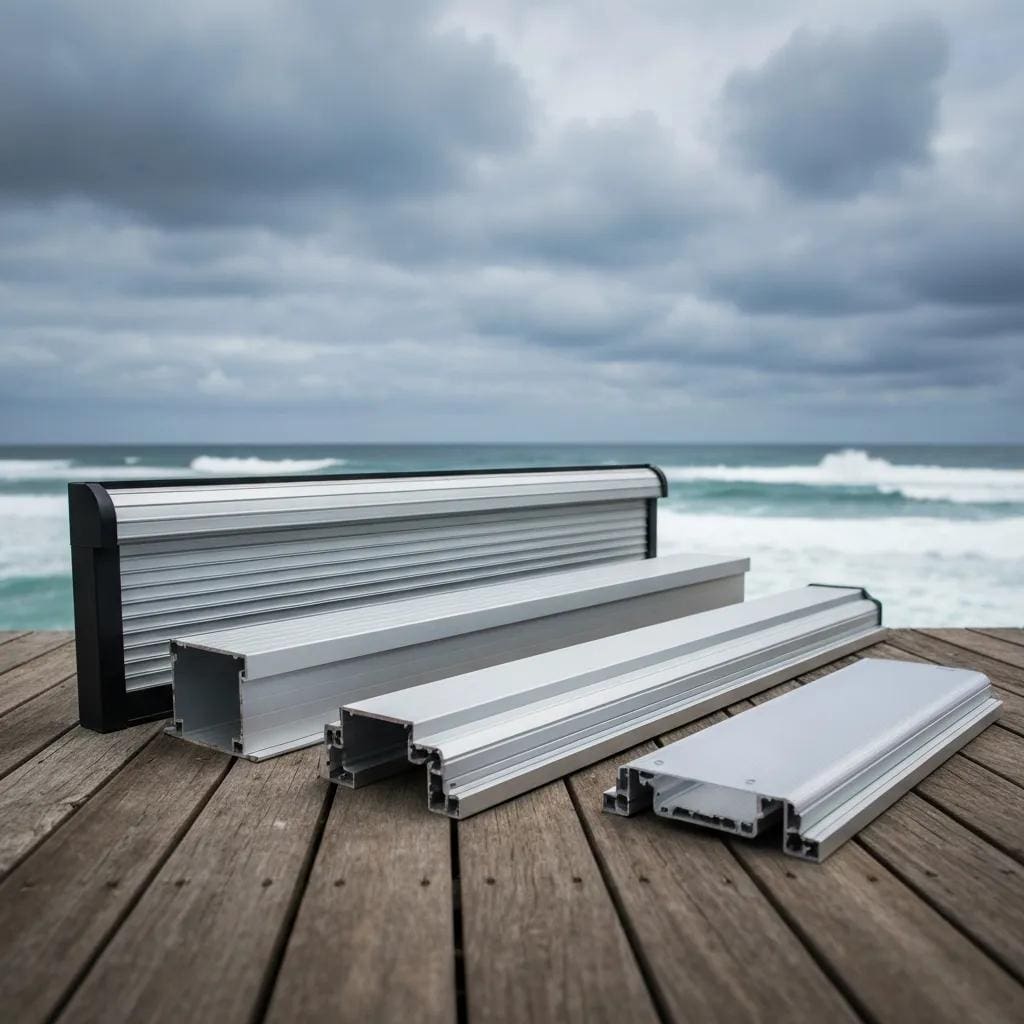
Most roll down shutters are made from extruded aluminum (hollow or foam‑filled) or clear polycarbonate. For coastal durability, look for marine‑grade alloys and stainless fasteners. Aluminum delivers a strong strength‑to‑weight ratio and resists deformation on impact; specified as 6063‑T6 Marine‑Grade Aluminum and paired with 18‑8 stainless fasteners, it stands up better to salt air. Foam‑filled slats add stiffness and sound insulation for a moderate premium. Polycarbonate gives transparency and high impact resistance but is typically a higher‑cost, specialized choice. Material selection affects finish life, maintenance needs, and expected lifespan, so match materials to local exposure and long‑term value goals.
What Is the Average Cost of Roll Down Hurricane Shutters per Square Foot?
Installed prices for roll down hurricane shutters typically fall between $25 and $60 per square foot, with variation driven by material, motorization, and installation complexity. That band covers most manual and common electric systems for standard residential openings.
To convert per‑square‑foot pricing into a project total, factor in opening sizes and counts, motor add‑ons, and any required reinforcement or electrical work.
As a local example, a Manual Rated Rolldown is shown at $48 per square foot with a Motor option listed as +$700 in a local installer FAQ — a useful illustration of how a base per‑square‑foot price can combine with fixed equipment charges.
Use these ranges for budgeting, but expect final, site‑specific pricing after precise measurement and analysis. The table below gives representative pricing bands for quick comparison.
Common pricing elements for roll down systems, summarized to help homeowners compare options and plan budgets.
These bands reflect typical market pricing; final bids depend on opening geometry, finish choices, and local labor rates, so treat them as planning values rather than firm quotes.
How Do Material and Motorization Affect Roll Down Shutter Prices?
Upgrading materials or adding motorization are two of the biggest single‑line cost drivers, often raising the base price by 20–40% depending on choices.
Foam‑filled slats boost stiffness and thermal performance for a moderate premium over hollow extrusions. Heavier gauges and premium coatings increase material cost up front but reduce life‑cycle maintenance in corrosive coastal environments.
Motorized systems add the motor cost (for example, a motor add‑on) plus electrical labor for wiring and controls. Motors also change warranty and service profiles, which can justify higher initial investment for homeowners who value convenience and reliability.
Motorization tends to be most cost‑effective on large or hard‑to‑reach openings where manual operation is impractical and the convenience and safety benefits outweigh the extra cost.
What Installation Costs Should Homeowners Expect in Coastal NC and SC?
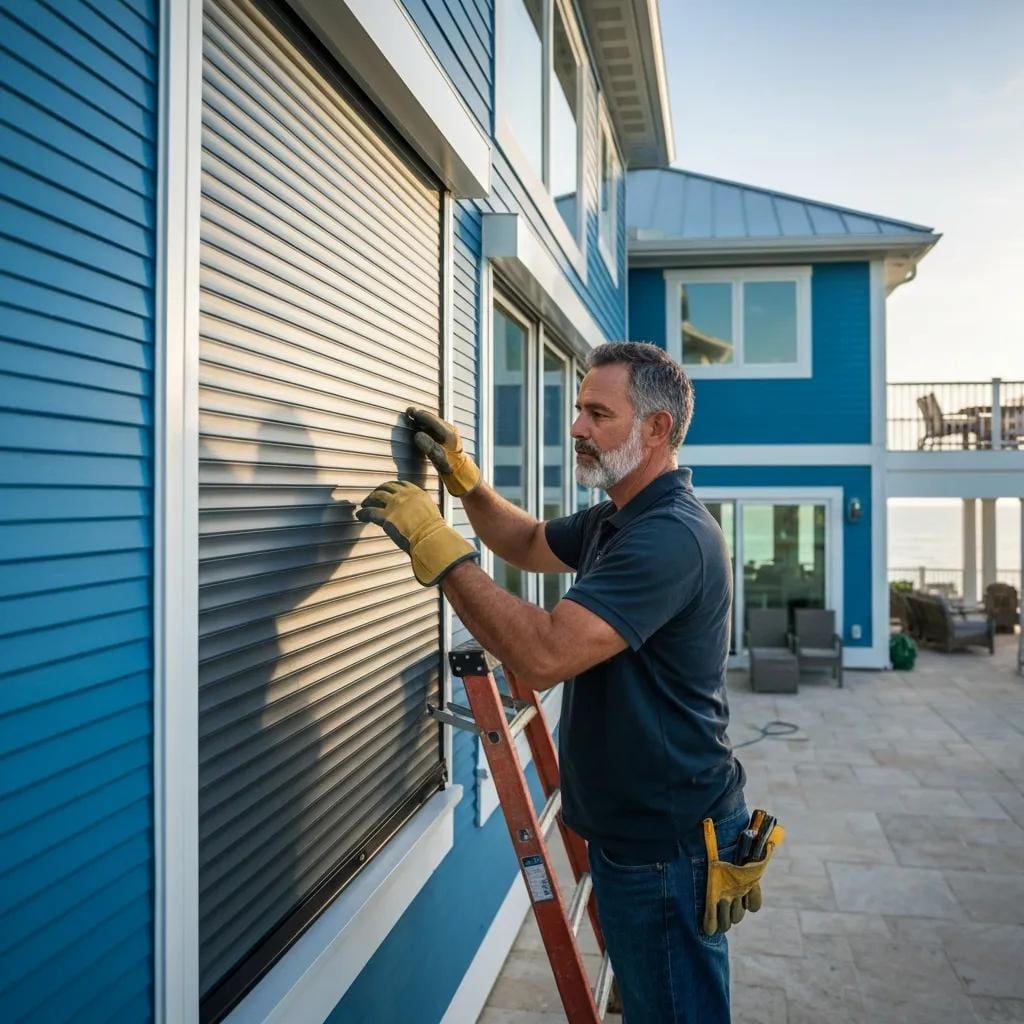
Installation costs depend on height, access, and how the shutters must be attached. In coastal North and South Carolina, multi‑story work often requires lifts or fall protection, and corrosion‑resistant hardware and proper sealing add time and cost.
Local installers commonly account for specialty fasteners, potential reinforcement of flashing or framing, and municipal permitting and inspection. Height and complexity can add fixed hourly charges or lift rental fees.
Seasonal demand around hurricane season can also affect scheduling and labor rates, so planning ahead helps avoid urgency premiums.
Knowing these local installation drivers gives homeowners a clearer picture of the total project cost beyond per‑square‑foot pricing.
What Key Factors Influence the Total Cost of Roll Down Hurricane Shutters?
The installed cost turns on material grade, operation type (manual vs motorized), opening size and geometry, and installation complexity tied to access and attachment requirements.
Secondary yet meaningful factors include finish choices, smart‑home integration, warranty length, and any Design Pressure Analysis outcomes that require higher‑performance products or attachments.
Assessing these factors helps homeowners focus spending where it most improves durability and performance.
The table below highlights common attributes and their typical cost impact so you can quickly see where dollars matter most.
Installation access and material choice typically produce the largest cost swings, so prioritize those when planning your budget.
How Do Size, Customization, and Building Code Compliance Impact Pricing?
Larger openings and unusual window shapes increase fabrication complexity and material usage, raising the per‑opening price compared with simple rectangles. Large spans may need reinforced housings or multiple motors, which add cost.
Custom finishes, trim integration, and color matching increase fabrication and installation time and therefore raise quotes.
Importantly, local building codes and a required Design Pressure Analysis can force specific attachment methods or higher‑rated products, directly affecting product choice and price.
Because these variables can materially change a quote, the next section looks at how brand, warranty, and extra features influence both cost and homeowner value.
What Role Do Brand, Warranty, and Additional Features Play in Cost?
Brand and warranty length often reflect engineering standards, quality control, and service networks. Premium brands typically charge more but may offset lifetime ownership costs with better warranties and service support.
Warranties can cover materials, finishes, and mechanical parts for specified terms; longer warranties often indicate stronger corrosion protection or higher‑quality coatings — an important consideration on the coast.
Features like smart‑home integration, battery backup, or higher IP‑rated motors increase upfront cost but add convenience and resilience, and they can affect insurance eligibility and resale value.
Weigh these tradeoffs to choose options that match your maintenance expectations and long‑term value goals.
How Do Roll Down Hurricane Shutters Compare to Other Hurricane Protection Options in Cost and Benefits?
On the cost‑to‑performance spectrum, roll down shutters sit between temporary storm panels and full impact windows: they typically cost more than basic panels but less than replacing all windows with impact glazing, while offering permanent, on‑demand protection.
Roll downs provide quick deployment, full coverage, and strong wind/debris resistance when specified and installed correctly. Tradeoffs include visible housings and a higher initial price than temporary systems.
Comparing cost, lifespan, and non‑monetary benefits clarifies which solution best fits your budget, aesthetic priorities, and permanence goals.
The table below summarizes representative averages and benefits to help you weigh options.
This comparison shows roll down systems balance permanence and performance at a mid‑to‑high price point, making them an attractive choice for long‑term coastal protection.
What Are the Price Differences Between Roll Down, Accordion, Bahama, and Colonial Shutters?
Price differences come from permanence, installation complexity, and material needs. Accordion and colonial systems are always‑mounted and avoid seasonal handling, which can lower deployment labor though material costs vary. Bahama shutters add architectural brackets and can be pricier per opening because of custom hardware.
Roll down shutters require housings and tracks and often involve motors or electrical integration, which increases complexity and cost compared with simpler hinged systems.
If aesthetic continuity matters most, homeowners may pay more for Bahama or colonial styles; if maximum protection and straightforward operation are priorities, roll down systems are often worth the premium.
How Do Roll Down Shutters Compare to Storm Panels and Impact Windows?
Storm panels are the lowest‑cost temporary option but require storage and installation labor before each storm and offer limited insulation or resale benefit.
Impact windows replace glass and framing for continuous protection, better energy performance, and strong resale appeal, but their high upfront cost can exceed shutter systems when protecting an entire home.
Roll down shutters are a middle path: a permanent system that can protect many openings for less than full window replacement, with the option to motorize for convenience. When you factor lifecycle costs and non‑monetary benefits like ease of use and appearance, roll downs can be a very cost‑competitive solution.
What Long-Term Benefits Can Offset the Initial Cost of Roll Down Hurricane Shutters?
Yes — roll down shutters can help offset initial costs through measurable benefits: insurance savings from wind‑mitigation credits, energy savings from reduced solar gain, and greater resale appeal from permanent, visible protection.
Insurance discounts vary by company and region, but many homeowners secure wind‑mitigation credits after inspection and proper documentation. Reduced HVAC runtime from shading and wind resistance can also lower seasonal energy use in warm coastal climates.
Additionally, the security and permanence of installed shutters can make a home more attractive to buyers.
The following sections explain how shutters influence home value and how to capture insurance and energy savings with concrete steps you can take.
How Do Roll Down Shutters Increase Home Value and Security?
Permanent roll down shutters signal proactive risk reduction and durable exterior upgrades, which can improve marketability in hurricane‑prone areas where buyers value resilience.
Closed shutters also act as a physical deterrent, making forced entry harder and reducing opportunistic crime. Buyers often see that added security as a plus.
Using corrosion‑resistant materials and keeping up routine maintenance preserves both appearance and function, protecting resale value over time.
For coastal installations, specifying 6063‑T6 Marine‑Grade Aluminum and 18‑8 Stainless Steel fasteners supports performance and buyer confidence in a durable installation.
Can Roll Down Shutters Lower Insurance Premiums and Improve Energy Efficiency?
Roll down shutters can qualify for wind‑mitigation credits when installations meet insurer and local code requirements and when you provide the right documentation. Talk to your insurance agent and inspector to confirm what evidence is needed.
Energy savings come from reduced solar heat gain and shading, which cuts HVAC runtime during hot months; foam‑filled slats add further thermal benefit.
To pursue insurance savings, document product specifications and any site‑specific Design Pressure Analysis results, then submit them to your insurer for review.
- The primary actionable steps for homeowners pursuing insurance credits include:
Document product specifications and installation details in writing.
Obtain inspection or certification showing compliance with local wind mitigation standards.
Submit documentation to the insurer and follow up on the credit application.
These steps help convert installed protection into measurable financial benefits and lead into the next section on getting accurate, site‑specific pricing and documentation.
How Can You Get an Accurate Estimate for Roll Down Hurricane Shutters on Your Home?
An accurate estimate depends on three things: precise measurements of each opening and access conditions, a site‑specific Design Pressure Analysis to set required product performance and attachment, and a detailed written estimate that itemizes materials, labor, electrical work, and permitting.
The Design Pressure Analysis (DPA) matters because it quantifies wind loads for each opening and dictates attachment methods and product selection — which directly affects both materials and labor costs and warranty eligibility.
Online calculators are useful for ballpark budgeting, but they can’t replace an on‑site review that captures structural conditions and access challenges.
Follow this practical sequence to get reliable pricing and documentation:
- Measure and record each opening’s width, height, and access conditions.
- Request or perform a site‑specific Design Pressure Analysis for code compliance.
- Obtain a written, itemized estimate from a qualified installer based on the analysis.
Why Is a Site-Specific Design Pressure Analysis Important for Cost Accuracy?
A Design Pressure Analysis (DPA) calculates the wind loads each opening will face and therefore sets the required product performance and attachment method — directly affecting both materials and labor.
DPA results can call for stronger housings, different fastener patterns, or reinforced attachment points, all of which change the bill of materials and installation time. Beyond cost, a DPA ensures code compliance and supports warranty coverage by matching installed products to their rated limits.
Since a DPA can materially alter product selection and price, including it early reduces the risk of change orders and underperformance. The next section explains how online tools and free on‑site estimates work together in practice.
How Do Free Estimates and Cost Calculators Help Homeowners Plan Their Budget?
Online cost calculators provide quick ballpark numbers useful for initial budgeting and comparing options, but they don’t include a DPA, access evaluation, or permitting details that shape final pricing. A free on‑site estimate captures installation complexity — scaffolding needs, electrical routing for motors, local permit fees — and produces an itemized quote you can use for insurance and financing. Many reputable local installers offer free, no‑obligation estimates and provide a cost calculator while performing site‑specific Design Pressure Analysis to ensure accurate bids. Use an online calculator to set a preliminary budget, then schedule a free on‑site estimate for a reliable final price.
- Summary of planning approach:
Use a cost calculator to set a preliminary budget and compare manual vs motorized scenarios.
Schedule a free, no‑obligation on‑site estimate to capture actual installation needs.
Ensure the estimator includes a Design Pressure Analysis and provides an itemized scope to support permits and insurance claims.
Frequently Asked Questions
What are the maintenance requirements for roll down hurricane shutters?
Regular maintenance keeps shutters working when you need them. In coastal areas, rinse salt and debris off the tracks and slats, inspect fasteners and seals, and lubricate moving parts per the manufacturer’s schedule. For motorized systems, test electrical components and the manual override periodically. Following the manufacturer’s maintenance guide helps avoid costly repairs and preserves performance.
How do I choose the right size for my roll down hurricane shutters?
Measure each opening’s width and height and note any architectural features that affect installation. Some systems need extra space for the housing or guides, so share measurements with a qualified installer who can confirm fit and recommend the correct system for each opening.
Are roll down hurricane shutters suitable for all types of homes?
Yes — roll down shutters can be adapted for single‑family homes, multi‑story buildings, and many commercial properties. Installation methods vary with building design and structural elements, so a site review by a qualified installer will determine the best approach and ensure code compliance.
What is the lifespan of roll down hurricane shutters?
With proper maintenance and the right materials, roll down shutters commonly last 20 years or more. Lifespan depends on materials, installation quality, and environmental exposure; using marine‑grade alloys and stainless fasteners in coastal settings helps extend service life.
Can I install roll down hurricane shutters myself?
DIY installation is possible for experienced, well‑equipped owners, but professional installation is recommended. Proper attachment, alignment, and compliance with local codes are critical for performance and warranty coverage. Professional installers bring the tools, experience, and warranty protection that reduce risk.
What are the insurance benefits of installing roll down hurricane shutters?
Installing roll down shutters can qualify you for wind‑mitigation credits or premium discounts, depending on your insurer and local rules. To pursue savings, document product specs and installation compliance, then submit that evidence to your insurer. Check with your agent to understand the exact requirements and likely savings.
Conclusion
Roll down hurricane shutters deliver strong, on‑demand protection, plus potential energy and insurance savings and improved resale appeal. Understanding costs, performance drivers, and the role of a Design Pressure Analysis helps you make practical choices for your home. Start by using a cost calculator for budgeting, then schedule a free on‑site estimate with a reputable installer to get a site‑specific DPA and an itemized quote. Taking those steps puts you in control — and helps protect your home when storm season arrives.