

Understanding Customization Options for Roll-Down Hurricane Shutters: Fit Any Window Size and Style
Roll-down hurricane shutters are engineered storm protection that balance impact resistance, wind-load performance, and visual integration for coastal homes. This guide walks homeowners through how customization — from slat profiles and tracks to housings, operation methods, and material choices — lets these shutters adapt to unusual openings and match a home’s style while meeting local wind-load rules. You’ll find measurement tips, material trade-offs (including marine-grade aluminum and polycarbonate), operation options from manual crank to smart-home control, and why a professional design pressure analysis matters for code compliance. The guide also covers sizing and engineering for large spans, compares materials and operation types, explores low-visibility aesthetic choices, and explains installation and permitting to ensure reliable shutter performance. Throughout, component-level details like slats, motors, and mounting methods are tied directly to durability and everyday usability so you can make informed customization decisions for coastal properties.
What customization features make roll-down hurricane shutters adaptable to any window or door?
Roll-down systems are flexible because each major part — slats, tracks, box housing, end-retention, operator (motor or manual), and mounting brackets — can be specified to match opening geometry, wind-load requirements, and the home’s finish. Custom slat profiles and reinforced end-retention add strength where needed, while tailored track shapes and mounting brackets secure the unit to masonry, wood, or retrofitted siding. Those mechanical choices affect impact resistance, weather sealing, and long-term corrosion performance in coastal environments. Below we break down the components most often customized and when the decision is driven by performance versus appearance.
Which shutter components can be customized for unique window shapes and sizes?
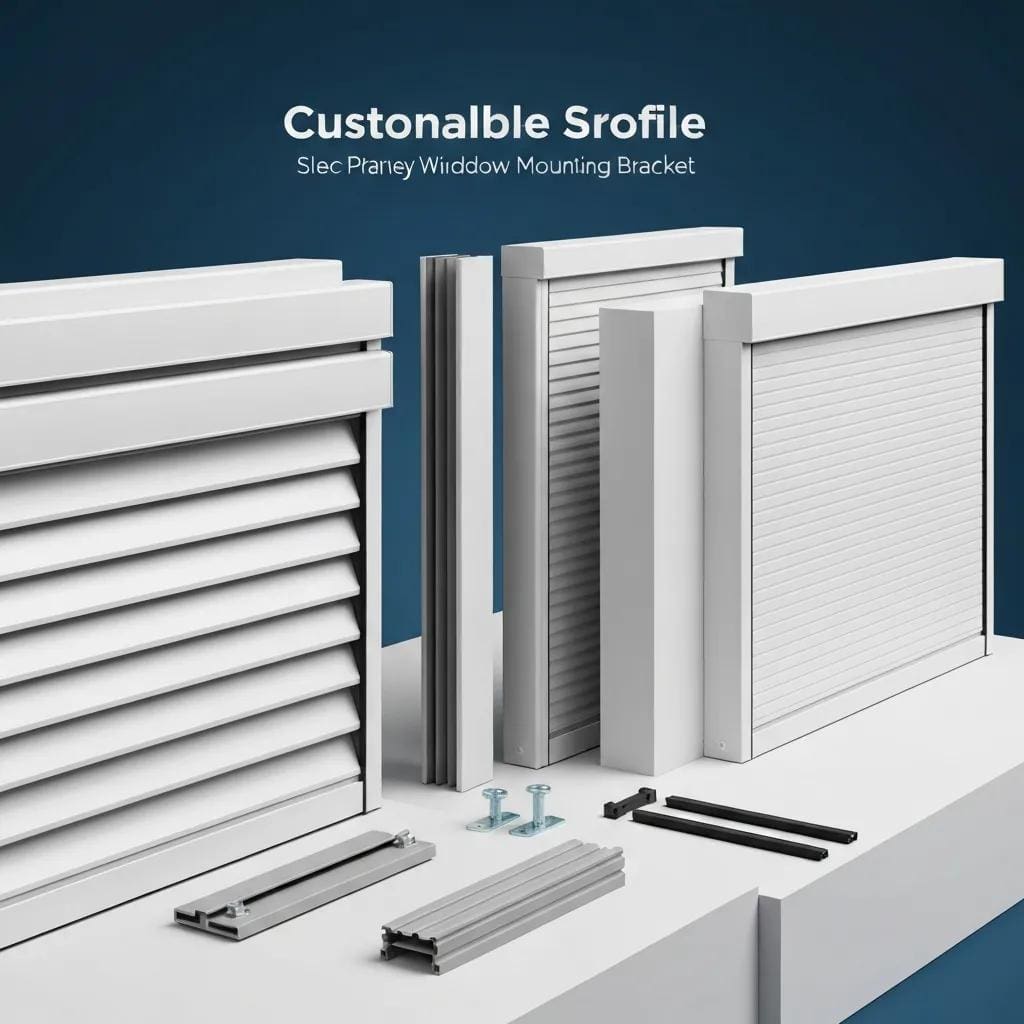
Common customization points include slat profile (solid, vented, or clear polycarbonate insert), track geometry (straight, curved, or tapered), box housing size and placement (visible, recessed, or integrated into fascia), motor selection (torque and enclosure), and special mounting brackets for varied substrates. Slat choice balances impact resistance and weight — reinforced slats for wide spans, clear inserts where visibility matters. Curved or tapered tracks let the shutter follow arched or angled openings for a weather-tight seal. These selections are made from measured opening geometry and the required wind-load rating so the installed shutter performs reliably in storms.
How does customization enhance protection and aesthetic integration?
Customization improves protection by making sure slats, tracks, and fasteners meet calculated wind loads and by reducing gaps that cause rattling or water intrusion. A correct end-retention system and properly sized housing cut deflection and raise the system’s effective wind-load capacity, increasing durability. Aesthetically, color-matched powder coating, compact housings, and recessed installations let shutters blend with trim and rooflines so protection isn’t a visual distraction. Those choices preserve curb appeal while delivering the engineered performance homeowners expect, tying structural decisions to day-to-day satisfaction and maintenance needs.
For homeowners who want locally tailored installations, American Hurricane Shutters offers customization of slat profiles, track geometry, housings, and operation options to fit most window and door types. We provide free estimates and a handy on-site cost calculator so you can compare motorized and manual setups and match budget to performance.
How are roll-down shutters precisely sized for unusual windows and large openings?
Accurate sizing starts with precise measurements and moves into engineering choices that turn dimensions into component selections, modular spans, or segmented systems for very large openings. Geometry and exposure determine reinforcement, fastener spacing, and slat profiles, so measured dimensions become the inputs for design. For wide spans, designers often use modular shutters with reinforced slats and intermediate guides or telescoping tracks to control deflection and keep operation smooth. The sections below list shapes these systems can handle and explain why tight measurement tolerances matter for final performance.
What window and door shapes can custom roll-down shutters fit?
Roll-down shutters can be engineered for arched and circular openings using segmented head boxes or curved tracks; tapered or trapezoid windows with custom tracks; bay and bow windows using articulated segmented panels; and large sliding or patio doors with modular spans, reinforced slats, and intermediate guides. For very wide openings, multiple contiguous shutters with synchronized motors or mechanical couplings distribute the load while keeping operation practical and seams minimal. The right modular or segmented approach depends on opening size, desired sightlines, and the property’s local wind-load requirements.
This sizing matrix shows how opening geometry drives engineering choices, with modularization the preferred method for maintaining strength and operability across wide or irregular openings.
Why is exact measurement critical for custom fit and performance?
Exact measurement leads to predictable performance: accurate widths, heights, and squareness determine track fit, housing clearance, and anchor placement so the shutter seals and moves without binding or flutter. Small tolerances affect wind rating — gaps or misaligned guides reduce effective wind-load capacity and can cause rattling, water ingress, or premature wear. On-site checks include confirming substrate type, plumb and level, and clearance behind trim so anchors fasten into solid material. Precise measurement is the foundation for a sound design pressure analysis and tells engineers whether a standard, reinforced, or segmented solution is required for safe, code-compliant performance.
What material options are available for custom roll-down hurricane shutters?
Material selection balances impact resistance, corrosion resistance, light transmission, and appearance. Common choices are marine-grade aluminum, clear polycarbonate inserts, and vented slat profiles. In coastal settings, corrosion resistance and proper fastener pairing are crucial to avoid galvanic issues and ensure long-term operation. The table below compares common materials across functional attributes so homeowners can match materials to use cases — living areas that need light and views, garages that want full metal coverage, or utility spaces that benefit from ventilation. After the table, we cover the strengths of 6063-T6 aluminum and the trade-offs for polycarbonate and vented designs.
What are the benefits of 6063-T6 marine-grade aluminum for shutters?
6063-T6 aluminum combines strength, formability, and corrosion resistance that suits coastal installations when fasteners are specified for the environment. Its properties let manufacturers make thin, reinforced slats that resist bending under design loads while keeping weight low for smooth operation. Powder-coating marine-grade aluminum adds a protective finish against salt air, cutting maintenance and preserving long-term appearance. For homeowners who want long-lasting protection without bulky profiles, 6063-T6 is a practical, dependable choice.
Aluminum’s strength-to-weight ratio and corrosion resistance make it a leading material choice for marine and hurricane-shutter applications.
Aluminum Alloys for Marine Structures and Hurricane Shutters
Aluminum alloys are frequently chosen for marine and coastal applications because they offer a favorable strength-to-weight ratio, corrosion resistance, and ease of fabrication. These properties make certain aluminum grades well suited to harsh salt-air environments and weather-exposed structures where durability is required.
How do clear polycarbonate inserts and vented slats enhance functionality?
Clear polycarbonate inserts give impact-resistant visibility and daylighting for living rooms, entries, or areas where you want a view while maintaining protection. Vented slats trade a full solid seal for airflow and heat dissipation, helping reduce interior heat behind closed shutters and moderating pressure differences on some façade types. Trade-offs include higher cost for polycarbonate and slightly different impact behavior for vented designs; still, these options are valuable when light, ventilation, or visibility are priorities alongside storm protection. Polycarbonate requires regular cleaning and seal checks to keep clarity and performance long-term.
How do manual, motorized, and smart-home systems customize shutter operation?
Operation choices run from manual strap or crank systems to motorized units with remote or smart-home integration; each affects convenience, cost, power reliance, and redundancy. Manual systems are simple and reliable with no electrical dependency and low maintenance. Motorized shutters add convenience for large or multi-story openings and can integrate with automation platforms for scheduled testing and remote control. Smart-home integration brings voice commands, scene control, and alarm linkage, but systems must include manual override and battery backup to guarantee operation during outages. The table below compares typical operation types and homeowner value to guide selection.
In short, motorization and smart features raise convenience but should be designed with redundancy so protection remains reliable during power loss.
What are the advantages of manual crank and strap operation?
Manual crank and strap systems are prized for reliability and low lifecycle cost because they don’t depend on electricity and usually require minimal service. For small openings or shutters used infrequently, manual options meet wind-load needs without motor maintenance or battery backups. They’re also easier to retrofit when adding wiring would be intrusive or expensive, and they suit homeowners who prefer straightforward mechanical systems. For budget-conscious projects or locations with uncertain power reliability, manual operation often makes the most sense.
How do motorized and smart-home integrated shutters improve convenience and security?
Motorized shutters deliver one-touch operation, synchronized movement across multiple modules, and simpler testing — benefits that matter for large patio doors or upper-story shutters. Smart integration enables scheduled closing for storms, remote control, and interoperability with security systems so shutters can respond automatically to alerts or simulate occupancy. Design must include manual override, battery backup options, and motors sized with the correct torque for slat weight and wind-load requirements. Homeowners weighing motorization should balance convenience against redundancy and maintenance planning.
Evaluating how shutters perform against wind-driven rain is important because it affects the building envelope’s integrity.
Wind-Driven Rain Intrusion Testing for Shuttered Windows
Shutter systems are widely used in hurricane-prone regions to limit damage from windborne debris and rain. Testing that measures how well shutters reduce wind-driven rain intrusion helps quantify their effectiveness at protecting the building envelope under storm conditions.
For motorized setups and recommended motor sizes for large spans, American Hurricane Shutters lists typical configurations and pricing in its cost calculator — a useful tool for comparing motorized versus manual setups while accounting for installation complexity and accessories like battery backup.
What aesthetic customization options help roll-down shutters blend with your home’s style?
Aesthetic customization lets shutters be discreet or intentionally architectural through powder-coat finishes, custom RAL color matching, compact or recessed housings, and trim-integration strategies. Choosing finishes that resist coastal wear — such as marine-grade powder-coating with UV-stable pigments — preserves color and surface integrity in salt-air environments. Housing design (compact boxed housings, recessed pockets, or visible fascia-mounted boxes) determines whether the shutter hides from view or becomes an exterior detail. The sections below cover color and finish choices and how housing design affects appearance and maintenance access.
Which color and finish options are available for custom shutters?
Standard powder-coat colors include neutral tones commonly used on exteriors, and custom RAL matching is available when you need tight coordination with trim, siding, or window frames. Powder-coating offers both visual flexibility and a protective barrier against salt-air corrosion that outperforms basic paints. For coastal homes, choose finishes with UV-stable pigments and marine-grade surface prep to keep color longer. When selecting color, think about how the shutter looks when stowed and whether you want it to blend in or provide a contrasting accent.
How do different box housing designs affect shutter appearance?
Box housings determine visual impact and service access: compact housings minimize visibility and suit modern facades, recessed housings let the shutter disappear from sightlines but require planning during construction, and visible fascia boxes are easier to service but remain an exterior element. Integrated housings can be coordinated with eaves or soffits to hide the unit while preserving access. The trade-off is balancing a low profile with enough internal volume to fit reinforced slats and motor units without crowding — a decision that affects both looks and long-term performance.
- Coordinate exterior finishes and housing choices with roofing, trim, and window profiles.
- Factor maintenance access into the decision when choosing recessed or compact housings.
- Pick UV-stable powder-coats to retain color longer in coastal environments.
With these strategies, shutters can be a seamless part of your home’s design rather than an afterthought.
How does professional installation and design pressure analysis ensure code compliance and optimal performance?
Design pressure analysis (DPA) and professional installation turn site conditions into engineering specs so shutters meet local codes and wind-load requirements. DPA defines slat profiles, fastener schedules, and reinforcement needs. Certified installers follow best practices for anchoring into appropriate substrates, avoid fastening into materials that can fail under load (for example, relying solely on loose siding), and handle permits where local departments require them. Proper installation and verified design inputs reduce failure risk during storms and support warranties and insurance requirements. The following sections define DPA and explain how trained technicians deliver safe, code-compliant installations.
What is design pressure analysis and why is it essential for custom shutters?
Design pressure analysis quantifies the wind and impact forces an opening will face by accounting for location, exposure, opening geometry, and local code criteria. The DPA produces required component ratings and fastener schedules so the manufactured shutter matches calculated loads. Skipping DPA risks under-specifying parts, which can cause excessive deflection, seal failure, or code noncompliance. A formal DPA gives traceable engineering justification for the chosen materials and mounting methods and yields predictable performance for the specified wind conditions.
This table links opening geometry to engineering remedies so each installation receives reinforcement sized from a DPA.
How do certified technicians ensure safe, code-compliant installation?
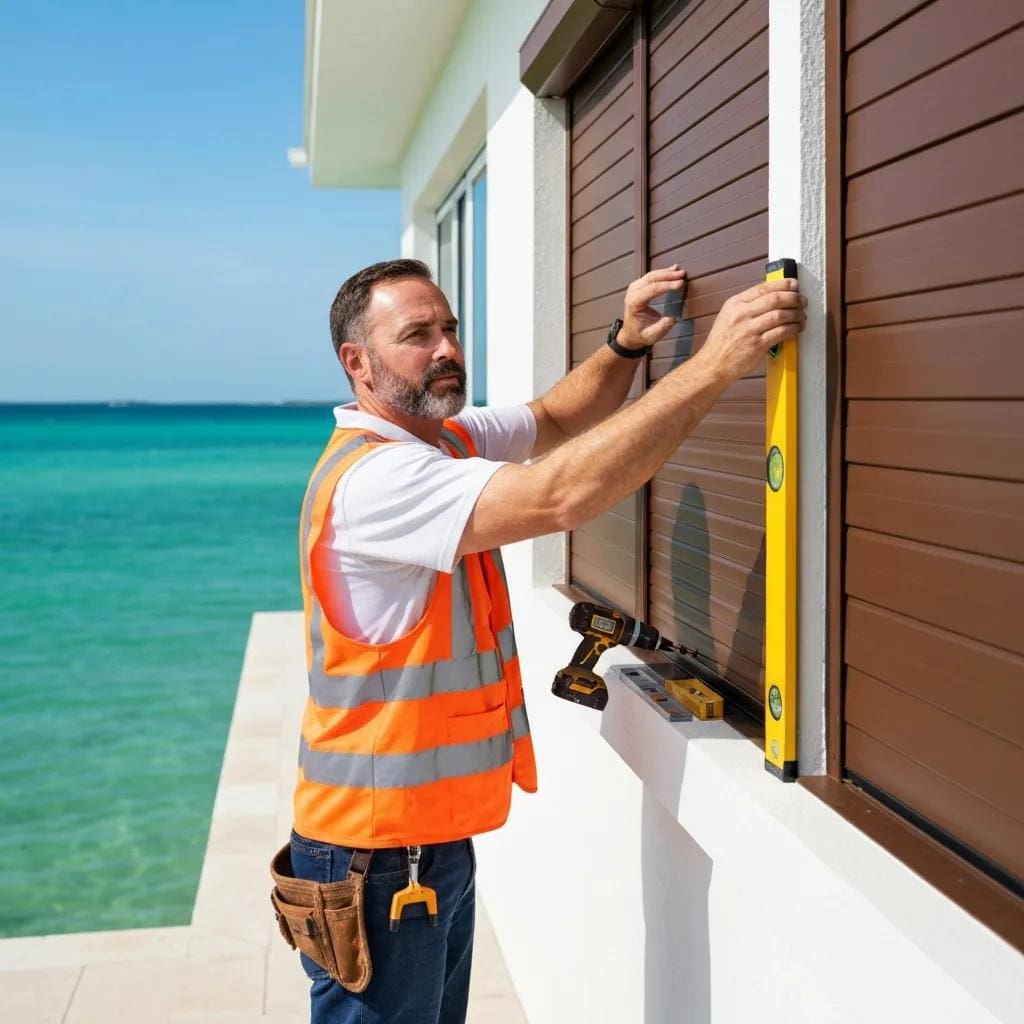
Certified technicians apply DPA specs on site: they verify substrate conditions, anchor into structural members, and use specified fasteners — typically 18-8 stainless steel for coastal corrosion resistance — to meet load and durability requirements. Technicians are trained in safe access techniques (including aerial-lift work when needed) and manage permit workflows so installations meet local building department rules and inspections. They also supply installation documentation that supports warranty claims and shows adherence to calculated design parameters. Those practices reduce failure risk and give homeowners confidence that their shutters will perform as engineered.
Impact performance is a key factor in how well hurricane shutters protect during severe weather.
Performance of Hurricane Shutters Under Impact
Impact testing evaluates how shutter panels withstand flying debris and repeated pressure cycles. Test matrices typically include steel and aluminum panels at different thicknesses, impacted by representative projectiles and subjected to cyclic pressure to simulate storm conditions and assess durability.
American Hurricane Shutters provides local installation and permitting support as a licensed contractor; our technicians are trained in safe installation practices, and we offer warranty and permit-handling assistance to simplify compliance and give homeowners added peace of mind.
- Measure precisely: Verify substrate and opening geometry before fabrication so the shutter aligns with the DPA.
- Anchor to structure: Fasten into structural members rather than relying on cladding for load transfer.
- Document installation: Keep records that verify compliance and support warranty or insurance needs.
Following these steps connects engineering to field work so shutters perform when they’re needed most.
Frequently Asked Questions
What are the maintenance requirements for roll-down hurricane shutters?
Regular inspection and cleaning keep roll-down shutters working reliably. Check for corrosion (especially in coastal areas), clear debris from tracks and slats, and lubricate moving parts like motors and guide tracks as recommended. Test operation periodically — and especially before storm season — to confirm smooth opening and closing. These simple routines extend service life and ensure the shutters will function when a storm arrives.
How do I choose between manual and motorized operation for my shutters?
Choice depends on convenience, budget, and opening size. Manual systems are economical and dependable without electrical reliance, ideal for smaller or seldom-used shutters. Motorized systems add ease for large, multiple, or hard-to-reach openings and support remote control or automation. Consider how often you’ll operate the shutters, whether wiring is feasible, and whether you want integration with smart systems before deciding.
What is the typical lifespan of roll-down hurricane shutters?
Lifespan varies with materials, usage, and maintenance. Well-made marine-grade aluminum shutters can last 20 years or more with proper care; polycarbonate options may have a somewhat shorter service life due to potential UV effects. Regular cleaning and inspections significantly extend durability. Site conditions such as salt exposure and humidity also affect longevity, so choose materials that match your climate and maintenance plan.
Are there any local building codes I need to consider for installation?
Yes. Local codes set required wind-load ratings, materials, and installation practices. Consult your local building department or a certified installer to understand rules in your area and obtain necessary permits before installation. Following code requirements not only keeps you compliant but also improves the shutter’s effectiveness during severe weather.
Can roll-down hurricane shutters be installed on existing windows?
Yes. Roll-down shutters can be retrofitted to existing windows, though the installation approach depends on window type and structure. A professional installer will evaluate compatibility, suggest mounting options, and recommend reinforcement if needed to meet wind-load requirements. Retrofitting may require adjustments to frames or added structural anchors to ensure a safe, reliable installation.
What are the energy efficiency benefits of roll-down hurricane shutters?
Closed roll-down shutters add a layer of insulation and reduce heat transfer, which can lower heating and cooling demand. They also block direct sunlight, reducing glare and protecting interior surfaces from UV damage. In extreme weather, shutters help maintain indoor temperatures more steadily, which can translate to energy savings over time.
How do I ensure my shutters are properly installed for maximum effectiveness?
Use certified professionals who understand local codes and perform design pressure analysis. Proper installation includes verifying substrate conditions, using appropriate fasteners anchored into structure, and following manufacturer specs. Make sure necessary permits are pulled and keep post-installation maintenance checks to catch issues early so shutters perform reliably when you need them.
Conclusion
Customizing roll-down hurricane shutters improves protection and helps them integrate with your home’s design. By understanding options — from materials and slat profiles to operation types and housings — you can choose a solution that fits your needs and local regulations. For a tailored system that balances performance and appearance, contact a professional installer. Explore our customizable shutter options to find the best fit for your home.