
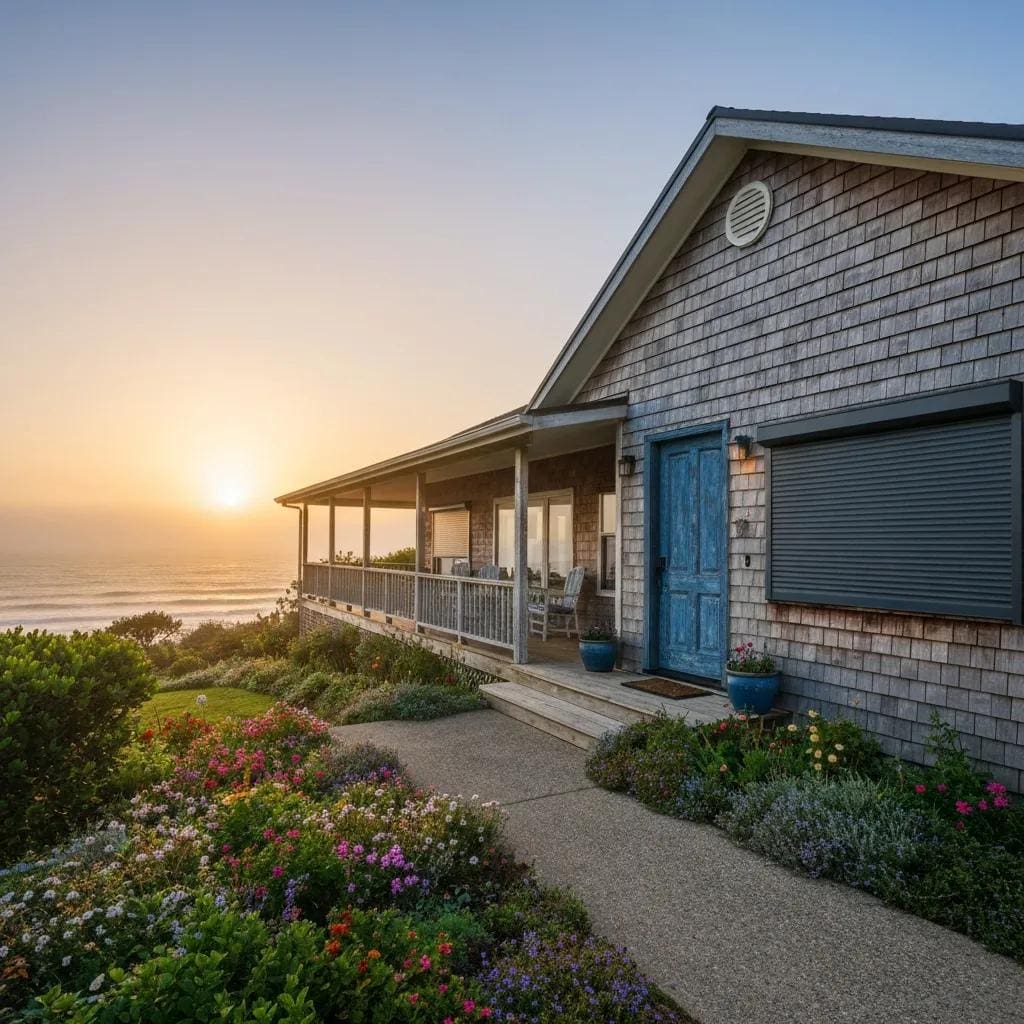
Choosing the Best Roll-Down Shutters: Practical Guidance for Coastal Carolina Homeowners
Roll-down shutters are a proven way to protect coastal Carolina homes from hurricanes, salt air, and everyday security risks. They combine impact resistance, wind-load performance, and daily convenience to keep windows and openings secure. This guide walks you through how roll-down shutters work, the pros and cons of common materials and control types, and the installation, permitting, cost, and maintenance issues specific to North and South Carolina coastlines. You’ll get practical comparisons — for example, marine‑grade aluminum versus steel or polycarbonate — plus installation steps that usually trigger permits, typical price ranges, financing options, and seasonal maintenance routines to extend service life in salt-air conditions. We also compare roll-down shutters with other shutter styles and answer common buyer questions, and we include local supplier context for homeowners who want a free estimate or to try an online cost calculator. Read on for clear checklists, side-by-side comparisons, and regional considerations for coastal properties.
What Are Roll-Down Hurricane Shutters and How Do They Protect Coastal Homes?
Roll-down hurricane shutters unroll from a compact housing and lock into side tracks to form a continuous, impact-resistant barrier over windows and openings. The slat-and-track assembly spreads wind loads across the opening and into the structure, helping prevent glass failure and limiting sudden pressure changes that can lead to roof or structural damage. For coastal homes, that means a much lower risk of wind- or water-driven entry during hurricanes and tropical storms — and an added deterrent against break‑ins. Knowing how the system works makes it clear why material choice, anchor details, and certified testing matter for coastal installations, and why professional installation with rated components is important for code compliance and insurance credits.
Roll-down shutters give coastal homeowners several immediate benefits:
- Defend against windborne debris and shattered glass during storms.
- Reduce internal pressure spikes that can contribute to roof uplift and structural damage.
- Provide improved security and privacy when doors and windows are closed.
Those protections guide decisions about materials and operation type — topics we cover next, including manual versus motorized systems and coastal rating requirements.
How Do Roll-Down Shutters Work? Manual vs. Motorized Operation Explained
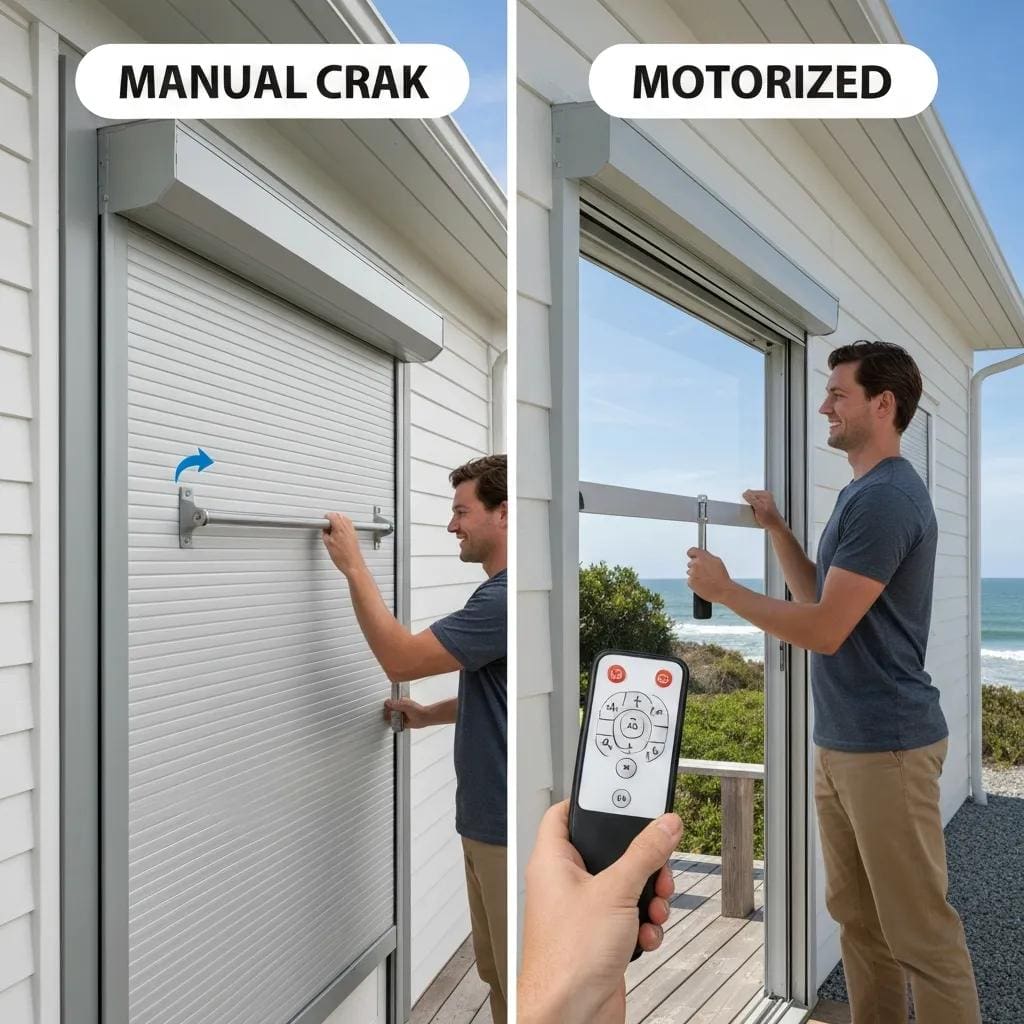
Roll-down shutters use a slatted curtain that rolls into a housing and runs in side tracks. You can operate them with a manual crank or with an electric motor that works with wall switches, remotes, or smart-home systems. Manual gearboxes are simple and generally lower maintenance, while motorized units add speed, convenience, and automation — at the cost of wiring, occasional motor servicing, and sometimes backup power. Many motorized systems include a manual override or battery backup so you can operate them during power outages, and they can be tied to storm sensors or timers to close automatically. Choose manual if you want lower upfront cost and simplicity; choose motorized if speed, accessibility, and automation are priorities.
Operation choice affects both installation cost and future maintenance, and it ties directly to material and mounting decisions covered later.
Why Are Roll-Down Shutters Important for Hurricane Protection in NC and SC?
Coastal North and South Carolina face higher exposure to hurricanes and windborne debris, so rated protective systems are a frontline defense for glazing and openings. Rated roll-down shutters are tested for impact and cyclic wind-loads and, when installed correctly, lower the chance of catastrophic water intrusion and progressive structural damage. Salt air accelerates corrosion, so coastal installations should use corrosion-resistant materials and stainless fasteners to maintain long-term performance. Choosing rated shutters and following local permitting and inspection rules not only improves safety but can also help you qualify for wind-mitigation insurance benefits; the sections below dive into those material and code details.
Key Benefits: Security, Energy Savings, and Noise Reduction
Roll-down shutters do more than stop debris — they also boost security, improve energy performance, and reduce exterior noise. As a physical barrier they deter forced entry and block sight lines; as an added layer over windows they help cut solar heat gain and create an insulating air pocket; and as a sealed assembly they damp exterior sound. Those combined benefits can enhance comfort and reduce HVAC runtime on hot, sunny days. Understanding these grouped advantages helps homeowners compare shutters to alternatives like storm panels or screens.
The main benefit categories are:
- Security and privacy: A durable, lockable barrier that limits break‑ins and visibility into the home.
- Energy efficiency: Reduced solar heat gain and an extra insulating layer that can lower cooling loads.
- Noise reduction: The shutter assembly and tight fit cut street and wind noise for better indoor comfort.
Each category affects product selection and installation choices; the next subsections explain the security, thermal, and acoustic mechanics in more detail and link them to material and operation options.
How Do Roll-Down Shutters Improve Security and Privacy?
Closed roll-down shutters create a continuous, lockable barrier that raises the physical effort required for forced entry and discourages opportunistic theft. Secure side tracks and certified locks resist prying and tampering, and opaque shutters conceal valuables and occupancy patterns — a real benefit for seasonal or vacation properties. For privacy, shutters give you blackout control and instant visual privacy. These security features depend on material strength, anchorage design, and proper locking hardware.
Security considerations naturally lead to insulation and acoustic choices, which we cover next for homeowners focused on comfort.
How Do Roll-Down Shutters Help with Energy and Noise?
Shutters block direct sun, reduce conductive heat transfer through glass, and create an air gap that lowers thermal exchange — all of which can cut cooling loads in warm coastal climates. Well-sealed housings and tracks limit air leaks, and insulated slats add thermal resistance. On the acoustic side, shutters reflect and interrupt sound waves while the slat-and-track assembly reduces vibration, often yielding noticeable reductions in street and wind noise. These combined benefits make shutters an attractive value for homes in noisy or sun-exposed locations.
Performance goals like those above will influence material choices and optional upgrades discussed in the following section.
Choosing the Best Roll-Down Shutters: Materials, Features, and Custom Options
Picking the right shutters means balancing coastal durability, impact performance, weight, look, and lifecycle maintenance. Material affects corrosion resistance and impact behavior; operation type affects convenience and service needs; and housings, colors, and integration options determine how the system fits your home’s style. Evaluate trade-offs among marine-grade aluminum, steel, and polycarbonate, consider motorization and smart controls, and plan for coatings and stainless fasteners that resist salt corrosion. The table below summarizes common materials and how they hold up on the coast.
Common materials and their trade-offs for coastal applications:
That comparison explains why marine-grade aluminum with stainless fasteners is a common coastal recommendation. The subsections that follow unpack material details and the feature choices you’ll want for Carolina properties.
Which Materials Work Best on the Coast: Aluminum, Steel, or Polycarbonate?
Marine-grade aluminum is often the best balance of corrosion resistance, light weight, and manageable upkeep for coastal roll-down shutters — especially when paired with 18-8 stainless fasteners to limit galvanic corrosion. Steel delivers higher stiffness and impact resistance but adds significant weight and may increase labor and corrosion‑protection needs. Polycarbonate can be useful where you want light transmission, but it requires UV‑stable formulations and closer inspection for discoloration in full sun. Match material choice to local wind exposure, mounting substrate, and how much maintenance you’re willing to do; these trade-offs shape cost and expected service life.
Material choice then informs operation and custom feature decisions, including motorization and smart-home compatibility.
What Operation Types and Custom Features Should You Consider?
Operation choices range from simple manual cranks to fully motorized systems with wall switches, remotes, and smart-home integration. Motorized shutters deploy quickly and can tie into automated sensors, while manual systems are lower-cost and easier to maintain. Useful custom options include insulated slats, battery backup for motorized units, manual overrides, color-matched housings, and durable powder-coat finishes that resist salt corrosion. Decide which features matter most: budget and simplicity point to manual setups; convenience, accessibility, and automation point to motorized, smart-ready systems with backup power.
These choices affect installation complexity and permitting — topics we cover next.
The Installation Process and How Local Building Codes Affect It
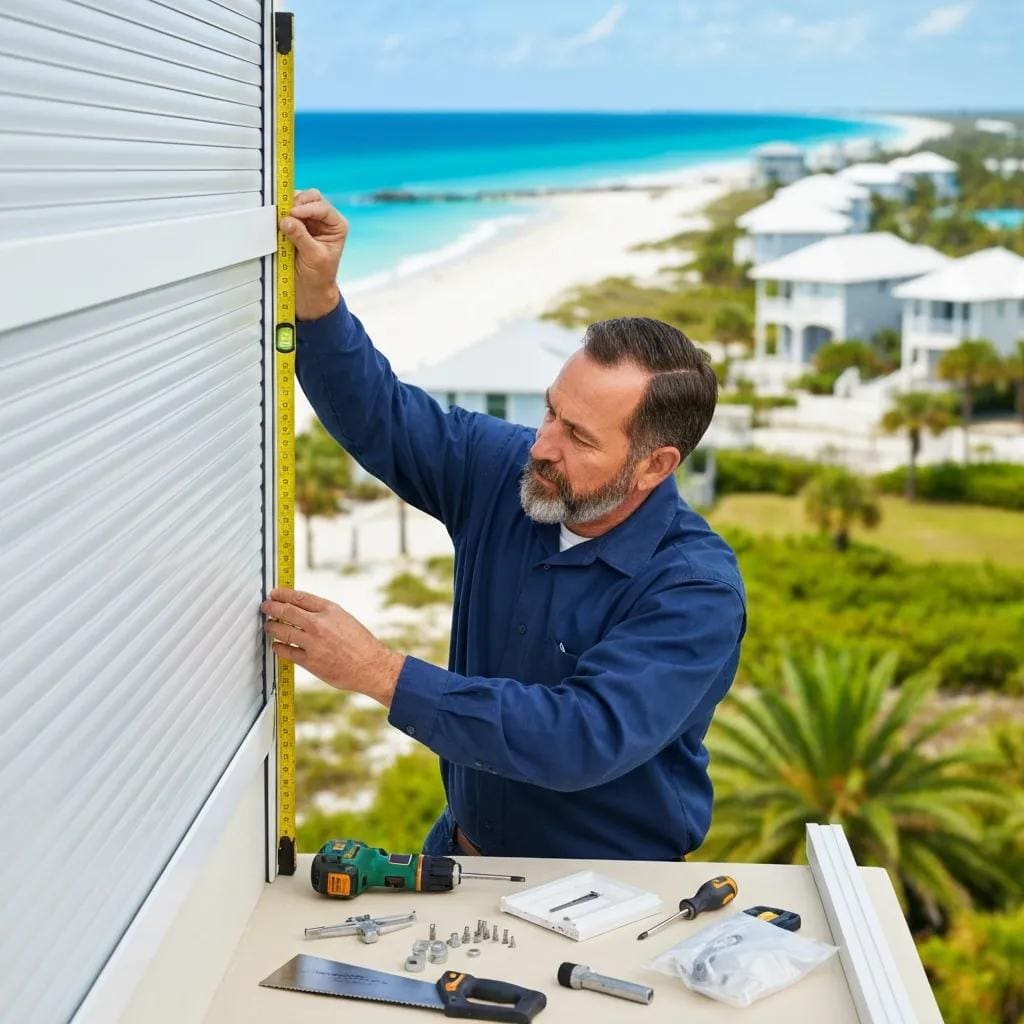
Professional installation starts with a site survey and measurements, moves through custom design or prefabrication, and finishes with installation, commissioning, and inspection. Local codes and permit rules in NC and SC influence required documentation, product approvals, and anchorage details. Proper installs verify substrate capacity, specify rated anchorage hardware, and — for larger openings — include pressure analysis so the system performs to its tested rating. Permits are commonly required for permanent hurricane protection, and inspectors often request product approvals and installation records for insurance credits. Working with a vendor who knows local code requirements reduces the chance of failed inspections and helps ensure the system delivers its rated protection.
Below is a concise installation-step table showing who typically handles each phase and the usual timeframes and permitting needs.
Those steps explain why experienced local installers are often recommended. The following section breaks down the sequence in homeowner-friendly terms and highlights how NC and SC permit differences can affect timing and paperwork.
What Are the Steps for Professional Roll-Down Shutter Installation in Coastal Carolina?
A typical installation begins with a detailed site survey to measure openings and assess mounting surfaces, followed by a custom design, any required pressure analysis for rated openings, and a written estimate listing materials and anchor details. After you approve the design, shutters are fabricated or prepared and shipped to the site. Certified installers then mount housings, secure tracks, anchor to the structure with corrosion-resistant fasteners, and test deployment and locks. For motorized units, electrical work and commissioning are completed before scheduling local inspections and sign-off. Expect coordination between the installer and local permitting offices, and ask for product test reports and installation documentation to keep with your records.
How Do NC and SC Building Codes and Permits Affect Your Installation?
Many North and South Carolina municipalities require permits for permanent hurricane protection and commonly request product approvals, installation details, and engineering or pressure analysis for larger openings to confirm wind-load compliance. Permit triggers vary, but permanent attachments that change the building envelope generally need approval; removable panels may follow different rules. Documentation usually includes product test certifications, installation method descriptions, and fastener specs showing rated performance. Because enforcement varies by locality, a regional installer familiar with local permit processes can simplify submissions and help you qualify for insurance wind-mitigation credits.
How Much Do Motorized and Manual Roll-Down Shutters Cost? Pricing and Financing
Shutter pricing depends on material, size, motorization, and installation complexity. Costs are often quoted per square foot or per unit, with motorized systems carrying an added premium for motors, wiring, and controls. Major cost drivers include opening size and shape, material choice (marine-grade aluminum vs heavier steel), mounting conditions, and any custom housings or required pressure analysis. Financing options — contractor plans or third-party loans — are commonly available, and documented rated systems may qualify for insurance wind-mitigation discounts. Use a cost estimator to model scenarios and get a free on-site estimate for precise pricing tied to your property.
Typical price bands and financing notes for manual versus motorized systems:
These ranges are illustrative. Homeowners should try our cost calculator and request a free, no-obligation estimate for numbers based on actual window sizes, materials, and control options. Below we outline the main factors that drive cost and how financing or insurance discounts can offset upfront expense.
What Factors Drive the Cost of Roll-Down Shutters?
Major cost factors include total protected square footage, material (marine-grade aluminum vs steel or polycarbonate), customization (color, insulation, special housings), motorization and smart controls, and installation complexity such as substrate reinforcement or hard-to-reach openings. Labor for precise anchorage, electrical work for motors, and any required pressure analysis or engineering also add to the bill. Permit fees and inspection costs vary by jurisdiction, and corrosion-mitigation measures like specialized coatings or stainless fasteners raise initial cost but reduce long-term upkeep. Knowing these drivers helps you prioritize features based on exposure, aesthetics, and lifecycle value.
Are Financing Options or Insurance Discounts Available?
Yes. Common financing includes contractor payment plans and third‑party consumer finance programs; availability depends on the installer and your credit. Many Southeast insurers offer wind-mitigation discounts for documented, rated hurricane protection systems — but you’ll typically need to provide product approvals and installation records. Collect product test reports, permit approvals, and installation documentation for your insurer; installers who supply these records can make the process easier. For exact financing offers and discount eligibility, request a detailed estimate from a local supplier.
How to Maintain and Repair Roll-Down Shutters for Coastal Longevity
Proper maintenance and prompt repairs keep shutters working in salt-air environments. A seasonal routine reduces corrosion risk and keeps motorized systems ready when storms arrive. Regular tasks include rinsing salt residue, inspecting and lubricating tracks and moving parts with corrosion-resistant lubricants, testing motors and manual overrides, and checking housings and fasteners for rust or loosening. Proactive upkeep lowers the chance of emergency repairs after a storm and extends system life. The checklist below is an easy seasonal routine and shows when to call a pro.
Seasonal maintenance checklist for coastal properties:
- Monthly visual check: Rinse off salt buildup, look for dents, and inspect seals.
- Quarterly lubrication: Apply corrosion-resistant lubricant to tracks, rollers, and moving parts.
- Biannual motor and function test: Cycle motorized systems and test manual overrides and battery backups.
- Post-storm inspection: Schedule a professional inspection after major storms or debris impact.
Following this routine prevents small problems from becoming major repairs and helps keep warranties valid; below are recommended maintenance practices and when to schedule professional service.
Best Maintenance Practices for Roll-Down Shutters
Rinse exposed components with fresh water to remove salt, use recommended corrosion-resistant lubricants on moving parts, check and tighten stainless fasteners annually, and operate both motorized and manual systems regularly to prevent seizing. Keep housings clear of debris and maintain weather seals to prevent moisture intrusion. Keep records of maintenance to support warranty claims and insurance documents, and consider a regular service contract with a local technician experienced in coastal installations — it reduces unexpected downtime and extends system life.
When Should You Schedule Repairs or Retrofits with Local Experts?
Contact a pro when you find fastener corrosion, motors that hesitate, damaged slats, misaligned tracks, or after storm damage — these issues can compromise rated performance. Retrofits (converting manual to motorized, replacing old housings, or adding insulated slats) make sense when components near end of life or when you want better convenience or efficiency. Choose a technician with coastal experience and documented work on rated installations so repairs restore rated performance and remain code-compliant. Regular inspections and maintenance contracts are the best way to balance uptime and long-term value.
Why Choose American Hurricane Shutters for Roll-Down Shutters in NC and SC?
American Hurricane Shutters is a local, insured installer serving coastal North and South Carolina with a focus on roll-down systems, installations, repairs, maintenance, and retrofits. We use coastal-grade materials like 6063‑T6 aluminum and 18‑8 stainless fasteners to fight salt-air corrosion, and we back work with a seven-year warranty to give homeowners confidence. Since 2003 we’ve served coastal customers with free, no-obligation estimates, emergency service options, and an online cost calculator that helps you scope projects before a site visit. For code-compliant installs, we perform custom pressure analysis, assist with permitting and inspections, and help document installations for potential insurance wind-mitigation credits.
Our regional experience and material standards simplify product selection and documentation — request a free estimate for an on-site evaluation and tailored cost assessment.
What Local Expertise and Quality Materials Set Us Apart?
We emphasize coastal-appropriate materials and service: corrosion-resistant 6063‑T6 marine-grade aluminum, 18‑8 stainless fasteners, trained installers, and a regional focus on the permit and inspection landscape. Our services include installation, repair, maintenance, and retrofits, plus emergency response when urgent repairs are needed. With free estimates, a cost tool, and a seven-year warranty, we help homeowners feel confident in their choices. We serve Wilmington, Myrtle Beach, Oak Island, Topsail, New Bern, Pawleys Island, and surrounding coastal communities with local code familiarity and permit navigation.
How Do Pressure Analysis, Code Compliance, and Warranty Support Help You?
Custom pressure analysis verifies that the chosen shutter layout meets the wind-load demands of a specific opening and guides anchor and slat selection so the system performs as tested. Code‑compliant installation reduces inspection problems and speeds permitting and insurance documentation. Our seven-year warranty provides post-installation protection and recourse for defects or premature failures. Together, analysis, compliance, and warranty protect your investment and can enable insurance discounts — which is why many homeowners prefer vendors who combine material expertise with documented testing and warranty coverage.
How Roll-Down Shutters Compare to Other Hurricane Shutter Types
Roll-down shutters differ from accordion and Bahama shutters in deployment speed, coverage, automation, and appearance. Roll-down systems offer continuous, sealed coverage and are easy to automate; accordion shutters are permanently mounted and fold into place for manual deployment, while Bahama shutters hinge at the top, offering shade and partial protection with a distinct look. Roll-down systems usually provide the highest impact resistance and fastest automated deployment, making them the preferred choice where maximum protection is needed. Cost, curb appeal, and retrofit feasibility still matter — each shutter type has situations where it’s the right fit.
How Do Roll-Down Shutters Compare to Accordion and Bahama Shutters?
Roll-down shutters form a continuous, sealed barrier and can be motorized for quick deployment, which suits high-risk coastal exposures. Accordion shutters attach to the opening sides and fold across — a simpler manual option with lower initial cost but less sealing against pressure changes. Bahama shutters provide shade and some protection but don’t typically offer a continuous rated seal like roll-down systems. Weigh protection level, appearance, and how often you’ll deploy the shutters when choosing among types.
Which Shutter Type Is Best for Coastal Carolina Homes?
For homeowners who prioritize maximum storm protection and wind-load performance, roll-down shutters are usually the best choice because they create a continuous, rated barrier and offer motorization for fast deployment. Accordion shutters can work well for owners who want a permanent manual solution with lower upfront cost, while Bahama shutters fit properties focused on shading and architectural style with moderate exposure. For historic houses or properties with strict design rules, less intrusive systems or custom housings can balance protection with appearance. Your final choice should reflect exposure, budget, and whether you want automation and corrosion-resistant materials.
Common Questions About Roll-Down Shutters
Homeowners often ask about lifespan, benefits, motorization value, noise reduction, and how quickly shutters can be deployed before a storm. The short answers below help you decide quickly and point you to local installers for precise, property-specific details.
What Are the Main Benefits of Roll-Down Hurricane Shutters?
Roll-down shutters deliver three core benefits: storm protection, security, and improved comfort. Storm protection comes from a continuous slat-and-track barrier that resists windborne debris and pressure changes. Security and privacy come from durable locks and opaque coverage that deter intruders and shield interiors. Environmental comfort improves through reduced solar heat gain and lower noise infiltration, which can cut HVAC runtime and improve indoor acoustics.
These points help you prioritize features when choosing materials and operation types.
How Long Do Roll-Down Shutters Typically Last?
Lifespan depends on material, coastal exposure, and maintenance. Properly installed and maintained marine-grade aluminum systems can last for decades; steel and polycarbonate have different profiles. Regular maintenance — rinsing salt residue, lubricating tracks, and checking fasteners — extends service life. Expect periodic repairs or component replacements (motors, seals) over a multi-decade life cycle, and rely on warranty coverage to manage unexpected issues.
Knowing expected lifespan helps with budgeting for maintenance and future retrofits.
Do Roll-Down Shutters Reduce Noise and Provide Privacy?
Yes. Roll-down shutters reduce external noise by disrupting sound transmission through windows and adding an insulating air layer, often producing noticeable indoor improvements. They also provide full privacy and blackout conditions when closed. These benefits make shutters a strong choice for homes near busy roads, waterfronts, or rental properties requiring privacy and noise control.
Acoustic and privacy goals often influence choices like insulated or thicker slat profiles.
Are Motorized Roll-Down Shutters Worth the Investment?
Motorized shutters are often worth the extra cost for homeowners who want rapid deployment, accessibility, and smart-home integration — especially in high-risk coastal zones or for people who can’t easily use a manual crank. Motorization shortens deployment from minutes to seconds, supports automation with weather sensors, and enables remote operation when you’re away. The trade-offs are higher upfront cost and occasional motor maintenance, but many homeowners find the convenience and improved response time justify the investment.
Deployment speed and automation also affect installation and financing choices discussed earlier.
How Quickly Can Roll-Down Shutters Be Installed After a Storm Warning?
If shutters are already installed, you can close them in minutes using manual or motorized controls. New installations, however, require site surveys, fabrication, and permits and usually take days to weeks depending on complexity and local permit timelines. Emergency repair teams can restore damaged installed systems quickly after a storm, but full new installs aren’t immediate solutions for an imminent storm. Install shutters well before hurricane season for reliable protection.
For accurate scheduling and emergency options, request a free estimate or site survey from a local installer to confirm lead times and retrofit possibilities.
Frequently Asked Questions
What are the maintenance requirements for roll-down shutters in coastal environments?
Because of salt exposure, coastal shutters need regular care. Rinse salt monthly, lubricate tracks and moving parts quarterly, and test motorized systems twice a year. After major storms, schedule a professional inspection. Following a seasonal checklist prevents corrosion and keeps shutters working reliably while protecting warranties.
How do I choose the right size for my roll-down shutters?
Measure each window or opening accurately for height and width so shutters fully cover the opening when deployed. It’s best to have a professional installer confirm measurements and recommend the correct fit and mounting approach based on local codes and your home’s construction.
Can roll-down shutters be customized for aesthetics?
Yes. Manufacturers offer colors, finishes, and housing styles to match your home’s look. You can also choose insulated slats or decorative options to balance performance and curb appeal. Talk with your installer about color matching and finish options to keep the home’s style intact.
What should I do if my roll-down shutters are damaged during a storm?
As soon as it’s safe, assess damage. Small issues like misalignment or dents might be adjustable, but broken slats, damaged motors, or compromised tracks require professional repair to restore rated performance and code compliance. Contact a certified installer to evaluate and fix significant damage.
Are there any insurance benefits for installing roll-down shutters?
Yes. Many insurance companies offer wind-mitigation discounts for homes with rated roll-down shutters. To qualify you’ll typically need product approvals and installation documentation. Check with your insurer about specific requirements and provide product test reports, permits, and installation records to support any discount claims.
How do roll-down shutters compare to other types of hurricane protection?
Roll-down shutters generally offer the highest level of continuous coverage and automation compared with accordion or Bahama shutters. Accordion shutters are simple and permanent but less automated; Bahama shutters add shade and style but don’t always provide the same continuous rated seal. Choose based on the protection level you need, desired appearance, and how often you’ll deploy the system.
What is the typical lifespan of roll-down shutters?
Lifespan varies by material and environment. Marine-grade aluminum systems, properly installed and maintained, often last several decades. Regular cleaning and lubrication extend service life; expect periodic component replacements and occasional repairs after severe weather. Warranties help manage unexpected issues.
Conclusion
Roll-down shutters give coastal Carolina homeowners strong storm protection, better security, and improved energy and acoustic comfort. By understanding materials, operation types, and the installation process — and by working with a local, code-savvy installer — you can choose a solution that fits your home and budget. Explore our selection, use the cost calculator, or request a free estimate to get a custom plan for your property. Protect your home before the next storm season — we’re here to help.