
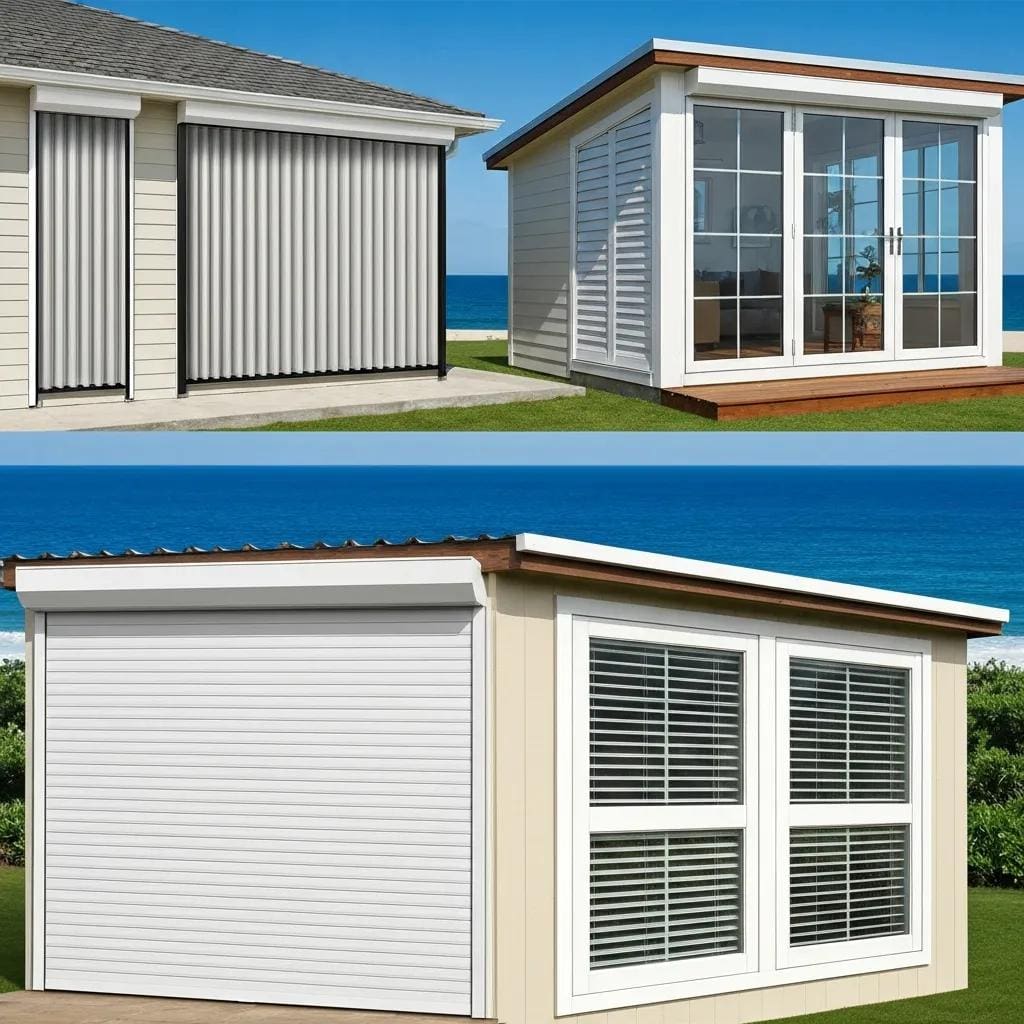
Best Hurricane Shutters for Coastal Homes: Types, Costs, Materials, and Installation
Hurricane shutters are the physical barriers that stop windborne debris and help keep pressure changes from damaging your home during a storm. For coastal homeowners who face recurring storm risk, picking the right system matters. This guide explains how common shutter types work, compares materials for salt‑air durability, breaks down realistic cost drivers and insurance considerations, and walks through professional installation and maintenance. We focus on real performance — design pressure ratings, manual versus motorized operation, and the trade‑offs between visibility, weight, and corrosion resistance. Read on to match shutter types (accordion, rolldown, colonial, Bahama, and screens) to your openings and budget, understand coastal corrosion management, and decide when to request a professional design‑pressure analysis and estimate. Local examples and technical guidance for NC/SC homeowners help you balance protection, appearance, and long‑term value.
What Are the Different Types of Hurricane Shutters and How Do They Protect Your Home?
Shutters protect glazing by absorbing or deflecting impact energy and by resisting uplift and lateral wind loads — which lowers the risk of broken glass and internal pressurization that can cause structural damage. Different shutter systems use different protection strategies: rigid panels stop debris, fabric or screens dissipate energy and block projectiles, and rolling or accordion systems deliver continuous coverage with quick deployment. The right choice depends on opening size, sightlines, light needs, and whether you want permanent or removable protection. Below we define the common systems and compare pros and cons so you can line up performance with exposure.
This section lists the most common hurricane shutter types with a one‑line note on how each protects an opening.
- Accordion Shutters — Permanently mounted vertical panels that fold open and lock to form a continuous, impact‑resistant barrier.
- Rolldown Shutters — Interlocking slats, motorized or manual, that roll into a headbox and create a solid shield for large openings.
- Colonial Shutters — Hinged panels that close over windows and fasten at fixed points to block impacts.
- Bahama Shutters — Top‑hinged louvers that provide shade day‑to‑day and frontal impact protection when closed.
- Hurricane Screens and Panels — High‑strength mesh or polycarbonate panels that stop debris while keeping views and airflow.
These systems cover most residential needs. The short comparison that follows helps you weigh aesthetics, cost, and coastal suitability.
What Are Accordion, Rolldown, Colonial, Bahama, and Hurricane Screen Shutters?
Accordion shutters use rigid, interlocking panels on tracks that slide and lock at the jamb — fast to deploy by hand and continuously protective when closed. Rolldown shutters use interlocking slats that retract into a headbox via motor or crank; they suit wide openings like sliding glass doors and can achieve high wind‑load ratings when anchored correctly. Colonial shutters are hinged and often chosen for curb appeal; they secure with bolts or latches and work well on many window sizes. Bahama shutters hinge at the top and double as shade devices while offering frontal protection when latched. Hurricane screens are engineered meshes or clear polycarbonate panels that catch or deflect debris; they’re lightweight and commonly used for lanais, patios, and large spans where visibility or airflow matters. Knowing these mechanisms helps you balance protection, appearance, and everyday use.
What Are the Pros and Cons of Each Hurricane Shutter Type?
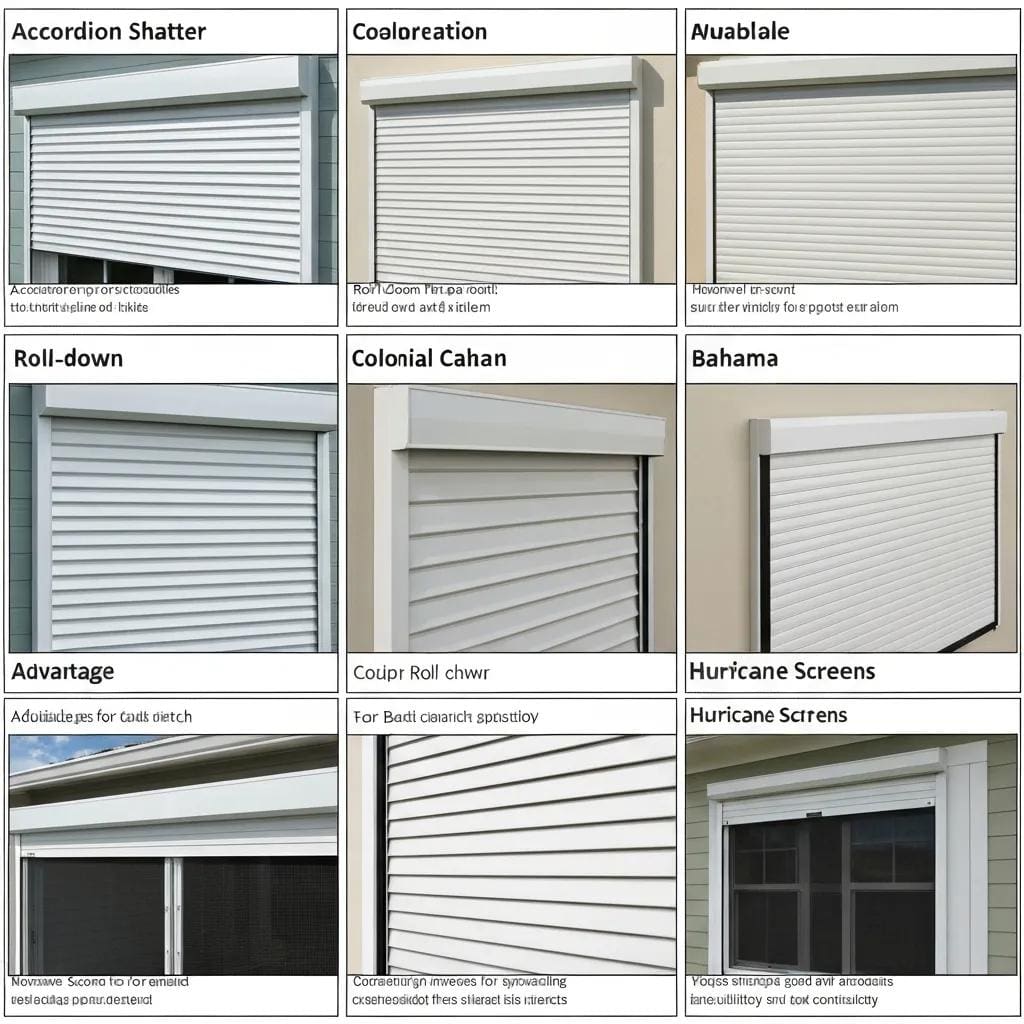
Every shutter type has trade‑offs — especially where salt corrosion and UV exposure speed wear. Accordion and rolldown shutters give permanent, ready‑to‑use protection and strong wind ratings, but they’re more visible and usually cost more than removable panels. Colonial and Bahama shutters boost curb appeal and work well for small‑to‑medium openings, but they need proper anchoring for high winds and can affect egress if not specified correctly. Hurricane screens and polycarbonate panels are lighter and maintain sightlines, but fabric systems can need more frequent inspection and replacement near salt water. Think about operation (manual vs. motorized), storage for removable panels, and how visible the system will be before you decide.
This quick table lays out attributes for side‑by‑side comparison.
How Do Hurricane Shutter Materials Compare for Durability and Coastal Protection?
Material choice controls corrosion resistance, strength‑to‑weight, light transmission, and maintenance — all critical for homes near salt water and strong sun. Marine‑grade aluminum with stainless fasteners performs well long term, polycarbonate delivers excellent impact resistance and clarity, and engineered fabrics cover large spans with less weight but can age faster under UV. Pick materials that avoid galvanic corrosion, meet design‑pressure requirements, and lower lifecycle cost. Below we explain why marine‑grade aluminum is a common coastal recommendation and then compare polycarbonate, fabric, and steel options.
Why Is Marine-Grade Aluminum Preferred for Coastal Hurricane Shutters?
Marine‑grade aluminum — commonly 6063‑T6 — strikes a practical balance of strength, extrudability, and corrosion resistance for shutter frames and slats in salt‑air conditions. It resists pitting and oxidation better than standard alloys, and when combined with corrosion‑resistant fasteners it reduces galvanic risks that can compromise anchors and tracks. Pairing extrusions with 18‑8 stainless steel fasteners helps prevent rust and keeps anchorage integrity after repeated exposure to humidity and salt. These material choices lower maintenance, extend service life, and help shutters meet design‑pressure requirements for coastal NC/SC homes where salt‑driven corrosion is a leading failure mode.
Next we look at alternatives that prioritize clarity, cost, or raw strength where aluminum isn’t the best fit.
How Do Polycarbonate, Fabric, and Steel Materials Differ in Performance and Cost?
Polycarbonate (often sold as Lexan) offers excellent impact resistance and high light transmission — a strong choice when visibility matters — but it’s typically costlier and needs UV‑stable formulations to avoid yellowing. Engineered storm mesh provides large‑span coverage at lower weight and price and is easy to store, though woven or coated fabrics can degrade faster under intense sun and salt. Steel panels deliver maximum strength and penetration resistance but are heavier and prone to rust unless properly coated; that weight can increase framing and hardware requirements. Weigh transparency, weight, long‑term corrosion resistance, and upfront cost against site exposure and budget when selecting materials.
The table below summarizes key attributes for coastal homeowners.
What Are the Typical Costs of Hurricane Shutters and How Can You Maximize Value?
Costs depend on shutter type, material, opening size, and installation complexity. As a rule, fabric and removable panels cost less per square foot, while motorized rolldown and polycarbonate systems sit at the higher end. Other cost drivers include motorization, multi‑story access, custom fabrication, permitting, and reinforcement to meet design‑pressure requirements. To get the best value, pursue wind mitigation credits, request a written design‑pressure analysis, and collect multiple free estimates that include permitting and warranty coverage.
How Much Do Different Hurricane Shutter Types Cost per Square Foot?
The ranges below reflect common regional pricing dynamics — they’re guidelines, not quotes. Fabric storm screens and removable aluminum panels usually start at lower per‑square‑foot rates, good for covering large expanses on a budget. Accordion and colonial shutters fall in the middle with durable extruded aluminum, while motorized rolldown and polycarbonate systems trend higher because of motors, headboxes, and precision fabrication. Accurate pricing requires measuring openings and accounting for multi‑story rigging or special anchoring; our formal estimate and cost calculator are useful for forecasting installed cost.
To protect value and offset upfront costs, follow these steps:
- Request free, on‑site estimates and a written design‑pressure analysis to ensure accurate quotes.
- Ask about permitting assistance so installations meet local codes without surprise fees.
- Document installations and product ratings to qualify for insurance wind‑mitigation discounts.
These actions reduce uncertainty and help you capture available savings while staying code‑compliant.
What Insurance Discounts and Financing Options Are Available for Hurricane Shutters?
Many insurers offer wind‑mitigation discounts when rated storm protection is installed. To claim credits you typically need product data, a design‑pressure analysis, and professional installation records. Financing varies by provider and may include payment plans or contractor‑arranged options that spread costs and accelerate ROI through insurance savings. When financing, prioritize systems that meet local wind‑load requirements and qualify for mitigation credits to maximize net value. Combining free estimates, permitting support, and well‑documented ratings is the best path to insurance discounts and sensible financing.
The short table below links common shutters and materials to cost tendencies, installation complexity, and insurance discount potential.
How Does the Hurricane Shutter Installation Process Work and Why Choose Professional Installation?
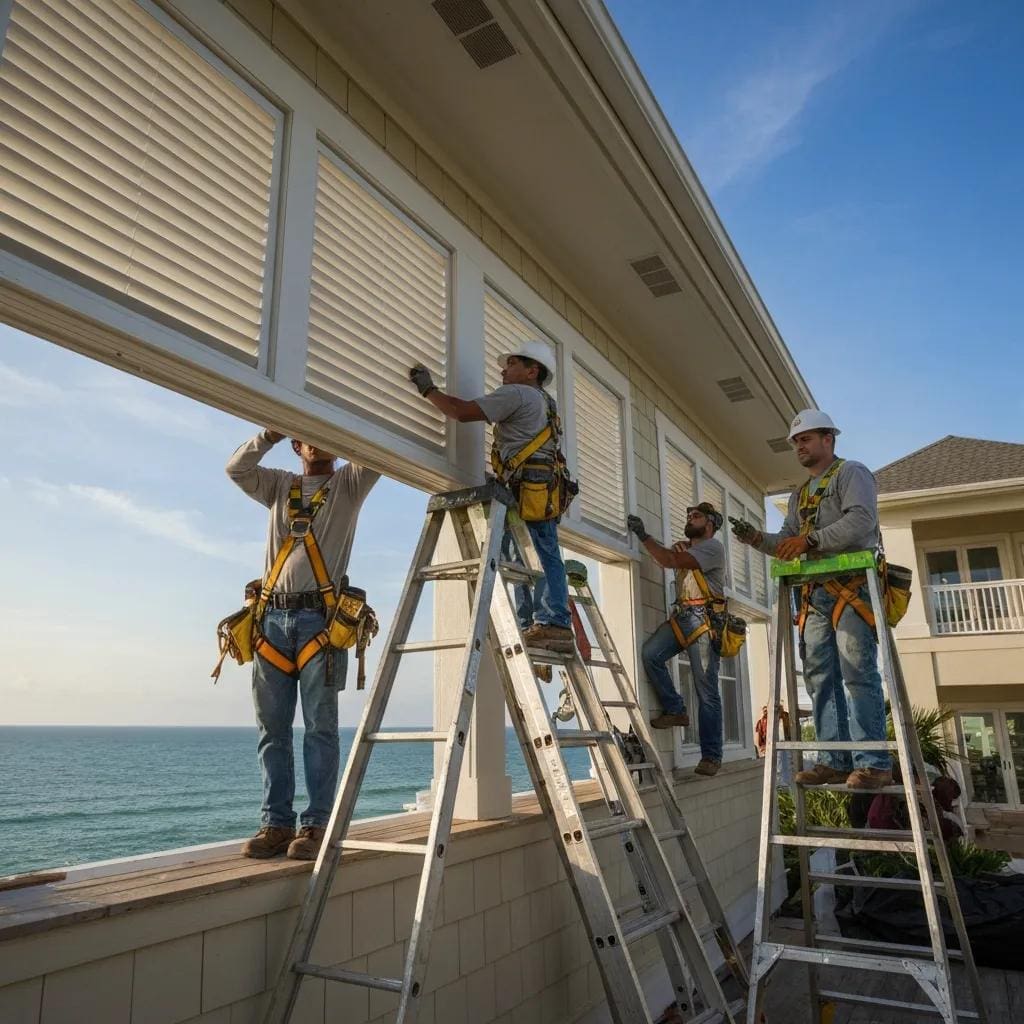
Professional installation ensures your shutters meet design pressures, local building codes, and wind‑mitigation documentation requirements — and it reduces safety risks on multi‑story homes. Proper installation starts with a site survey and design‑pressure analysis to define anchorage and reinforcement for each opening. After fabrication, installers mount, test, and inspect the system so wind‑load performance and operation are validated. Professional teams also handle permitting and typically offer warranties that protect homeowners from installation‑related issues.
What Is the Step-by-Step Process for Installing Hurricane Shutters?
Installations usually follow these stages to ensure performance and compliance: first, a site survey to capture measurements, exposures, and attachment conditions; second, a design‑pressure analysis to set anchor and product specs; third, fabrication/customization to match dimensions; fourth, mounting and anchoring to secure the system; and finally, testing, permitting sign‑off, and handover. Each step reduces retrofit surprises and helps ensure the shutter meets its rated performance. Collect the installation documentation at handover to support insurance credits and future maintenance.
Homeowners often ask whether to DIY or hire pros — compare the differences below.
What Are the Benefits of Professional Installation vs. DIY for Storm Protection?
Pros bring certified safety training, permitting experience, and warranty‑backed workmanship that DIY installs rarely provide — important on multi‑story or high‑exposure sites. Certified crews know how to anchor to design‑pressure specs and have the equipment for safe work at height; technicians with OSHA‑30 and aerial‑lift training reduce site risk. Warranties (multi‑year work guarantees) protect you from installation defects, and pros usually handle permitting and provide the documentation insurers require for credits. For reliable, documented protection, professional installation is the sensible choice.
How Should You Maintain Hurricane Shutters to Ensure Long-Term Protection?
Routine maintenance keeps shutters working, extends service life, and prevents corrosion‑related failures in coastal settings. Different materials need different care: aluminum systems require periodic washing and fastener checks; polycarbonate needs UV‑safe cleaners and inspections for micro‑cracks; fabric systems benefit from tension checks and prompt replacement when coatings fail. A basic maintenance routine includes cleaning, lubricating moving parts, checking stainless fasteners, and verifying motors where present. Regular upkeep also preserves documentation and ratings for insurance purposes and ensures shutters deploy when you need them.
What Are the Essential Maintenance Tips for Aluminum and Other Shutter Materials?
For aluminum shutters: rinse with fresh water and a mild detergent at least twice a year, inspect 18‑8 stainless fasteners for loosening or electrochemical corrosion, and lubricate tracks and locks. For polycarbonate: rinse gently, use non‑abrasive, UV‑safe cleaners, and check annually for discoloration or crazing that can affect impact performance. For fabric storm screens: look for tears, re‑tension fasteners, and replace panels when coatings show failure. A little preventive care cuts emergency repairs and keeps your protection ready.
Here’s a short, actionable maintenance checklist:
- Inspect seals, fasteners, and mounting points every six months.
- Wash surfaces with fresh water and suitable cleaners to remove salt deposits.
- Lubricate tracks, hinges, and motor mechanisms once a year.
- Test motorized units and manual locks before hurricane season.
These steps help you spot problems early and keep rated performance intact. Below are common troubleshooting tips.
How Can You Troubleshoot Common Hurricane Shutter Issues?
Typical problems include sticking or misalignment, motor failures in rolldown units, and fastener loosening from cyclical loading and corrosion. For sticking shutters, check tracks for debris or corrosion, clean and lubricate, and verify jamb alignment — small adjustments often restore smooth operation. For motorized systems, confirm power, reset breakers, and follow the motor maker’s reset procedure before calling a technician. If fasteners show corrosion or anchors pull, stop using the shutter and schedule a professional inspection to restore anchorage integrity. Timely troubleshooting preserves safety and avoids costly emergency replacements.
What Do Customers Say About the Best Rated Hurricane Shutters for Coastal Homes?
Customer feedback consistently highlights responsiveness, corrosion‑resistant materials, and installation quality. Coastal NC/SC homeowners prioritize stainless hardware and dependable deployment. Reviews often mention quick emergency service, help with permitting, and complete documentation for insurers as decisive value adds. Successful projects — marine‑grade aluminum or motorized rolldown systems that protect glazing through high winds — build homeowner confidence and show the practical value of rated shutters. These themes help buyers evaluate installers by materials, warranty terms, and local permitting experience.
What Are the Top Customer Testimonials and Ratings for American Hurricane Shutters?
Customers praise installers who combine coastal experience with corrosion‑resistant materials and clear documentation. American Hurricane Shutters is described as a local, insured contractor that favors permanent, reliable protection over temporary fixes; reviewers note free estimates and permitting help as useful services. The company’s use of 6063‑T6 marine‑grade aluminum, 18‑8 stainless steel fasteners, custom design‑pressure analysis, OSHA‑30 and aerial lift–trained technicians, emergency service, and a 7‑year warranty are commonly cited as differentiators that align with homeowner priorities for compliance and long‑term performance.
How Have Past Projects Demonstrated Effective Home Protection with Our Shutters?
Project snapshots typically show a vulnerable opening and a tailored solution that matched shutter type and material to exposure, resulting in preserved glazing and continued occupancy after storms. Examples include motorized rolldown systems for wide sliding doors to deliver rated protection and marine‑grade aluminum accordion or colonial shutters where durability and visual fit mattered. Custom design‑pressure analysis combined with corrosion‑resistant hardware ensures installations meet local wind loads and reduce post‑storm maintenance. These outcomes demonstrate how the right product and professional installation produce durable protection for coastal homes.
This completes the guide and leaves you ready to evaluate shutter options, request precise estimates, and prioritize long‑term coastal performance.
Frequently Asked Questions
1. How do I choose the right hurricane shutter type for my home?
Start by assessing opening size, desired look, and whether you want permanent or removable protection. Consider impact resistance, ease of use (manual vs. motorized), and how much light and visibility you want to keep. Factor in your budget and local building codes, and consult a professional for a recommendation tailored to your home’s exposure.
2. What maintenance is required for hurricane shutters?
Regular maintenance keeps shutters ready and extends their life. For aluminum, rinse with fresh water and mild detergent twice a year and check fasteners. Inspect polycarbonate annually for UV damage and clean with non‑abrasive products. Check fabric screens for tears and tension. A scheduled inspection and simple upkeep prevent most problems.
3. Can I install hurricane shutters myself, or should I hire a professional?
Some removable systems are DIY‑friendly, but professional installation is usually safer and more reliable, especially on multi‑story homes or high‑exposure sites. Pros handle anchoring to design pressures, permits, warranties, and documentation insurers require — all important for long‑term protection.
4. What factors influence the cost of hurricane shutters?
Price varies with shutter type, material, opening size, and installation complexity. Motorized systems and custom fabrication raise costs, and multi‑story work or required reinforcement adds labor. Get multiple quotes and a written design‑pressure analysis to understand actual installed cost.
5. How can I maximize insurance discounts for hurricane shutters?
To secure wind‑mitigation discounts, use rated products installed to code and keep documentation: rated product sheets, a design‑pressure analysis, and installation records. Talk to your insurer about their specific requirements and keep maintenance records to maintain eligibility.
6. What are the common issues with hurricane shutters, and how can I troubleshoot them?
Common issues include sticking or misalignment, motor faults, and corroded fasteners. Clean and lubricate tracks for sticking shutters, check power and reset breakers for motor issues, and stop use and call a pro if anchors or fasteners show corrosion. Regular inspections catch most problems early.
7. What should I look for in customer reviews for hurricane shutter providers?
Look for comments on material quality, installation expertise, and responsiveness. Positive reviews mention corrosion‑resistant hardware, warranty support, help with permitting, and performance during storms. Local experience and good documentation are strong indicators of a reliable installer.
Conclusion
Choosing the right hurricane shutters protects your home and preserves curb appeal. By understanding types, materials, costs, and professional installation steps, you can make informed decisions that deliver long‑term durability and code compliance. Don’t wait for the next storm — take proactive steps now. Explore our shutter options and request a free estimate to get started.