

Accordion Shutter Maintenance Guide for Homeowners — Cleaning, Lubrication & Inspection Schedule
Accordion shutters are a mechanical hurricane protection system made of interlocking slats and tracks that deploy quickly to shield windows and doors from wind‑borne debris. Routine maintenance keeps those parts moving—preventing stuck tracks, corroded fasteners, and seized hinges that can lead to failure when you need protection most. In this guide we walk homeowners through a practical maintenance schedule that balances DIY tasks with professional inspections to reduce emergency repairs and protect warranty coverage. You’ll learn why cleaning, lubrication, and inspection matter, which tasks to do monthly, quarterly, and annually, step‑by‑step cleaning and lubrication methods, a full inspection checklist with troubleshooting guidance, and coastal‑specific tips for North and South Carolina shorelines. We focus on clear, usable steps—tools, products, and timing—so your shutters stay ready and you know when to call a pro for service or a Design Pressure Analysis.
Why regular accordion shutter maintenance matters for homeowners
Keeping shutters maintained means they’ll deploy and lock as designed by reducing friction, slowing corrosion, and keeping hardware sound. Cleaning removes abrasive salt and sand that wear tracks and rollers, lubrication lowers friction at hinges and wheels, and inspections catch loose anchors or bent slats before they become safety issues. Together these steps preserve structural performance and protect your home. Regular care also cuts lifetime costs by preventing small problems from turning into major repairs, and documented service often helps keep warranties valid. Understanding these benefits makes it easier to prioritize simple recurring tasks and know when professional help is needed.
Benefits of routine cleaning, lubrication, and inspection
Routine cleaning, lubrication, and inspection deliver predictable performance through straightforward preventive work that lowers risk and cost. Removing salt and grit protects finishes and seals; a proper lubricant on moving parts reduces wear and speeds deployment, increasing the chance shutters work in an emergency. Inspections find loose fasteners, misalignment, and early corrosion so you can plan repairs instead of reacting under pressure—this reduces replacement frequency and emergency contractor bills. These habits also make daily use easier—shutters open and close smoothly—so homeowners are more likely to keep up with maintenance, which in turn protects warranty coverage and extends service life.
How maintenance extends shutter life and preserves warranty
Maintenance protects every part of the system—tracks, hinges, locks, and fasteners—from the accelerated wear common in coastal and humid environments. Regular cleaning and lubrication slow electrochemical corrosion and limit abrasive damage to seals and tracks, keeping slats aligned and delaying replacements. Many manufacturers and installers expect documented annual inspections as a warranty condition; professional checks typically include torque testing of anchors and verification of Design Pressure Analysis where required. Keeping records of DIY checks and professional visits not only lengthens useful life but also provides the documentation you’ll need if warranty service is requested.
Recommended accordion shutter maintenance schedule for homeowners
A simple calendar—monthly, quarterly/bi‑annual, annual, and after storms—helps homeowners plan and split work between DIY care and pro service. Monthly checks are fast visual and operational tests to spot obvious problems early. Quarterly or seasonal work (especially before and after hurricane season) involves deeper cleaning and lubrication to remove salt buildup and protect moving parts. Annual service is when a professional should perform torque checks, inspect anchors, and do a full system review. After any significant storm, inspect immediately for impact damage or hidden failures. This cadence balances homeowner effort with the technical work that requires trained technicians.
Quick checklist for scheduled maintenance:
- Monthly: Cycle shutters and do a visual check for debris and obvious wear.
- Quarterly / Pre‑Season: Deep clean slats and tracks, apply silicone lubricant to moving parts, and inspect for salt corrosion.
- Annual: Schedule a professional inspection for fastener torque checks, anchor review, and documentation for warranty records.
These intervals prioritize early detection so small issues get fixed before weather events make them worse. The table below summarizes who should handle each task and how often.
This schedule helps homeowners plan time efficiently and shows when to hand work over to a professional to protect warranty and structural integrity. To learn more about hurricane protection options or get a site estimate, try our free estimate and cost calculator. American Hurricane Shutters is available to support homeowners with professional inspections and service when needed.
Monthly tasks to keep shutters running smoothly
Monthly checks are quick—about 10–20 minutes per opening—and prevent many common issues when done consistently. Cycle the shutter from stored to deployed to confirm smooth travel and positive lock engagement. Inspect tracks for sand, leaves, or other debris that can jam rollers, and scan locks and fasteners for looseness or corrosion. Note any odd noises, binding points, or dents and take photos—those images make it easier to explain problems to a technician. Monthly operation both exercises components and acts as an early warning system for issues that need deeper attention later.
Key quarterly and pre/post‑season maintenance steps

Quarterly and pre/post‑season work removes accumulated salt and sand and reapplies protective treatments before storms. Start with a freshwater rinse to dissolve salt, follow with a mild detergent and soft brush to remove grime from slats and tracks, vacuum track channels where possible, dry thoroughly, and then apply a silicone‑based lubricant to moving parts. Check weatherstripping and seals for cracks or compression damage and inspect fasteners and anchors for early corrosion—treat small surface rust with a rust inhibitor. These deeper checks prepare shutters for storm stress and reduce the need for emergency repairs afterward.
Why annual professional inspections matter and what they include
An annual professional inspection gives a technical assessment most DIY checks can’t cover, confirming anchors, fastener torque, and any hidden corrosion that could threaten structural performance. A trained technician can perform a Design Pressure Analysis if required, test locks under load, and document fastener integrity and alignment—steps often needed for warranty compliance. Professionals can also recommend repairs like replacing worn wheels or reinforcing anchors and provide service documentation for insurance or warranty claims. Booking yearly inspections keeps your system reliable and gives you a clear maintenance baseline.
How to clean accordion shutters effectively: step‑by‑step
Effective cleaning uses the right tools and gentle techniques so finishes, seals, and moving parts are protected while contaminants are removed. Start with a freshwater rinse to dissolve salt, then use a mild detergent and a soft‑bristled brush on slats and tracks. Vacuum track channels if you can, rinse again, and dry with microfiber towels to avoid trapped moisture. Avoid abrasive pads, high‑pressure washers, and petroleum‑based cleaners that can strip coatings or push debris into seals. Proper cleaning prepares parts for lubrication and inspection and helps extend service intervals.
Tools and supplies for safe cleaning:
- Mild detergent or biodegradable soap, diluted in a bucket.
- Soft‑bristled brush, microfiber cloths, and a household vacuum with a crevice tool.
- Garden hose with low‑pressure nozzle and a rust inhibitor for spot treatment.
These supplies balance cleaning power with finish protection. Once you’ve gathered tools, follow the sequence below to remove salt, dirt, and debris without harming finishes.
- Rinse: Start with freshwater to dissolve surface salt and loosen debris.
- Clean: Apply mild soap with a soft brush, concentrating on slats and track interiors.
- Vacuum: Remove loosened grit from tracks and corners with a crevice tool.
- Rinse & Dry: Rinse thoroughly and dry all accessible surfaces with microfiber towels.
Doing these steps prevents salt from sitting against metal parts and sets movable components up for effective lubrication and inspection. The result: lower corrosion risk and easier future troubleshooting.
Tools and materials for safe, thorough cleaning
A focused set of tools gets the job done without damaging finishes or seals—especially important in coastal areas. Use a mild, non‑abrasive detergent so protective paint isn’t stripped; a soft nylon brush removes grit without scratching; and microfiber towels dry surfaces without leaving lint. A household vacuum with a crevice attachment helps clear settled sand from tracks, and a low‑pressure garden hose rinses without forcing water into seals. Wear gloves and eye protection when using rust inhibitors or spot treatments.
Removing salt, dirt, and debris from slats and tracks
Remove salt, dirt, and debris by dissolving and displacing contaminants carefully to avoid embedding grit into moving parts. Begin with a freshwater rinse to remove soluble salts, follow with mild detergent cleaning for stubborn grime, use a soft brush for slats and track interiors, then vacuum or flush loosened particles from channels and drain points. After cleaning, dry thoroughly and treat exposed metal with a corrosion inhibitor or silicone lubricant where recommended. Regular cleaning—especially after beach exposure or storms—prevents micro‑abrasion and delays functional failure.
How to lubricate tracks and moving parts for best performance
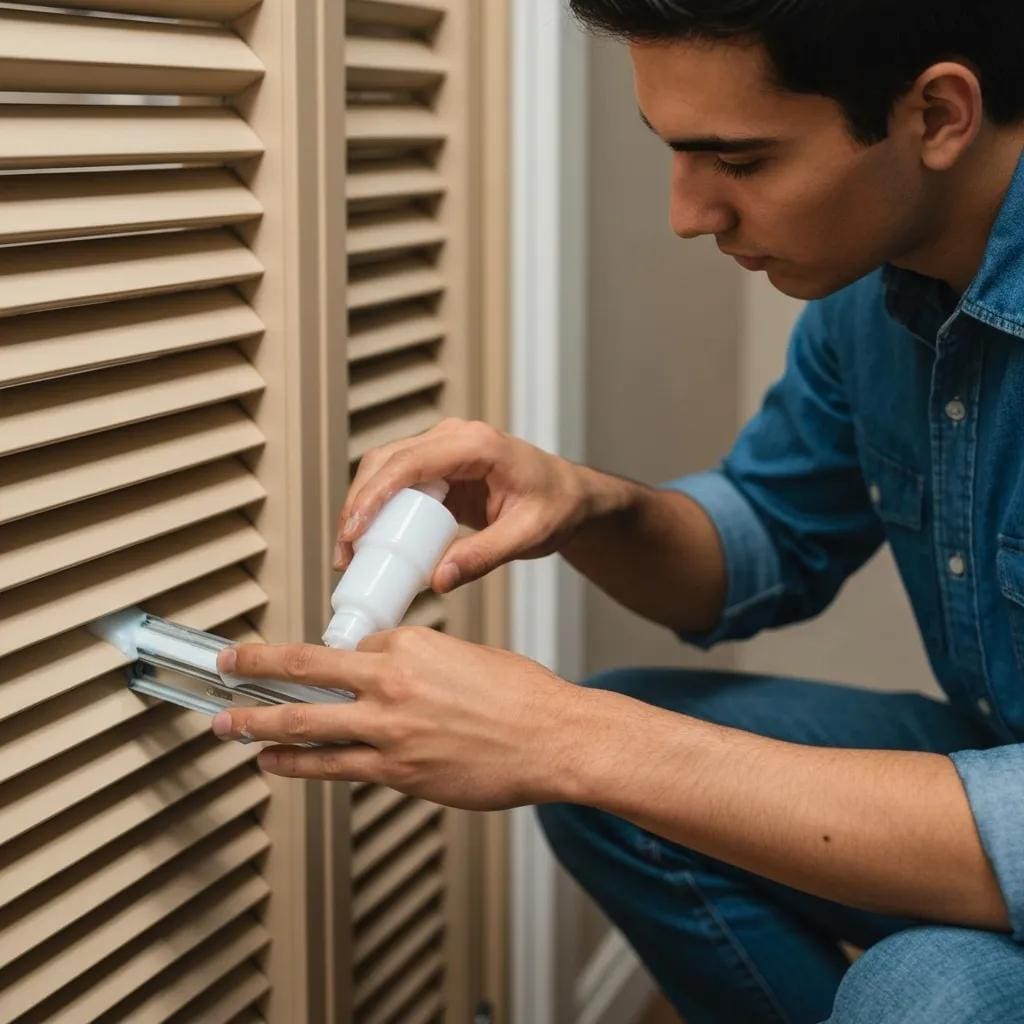
Lubrication lowers friction at the system’s moving parts—tracks, hinges, rollers, and locks—so shutters operate smoothly and wear less, which matters most in salty, sandy conditions. Use a silicone‑based lubricant for moving parts: silicone repels water, reduces friction, and doesn’t attract dust like petroleum‑based products. Clean tracks and moving parts before lubricating, apply a light, even coat to contact areas, cycle the shutter several times to spread the lubricant, and then wipe away excess to avoid buildup. Frequency depends on exposure: coastal homes often need quarterly treatment while inland properties may get by with semi‑annual applications.
Quick lubricant comparison to help you choose:
This shows why silicone products are preferred where sand and salt are a problem, and why you should always clean before lubricating. Use light applications and cycle shutters to distribute lubricant evenly—over‑application can trap dirt.
Best lubricant for tracks and hinges
We recommend silicone‑based lubricants because they leave a water‑resistant film that reduces friction without attracting dust or harming rubber seals. Dry PTFE sprays work well on rollers where a dry film is desirable. Avoid petroleum‑based oils on tracks and seals—they attract sand and speed abrasive wear. For coastal installs, pick corrosion‑resistant formulas and test compatibility on a small painted area first to avoid staining. The right lubricant lowers maintenance frequency and helps shutters deploy smoothly when it counts.
How to apply lubricant to prevent rust and keep movement smooth
After cleaning, apply a light, targeted spray or use an applicator to coat hinges, rollers, and contact areas inside tracks. Cycle the shutter several times so the lubricant spreads, then wipe away any excess with a clean cloth to prevent soil buildup. Don’t saturate seals or painted surfaces. Reapply on a schedule—quarterly for coastal homes, semi‑annually for lower‑exposure properties—and always after a storm that deposits salt or debris. Proper application keeps a protective film in place and helps prevent rust while maintaining predictable movement.
What to include in an accordion shutter inspection checklist
A thorough inspection combines visual, operational, and hardware checks to reveal problems early and guide repairs or professional referrals. Look for slat damage and alignment, dents in tracks, smooth deployment and positive lock engagement, and corrosion or looseness on fasteners and anchors. Verify seals and weatherstripping are intact. Document findings with photos and notes, mark items as DIY fixes or professional jobs, and track dates to build a maintenance history useful for warranty and insurance claims. The table below lists common items, symptoms, and recommended actions for quick triage.
This checklist helps homeowners triage issues and spot when a problem needs pro attention. Completing the list prepares you to request a professional inspection or a service quote if needed.
How to spot rust, misalignment, and loose hardware
Find rust by checking fasteners and hinge interfaces for brown or flaky deposits—surface rust can be treated, but structural corrosion needs a pro. Misalignment shows as uneven gaps or binding during operation and is often caused by bent tracks or shifted anchors. Loose hardware presents as rattles, visible gaps at connections, or movement when cycling the shutter. Torque accessible screws to the manufacturer’s specs if you can, and document any anchor movement. Note whether issues are cosmetic or structural to determine if a DIY fix is safe or a technician is required.
When to troubleshoot yourself and when to call a professional
Use a simple triage: DIY troubleshooting is fine for debris removal, light lubrication, and tightening accessible screws. Call a professional for bent tracks, major corrosion, anchor movement, or any condition that compromises structural attachment. If shutters won’t lock or anchors visibly move, stop using them and get a professional assessment—these are safety‑critical failures. Professionals also provide testing and documentation useful for warranties and can perform a Design Pressure Analysis when required. When in doubt, prioritize safety and call a technician.
How coastal conditions change shutter maintenance
Coastal conditions speed up corrosion, abrade moving parts, and generally increase maintenance needs—salt, humidity, and sand are aggressive on metal and seals. Salt air causes electrochemical corrosion on fasteners and anchors; windblown sand abrades tracks and weatherstripping; trapped humidity can lead to hidden rust. Homeowners in Wilmington, NC; Morehead City, NC; and Myrtle Beach, SC should rinse and lubricate more often, favor stainless fasteners when replacing hardware, and inspect anchors after strong onshore storms. Tailoring your plan to local exposure reduces the chance of failure during a storm.
Special care to prevent salt air and sand corrosion in coastal NC and SC
Take extra steps: rinse with freshwater more often—at least monthly after heavy salt exposure—apply corrosion inhibitors to exposed metal, and use 18‑8 stainless steel fasteners where practical to resist chloride corrosion. Rinse shutters after beach storms and schedule a quarterly deep clean and lubrication before and after hurricane season to remove built‑up salt and sand. Consider protective covers for stored hardware and inspect anchor points more frequently in high‑spray areas. These measures slow deterioration and lengthen intervals between major repairs.
How regular operation helps in humid, salty environments
Cycling shutters monthly redistributes lubricant, prevents parts from seizing, and reveals binding points before they get worse. Moving locks and hinges spreads protective films across contact areas, reducing localized corrosion and keeping alignment by freeing small obstructions. Operational checks also surface unusual noises or resistance that signal cleaning or professional attention. Monthly operation is a low‑effort, high‑impact habit that supports all other maintenance steps.
To educate homeowners about hurricane protection options and generate leads, we offer free estimates and can schedule professional inspections when homeowner checks indicate the need for expert attention. American Hurricane Shutters stands ready to help with inspections and maintenance services.
- Preventive Care: Regular cleaning and lubrication reduce emergency failures.
- Documentation: Keep inspection photos and dates to support warranties.
- Professional Support: Schedule pro inspections when anchors, major corrosion, or structural issues are suspected.
These closing points pull together the maintenance plan and help you act when routine checks reveal deeper problems. If you want a professional assessment or a cost estimate, our team is ready to help.
Frequently Asked Questions
What should I do if my accordion shutters are difficult to operate?
If shutters feel stiff or hard to move, start by checking the tracks and slats for dirt, sand, or other obstructions. Clean the tracks and apply a silicone‑based lubricant to moving parts. Cycle the shutter a few times to help redistribute the lubricant. If the problem continues, look for misalignment or damaged components and contact a technician—especially if locks aren’t engaging properly.
How can I tell if my accordion shutters need professional maintenance?
Call a professional if you see visible rust on fasteners, difficulty with locking mechanisms, or unusual noises during operation. Bent tracks, loose anchors, or shutters that don’t deploy smoothly are signs you need expert attention. Keeping a simple maintenance log helps you track symptoms and decide when to book a pro inspection.
Are there specific cleaning products I should avoid when maintaining my shutters?
Yes. Avoid abrasive pads, high‑pressure washers, and petroleum‑based cleaners—these can strip protective coatings, damage seals, or push contaminants into components. Instead, use mild detergents or biodegradable soap and a soft‑bristled brush to clean safely without harming finishes.
What are the consequences of neglecting accordion shutter maintenance?
Neglect can lead to faster wear, reduced operation, and possible failure during storms. Corrosion and abrasion can make repairs costly or require part replacement. Also, many warranties require documented maintenance, so skipping care can jeopardize coverage. Regular upkeep keeps shutters reliable when they’re needed most.
How does humidity affect the maintenance of accordion shutters?
Humidity traps moisture that accelerates rust and degrades seals—this is why coastal and humid areas need more frequent cleaning and lubrication. Check moving parts and seals more often, and treat exposed metal with corrosion inhibitors where appropriate. Regular inspections help catch problems early.
What should I include in my maintenance log for accordion shutters?
Record dates of inspections, cleaning, and lubrication, plus any observations—rust, misalignment, sounds, or parts replaced. Note actions taken and include photos when possible. Also log professional inspections and service details; that history supports warranty claims and helps technicians diagnose trends.
Can I perform all maintenance tasks myself, or should I hire a professional?
Homeowners can handle cleaning, basic lubrication, and simple tightening. But hire a professional for torque checks on anchors, hidden corrosion assessment, structural issues, or whenever safety is a concern. Balancing DIY care with annual professional inspections keeps shutters in top condition and ready for storm protection.
Conclusion
Regular maintenance keeps accordion shutters reliable and lengthens their service life—especially in coastal areas where salt and humidity speed wear. Following a clear schedule of cleaning, lubrication, and inspections helps prevent costly repairs, keeps warranties valid, and improves safety during storms. Take a proactive approach: do the simple monthly checks, schedule deeper seasonal care, and book a professional inspection annually or after major storms. For expert help and tailored maintenance plans, reach out to our team today.