

Accordion Shutter Repair: A Step‑by‑Step Troubleshooting and Coastal Maintenance Guide
Accordion shutters fold and slide on top and bottom tracks to protect windows and openings during storms. They share storm loads across interlocking slats and anchored fasteners to protect glass and openings. This guide walks homeowners through how to spot common failure modes, perform safe DIY repairs, and follow coastal maintenance that extends service life and reliability. Coastal homes face unique wear from salt spray, wind‑driven debris, and humidity—addressing those issues early reduces operational failures and prevents costly structural repairs. You’ll learn how to find jams, evaluate worn wheels and tracks, swap common parts, and use lubrication and corrosion‑control techniques tuned for North and South Carolina shorelines. The guide also gives clear decision points for DIY work versus calling a professional, plus a practical tools and materials checklist so you can be prepared. Relevant search phrases like accordion shutter repair guide, fixing accordion shutters, accordion shutter maintenance, and accordion shutter wheel replacement are woven through the steps to help you find the information you need.
Common Accordion Shutter Problems and How to Spot Them
Accordion shutters typically fail from jams, worn wheels, bent tracks, loose fasteners, corrosion, or lock problems. Each issue shows its own signs you can spot with simple checks. A quick visual inspection often reveals rust or debris; operating the shutter slowly will show whether wheels skip, slats bind, or locks misalign. Pinpointing the cause early lets you target fixes like debris removal, lubrication, tightening anchors, or wheel replacement before damage spreads to nearby panels or tracks. Coastal exposure speeds up oxidation and salt buildup on tracks, so pay special attention to corrosion and crusted salt. The sections below walk through specific diagnostics for jams and wheel wear so you can decide if a short DIY service will get you back to smooth operation or if it’s time to call a pro.
How to Diagnose Jammed or Sticking Accordion Shutters
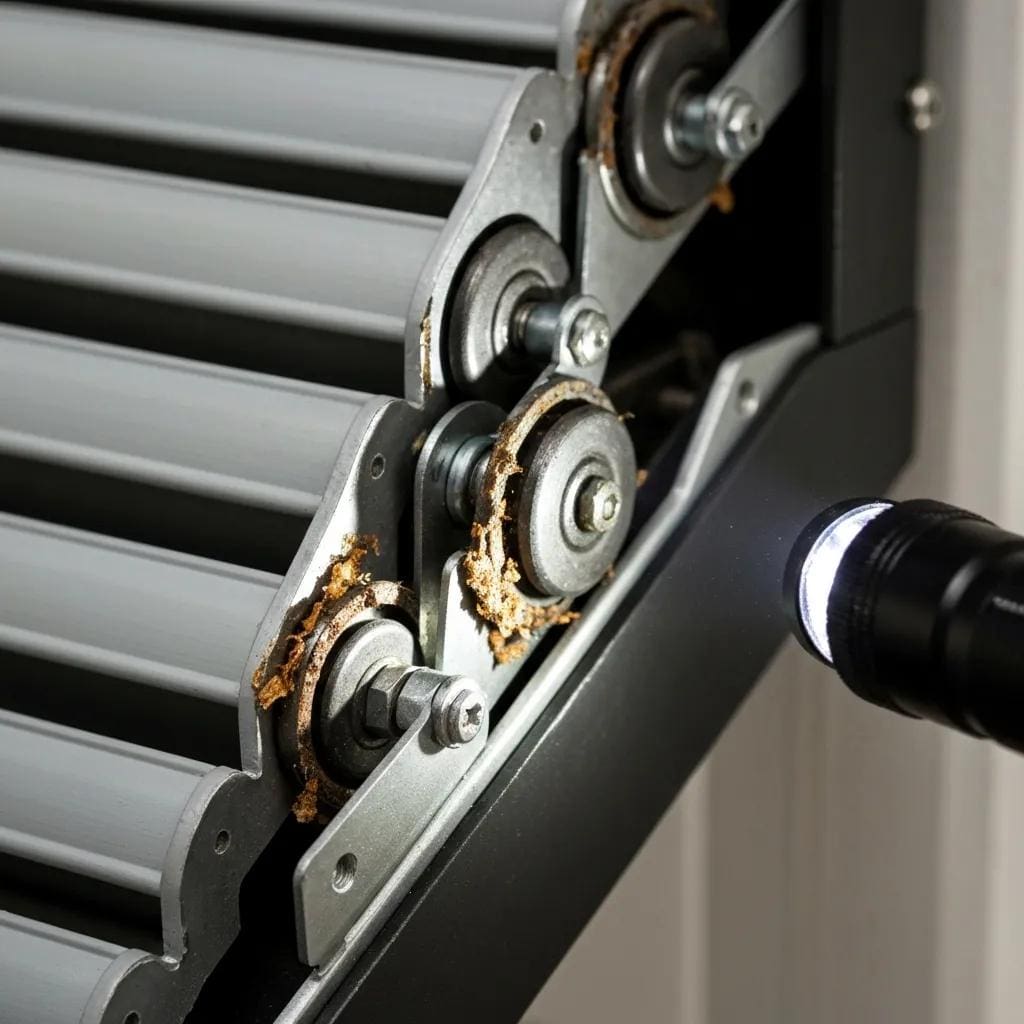
Start diagnosing a jam by operating the shutter slowly and watching the track, wheels, and slat alignment for binding or skipping. Look for visible debris, bent track lips, or protruding fasteners and listen for grinding or scraping that points to wheel or track damage. Use a flashlight and, where it’s safe, a small mirror to inspect hidden track sections and hinge mounts. Never force a stuck shutter — forcing it can bend tracks further or break wheels. If the shutter moves when lifted slightly but binds under normal load, you’re likely facing a misaligned track or a worn wheel, which can often be fixed with cleaning, lubrication, and minor realignment.
Signs of Broken or Worn Accordion Shutter Wheels
Damaged or worn wheels cause uneven movement, side‑to‑side play, or intermittent skipping during operation, often with grinding noises or visible flat spots on the wheel. Inspect each wheel for cracks, missing bearings, loose fasteners, or excessive lateral movement by gently manipulating the panel while supporting its weight to isolate wheel play. If neglected, failing wheels can score tracks, which leads to worsening misalignment and heavier loads on neighboring wheels. Temporary measures include cleaning, removing corrosion around the axle, and fitting a short‑term spacer; persistent issues usually call for wheel replacement to protect tracks and slats from further damage.
This quick reference helps you match symptoms to causes and decide whether to try a DIY fix or call a professional.
How to use this table: match what you see with likely causes and follow the immediate homeowner action before scheduling professional help.
Bottom line: use cleaning and lubrication for simple problems, but escalate to professionals for structural damage or recurring failures.
How to Fix Jammed Accordion Shutters and Restore Smooth Operation
Treat jams methodically: support panels, clean tracks, gently realign parts, and apply targeted lubrication — never force components. Start by supporting the shutter panel, remove visible debris with non‑metallic brushes and a vacuum to avoid scratching track finishes, then inspect for bent track areas or protruding fasteners and carefully straighten minor bends with padded tools. After clearing mechanical obstructions, apply an exterior‑grade silicone dry lubricant to wheel bearings and track lips and cycle the shutter several times to spread the lubricant. Run the shutter slowly through its full range and watch for any remaining binding or lateral drift. If binding continues after cleaning and lubrication, worn wheels or bent tracks likely need replacement or professional realignment.
High‑level repair steps — what to expect at each stage:
- Visually inspect and operate shutter slowly to locate binding points.
- Remove debris with a soft brush and vacuum; rinse salt deposits with fresh water if it’s safe to do so.
- Straighten small track bends and tighten loose fasteners; avoid striking untreated metal surfaces.
Summary: careful inspection, cleaning, and lubrication often restore smooth operation; persistent or structural issues mean replacement parts or pro service are needed.
Best Ways to Clean and Remove Debris from Shutter Tracks

Start by removing loose debris, then address salt and grime with mild detergent and fresh water — avoid abrasive cleaners that can scratch finishes. Use a soft brush or handheld vacuum to clear leaves, sand, and grit, then wipe with a damp cloth and a mild cleaning solution suitable for coastal use. Dry tracks thoroughly before applying any protective treatments. For hard salt crust, rinse with fresh water and dry immediately to slow corrosion, and consider an approved silicone or corrosion‑inhibiting treatment for exterior metal. Always secure ladders properly when working at height, and only lubricate once the track is clean and completely dry.
How to Lubricate Tracks and Moving Parts for Best Performance
Use lubrication to lower friction and keep grit from embedding in moving parts — but choose the right product and apply it correctly. An exterior silicone‑based dry spray works well in salt‑air environments because it won’t attract dirt the way oil‑based products do. Apply sparingly to wheel contact surfaces and track lips, then cycle the shutter several times to distribute the lubricant. Avoid petroleum‑based lubricants that collect grime. Reapply based on exposure — more often for beachfront homes — and always clean tracks before relubricating so you don’t lock debris into the interfaces. Proper lubrication, combined with regular cleaning and inspections, helps wheels and tracks last longer.
How to Replace Damaged Wheels and Other Key Parts
Wheel and part replacement starts with identifying the exact wheel type, matching dimensions, and confirming compatible fasteners so replacements seat correctly and keep alignment. Many wheels attach with pins or bolts; replacement usually involves supporting the panel, removing the retaining fastener, sliding out the worn wheel, and installing a matching wheel with the correct shims. Measure wheel diameter, axle thickness, and bearing type to source the right parts; after fitting, cycle the shutter to confirm even engagement and check for lateral play that signals shim adjustment. If you’re unsure about part fit, multiple failed wheels exist, or tracks show scoring, professional replacement preserves alignment, warranty coverage, and storm‑rating compliance.
Quick comparison to help prioritize repairs or request a quote:
Bottom line: wheel swaps are often DIY‑feasible with common tools; track or anchor repairs are labor‑intensive and best done by pros.
If a part needs professional replacement, American Hurricane Shutters offers repair services and online resources — including a cost calculator and maintenance guide — to help homeowners estimate needs and request free inspection estimates. Their regional knowledge of North and South Carolina means recommendations consider local corrosion and storm‑load conditions, and a professional inspection will confirm part compatibility and a long‑term repair plan.
Tools and Materials for DIY Wheel Replacement
A compact hand tool kit and basic safety gear let most homeowners replace a single wheel: screwdrivers, pliers, a socket set, a rubber mallet for gentle taps, and a torque‑capable driver for anchors. Use replacement wheels that match original dimensions and are made of corrosion‑resistant materials for coastal use; bring spare shims or spacers to correct lateral play and stainless or coated fasteners if allowed. Wear gloves, eye protection, and slip‑resistant footwear for overhead work and to guard against sharp edges revealed during disassembly. Set up a clean workspace and have a flashlight or inspection lamp to see inside tracks before reassembly.
Essential tool checklist with purpose and safety reminders:
- Screwdrivers and nut drivers — remove retaining fasteners and access panels.
- Pliers and an adjustable wrench — handle axle nuts and small bearing tasks.
- Rubber mallet and shims — gently realign parts and adjust lateral play.
Summary: With correct parts and the basic toolset above, many wheel replacements are manageable for competent DIYers; always combine the checklist with safety precautions and a cautious approach.
When to Call a Professional for Parts Replacement and Repair
Call a pro when damage goes beyond a single part — for example, tracks bent across multiple panels, structural mount corrosion, several failing wheels, or situations that would be unsafe to repair yourself. Professionals bring alignment tools, replacement track sections, corrosion remediation methods, and the ability to test shutters under load to confirm storm readiness. Insurance and building codes may require certified repairs to preserve coverage for hurricane‑rated systems; improper DIY work can void warranties or create unsafe performance in severe weather. Before the pro arrives, photograph damage, note operational symptoms, and record exposure (beachfront, windward side) so technicians can prioritize repairs.
Preventative Maintenance to Extend Shutter Lifespan
Regular preventative maintenance — scheduled inspections, targeted cleaning, and proactive corrosion control — cuts failure rates and extends accordion shutter life. Coastal properties should increase inspection frequency during and after storm season: check tracks, wheels, fasteners, and anchor points for salt buildup, corrosion, and looseness. Use a maintenance checklist that schedules cleaning and lubrication, tightens or replaces fasteners as needed, and corrects small misalignments before they score tracks. Include seasonal prep before hurricane season and post‑storm checks for impact damage, and keep records to support warranties or insurance claims. The lists and table below give practical timing and seasonal steps to keep shutters serviceable and storm‑ready.
Preventative checklist homeowners should schedule:
- Inspect tracks, wheels, and fasteners for wear and corrosion every three months.
- Clean tracks and remove salt deposits after storms or heavy coastal winds.
- Lubricate wheel bearings and contact points with a silicone‑based lubricant twice a year — more often for beachfront properties.
Summary: Regular inspections, cleaning, and lubrication significantly reduce emergency repairs and keep shutters operable through storm seasons.
How Often to Clean and Lubricate Shutters in Coastal Areas
Coastal exposure needs more frequent attention than inland locations. As a baseline, inspect and do light cleaning every three months and lubricate every six months. Properties close to the shoreline or exposed to direct salt spray should do monthly visual checks and quarterly cleanings with immediate lubrication afterward. After any storm or heavy wind event, run an immediate operational check and address visible salt crust or debris to prevent faster corrosion and wear. Keep a simple log of inspections and services to spot wear trends and decide if more frequent professional maintenance is necessary.
Seasonal Steps to Prevent Rust, Corrosion, and Misalignment
Pre‑season preparation should include a full inspection, targeted cleaning, and securing anchors and fasteners before hurricane season. Replace corroded fasteners with approved alternatives and apply corrosion‑inhibiting treatments that manufacturers approve. After storms, check for slat impact damage, track deformation, and loose anchors — stabilize temporarily if permanent repairs can’t wait. Consider marine‑grade protective sprays or upgraded coastal‑rated components when corrosion recurs. Keep a seasonal log of repairs to prioritize upgrades that lower long‑term maintenance costs.
Use this seasonal table to plan tasks by period.
Summary: Seasonal maintenance focuses effort on higher‑risk periods and keeps shutters ready when storms roll in.
If you prefer professional scheduling, American Hurricane Shutters offers free estimates and a cost calculator to help plan service before hurricane season. Their guides are tailored to North and South Carolina coastal conditions and can help you choose between a DIY schedule and a professional maintenance plan based on exposure level.
When to Call American Hurricane Shutters for Professional Repair
Call a professional for structural damage, tracks bent across multiple panels, failed anchor fasteners, severe corrosion of mounts, or when shutters fail critical safety functions such as locking under load. Professionals perform full diagnostics, use specialized alignment and track‑straightening equipment, and supply compatible replacement parts that preserve system ratings. A regional provider understands local code requirements and coastal corrosion patterns; American Hurricane Shutters serves North and South Carolina communities and offers free inspection estimates and maintenance resources to guide homeowner decisions. Hiring a pro also provides documented repairs and can reduce long‑term costs by fixing root causes instead of repeating temporary fixes.
Repair Issues That Need Professional Expertise
Bring in a pro for tracks bent across multiple panels, structural mount corrosion that compromises load paths, major misalignment affecting several shutters, or situations that become a safety risk during repair. Professionals have diagnostic tools to measure alignment, access to custom track sections, and coastal‑grade replacement components that preserve storm‑rating performance. Forcing repairs in these conditions can cause unsafe deployment, void warranties, and complicate insurance claims. When unsure, photograph symptoms and request a professional assessment to prioritize permanent, code‑compliant repairs.
How American Hurricane Shutters Supports Coastal NC and SC Homeowners
American Hurricane Shutters focuses on hurricane protection across coastal North and South Carolina, offering inspection, maintenance, and repair services suited to salt‑spray and storm‑load conditions in towns like Wilmington, Myrtle Beach, and Oak Island. The company emphasizes homeowner education through maintenance guides, a cost calculator for planning repairs, and free estimates to evaluate options. Regional experience guides material choices and corrosion mitigation and helps schedule inspections and corrective work so homeowners are prepared before hurricane season and recover faster after events.
Essential Tools and Materials for Effective Repair and Maintenance
A focused toolset and the right materials make DIY maintenance safer and more effective: hand tools for fasteners, good inspection lighting, non‑metallic brushes for cleaning, silicone‑based dry lubricant for moving parts, and basic personal protective equipment. When allowed, choose corrosion‑resistant replacement parts and marine‑grade fasteners to reduce repeat failures on coastal properties. Follow ladder safety and use two‑person handling for heavier panels. The table below summarizes tools, their uses, recommended types, and safety notes to help you get ready.
Tool summary — purpose, recommended type, and safety reminders:
Summary: Having these items on hand supports safe, effective maintenance and improves the success rate of DIY repairs while minimizing coastal wear.
Recommended Lubricants and Cleaning Supplies
Choose silicone‑based dry sprays for tracks and moving parts because they reduce friction without attracting dust like petroleum‑based oils. For salt and grime removal, use mild detergent with a fresh water rinse and dry immediately to prevent trapped moisture that accelerates corrosion. Avoid abrasive cleaners or steel brushes that scratch protective finishes and expose raw metal. After cleaning, apply a thin protective coating approved for exterior metals if the shutter manufacturer recommends it to further reduce corrosion.
Basic Tools Every Homeowner Should Have for DIY Repairs
Keep a small prioritized toolkit: screwdrivers, pliers, an adjustable wrench, a socket set for axle and anchor hardware, non‑metallic brushes and a vacuum for cleaning, a rubber mallet for gentle realignment, and a good flashlight for inspections. Also have gloves, eye protection, a stable ladder, and slip‑resistant footwear for work at height. Keep spare fasteners and a selection of shims or spacers to adjust lateral play after wheel replacement — those small parts often save an extra trip to the store.
Must‑have items for common repairs:
- Screwdrivers, pliers, and a socket set for disassembly and reassembly.
- Non‑metallic brushes, a vacuum, and mild detergent for safe cleaning.
- Gloves, safety glasses, and a secure ladder for safe working conditions.
Summary: A modest investment in the right tools and safety gear equips homeowners to handle routine repairs while recognizing when to call in professionals.
Frequently Asked Questions
What are the benefits of regular maintenance for accordion shutters?
Regular maintenance keeps shutters working longer and reduces the risk of failure when you need them most. Routine inspection, cleaning, and lubrication prevent corrosion, jamming, and accelerated wear. That proactive care lowers repair costs over time and helps ensure shutters operate reliably during storms. For coastal homes, a tailored maintenance schedule is especially important to combat salt and moisture.
How can I tell if my accordion shutters need professional repair?
Seek professional help for persistent problems like repeated jamming, multiple bent tracks, or heavy corrosion at anchor points. If shutters won’t lock securely, make unusual noises, or several components are failing, call a pro. Photograph issues and note operating symptoms to speed up diagnosis when a technician arrives.
What types of replacement parts are commonly needed for accordion shutters?
Common replacement parts include wheels, tracks, fasteners, and locks. Wheels wear from friction and coastal exposure and can cause skipping or grinding. Tracks can bend or become scored, affecting movement. Fasteners may corrode or loosen, and locks can fail. Correctly identifying the failed part is key to getting a compatible replacement and restoring safe operation.
Are there specific cleaning products I should avoid when maintaining accordion shutters?
Yes. Avoid abrasive cleaners, steel brushes, and harsh chemicals that can scratch finishes and expose raw metal to salt. Also avoid petroleum‑based lubricants, which attract dirt. Use mild detergents, non‑metallic brushes, and silicone‑based lubricants recommended by the manufacturer to keep shutters functioning and protected.
How can I improve the corrosion resistance of my accordion shutters?
Improve corrosion resistance by keeping shutters clean of salt and grime, using corrosion‑resistant fasteners, and applying manufacturer‑approved protective coatings. Regular cleaning, prompt removal of salt deposits, and silicone‑based lubrication help prevent moisture buildup. For recurring corrosion, consider upgrading to coastal‑rated materials where appropriate.
What should I do if my accordion shutters are not closing properly?
First, check for obstructions in the tracks and clear any debris. Inspect wheels for wear or damage and look for bent tracks that might need realignment. Lubricating tracks and wheels can help restore smooth movement. If these steps don’t fix the problem, contact a professional to assess underlying damage that could affect safe operation.
Conclusion
Keeping accordion shutters in good condition is vital for longevity and storm readiness, especially on the coast. Regular inspections, cleaning, and proper lubrication prevent many common problems and reduce repair costs. For tailored maintenance plans or professional help, reach out to American Hurricane Shutters — our regional experience helps homeowners keep shutters in peak condition. Explore our resources and request a free estimate to get started.