Accordion Shutters — Coastal Protection, Built for the Carolina Shore
Accordion hurricane shutters are track-mounted, impact-rated panels that fold open and closed to shield windows and doors from high winds and flying debris. This guide walks through how tracked accordion systems work, why specific materials perform better in salty coastal air, the homeowner benefits, typical cost drivers and insurance implications, and why professional installation matters for code compliance and lasting performance. For property owners across coastal North and South Carolina — where hurricanes are a recurring risk — fast, reliable storm protection is essential. You’ll learn the mechanics of head-and-sill track systems, why 6063-T6 marine‑grade aluminum and 18‑8 stainless fasteners are standard for corrosion resistance, practical deployment and maintenance tips, estimated per‑square‑foot pricing cues, required documentation for insurers, and how to request a no‑obligation local estimate from a qualified installer.
What Are Accordion Hurricane Shutters and How Do They Protect Your Home?
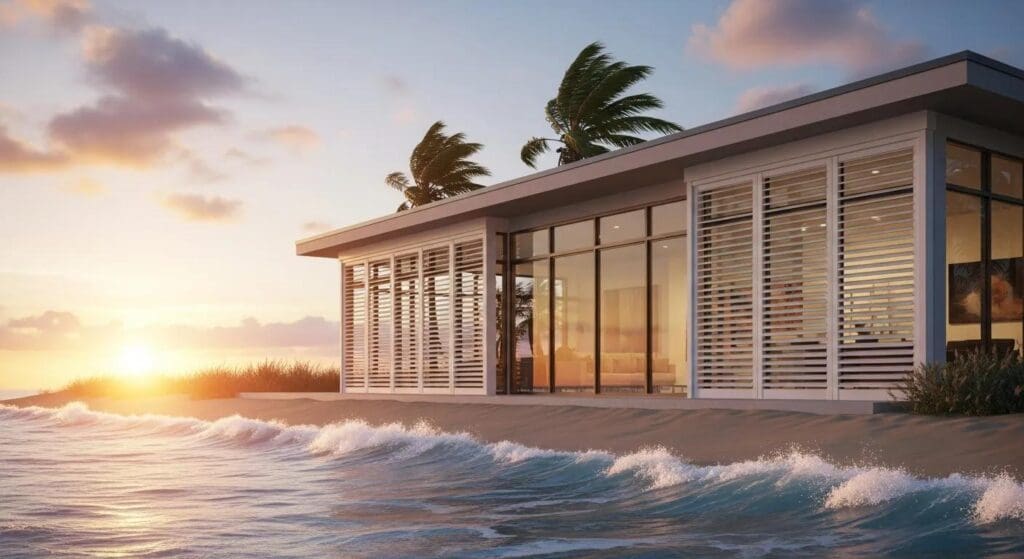
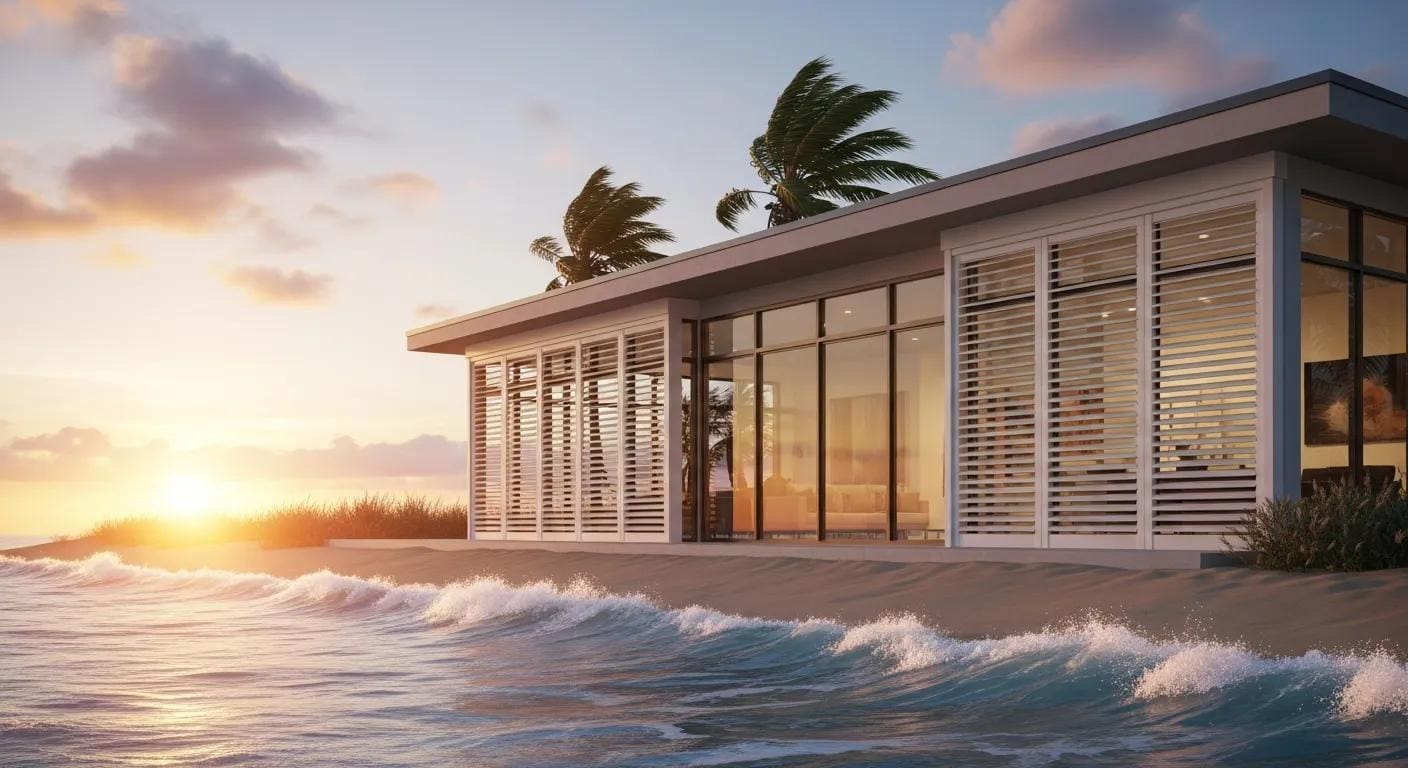
Accordion shutters are rigid, multi‑panel assemblies that ride on fixed head and sill tracks. When retracted, panels fold neatly to the side; when deployed they slide across the opening to form a continuous protective face. Because the system is track‑mounted, it transfers wind loads into the building structure across multiple anchors instead of relying on a single fastener. Below we summarize the core protection modes, ease of deployment, and why these systems are well suited to coastal conditions.
Accordion shutters protect your home by:
- Stopping wind‑driven debris and impact fragments from reaching glass and framing.
- Spreading wind pressures across tracks and mounting points to lower the risk of concentrated failures.
- Allowing fast deployment for windows and larger openings like sliding patio doors.
Those protection features explain how accordion shutters absorb impact, meet local wind‑load requirements, and remain operable for household members when a storm approaches.
How Do Accordion Shutters Provide Superior Hurricane Protection?
Accordion shutters deliver proven protection through impact‑rated extruded aluminum panels and engineered track systems sized for local wind loads. Panels either interlock or butt tightly to prevent projectiles from breaching the opening, and the track design routes wind pressures to structural anchors so the system behaves as a continuous protective skin. Regular inspection of anchors and periodic maintenance keep performance aligned with coastal building codes and homeowner expectations.
What Materials Make Accordion Shutters Ideal for Coastal Environments?
Material choice matters where salt air accelerates corrosion. Marine‑grade 6063‑T6 aluminum paired with 18‑8 stainless steel fasteners gives the strength and corrosion resistance coastal installations need. These alloys resist pitting and help preserve finish integrity, which reduces maintenance and maintains impact performance over time. Added protective coatings and correct fastener selection further extend service life, and simple upkeep — like rinsing off salt and lubricating hinges — keeps the system operating season to season.
Aluminum Alloys in Marine Construction: Characteristics, Applications, and Fabrication Challenges
Aluminum alloys in the 5xxx and 6xxx series are commonly used in marine construction because of their favorable strength‑to‑weight ratios and corrosion resistance. Fabrication—especially joining and welding—presents technical challenges, and exposure to a marine atmosphere increases the risk of corrosion without proper alloy choice and protection. This review summarizes the properties, common applications, and fabrication issues of these alloys in marine settings, which is useful background for choosing materials for coastal building components.
Aluminum alloys in marine construction: characteristics, application, and problems from a fabrication viewpoint, MA Wahid, 2020
What Are the Key Benefits of Accordion Hurricane Shutters for Homes?
Accordion shutters combine durability, fast operation, and added security in a permanently mounted storm‑protection system. They outlast most temporary panels, close quickly without tools, and provide a visible barrier when locked. The benefits below explain why many coastal homeowners choose tracked accordion systems for both windows and larger openings.
- Durability and corrosion resistance: Built to withstand repeated deployments in harsh environments with minimal degradation.
- Quick deployment: One person can usually close an opening in minutes, simplifying storm readiness.
- Security and value: A robust physical barrier that helps protect against storm damage and can support property value preservation.
Those homeowner benefits tie directly to material selection, installation quality, and routine maintenance — and they’re the basis for service guarantees offered by reputable installers.
Benefit comparison overview: The short table below highlights key attributes so homeowners can compare expected outcomes.
This comparison shows how mechanical and material choices create the homeowner benefits described above. If you want installation credentials or warranty details, a local installer can confirm ratings and provide a written estimate.
Local service note: Installers like American Hurricane Shutters (AHS Carolinas) can verify impact‑rated construction, offer a free, no‑obligation estimate to size systems, and explain warranty and maintenance expectations specific to your openings and local codes.
How Do Accordion Shutters Offer Durability and Long-Term Storm Defense?
Durability comes from extruded‑aluminum panels and corrosion‑resistant hardware that remain functional after repeated deployments. Proper factory finishes plus routine care — occasional rinsing and track lubrication — prevent premature wear and keep seals working. Reputable manufacturers and installers back materials with warranties and documented installation practices so homeowners know what to expect over the system’s life.
Why Are Accordion Shutters Easy to Use and Quickly Deployable?
Accordion shutters slide and fold on fixed tracks and use simple latches or keyed locks. Deployment usually means pulling the panels across the opening and engaging the latch, with no storage or extra hardware to manage. Because they’re permanently mounted, multiple openings can be secured quickly — a clear advantage over temporary panels during an approaching storm.
How Much Do Accordion Hurricane Shutters Cost and What Is Their Value?
Price varies with material choice, opening size, mounting complexity, and local labor. To help planning, typical material costs often fall in the neighborhood of $30–$40 per square foot (illustrative), while installation labor commonly ranges roughly $15–$30 per square foot depending on complexity. These figures are estimates; the most accurate pricing comes from a site‑specific, on‑site measurement and free estimate.
Key cost drivers checklist:
- Total square footage and number of openings to protect.
- Mounting complexity, custom extrusions, and finish requirements.
- Local permit, inspection, and labor rates.
Cost overview table: The following maps common cost components to typical ranges so you can see where investment is allocated.
That breakdown clarifies where costs commonly rise and helps homeowners judge ROI against expected lifespan and possible insurance discounts.
Do accordion shutters lower insurance premiums? Many insurers offer wind‑mitigation credits when shutters meet recognized impact and wind‑load standards and when homeowners provide supporting documentation, like a Design Pressure Analysis. Documented product ratings plus proof of professional installation are typically required to qualify — check with your carrier for the specific credit amounts.
For precise pricing and documentation details, request a free, on‑site estimate so a qualified installer can measure openings and confirm the paperwork insurers will need.
What Factors Influence the Cost of Accordion Hurricane Shutters in NC and SC?
Opening size and quantity are the main cost drivers: larger or irregular openings usually require custom extrusions and more labor. Complex trim, recessed installations, and any required structural reinforcement for higher design pressures also add fabrication and labor time. Local permit and inspection fees affect upfront costs, so a thorough site survey provides the clearest picture of total project pricing.
Can Accordion Shutters Lower Your Insurance Premiums?
Yes — when shutters meet impact‑resistance and wind‑load criteria, homes can qualify for wind‑mitigation discounts. Insurers generally ask for manufacturer specifications and proof of professional installation. Homeowners should collect stamped Design Pressure Analysis reports and installation verification, then confirm discount levels directly with their carrier. Those documents also help demonstrate code‑compliant protection to future buyers.
How Does Professional Installation Ensure the Best Performance of Accordion Shutters?
Professional installation ties product performance to real protection by ensuring correct anchorage, drainage, and sealing details so the shutter transfers loads and resists impact as designed. Certified technicians follow a measured installation workflow — from site survey through final inspection — and provide the documentation needed for code compliance and insurance. Below is a concise process overview and a table that links installation steps to homeowner benefits.
Standard installation steps include:
- Site survey and precise measurements to size custom panels.
- Fabrication or ordering of extruded panels and track components to spec.
- Anchor installation, sealing, final inspection, and homeowner handover with documentation.
Installation benefits summary: The table below links common activities to the compliance or performance advantages homeowners receive.
That mapping shows how professional steps protect performance and preserve both warranty coverage and the documentation insurers expect. For homeowners in the Carolinas, hiring a local installer helps ensure work aligns with regional codes and coastal exposure realities.
Business credibility and next steps: American Hurricane Shutters (AHS Carolinas) provides insured local installation, OSHA 30‑certified technicians, custom Design Pressure Analysis for wind‑load compliance, a 7‑year warranty, emergency services, and free estimates. Contact the company by phone or email to schedule a site assessment.
What Is the Accordion Hurricane Shutter Installation Process?
Installation starts with a detailed site survey to measure openings and evaluate mounting substrates. Panels and tracks are fabricated or ordered to the specified sizes. On site, head and sill tracks are secured, panels anchored with corrosion‑resistant fasteners, and terminations sealed to limit water intrusion. Final testing and homeowner handoff complete the job, and installers supply the paperwork needed for permits and insurance.
Why Choose American Hurricane Shutters for Local Installation in Coastal Carolinas?
Choosing a local installer with material expertise and certified technicians reduces risk and streamlines code compliance. American Hurricane Shutters uses marine‑grade 6063‑T6 aluminum and 18‑8 stainless fasteners, offers a 7‑year warranty, performs custom Design Pressure Analysis, and staffs OSHA 30‑certified technicians to meet coastal performance needs. They also offer emergency services and free estimates — call or email to arrange a site visit.
Frequently Asked Questions
What are the maintenance requirements for accordion hurricane shutters?
Regular maintenance keeps shutters ready and extends their life. Inspect anchors, tracks, panels, and fasteners at least twice a year and after any major storm. Rinse salt and debris with fresh water, check for loose or corroded fasteners, and lubricate tracks and hinges so the panels slide smoothly. Address small issues quickly to avoid larger repairs.
How do accordion shutters compare to other types of hurricane protection?
Compared with temporary options like plywood or fabric panels, accordion shutters are a permanent solution that deploys quickly without tools. They’re designed for repeated use, require less storage and preparation, and add a security layer when closed. While the up‑front cost can be higher than temporary panels, the long‑term convenience and durability often make them a better investment for coastal homeowners.
Are accordion shutters suitable for all types of windows and doors?
Accordion shutters are highly adaptable and can be customized for sliding doors, large picture windows, and standard openings. Some openings with unusual profiles or structural limitations may require custom work or reinforcement. A professional installer can assess each opening and recommend the correct panel and anchoring approach to meet performance and code requirements.
What is the expected lifespan of accordion hurricane shutters?
Lifespan depends on material quality and maintenance. High‑quality systems using marine‑grade aluminum and stainless hardware can last 20 years or more with routine care. Warranties and documented maintenance schedules from your installer provide added assurance about expected life and performance.
Can I install accordion shutters myself, or should I hire a professional?
While an experienced DIYer might handle some installations, we strongly recommend professional installation. Proper anchoring, sealing, and alignment are critical for meeting wind‑load requirements and code, and professionals provide the documentation insurers typically require. Hiring a qualified installer reduces installation risk and preserves warranty coverage.
What documentation do I need for insurance purposes after installing accordion shutters?
Insurers usually ask for proof of professional installation, product impact and wind‑load ratings, and a Design Pressure Analysis when required. An installation certificate or completion report from your installer, plus manufacturer specs, are commonly accepted. Collect these documents and confirm requirements with your carrier to pursue wind‑mitigation discounts.
Conclusion
Accordion hurricane shutters are a durable, fast‑deploying solution that adds security and long‑term storm protection for coastal homes. With corrosion‑resistant materials and correct professional installation, they deliver predictable performance and the documentation insurers expect. If you want local guidance, material verification, and a free estimate, contact a qualified installer to schedule an on‑site assessment.