
Top Hurricane Shutter Materials
Coastal properties face concentrated hurricane risk from high winds and wind-driven debris. Choosing the right shutter material is a practical decision that balances impact protection, resistance to salt-air corrosion, daylight and view retention, and overall cost. This guide walks through the leading options—marine‑grade aluminum, clear polycarbonate (flat Lexan), engineered fabric screens, and steel storm panels—explains how each performs, and gives clear rules for selecting the right solution for particular openings and exposure. You’ll get straightforward guidance on material properties, maintenance needs, coastal corrosion considerations, and how choices affect insurance and service life. The sections that follow compare materials side-by-side, contrast fabric and steel performance, and offer a decision checklist plus installation, maintenance, and insurance notes focused on coastal North and South Carolina homes. We emphasize actionable criteria—impact resistance, design wind load, recommended fasteners like 316 stainless, and alloy specs such as 6063‑T6—so you can make an informed selection for your property.
What Are the Top Materials Used for Hurricane Shutters?
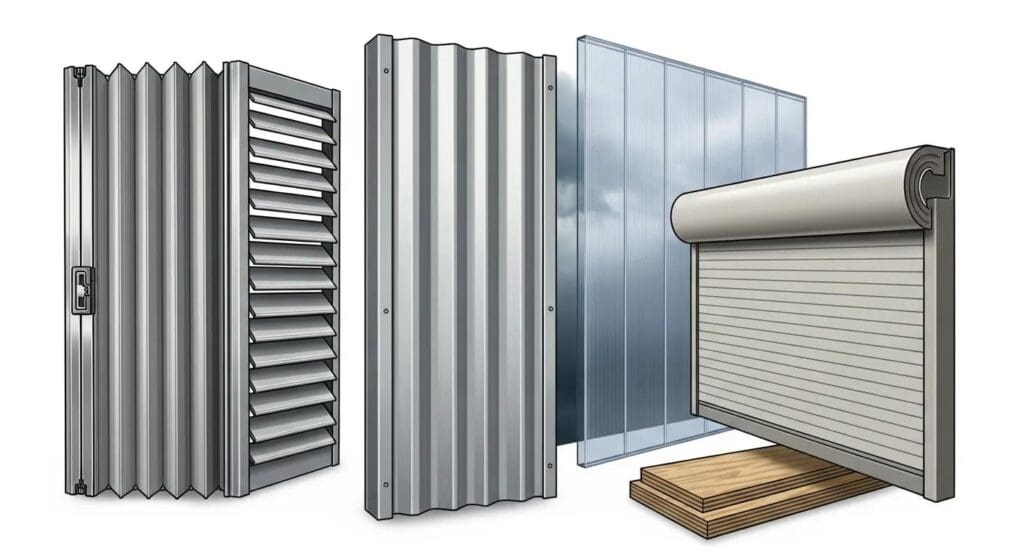
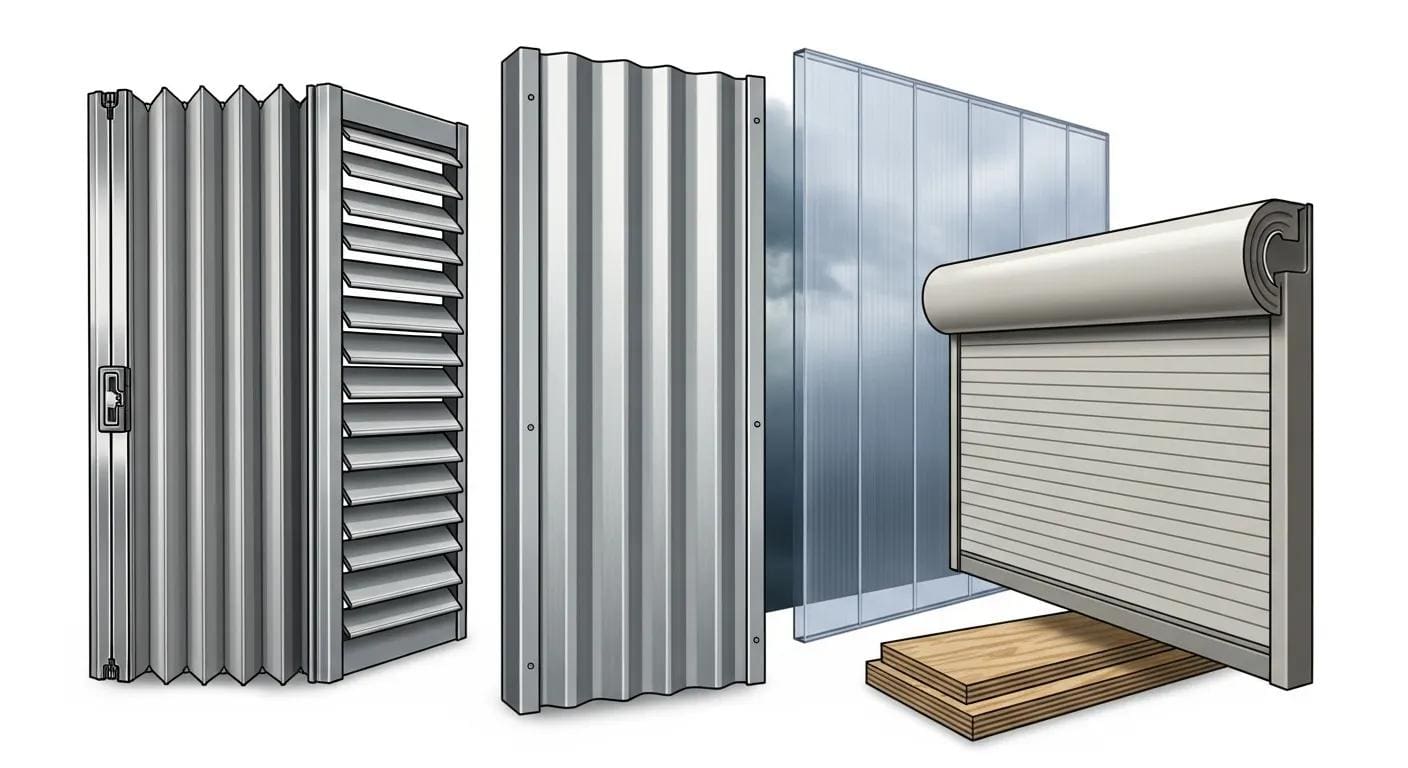
The most common materials for hurricane shutters are marine‑grade aluminum, clear polycarbonate (flat Lexan), engineered fabric screens, and steel storm panels—each selected for specific performance traits. Marine‑grade aluminum (6063‑T6) pairs lightweight construction with strong corrosion resistance when used with 316 stainless steel fasteners, making it a popular choice for accordion and rolldown systems. Polycarbonate panels give transparent impact protection for views and sliding doors but need scratch care and correct fastening to handle design pressures. Fabric hurricane screens offer lightweight, large‑span coverage with minimal visual impact, while steel panels deliver maximum rigidity and impact resistance for the highest‑risk openings. Knowing these trade‑offs helps match shutter styles—accordion, rolldown, Bahama, colonial, or fixed panels—to your protection needs, budget, and coastal durability goals.
Why Choose Aluminum for Durable Hurricane Shutters?
Aluminum shutters built from marine‑grade 6063‑T6 alloy strike a useful balance of strength, low weight, and corrosion resistance that slows degradation in salt‑air environments. That alloy allows precise extrusions for accordion and rolldown profiles that meet wind‑load requirements while staying easy to operate and store. To keep rated performance and avoid galvanic issues, aluminum assemblies should be paired with 316 stainless fasteners and inspected periodically for worn seals and hardware. Local installers commonly perform custom design pressure analysis to verify code and insurer requirements, and simple maintenance—rinsing salt residue and checking fasteners—significantly extends service life.
Marine-Grade Aluminum Alloys for Construction: Properties and Challenges
Aluminum alloys in the 5xxx and 6xxx series are widely used in marine construction for hulls, superstructures, and deck panels because of their favorable strength‑to‑weight ratios and corrosion characteristics. Fabrication can be challenging—especially joining and welding—because these alloys have differing chemical and mechanical properties. Corrosion in a marine atmosphere is also a notable concern. This review examines candidate alloys for marine use and highlights the fabrication and performance challenges researchers face when applying these materials to marine vehicles and structures.
This table highlights aluminum’s key specifications and routine care—one reason it’s widely used for coastal shutter systems and long‑term durability planning.
How Do Polycarbonate Panels Provide Clear Storm Protection?
Polycarbonate (flat Lexan) is an engineered thermoplastic that resists high‑velocity impact while transmitting daylight, making it a strong option for protecting glazing without sacrificing views. It outperforms acrylic and glass for impact resistance and can accommodate flex under wind loads when installed with proper edge spacing and pressure‑rated fasteners. Polycarbonate is more prone to surface scratches than glass, so protective coatings and careful cleaning are recommended, and thermal expansion must be allowed for in fastener slots and seals. Where visibility and daylight matter, polycarbonate offers a practical balance of transparency and impact protection when combined with a correct design pressure analysis.
This comparison clarifies polycarbonate strengths and on‑site installation considerations so homeowners can weigh light transmission against scratch and thermal behavior.
After reviewing these basics, schedule a site visit with a local installer for recommendations specific to your property. American Hurricane Shutters (AHS Carolinas) supplies and installs accordion and rolldown aluminum systems, clear polycarbonate panels, and fabric hurricane screens. For a tailored pressure analysis and a free estimate, call us at +19102561288 or email [email protected].
How Do Fabric and Steel Hurricane Shutters Compare in Strength and Flexibility?
Fabric hurricane screens and steel storm panels sit at opposite ends of the protection spectrum: fabric emphasizes flexibility and broad coverage, while steel provides maximum stiffness and impact resistance. Fabric systems are lightweight, packable, and well suited to patios or large openings where permanent rigid panels are impractical; their high‑performance meshes absorb and dissipate impact energy with less structural load transfer. Steel panels offer the highest structural resistance with minimal deflection and are common for commercial bays or the most exposed residential openings, but they require corrosion protection like galvanization or coatings in salt‑spray environments. The right choice depends on opening size, desire to preserve sightlines, storage logistics, and the local marine corrosion risk.
What Are the Benefits of Hurricane Fabric Screens for Lightweight Protection?
Hurricane fabric screens use engineered textiles—high‑tenacity fibers and technical meshes—to give reliable protection with low visual impact and quick deployment for large openings. They work well where airflow and views matter and where heavy panels would be hard to handle or store. Maintenance is usually limited to rinsing salt deposits and checking attachment points; limitations include lower absolute debris resistance compared with rigid panels and possible replacement after severe impacts. Fabric systems are especially suitable for porches, lanais, and wide sliding‑door openings where coverage and appearance outweigh the need for maximum ballistic resistance.
- Fabric screens are lightweight and easy to deploy or store.
- Fabric preserves outward visibility and airflow for outdoor living spaces.
- Fabric systems require routine inspection of attachment hardware and mesh condition.
These advantages make fabric screens a sensible choice for homeowners prioritizing aesthetics and coverage, though they’re not optimal when maximum debris resistance is required.
Why Are Steel Storm Panels Ideal for Maximum Durability?
Steel storm panels provide outstanding rigidity and impact resistance, showing very low deflection under wind loads and debris strikes when properly installed and coated. Their extra weight demands careful handling, strong anchoring, and planned storage. In coastal settings, steel must be galvanized or coated and regularly inspected to prevent accelerated corrosion from salt air. Correct fastening patterns and edge conditions are essential to achieve rated wind and impact performance. Steel is often chosen for commercial façades, garages, and openings where security and maximum protection are priorities. Although material and labor costs are higher, steel panels are a durable long‑term option in the highest‑threat locations.
- Steel panels deliver maximum structural stiffness and low deflection.
- Steel requires corrosion coatings and regular inspection in coastal areas.
- Steel installations need strong anchoring and storage solutions due to weight.
These points explain why steel is favored for the highest‑risk applications despite its handling and upkeep needs.
How Can You Compare Hurricane Shutter Materials to Choose the Best Option?
Choosing the right material works best with a clear decision framework that balances impact resistance, corrosion resistance, cost per square foot, light transmission, maintenance needs, and expected lifespan. Start by prioritizing certified wind‑load and impact ratings, then evaluate corrosion resistance—especially for coastal salt spray—recommended fasteners like 316 stainless, and practical issues such as storage, weight, and curb appeal. The table below offers a concise comparison to help match materials to common homeowner objectives and property contexts.
Apply these decision rules when evaluating options:
- Choose polycarbonate when preserving view and daylight is essential.
- Select steel for maximum structural resistance and commercial or ultra‑exposed applications.
- Opt for marine‑grade aluminum for a balanced mix of coastal durability and operability.
- Pick fabric screens for large‑span, lightweight coverage where appearance matters.
This checklist simplifies trade‑offs so you can match material attributes to protection goals and budget. For site‑specific design pressure analysis, code compliance, and insurer documentation tailored to NC/SC locations, request a professional inspection and a free estimate.
What Should You Know About Installation, Maintenance, and Insurance Benefits for Hurricane Shutters?
Proper installation, correct fastener selection, and documented design pressure analysis determine whether a shutter system performs to its rated wind and impact specifications—and whether warranties and insurance credits apply. Using specified fasteners—316 stainless for coastal corrosion resistance—and following engineered attachment patterns prevent premature failure and preserve load paths to the structure. Maintenance varies by material: rinse aluminum and fabric to remove salt, inspect polycarbonate seals and hardware, and check coatings on steel. Rated shutters with verified documentation and installation reports often qualify for homeowners insurance wind‑mitigation discounts; requirements vary by insurer and locality, so keep certificates and installation records to support any claims.
How Does Professional Installation Affect Shutter Performance and Warranty?
Professional installation ensures shutters are anchored and fastened to meet design pressure calculations and manufacturer specifications—essential for achieving certified wind‑load and impact ratings. Installers who provide custom design pressure analysis and use the correct fastener materials reduce galvanic corrosion risk and ensure loads transfer properly to the structure. Installation credentials matter—look for technicians trained in aerial work and safety for tall or complex jobs. American Hurricane Shutters (AHS Carolinas) uses OSHA‑30 certified, aerial‑lift trained technicians, provides custom pressure analyses, and backs installations with a seven‑year warranty. Schedule an inspection or request a free estimate to document compliance and warranty coverage.
This table makes clear how installation practices tie directly to performance, warranty protection, and insurance paperwork.
Can Hurricane Shutter Materials Lower Your Homeowners Insurance Premiums?
Yes—properly rated hurricane shutter systems with verified wind‑load and impact certifications, installed per manufacturer and engineering specifications, can often earn wind‑mitigation credits or premium reductions. Qualifications differ by insurer and jurisdiction, so collect the product rating, an installation certificate or design pressure analysis, and photos or inspection reports, then submit them to your agent. In North and South Carolina, local code compliance and documented professional installation improve the chances of qualifying, so keep installation records and obtain a post‑installation inspection to capture any available savings.
- Verify product wind and impact ratings before purchase.
- Obtain a written installation certificate or design pressure analysis.
- Submit documentation to your insurer and request a wind‑mitigation credit review.
Keeping these records and working with a qualified local installer streamlines the insurance review process and helps maximize potential premium reductions.
Frequently Asked Questions
What factors should I consider when choosing hurricane shutters?
Consider impact resistance, corrosion resistance, cost, light transmission, and maintenance. Think about opening size and type, local exposure and codes, and how the shutter will affect appearance and storage. Also factor in installation complexity and whether you’ll need professional help to meet local building requirements. This approach helps you balance protection with practicality.
How do I maintain my hurricane shutters for optimal performance?
Maintenance depends on material but usually means regular inspection and cleaning. Rinse salt off aluminum and fabric, check fasteners for corrosion, clean polycarbonate carefully to avoid scratches, and inspect steel coatings for rust. A simple routine—visual checks after storms and scheduled rinses—extends service life and keeps systems ready for a storm.
Can I install hurricane shutters myself, or should I hire a professional?
Some homeowners install simple systems themselves, but professional installation is often recommended. Pros ensure anchors and fasteners meet design pressure specs, preserve warranties, and provide documentation insurers expect. If you’re unfamiliar with load calculations, structural anchoring, or working at height, hire a qualified installer to avoid costly mistakes.
What are the insurance benefits of installing hurricane shutters?
Rated hurricane shutters can qualify you for wind‑mitigation discounts or premium reductions, but eligibility varies. To pursue savings, keep the product rating, installation certificate or design pressure analysis, and inspection photos or reports, then submit them to your insurance agent. Proper documentation and professional installation make it much easier to secure credits.
How do I choose between fabric screens and steel panels for my home?
Pick fabric screens when you need large coverage, lightweight deployment, and preserved views. Choose steel panels when maximum rigidity and impact resistance are required and you can accommodate heavier handling and anchoring. Base your decision on opening size, desired sightlines, storage needs, and the level of protection you want.
What is the expected lifespan of different hurricane shutter materials?
Lifespans vary. Marine‑grade aluminum can last 20+ years with proper care; polycarbonate generally lasts 10–15 years depending on UV and wear; fabric screens often need replacement every 5–10 years, especially after severe impacts; and coated steel panels can last 20 years or longer with maintenance. Regular inspections and upkeep help maximize life across all materials.
Are there any local regulations I should be aware of when installing hurricane shutters?
Yes—local building codes and permitting requirements vary by jurisdiction, especially in hurricane‑prone regions. Check with your local building authority or a professional installer to confirm accepted materials, fastening methods, and any documentation required for inspections or insurance. Complying with codes protects safety and supports insurance claims if damage occurs.
Conclusion
Picking the right hurricane shutter material protects your home and balances cost, visibility, and upkeep. Marine‑grade aluminum, polycarbonate, fabric screens, and steel each bring distinct advantages for different situations. With the guidance above, you can match material performance to your property’s exposure and budget—and potentially earn insurance savings with proper documentation. For a personalized recommendation and a free estimate, contact our team and we’ll review your site, provide a pressure analysis, and outline the best options for your home.