
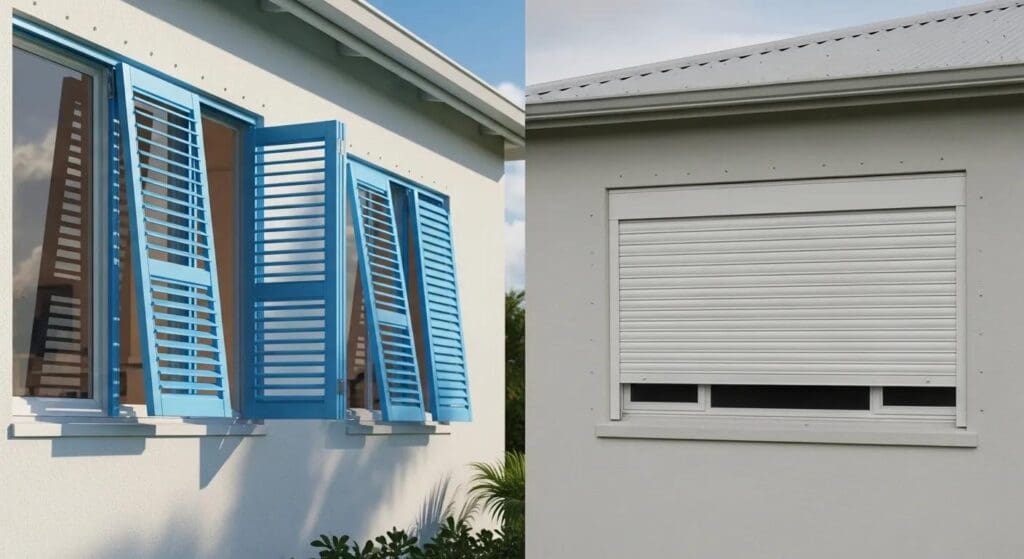

Bahama Shutters vs. Other Options — A Clear, Practical Comparison
Bahama hurricane shutters are top-hinged, louvered awning panels that pair daily shade and curb appeal with moderate storm protection—an especially popular choice for Coastal Carolina homes. This guide explains what Bahama shutters are, how they work, and why material choices and rated performance matter for homeowners in Wilmington, Myrtle Beach, Oak Island, Topsail, and surrounding communities. You’ll get straightforward benefits, the marine-grade material facts that matter in salt air, and side-by-side comparisons with Colonial, Accordion, Rolldown, hurricane screens, and storm panels. We also cover the decision factors—budget, look, protection level, and local code—plus installation, maintenance, and warranty realities. If you want expert help, the article points to professional services and a free estimate for a custom design pressure analysis and code-compliant installation.
What Are Bahama Hurricane Shutters and Their Key Benefits?
Bahama shutters mount above the window on a top hinge and swing outward to form an awning. Their louvered face blocks wind-driven rain, cuts solar heat gain, and adds architectural character — all while letting you keep an outward view when propped open. In a storm, a properly secured Bahama shutter helps divert wind and flying debris forces away from glass and toward the shutter frame. Because salt air speeds corrosion, material quality and fastener choice are critical to long-term performance.
How Do Bahama Shutters Provide Shade, Style, and Storm Protection?
By angling the louvers, Bahama shutters intercept direct sun and reduce interior heat so your cooling system runs less in summer. Their top-hinged design lets you balance daylight, view, and shade for year-round comfort.
When storms arrive, a continuous shutter face and solid hinge points transfer pressure away from the glass—giving meaningful protection for moderate events even if a particular unit isn’t rated for extreme design pressures. That mix of shade, style, and protection is why many homeowners choose Bahama shutters.
- Everyday homeowner benefits at a glance:
- Shade and Energy Savings: Angled louvers cut solar gain and lower cooling demand.
- Curb Appeal: The awning profile complements many coastal home styles.
- Storm Defense: Helps block wind-driven rain and light debris impacts.
These practical advantages make Bahama shutters a strong choice where daily use and appearance matter. Next, we’ll explain why marine-grade materials are so important on the coast.
Why Are Marine-Grade Materials Important for Bahama Shutters in Coastal Areas?
Salt-laden air quickly degrades ordinary metals and fasteners, which can weaken shutters and compromise safety. Marine‑grade 6063‑T6 aluminum resists atmospheric corrosion while keeping its shape under repeated loads, and 18‑8 stainless steel fasteners resist pitting and galvanic corrosion that often cause coastal failures. Choosing these materials extends service life, cuts maintenance needs, and helps preserve warranty coverage when manufacturers require corrosion‑resistant components. In short: marine‑grade parts lower life‑cycle cost and improve storm performance for Coastal Carolina homes.
How Do Bahama Shutters Compare to Other Popular Hurricane Shutter Types?
Bahama shutters prioritize shading and appearance with moderate protection. Other systems trade off looks for faster deployment, higher rated impact resistance, or lower upfront cost. Comparing protection level, deployment method, typical cost, and year‑round use helps you pick the right option for your priorities.
The table below summarizes these distinctions for quick, practical comparison on coastal properties.
This table shows Bahama shutters excel at aesthetics and shading but may not match rolldown or accordion systems when highest rated impact resistance is required. Below we break down common head‑to‑head differences.
What Are the Differences Between Bahama and Colonial Shutters?
Bahama shutters hinge at the top and form an awning that shades glass while allowing airflow and a view. Colonial shutters hinge at the sides to fully cover the window when closed. Functionally, Bahama provides daily shading plus moderate protection; Colonial offers full closure and can be specified to meet higher rated protection. Style also plays a role: Bahama suits coastal and modern facades, while Colonial fits historic and traditional homes. Decide whether year‑round shade or full closure matters more for your project.
How Do Bahama Shutters Compare to Accordion Shutters in Security and Ease of Use?
Accordion shutters deploy quickly across openings and can offer high rated protection without storage. They collapse into a narrow stack when unlocked. Bahama shutters require manual propping and aren’t intended for instant full closure across very large openings, so accordion systems are the better choice when rapid action and the highest rated security are priorities. Maintenance differs too: accordion systems rely on tracks that need cleaning and lubrication, whereas Bahama shutters depend on hinge health and louver fastenings. Your choice should reflect priorities for speed, permanence, and year‑round appearance.
What Makes Bahama Shutters Different from Rolldown Shutters in Convenience and Control?
Rolldown shutters often include motors and meet higher design pressures, providing strong continuous protection, insulation, and security when closed. Bahama shutters give you hands‑on control for shade and view but lack the automation and typically the full rated protection of rolldown systems. Rolldown units come with higher upfront cost and may need electrical work; Bahama shutters are mechanically simple and visually integrated. If automation and maximum protection are musts, rolldown is usually preferable; if daily shading and curb appeal matter most, Bahama stays very attractive.
How Do Bahama Shutters Stack Up Against Hurricane Screens and Storm Panels?
Hurricane screens focus on ventilation and visibility for large openings, while removable storm panels offer economical impact resistance but require storage. Bahama shutters sit between these options: they bring consistent curb presence plus moderate protection, ideal for modest openings where shade and aesthetics matter. Screens work well for big patio enclosures where visibility and insect control are priorities, though they provide less impact resistance than solid panels or rated shutters. Panels can be the budget‑minded choice for irregular openings but add storage and handling work.
- Quick deployment and storage notes across systems:
- Accordion/Rolldown: Immediate, built‑in protection; no external storage required.
- Panels: Affordable; require off‑season storage and manual handling.
- Bahama/Screens: Year‑round presence; screens favor visibility, Bahama favors shade.
These points should help you weigh protection needs, aesthetics, and ease of use for your property.
Which Hurricane Shutter Type Is Best for Your Coastal Carolina Home?
Start by answering three practical questions: do you prioritize appearance or maximum protection; what is your budget for purchase and lifecycle maintenance; and do local code or insurance rules require rated systems? Historic homes often pair well with Colonial or custom Bahama profiles to preserve character, while condos and HOAs may favor discreet rolldown or removable panels. For large lanais, screens or panels usually make the most sense for cost and handling; for main living‑area windows that get daily use, Bahama shutters frequently hit the sweet spot.
- Quick checklist before you decide:
- Aesthetics: Will the style match your home’s architecture?
- Budget: Have you accounted for lifecycle costs, including maintenance?
- Protection Requirements: Do local codes or insurance policies require rated systems?
If you’d like a recommendation tailored to Coastal Carolina conditions, American Hurricane Shutters provides a custom design pressure analysis and free estimate to match performance needs with local codes. We install marine‑grade materials like 6063‑T6 aluminum and 18‑8 stainless steel fasteners and back work with a local 7‑year warranty to help homeowners get durable, compliant results.
What Should You Know About Installation, Maintenance, and Warranty for Bahama and Other Shutters?
Professional installation ensures shutters meet design pressures, align correctly, and use the proper fasteners and anchorage for local building codes and wind loads. Certified installers reduce the risk of improper attachment that can lead to failure in storms, and they can manage permits and inspections when required. Warranty terms differ by provider and product—look specifically for material and corrosion coverage in coastal settings and clear labor and fastener language. Regular salt‑air maintenance preserves operation and keeps warranty protections valid.
Why Choose Professional Installation by OSHA 30 Certified Technicians?
OSHA 30 certification means crews understand safe, code‑aware practices for elevated work, structural anchoring, and building penetrations. That experience lowers on‑site risk and reduces installation errors that could void warranties or fail under wind loads. Installers who know Coastal Carolina codes also make permitting and inspections easier, saving you time and uncertainty. Choosing certified professionals increases the likelihood your shutters perform as intended when severe weather hits.
Routine checks and written maintenance records help preserve corrosion resistance and ensure shutters deploy reliably when you need them.
What Are Essential Maintenance Tips for Coastal Hurricane Shutters?
A short maintenance routine keeps shutters reliable in salt‑air conditions. Rinse aluminum and stainless components with fresh water to remove salt, inspect hinges and fasteners for corrosion, and lubricate moving parts with manufacturer‑recommended products. Replace corroded fasteners promptly with corrosion‑resistant parts to avoid galvanic issues. Finally, run deployment tests before each season to spot and fix any problems early.
- Maintenance summary for Coastal Carolina homeowners:
- Rinse & Inspect: Flush salt build‑up every 3 months and check structural condition.
- Fastener Care: Replace any corroded fasteners with 18‑8 stainless options.
- Operational Test: Cycle shutters before hurricane season to confirm reliability.
With professional installation, marine‑grade materials, regular maintenance, and clear warranty terms, Bahama or alternative shutter systems will deliver dependable protection and long‑term value. For tailored guidance, free estimates, or a custom design pressure analysis, contact American Hurricane Shutters to review options for your Coastal Carolina property.
Frequently Asked Questions
1. What factors should I consider when choosing Bahama shutters for my home?
Think about aesthetics, budget, and protection needs. Aesthetics: how the shutters fit your home’s style. Budget: include initial cost plus maintenance over time. Protection: check local building codes and insurance requirements to see if rated systems are needed. Balancing those three factors will lead to the best choice for your property.
2. How do I maintain Bahama shutters to ensure their longevity?
Rinse shutters with fresh water every three months to remove salt, inspect louvers, frames, and fasteners for wear before hurricane season, lubricate moving parts per the manufacturer, and replace any corroded fasteners with marine‑grade options. Regular care keeps shutters functioning when storms arrive.
3. Can Bahama shutters be customized for different window sizes?
Yes. Bahama shutters are commonly custom‑sized for a wide range of window shapes and openings. Working with a professional installer ensures a proper fit and a design pressure analysis to meet local code requirements.
4. Are Bahama shutters suitable for all coastal climates?
Bahama shutters work well in many coastal settings, offering shade and moderate protection. In areas that regularly face the most severe hurricanes, you may need supplemental measures or a higher‑rated shutter type. Always evaluate local weather risks and consult an expert for the best solution.
5. What is the typical installation process for Bahama shutters?
Installation usually involves measuring openings, choosing appropriate marine‑grade materials, and anchoring shutters with corrosion‑resistant fasteners. Professional installers confirm attachments meet design pressures, handle permitting, and coordinate inspections to ensure a compliant, safe installation.
6. How do Bahama shutters affect energy efficiency in my home?
Bahama shutters reduce solar heat gain by shading glass while allowing airflow, which lowers cooling demand in hot months. That makes them a practical option for homeowners who want to improve comfort and reduce energy use without sacrificing outward views.
7. What warranty options are available for Bahama shutters?
Warranties vary by manufacturer. Typical coverage includes materials and workmanship, with specific terms for corrosion resistance in coastal environments. Review warranty details carefully—look for explicit coverage of materials, fasteners, and labor, and consider extended warranties tied to professional installation.
Conclusion
Bahama shutters offer a practical mix of year‑round curb appeal, energy savings, and moderate storm protection—an excellent fit for many Coastal Carolina homes. When built with marine‑grade components and installed professionally, they resist salt‑air deterioration and deliver reliable performance. For a solution tailored to your home and local codes, reach out for a professional consultation and free estimate to find the right shutters for your needs.