
User Reviews: How Easy Is It to Install Accordion Shutters at Home?
Accordion shutters are interlocking panels that fold to the sides of a window opening, staying permanently mounted to the frame to protect your home during storms. When homeowners read reviews about installing accordion shutters, the question they ask most is simple: can I do this myself, and how much time and effort will it take compared to hiring a pro? This guide pulls together real homeowner feedback, clear how‑to steps, common pitfalls, maintenance tips, and straightforward cost guidance so you can decide if a DIY install makes sense for your property. You’ll find measurement and mounting basics, a tools-and-materials checklist, aggregated homeowner insights about surprises and ease, and a direct comparison of DIY versus professional installation. Along the way we’ll cover safety and local code considerations for coastal properties, routine maintenance to keep shutters working reliably, and the best resources for accurate estimates and professional help.
How Easy Is DIY Accordion Shutter Installation for Homeowners?
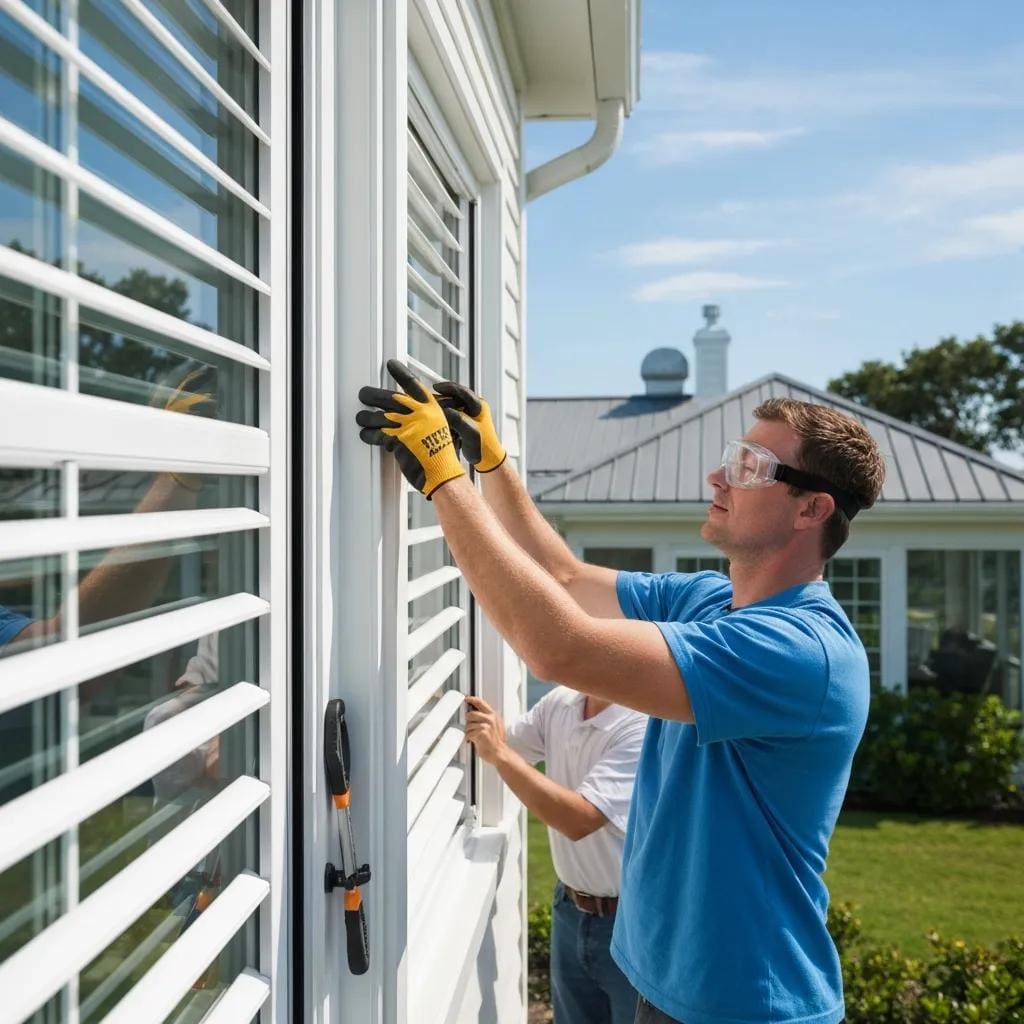
Most homeowners rate DIY accordion shutter installation as moderately difficult: it calls for careful measuring and drilling, choosing the right fasteners for your substrate, and at least one helper for larger panels. The core steps—mounting side tracks, fitting panels into those tracks, and installing top and bottom stops—are straightforward when openings are square and substrates are solid wood or masonry. Complexity increases with irregular openings, multi‑story installs, or unclear structural anchoring. If you’re comfortable with drills, levels, and working from ladders, a single‑window install often takes 2 to 4 hours; multiple openings or tougher substrates add time and risk. Knowing the tools and typical time per opening helps you judge whether DIY is a realistic option; the next section lists the specific tools and materials you’ll need.
What Tools and Materials Are Needed for DIY Installation?

A precise tools-and-materials list reduces surprises and prevents rework from wrong anchors or fasteners. Must-have tools include a hammer drill for masonry, a 1/4″–3/8″ cordless drill with percussion for pilot holes, a long spirit or laser level for track alignment, tape measure, caulk gun, rivet gun, and PPE like safety glasses and work gloves. Recommended materials: powder‑coated aluminum accordion panels, anchors sized to your substrate, 18‑8 stainless steel fasteners for corrosion resistance, silicone or polyurethane sealant for weatherproofing, and padlocks or keyed locks if your shutter operation requires them. Choosing the correct anchors and fasteners cuts pullout risk in high winds and directly affects long‑term protection.
Quick prep checklist before you start the step‑by‑step: measure each opening twice, inspect the substrate for soundness, confirm panel sizes and hardware, and pre‑drill alignment holes. With that done, you’re ready for the installation workflow below.
What Are the Step-by-Step Instructions for Installing Accordion Shutters?
Start by measuring the opening height and width at multiple points to confirm squareness—accurate measurements are the foundation of a good fit. Mark and level the vertical track locations on each side of the opening, then fasten those tracks with anchors and 18‑8 stainless fasteners where corrosion resistance is needed—proper anchoring lets the shutter resist its design pressure. Slide the panels into the tracks and install top and bottom stops, then test deployment and stowage to ensure smooth operation and make minor alignment tweaks as needed. Finish by sealing where panels meet the frame or substrate, installing any locks or latches, and running a full operation check. Most troubleshooting centers on track alignment and fastener tightness; maintenance tips later cover how to keep those parts working.
Before we move on to homeowner reviews and common challenges, compare the components below so you can see which parts of the job you can realistically handle yourself.
That breakdown shows track alignment and anchoring drive time and skill needs; once anchors are correct, panel fitting and finishing move quickly.
What Do Homeowners Say About Installing Accordion Shutters Themselves?
Reviews from homeowners make a consistent point: preparation and the right fasteners make the difference between a satisfying DIY job and multiple hardware‑store runs. Many DIYers say straightforward openings with concrete or wood frames are workable; openings with stucco returns, arches, or odd dimensions cause most headaches. Reviewers also stress the value of having a helper for panel handling and laying out hardware before you start so you avoid interruptions. These takeaways set realistic expectations about time, crew size, and surprises; next we break down the common installer issues and quick fixes reported by users.
What Are Common Challenges Reported by DIY Installers?
Frequent pain points include measurement errors—assuming windows are perfectly square can lead to misfit panels and trim gaps that require rework. Track alignment mistakes are common: if the vertical tracks aren’t plumb and parallel, panels bind or operate roughly, shortening the system’s life and ease of use. Fastener mistakes happen when installers use ordinary stainless screws instead of marine‑grade 18‑8 stainless or select anchors that are too small for the substrate, increasing pullout risk under wind loads. Typical fixes are re‑measuring openings, loosening and realigning tracks before retightening, and swapping in substrate‑appropriate anchors to restore structural integrity.
These recurring issues underscore why correct fastener choice matters; next we summarize how users rate installation and daily operation.
How Do Users Rate the Ease of Operation and Installation?
Users generally describe daily operation as “easy to moderate” and installation as “moderate.” Once installed correctly, accordion shutters get high marks for quick deployment and compact stowage—many homeowners can operate them solo. Installation scores drop when DIYers run into alignment, substrate, or anchoring problems; those who follow manufacturer templates and use 18‑8 stainless fasteners report better long‑term satisfaction. Durability feedback often ties back to corrosion‑resistant hardware and proper sealing against salt air in coastal locations, which keeps operation smooth. The next section compares these DIY experiences with what professional installation delivers on compliance, speed, and engineered attachment.
How Does Professional Installation Compare to DIY Accordion Shutter Installation?
Professional installation brings advantages in safety, speed, and code compliance. Trained crews know structural attachment methods, perform engineered load analysis, and consistently pick the right fasteners and anchors to lower long‑term failure risk. Professionals commonly run a Design Pressure Analysis to size attachments, and they’ll use 18‑8 stainless fasteners and engineered brackets to meet or exceed local codes—important in hurricane‑prone coastal areas. While pros add labor cost, they save time, reduce permit or compliance risk, and often back their work with warranties or post‑install service that DIY jobs don’t include. Below we explain the specific pros of professional installation and summarize cost tradeoffs to help you decide.
What Are the Advantages of Choosing Professional Installation?
Professional installers use engineered practices—like Design Pressure Analysis—to match attachment methods to local wind loads and substrate conditions, lowering the chance of failure in a storm. They also standardize corrosion‑resistant fasteners (often 18‑8 stainless steel), anchor strategies for masonry or wood, and alignment techniques that reduce operational issues. Professionals can finish multi‑opening jobs faster, handle permit questions, and sometimes include post‑install inspections and warranty coverage that add long‑term value. Free consultations and written estimates let you compare pro costs to DIY before you commit—especially valuable for complex or multi‑story jobs.
Homeowners often ask how costs stack up; the table below summarizes typical cost elements and associated risks.
In short: DIY can save on labor but raises compliance and structural risk; professional installation reduces risk and time at the price of labor.
Note for DIY-minded homeowners: many still want a quick DIY estimate and a pro backup if the project grows. This article keeps a DIY focus while clearly presenting professional options where they make sense—to inform decisions, generate leads for service, and help existing customers get reliable protection.
What Are the Most Frequent Questions About Installing Accordion Shutters at Home?
Common homeowner questions ask whether DIY installation is safe, how long installs take, and whether permits or special anchors are required in coastal zones. Safety depends on your comfort with ladders and structural anchoring—single‑story installs with solid substrates are lower risk than multi‑story or stucco retrofits. Time estimates vary by opening and substrate: a practiced DIYer can complete a standard window in 2–4 hours, while professionals often finish the same opening in under two hours thanks to experience and teams. Below are focused answers to the frequent homeowner questions to help with quick planning and decisions.
Is It Safe for Homeowners to Install Accordion Shutters Themselves?
Yes—on single‑story openings with the right PPE, correct fasteners, and a helper for larger panels. Essential precautions: safety glasses, sturdy ladders, and avoiding work near drop‑offs. Risk rises when working at height, on multi‑story facades, or when anchoring into unknown substrates where structural attachments are critical; in those cases a professional assessment lowers hazard and compliance risk. If you’re unsure at any point, stop and get a professional consultation—proper anchoring and safe access are worth it for your safety and for preserving warranties.
How Long Does It Typically Take to Install Accordion Shutters?
A single standard window installed by a DIYer usually takes 2–4 hours, including measuring, track installation, panel fitting, sealing, and testing—assuming you have the right tools and a helper. Professional teams shorten that time, often completing an individual opening in under two hours and multiple openings in a single day depending on site conditions. Factors that add time: uneven openings, masonry anchors or blockout repairs, working from lifts or scaffolds for multi‑story homes, and complex trim or arch details. Preparing materials and measuring carefully before you drill will cut on‑site time and reduce rework.
How Can Homeowners Maintain Accordion Shutters After Installation?
Routine maintenance keeps accordion shutters working smoothly and preserves their protective function. Focus on cleaning, checking fasteners and tracks, and lubricating moving parts. After salt exposure, rinse with fresh water; inspect 18‑8 stainless fasteners for tightness; and lubricate track areas with a silicone‑based lubricant to prevent binding. Do visual checks before and after storm season for loose anchors, bent panels, or impact damage, and tighten or replace hardware as needed. The maintenance table below lists common tasks, recommended frequency, and the tools you’ll need.
What Are Simple Maintenance Steps for DIY-Installed Shutters?
Keep it simple: rinse panels and tracks with fresh water, clear debris from track channels, and wipe powder‑coated surfaces with a mild detergent to prevent salt buildup. Visually inspect fasteners and anchors and tighten loose screws; replace damaged or corroded hardware with 18‑8 stainless fasteners to maintain corrosion resistance in coastal environments. Lubricate tracks and pivot points with silicone spray to keep deployment smooth, and test full deployment and stowage quarterly to catch issues early. These inexpensive steps often prevent the need for professional repairs, though some problems will need specialist service.
When Should Homeowners Schedule Professional Maintenance?
Schedule a pro inspection after major storms, when you see structural damage, or if you notice persistent operation issues that DIY fixes don’t solve. Professionals can perform post‑storm checks, replace or re‑engineer attachments if anchors have pulled, and handle warranty repairs. When panels are dented, tracks bent, or anchors pulled out, professional service reduces the risk of failure in future storms and restores certified protection. Knowing when a problem exceeds home maintenance capability helps protect your investment.
Where Can Homeowners Get Accurate Cost Estimates for Accordion Shutter Installation?
Accurate estimates combine measured openings, substrate assessment, and labor assumptions; online calculators are a useful starting point, but onsite estimates are the gold standard. A cost calculator helps you model variables—number of openings, panel material like powder‑coated aluminum, and whether you plan to DIY or hire pros—to produce a materials‑first budget range. For complex jobs or to ensure code‑compliant anchoring and engineered attachments, a free consultation with an experienced installer provides measurements, recommendations, and a formal estimate that reflects real site conditions. Below we explain how to use a cost calculator effectively and outline the free consultation services some installers offer to validate those numbers.
How Does the Accordion Shutter Cost Calculator Help Estimate DIY Installation Expenses?
Our cost calculator breaks costs into line items—panel material, fasteners and anchors, sealant, and tool rental or purchase—and lets you enter opening counts and sizes to get a materials‑first estimate. Key inputs to watch: substrate type (masonry versus wood) which affects anchor needs, and whether you’re assuming DIY labor or pro hourly rates; calculators often simplify labor, so review assumptions carefully. Calculators are great for budgeting and comparing DIY versus professional scenarios, but they can’t replace an onsite inspection for hidden issues like substrate weakness or structural reinforcement. Use the calculator to focus questions for a subsequent professional consult.
Practical next step: pair a calculator estimate with a free professional consult to validate scope before committing to full DIY or pro installation.
What Free Consultation Services Does American Hurricane Shutters Offer?
American Hurricane Shutters (AHS) offers free consultations and quick estimate tools to help homeowners evaluate accordion shutter options, confirm measurements, and discuss engineered attachment approaches before purchase or installation. In a free consult you can expect a measurement review, recommendations on shutter types (for example, powder‑coated aluminum accordion shutters), discussion of engineered protection like Design Pressure Analysis, and guidance on appropriate fasteners such as 18‑8 stainless steel for coastal corrosion resistance. These consultations supplement DIY research by identifying site‑specific challenges and helping you compare DIY material costs to professional installation. Starting with a calculator and following up with a free consult reduces the risk of unexpected scope or compliance issues.
Practical summary: use the calculator to set a budget, then verify site needs and pricing with a free consultation.
- Key takeaway: use calculators for budgeting, then validate with a free consult.
- Bring in professional advice when substrates or openings are complex.
- Expect better long‑term protection when engineered attachments are applied.
These lists and tables outline practical paths to estimating costs and choosing the right installation approach.
- Start with accurate measurements and a cost calculator.
- Validate assumptions with a free professional consultation.
- Choose professional installation for complex or multi‑story installs.
This structured approach helps homeowners balance cost, safety, and longevity when deciding how to install accordion shutters.
Frequently Asked Questions
What are the key safety precautions for DIY accordion shutter installation?
Put safety first: wear eye protection and gloves, use a stable ladder, and avoid working over drop‑offs. Have a helper for larger panels and use proper PPE when drilling. If you’re on a multi‑story facade or unsure about the substrate, hire a professional to avoid unsafe anchoring or fall hazards. Prioritizing safety protects you and helps ensure your installation meets compliance requirements.
Can accordion shutters be installed on non-standard window sizes?
Yes. Accordion shutters can be custom made for non‑standard openings, but custom work can complicate installation. Take precise measurements and consult the manufacturer or a professional installer to ensure a proper fit. Custom panels may add time and cost, so factor that into your plan; for very irregular openings, professional installation is often the safest route.
What is the typical lifespan of accordion shutters?
Lifespan depends on materials and maintenance. High‑quality, powder‑coated aluminum shutters can last 10–20 years or more with proper care. Regular cleaning, inspections, and timely repairs extend service life. Coastal homeowners should watch for corrosion and routinely check fasteners to keep shutters fully protective.
Are there any specific building codes for installing accordion shutters?
Yes—codes vary by region and are stricter in hurricane‑prone areas. Codes can dictate materials, installation methods, and fastener types to ensure safety and compliance. Check local building authorities or consult a professional installer to understand requirements in your area. Following code is important for storm protection and for maintaining insurance coverage.
What are the benefits of hybrid installation (DIY prep and professional finish)?
Hybrid installation blends DIY savings with pro expertise. Homeowners can handle measuring and material purchasing while professionals handle critical attachment, alignment, and final compliance checks. This approach can lower labor costs and time on site while giving you reassurance that the installation meets code and structural needs.
How can homeowners troubleshoot common issues with accordion shutters?
Regularly inspect for misalignment, loose fasteners, or debris in tracks. If shutters stick, clean and lubricate the tracks. For alignment problems, confirm the vertical tracks are plumb and parallel. If issues persist, consult the installation manual or call a professional for problems involving structural anchoring or panel fitting.
Conclusion
Installing accordion shutters can be a cost‑saving, empowering project for many homeowners—if you understand the tools, techniques, and common challenges. Use careful measuring, the right fasteners, and sensible safety practices to improve your chances of a successful DIY job. For complex openings, multi‑story work, or any doubt about anchoring and code, schedule a professional consultation. If you’d like personalized guidance, consider a free consult with a trusted installer to confirm safety, compliance, and the best approach for your home.