
Understanding Roll-Down Hurricane Shutters vs. Other Types: A Practical Comparison for Coastal Carolina Homes
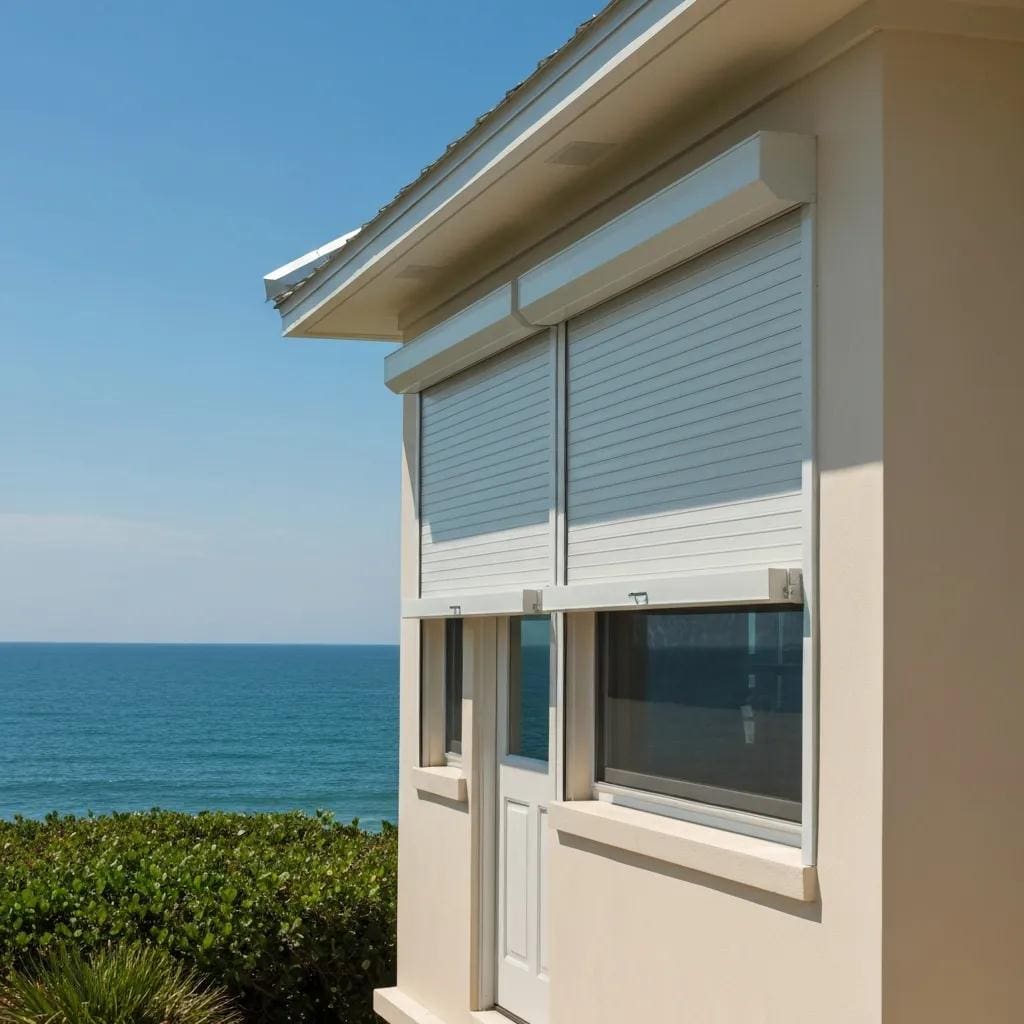
Roll-down hurricane shutters unroll from a protective housing—either by motor or by hand—to cover windows and doors, forming a continuous barrier against wind and flying debris. This guide explains how roll-down shutters work, compares them with other popular shutter styles, and shows why the right choice matters for homes along the North and South Carolina coast where hurricanes and salt air are everyday concerns. Homeowners often juggle protection, cost, curb appeal, and maintenance when choosing storm protection; this article gives a step-by-step way to weigh those trade-offs and pick the solution that fits your property. We define roll-down systems, highlight their advantages, compare accordion, Bahama, colonial, screen and panel options, and break down protection, cost, and long-term value in practical terms. You’ll also find a localized checklist for NC/SC conditions and clear next steps for a personalized estimate. Keywords like hurricane shutter comparison, benefits of roll down shutters, and accordion vs. roll down shutters are woven in to help you find the answers you need.
What Are Roll-Down Hurricane Shutters and Their Key Benefits?
Roll-down shutters are built from interlocking aluminum slats that roll into a header box and slide down tracks to cover openings, offering impact resistance and wind protection. They form a continuous, tested barrier against debris and pressure from high winds, and they can be operated manually or with a motor for fast deployment. Roll-down systems give several advantages: strong storm protection, improved security, and operational convenience—especially useful for coastal properties where quick closure and full coverage matter. Corrosion-resistant aluminum and impact-rated slats extend service life in salt-air environments, and motorized units can tie into smart-home systems for one-button control. Knowing these features helps homeowners decide whether roll-down shutters meet needs like multi-story coverage or oversized openings common on coastal homes.
Roll-down shutters combine weather protection with everyday convenience. The next section outlines the specific features that make them well suited to coastal vulnerabilities like high winds, flying debris, and salt corrosion.
What Features Make Roll Down Shutters Ideal for Coastal Homes?
Roll-down shutters are designed for coastal storm loads: they offer motorized deployment, complete full-coverage, and impact and wind ratings aligned with regional codes. Motorized models close with a button—reducing the time your home is exposed—while manual versions provide a lower-cost option with the same physical barrier. Header boxes and guide tracks are typically aluminum with protective finishes to resist salt-air corrosion, and impact-rated slats are tested for wind speed and debris impact to meet code. These traits make roll-down shutters a strong fit for multi-story houses and large picture windows often found along the Carolina coast. Evaluating those features alongside local storm patterns and code requirements helps you choose a configuration that balances protection, durability, and convenience.
Those coastal-focused features also connect to security and everyday ease of use, which we cover next.
How Do Roll Down Shutters Provide Superior Security and Convenience?
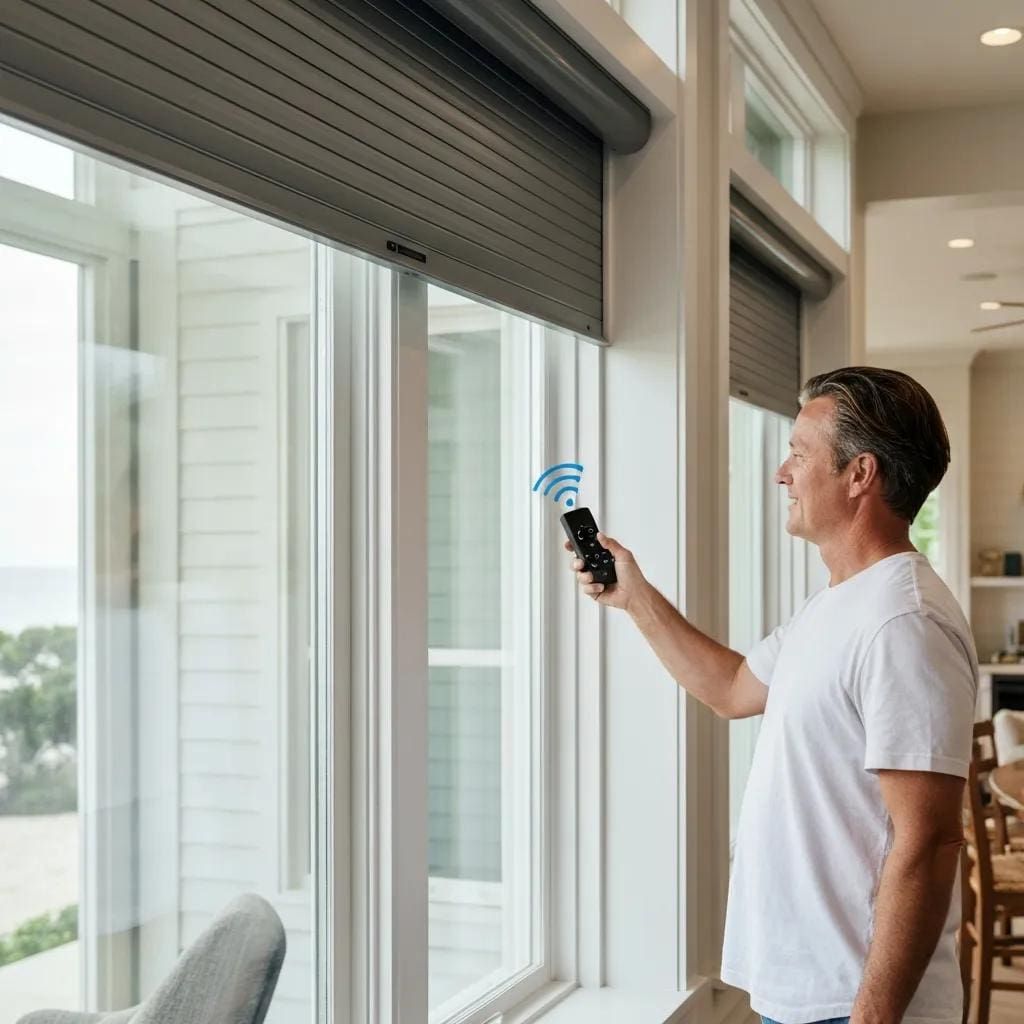
Roll-down shutters add security by acting as a physical barrier that deters break-ins and shields glass from impact, and they add convenience through motorized controls and smart-home integration. Motorized systems cut deployment time and reduce the chance of human error during urgent storm prep. Security benefits include visible deterrence and greater resistance to forced entry; maintenance is straightforward—periodic cleaning and motor checks keep systems dependable. Many homeowners find the combined value of protection and automation offsets higher upfront costs, and some insurers offer discounts for qualified installations. Understanding how security and convenience complement each other explains why roll-down shutters are often recommended where both safety and ease matter.
How Do Accordion Shutters Compare to Roll Down Shutters in Cost and Functionality?
Accordion shutters are fixed panels that fold together and sit beside openings, while roll-down shutters retract into a roller box above the opening. Both protect against storms, but they differ in how they deploy, their visual impact, and cost. Accordion shutters swing or fold closed instantly and remain visible on the façade; roll-down shutters tuck neatly away and can be motorized for remote operation. Accordion systems are simple and sometimes quicker to install, while roll-downs offer automation and flexible coverage for large or irregular openings. Durability and repairability depend on design and exposure: accordion shutters have fewer moving parts but are always exposed, while roll-down slats are protected when retracted. These differences help homeowners match system choice to budget, appearance, and daily convenience.
Below is an overview of cost differences and typical use cases, followed by a practical per-square-foot comparison for 2025 market expectations.
What Are the Cost Differences Between Accordion and Roll Down Shutters?
Accordion shutters usually start with a lower base cost per square foot than motorized roll-down units, but final pricing varies with opening size, custom options, and whether you add motorization. Roll-down costs rise with motorized actuators, larger roller boxes for wide openings, and impact-rated slat upgrades. Manual accordion shutters can be more budget-friendly for smaller openings where a permanent, always-ready solution is acceptable. Installation labor differs too: accordion shutters mount directly to jambs with straightforward anchoring, while roll-down systems require accurate header installation and electrical work for motors. Looking at life-cycle value, roll-down shutters can justify higher upfront costs through greater convenience and protection—especially for coastal homes that need frequent storm readiness.
Intro to cost table and purpose: the table below shows common per-square-foot ranges and typical use cases to help compare upfront costs.
This table shows when the higher per-square-foot cost of motorized roll-down shutters can be worth it—for larger openings and faster deployment—while accordion shutters remain a cost-effective, always-ready choice for many homes.
Short summary: choose accordion when lower upfront cost and simplicity are priorities; choose roll-down when automation and full coverage are more important.
What Are the Pros and Cons of Accordion Shutters Compared to Roll Down?
Accordion shutters’ main strengths are lower upfront cost, simple manual operation, and fewer mechanical parts to maintain. Because they’re permanently attached, they’re always ready and require minimal handling—appealing if you want a low-tech solution. On the downside, accordion panels are visible on the façade and can affect curb appeal. They also may not seal as neatly as a motorized roll-down. Roll-down shutters offer compact storage in a roller box, automation, and full coverage for large openings, but they carry higher initial costs and a bit more maintenance because of moving parts. The right choice depends on budget, curb appeal priorities, number of openings, and whether you value motorized convenience.
Recommendation: pick accordion for cost and simplicity; pick roll-down for automation, full-coverage, and convenience.
What Other Types of Hurricane Shutters Are Available and How Do They Differ?
Beyond roll-down and accordion options, homeowners can choose Bahama and Colonial shutters for a style-forward look, hurricane screens for lightweight year-round coverage, and removable storm panels for seasonal protection. Each option sits at a different point on the protection-versus-aesthetics scale: Bahama and Colonial shutters add architectural character with moderate protection, while screens and panels focus on affordability and easier installation or storage. Material choices—aluminum, polycarbonate, high-strength fabric—affect impact resistance and storage needs. Understanding these trade-offs helps match shutter type to your home’s style, budget, and whether you prefer a permanent or seasonal solution. The following sections break those choices down further.
How Do Bahama and Colonial Shutters Combine Style with Protection?
Bahama shutters hinge at the top and function as a permanent awning that also closes for storm protection—offering shading and an island-style look. Colonial shutters are two-panel, hinged units that close over openings for a classic appearance and moderate impact resistance, often chosen for historic or traditional homes where curb appeal matters. Both provide partial coverage compared with full-coverage systems like roll-down shutters, so they’re best when appearance and shading are priorities alongside some storm protection. Installation can be on hinges or tracks and sized to match openings; their visible presence can enhance curb appeal while giving intermittent defense against storms. These options suit homeowners who want architectural character with seasonal protection benefits.
What Are the Benefits of Hurricane Screens and Storm Panels?
Hurricane screens use high-strength fabric stretched over frames to deliver lightweight protection that’s easy to store and deploy seasonally; they also serve as insect screens and reduce solar heat gain. Storm panels—made from aluminum, polycarbonate, or steel—are affordable, removable covers that protect openings during storm season and can be stored when not in use. Fabric screens are lighter and take less storage space but offer limited debris protection compared with rigid panels; polycarbonate panels strike a balance with better impact resistance at moderate weight and cost. Choosing between screens and panels depends on your preference for permanence, how often you face storms, and storage logistics. Seasonal users often pick storm panels, while those wanting a lighter, multi-use option may prefer hurricane screens.
How Do Roll Down Shutters Compare to Other Types in Protection, Cost, and Maintenance?
Comparing protection, cost, and maintenance shows clear trade-offs: roll-down shutters lead for full coverage and automation; accordion shutters provide low-maintenance permanence; Bahama and Colonial shutters balance aesthetics with moderate protection; and screens or panels focus on affordability and storage flexibility. Protection depends on impact ratings and installation quality; long-term cost depends on materials, motorization, and upkeep. Maintenance ranges from periodic cleaning and motor checks for roll-down systems to simple checks and storage for panels and screens. Understanding these differences helps homeowners calculate life-cycle value and potential savings on insurance or energy bills tied to each option.
The next sections dig into protection and durability specifics, installation and maintenance expectations, and long-term cost considerations.
What Are the Key Differences in Protection Levels and Durability?
Protection depends on impact and wind-speed ratings plus the materials used: heavy-duty aluminum roll-down slats with tested impact ratings provide top-level debris resistance and wind-load performance. Accordion shutters can be strong but may concentrate stress at seams under extreme loads; Bahama and Colonial shutters typically offer less impact resistance but still reduce wind-driven glass damage. Coastal durability also hinges on corrosion resistance—protected aluminum outperforms untreated metals in salt-air—and finish choice matters for longevity in NC/SC conditions. Real-world durability ties to maintenance and exposure: homes closest to the ocean will need more frequent inspections to manage salt-related wear. These durability points help you choose between maximum protection and systems that prioritize aesthetics or cost.
How Do Installation and Maintenance Requirements Vary Among Shutter Types?
Installation complexity and labor vary: roll-down shutters require accurate header installation and, for motorized models, electrical hookup and calibration; accordion shutters usually mount to jambs with simpler anchoring. Professional installation ensures code-compliant attachments and proper sealing, which improves protection and can affect insurance eligibility; small storm panels or fabric screens may be DIY-friendly but won’t offer the same permanent integration. Routine maintenance for roll-down systems includes cleaning the guide tracks, lubricating moving parts, and testing motors annually. Accordion and hinged shutters need periodic hardware checks and cleaning; storm panels and screens should be inspected before each season for damage. Following clear maintenance steps reduces failure risk and extends service life for any system.
Intro to long-term cost table: the table below summarizes long-term value factors and notes for common shutter types to guide life-cycle decisions.
This table highlights how initial investment, maintenance, and protection interact to shape long-term value. Homeowners should weigh upfront cost against expected storm frequency and their desired level of convenience.
Bottom line: a higher upfront investment in motorized roll-down shutters can translate to stronger protection, lower storm-damage risk, and potential insurance and resale benefits—often a smart choice for homes in high-exposure coastal areas.
How Do You Choose the Best Hurricane Shutters for Your Coastal Carolina Property?
Picking the right shutters means evaluating budget, the number and size of openings, your home’s architectural style, local building-code rules, and whether you prefer permanent or seasonal protection. Start with an audit—measure windows and doors and note orientations—then check local code and insurance requirements for impact protection. Think about operation: do you want motorized, one-button deployment or a simple manual system? Factor in maintenance and storage for removable options. Balancing these points with long-term value, including possible energy or insurance savings, will point you to the best choice for NC/SC coastal conditions. Use the checklist below to prioritize decisions and move toward a personalized estimate.
Use this prioritized checklist to evaluate choices quickly and move toward a personalized estimate.
- Budget and life-cycle cost: Compare initial cost with expected lifespan and upkeep.
- Opening size and frequency of use: Choose motorized roll-down for large, frequently used openings.
- Aesthetic priorities: Pick Bahama/Colonial for curb appeal or roll-down for a clean look when retracted.
- Local code and insurance considerations: Verify required impact ratings and possible premium reductions.
- Storage and permanence: Decide between permanent systems and seasonal removable panels or screens.
What Factors Should Homeowners Consider When Selecting Shutters?
Homeowners should weigh four core factors—level of protection, operation and convenience, aesthetics, and long-term cost—while considering local climate and code requirements specific to coastal NC/SC. Protection is driven by impact ratings and proper installation; operation covers manual versus motorized deployment and smart-home options. Aesthetics affect curb appeal and resale—Bahama or Colonial may appeal there—while long-term cost balances material durability, motorization premiums, and maintenance. Prioritizing these factors in the order that matters most to your household clarifies whether roll-down, accordion, screens, or panels best meet your goals. With that clarity, you’ll be ready to request a free, personalized estimate with realistic expectations.
How Can You Get a Free, Personalized Estimate for Hurricane Shutters?
- Content Intent: To inform homeowners about hurricane protection options, generate leads for estimates, and support existing customers with clear guidance.
Requesting a free, personalized estimate usually starts with basic property details—how many openings you have, approximate sizes, and any architectural constraints—and choosing between an in-home visit or a virtual consultation.
- Gather measurements or clear photos of each opening.
- Request a professional estimate that lists product options (roll-down, accordion, Bahama, Colonial, screens, panels) and cost projections—use the cost calculator when available.
- Schedule an on-site measurement and confirm an installation timeline if you decide to proceed.
Expect straightforward recommendations, a clear comparison of motorized versus manual options, and a timeline from estimate to installation. This step-by-step approach helps ensure the estimate is accurate and tailored to coastal NC/SC conditions while keeping pricing and installation details transparent.
One practical tip: having accurate opening measurements and any existing window/door documentation speeds the estimate process and reduces surprises at installation.
Why Choose American Hurricane Shutters for Your Roll Down and Other Hurricane Shutter Needs?
American Hurricane Shutters focuses on coastal North and South Carolina and carries a full range of products: Roll-Down Shutters, Accordion Shutters, Bahama Shutters, Colonial Shutters, Hurricane Screens, and Storm Panels. We emphasize custom, high-quality systems that meet or exceed Florida Building Code standards and back our work with professional installation and a transparent online cost calculator. Serving coastal communities—Wilmington, Myrtle Beach, Oak Island, Topsail, New Bern, Pawleys Island, and others—we translate technical comparisons into real-world installations suited to regional conditions and homeowner priorities.
What Local Expertise and Quality Standards Does American Hurricane Shutters Offer?
We target service for coastal North and South Carolina and design products and installations to meet regional code expectations. Our shutters are built to meet or exceed Florida Building Code standards as stated in product information. Our product line spans roll-down, accordion, Bahama, Colonial, hurricane screens, and storm panels, all installed by trained professionals to ensure proper attachment and performance. Local experience with storm patterns and salt-air corrosion informs our material choices and maintenance recommendations. Professional installation by our crews helps ensure code compliance and long-term performance for coastal homes.
What Do Customers Say About Their Experience with American Hurricane Shutters?
Local case studies and testimonials build trust—American Hurricane Shutters encourages using customer stories and before/after photos to show installation quality and real-world results. Sharing examples from Wilmington, Myrtle Beach, and nearby towns helps homeowners picture how systems perform on similar homes. While specific testimonials aren’t included here, showcasing regional installations and documented outcomes gives prospective customers confidence in product selection and contractor capability. Including imagery and project summaries alongside technical details helps homeowners compare expected results across shutter types.
Verified local examples and documented installations help homeowners understand installation timelines, aesthetics, and operation when choosing a shutter system.
Hurricane protection choices combine technical performance, cost, aesthetics, and regional factors. The comparisons, checklists, tables, and steps above are designed to guide homeowners in selecting, evaluating, and getting a personalized estimate for the system that best fits their coastal Carolina property’s risk profile.
Frequently Asked Questions
What Maintenance Is Required for Roll Down Hurricane Shutters?
Regular maintenance keeps roll-down shutters reliable. Clean guide tracks and slats to remove debris that can hinder operation, lubricate moving parts, and have motors and electrical connections checked annually—especially before hurricane season. If you notice unusual noises or slow operation, call a professional for service. Routine care extends shutter life and ensures they work when you need them most.
Can Roll Down Shutters Be Customized for Different Window Sizes?
Yes. Roll-down shutters are available in custom sizes to fit a wide range of windows and doors. Manufacturers offer options for width, height, and color to match your home’s exterior. Provide accurate measurements and any style preferences when requesting a quote so the system fits and performs correctly.
How Do Roll Down Shutters Affect Home Insurance Premiums?
Installing roll-down shutters can reduce home insurance premiums. Many insurers offer discounts for qualifying storm protection that lowers the risk of wind and impact damage. Check with your insurance provider to confirm requirements for discounts and make sure installations meet local codes. Documenting the installation and compliance helps when negotiating rates.
Are Roll Down Shutters Suitable for All Types of Homes?
Roll-down shutters are versatile and work on single-family homes, multi-story buildings, and some commercial properties. They adapt to many architectural styles, but suitability depends on opening sizes, local codes, and aesthetic preferences. A professional assessment will confirm whether roll-down shutters are the right fit for your property.
What Is the Typical Lifespan of Roll Down Hurricane Shutters?
Lifespan varies by material, usage, and upkeep. High-quality aluminum roll-down shutters can last 20 years or more with proper care. Salt-air exposure, storm frequency, and maintenance practices all influence longevity. Regular inspections and timely repairs extend service life. Check manufacturer warranties for additional assurance.
How Do I Know If My Home Needs Hurricane Shutters?
Deciding whether you need hurricane shutters depends on location, storm frequency, and the vulnerability of your openings. Coastal homes and properties in hurricane-prone areas benefit most. Also consider window and door sizes and local building codes that may mandate impact protection. A local expert can provide a tailored recommendation based on your home and risk profile.
Conclusion
Choosing the right hurricane shutters—especially roll-down models—gives homeowners a balance of protection, convenience, and curb appeal suited to coastal Carolina conditions. Understanding the strengths and trade-offs of each shutter type helps you make an informed choice that protects your home and fits your lifestyle. Take the next step: request a personalized estimate so we can recommend the best solution for your property and help you prepare for the next storm.