

Roll‑Down vs. Accordion Hurricane Shutters — Which Is Right for Your Coastal Home?
Hurricane shutters form a physical barrier that protects windows and doors from wind, flying debris, and water intrusion. Two of the most common choices for coastal properties are roll‑down and accordion shutters. This guide breaks down how each system works, what makes one a better fit for a given opening, and the practical trade‑offs—cost, security, upkeep, and local code requirements—that influence the decision. Coastal Carolina homeowners need comparisons that are clear, locally relevant, and actionable: how shutters operate, what installation and lifecycle look like, and the real‑world pros and cons. Below you’ll find plain explanations of roll‑down and accordion shutters, side‑by‑side comparisons, region‑specific guidance for North and South Carolina coasts, step‑by‑step installation and maintenance notes, and short answers to the most common buyer questions. By the end you’ll be able to weigh convenience, budget, and durability to choose the right protection for your home.
What Are Roll Down Hurricane Shutters?
Roll‑down shutters are retractable exterior covers built from interlocking aluminum slats that unroll from a compact housing to cover windows and doors. They ride in vertical tracks and form a continuous barrier that absorbs and redirects wind and impact forces. Motorized models use a tubular motor inside the housing; manual options use a crank or strap. Homeowners choose roll‑downs for fast, one‑touch deployment, a clean look when the housing is closed, and strong, uninterrupted coverage that boosts security and impact resistance. Deciding between motorized and manual versions comes down to convenience versus cost and the need for power‑backup planning.
How Do Roll Down Shutters Operate: Manual vs. Motorized Options?
Roll‑down shutters work either with a manual mechanical drive (hand crank or strap) or with an electric motor controlled by a switch, remote, or home automation system. Manual units cost less and require physical effort to operate; motorized units give you quick, consistent deployment and can be scheduled or integrated with smart home routines. If you choose motorization, plan for power‑backup—battery systems or a generator—so shutters operate during outages. Motors need occasional servicing and electrical checks, and many installations include a manual override or emergency crank kit as a fail‑safe.
What Are the Key Features and Benefits of Roll Down Shutters?
Roll‑down shutters offer three primary advantages: automated convenience for rapid protection, continuous coverage that improves security and impact resistance, and a concealed housing that preserves curb appeal. The slatted design can also provide insulation and noise reduction, while painted or powder‑coated finishes help match the home’s exterior. Optional locking systems increase intrusion resistance. When weighing these benefits, consider cost drivers like motorization and custom sizing to decide whether roll‑downs fit your long‑term priorities and maintenance plans.
For product details or to estimate motorized versus manual roll‑down systems, American Hurricane Shutters maintains a roll down product page and a cost calculator homeowners can use to request a free estimate or explore specific configurations and pricing.
What Are Accordion Hurricane Shutters?
Accordion shutters are side‑stacking aluminum panels that mount permanently beside an opening and fold across windows or doors when needed. They store visibly at the sides and slide across tracks, then lock into place with mechanical bolts. Because they’re manual and power‑independent, accordions are a common choice for ground‑floor windows, sliding glass doors, and large patio openings. Their straightforward operation and low‑tech reliability make them a good fit for homeowners looking for a durable, low‑maintenance solution—especially where frequent manual deployment is expected.
How Do Accordion Shutters Work and What Makes Them Reliable?
Accordion shutters use interlocking vertical slats that glide on a track and latch at the far side to form a continuous protective barrier. With relatively few moving parts and no motors, they have fewer failure points than powered systems. Proper installation requires reinforced mounting adjacent to the opening and precise measurements so the panels stack neatly and seal tightly. Solid locks and secure anchor points resist uplift and intrusion, which contributes to their reputation for reliability in coastal settings and during power outages.
What Are the Main Advantages of Accordion Shutters for Coastal Homes?
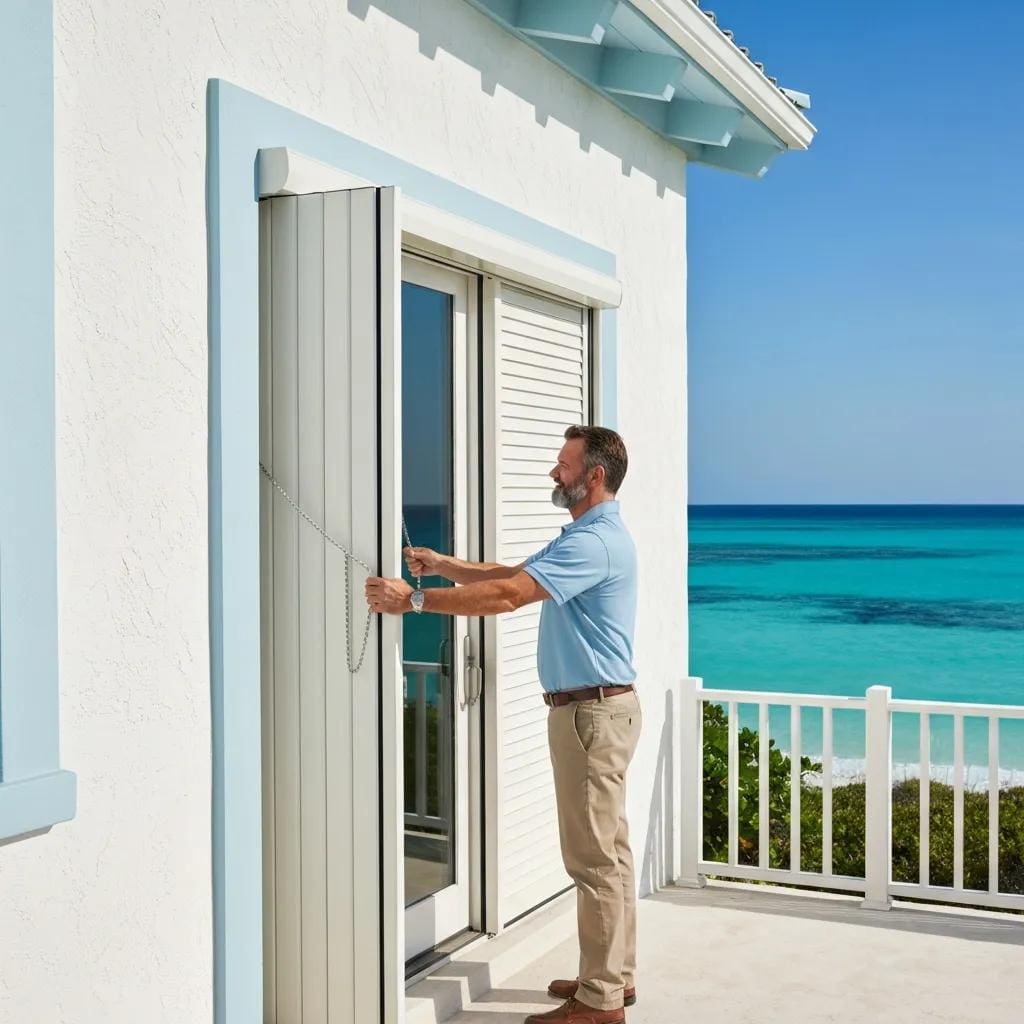
Accordion shutters are often more affordable up front than motorized roll‑downs, deploy quickly without electricity, and scale well to wide openings such as patios and sliding doors. Their manual design means no motor maintenance or backup power is required, simplifying long‑term care. The trade‑off is visible side stacks when retracted, so you’ll weigh looks against cost and utility. For many single‑level homes and rental properties, accordions strike a practical balance of protection, cost, and durability.
What Are the Pros and Cons of Roll Down vs. Accordion Shutters?
Both systems trade off convenience, appearance, cost, and maintenance. Roll‑down shutters prioritize automation, hidden storage, and seamless coverage that can boost security and curb appeal. Accordion shutters prioritize lower initial cost, immediate manual deployment, and straightforward upkeep. In security terms, roll‑downs provide continuous coverage and can include motorized locks; accordions depend on interlocking slats and mechanical locks. Maintenance for roll‑downs typically covers motor service and housing care, while accordions need track and lock inspections. The summary below organizes those trade‑offs for quick comparison.
Different shutter types have distinct maintenance and aesthetic trade‑offs:
What Are the Advantages and Disadvantages of Roll Down Shutters?
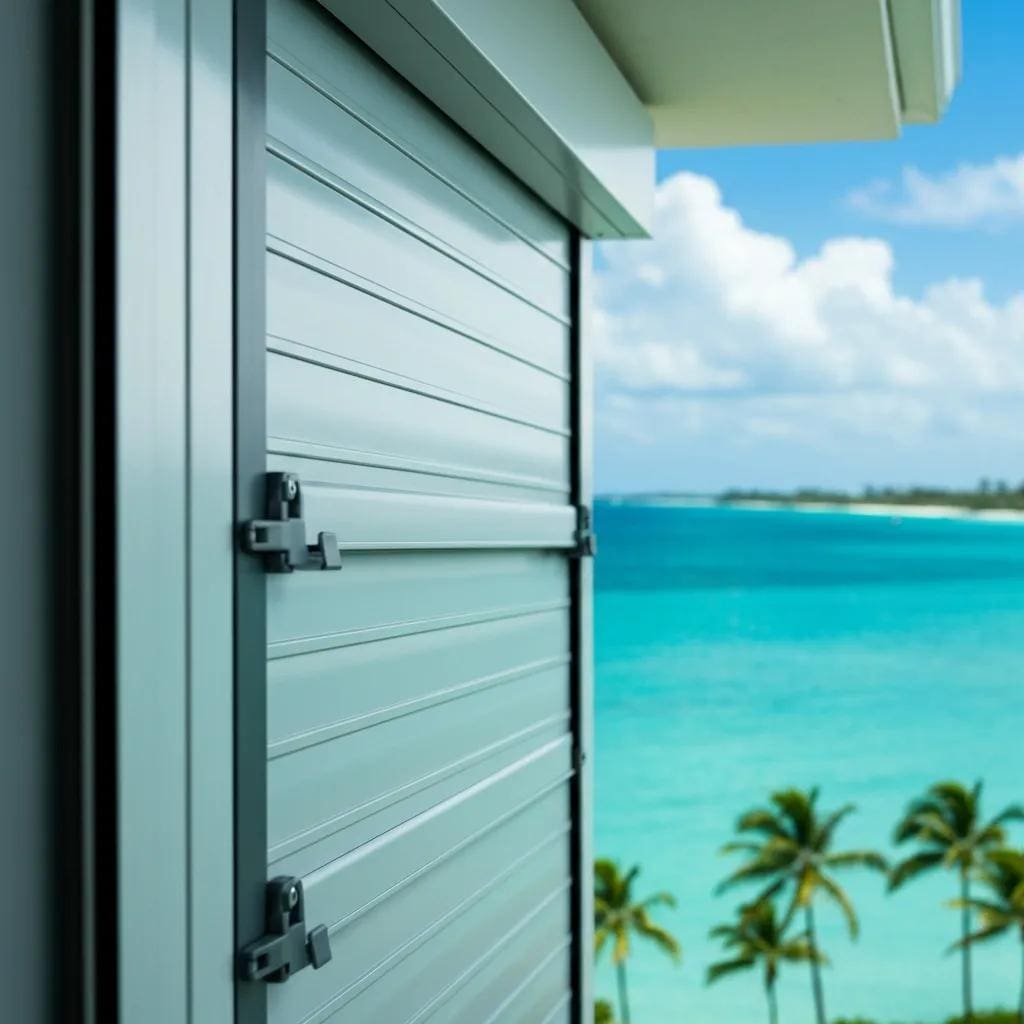
Roll‑down shutters give you fast, automated protection, uninterrupted coverage that strengthens impact resistance, and a neat housing that preserves exterior lines. They can also reduce noise and add insulation. On the downside, motorized units raise the initial cost and require electrical maintenance or backup power during outages. For homeowners who value convenience and curb appeal, roll‑downs often justify the investment; for those on tighter budgets or with many large openings, the cost can be a limiting factor.
What Are the Advantages and Disadvantages of Accordion Shutters?
Accordion shutters are economical, retrofit easily on wide openings, and provide reliable manual operation without electricity—advantages that make them attractive for many coastal homes. Maintenance is generally limited to track cleaning and lock checks, and repairs are usually simpler than for motorized systems. Their main drawbacks are the visible side stacks and the manual effort needed to close large panels. For buyers focused on affordability and low maintenance, accordions are often the sensible choice.
How Do Roll Down and Accordion Shutters Compare on Cost, Security, and Maintenance?
Comparing cost, security, and maintenance means looking at what drives price, how each system locks and covers openings, and the upkeep required to preserve performance. Key cost drivers include opening size, motorization, custom finishes, and complexity for multi‑story installs. Security differences center on continuous coverage and motorized lock options for roll‑downs versus heavy slats and multiple mechanical locks for accordions. Maintenance for roll‑downs includes motor checks and housing seal inspection; accordions require occasional lubrication and track cleaning. Engineered installation practices—Design Pressure Analysis and 18‑8 stainless steel fasteners—reduce corrosion and improve long‑term reliability. The table below summarizes typical ranges and feature differences to aid budgeting and planning.
Estimating costs and features across typical residential openings:
What Is the Cost Difference Between Roll Down and Accordion Shutters?
Roll‑down shutters typically cost more up front because of the housing, motor options, and more involved installation. Accordion shutters are generally less expensive thanks to simpler fabrication and manual operation. Cost factors include opening dimensions, motorized versus manual operation, finish choices, and whether multi‑story work requires scaffolding or engineered supports. Use a cost calculator to model examples (a single small window versus a large patio door) and explore financing or wind‑mitigation credits. Engineered installation—documented Design Pressure Analysis and corrosion‑resistant 18‑8 stainless steel fasteners—adds cost but often yields better longevity and potential insurance or code benefits.
How Do Security and Maintenance Requirements Differ Between the Two?
Roll‑downs commonly offer unbroken coverage and can include motorized locks and tamper protections; accordions depend on the strength of interlocking slats and multiple mechanical locks. Maintenance diverges: motorized roll‑downs need periodic motor inspections, wiring checks, and housing seal maintenance, while accordions require track cleaning, lubrication of hinges and locks, and occasional panel realignment. We recommend a pre‑season inspection and at least an annual professional check for motors and fasteners. Early warning signs—corrosion, unusual noises, uneven movement, or trouble engaging locks—should trigger service. Choosing an installer that documents engineered installation and uses 18‑8 stainless steel fasteners helps limit corrosion and simplifies long‑term care.
Providers that offer transparent tools—like interactive cost calculators—and engineered installation details make it easier to forecast lifecycle costs and plan maintenance.
Which Hurricane Shutters Are Best for Coastal Carolina Homes?
Coastal Carolina properties face specific challenges—high winds, salt spray, and variable exposure—that should shape shutter selection. Areas such as Wilmington, Myrtle Beach, Oak Island, Topsail, New Bern, and Pawleys Island have elevated corrosion risk and higher design pressure requirements, so corrosion‑resistant materials and engineered installation matter. Local code requirements—often aligned with Florida’s wind standards—make certified shutters and documented Design Pressure Analysis important for permit and insurance purposes. Prioritize products with verified ratings, durable finishes, and installers experienced with local permitting and wind‑load calculations to ensure long‑term performance.
How Do Local Building Codes and Weather Influence Shutter Choice?
Local codes and expected storm intensity define required design pressures, acceptable certification, and installation practices. Selecting shutters that meet or exceed code eases permitting and helps qualify for insurance mitigation credits. Wind speed, exposure category, and elevation determine design pressures, so products backed by testing and engineering—such as Design Pressure Analysis—are recommended in higher‑risk areas. Salt air speeds corrosion, which is why 18‑8 stainless steel fasteners and marine‑grade finishes extend service life. Work with installers who understand local code nuances and can provide engineered documentation for inspections and permit submittals.
What Factors Should Homeowners Consider When Choosing Between Shutter Types?
Use a short checklist: budget and financing, opening size and count, how the shutters look when retracted, ease and speed of deployment, maintenance comfort, and whether you want automation. Also factor in potential wind‑mitigation insurance credits, occupancy (rental vs. primary home), and whether it makes sense to mix shutter types across the property. For older homeowners or multi‑story properties, automation and roll‑downs may be worth the investment; for rentals or tight budgets, accordions often deliver the best value. Verify manufacturer certifications, engineered installation documentation, and corrosion‑resistant hardware to ensure the system performs in a coastal environment.
How Does Installation and Maintenance Affect Your Choice of Hurricane Shutters?
Installation quality and maintenance commitments strongly affect long‑term performance, ownership cost, and code compliance. Both systems need precise measurement, secure mounting, and scheduled servicing. Installation differences include structural checks for roll‑down housings, through‑bolt mounting for accordion frames, and weatherseal integration to limit water intrusion. Maintenance differs by system—motorized roll‑downs need electrical and motor service, while accordions need track upkeep—so know the routine tasks and how often a professional should inspect your shutters. Understanding installation steps and maintenance schedules reduces surprises and extends service life.
What Is the Typical Installation Process for Roll Down and Accordion Shutters?
Installations start with a site visit and accurate measurements to produce shop drawings and confirm mounting. For roll‑downs, that includes confirming space for the housing and verifying structural backing. Installers then mount the housing, fit the guide tracks, install and wire the motor (if applicable), and commission the system with tests and safety limits. Accordion installs require precise frame mounting, track alignment, panel fitting, and lock installation. Both systems end with final commissioning, homeowner training, and documentation for permits where required. A single window can take a few hours; whole‑house installs may span several days depending on complexity.
How Should Homeowners Maintain Their Roll Down and Accordion Shutters?
Adopt a seasonal maintenance routine: pre‑season checks before hurricane season, post‑storm inspections, and an annual professional service to catch wear and corrosion early. DIY tasks include rinsing salt and debris from exposed parts, cleaning tracks, lubricating moving components with manufacturer‑approved products, and testing locks and motor operation. Professional inspections should verify motor condition, fastener integrity, and corrosion‑resistant hardware. Watch for unusual noises, uneven movement, water entry at seals, or difficulty engaging locks—these are signs to call for service. Regular maintenance extends life and keeps your system ready when a storm approaches.
To plan maintenance and get transparent pricing, homeowners can use an installer’s cost calculator and request a free estimate that accounts for local environmental factors and engineered installation documentation.
Frequently Asked Questions
What Maintenance Is Required for Roll Down and Accordion Shutters?
Roll‑down shutters need periodic motor, wiring, and housing seal checks, along with track cleaning and lubrication of moving parts. Accordion shutters require simpler upkeep—track cleaning, lock and hinge lubrication, and panel alignment checks. Regular inspections before and after storm season help catch issues early and prolong service life for both systems.
How Do I Choose the Right Hurricane Shutter for My Home?
Start by defining priorities: budget, ease of use, appearance, and how many and what size openings you have. Decide whether you prefer manual or automated operation and how much maintenance you’re willing to perform. Check local building codes and insurance requirements, and consult a qualified installer for recommendations tailored to your home’s construction and exposure.
Can Hurricane Shutters Be Installed on Any Type of Home?
Most homes can be fitted with hurricane shutters, but installation details vary by structure and materials. Wall thickness, window size, and overhangs affect mounting options. A qualified installer will assess your home and advise the best shutter type and attachment method to meet code and perform reliably during storms.
What Are the Aesthetic Options for Hurricane Shutters?
Shutters are available in a range of styles, colors, and finishes to complement your exterior. Roll‑down housings can be painted to match the facade, and accordion panels come in multiple colors and finishes. Custom options let you balance protection with curb appeal so your shutters fit your home’s architecture.
How Do I Prepare My Shutters for Hurricane Season?
Prepare by cleaning tracks, lubricating moving parts, and inspecting locks and seals. Test roll‑down motors and confirm manual overrides work; practice deploying accordion panels so you can do it quickly. Record any repairs or maintenance so you have a history of care before a storm arrives.
Are There Any Insurance Benefits for Installing Hurricane Shutters?
Yes—many insurers offer discounts or credits for homes with hurricane shutters because they lower storm‑damage risk. Savings vary by carrier and location, so check with your insurance provider. Certified shutters that meet local codes and have engineered documentation often improve eligibility for these incentives.
Which Is Better: Roll Down or Accordion Shutters?
There’s no one‑size‑fits‑all answer. Choose roll‑down shutters for automated convenience, hidden housings, and uninterrupted coverage. Choose accordion shutters for lower upfront cost, reliable manual operation, and simple retrofits for large openings. Consider your budget, how often you’ll deploy shutters, and how much maintenance you want to do. Matching the system to your lifestyle and specific openings will give you the best result.
Are Roll Down Shutters More Secure Than Accordion Shutters?
Roll‑downs often feel more secure because they create an unbroken surface and can include motorized locks. Properly installed accordion shutters with heavy‑gauge slats and multiple mechanical locks also provide strong protection. Security depends on product quality, installation, and corrosion‑resistant fasteners—so engineered installation matters as much as shutter type.
Can I Mix Roll Down and Accordion Shutters on the Same Home?
Yes. Mixing types is a common strategy: use roll‑downs on upper or high‑priority openings and accordions for wide patio doors or budget areas. Coordinate finishes for visual consistency and make sure each system is installed to code and accompanied by clear operating instructions for residents.
What Is the Lifespan of Each Shutter Type?
With quality materials and regular care, both roll‑down and accordion shutters often last 15–25 years or more in coastal environments. Lifespan shortens with heavy salt exposure, deferred maintenance, or storm damage; it lengthens with annual inspections, prompt repairs, and use of 18‑8 stainless steel fasteners and durable finishes.
What Are the Disadvantages of Accordion and Roll Down Shutters?
Accordion shutters are visible when retracted and require manual effort to close, which can be a drawback for frequent use. Roll‑down shutters cost more and motorized models need electrical maintenance or backup power. You can mitigate these downsides—choose attractive finishes for accordions and ensure roll‑downs have manual override options—so your choice fits your routine and budget.
Why Choose American Hurricane Shutters for Your Roll Down or Accordion Shutters?
At American Hurricane Shutters we specialize in engineered storm protection for coastal North and South Carolina. We offer product pages for both Accordion and Roll‑Down shutters, free estimates, a cost calculator, and local installation across Wilmington, Myrtle Beach, Oak Island, Topsail, New Bern, Pawleys Island and surrounding communities. Our focus is documented, engineered protection—Design Pressure Analysis—plus corrosion‑resistant hardware like 18‑8 stainless steel fasteners to address salt‑air risks and code compliance. If you want transparent pricing and professionally installed systems by local teams, our tools and services help you estimate cost, verify engineered performance, and schedule installation.
How Does American Hurricane Shutters Ensure Engineered Storm Protection?
We use an engineered approach that includes Design Pressure Analysis to match shutter selection and attachment details to wind loads and site exposure for each opening. That analysis links expected wind pressures for your location to a shutter’s rated capacity, so installs resist storm‑level forces rather than relying on generic assumptions. We also prioritize corrosion resistance—using 18‑8 stainless steel fasteners and marine‑grade finishes—to reduce failure risk in salt air. Engineering documentation plus corrosion‑resistant hardware delivers a stronger long‑term protection strategy for coastal homeowners.
What Free Services and Support Does American Hurricane Shutters Offer?
We provide free estimates and an online cost calculator so homeowners can model scenarios and get site‑specific pricing. We also supply maintenance guides and local installation expertise to support new buyers and existing customers. Free estimates show options for roll‑down or accordion shutters across different openings and the cost impact of motorization or manual configurations; maintenance resources explain pre‑ and post‑storm care. For coastal North and South Carolina residents, these services simplify the decision and scheduling process with local technicians.
- Free Estimates: Get site‑specific pricing and options with no obligation.
- Cost Calculator: Model scenarios by opening size and configuration for clear budgeting.
- Maintenance Guides: Practical, step‑by‑step care instructions and recommendations for professional service.
Conclusion
Choosing between roll‑down and accordion hurricane shutters comes down to priorities: automation and concealed aesthetics versus lower cost and manual simplicity. Knowing each system’s features, upkeep needs, and local code implications helps you make a confident choice that protects your home and investment. Evaluate your openings, budget, and how you’ll use the shutters, then contact a trusted installer to confirm engineered details and pricing. Explore our range of premium hurricane shutters to find the right protection for your coastal property.