
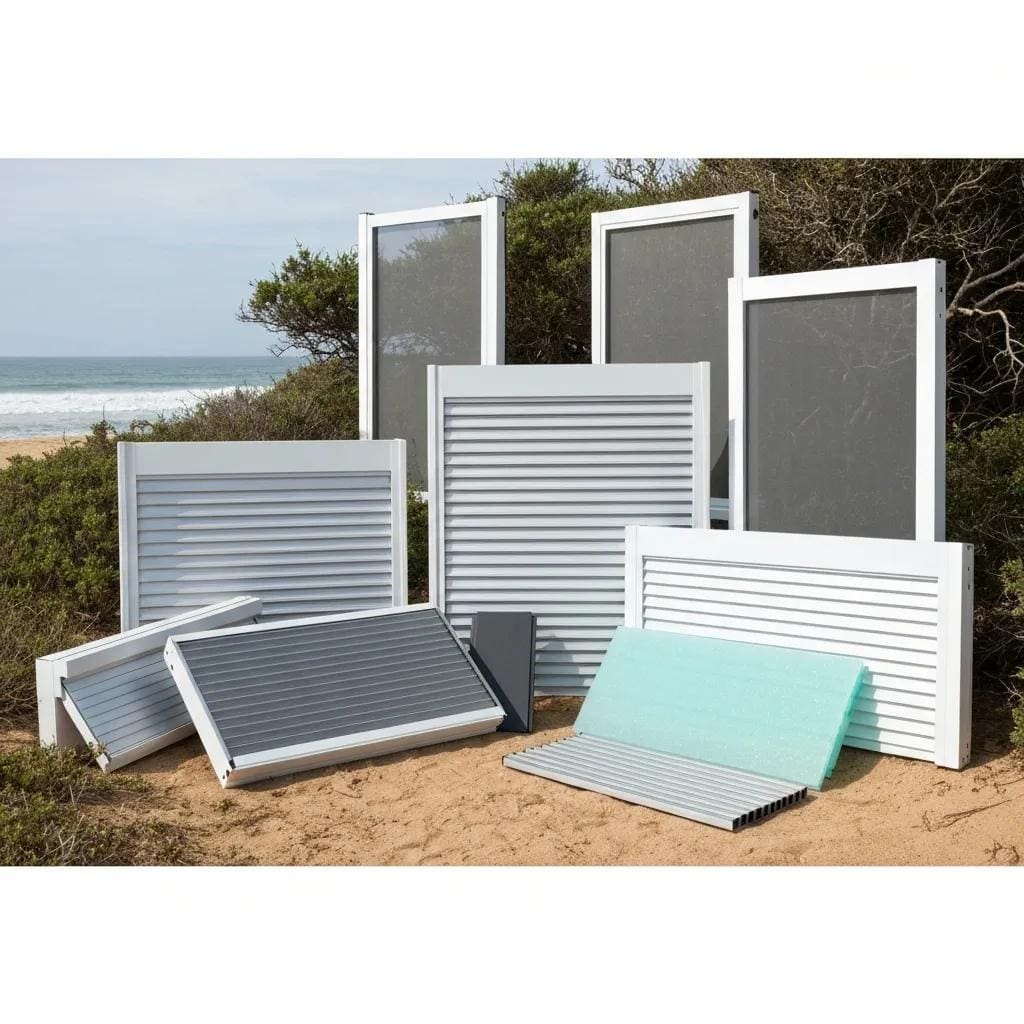
Most Cost‑Effective Storm Shutter Materials: Affordable Hurricane Shutters and Durable Coastal Protection
Finding storm shutters that are truly cost‑effective means weighing upfront price against lifespan, upkeep, and the value of any insurance wind‑mitigation credits. Along the Carolina coast, salt air and corrosion change the math: materials that resist rust and keep their ratings tend to cost less over time, even if they start out pricier. Below we walk through the most commonly recommended options—marine‑grade aluminum, polycarbonate (Lexan) panels, fabric hurricane screens, and steel—so you can compare cost, durability, maintenance, and insurance eligibility. Each section gives clear pros and cons, explains how shutter styles influence price, covers non‑material cost drivers like motorization and installation, and shows how materials affect insurance savings and resale value. Where helpful we point homeowners to AHS Carolinas for local pricing and free estimates to turn these ranges into real project budgets.
Which Storm Shutter Materials Give the Best Value for Coastal Homes?
On the coast, “value” means low total cost of ownership: a reasonable purchase price plus a long service life, limited maintenance, strong corrosion resistance, and the ability to qualify for wind‑mitigation credits. Materials that pair good impact resistance with marine‑grade corrosion protection usually win on lifetime cost because they need fewer repairs and keep their insurer‑qualifying ratings. The right choice also depends on the opening (window, door, sunroom), how much light you want to keep, and how often you’ll deploy the shutters. Below is a focused comparison of three high‑value options to help homeowners quickly weigh real tradeoffs.
In short: marine‑grade aluminum generally leads on durability and corrosion resistance; polycarbonate preserves daylight while still providing rated protection; and fabric screens deliver the lowest upfront cost for very large openings. Spending more on aluminum often raises the initial bill but reduces maintenance and replacement cycles — shifting the value toward long‑term savings and insurance eligibility.
Aluminum hurricane shutters perform best on the coast when specified with corrosion‑resistant components. Using 6063‑T6 marine‑grade aluminum for frames and panels, plus 18‑8 stainless fasteners, cuts galvanic corrosion and extends service life. Those specific material choices directly affect performance, maintenance intervals, and total cost of ownership. If you’d like to turn the per‑square‑foot ranges above into a site‑specific estimate, AHS Carolinas installs these options and offers a local cost calculator and free estimates to translate material choices into a project scope and budget.
What Are the Benefits and Costs of Aluminum Hurricane Shutters?

Aluminum shutters offer a strong strength‑to‑weight ratio and, when you specify marine‑grade alloys like 6063‑T6, solid resistance to the coastal environment. Their lighter weight makes installation easier on multi‑story homes and reduces stress on anchors compared with heavier steel. Upfront costs are higher than temporary panels or fabric screens, but aluminum’s long life and low upkeep usually give better lifetime value for coastal homeowners. Aluminum is a natural fit for permanent systems — accordion, roll‑down, and Bahama styles — where frequent use and durability matter. Using stainless fasteners and protective coatings further extends service life and lowers replacement expense.
How Do Polycarbonate Storm Panels Combine Clarity and Affordability?

Polycarbonate (often sold as Lexan) is valued for impact toughness plus transparency, so it protects while keeping natural light. Its molecular structure absorbs and disperses impact energy better than glass, and UV treatments help preserve clarity for years. Polycarbonate is typically less expensive and faster to install than custom aluminum roll‑down systems, reducing initial labor costs; however, it may need replacement sooner and requires periodic checks of UV coatings and seals. For porches, sunrooms, and other openings where daylight matters, polycarbonate strikes a practical balance of price and performance.
How Do Fabric and Steel Storm Shutters Compare in Cost and Durability?
Fabric hurricane screens and steel shutters sit at opposite ends of the cost‑versus‑durability spectrum. Fabric systems favor low weight and affordability for large spans; steel delivers maximum strength and security but brings higher material, handling, and coastal corrosion costs. Fabric screens are lighter, easier to store, and faster to deploy on lanais, large patio doors, and folding glass walls, which lowers installation time. Steel provides strong impact resistance but must be stainless or specially coated for coastal use — otherwise rust and repair costs quickly erode any upfront savings. Your choice depends on budget, opening type, and how much maintenance or motorization you’re willing to accept.
Fabric screens shine for very large openings where they can be the most cost‑effective solution. Textile systems ship and install more cheaply than rigid panels, and their flexibility simplifies fitting around irregular openings. They tend to be the lowest per‑square‑foot option on big spans, though they offer less privacy and light blocking and will need occasional re‑tensioning or replacement as UV wears the fabric. For expansive sliding doors or screened living areas, fabric systems minimize upfront cost while still meeting many wind‑mitigation needs when properly rated and installed.
Why Choose Lightweight Fabric Hurricane Screens for Large Openings?
Fabric hurricane screens cover large openings efficiently, protecting wide glazed areas without the weight and storage demands of metal shutters. The fabric’s tensile strength spreads impact loads across the frame, which makes it practical where rigid panels would be heavy and costly to operate. Fabric systems often run on tracks or removable frames and roll or stack compactly when not in use, saving interior storage space. Their lower per‑square‑foot price and simple installation make them a sensible pick for homeowners who prioritize economy and coverage for outdoor living spaces.
Steel shutters deliver top‑level impact resistance and security but require careful specification on the coast to avoid costly corrosion. Steel is stronger by weight than aluminum but is heavier to handle and install, which can raise labor costs and complicate anchor design. In coastal locations, choose stainless or properly coated steel to limit rust; otherwise mild steel’s upfront savings are offset by faster degradation and repair bills. Reserve steel for situations that need maximum penetration resistance or where a solid metal look is desired.
What Are the Cost Differences Among Popular Hurricane Shutter Types?
Shutter style affects both materials and installation labor: accordion and roll‑down systems include frames and mechanisms that raise the per‑square‑foot price, while bolt‑on panels and fabric screens keep mechanical complexity — and cost — lower. Accordion shutters are often simple to operate manually and suit frequent use; roll‑down systems add motorization and housings that increase cost but improve convenience and quick deployment. Bahama and colonial shutters mix curb appeal with moderate protection and shading benefits, which matters if resale and aesthetics are priorities. The table below summarizes common types and typical cost bands so you can compare tradeoffs quickly.
That table shows why roll‑down systems usually sit at the top of the price range — motors, tracks, and housings add cost — while storm panels are the most budget‑friendly upfront option. To get precise local pricing for your home geometry, use an installer’s cost calculator or request an on‑site quote.
How Do Accordion and Roll-Down Shutters Compare in Price and Use?
Accordion shutters are commonly less expensive than motorized roll‑down systems. They provide manual, ready‑to‑use protection built into the window opening and require minimal mechanical maintenance. They’re a good fit when you expect frequent manual deployment and want a lower lifecycle cost than motor‑driven systems.
Roll‑down shutters offer automation and can be motorized for quick deployment from inside the home — a strong advantage when warnings come late or accessibility is a concern. That convenience adds material and installation expense for motors, housings, and possible backup power. Homeowners who value instant activation or have hard‑to‑reach windows often find the added cost of roll‑down shutters worthwhile, while budget‑minded buyers who plan to use shutters regularly may prefer accordion models.
What Are the Aesthetic and Cost Trade-Offs of Bahama and Colonial Shutters?
Bahama and colonial shutters blend curb appeal with functional storm coverage, and their cost reflects both styling and protection. Bahama shutters give a tropical look plus shading benefits and moderate storm defense when reinforced; they can also reduce cooling loads slightly and boost resale appeal. Colonial shutters offer a classic appearance and can be made from aluminum or composite materials for improved durability without sacrificing style. These options may not match the impact resistance of dedicated security shutters or motorized roll‑downs, so homeowners who prioritize aesthetics should verify ratings and consider adding supplemental panels for the most severe storms.
Which Factors Influence the Overall Cost of Storm Shutters Beyond Materials?
Material cost is only one part of the final bill. Other common drivers include professional installation labor, opening complexity, motorization and control systems, building‑code compliance and testing, permits, and whether the work is a retrofit or new construction. Labor and custom fabrication can be a large share of the invoice when openings are irregular, oversized, or require reinforcing mounting walls. Motorization adds equipment and electrical work; meeting rated‑product standards and providing inspection paperwork can add testing or certification fees. Planning for these variables up front helps you weigh long‑term savings from higher‑spec materials and pro installation against short‑term budget limits.
- Below are the principal cost drivers homeowners should plan for when budgeting for storm shutters.
- Each item explains how it affects price and how to manage the impact.
- Use these points when comparing quotes or using cost calculators so estimates are apples‑to‑apples.
- Professional installation and labor: Skilled installers ensure rated performance and correct anchoring, which reduces rework and preserves warranties.
- Opening complexity and custom fabrication: Irregular shapes or very large panes require custom panels or frames, increasing fabrication time and material waste.
- Motorization and controls: Adding motors, backup power, and smart controls raises both material and electrical labor costs.
- Code compliance, testing, and documentation: Meeting local codes and keeping required inspection paperwork may add verification or testing fees.
Factoring these non‑material costs early prevents surprises and makes it clearer whether DIY panels or professionally installed systems are the better economic choice for your property.
How Does Professional Installation Affect Hurricane Shutter Pricing?
Professional installation changes the price through labor rates, efficiency, and technical know‑how for meeting wind‑rating standards and securing structural anchors. Professional crews may add labor markup and time for custom mounts, but they lower the risk of installation errors that could void ratings or warranties. Certified installers also supply the documentation and pressure analysis insurers often require for wind‑mitigation credits, which can offset some expenses via lower premiums. While DIY reduces the initial outlay, professional installation usually preserves product performance and long‑term value — especially where inspections and rated installs matter.
What Role Do Window Size, Motorization, and Building Codes Play in Cost?
Window size and shape determine material quantities and fabrication complexity: large or arched openings need custom engineering and extra labor. Motorization brings equipment, electrical work, and possible control‑system licensing, which can add thousands depending on the number of motors and backup needs. Building codes and rating standards (for example, ASTM performance levels) can require specific testing, certified installation, or additional anchoring hardware; compliance increases both material specs and labor, but it also improves eligibility for insurance discounts and reduces long‑term risk. Factor these items into early estimates to compare true costs across suppliers.
How Do Storm Shutter Materials Affect Insurance Discounts and Long-Term Value?
Insurers base wind‑mitigation credits on documented measures and certified installations that lower expected loss. Rated shutters or panels installed with proper documentation are the usual qualifiers; durable materials that keep their ratings — like marine‑grade aluminum with stainless fasteners — are more likely to sustain premium reductions. Long‑term value comes from longer lifespans, lower maintenance, and preserved curb appeal: materials that avoid corrosion and repeated replacement hold resale value and cut lifecycle costs. Prioritize rated materials and keep installation records to maximize insurance benefits.
Products that commonly qualify for wind mitigation credits include rated roll‑down shutters, properly installed accordion systems, and impact‑resistant panels that meet local standards. Certified products with labels and installation paperwork make insurer verification straightforward. When comparing options, ask whether the product and its installation will be documented to insurer standards — often the paperwork matters as much as the hardware.
- Practical steps homeowners can take to convert material choices into insurance and resale value:
- These actions help translate hardware decisions into measurable financial returns.
- Use them when talking with installers or when calculating ROI with a cost tool.
- Choose rated materials with verifiable labels: Products tested to recognized standards are easier to document for insurers.
- Retain installation and inspection records: Paperwork supports wind‑mitigation credit applications and future resale disclosures.
- Specify corrosion‑resistant components: Marine‑grade alloys and stainless fasteners reduce maintenance and protect long‑term ratings.
- Consider lifecycle costs in ROI calculations: A higher upfront cost can pay off through fewer replacements and lower repair bills.
Which Materials Qualify for Wind Mitigation Insurance Discounts?
Insurers typically require rated shutters and panels that are installed to standards and backed by documentation. Common qualifying materials include roll‑down aluminum shutters, rated accordion systems, and impact‑resistant polycarbonate panels — provided the entire system (fasteners, mounts, hardware) is part of a tested and labeled assembly. Always confirm rating labels and keep the installation paperwork to support your insurance credit claim.
How Does Material Durability Impact Home Value and Maintenance Costs?
Durable materials cut repair and replacement frequency, lowering lifetime costs and supporting resale value through preserved curb appeal and verified protection. For example, marine‑grade aluminum with stainless fasteners resists salt‑air corrosion and reduces repainting and fastener replacement needs, protecting both appearance and function. Lower‑cost materials that degrade faster can incur recurring replacement and labor expenses that erode initial savings. Comparing lifecycle costs — maintenance intervals, typical repair expenses, and expected service life — helps reveal which materials are most economical over time.
Where Can Homeowners Get Accurate Cost Estimates for Cost-Effective Storm Shutters?
Accurate estimates combine per‑square‑foot ranges with site‑specific inputs: opening geometry, local labor rates, required ratings, and selected accessories like motors or backup power. Cost calculators that ask for these variables translate general ranges into project totals and let you compare scenarios side‑by‑side. Local experts who know coastal codes and material performance can validate calculator outputs and identify required reinforcements or permits. In the Carolinas, local installers also provide faster emergency service and warranty support that remote retailers can’t match.
AHS Carolinas offers a local cost calculator and free estimates to convert per‑square‑foot ranges into detailed project pricing and scope for your property. Their local knowledge emphasizes marine‑grade materials and corrosion‑resistant components, and they provide installation, repairs, maintenance, retrofits, and warranty‑backed work by insured technicians. Use the calculator to test different materials, motorization options, and shutter types, then request a free estimate for a site‑validated recommendation and documented scope that supports insurance and permitting needs.
How Does the AHS Carolinas Cost Calculator Help Estimate Shutter Prices?
The cost calculator asks for material choice, shutter type, opening size, and desired features (for example, motorization) and returns a localized estimate based on those inputs. It turns broad per‑square‑foot ranges into realistic project totals and highlights cost drivers like custom shapes, motorized controls, or higher‑spec marine alloys. Running numbers through the calculator before an on‑site visit helps you compare tradeoffs and prepare questions for installers. AHS Carolinas pairs calculator results with local expertise to produce free, documented estimates you can use for budgeting and insurance purposes.
Why Choose Local Experts for Installation and Warranty Services?
Local installers respond faster after storms, understand regional codes and permitting, and know how local wind patterns and salt exposure affect system selection and anchoring. Working with a local company simplifies warranty service and maintenance because technicians already use the best practices to prevent galvanic reactions between dissimilar metals. AHS Carolinas emphasizes insured installations, certified technicians, and a local warranty that supports post‑installation service — attributes that reduce long‑term risk and simplify insurance and resale documentation. Choosing local, rated installation often turns a higher initial investment into measurable long‑term value.
Frequently Asked Questions
1. What factors should I consider when choosing storm shutters for my home?
Focus on material durability, total cost of ownership (purchase price plus maintenance), installation quality, and insurance eligibility. Also consider window size and shape, local building codes, deployment frequency, and how the shutters will look on your home. Balancing protection, cost, and curb appeal will help you pick the right system.
2. How can I ensure my storm shutters qualify for insurance discounts?
Choose rated shutters and have them installed to local code. Keep all installation documentation and inspection records — insurers often require proof of compliance. Materials like marine‑grade aluminum or impact‑resistant polycarbonate are commonly accepted when installed and documented correctly.
3. What maintenance is required for different types of storm shutters?
Aluminum: periodic washing and fastener checks. Polycarbonate: inspect UV coatings and seals, replace as needed. Fabric screens: cleaning and occasional re‑tensioning. Steel: regular corrosion checks and coatings in coastal areas. Match maintenance needs to how much time and expense you’re willing to commit.
4. Are there any DIY options for installing storm shutters?
Yes — some fabric screens and bolt‑on panels can be DIY installs. However, you must follow local codes and manufacturer instructions to keep the shutters effective and to qualify for insurance discounts. If you’re unsure, a professional install helps protect ratings and warranties.
5. How do I determine the right size and type of storm shutters for my windows?
Measure window width and height accurately and note opening types (sliding doors, picture windows, arched openings). Large or unusual shapes often need custom solutions. Consult local installers or use a cost calculator that factors in your measurements and needs to find the best fit for protection and budget.
6. What are the advantages of motorized storm shutters compared to manual options?
Motorized shutters offer fast, one‑button deployment and easier use for hard‑to‑reach windows — a big plus during short warning windows. They cost more for equipment and installation, but the convenience and speed can be worth the price for many homeowners.
7. How do I find a reliable installer for storm shutters in my area?
Ask for referrals from neighbors, check online reviews, and verify certifications or trade affiliations. Get multiple quotes and confirm the installer’s experience with the materials you’re considering. Make sure they understand local building codes and can provide the documentation insurers require.
Conclusion
Choosing the right storm shutter materials means balancing upfront cost, maintenance, and long‑term value — especially along the coast where corrosion matters. Marine‑grade aluminum, polycarbonate, and fabric screens each have clear use cases; the best choice depends on your openings, budget, and how much maintenance you’re willing to accept. For tailored guidance and accurate pricing, contact a local expert who understands coastal conditions and code requirements. Use the tools and resources here to prepare your home with durable, cost‑effective protection before the next storm season.