
Roll-Down vs. Traditional Shutters for Coastal Homes: Which Hurricane Protection Works Best?
Coastal homeowners face distinct storm risks, so choosing the right shutter system affects safety, cost and long‑term value. This guide breaks down how roll‑down systems differ from accordion, Bahama, Colonial and panel options—and why those differences matter for salt‑air durability, deployment speed, insurance benefits and energy performance. You’ll learn how motorized and manual roll‑down shutters work, the trade‑offs in upfront cost and upkeep, which systems suit North and South Carolina shorelines, and how shutters add security and reduce cooling loads. We also include practical maintenance checklists, what to prepare for local codes and HOAs, and step‑by‑step help for getting a free estimate or using the cost calculator. Throughout, our focus is matching shutter solutions to beach‑house climates while honoring architectural style and regulatory requirements.
What Are Roll‑Down Shutters and How Do They Protect Coastal Homes?
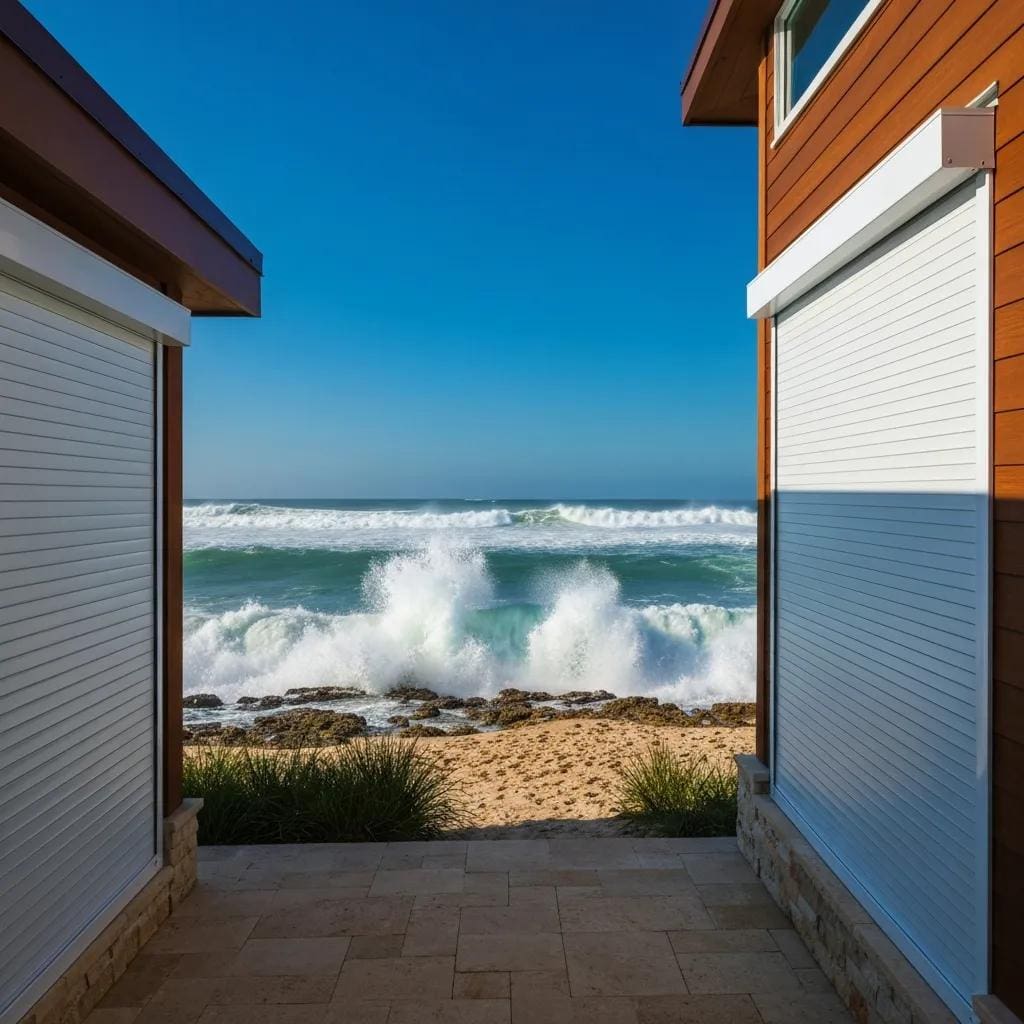
Roll‑down shutters are permanently mounted barriers that unspool from a housing box to cover windows and doors. Interlocking aluminum slats ride in secure vertical tracks and transfer wind loads into reinforced mounts, which lowers the chance of glass failure in a storm. Typical systems use extruded aluminum components plus a motor or gearbox and are engineered to block debris and reduce uplift forces. Those features make roll‑down shutters particularly effective where wave‑driven debris, sustained high winds and salt‑laden air increase damage risk. Next, we explain motorized versus manual operation and what to consider when choosing deployment methods.
How Do Motorized and Manual Roll‑Down Shutters Work?
Motorized roll‑down shutters use an electric motor and gearbox to raise and lower the slatted curtain into its tracks, often controlled by a wall switch or remote for fast deployment. Manual systems use a hand crank or strap drive to move the same curtain, with fewer electronics and simpler mechanical maintenance. Motorized units save time—multiple openings can close in seconds—while manual systems offer a reliable fallback during power outages. When choosing, weigh the convenience of motorization against requirements for backup power and periodic motor service.
What Are the Main Benefits of Roll‑Down Hurricane Shutters?
Roll‑down shutters provide layered protection: they shield openings from windborne debris, create a continuous barrier that deters forced entry, and cut solar heat gain and UV exposure when closed. By blocking direct sun and creating an air gap, they can lower cooling loads and reduce interior fading. Continuous slats also help dampen noise and offer privacy. For coastal resilience, pair roll‑down shutters with engineered installation—design pressure analysis and corrosion‑resistant fasteners—to maintain reliable performance in salt‑air conditions.
Different slat profiles, housings and material choices affect long‑term performance, so it helps to compare conventional shutter types and their coastal use cases next.
What Are Traditional Hurricane Shutters and Which Types Are Common on Coastal Properties?
Traditional hurricane shutters include permanently mounted and removable options—accordion shutters, Bahama shutters, Colonial shutters and storm panels or fabric—each with different deployment methods, visual impact and cost. These systems often trade automation and continuous coverage for lower upfront expense or specific architectural fit. On the coast, the right choice balances ease of use, storage needs for removable panels, corrosion risk of fasteners, and HOA or historic‑district guidelines. Below we describe accordion, Bahama and Colonial shutters and where they typically fit into coastal protection plans.
What Are Accordion Shutters and What Are Their Pros and Cons?

Accordion shutters are fixed, folding panels that slide sideways to cover openings and are operated manually—so they deploy quickly without needing storage space. Their continuous coverage is well suited to large sliding doors and multi‑panel windows common in beach homes, and they usually cost less per opening than motorized roll‑down systems. On the downside, most accordion shutters are manual and require periodic track lubrication and hinge checks to keep moving smoothly in salty conditions. For homeowners who want fast, reliable manual protection without motorization, accordion shutters are a practical and cost‑effective option.
How Do Bahama and Colonial Shutters Balance Style and Storm Protection?
Bahama and Colonial shutters pair architectural character with storm protection. Bahama shutters hinge at the top to provide shade and partial coverage when propped, adding ventilation and solar control during the day; they still require secure fastening before storms. Colonial shutters are side‑hinged panels that close over openings and can be engineered to meet wind‑load requirements, though they may demand more manual fastening and hardware checks. The right choice depends on HOA rules, curb appeal priorities and whether you value everyday shading and ventilation as much as quick storm readiness.
How Do Roll‑Down and Traditional Shutters Compare on Cost and Maintenance?

Compare systems by looking at upfront cost per square foot, lifecycle maintenance, deployment speed and long‑term value including insurance and coastal durability. Roll‑down shutters typically carry higher initial costs—driven by motorization, housing boxes and engineered mounting—but they deploy faster and offer continuous coverage that can reduce storm repair expenses. Traditional choices like accordion or storm panels cost less up front but may add storage and labor when storm season arrives.
Shutter types differ across cost, durability, deployment speed and upkeep needs.
The table above shows how price and operation influence selection for coastal homes. The next section digs into cost drivers and maintenance expectations.
How Do Costs Compare Between Roll‑Down and Accordion Shutters?
Roll‑down shutters span a wide price range because motorization, custom housings and longer spans increase cost, while accordion shutters fall in a narrower, generally lower band driven mainly by materials and opening complexity. Key cost drivers include motorization, custom sizing, hurricane rating and any needed reinforcement or design pressure analysis. Installing motorized roll‑down shutters across a whole house raises the upfront investment, but it can cut deployment labor and may improve resale and insurance outcomes. Knowing these drivers helps you interpret cost‑calculator ranges and decide when a site visit is needed for an accurate quote.
What Maintenance Do Roll‑Down and Traditional Shutters Require?
Maintenance varies by system. Roll‑down shutters need periodic motor checks, track cleaning, slat inspection and occasional lubrication to prevent salt buildup. Accordion, Bahama and Colonial shutters require hinge and track checks, fastener inspections and repainting or recoating as needed. In coastal settings, use corrosion‑resistant hardware—like marine‑grade stainless—and rinse shutters with freshwater to slow corrosion. A semiannual inspection routine (operation check, debris removal and anchor verification after storm season) is a sensible baseline to keep systems working and avoid costly repairs.
Which Shutter Types Best Fit Coastal Homes in North and South Carolina?
For coastal NC and SC homes, the right shutter balances wind‑load requirements, corrosion resistance, architectural style and local code or HOA constraints. Roll‑down shutters often stand out for rapid deployment and full coverage, while traditional shutters may be a better match for historic or stylistic priorities. Material choice is critical: extruded aluminum with quality coatings and marine‑grade stainless fasteners resist salt corrosion, and design pressure analysis ensures assemblies meet wind‑load needs. If shading and ventilation are important, Bahama or Colonial shutters can work—provided they’re specified with proper anchors and protective coatings for true coastal resilience. The table below links common coastal challenges to recommended materials and features.
Coastal conditions demand targeted materials and installation practices to keep protection reliable over time.
This mapping shows how site conditions should drive product selection and installation details. Next we cover how coastal exposure affects material durability and what permits or HOA rules usually require.
How Do Coastal Conditions Affect Shutter Durability?
Salt‑laced air speeds up metal corrosion and can weaken fasteners if lower‑grade materials are used, so we recommend extruded aluminum with durable coatings and 316 stainless anchors to preserve performance. UV exposure and humidity will degrade paints and seals over time, so UV‑stable finishes and regular inspections help prevent water intrusion. Proper material selection combined with engineered installation—track seals, housing drainage and accessible servicing—reduces maintenance and replacement frequency and better meets building‑code performance expectations while keeping the look of your home.
What Local Building Codes and HOA Rules Affect Shutter Selection?
Local building departments and HOAs commonly require documentation proving shutter systems meet wind‑load standards or appear on approved product lists; some jurisdictions benchmark to Florida Building Code even outside Florida. Homeowners should be ready to submit product specs, design pressure analysis and installation drawings to speed permit or HOA approval. Using certified installation methods and corrosion‑resistant materials helps meet both regulatory and aesthetic requirements, reduces the chance of rejection or rework, and working with experienced local installers streamlines approvals.
How Do Hurricane Shutters Improve Home Security and Energy Performance?
Hurricane shutters add a physical security layer by creating a continuous barrier across openings and improve energy performance by cutting solar heat gain, lowering cooling demand and blocking UV that fades interiors. Continuous slatted systems with secure anchoring reduce forced‑entry opportunities, while external shading and the air gap limit thermal transfer. Exact savings vary by system and climate, but many homeowners see measurable drops in peak cooling demand and less interior UV damage after consistent shutter use. The table below connects shutter types to security and energy attributes to clarify expected benefits.
This comparison sets realistic expectations for security and energy performance. The sections below expand on how roll‑down shutters increase security and how all shutters help with cooling and UV protection.
How Do Roll‑Down Shutters Boost Home Security?
Roll‑down shutters provide uninterrupted coverage and can include locks that engage the housing or track, making unauthorized entry much harder than with segmented panels. Continuous slats transfer forces along tracks to anchors, limiting weak points and creating a strong physical barrier against opportunistic break‑ins. Properly engineered installation—correct anchor grade and mount locations—adds structural resistance that also thwarts prying. Using stainless‑steel fasteners and quality hardware helps those security benefits endure in corrosive coastal environments.
How Do Shutters Help with Energy Savings and UV Protection?
Shutters reduce solar heat gain by blocking direct sunlight and acting as an external barrier that slows conductive heat transfer through windows, easing HVAC load during hot months. Roll‑down shutters offer full closure and more effective shading than partial options, which often translates to noticeable reductions in peak cooling demand on sunny, humid coastal days. They also block UV rays that fade furniture and flooring, extending interior finishes’ life and cutting replacement costs. Together, these effects improve comfort and can produce measurable energy‑related savings over time.
Where Can Coastal Homeowners Get Free Estimates and Professional Installation?
Expect a free estimate to include a site inspection, measured openings, product options and a clear explanation of local code and HOA requirements. Good estimates outline scope, timeline and the primary cost drivers—motorization, materials and mounting reinforcement—so you know what to expect before installation.
We use free estimates to educate homeowners about protection options, generate leads and serve existing customers with tailored recommendations.
Your free estimate should plainly cover scope, schedule and cost factors so the final quote is predictable.
- Scope: Site measurements, product options and required anchors.
- Timeline: Typical install windows and permit turnaround expectations.
- Cost Factors: Motorization, shutter type, span size, and corrosion‑resistant anchors.
That structured approach clarifies what you’ll receive and why an on‑site assessment often produces a different figure than an online calculator.
Why Choose American Hurricane Shutters for Coastal NC/SC Protection?
American Hurricane Shutters delivers engineered hurricane protection for homeowners and businesses along the North and South Carolina coast. We offer roll‑down, accordion, Colonial and Bahama shutters plus hurricane screens, clear and aluminum panels and flat polycarbonate. Our installations emphasize design pressure analysis and use 316 stainless steel anchors to stand up to salt air and meet wind‑load requirements. We provide free estimates and local expertise to help you get product‑appropriate recommendations and the documentation needed for permits or HOA approval. Those engineered installation practices back the long‑term performance claims we make.
How to Use the Hurricane Shutter Cost Calculator for Accurate Estimates?
A cost calculator gives preliminary ranges based on window and door dimensions, shutter type (roll‑down vs. accordion) and motorization choices; accurate inputs produce a useful ballpark. Remember that calculator ranges reflect assumed material and labor levels—larger spans, motorization or higher wind ratings increase costs—so treat results as guidance, not a final quote. Follow up with a free on‑site estimate to include design pressure checks, anchor verification and any custom flashing or framing work that affects final pricing. Prepare a list of openings, photos and any HOA or permit notes to speed the site visit.
- Input accurate dimensions and shutter type to get a realistic preliminary range.
- Factor motorization and premium coatings into the upper end of ranges if selected.
- Request a site visit for a formal estimate that includes engineered mounting and documentation.
Those steps move you from ballpark figures to permit‑ready quotations with fewer surprises.
Frequently Asked Questions
What should I consider when choosing hurricane shutters for my coastal home?
Start with expected wind loads in your area, the durability of materials against salt air, and how shutters will fit your home’s style. Also evaluate ease of deployment, maintenance needs and compliance with local codes and HOA rules. Finally, weigh your budget—different shutter types have varying upfront costs and long‑term value—so prioritize safety, convenience and appearance based on what matters most to you.
How do I maintain my hurricane shutters so they last?
Perform routine inspections and cleanings. For roll‑down shutters, check motors and tracks for debris, lubricate moving parts and inspect slats for damage. For accordion, Bahama or Colonial shutters, inspect hinges, tracks and fasteners and touch up coatings as needed. Rinse components with freshwater in coastal areas and use corrosion‑resistant hardware. A semiannual maintenance check is a good rule: test operation, clear debris and verify anchor integrity after high‑wind seasons.
Can hurricane shutters improve my home’s energy efficiency?
Yes. By blocking direct sunlight, shutters reduce solar heat gain and lower HVAC demand during hot months. Closed shutters create an external air gap that reduces thermal transfer, keeping interiors more comfortable and protecting furniture from UV fade. Over time, these effects can translate to noticeable reductions in peak cooling usage.
Are there insurance benefits to installing hurricane shutters?
Many insurers offer discounts for homes with approved storm protection because shutters reduce the likelihood of damage during hurricanes. Having shutters installed can also streamline claims after a storm by showing you took proactive protection measures. Check with your insurance provider to confirm available discounts and any specific product requirements.
How do I choose between motorized and manual hurricane shutters?
Motorized shutters are ideal if you want rapid, button‑press deployment and convenience—especially when you have multiple openings. They require power and periodic service. Manual shutters are slower to deploy but are usually more reliable during outages and cost less up front. Consider your lifestyle, how often you’ll deploy them and whether you’ll add backup power when deciding.
What local regulations should I check before installing shutters?
Check local building codes and HOA rules for material and design restrictions and required wind‑load documentation. Many jurisdictions expect proof that a system meets specific standards and sometimes reference Florida Building Code performance. Obtain product specs, design pressure analysis and installation drawings for permit or HOA review to avoid delays.
Should I worry about aesthetics when picking shutters?
Yes—especially on coastal homes where curb appeal matters. Bahama and Colonial shutters can enhance architectural character while offering protection. Choose colors, finishes and hardware that complement your home and verify HOA guidelines so the shutters both perform and look right.
Conclusion
Choosing the right hurricane shutters means balancing protection, convenience, durability and curb appeal. Roll‑down shutters stand out for fast deployment and continuous coverage, making them a strong long‑term investment for many coastal properties. By understanding the strengths and trade‑offs of each shutter type—and working with experienced local installers—you can pick a solution that meets codes, HOAs and your family’s needs. Explore our shutter options or request a free estimate to protect your home with confidence.