

Wind Resistance Compared: Why Roll‑Down Hurricane Shutters Often Outperform Other Options
“Wind resistance” refers to a product’s ability to stand up to wind pressure and impact during severe storms — and for coastal homeowners in North and South Carolina, it’s the single most important performance metric. This guide walks through how common shutter systems behave under wind loads, why roll‑down shutters often carry the highest ratings, and where other choices — accordion, Bahama, colonial shutters, screens, and storm panels — make practical sense. You’ll get the mechanical reasons behind higher ratings, typical numeric ranges by product class, and how materials like 6063‑T6 marine‑grade aluminum and 18‑8 stainless fasteners influence long‑term corrosion resistance. We map common use cases (large sliders, decorative openings, screened porches), offer decision checklists tied to NC/SC code considerations and maintenance, and explain why a professional Design Pressure Analysis and certified installation matter. When you’re ready to budget, use our cost calculator or request a free estimate.
Why Roll‑Down Hurricane Shutters Lead for Wind Resistance
Roll‑down shutters create a continuous protective envelope over openings with interlocking aluminum slats, guide rails, and a secure bottom bar — a construction that explains their strong wind‑load ratings. Because the curtain spreads wind pressure across the whole assembly instead of concentrating it at a few anchors, frames and fasteners see less stress and impact resilience improves. Specified systems include seals and interlocks that reduce air infiltration and uplift, which also helps energy performance. Below we break down the mechanical factors that set wind‑load ratings and how manual and motorized models differ in both performance and ease of use.
How Roll‑Down Shutters Work — and What Their Wind Ratings Mean
Roll‑down shutters use a slatted curtain that rolls into a headbox and travels in vertical guides to form a continuous, load‑bearing barrier. That continuous curtain transfers wind loads evenly into the guides and anchors, allowing higher allowable design pressures than point‑anchored systems. Higher‑end roll‑down installations commonly target the upper coastal ranges — many are engineered for the 140–170+ mph equivalent wind speeds shown here when a proper Design Pressure Analysis and certified attachment are used. Field performance and longevity depend on installation quality, correct headbox sizing, and fastener selection (marine‑grade materials and stainless hardware), so specification and testing against standards such as Miami‑Dade/FBC or local DP requirements are essential.
Operationally, roll‑down models vary: manual units are simple and rugged, while motorized systems add remote deployment and automatic locking that improve safety as conditions worsen. Motorized units also reduce deployment errors and speed closure — a real advantage for second homes or properties without someone on site. The next section looks at benefits beyond wind protection.
Benefits of Roll‑Down Shutters Beyond Wind Protection
Beyond wind resistance, roll‑down shutters offer security, energy savings, noise reduction, and fast storm‑time deployment — a useful package for coastal properties. The solid aluminum curtain deters forced entry, lowers solar heat gain when closed, and reduces exterior noise, which can ease HVAC loads and increase comfort. Motorized systems add convenience and safety: remote or automated closure limits exposure during setup and can integrate with home automation. Rated and properly installed shutters may also qualify for insurance mitigation credits. Choosing 6063‑T6 marine‑grade aluminum with 18‑8 stainless fasteners helps prevent salt‑air corrosion and keeps rated performance over time.
Roll‑down systems scale well to large openings and gable windows where a continuous barrier is preferable to segmented panels — a factor that affects cost and installation planning. With those advantages in mind, the next section compares roll‑down solutions to accordion shutters for homeowners focused on cost and permanence.
Accordion Shutters — Wind Resistance and Cost Compared

Accordion shutters are permanent, side‑folding assemblies anchored at each jamb. They deploy quickly by hand and are low‑maintenance, making them a solid choice for many coastal openings. Structurally, they rely on strong jamb anchors and continuous vertical mullions to transfer wind loads into the building; when built from heavy‑gauge aluminum and properly anchored, they deliver respectable wind‑load performance. Typical ratings for quality accordion systems commonly fall in the moderate‑to‑high range (roughly 130–160 mph, depending on gauge and anchoring), although they usually don’t reach the continuous‑envelope ratings top roll‑down systems can achieve. Long‑term durability hinges on hinge and anchor fatigue life, so attention to fasteners and coastal corrosion protection is important.
Accordion shutters are cost‑effective because they avoid motors and headboxes and serve as a permanent attachment — they’re convenient for entryways and frequently used windows. With fewer electrical parts, maintenance is simpler, and there’s no storage to worry about. Key considerations:
- Cost‑effective permanence: Often lower installed cost per opening than motorized roll‑down systems.
- Fast manual deployment: Simple latch and fold operation that’s quick to use before a storm.
- Anchor‑dependent durability: Long life depends on robust anchoring and corrosion‑resistant fasteners.
Accordion systems work well when budget and permanent coverage are priorities. If you need the highest wind ratings or automated deployment, roll‑down may be a better fit. Use a cost calculator and request a free estimate to see how accordion systems would be specified for your NC/SC wind zone.
Bahama and Colonial Shutters — Style, Shade, and When They Protect
Bahama and colonial shutters are popular architectural features that can also be engineered as rated storm protection — but many installations are decorative and offer limited wind resistance. When manufactured and certified as impact‑rated products, rated Bahama and colonial shutters can reach moderate wind‑load levels and deliver shade, daylight control, and coastal curb appeal. Decorative, non‑rated versions provide shade and ventilation but don’t meet hurricane protection standards; always verify product ratings and installation details if you plan to use these styles for storm protection.
How Rated Bahama and Colonial Shutters Hold Up in High Winds
Rated Bahama and colonial shutters add reinforced frames, heavier sections, and stronger fastenings to resist wind loads. Properly tested and certified models can meet the needs of many coastal wind zones, but because many installed shutters remain decorative, it’s critical to confirm certification and review approved test reports before relying on them for protection. Upgrading decorative shutters to rated performance may require added structural backing and reinforced anchors to transfer design pressure into the building. Always request product approval documentation and a Design Pressure Analysis for your openings.
Practical Notes on Style and Function
If you choose Bahama or colonial styles, plan routine maintenance to protect finishes and fastener integrity in salt air, and evaluate whether rated models are needed for specific openings. These shutters offer passive cooling and shade that improve outdoor comfort and, when rated, can double as protection without sacrificing architectural character. Longevity depends on corrosion‑resistant materials — 6063‑T6 aluminum and 18‑8 stainless fasteners are preferred — plus periodic checks of hinges, tracks, and mounts. For primarily decorative styles, consider adding rated solutions for large or exposed openings to ensure consistent protection across the home.
Hurricane Screens and Storm Panels — Versatile Protection for Large Openings
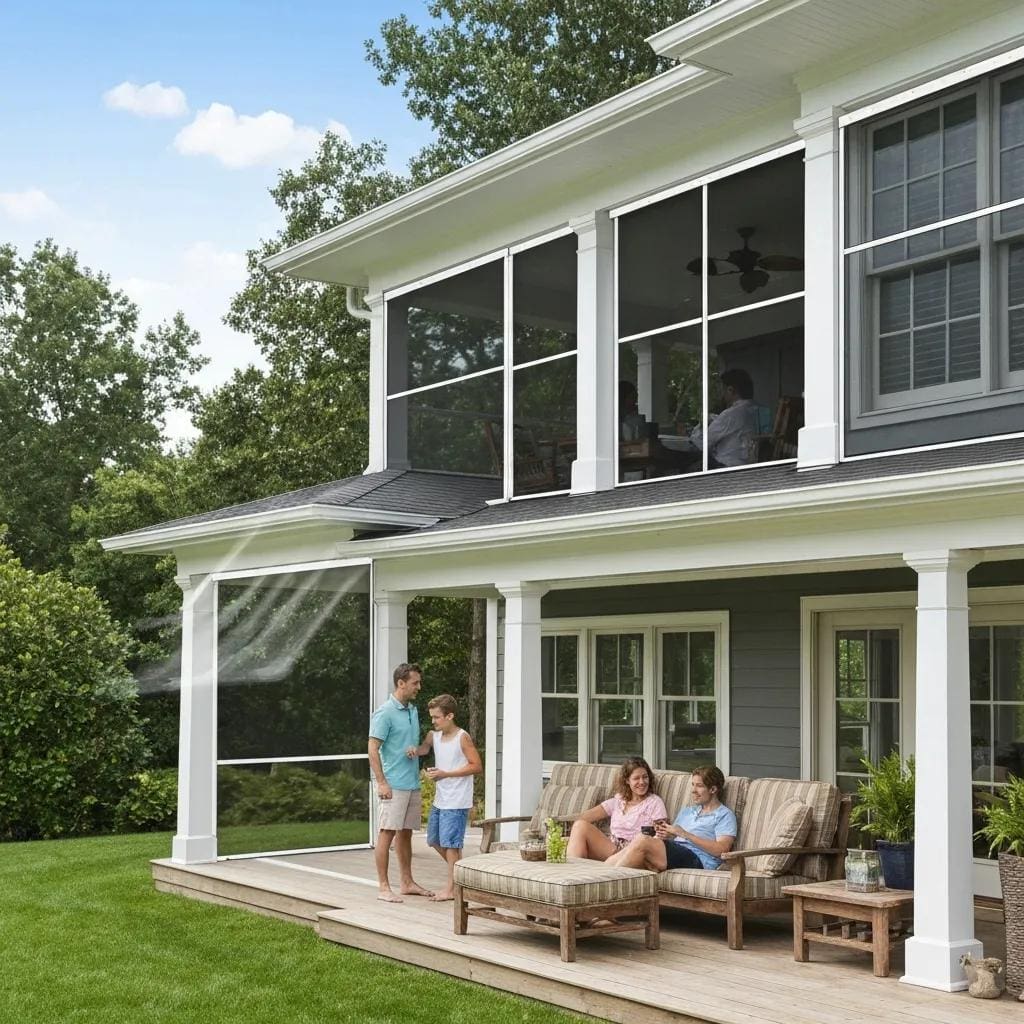
Hurricane screens and storm panels offer flexible options for porches and large openings by balancing visibility, light transmission, deployment speed, and cost with varying wind resistance. Fabric hurricane screens use high‑strength mesh mounted in frames to absorb debris impact while maintaining visibility — ideal for lanais and screened porches. Aluminum and clear polycarbonate storm panels provide rigid protection: aluminum is cost‑oriented and durable, while polycarbonate preserves sightlines and light at a higher price. The right choice depends on opening size, desired visibility, budget, and required wind rating.
Typical Wind Ratings for Screens and Panels
Hurricane screens often deliver strong debris protection and modest‑to‑moderate wind resistance suitable for porches and large enclosures; engineered screen systems can be rated for significant wind speeds when installed to spec. Aluminum storm panels offer rigid protection and can be rated into moderate‑to‑high ranges depending on panel gauge and anchoring. Clear polycarbonate panels can meet or exceed aluminum in impact resistance and keep light, but they need UV‑rated finishes to avoid yellowing. Typical guidance: choose screens where visibility matters, aluminum panels for budget‑friendly rigidity, and polycarbonate when you need impact resistance plus daylight. Proper edge supports and anchoring are decisive for achieving published ratings.
When to Choose Screens or Panels Instead of Shutters
Pick hurricane screens when you want to keep views and airflow while protecting porches or lanais, especially where rigid shutters would be visually intrusive. Choose aluminum panels for budget‑minded rigid coverage on secondary openings, and select clear polycarbonate when impact resistance and light transmission are both required for enclosed patios or large glazing. Quick checklist:
- Preserve visibility and airflow: Use hurricane screens for porches and lanais.
- Budget‑oriented rigid protection: Choose aluminum storm panels for cost‑effective coverage.
- Light and impact balance: Opt for polycarbonate panels to keep daylight and strong impact resistance.
How to Choose the Right Shutter for Your Coastal NC/SC Home
Picking the right hurricane shutter means matching required wind resistance to local wind zones, opening type, budget, aesthetic goals, and maintenance ability — and a professional Design Pressure Analysis (DP) customizes the ratings needed for each opening. Start by finding your home’s mapped wind speed zone and exposure category, then identify priority openings — large sliders and wind‑facing windows usually need the highest protection. Balance that protection with cost: prioritize rated roll‑downs for primary exposures and consider accordion or rated decorative shutters for secondary openings. The sections below list the most important selection factors.
Key Factors That Should Drive Your Selection
Consider the required wind‑load rating for each opening, material durability in a coastal environment, operation method (manual versus motorized), aesthetic impact, and lifecycle maintenance. Prioritize openings by vulnerability and occupancy — sleeping rooms and main living areas facing the windward side should get the best protection. Materials matter: 6063‑T6 marine‑grade aluminum and 18‑8 stainless fasteners give superior corrosion resistance and longer service life, while polycarbonate preserves light where needed. For operation, motorized roll‑downs give fast, safe deployment on larger or unattended properties, while accordion units offer a permanent, manual solution for frequently used openings.
How Local Codes Affect Shutter Requirements
Local building codes and permit processes set the wind‑load ratings and product approvals needed for protective systems; many jurisdictions expect rated products with documentation that proves compliance. Officials use design pressures derived from mapped wind speeds, exposure, and roof height to set required ratings — a Design Pressure Analysis that calculates DP for each opening ensures your shutter choice meets permit criteria. Certified product approvals, test reports, and correct attachment details simplify inspections and insurance mitigation, and installers familiar with NC/SC code expectations can speed permitting. Talk with local code officials and keep certified documentation handy to avoid noncompliant installs and to secure insurance benefits.
Maintenance That Keeps Wind Resistance Reliable
Regular maintenance preserves wind resistance by preventing corrosion, ensuring smooth operation, and keeping seals and anchors in good condition — especially in salt‑air coastal settings. Inspections should check guide rails and slat interlocks for debris, verify that 18‑8 stainless fasteners are secure, and test motors under load on powered systems. Rinse with fresh water after salt exposure, lightly lubricate moving parts with manufacturer‑recommended products (non‑silicone where advised), and replace worn seals to keep performance consistent. Below is a practical routine to protect shutter performance and maintain warranty coverage.
- Rinse and clean: Flush salt and sand from surfaces with fresh water after storm exposure.
- Inspect fasteners and seals: Check stainless fasteners and rubber seals for wear every 6–12 months.
- Exercise moving parts: Operate motorized units periodically to confirm smooth operation and test backups.
These steps reduce corrosion‑related failures and help retain design wind ratings. The table below summarizes material‑specific maintenance actions to make planning easier.
Protecting Shutters from Coastal Corrosion and Wear
Focus on removing salt, preserving finishes, and replacing vulnerable hardware before failure to keep wind resistance and mechanical integrity intact. Rinse exterior components after offshore winds or salt spray, dry trapped moisture, and avoid abrasive cleaners that strip protective coatings. Inspect 18‑8 stainless fasteners and replace any showing pitting; ensure motor housings remain sealed and consider annual professional servicing of electrical components. Proactive maintenance extends shutter life and lowers the chance of failure during a storm — scheduled professional inspections are a smart investment.
Warranty and Service Options from American Hurricane Shutters
American Hurricane Shutters offers a 7‑year warranty and provides installation, repairs, maintenance, retrofits, and emergency services tailored to coastal North and South Carolina homes. We emphasize marine‑grade materials and corrosion‑resistant fasteners to extend service life in salt air and perform a professional Design Pressure Analysis to ensure shutter selection meets local wind‑load and code requirements. For pricing guidance, use our cost calculator or request a free on‑site or remote estimate to align product choice with your budget and performance needs. To request service or a free estimate, contact American Hurricane Shutters by email at [email protected] or by phone at +1-910-256-1288; emergency services are available for urgent storm‑related needs.
This company information supports homeowners who need certified installation, ongoing maintenance, or rapid repairs while keeping the focus on education and practical decision‑making.
- Get a Design Pressure Analysis: A professional DP analysis customizes required ratings for each opening.
- Compare materials and operation: Prioritize marine‑grade aluminum and stainless fasteners for coastal longevity.
- Budget and prioritize: Protect primary exposures first, then secondary openings as budget allows.
These steps give a clear path from evaluation to installation while keeping the article focused on helping homeowners choose durable, high‑wind‑resistance solutions.
Frequently Asked Questions
What are the differences in installation requirements between roll‑down and accordion shutters?
Roll‑down and accordion shutters have different installation needs. Roll‑down systems need a headbox and guide rails, requiring precise measurements and professional installation for correct alignment and operation. Accordion shutters are permanently mounted and depend on strong jamb anchors, so they’re simpler in some respects but still require careful anchoring and corrosion protection. Consult a professional to meet local codes and ensure optimal performance for your chosen system.
How do I determine the right wind resistance rating for my home?
Start by identifying your local wind speed zone and exposure category via local building codes or a Design Pressure Analysis. Look at specific openings — large sliders and wind‑facing windows typically need higher ratings. A professional installer can confirm required wind‑load levels and recommend shutters that meet your area’s standards for storm protection.
What maintenance is required for accordion shutters compared to roll‑down shutters?
Accordion shutters usually need less complex upkeep because they’re manual with fewer moving parts. Maintenance focuses on anchoring and the folding mechanism. Roll‑down systems require periodic checks of motors, guide rails, and seals plus lubrication of moving parts. Both types benefit from fresh‑water rinses after salt exposure, but powered roll‑downs may need more frequent professional servicing to stay in top condition.
Can I install hurricane shutters myself, or should I hire a professional?
While some homeowners attempt DIY installation, we strongly recommend hiring a professional. Proper installation is essential for meeting local codes and ensuring shutters perform in storms. Professionals perform Design Pressure Analyses, install to certified details, and provide warranties — all of which reduce the risk of failure during severe weather.
What are the insurance benefits of installing rated hurricane shutters?
Rated hurricane shutters can lower insurance premiums because carriers recognize certified storm protection reduces damage risk. To qualify, shutters must be installed per local codes and be properly rated for your wind zone. Check with your insurance provider to understand eligibility, required documentation, and potential savings.
How do I choose between different shutter types based on my budget?
Match cost to need: roll‑down shutters cost more up front but offer high wind resistance and convenience that may save on repairs and insurance over time. Accordion shutters are generally more budget‑friendly due to simpler design and installation. Factor in long‑term durability and maintenance when weighing options — and use a cost calculator to compare installed costs.
What should I look for in a warranty for hurricane shutters?
Look for warranties that cover both materials and labor for several years. A strong warranty addresses defects in workmanship and materials and offers support for installation issues. Check whether the warranty is transferable and what maintenance is required to keep coverage valid. Choose products from manufacturers with proven records in storm protection.
Conclusion
Understanding how different shutter types perform under wind loads helps you make smarter choices that protect your family and property. Roll‑down shutters stand out for performance, convenience, and added benefits like energy savings and security, but the right solution depends on your home’s exposures, budget, and maintenance preferences. Evaluate your needs, get a Design Pressure Analysis, and consult a certified installer — and when you’re ready, request a free estimate to make a plan that keeps your coastal home protected.