

Hurricane Shutter Maintenance: Cleaning, Inspection, Lubrication & Repair — A Practical Guide
Keeping hurricane shutters ready means regular cleaning, careful inspections, periodic lubrication, and timely repairs. These simple steps keep your storm protection reliable, protect property value, and help keep occupants safe during severe weather. This guide lays out straightforward maintenance for common shutter types — Accordion, Rolldown, Bahama, Colonial, clear and aluminum panels, and hurricane screens — so homeowners along the NC/SC coast can prolong service life and stay storm-ready. Salt spray, gritty tracks, and motor trouble are common at the worst moments; here you’ll get practical, step-by-step methods for cleaning, inspecting, lubricating, and deciding when to call a pro. Each H2 section includes short how-to lists, quick comparison tables, and local tips — including salt-air corrosion concerns and code notes — so you can prioritize work before hurricane season.
Why regular hurricane shutter maintenance matters
Routine maintenance keeps shutters working the way they should when a storm hits. It protects mechanical parts and the overall structure so shutters resist impact, seal against wind-driven rain, and reduce the chance of broken glass and water damage. In coastal climates, salt and humidity speed corrosion and wear, so regular service preserves both function and curb appeal — a well-kept system also helps with resale and insurance documentation. Maintaining shutters demonstrates homeowner diligence and can affect claim handling or underwriting where mitigation features are a factor.
Maintenance protects your home in three practical ways:
- Reliable performance: Regular checks help ensure shutters deploy, lock, and seal correctly when needed.
- Damage prevention: Cleaning and corrosion control limit secondary water and structural damage.
- Documented care: Recorded inspections and repairs back up insurance claims and condition disclosures.
Keeping shutters ready means paying attention to both moving parts and the coastal environment; the next section explains how that attention protects property value.
How maintenance preserves your home and its value
Well-maintained shutters act as active storm protection, stopping debris from breaking windows and preventing costly water intrusion that damages framing, finishes, and systems. Addressing small problems early — like a bent panel or a sticky track — avoids larger replacements and lowers lifecycle costs. A clear maintenance record shows buyers, appraisers, and insurers you’ve cared for your mitigation systems. Because salt spray, sand abrasion, and humidity accelerate wear along the NC/SC coast, scheduled cleaning and protective coatings are especially valuable for coastal homes.
Knowing how maintenance protects value leads straight into the insurance and safety benefits below.
Insurance and safety benefits of proper shutter care
Insurers favor functioning mitigation features because they lower claim severity and frequency. Well-maintained shutters can ease claims processing and sometimes influence underwriting. From a safety view, shutters that deploy reliably help protect occupants from flying debris and reduce flooding risk. Keeping dated inspection notes and photos creates a maintenance history that speeds claim validation and shows reasonable homeowner care — something coastal properties benefit from when insurers assess storm preparedness.
With insurance and safety in mind, the next section covers the right cleaning methods for each shutter type.
How to clean different hurricane shutters effectively
Cleaning removes salt, sand, and grime so moving parts run freely and finishes last longer. The method you choose depends on the shutter material and style. Proper cleaning reduces corrosion, clears tracks and rollers, and protects aluminum, polycarbonate (Lexan), and stainless parts. Use mild soap, fresh water, and soft brushes for general cleaning; treat rusted spots and apply protective sealants only where needed. Never use abrasive tools that scratch surfaces. Work safely: secure ladders, have a partner for elevated jobs, and cut power before servicing motorized systems.
Below are type-specific routines for accordion/rolldown systems and Bahama/aluminum panels.
Cleaning accordion and rolldown shutters — best practices
Accordion and rolldown systems need attention to tracks and rollers to avoid jams and reduce motor strain. Retract shutters when possible and rinse tracks with fresh water to dislodge salt and grit. Use a soft brush and mild detergent to clean panels and track interiors, then rinse and let everything dry before applying a silicone lubricant made for outdoor use. For rolldown units, wipe the motor housing and check the bottom bar and guides for dents or debris that can throw alignment off; run a full travel test after cleaning. Avoid pressure washing near electrical housings and don’t use solvents that can strip paint or protective coatings.
A quick how-to for accordion/rolldown cleaning:
- Rinse tracks: Use fresh water to flush salt and sand from guides.
- Wash panels: Clean faces with mild soap and a soft cloth or brush.
- Dry and lubricate: Let components dry, then apply silicone to rollers and guides.
After these steps, you’ll be ready to manage corrosion and rust on Bahama and aluminum panels, covered next.
Before metal-specific treatments, this quick comparison summarizes methods, tools, frequency, and cautions by shutter type to guide your work.
How often to inspect your shutters and what to look for
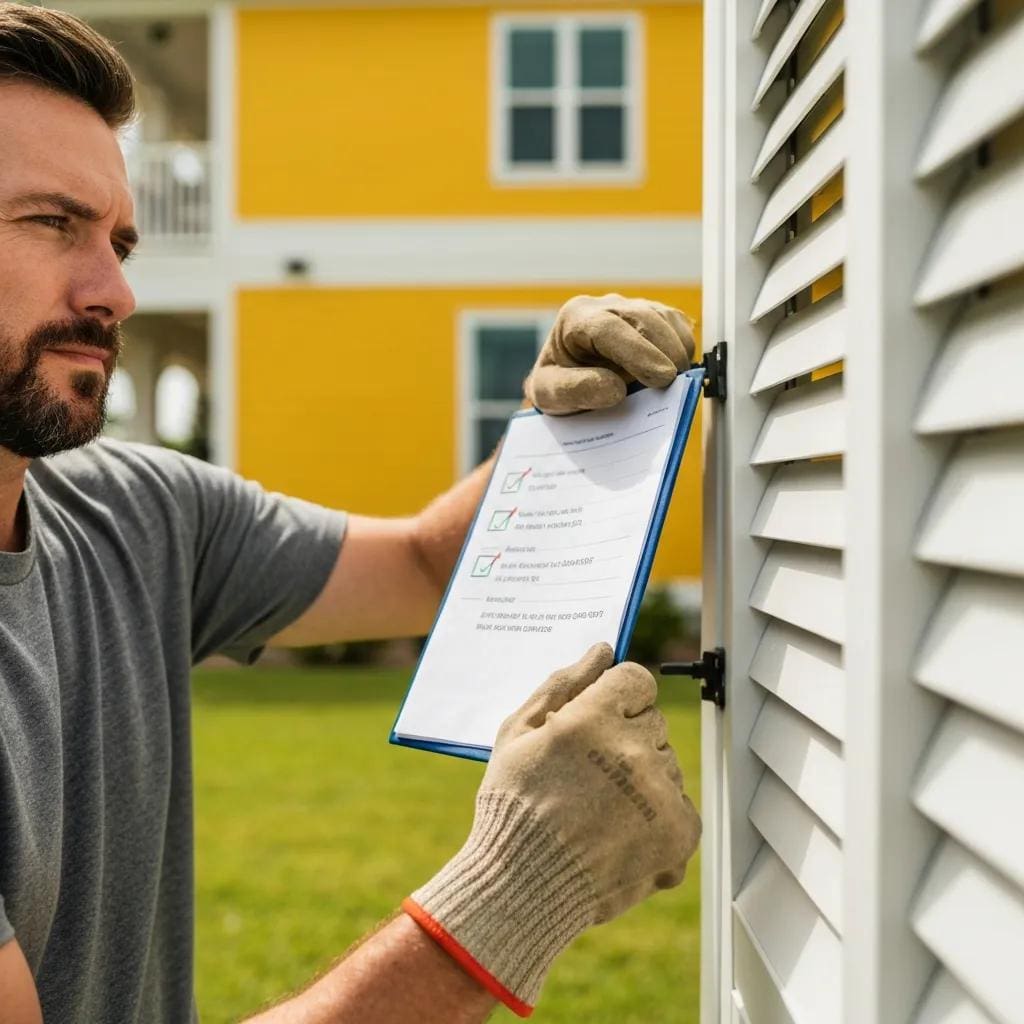
Inspections should include a full pre‑season check each year, a post‑storm review after significant weather, and periodic visual checks during the season to catch problems early. Focus on hardware (fasteners, hinges, locks), track alignment, corrosion, panel deformation, and operational testing for motorized units. Take photos and notes to prioritize repairs, support insurance claims, and build a maintenance history. Prioritize fixes by safety and function so critical defects get addressed first and your shutters stay storm-ready.
Use the checklist and table below to structure pre‑season and post‑storm inspections and assign priority.
Pre‑season and post‑storm inspection checklist overview:
What a pre‑season and post‑storm inspection should cover
Pre‑season checks confirm deployment paths are clear, fasteners are secure, seals are intact, and manual and motorized systems travel fully without binding. Photograph problem areas and record model or serial numbers for future reference and insurance. After a storm, look for new dents, missing fasteners, detached panels, motor faults, and signs of water intrusion; apply temporary stabilization (strap panels, seal gaps) to limit further harm until repairs can be made. If attachment points or code‑related damage are suspected, call a professional and document everything thoroughly.
These inspection steps help you spot typical failures and decide what’s DIY and what needs pro attention.
How to spot loose hardware, corrosion, and other common issues
Watch for loose or missing fasteners, rust streaks around hinges, bent bottom bars, or panels that don’t seat flush — those all signal reduced protection. Run the shutters fully to check for sticking, grinding, or uneven movement that points to track issues or roller failure. Classify severity by impact: surface scratches and light rust are low priority; bent panels, broken fasteners, or motor failure are high priority and usually need a pro. Early fixes like tightening hardware, clearing tracks, and applying corrosion inhibitor often stop problems from getting worse — but watch for repeated issues, which suggest a deeper problem.
Knowing how to grade problems leads to the lubrication best practices below, which help extend component life.
Lubrication best practices for hurricane shutters

Correct lubrication lowers friction, reduces abrasive wear, and eases motor load so shutters operate smoothly. Choose lubricants based on contact surfaces and salt exposure. Silicone sprays and dry PTFE are preferred because they don’t attract grit and hold up outdoors; heavy oils and greases collect sand and speed wear. Apply sparingly to tracks, hinges, rollers, and pivot points; avoid spraying into motor housings or electrical parts. In coastal settings, re‑lubricating every three months is a good rule to keep parts protected without creating buildup.
The table below outlines recommended lubricants, where to apply them, compatible materials, and suggested intervals.
Which lubricants to use on tracks, hinges and moving parts
Use silicone sprays on tracks and hinges for a long‑lasting, non‑gummy film. Apply dry PTFE on roller bearings where a dry, low‑friction surface helps keep grit from sticking. Avoid heavy oils or grease on exterior tracks since they trap sand and salt. For threaded components and fasteners, a light corrosion inhibitor or anti‑seize applied sparingly will protect metal‑to‑metal contact. Wipe off excess lubricant and run an operational test to confirm smoother travel without binding.
Lubrication differences for manual vs. motorized systems
Motorized shutters need care for the drive assembly and limit switches in addition to track lubrication. Manufacturers typically advise keeping motor housings dry and using only approved lubricants on accessible gears. Always disconnect power and follow manufacturer instructions before lubricating near motors, and never spray inside electrical enclosures. Certified technicians should handle gearbox service and limit‑switch calibration to prevent overtravel and motor strain. For manual systems, homeowner‑applied silicone or PTFE on tracks and hinges is often sufficient, while motorized systems benefit from periodic professional maintenance.
Good lubrication lowers wear and helps you decide when to handle repairs yourself and when to call a pro — covered next.
Common repairs and when to call a professional
Typical repairs include tightening or replacing fasteners, realigning tracks, treating localized corrosion, straightening bent bottom bars, and fixing motor or electrical faults. Homeowners can tackle many minor jobs with basic tools: surface rust treatment, swapping washers for stainless steel, tightening loose fasteners, and cleaning or re‑lubricating tracks. However, call a professional for structural attachment failures, deep corrosion at anchors, motor drive failures, limit‑switch problems, complex track realignment, or any work involving electrical systems or code compliance. Coastal conditions accelerate corrosion, so prompt professional assessments are often important for safety‑critical repairs.
Use this DIY vs. professional decision list to plan work before the season:
- DIY‑appropriate: Tighten loose fasteners, clean tracks, apply silicone lubricant.
- Requires professional: Bent structural rails, motor failures, anchor replacements, deep corrosion near mount points.
- When unsure: Take photos, run a simple operational test, and schedule a pro inspection if function is impaired.
When you need more than DIY, American Hurricane Shutters (AHS) provides local expertise across coastal NC/SC and offers Free Estimates. Our regional knowledge of salt‑air effects and our range of shutter products — Accordion, Rolldown, Colonial, Bahama, Hurricane Screens, clear and aluminum panels, and Flat Polycarbonate (Lexan) — helps prioritize repairs that restore code‑compliant protection. Scheduling a free estimate with a local specialist is a practical next step for complex or safety‑critical issues.
Simple DIY fixes for loose fasteners and track problems
Start DIY work by photographing the issue, then address simple items: tighten screws to recommended torque, replace corroded washers with stainless hardware, clear debris from tracks and apply silicone. For minor track misalignment, remove obstructions, loosen nearby fasteners slightly, realign the guide by hand, and retighten evenly while testing travel. Use temporary supports (straps, boards) for loose panels until a full repair is completed. Always wear eye protection and gloves, work with a partner on ladders, and stop if you must access anchors or structural members — that’s a pro job.
When professional service is required for coastal NC/SC homes
Call a professional if corrosion reaches anchor points, motors stop responding, panels are structurally deformed, or any condition threatens attachment during a storm. Coastal NC/SC homes face accelerated salt corrosion and sand abrasion that can hide deeper metal fatigue, so certified technicians should verify anchor integrity and code compliance when you see deep corrosion or unusual movement. Pros handle load‑bearing anchor replacements, gearbox service, motor electronics diagnostics, and thorough post‑storm assessments that homeowners cannot safely or legally perform. Prepare for a pro visit by collecting inspection photos and notes to speed triage and cost estimates.
Knowing when to bring in a pro helps you plan seasonal maintenance, explained next.
Scheduling seasonal maintenance for reliable protection
Plan seasonal maintenance so inspections, deep cleaning, lubrication, and repairs line up with pre‑season readiness and post‑storm follow‑up. A steady schedule reduces emergency fixes and extends shutter life. Pre‑season (spring to early summer) should include a full functional test, fastener checks, track cleaning, motor testing, and spot corrosion treatment. During the season, do quick visual checks after strong winds or heavy salt spray and make sure removable panels are stored or secured. After storms, prioritize safety repairs, document damage with photos, and schedule professional assessments for structural or motorized issues.
Use this phased timeline to plan work and consider seasonal service plans.
- Pre‑season: Full inspection, deep cleaning, lubrication, and professional motor service if needed.
- During season: Visual checks after storms and temporary stabilization as needed.
- Post‑storm: Document damage, make temporary fixes, and schedule professional repairs.
If you prefer scheduled support, American Hurricane Shutters (AHS) offers seasonal maintenance plans and Free Estimates tailored to coastal NC/SC. We coordinate pre‑season inspections, post‑storm assessments, and repairs from Wilmington to Myrtle Beach and nearby coastal towns. Regular service with a regional specialist reduces homeowner worry and helps keep shutters compliant and ready when storms approach.
Tasks to do before, during and after hurricane season
Before season: perform a full inspection, clean tracks and panels, tighten fasteners, check motor limits, and treat corrosion while photographing conditions for records. During the season: inspect after strong winds for new dents, loose hardware, or operational issues, and remove visible salt deposits to slow corrosion. After storms: prioritize safety, apply temporary stabilization, document all damage with photos and notes, and schedule professional repairs for structural or motorized problems. Keep a simple log of dates, tasks, and photos to show continuous care and support any insurance claims.
These phase‑based actions make immediate and ongoing upkeep clear, leading into off‑season care tips below.
Off‑season care to extend shutter service life
In the off‑season, store removable panels in a dry, ventilated area away from direct sun and sand, and inspect stored panels occasionally for scratches or corrosion. Perform light cleaning and apply protective coatings to exposed metal components at least twice a year in coastal climates, and schedule an annual professional inspection to catch slow‑developing issues. Keep a maintenance calendar with quarterly visual checks and annual professional service reminders so small problems don’t become big ones. Off‑season attention lowers the chance of surprises when the next hurricane season starts.
Consistent off‑season care helps protect finishes and hardware so shutters remain ready year after year.
Frequently Asked Questions
1. What are the signs that my hurricane shutters need repair?
Look for visible damage such as dents, cracks, or rust and for operational problems like sticking, grinding, or incomplete travel. If shutters won’t lock, fasteners are loose, or you hear unusual noises during operation, schedule an inspection. Regular checks help catch issues early so you don’t face bigger problems during a storm.
2. How can I prepare my hurricane shutters for a storm?
Prepare shutters by cleaning away debris, checking for damage, and testing manual and motorized operation to confirm they deploy and lock. Tighten loose hardware and secure removable panels. If you find any problems, address them before the storm or contact a professional for repairs.
3. Are there specific products recommended for cleaning hurricane shutters?
Yes. Use mild soap and fresh water for general cleaning and soft brushes or microfiber cloths to avoid scratches. Treat aluminum corrosion with a rust product where needed and protect finishes with a sealant if recommended. Don’t use abrasive cleaners or tools on painted or polycarbonate surfaces.
4. How do I document maintenance for insurance purposes?
Keep a dated log of inspections, cleaning, repairs, and products used. Photograph shutters before and after work and save receipts for materials or professional services. A clear maintenance record demonstrates proactive care and can support faster claim handling after storm damage.
5. What should I do if my hurricane shutters are damaged during a storm?
First, make sure everyone is safe. Then document damage with photos and notes for insurance. If damage is minor, use temporary stabilizing measures to prevent further loss. For significant structural or electrical damage, contact a professional for a full assessment and repairs.
6. How can I extend the lifespan of my hurricane shutters?
Regularly clean, lubricate, and inspect shutters. Do pre‑ and post‑season checks, store removable panels properly, and apply protective coatings to exposed metal. Keep a maintenance log and schedule annual professional service to catch slow problems before they grow.
7. What are the benefits of hiring a professional for hurricane shutter maintenance?
Professionals spot hidden problems, ensure work meets local codes, and safely handle complex repairs or electrical issues. They bring the right tools and products to extend shutter life and provide peace of mind that your storm protection is in top condition.
Conclusion
Regular shutter maintenance — cleaning, inspection, lubrication, and timely repairs — keeps storm protection reliable, supports property value, and improves occupant safety. Follow the practical steps in this guide to extend the life of your shutters and reduce the risk of damage during severe weather. If you’d rather have a pro handle maintenance or repairs, American Hurricane Shutters (AHS) offers tailored service plans and Free Estimates to help NC/SC homeowners stay ready. Schedule your consultation to make sure your home stays safe and compliant through hurricane season.