
Real Homeowner Experiences: Accordion Shutter Installation — A Practical Guide
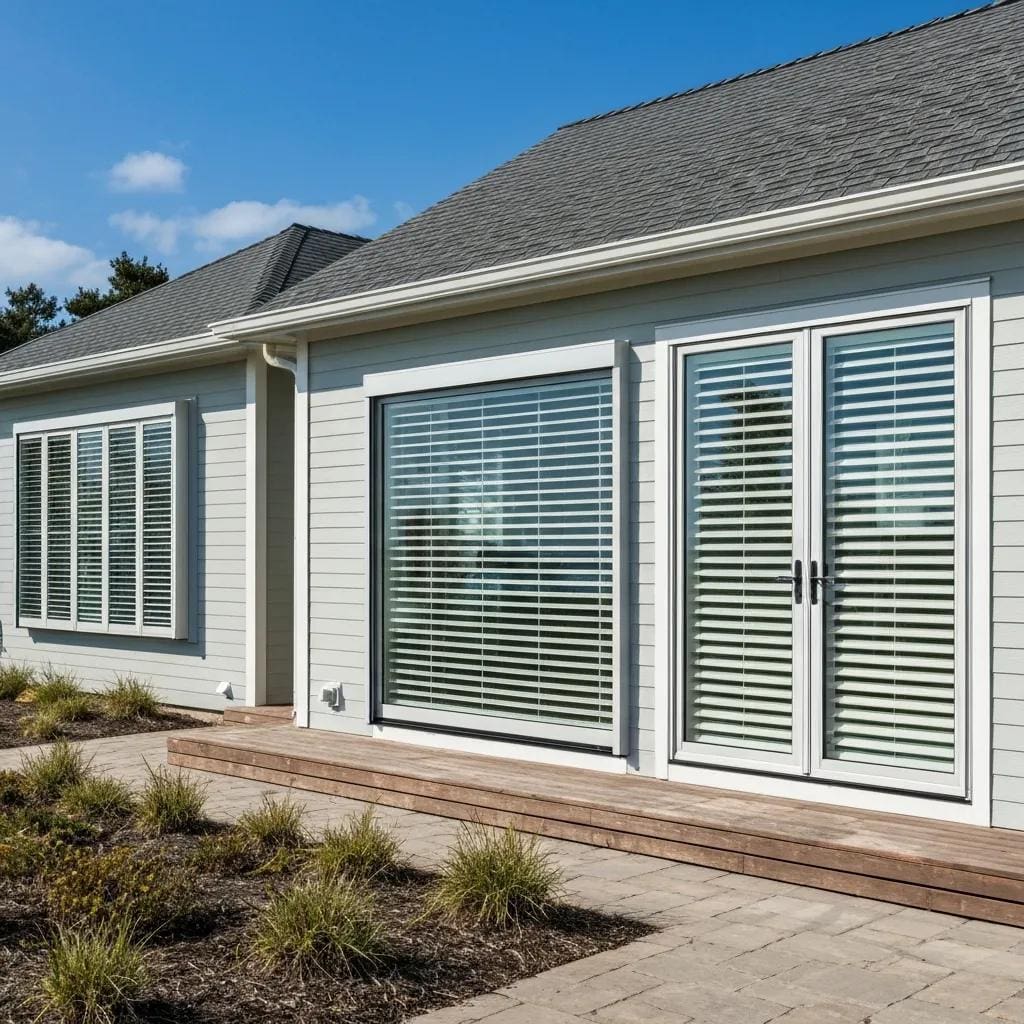
Accordion shutters are a fixed, hinged metal system that fold to the sides of a window or door and lock in place to protect openings from wind and debris during storms. This guide explains why actual homeowner experiences matter for coastal properties, how a typical installation unfolds, and what you can expect for durability, cost, and upkeep. Many coastal owners choose accordion shutters because they deploy quickly and give passive protection, but long-term performance depends heavily on accurate measurement, the right hardware, and installer skill. Read on for a clear installation workflow, practical DIY tips and tool lists, aggregated feedback from North and South Carolina homeowners, cost and value considerations, common mistakes and fixes, and a coastal-focused maintenance schedule. Each section blends technical detail with actionable checklists and comparisons so you can weigh professional installation against DIY, prepare for inspections, and plan for lifecycle needs. Topics like installation tips, maintenance checklist, and real user testimonials are woven throughout with a regional focus.
How the Accordion Shutter Installation Process Works
Installation starts with precise measurement, moves through fabrication or ordering, continues with careful mounting of tracks and panels, and finishes with operational testing and sealing. Correct measurements prevent binding under wind load; proper anchors carry hurricane forces through carrier rails and mounting brackets into the structure. Following the right sequence reduces rework, lowers the chance of water intrusion, and delivers a system that locks securely and deploys reliably when needed. The H3 subsections below walk through step-by-step instructions and a tools-and-materials checklist so homeowners understand what a competent installer — or a well-prepared DIYer — will do next.
Step-by-Step Instructions for Installing Accordion Shutters
The numbered list below outlines core installation stages and typical time estimates for a standard residential opening. Each step highlights measurement tolerances, secure fastening, and operational checks to ensure the system performs under storm conditions. Follow these steps and pause to consult a professional if you encounter structural or code questions.
- Measure and mark openings: Verify width and height at three points and use the smallest dimension to allow for manufacturing tolerances; this typically takes 15–30 minutes per opening.
- Prepare mounting surface: Inspect framing, remove trim where needed, and mark anchor locations; this prevents misaligned carrier rails that cause binding.
- Install top and bottom tracks: Set carrier rails square to the opening and fasten with corrosion‑resistant anchors into structural members; allow 30–45 minutes.
- Hang panels and test operation: Engage panels in the tracks, cycle them several times, and check locking mechanisms and latch alignment to verify smooth deployment.
- Seal and finish: Apply sealant at fastener penetrations and reattach exterior trim to reduce water intrusion and corrosion risk.
These steps help you judge whether the install is a feasible DIY project or one that should be handled by a pro with structural and code expertise.
Tools and Materials Needed for Installation
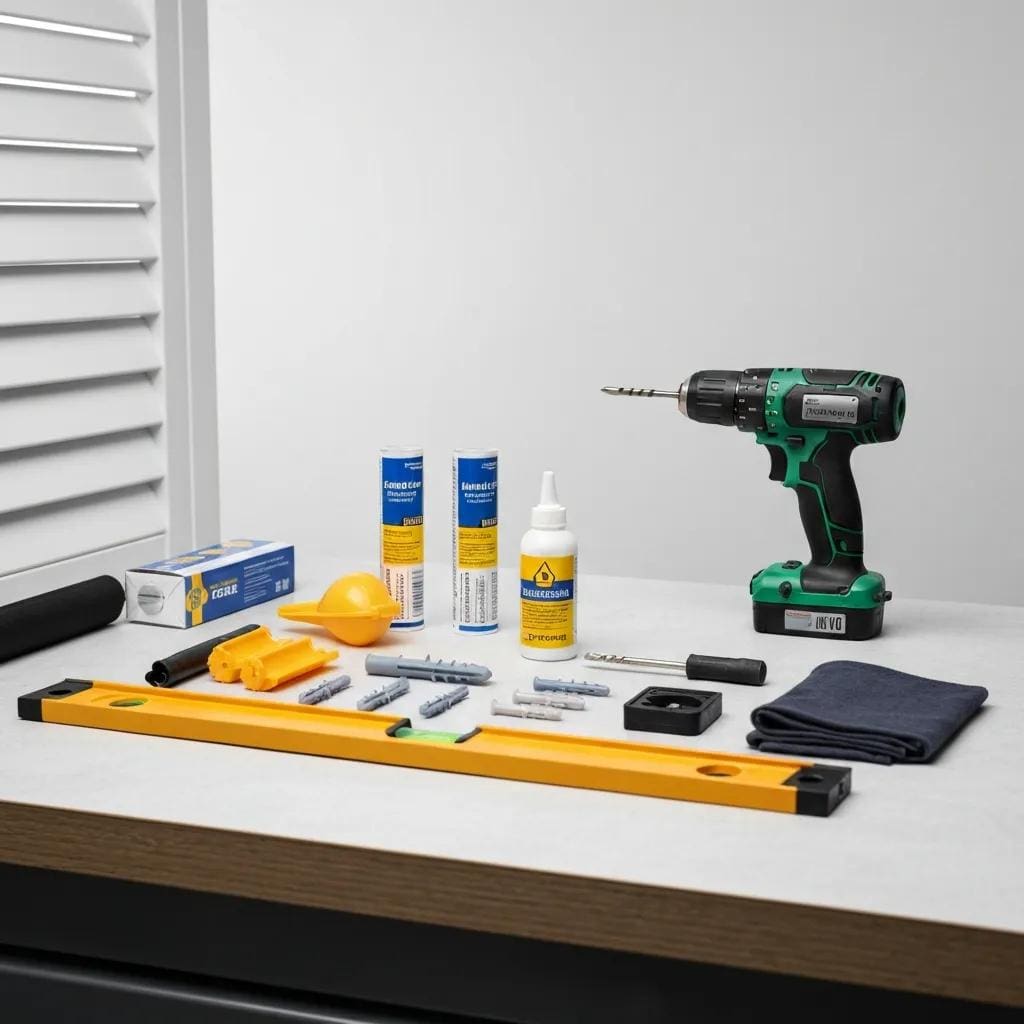
Below is a compact checklist of equipment and materials with typical specifications so homeowners know what to source or expect an installer to use. In coastal areas, safety gear and corrosion‑resistant components are essential to avoid premature failures.
Use this list to prepare for a DIY job or to verify an installer’s proposed tools and materials before work begins. The next section explains where professional scope is important and when to call local specialists.
American Hurricane Shutters provides a professional workflow that includes measurement, permit guidance when required, turnkey installation, and post‑installation testing. Homeowners in Wilmington, Morehead City, and Myrtle Beach commonly hire local installers for code compliance and warranty support. If you prefer a pro‑managed path, ask potential installers about their measurement protocol, the corrosion‑resistant hardware they use, and a written testing checklist when comparing proposals or requesting a free estimate.
How Do Homeowners Rate Their Accordion Shutter Installation Experience?
Homeowner ratings usually come down to installer professionalism, measurement accuracy, and how easily the system deploys during storm prep. Positive reviews highlight timely installs and shutters that keep operating smoothly for months or years. Critical feedback most often points to fitment issues, fabrication or shipping delays, and occasional hardware corrosion in salt‑air settings. Looking at regional feedback helps buyers set realistic expectations and ask targeted questions of contractors. The H3 sections below summarize common praise and recurring issues from NC and SC residents and explain when to escalate a service request.
Common Positive Feedback From NC/SC Customers
Coastal homeowners in North and South Carolina often praise accordion shutters for quick deployment and the peace of mind they bring during storm watches. Reported strengths include solid structural feel, single‑person operation for many openings, and installation teams that communicate timing and test results clearly. Positive comments frequently note reduced anxiety during hurricane season and a stronger sense of property protection. These themes help set expectations for product performance and service level.
- Fast deployment: Many owners say shutters stow and deploy quickly.
- Durability: Panels often resist dents and typical impact.
- Clear communication: Timelines and testing by installers boost satisfaction.
Taken together, these positives show why homeowners choose accordion shutters in coastal areas.
Common Installation Issues Users Report
Certain installation problems recur in salty, humid coastal climates: inaccurate measurements, wrong anchor selection, and poor sealing. Those root causes can produce binding panels, wind‑driven rattling, or water intrusion. Stiff operation after salt exposure is often prevented by correct hardware choice and regular maintenance. Knowing these common issues helps homeowners spot early warning signs and decide whether a DIY fix is appropriate or professional recalibration is needed.
- Watch for sticking during deployment, visible gaps at edges, and accelerated fastener corrosion.
- Many alignment and tension problems are correctable; repeated hardware failure usually requires professional service and parts replacement.
If problems persist after basic remedies, contact support for a service check and warranty guidance.
Benefits of Accordion Hurricane Shutters for Coastal Homes
Accordion shutters combine impact protection, quick deployment, and perimeter security, making them a good fit for many coastal homes. Permanently attached, they offer faster prep than removable panels and often lower lifecycle upkeep than some motorized systems. The table below compares key benefits—protection, ease of use, security, and cost/ROI—so you can quickly scan trade‑offs and make an informed choice.
This snapshot explains why accordion shutters are a popular choice on the coast. The H3 sections that follow dig into protective mechanics and cost drivers.
How Accordion Shutters Improve Hurricane Protection and Home Security
Accordion shutters shield windows and doors by creating continuous vertical panels that transfer wind and impact forces into carrier rails and mounting brackets anchored to the structure. Because loads are spread across multiple fasteners instead of concentrated on the glass, the risk of shattering drops significantly during debris storms. Reinforced stiles and locking mechanisms increase intrusion resistance, complementing impact‑rated glazing and helping deter break‑ins. Understanding this load‑distribution and locking logic makes it easier to compare accordion shutters with roll‑down and other shutter types when protection and security are priorities.
These mechanical and security points naturally lead into a look at cost and long‑term value.
Cost and Value Benefits of Accordion Shutters
Accordion shutters generally deliver a competitive cost‑per‑square‑foot when you factor in lifespan and maintenance needs in coastal climates. Key cost drivers include opening complexity, custom fabrication, and the need for corrosion‑resistant hardware. On the flip side, predictable installation workflows and durable aluminum panels tend to reduce repair needs over time. Insurance discounts and lower post‑storm repair costs can improve payback, and a useful life measured in decades often beats cheaper short‑term fixes. Get per‑square‑foot quotes and review warranty terms to clarify total cost of ownership for your property.
A quick cost comparison will help you budget and decide between storm‑protection options.
Should You Hire a Pro or Install Accordion Shutters Yourself?
Choosing professional installation or DIY depends on structural complexity, local building codes, access to proper tools, and your comfort with precise measurement and anchoring. Pros provide consistent measurements, correct fastener selection, and code knowledge; DIY is feasible for simple, standard openings if you have mechanical skill, the right tools, and time. The table below lays out pros and cons to guide that decision, followed by H3 sections explaining the benefits of hiring American Hurricane Shutters and how a confident DIYer should proceed.
Use this comparison to balance cost, time, and risk when choosing your installation path.
Why Hire American Hurricane Shutters for Professional Installation?
Hiring American Hurricane Shutters brings local coastal know‑how, familiarity with regional codes, and a turnkey process that covers measurement, installation, and aftercare. Our crews use corrosion‑resistant hardware and follow testing protocols to ensure panels operate smoothly and meet expected design loads. For homeowners in Wilmington, Morehead City, and Myrtle Beach, local installers can simplify permitting and offer warranty‑backed service and follow‑up maintenance recommendations. If you want a managed installation, request a free estimate and confirm the testing steps before work begins to avoid surprises.
We aim to educate homeowners about hurricane protection, generate leads for free estimates, and support existing customers with reliable service.
How Homeowners Can Successfully Install Accordion Shutters Themselves
A successful DIY install depends on careful measurement, the right anchors, and staged testing to catch alignment issues before you fully fasten components. Verify framing strength, use stainless or marine‑grade anchors in coastal settings, and follow manufacturer tolerances for panel widths and track alignment. Key skills include squaring rails accurately, applying correct torque to fasteners, and repeatedly testing operation. Stop and call a pro if you see repeated binding, large gaps, or any uncertainty about structural anchoring — those are decision points where professional help protects performance and warranty.
Following these DIY precautions reduces common errors and helps preserve the system’s long‑term performance.
Most Common Installation Mistakes — and How to Avoid Them
Many performance complaints trace back to a few repeatable mistakes: inaccurate measurements, wrong fasteners, poor sealing, and skipping operational testing. Each mistake has a clear preventive action — measure at multiple points and document tolerances, use marine‑grade or stainless anchors, apply exterior‑grade sealant at penetrations, and cycle shutters during installation to catch binding early. The lists and troubleshooting flow below give prioritized remedies and quick fixes homeowners or installers can apply during post‑install checks.
Measurement and Alignment Errors That Affect Quality
Measurement mistakes often come from measuring only once, ignoring out‑of‑plumb conditions, or overlooking trim or stucco returns. While tolerances vary by manufacturer, a best practice is to measure height and width at three locations and use the smallest dimension for panel fabrication. Misalignment causes binding, uneven track wear, and gaps that let water in — correcting alignment before final fastening prevents costly rework. Verify fit by dry‑fitting panels, checking squareness with a framing square, and running multiple deployment cycles before sealing.
Fixing measurement issues early improves operation and reduces long‑term maintenance.
How to Troubleshoot and Fix Installation Problems Quickly
This troubleshooting flow helps you diagnose common symptoms and try simple fixes before calling a pro. Identify the symptom, test likely causes, apply the simplest remedy, and escalate if the issue persists. For example, sticking usually points to misaligned tracks — loosen fasteners, re‑shim rails, and re‑tighten in sequence. Rattling often comes from loose fasteners or missing washers — tightening anchors and replacing corroded hardware typically stops the noise. If problems continue, professional recalibration, replacement of corroded parts, or structural reinforcement may be required.
- Symptom → Likely cause → Quick fix → When to call pro
- Sticking → Misalignment → Re‑shim and retorque → Call pro if it persists
- Rattling → Loose or corroded fasteners → Tighten/replace → Call pro if damage is present
- Leaks → Improper sealing or gaps → Re‑seal and check flashing → Call pro for structural leaks
Following this flow reduces downtime and improves reliability when you need shutters ready for storms.
How to Maintain Accordion Shutters After Installation
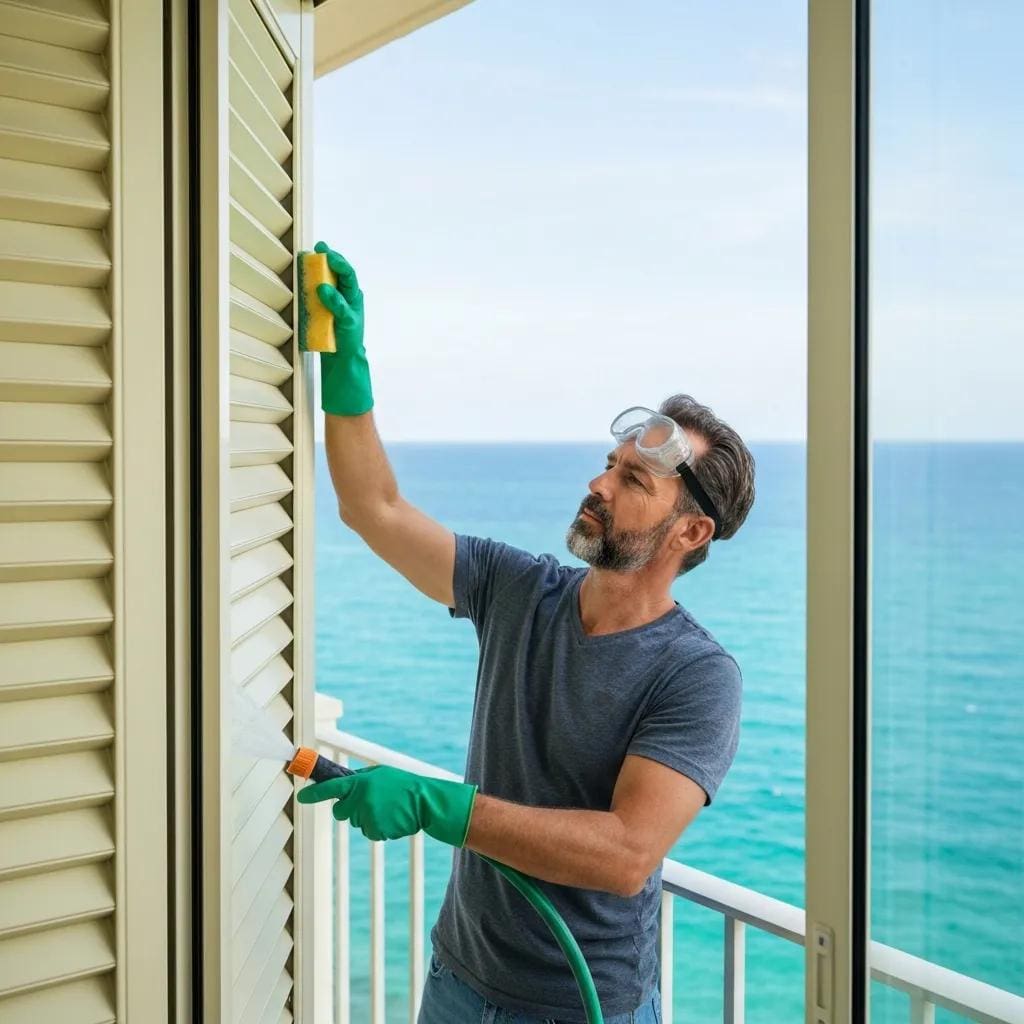
Regular maintenance is vital in coastal areas where salt, humidity, and wind speed up wear. A seasonal schedule that includes rinsing salt deposits, lubricating moving parts with marine‑grade lubricant, inspecting fasteners for corrosion, and cycling shutters to verify operation will extend service life and prevent failures at critical times. The H3 sections below give a practical checklist and explain how routine care affects homeowner satisfaction and storm readiness.
Maintenance Tips to Extend Lifespan in Coastal Conditions
Simple coastal maintenance steps reduce corrosion and keep shutters operating smoothly: rinse shutters with fresh water after salt spray events, inspect and replace stainless or marine‑grade fasteners when pitting appears, and lubricate tracks and locking points before and after hurricane season. Use quality exterior sealants at fastener penetrations and schedule professional inspections for multi‑story or hard‑to‑reach openings. Keep a short log of inspection dates and noted issues to track component life and time replacements before a storm.
Seasonal care directly cuts emergency repairs and keeps protection reliable.
How Maintenance Affects Satisfaction and Performance
Homeowner satisfaction tracks closely with maintenance frequency and how quickly minor issues are handled. Properties with documented seasonal care report fewer operational failures and better storm performance. Useful metrics to track include cycles between lubrication, visible corrosion spots per inspection, and any deployment hiccups logged during test cycles. Proactive maintenance often preserves warranty coverage and can improve resale value by showing ongoing care of storm‑protection assets. Periodic professional service complements homeowner tasks and resolves issues needing specialized access or parts.
- Seasonal rinse and inspect: Rinse salt residue and check fasteners every 3–6 months.
- Lubrication schedule: Apply marine‑grade lubricant to tracks and locks before and after hurricane season.
- Recordkeeping: Keep a simple log of inspections and repairs to plan service needs.
These proactive steps keep accordion shutters reliable and align upkeep with homeowner expectations.
American Hurricane Shutters supports customers across Wilmington, Morehead City, and Myrtle Beach with service guidance and local maintenance recommendations. Contact your local office for support, scheduling, or to request a free estimate for upgrades or larger maintenance projects.
Frequently Asked Questions
How do accordion shutters differ from other storm protection options?
Accordion shutters are permanently mounted and deploy quickly, often by one person, offering immediate protection. Roll‑down shutters usually require motorization and cost more, while removable panels need storage and manual installation. Each system has trade‑offs, but accordion shutters strike a balance of convenience, durability, and value for many coastal homes.
How do I choose the right size and style of accordion shutters for my home?
Pick shutters after taking accurate height and width measurements and noting architectural features like trim or stucco returns. Consider material and finish for durability and curb appeal. Consulting a professional installer ensures proper fit, code compliance, and the best choice for your needs.
What should I do if my accordion shutters aren’t working properly?
Start by checking for common issues: misalignment, sticking, or corrosion. Clean and lubricate tracks, and inspect fasteners for wear. If problems remain, adjust alignment or replace damaged components. For stubborn issues, contact a professional installer for a safe, correct repair and to maintain storm readiness.
Can installing accordion shutters lower my insurance premiums?
Many insurers offer discounts for verified storm protection like accordion shutters. Check with your carrier to confirm available discounts and document your installation and any inspections to support premium reductions.
How often should I maintain my accordion shutters?
Perform maintenance at least twice a year and after severe weather: rinse off salt, lubricate moving parts, and inspect for corrosion. Keep a maintenance log to track inspections and repairs. Regular upkeep improves reliability when storms arrive.
Are there environmental considerations when installing accordion shutters?
Choose corrosion‑resistant materials such as marine‑grade aluminum to reduce replacements and waste. Follow local codes to minimize environmental and structural risks after storms. Well‑designed shutters can also help regulate indoor temperatures and improve energy efficiency.
Can accordion shutters be made for odd‑shaped or non‑standard openings?
Yes — shutters can be custom fabricated for non‑standard shapes and sizes, though custom work usually costs more and takes longer to produce. Work with a professional who can measure accurately and design a tailored solution that balances functionality and appearance.
Conclusion
Accordion shutters offer dependable storm protection, fast deployment, and long‑term value for coastal homeowners. Understanding installation steps and maintenance requirements helps you get the most from your system and maintain peace of mind during hurricane season. Whether you DIY or hire a pro, the right approach protects your home and your investment. Reach out to our team for personalized advice and a free estimate.