
Accordion Shutters for Coastal Homes: Costs, Installation, Benefits, and What Local Buyers Should Know
Accordion shutters are permanently mounted, folding storm shutters that form a continuous, impact‑resistant barrier across windows and doors. For homeowners on the North and South Carolina coastlines, they defend against high winds, flying debris, and salt‑driven corrosion. This guide walks you through how accordion shutters work, the materials and engineering that make them coastal‑ready, and the trade‑offs to weigh when choosing storm protection. You’ll find clear definitions, typical cost ranges per square foot and whole‑house examples, step‑by‑step professional installation guidance, maintenance tips for salt air, and side‑by‑side comparisons with rolldown, Bahama, and panel solutions. We also cover local permitting and insurance considerations for Wilmington‑area properties and include checklists to help you plan and maintain your system. Read on to learn how accordion shutters balance protection, curb appeal, and lifecycle cost.
What Are Accordion Shutters and Why Are They Ideal for Coastal Homes?
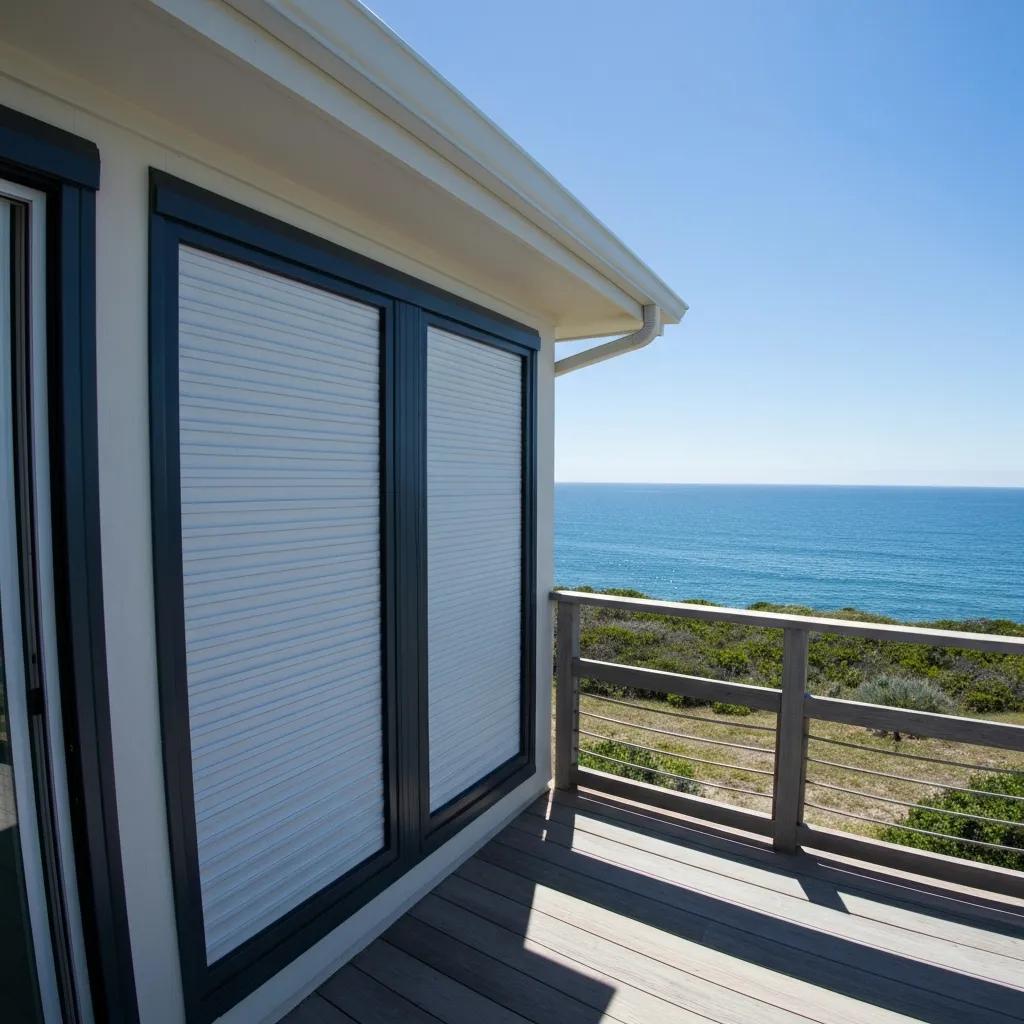
Accordion shutters are fixed, folding exterior panels that slide open and closed on vertical tracks mounted to the sides of an opening. When deployed, interlocking panels and multi‚Äëpoint locks transfer wind loads into a reinforced frame and the building structure, delivering immediate impact and wind‚Äëload resistance without the need for storage. Because coastal conditions accelerate corrosion, choosing materials and fasteners rated for salt air is essential to preserve performance and extend service life.
To highlight the material features that matter in a marine environment, the table below lists the critical components and why they matter to coastal homeowners.
This table makes clear why marine‚Äëgrade specifications matter for coastal performance and leads into a closer look at system components and materials.
How Do Accordion Shutters Work and What Materials Are Used?
Accordion shutters operate by sliding interlocked panels along vertical tracks anchored to the jamb or wall. A firm push closes the panels and integrated locks or pins secure the assembly against uplift and racking during storms. Panels are typically formed from marine‚Äëgrade aluminum with internal stiffeners; all exposed fasteners and anchors use corrosion‚Äëresistant stainless steel to resist salt spray. Manual systems rely on mechanical leverage and locks; motorized versions add an electric drive for remote operation. Track design, panel construction, and fastener choices together determine impact resistance, wind‚Äëload capacity, and maintenance needs.
Because those material and fastening choices strongly affect long‚Äëterm performance, the next section explains why accordion shutters are especially relevant for coastal risk profiles.
Aluminum Alloys for Coastal Architecture: Corrosion Resistance and Marine Applications
As marine‚Äëgrade aluminum alloys were refined, they became a practical choice for coastal construction thanks to strong corrosion resistance and wide availability.
Why Are Accordion Shutters Essential for Protecting Coastal Homes?
Accordion shutters offer continuous protection that resists both wind pressures and flying debris — two failure modes that commonly lead to major hurricane damage. Coastal properties face stronger gusts, airborne projectiles, and faster corrosion from salt air; specifying marine‑grade aluminum and stainless‑steel fasteners helps preserve critical anchor points and reduces pitting. Because the system is permanently mounted and deploys instantly, it removes the last‑minute scramble that can lead to improper protection. Those practical outcomes naturally lead to cost considerations and what drives price.
How Much Do Accordion Hurricane Shutters Cost for Coastal Properties?
Accordion shutter pricing is usually expressed per square foot and then rolled up by the number and size of openings. Coastal installs often cost more than inland work because of marine‚Äëgrade materials, two‚Äëstory access, and reinforced anchoring. Expect a per‚Äësquare‚Äëfoot range that covers basic manual systems up to motorized, impact‚Äërated assemblies; whole‚Äëhouse totals vary with opening sizes and complexity. Major cost drivers include shutter type and rating, the number and size of openings, substrate and framing reinforcement, travel and labor for coastal jobs, and any required Design Pressure Analysis or permitting. These elements together shape the final bid and potential insurance wind‚Äëmitigation credits.
Below is a straightforward cost‚Äëcomponent breakdown to help homeowners estimate budgets for different scopes of work.
After reviewing costs, many homeowners request a tailored estimate. Local installers commonly offer free, no‑obligation quotes and online tools to model project totals. Financing options are often available, and properly documented installations may qualify for insurance discounts that improve return on investment over the system’s lifespan.
Cost-Benefit Analysis of Cyclone-Rated Window Shutters for Windstorm Mitigation
This study uses cyclone‚Äërated shutters as a case example in a lifecycle cost analysis, showing how mitigation measures can affect homeowner incentives to reduce windstorm damage.
What Factors Influence Accordion Shutter Installation Costs?
Installation costs hinge on measurable variables: total protected square footage, the number and type of openings (standard windows versus large sliding doors), height and access complexity (single‚Äë vs two‚Äëstory), and whether substrate reinforcement is required to meet design pressure demands. Labor rises with second‚Äëstory work that needs lifts or scaffolding and with sites requiring custom fabrication or structural upgrades, which can also affect permit timelines. Choosing marine‚Äëgrade aluminum and stainless fasteners raises material cost but typically reduces lifecycle maintenance. Budgeting with these variables in mind helps set realistic expectations and evaluate trade‚Äëoffs between upfront cost and long‚Äëterm value.
This cost context leads into how accordion shutters can deliver savings via insurance credits and lifecycle ROI.
Can Accordion Shutters Save Money Through Insurance Discounts and ROI?
Yes — accordion shutters can help lower insurance premiums when carriers recognize installed wind‑mitigation features and documented compliance with design requirements. The financial benefit depends on insurer rules and proper documentation, but homeowners commonly recoup a portion of upfront costs through discounts and by avoiding repair expenses after storms. When you calculate ROI, assume a 20–30 year service life for marine‑grade systems, fewer recurring pre‑storm labor costs, and avoided damage repairs. Providing installation certificates, design pressure analyses, and product ratings improves the chance of receiving mitigation credits.
With those financial incentives in mind, professional installation and code compliance become even more important; the next section covers professional workflows and regulatory touchpoints.
How Is Professional Accordion Shutter Installation Done for Coastal Homes?
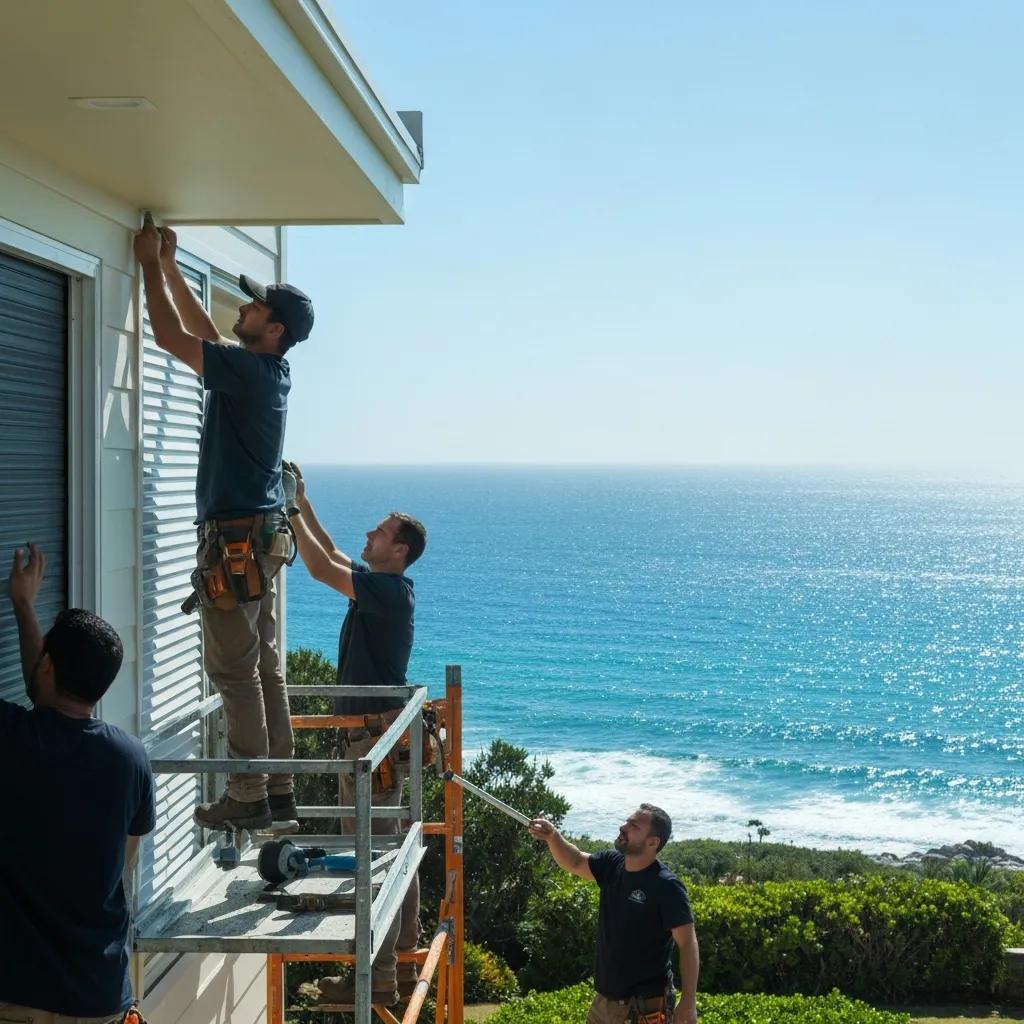
Professional installation follows a predictable workflow: accurate site measurement and Design Pressure Analysis, custom fabrication to match the openings, anchoring to structurally rated points with corrosion‚Äëresistant fasteners, finish and functional testing, and preparation of permit‚Äëready documentation. This sequence helps ensure shutters meet local coastal building codes and that attachment points transfer wind loads as required. Experienced crews also coordinate lifts and safety gear for two‚Äëstory work, which speeds installation while protecting the building and crew. Following these steps reduces field rework and supports warranty and insurance paperwork.
- Site measurement and Design Pressure Analysis to establish load requirements.
- Custom fabrication and pre‚Äëfinishing of panels and tracks to measured dimensions.
- Secure anchoring with 18-8 stainless fasteners into structurally rated points.
- Functional testing, sealing, and issuance of installation documentation for permits.
These steps explain why, for many coastal homes, professional installation is the preferred option and set up the comparison in the next subsection.
Hurricane-Resistant Shutters: Design and Materials for Coastal Protection
Manufacturers design hurricane‑resistant products — including roll‑down shutters and storm panels — using materials and methods intended to withstand extreme wind and impact conditions.
What Are the Steps in Accordion Shutter Installation and Building Code Requirements?
Installation starts with precise measurements and a Design Pressure Analysis that converts local wind‑load requirements into specific anchor patterns and framing reinforcement. Fabrication follows, producing panels and tracks to exact dimensions and the chosen finish. Installers then set and anchor tracks with corrosion‑resistant fasteners into rated structural members. Compliance checkpoints include verified anchoring patterns, operational testing, and completed paperwork for permits and inspections — which vary across North and South Carolina coastal jurisdictions. Ensuring your documentation aligns with insurer and municipal expectations streamlines approvals and supports potential wind‑mitigation credits.
Given the technical and safety requirements, next we weigh DIY versus professional installation.
Should You Choose DIY or Professional Installation for Accordion Shutters?
DIY is possible for some single‑story homes with simple openings and homeowners experienced with heavy‑gauge aluminum work. However, safety, warranty terms, and local code compliance often favor professional installation for coastal properties. Pros bring lifts and scaffolding, trained crews familiar with DP‑driven anchoring, and experience handling permits and inspections — all of which protect warranties and ensure proper attachment. For two‑story work or certified impact‑rated systems, OSHA‑level safety practices and specialized anchors typically make a professional crew the smarter choice. Compare job complexity to your skills and consider the importance of maintaining insurance documentation when deciding.
What Are the Key Benefits of Accordion Shutters for Coastal Living?
Accordion shutters provide permanent hurricane protection, immediate readiness, and added security, with useful secondary benefits like energy and noise reduction when paired with high‚Äëperformance glazing. Permanent mounting removes storage needs and speeds deployment, while marine‚Äëgrade construction fights corrosion for long‚Äëterm integrity in salt air. Multi‚Äëpoint locks and continuous panels create a strong physical deterrent that helps year‚Äëround security. The blend of impact resistance, corrosion‚Äëaware materials, and convenient operation makes accordion shutters a strong choice for coastal homeowners focused on lifecycle value.
- Immediate Protection: Deploys quickly without storage or assembly.
- Durable Coastal Materials: Marine‚Äëgrade aluminum and stainless fasteners resist corrosion.
- Security Enhancement: Interlocking panels and multi‚Äëpoint locks add a robust barrier.
- Energy & Noise Reduction: Shutters reduce solar gain and dampen exterior noise when closed.
This benefit summary prepares you for a deeper look at protective mechanics and performance metrics below.
How Do Accordion Shutters Provide Hurricane Protection and Home Security?
Accordion shutters resist impact and wind loads by transferring forces from interlocked panels into reinforced tracks and firmly anchored frames, preventing window breaches that can pressurize and damage an entire home. Impact‚Äërated assemblies are tested to quantify projectile resistance and wind‚Äëload capacity, and locking systems secure the assembly against forced entry outside storm events. Rated products are often necessary for insurance recognition and municipal approval in high‚Äërisk coastal zones; non‚Äërated options provide variable protection. Knowing the difference helps align product choice with your risk profile and insurance requirements.
Can Accordion Shutters Improve Energy Efficiency and Noise Reduction?
Closed accordion shutters act as a secondary barrier that reduces convective heat transfer and solar gain, helping to lower cooling loads in hot coastal summers. The air gap and reflective metal surface can deflect radiant heat while also dampening exterior noise and wind‑induced vibration — useful for homes near busy shorelines. Measured savings depend on window type, climate, and usage, but the combined benefits of shading and reduced infiltration support both comfort and utility bill reductions. These ancillary gains factor into the overall lifecycle value for coastal homeowners.
How Should Accordion Shutters Be Maintained to Ensure Longevity in Coastal Environments?

In salt‚Äëair conditions, a predictable maintenance routine preserves performance: routine cleaning, lubrication, inspection of fasteners and seals, and periodic functional testing. Regular upkeep prevents salt buildup in tracks, catches early corrosion on exposed hardware, and keeps locks and guides working reliably. A seasonally scheduled checklist helps homeowners and service providers plan tasks and spot issues before they become failures. Maintenance also supports warranty claims and insurance documentation.
The table above outlines routine tasks; below are recommended cleaning and lubrication practices to keep your shutters working smoothly.
What Are the Recommended Cleaning and Lubrication Practices?
Clean panels and tracks with a mild, non‑abrasive detergent and fresh water to dissolve salt residue, then rinse and dry to avoid trapped moisture. Use a silicone‑based lubricant on rollers, locks, and sliding interfaces — it repels moisture and holds up better than petroleum‑based products that attract grit. Inspect 18‑8 stainless fasteners and replace any showing pitting or galvanic damage, and test locking points to confirm secure engagement. Keep a maintenance log after each service to track wear and support warranty or insurance reviews.
How Long Do Accordion Shutters Typically Last with Proper Care?
When specified with marine‑grade materials and maintained as recommended, accordion shutters commonly reach 20–30 years of service life, depending on storm exposure and maintenance diligence. Regular cleaning and timely replacement of compromised fasteners extend structural integrity; severe storms may require component repairs rather than full replacement. Lifecycle analyses typically show that a higher initial investment in corrosion‑resistant materials reduces repair frequency and extends usable life, improving long‑term value.
How Do Accordion Shutters Compare to Other Hurricane Protection Options?
Accordion shutters differ from rolldown shutters, Bahama shutters, and removable storm panels across deployment speed, permanence, cost, storage needs, and wind‚Äërating performance. Accordion systems are permanent and provide immediate coverage without storage; rolldown systems store compactly and can be automated but add mechanical complexity; Bahama shutters offer shade and curb appeal with partial protection; storm panels are removable and less expensive up front but require storage and manual deployment. The right choice depends on priorities: permanence and rapid deployment favor accordion; automation and a low profile favor rolldown; aesthetics and shading favor Bahama; budget and portability favor panels.
This comparison sets the stage for more detailed pros and cons to help homeowners choose the right solution.
What Are the Differences Between Accordion and Rolldown Shutters?
Accordion shutters are permanent panels that hand‑deploy and lock into place, offering straightforward mechanics and immediate readiness without motorization. Rolldown shutters retract into a compact housing and can be motorized, providing convenience at the cost of extra mechanical components. Accordion systems generally expose fewer moving parts to salt spray and can be simpler to maintain; rolldown systems offer automation that some homeowners prefer for speed. Costs vary with rating and motorization, and maintenance needs differ — rolldown drives require periodic service, while accordion tracks and locks need regular cleaning and lubrication. Consider convenience versus long‑term durability in coastal settings when choosing between them.
How Do Accordion Shutters Compare to Bahama and Storm Panel Shutters?
Bahama shutters hinge above windows, offering shade and some storm resistance but not the continuous, interlocking coverage of accordion systems. Storm panels are removable and lower cost up front but require storage and timely installation before storms. Accordion shutters perform best where continuous readiness and certified impact resistance are priorities; Bahama shutters work well when aesthetics and shade are important; storm panels suit budget‚Äëminded owners willing to handle deployment. In short: prioritize permanent readiness and certified protection for exposed coastal homes; select budget or aesthetic options where exposure and code demands are lower.
- Choose accordion shutters for permanent, immediate coverage and high wind‚Äëload areas.
- Choose rolldown shutters where automation and compact storage are priorities.
- Choose Bahama shutters when aesthetics and shade are desired with moderate protection.
- Choose storm panels for budget‚Äëlimited applications if you can manage manual deployment.
That decision guide wraps up the comparison and leads into local procurement and service options.
For personalized project planning or a no‚Äëcost estimate for your coastal property, American Hurricane Shutters (AHS Carolinas) offers local, insured installation that specifies marine‚Äëgrade 6063‚ÄëT6 aluminum, uses 18‚Äë8 stainless steel fasteners, performs Design Pressure Analysis, handles permitting, and deploys OSHA‚Äë30 certified and aerial‚Äëlift trained technicians. We back our work with a local‚Äëleading 7‚Äëyear warranty. To schedule a free, no‚Äëobligation estimate or discuss financing and potential insurance discounts for documented wind‚Äëmitigation installations, contact AHS Carolinas by phone or email.
- Free estimate and Design Pressure Analysis: Start with a documented assessment to match performance to code and permit needs.
- Professional installation and permitting: Ensure code compliance and protect warranty coverage.
- Warranty and post-installation service: Choose systems backed by clear coverage to preserve value.
Frequently Asked Questions
What are the maintenance requirements for accordion shutters?
Regular maintenance keeps shutters reliable in coastal conditions. Clean tracks and panels with a mild detergent twice a year to remove salt buildup, lubricate moving parts with a silicone spray twice a year, inspect fasteners and anchors annually for corrosion or loosening, and perform a functional deployment test each storm season. These simple steps preserve operation, safety, and warranty support.
How do accordion shutters compare to other storm protection options?
Accordion shutters are permanent, hand‑deploying systems that offer immediate, full coverage without storage. Rolldown shutters store compactly and can be automated but introduce more mechanical maintenance. Bahama shutters focus on shade and curb appeal with limited protection, while storm panels are inexpensive up front but require storage and manual installation. Your priorities — protection level, convenience, appearance, and budget — determine the best choice.
Can accordion shutters enhance home security?
Yes. Interlocking panels combined with multi‑point locking systems create a strong physical barrier that deters forced entry. That security benefit applies year‑round, not just during storms, and complements the shutters’ protective role.
What factors should homeowners consider when choosing accordion shutters?
Consider material quality (marine‑grade aluminum for coastal sites), the number and size of openings, the height of the home, and whether you want motorization. Also factor in local building codes, permit needs, and whether you’ll hire professionals to ensure code compliance and preserve warranty coverage.
How do accordion shutters contribute to energy efficiency?
When closed, shutters act as a secondary
