
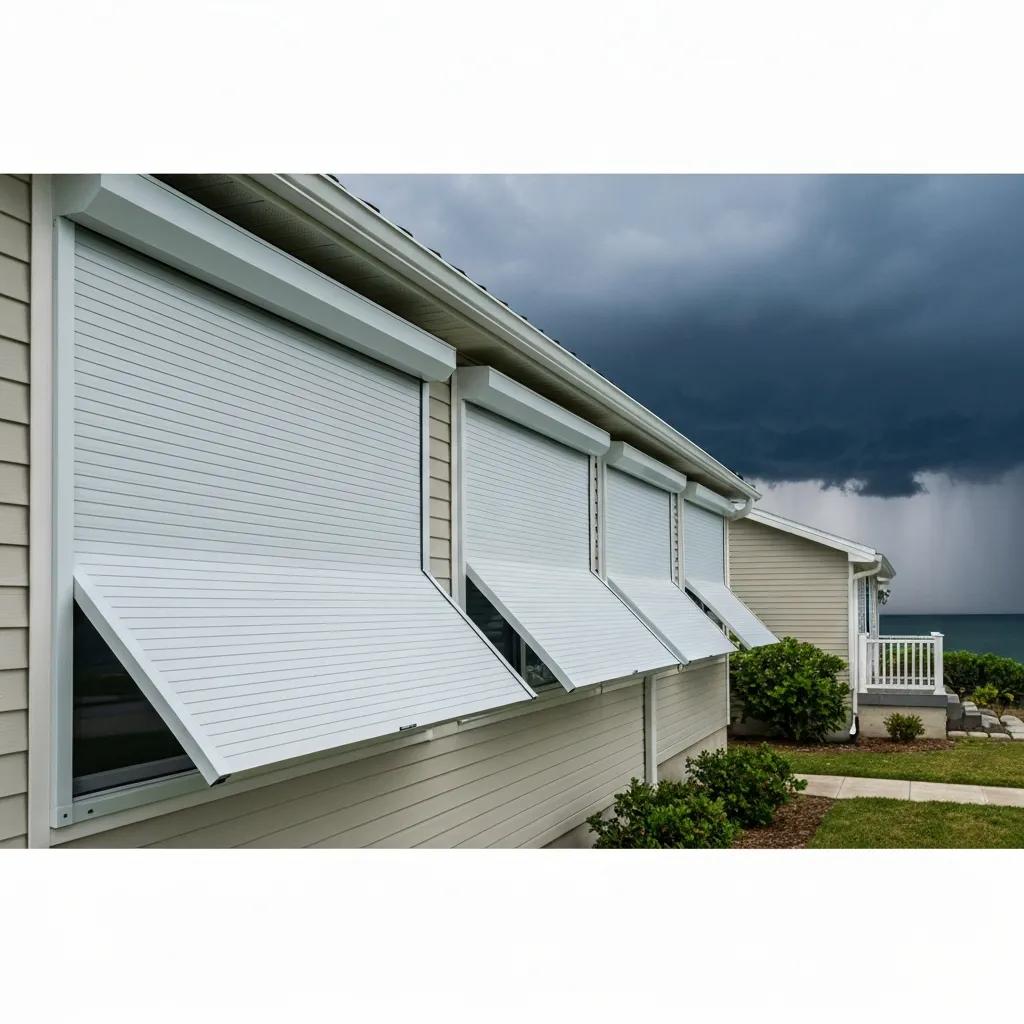
Why Roll-Down Hurricane Shutters Are the Best Choice for Coastal Home Protection: Benefits, Costs, and Installation Guidance
Roll-down hurricane shutters—available as motorized or manual systems—stow in a roller housing above the opening and deploy to shield windows and doors from wind-driven debris and extreme gusts. A reinforced curtain, guide tracks, and secure locks combine to form a continuous, impact-resistant barrier that protects your home during storms. This guide shows how roll-down shutters deliver reliable storm and impact protection, breaks down costs and return on investment, and outlines professional installation and maintenance specifically for coastal properties. You’ll also find a clear comparison with accordion shutters, an overview of operation choices (manual, motorized, and smart automation), and practical tips for selecting and caring for shutters in salt-air environments. Local considerations for North and South Carolina coastal homes are integrated throughout, with next steps such as using our cost calculator or requesting a free estimate when you’re ready to move forward.
Key benefits of roll-down hurricane shutters for coastal homes
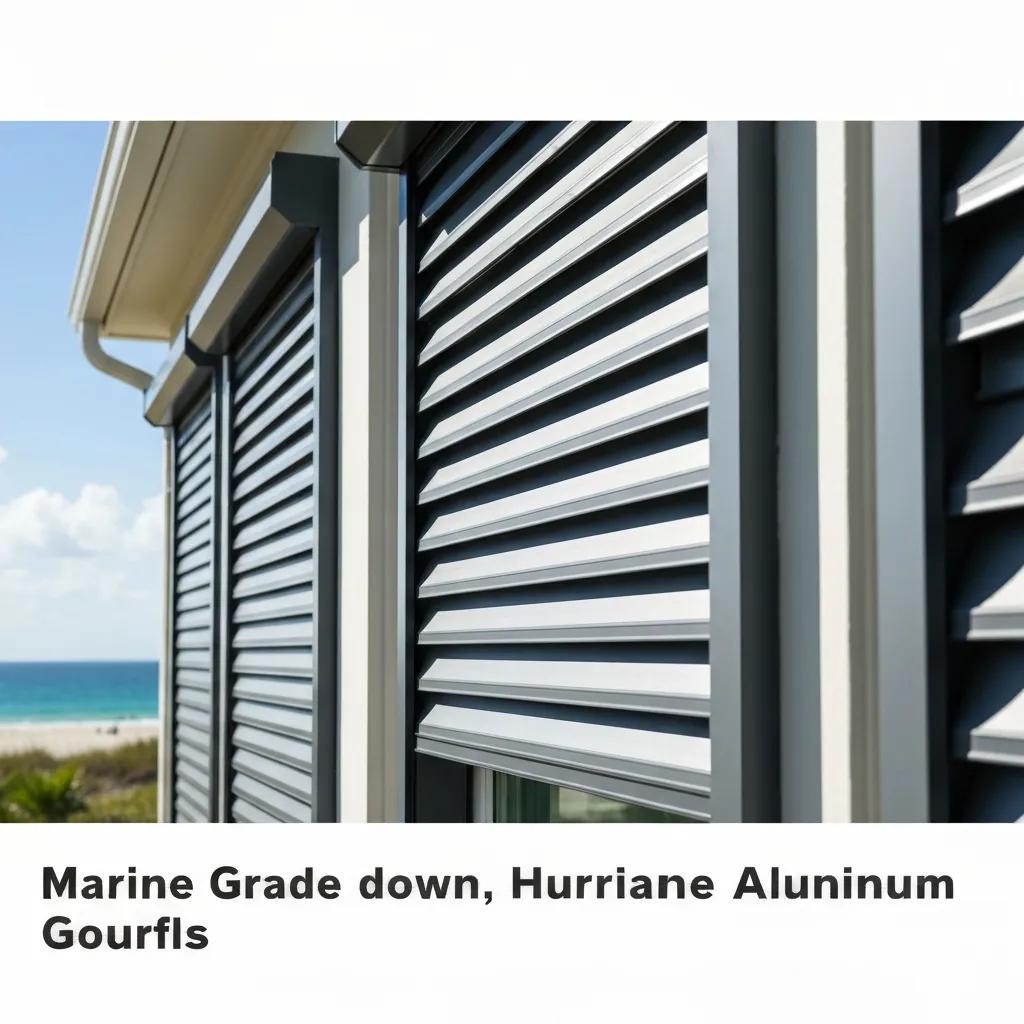
Roll-down shutters give strong storm protection, resist wind loads, and are built to limit corrosion in coastal conditions—helping preserve window and door openings during severe weather. By forming a continuous armored surface, they reduce the chance of debris penetration and lower the risk of interior pressurization and water intrusion. Beyond storm defense, installed shutters add security, cut solar heat gain to reduce cooling costs, and help block noise and harmful UV rays. The following paragraphs explain how these features work and why material choices matter for homes near the shore.
These shutters protect openings using a durable curtain that transfers impact energy into reinforced guide tracks and anchored points, while locking hardware prevents blow-out under rated pressures. Because systems are specified to meet particular wind-load ratings, the assembly functions as an integrated unit—not a collection of parts—which is crucial for coastal wind events. Understanding this system-level performance also explains how shutters double as a strong visual and physical deterrent to forced entry and provide useful everyday benefits.
Corrugated Metal Panels for Storm Shutter Systems
Laboratory tests evaluated the behavior of corrugated metal panels used in typical storm shutter assemblies mounted in a pressure-frame setup. The study assessed panel performance for storm shutter applications.
Behavior of corrugated metal panels for use as storm shutters, 2009
Roll-down shutters also lower solar heat gain and protect interior finishes by shading glazing during peak sun. That passive shading reduces A/C runtime and helps prevent UV-related fading. When closed, shutters also reduce exterior noise and grant immediate privacy—useful for homes on busy coastal roads. These operational benefits set up homeowner trade-offs and cost/ROI considerations discussed below.
Here’s a concise summary of the primary homeowner benefits:
- Storm protection: A continuous, impact-resistant barrier shields windows and doors from high winds and flying debris.
- Security and privacy: Closed shutters deter intrusion and provide complete visual privacy.
- Energy and UV control: Shading reduces solar heat gain and blocks UV exposure to interiors.
- Noise reduction: The curtain and sealed tracks help lower exterior sound transmission.
These advantages explain why roll-down shutters are often the preferred option for coastal properties and lead into a quick attribute table linking materials and ratings to homeowner outcomes.
Roll-down shutter attributes and homeowner benefits at a glance:
This table ties technical choices to practical homeowner outcomes and highlights why the right materials and fasteners matter for longevity. Next, we examine cost drivers and how investment translates into protection and potential financial return.
How much do roll-down hurricane shutters cost, and what is the ROI?
Costs for roll-down shutters depend on operation type (manual vs. motorized), material grade, total coverage, and installation complexity. The investment typically breaks down into hardware (curtain, motor when applicable, housing, tracks), installation labor, permitting and electrical work, plus optional automation or battery backup. Homeowners should weigh the upfront price against avoided repair bills, possible wind-mitigation insurance discounts, and reduced long-term maintenance or energy costs. Below we outline the main cost drivers and how to consider insurance and resale impacts.
Price differences between manual and motorized systems come from motor selection, control interfaces, and wiring. Manual units skip motors and controls, lowering hardware costs and simplifying installation; motorized systems add motor and control expenses plus potential electrical work and battery backup. Larger or customized openings increase fabrication and install time, though whole-home installs can provide economies of scale. Reviewing these variables helps you choose the balance of convenience, budget, and performance that makes sense for your home.
Evaluate ROI not just by upfront cost but by avoided losses and insurance savings. Properly rated shutters can qualify for wind-mitigation credits with insurers when documented, which may reduce premiums over time. Preventing a single catastrophic window failure can save far more in repair and recovery costs than the price of protection. Keeping permits, ratings, and invoices organized supports claims and appraisal conversations, strengthening the financial case for shutters.
Hurricane Shutter Performance Under Impact and Pressure
An analysis compared five types of storm panels to quantify performance under missile impact and cyclic pressure. The study also examined upper-track pull-out behavior.
Performance of hurricane shutters under impact by roof tiles, KR Gurley, 2010
Cost comparison—typical trade-offs:
This comparison helps you weigh features against long-term value. If you’re ready to estimate costs for your property, try our cost calculator or request a free, no-obligation estimate for site-specific pricing and a design pressure analysis.
How are roll-down hurricane shutters installed and maintained to last?
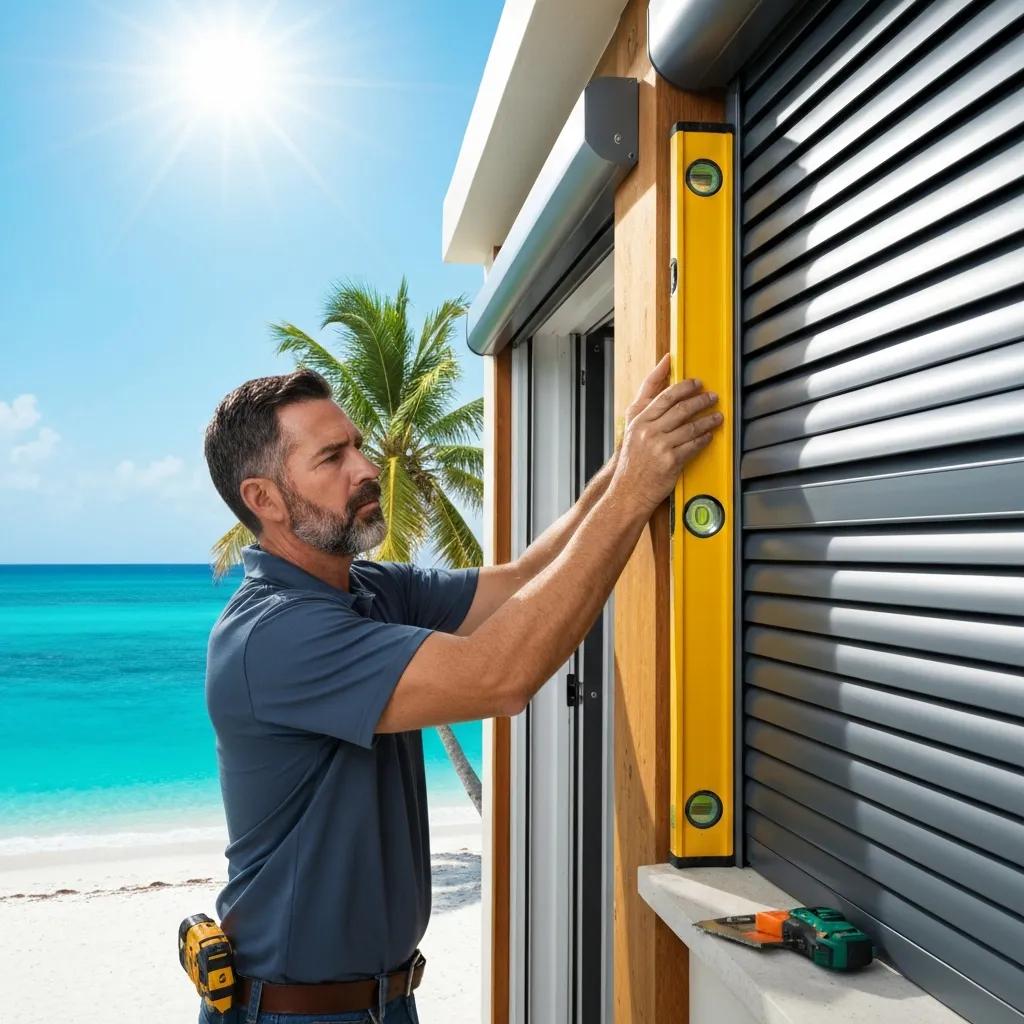
Professional installation ensures shutters meet their design pressure ratings and operate reliably year after year. The process combines accurate site measurement, custom fabrication, secure anchoring, and final testing. A complete installation includes a site survey, documentation for permits and insurance, and a functional hand-off—steps that preserve performance and help homeowners capture wind-mitigation credits. Below we outline the typical workflow and a maintenance checklist to keep shutters working in coastal conditions.
Installation begins with a site visit to measure openings, evaluate mounting substrates and load paths, and perform a Design Pressure Analysis to specify strength and anchoring. Fabrication follows those specs, then installers mount the roller housing, guide tracks, curtain, and locks using corrosion-resistant fasteners. For motorized systems, licensed electrical work ties in controls and any battery backup; the final step is full operational testing and homeowner orientation. Knowing this sequence sets realistic expectations for timelines and inspection needs.
Maintenance is straightforward but important in salt-air settings: regular cleaning to remove salt and debris, lubricating guide tracks, checking seals and fasteners, and periodic motor inspections keep systems reliable. We recommend quarterly visual checks by the homeowner and an annual professional service to inspect anchors, motor function, and early signs of corrosion. Addressing loose anchors or damaged tracks promptly prevents small issues from becoming performance failures during storms.
Roll-Up Doors and Storm Wind Pressure Analysis
A case study analyzed exterior roll-up doors that had been closed before a storm, using multiple methods to assess storm wind pressures. The study identified a secondary factor influencing overall performance.
Case studies of roofing and cladding failures involving internal pressurization, 2009
Installation checklist for homeowners:
- Site survey and measurements: A technician inspects openings and structural anchors before specification.
- Design Pressure Analysis and permitting: Engineering determines required ratings and paperwork for local codes.
- Fabrication and installation: Custom shutters are installed with corrosion-resistant components and secure anchoring.
- Testing and documentation: Final checks confirm operation and provide paperwork for insurance and permits.
This checklist clarifies what to expect during a professional install. Installers who follow this sequence and provide supporting documentation help ensure shutters deliver reliable protection over their service life.
American Hurricane Shutters supports this professional workflow and offers services built for coastal conditions, including OSHA 30 certified technicians and a 7-year installation warranty to reinforce quality and confidence. These service elements highlight the value of choosing experienced installers when moving from planning to purchase.
How roll-down shutters differ from accordion and other shutter styles
Roll-down and accordion shutters both protect openings, but they differ in deployment, visual impact, security, and retrofit flexibility. Roll-down shutters retract into a compact housing above the opening and create a continuous curtain when deployed; accordion shutters fold beside the opening when stowed. Those structural differences affect convenience, aesthetics, and the tested wind/impact performance for specific openings. The comparison below helps homeowners choose based on use case and architectural priorities.
On security and durability, roll-down shutters usually provide a higher continuous impact barrier because the curtain spans the full opening and transfers loads into anchored tracks and housing. Accordion shutters can offer strong protection too, but their hinge points and segmented panels create different load paths that may require heavier framing to match ratings. For both types, corrosion-resistant materials and proper fasteners are critical in coastal environments—salt accelerates degradation when the wrong metals are used.
For everyday use and appearance, accordion shutters are manually simple to deploy and remain visible as a design element when stowed, which suits certain styles. Roll-down shutters—especially motorized systems—deploy quickly and conceal completely when retracted, preserving a clean façade and enabling automation. Homeowners should weigh daily usability, the needs of older occupants, and architectural preferences when deciding.
This matrix gives a quick comparison to help you decide which shutter type fits your home and lifestyle. Next we cover operation options for roll-down systems and how controls affect convenience and safety.
Operation options for roll-down hurricane shutters
Roll-down shutters come in manual and motorized versions; motorized systems can include remote controls, scheduled operation, and smart automation. Manual units use hand cranks or secure locks and lower initial cost and complexity. Motorized systems add a motor, controls, and optional battery backup so shutters operate even during power outages. Smart automation adds timed schedules and integration with home systems for storm sensing and remote management. Below we outline the pros and cons and practical scenarios for each choice.
Motorized roll-down shutters offer fast, effortless deployment—especially useful for large openings, multi-story homes, or households with mobility limitations. The motor and controls add cost, but they reduce deployment time and can include battery backup for operation during outages. For many homeowners, that convenience justifies the premium when balanced against the value of prompt protection during rapidly approaching storms.
Smart automation takes motorized systems further with remote control, scheduling, and sensor-triggered responses. Weather sensors can command shutters to close as conditions worsen, reducing reliance on human response. Automation also provides diagnostics and status alerts that simplify preventative maintenance. When adding smart features, assess redundancy (local physical controls or manual override) and cybersecurity to ensure shutters remain operable if networks fail.
Operation options at a glance:
- Manual operation: Lowest upfront cost and straightforward mechanics for occasional use.
- Motorized operation: Faster deployment and greater ease—ideal for large or many openings.
- Smart automation: Remote control, scheduling, and storm-sensing for proactive protection.
Choosing the right operation style depends on household needs, mobility, and how quickly you must secure openings in a storm.
Advantages of motorized roll-down shutters versus manual models
Motorized shutters close faster, require no physical effort, and integrate more easily with automation systems compared with manual models. Faster closure minimizes the window exposure time to wind and debris—important for quickly developing storms and for occupants who find manual systems difficult. While motors add components that need periodic checks, they also support battery backup and remote diagnostics that streamline maintenance and improve reliability over time. These trade-offs explain why many homeowners prefer motorized systems for comprehensive coverage and faster response.
How smart automation improves roll-down shutter performance
Smart automation brings scheduling, remote control, and sensor-triggered closure that increase timely protection and homeowner convenience. Wind or storm sensors can automatically command shutters to close, reducing the risk of delayed response. Automation systems also offer diagnostics and alerts that aid preventative maintenance and lower the chance of unexpected failures when protection is needed most. When considering automation, weigh added cost against redundancy and security—ensure local controls or manual override are available if connectivity is lost.
Why choose American Hurricane Shutters for roll-down installations in the Coastal Carolinas?
American Hurricane Shutters focuses on hurricane protection for homeowners and businesses along the North and South Carolina coast. We provide custom designs, corrosion-resistant materials, and professional installation tuned to local conditions. Our standard materials include marine-grade 6063-T6 aluminum and 316 stainless steel fasteners to resist salt-air corrosion, and every project receives a custom Design Pressure Analysis to meet local wind-load requirements. Installations are performed by OSHA 30 certified technicians, backed by a 7-year warranty, and we offer free, no-obligation estimates to move from assessment to permitting and installation. These service elements help homeowners match product selection and installation to local codes and longevity goals.
We serve coastal communities like Wilmington, Myrtle Beach, Oak Island, Topsail, New Bern, and Pawleys Island, bringing local experience that aligns with regional wind-load expectations and permitting requirements. Our process includes site assessment, specification based on Design Pressure Analysis, and installation with documentation suitable for insurance and permitting. Choosing a provider with this capability reduces the risk of underspecified products or inadequate anchoring and supports claims for wind-mitigation benefits.
Key reasons homeowners trust American Hurricane Shutters:
- Local expertise: We specialize in coastal North and South Carolina communities.
- Material quality: We use marine-grade 6063-T6 aluminum and 316 stainless steel fasteners for better corrosion resistance.
- Certified installation and warranty: OSHA 30 certified installers and a 7-year installation warranty.
How we ensure compliance with local building codes
For each project we perform a custom Design Pressure Analysis to determine the correct shutter specifications and anchoring required by local codes and wind-load demands. That analysis informs material selection, anchoring strategy, and the documentation needed for permitting and insurance. Our installation workflow—measurement, specification, fabrication, regulatory paperwork, and final testing—ensures your system meets code and performs as expected in storm conditions.
Warranty and customer support
American Hurricane Shutters provides a 7-year warranty on installations and employs OSHA 30 certified technicians for professional installation, reinforcing service credibility and homeowner confidence. The warranty covers workmanship and installation-related issues as described during estimate and contract phases, and professional installation supports warranty activation. Keep installation records and any Design Pressure Analysis or permitting paperwork to support warranty claims and potential insurance or appraisal benefits.
Frequently Asked Questions
What maintenance is required for roll-down hurricane shutters?
Regular maintenance keeps roll-down shutters reliable, especially in coastal environments. Routine tasks include rinsing salt and debris from shutter surfaces, lubricating guide tracks for smooth operation, and inspecting seals and fasteners for corrosion or loosening. We recommend visual checks quarterly and a professional inspection annually to catch issues early. Proactive maintenance prevents small problems from turning into failures during storms.
Can roll-down hurricane shutters be installed on existing homes?
Yes—roll-down shutters can be retrofitted to most existing homes, though the process depends on architectural details and the building’s structural condition. A professional site assessment identifies the best mounting approach and confirms code compliance. Custom fabrication is often used to fit specific window and door sizes. Consult experienced installers to review options and ensure a proper, secure fit.
How do roll-down hurricane shutters compare to other storm protection options?
Compared with temporary solutions like plywood or fabric covers, roll-down shutters provide a permanent, durable option that deploys quickly—especially when motorized. They’re engineered to resist high winds and flying debris, offer better security, and can improve energy efficiency when closed. Homeowners should weigh permanence, convenience, and tested performance when comparing protection options.
What factors should I consider when choosing roll-down hurricane shutters?
Consider material quality, operation type (manual vs. motorized), and the wind-load ratings required for your location. Marine-grade aluminum and stainless fasteners are recommended for coastal properties. Also evaluate opening sizes, architectural features, your budget, and desired convenience. A professional installer can help specify the right system and ensure it meets protection and aesthetic goals.
Are roll-down hurricane shutters energy efficient?
Yes. When closed, roll-down shutters reduce solar heat gain and provide a thermal shading layer that can lower cooling costs. They also block UV rays, protecting interior finishes, and reduce exterior noise. These energy and comfort benefits add to the value of installing shutters on coastal homes.
What is the typical lifespan of roll-down hurricane shutters?
Lifespan depends on materials, installation quality, and maintenance. High-quality systems built with marine-grade aluminum and stainless fasteners can last 20 years or more with proper care. Regular cleaning and inspections extend service life. Review warranty terms from your installer or manufacturer for additional coverage details.
How do I prepare my home for the installation of roll-down hurricane shutters?
To prepare, clear areas around windows and doors for easy installer access and remove interior window treatments if they obstruct work. Know your preferred operation type and any design preferences. Be ready for a site assessment, during which the installer will measure openings and discuss the best layout for protection and aesthetic integration.
Conclusion
For coastal homes, roll-down hurricane shutters offer reliable storm protection, enhanced security, and energy-saving benefits—making them a practical long-term investment. When paired with durable materials and professional installation, shutters provide dependable performance and peace of mind during severe weather. If you’re ready to explore options, use our cost calculator or request a free estimate to get site-specific pricing and a Design Pressure Analysis. Protect your home with proven hurricane shutter technology.
