
How Roll-Down Hurricane Shutters Save You Money — Protecting Your Home and Your Wallet
Roll-down hurricane shutters — available motorized or manual — roll down over windows and openings to stop wind, flying debris, and water before they reach your home. Beyond the physical protection, they deliver measurable long-term savings for coastal homeowners. This guide walks through how these systems work, why they lower repair and energy costs, and how they can help you qualify for insurance discounts and stronger resale value. Many coastal properties face repeated storm exposure and rising insurance rates; knowing how roll-down shutters perform and pay back helps you make confident, cost-effective hardening choices. You’ll learn which protective features and ratings matter, how to estimate insurance and energy savings over 1–10 years, what drives installation costs, and why professional installation in coastal North and South Carolina matters for code compliance and long-term performance. We include practical examples, comparison tables, and clear next steps — like using an ROI/cost calculator and requesting a free estimate — so you can move from understanding to action. Keywords used throughout include hurricane shutter cost savings, benefits of roll down shutters, insurance savings with hurricane shutters, and roll down hurricane shutters Wilmington NC.
How Do Roll Down Hurricane Shutters Provide Effective Storm Protection?
Roll-down shutters form a continuous barrier over openings. Interlocking slats work with a housing and secure anchors to resist wind pressure and stop impact from debris — reducing window failures and the water intrusion that follows. The system pairs mechanical parts (slats, housing box, mounting brackets, locks) with a deployment method (manual crank or motor) so you can secure openings quickly before a storm. That sealed, anchored assembly lowers interior pressurization and blocks wind-driven projectiles — a leading cause of severe storm damage. Understanding these elements shows why properly specified and installed roll-down shutters are a central part of hardening coastal homes. The sections below unpack specific features and the added security benefit.
What Features Make Roll Down Shutters Resistant to Wind and Debris?
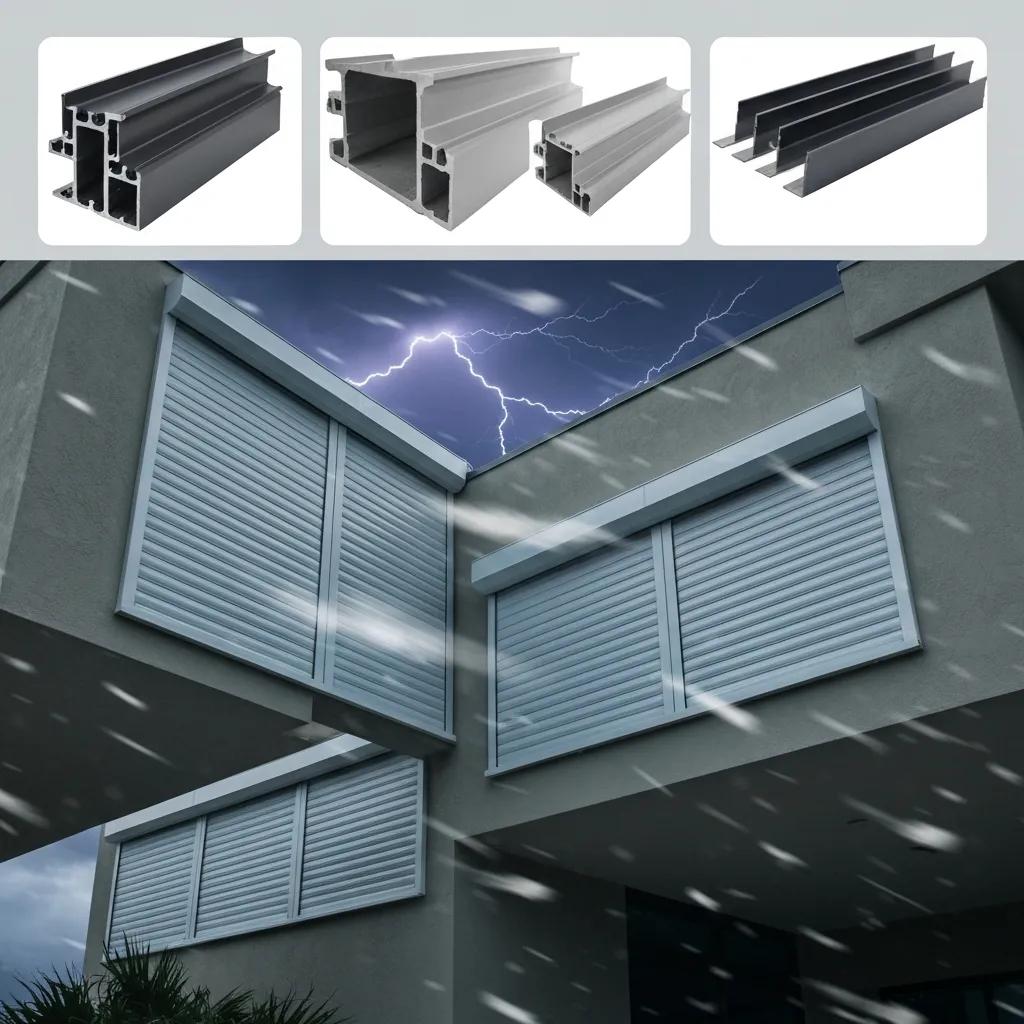
Roll-down shutters depend on engineered slat profiles, durable materials, and strong anchoring to meet rated wind and impact performance. Stiff slats transfer wind loads to the housing and mounts while seals and edge guides limit water entry and reduce air leakage — improving both storm protection and energy performance. Certified systems are tested to standards used across coastal installation practice; those ratings tell you how much pressure and debris the shutter can handle before deforming. Anchoring to structural framing and the right-sized housing ensure the system behaves as a unified assembly, not a set of loose parts. Knowing these feature-level roles helps you specify shutters that match local exposure and long-term durability expectations.
Introductory list: Key mechanical features and what they do.
- Slat profile and material: Moves wind loads into the frame and resists deformation.
- Housing/box and guides: Keeps slats aligned and resists forced entry.
- Mounting brackets and anchors: Transfer loads into the building structure.
- Seals and edge gaskets: Reduce water intrusion and air leakage.
Together these elements lower window-failure rates and the risk of costly repairs — and they also improve perimeter security against intruders.
How Do Roll Down Shutters Enhance Home Security Against Intruders?
Outside of storms, roll-down shutters act as a strong physical barrier that blocks easy access through windows and glass doors — common break-in points. Locks — from simple slide locks to integrated motorized locking — form a tamper-resistant connection to the frame and increase the time and effort needed for forced entry, discouraging opportunistic burglars. Motorized systems can tie into home security setups for remote locking and status checks, strengthening everyday security and emergency readiness. That dual-purpose protection (storm and security) adds practical value: fewer storm claims and lower theft risk, which helps protect both your home and its marketability.
Introductory table: How components translate to protection performance.
This component-to-system mapping prepares the way for measuring the financial upside from reduced damage and insurance benefits.
What Are the Long-Term Financial Benefits of Installing Roll Down Hurricane Shutters?
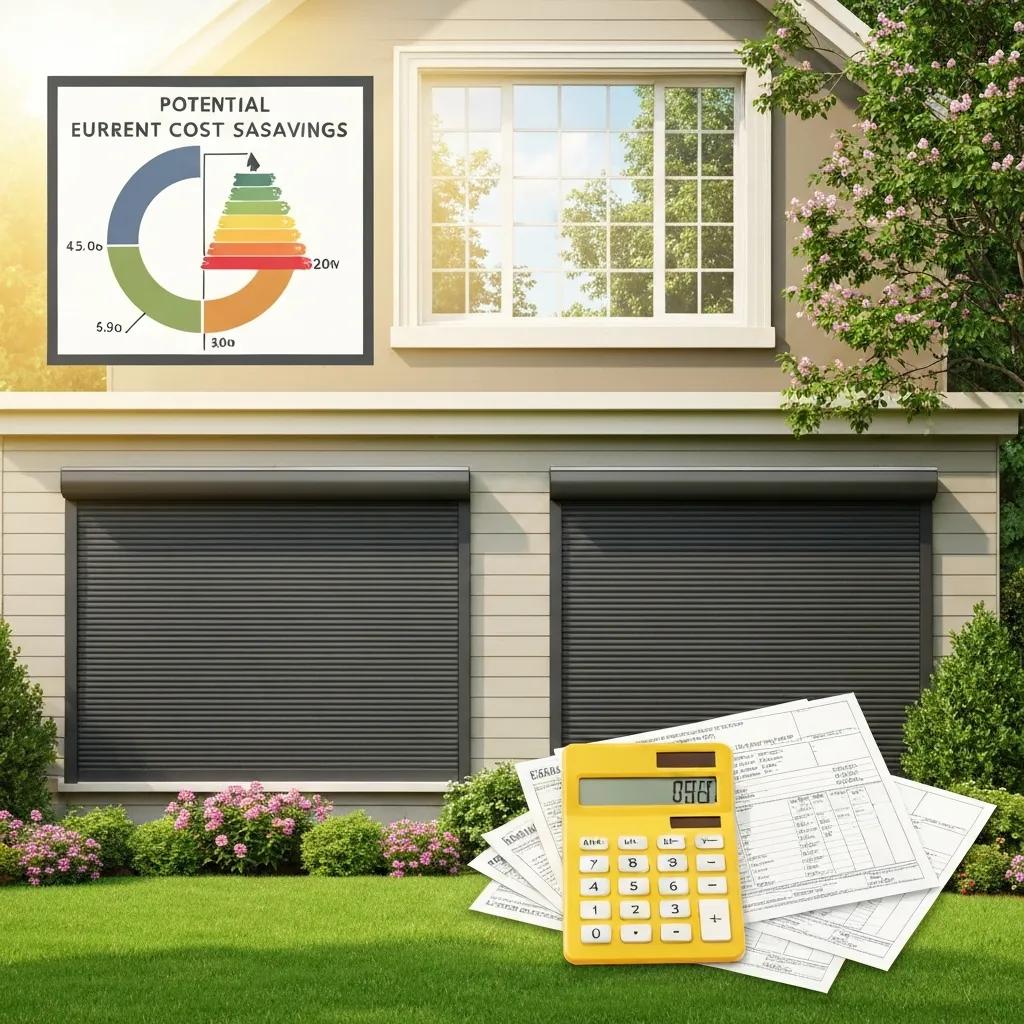
Roll-down shutters produce three main long-term financial benefits: lower insurance premiums through wind mitigation credits, reduced energy bills from improved shading and sealing, and avoided repair costs after storms. Insurance discounts come when shutters lower the chance of glazing failure — insurers often reward proven mitigations. Energy savings happen because shutters add exterior shading and reduce air infiltration, which cuts HVAC runtime in summer. Avoided repair costs occur when shutters prevent window and façade damage that would otherwise require costly repairs. Over multiple storms these avoided costs add up. Below we show sample numbers and an action step: use a cost calculator and request a free estimate to model multi-year savings for your property and insurance context.
If you’re ready to quantify projected savings, American Hurricane Shutters offers a free estimate and an online cost calculator to model insurance discounts, energy reductions, and avoided repair scenarios for coastal North and South Carolina properties. The calculator and estimate service turn the ranges below into a personalized ROI projection; a site-specific estimate is the pragmatic next step after reviewing typical savings.
Top financial advantages at a glance:
- Insurance premium reductions: Discounts for verified wind mitigation features.
- Energy bill reductions: Lower cooling loads from shading and improved sealing.
- Avoided repair/replacement costs: Fewer post-storm claims and out-of-pocket repairs.
These categories feed the example EAV table below, which shows typical ranges and sample calculations for 1-, 5-, and 10-year horizons.
Introductory table: Savings sources, typical ranges, and example multi-year figures.
Combined savings add up: insurance discounts cut recurring expense, energy savings lower seasonal bills, and avoided repairs prevent large one-time hits that heavily affect long-term ROI.
Summary: When insurance, energy, and avoided repairs are considered together, roll-down shutters usually shorten the payback period and boost return on investment — especially in high-exposure coastal markets with frequent or severe storms.
How Do Roll Down Hurricane Shutters Increase Property Value and Avoid Repair Costs?
Roll-down shutters can raise property value by signaling to buyers and appraisers that a home has been fortified against coastal hazards. That can translate into stronger offers and faster sales in markets where resilience matters. Coastal buyers often prefer homes with visible, documented protections that reduce future maintenance and insurance uncertainty. From an appraisal perspective, certified protective systems with installation records may support replacement-cost or marketability adjustments. The section below explains how shutters are presented in listings and the effect that can have on resale appeal.
In What Ways Do Shutters Boost Home Resale Appeal and Market Value?
Shutters strengthen resale appeal by offering practical protection and a clear message of preparedness — an effective selling point in coastal buyer pools. Listing notes that highlight certified storm protection and professional installation can attract buyers willing to avoid retrofit costs. Appraisal uplift varies, but documented, code-compliant shutters reduce perceived buyer risk and can shorten time on market when other homes lack similar upgrades. Sellers who provide inspection and installation paperwork create transparency that supports value-add claims and strengthens negotiation positions.
How Do Shutters Help Avoid Costly Storm Damage Repairs?
By stopping window breakage and limiting water intrusion, shutters reduce the chance of secondary damage like interior flooding, mold remediation, and structural repairs — expenses that often exceed the price of replacing glass. Typical avoided repairs include window replacement, water-damage restoration of finishes and insulation, and localized structural repairs from wind-driven debris. Costs escalate quickly when multiple openings fail, so preventing even one glazing failure can save thousands. Over a decade, cumulative avoided expenses can meaningfully lower total cost of ownership. Providing documentation of such avoided costs during a sale or insurance review supports conservative valuation adjustments and shows the real-world financial resilience shutters provide.
Introductory list: Typical repairs and losses shutters help prevent.
- Window and glazing replacement: Immediate cost savings and fewer claims.
- Interior water damage remediation: Avoids mold, drywall, and flooring replacement.
- Secondary structural repairs: Limits damage to frames, sills, and adjacent components.
These avoided-repair pathways show why shutters are both a protective measure and a financial strategy for coastal property ownership.
What Are the Cost Factors and Investment Options for Roll Down Hurricane Shutters?
Several variables drive installation cost: number and size of openings, slat material and profile, housing and finish, motorized versus manual operation, installation difficulty, and permitting or inspection requirements. Labor and local code compliance add to upfront cost but are essential for performance and insurance eligibility. Homeowners weighing manual vs. motorized should balance initial cost against convenience and consistent deployment — motorized systems cost more but often increase use and timely closure during warnings. Below we summarize cost drivers and present a comparison table to help with purchase and financing decisions.
Intro paragraph: Common cost drivers and what they affect.
- Opening size and count: Directly scales materials and labor.
- Motorized vs manual: Motorized adds equipment and electrical work.
- Installation complexity: Retrofits or hard-to-reach openings increase labor time.
Summary: Knowing these drivers lets homeowners model payback periods and consider financing or phased-install approaches.
Introductory table: Shutter type comparison to guide cost-of-ownership decisions.
This comparison helps you weigh initial outlay, lifecycle expectations, and insurance/energy implications when choosing a system.
If you’re evaluating payment options, many providers offer financing or phased-install programs to spread upfront cost and align payments with expected insurance and energy savings. Request a free estimate or finance consultation to explore terms that match your budget and timeline.
How Do Manual and Motorized Roll Down Shutters Compare in Cost and Convenience?
Manual systems generally cost less up front and have simpler mechanics to service, while motorized systems offer fast deployment and remote operation that reduce human error and save time during short-notice warnings. Motorized units add a drive unit and electrical work, increasing initial cost and requiring periodic motor maintenance, but they’re often worth it for multi-story homes or households with mobility limits. Both rely on the same slat and anchoring quality; the main difference is ease of use and service requirements. Choose based on your priorities: lower initial cost or greater convenience and speed.
Introductory list: Pros and cons side-by-side.
- Manual pros: Lower initial cost, simpler mechanics, easier field repairs.
- Manual cons: Requires physical effort; slower deployment.
- Motorized pros: Fast automated deployment, integrates with smart systems.
- Motorized cons: Higher upfront cost, needs electrical work and occasional motor service.
This frames motorization as a situational upgrade you can phase in or finance if budget is a concern.
What Financing Options Are Available for Hurricane Shutter Installation?
Common financing choices include provider-sponsored plans, home improvement loans, home equity lines of credit, and phased-install programs that allow staged deployment across the property. Provider financing may offer promotional rates tailored to project size; secured lending like home equity usually has lower rates but uses your home as collateral. Bringing documentation — quotes, product certifications, and projected insurance savings — speeds applications and helps lenders evaluate value improvements. Compare term length, interest, and how financing affects payback when modeling long-term savings.
Introductory list: Financing considerations to prepare when applying.
- Interest rate and term: Affects monthly payments and total interest paid.
- Documentation required: Quotes, certifications, and expected savings projections.
- Impact on ROI: Financing costs reduce net savings and lengthen payback.
A finance consultation or free estimate from a qualified installer can clarify which route gives the best net present value for your project.
Why Choose Professional Installation of Roll Down Shutters in Coastal North and South Carolina?
Professional installation ensures anchoring, sealing, and documentation meet code benchmarks and perform as intended during extreme events — critical in coastal North and South Carolina, where exposure and storm history are significant. Local installers know regional load paths, exposure categories, and the mounting and flashing details that prevent water intrusion in salt-air environments. Certified installation supports insurance wind mitigation claims and provides the product and workmanship documentation insurers and appraisers need. The following sections explain code compliance and how local proof points validate installation quality.
After outlining professional installation value, homeowners should consider local providers like American Hurricane Shutters, which installs roll-down shutters across coastal North and South Carolina (including Wilmington, Myrtle Beach, Oak Island, Topsail, New Bern, and Pawleys Island) and offers free estimates plus a cost calculator to quantify projected savings and compliance documentation. Listing local service areas and free-estimate tools helps homeowners turn education into practical next steps while keeping the focus on clear, actionable information.
Introductory list: Benefits local professional teams deliver.
- Code-compliant anchoring and seals: Ensures system performance and insurance eligibility.
- Warranty and local service: Faster response times in coastal communities.
- Documentation for inspections: Product certification and installation sign-off for insurers.
These service elements reduce long-term risk and support the financial benefits we covered by ensuring systems work when they’re needed most.
How Does Local Installation Ensure Compliance with Florida Building Code Standards?
While Florida Building Code is a widely used benchmark for high-wind performance, local installers in North and South Carolina apply equivalent standards and testing protocols so systems meet or exceed required wind and impact ratings for coastal exposures. Compliance means choosing rated products, following manufacturer installation instructions, and producing documentation — product certification and installation verification — that insurers and inspectors use to validate mitigation claims. Local installers familiar with permitting and inspection reduce the chance of non-compliant installs that could void insurance discounts or fail in a storm. Ask for certification and installation sign-off with your purchase to protect both performance and documentation.
Introductory list: Documentation to request after installation.
- Product certification documents: Shows rated wind/impact performance.
- Installation verification: Signed work order detailing anchoring and connections.
- Inspection-ready files: Materials to present to insurers for mitigation credits.
Having these documents on hand makes it straightforward to pursue insurance discounts and helps preserve long-term property value.
What Do Homeowners and Businesses in Wilmington, Myrtle Beach, and Surrounding Areas Say?
Local case summaries and social proof add confidence by showing how roll-down shutters perform in the same regional exposure and market conditions you face. Rather than invent testimonials, installers should present anonymized metrics — for example, percent reductions in claims frequency, estimated avoided repair dollars after named storm events, or insurance discount ranges realized by past clients — to give real context. Pairing installation records with measured outcomes helps buyers set realistic expectations and improves ROI modeling. Regional evidence is especially persuasive where recent storms have changed buyer and insurer behavior.
Introductory list: Useful localized evidence for case summaries.
- Insurance discount percentages: Ranges observed across similar properties.
- Avoided repair cost estimates: Dollars saved in post-storm remediation.
- Installation and inspection records: Proof of compliance and workmanship.
Sharing these localized metrics helps buyers make decisions grounded in regional reality and points them toward requesting an estimate.
What Are the Most Common Questions About Roll Down Hurricane Shutters and Their Savings?
Below are concise answers to common buyer questions to help with quick decision-making and capture search-intent for queries about cost, motorization, and insurance eligibility. Short, direct responses clarify typical ranges and next steps, and they point homeowners to a personalized estimate and cost calculator for precise projections. The last section covers typical costs and whether motorization is a sound investment, so you can quickly decide if roll-down shutters fit your budget and life circumstances.
How Much Do Roll Down Hurricane Shutters Typically Cost?
Costs vary widely based on opening size, number of openings, and whether the system is manual or motorized. Single standard windows are less expensive; large doors and complex retrofits raise per-opening costs. Main cost drivers are material grade, motorization, installation complexity, and any structural reinforcement needed for secure anchoring. Because of these variables, use an installer’s cost calculator or request a free estimate to get pricing tailored to your home’s layout and exposure. Bringing measurements and basic documentation to the appointment speeds quoting and produces a clearer payback analysis.
Introductory list: Key variables that most affect cost estimates.
- Number and size of openings: Directly multiplies materials and labor.
- Motorization: Adds equipment and electrical installation costs.
- Retrofit complexity: Access and framing work increase labor time.
A cost calculator plus a professional site visit will give you the most reliable budget and ROI projection for your property.
Are Motorized Roll Down Shutters Worth the Investment?
Motorized shutters are worth it when convenience, quick deployment, and consistent use matter — for example, on multi-story homes, for residents with mobility limitations, or where storms arrive on short notice. Motorization raises upfront cost and requires periodic drive-unit service, but it increases the chance shutters are closed promptly, which is critical in fast-developing situations. Many homeowners balance the motor premium against saved time, reduced deployment delays, and potential longevity benefits from regular, smooth operation. If motorization fits your needs, consider financing or phased installs to manage the initial expense.
Introductory list: Factors to weigh when choosing motorization.
- Home height and access: Multi-story homes often gain more from automation.
- Household mobility: Automation helps older adults and those with limited mobility.
- Storm frequency and warning time: Short warnings justify faster deployment.
If you’re unsure, a free estimate and finance consultation can map the payback timeline and help decide whether motorization matches your goals.
This guide lays out a technical and financial roadmap for roll-down shutters, explains how they protect homes and reduce long-term costs, and outlines practical next steps for homeowners in coastal North and South Carolina to quantify savings and secure professional installation.
Frequently Asked Questions
What maintenance is required for roll down hurricane shutters?
Main
