
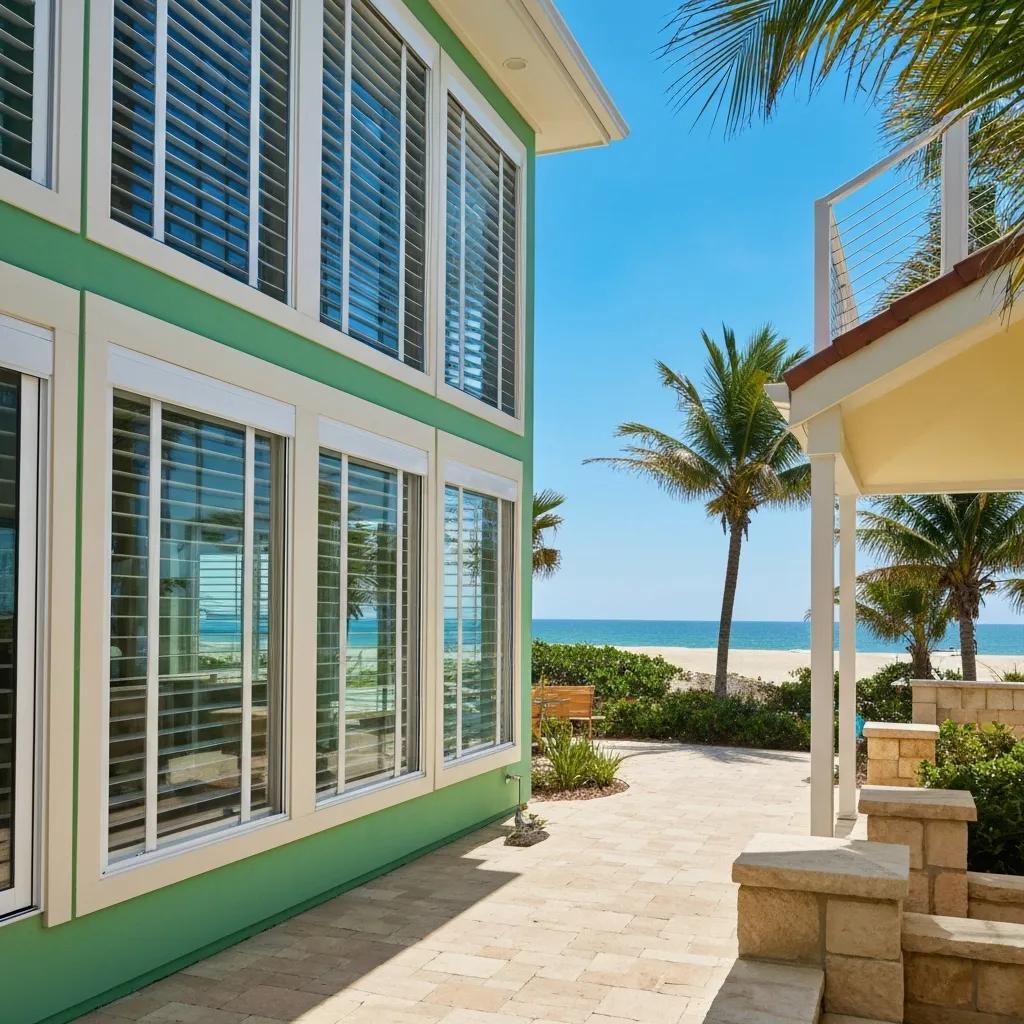
Save Energy with Accordion Shutters: A Coastal Homeowner’s Practical Guide
Accordion shutters are a permanently mounted, operable storm system that folds beside windows when not in use and locks into place to form a continuous protective barrier. For coastal homes, they deliver reliable hurricane protection and measurable energy benefits. This guide lays out how accordion shutters reduce heat transfer, reflect solar and UV radiation, and create a small insulating air space that improves comfort and lowers utility bills year‑round. You’ll find the thermal science explained in plain terms, seasonal savings estimates for cooling and heating, and a comparison with blinds, drapes, and impact windows. Practical sections cover installation quality and required Design Pressure Analysis, additional value like insurance mitigation and warranty coverage, and the steps to get a free energy‑savings estimate. Technical terms such as R‑value, U‑factor, convective barriers, and marine‑grade materials are included where helpful so you can make a confident, informed decision about selection, installation, and expected ROI.
How Accordion Shutters Boost Energy Efficiency in Coastal Homes
Accordion shutters improve efficiency by adding an exterior barrier that limits convective air exchange, reflects solar heat, and traps a thin air cavity against the glass—together these actions lower heat transfer through windows. That means less radiant and convective heat gain in summer and reduced conductive loss in cooler months, which cuts HVAC run time and raises indoor comfort. The shutters’ reflective metal finish and tight frame seals reduce direct solar absorption and stop drafts, lowering peak cooling demand and slowing UV damage to interiors. Knowing how these elements work explains why accordion shutters are both storm protection and effective window treatments for coastal climates.
What’s the Science Behind Accordion Shutters’ Thermal Performance?

Accordion shutters act as an external thermal layer by interrupting the main heat‑transfer modes—conduction, convection, and radiation. The shutter creates a narrow air cavity between the panel and the window; that trapped air reduces convective loops and behaves much like a secondary glazing layer. The metal panel’s reflective finish lowers absorbed solar radiation, cutting the radiant heat flowing indoors, while quality gaskets and edge seals limit infiltration‑driven convective losses. Together these effects lower the effective U‑factor of the window‑plus‑shutter assembly and complement the home’s envelope to improve overall thermal performance.
How Accordion Shutters Reduce Heat Transfer and Block UV
Accordion shutters lower heat transfer by reflecting and deflecting incoming solar energy so less infrared and UV reaches the glass and interior surfaces. Their continuous, reflective panels reduce peak glass temperatures and, as a result, heat conduction through glass and frames. Blocking UV slows fading of fabrics, flooring, and finishes, extending their life while keeping rooms cooler and reducing air‑conditioning use. These combined benefits mean fewer midday temperature spikes and longer‑term protection for interior materials—both comfort and cost advantages.
For homeowners seeking local supply and installation, American Hurricane Shutters (AHS Carolinas) manufactures shutters from corrosion‑resistant 6063‑T6 marine‑grade aluminum with 18‑8 stainless steel fasteners and provides custom Design Pressure Analysis to meet local wind‑load requirements. That local expertise helps ensure materials hold up in salt air and that each installation matches the window’s structural loading for both storm resilience and expected thermal performance. AHS Carolinas also offers repairs, maintenance, retrofits, emergency service, and a local‑leading 7‑year warranty so you have practical service options to keep shutters performing over time. Knowing material specs and analysis methods makes it easier to weigh long‑term energy and durability benefits before scheduling an on‑site estimate.
Year‚ÄëRound Energy Benefits of Accordion Shutters
Accordion shutters deliver year‚Äëround advantages: lower summer cooling demand, reduced winter heat loss, improved indoor comfort, and incidental noise attenuation. In summer they cut solar heat gain and peak cooling loads; in winter they act as a secondary barrier against conductive loss and wind‚Äëdriven infiltration. Beyond HVAC impacts, shutters protect interiors from UV and reduce glare, helping maintain finishes and delaying replacements. Putting seasonal impacts into realistic ranges helps homeowners evaluate ROI based on window area, orientation, and local climate.
How Accordion Shutters Lower Summer Cooling Costs
During summer, accordion shutters block direct sun and reduce the radiant heat load on glazing, lowering interior temperatures near windows. The shaded, reflective barrier reduces AC cycling during peak hours, which lowers energy use and cost over time. To maximize cooling performance, choose light exterior finishes, verify good seals, and close shutters during peak sun hours. Those steps are especially useful in coastal Carolina climates where strong midday sun and humidity drive higher cooling demand.
Can Accordion Shutters Improve Winter Heating Efficiency?
In winter, shutters help by reducing drafts and limiting conductive heat loss through windows—especially when cold winds raise pressure around openings. The exterior barrier also reduces night‑time radiative heat loss from interior surfaces and helps retain a warmer near‑window air layer, improving perceived warmth without changing the thermostat. While shutters aren’t a direct substitute for fully insulated storm windows in every case, their sealing and air‑pocket effects often yield meaningful reductions in heat loss. Estimating winter benefit depends on glazing type, frame construction, and your local heating patterns.
What Seasonal Energy Savings Can Homeowners Expect?
Savings vary with window area, orientation, glazing, envelope tightness, and climate; conservative ranges help set realistic expectations. Coastal homes with significant sun‚Äëexposed glazing can expect modest single‚Äëdigit reductions in total annual energy use up to larger percentages for homes with big, unshaded windows. Winter savings are usually smaller but still meaningful for comfort and heating‚Äëdegree‚Äëday reduction, especially where shutters cut drafts and radiative loss. Knowing these drivers helps prioritize installations where shutters will add the most marginal value.
To visualize seasonal impacts, the table below offers representative values and the factors that influence estimates.
Different seasonal effects help homeowners prioritize installs by exposure, orientation, and energy goals.
This table highlights that accordion shutters are especially valuable for solar control and storm protection, while insulation benefits can vary by project.
How Accordion Shutters Compare to Other Window Treatments for Energy Savings
Accordion shutters sit between lightweight interior treatments (blinds, drapes) and high‚Äëperformance glazing (impact windows). They combine storm protection with external shading and an air‚Äëbarrier effect. Unlike blinds and drapes, shutters form a continuous exterior barrier that interrupts heat transfer at the glazing surface instead of only diffusing light. Compared with impact windows, shutters are often a more cost‚Äëeffective retrofit with multi‚Äëfunction protection and quick removal when not needed; however, upgraded glazing typically yields higher baseline R‚Äëvalue for year‚Äëround insulation. Choosing the right path means weighing insulation mechanism, lifecycle cost, and multi‚Äëfunctional benefits for your home.
Insulation Benefits vs. Blinds, Drapes, and Impact Windows
Blinds and drapes reduce radiant heat and glare from inside but do little to stop external convective flows or lower glass temperature. Impact windows improve glazing performance with multi‑pane assemblies and inert gas fills—raising R‑value but often requiring a larger investment and structural work. Accordion shutters combine external shading with an air cavity effect, giving strong cooling‑season advantages and storm protection that interior treatments can’t match. For homeowners balancing budget, protection, and energy savings, shutters are frequently a practical middle ground between inexpensive interior solutions and costly glazing replacement.
Below is a compact comparison that outlines insulation mechanisms and typical performance attributes across common options.
Again, accordion shutters shine for solar control and storm protection, with insulation benefits that vary by installation.
R‚ÄëValue: Accordion Shutters Versus Alternatives
Accordion shutters don’t always come with a standardized R‑value because R‑value testing focuses on fixed insulation assemblies and glazing. Shutters act as an add‑on that changes the whole‑assembly U‑factor rather than providing a single R‑value. Practical comparisons use equivalent indicators—changes in glass surface temperature, reduced HVAC runtime, or measured U‑factor for the window‑plus‑shutter system—rather than one R‑value number. Review manufacturer thermal data, request site‑specific estimates, and consider combined strategies (shutters plus better glazing) for maximum year‑round efficiency. For many coastal homes, the shutters’ effect on peak cooling demand is the most relevant metric.
Additional Value Beyond Energy Savings
Accordion shutters also deliver hurricane protection, improved security, noise reduction, and possible insurance wind‑mitigation credits—adding to the financial and practical case for installation. Proper materials and anchoring shield glazing from windborne debris and reduce the risk of water intrusion during storms, which protects home value and lowers repair exposure. When shutters meet local certification or mitigation programs, homeowners may qualify for insurance discounts. Manufacturer warranties and local maintenance options extend product life and keep performance reliable. In many coastal communities these non‑energy benefits make up a large part of the shutters’ total ROI.
How Shutters Strengthen Hurricane Protection and Security

Accordion shutters form a continuous surface that absorbs and redirects wind and debris away from glazing frames and seals, reducing the chance of catastrophic window failure in storms. Using corrosion‑resistant 6063‑T6 marine‑grade aluminum and 18‑8 stainless steel fasteners helps maintain strength in salt‑air conditions so performance doesn’t degrade over time. Properly anchored tracks and locks also add intrusion resistance for everyday security. Because durability and correct material selection are key to long‑term protection, material specs should factor into your purchase decision.
Can Shutters Lower Homeowners Insurance Premiums?
Accordion shutters can help qualify for homeowners’ insurance wind‑mitigation credits when they meet insurer or local program standards that verify reduced wind damage risk. Actual discounts depend on local policies and required documentation. To secure potential savings, you’ll typically need proof of compliance with design pressure or certification standards and inspection‑ready installation records. Choosing an installer who understands mitigation programs and provides the necessary paperwork makes the process smoother. The table below summarizes common value components tied to financial and practical benefits.
This table underscores that while insurance savings vary, strong warranty and service offerings from local providers add predictable long‚Äëterm value.
If you’re considering shutters, American Hurricane Shutters (AHS Carolinas) supplies the corrosion‑resistant materials above, provides custom Design Pressure Analysis, and supports repairs, retrofits, emergency response, and a local‑leading 7‑year warranty—services designed to help shutters perform for both protection and energy savings.
Why Professional Installation Matters for Energy Performance
Professional installation is critical because thermal and protective performance depend on precise frame integration, correct fasteners, and continuous seals that prevent air leakage and thermal bridging. Improper anchoring or perimeter gaps can undermine the air‑barrier effect and allow convective heat exchange that erodes insulating benefits. Compliance with local design pressure and wind‑load rules is essential in coastal jurisdictions for safety and for potential insurance credits—so a Design Pressure Analysis is an important step. Many warranties also require certified installation to stay valid, so installation quality directly links to long‑term thermal and protective performance.
How Expert Installers Ensure Proper Sealing and Thermal Results
Experienced installers make sure perimeter seals, threshold details, and fastener patterns create a continuous barrier to minimize air movement and prevent thermal bypass. They follow sealing best practices—correct gaskets, proper fastener torque, and precise track alignment—to reduce gaps that would permit infiltration and lower effective thermal resistance. Use the short checklist below to confirm quality at installation and during follow‑up inspections; maintaining these items preserves both energy performance and storm protection.
- Seal Integrity: Gaskets and edge seals are continuous and intact.
- Fastener Specification: Corrosion‚Äëresistant fasteners are installed and torqued correctly.
- Track Alignment: Panels operate smoothly with no binding or gaps.
- Design Pressure Documentation: Installer provides load‚Äërating paperwork.
Checking these items helps ensure your shutters deliver the expected thermal and protective performance. That naturally leads to questions about local code and design pressure requirements.
Which Local Codes and Design Pressure Standards Matter?
Local building codes and Design Pressure (DP) standards set required wind loads, attachment methods, and documentation for compliance in coastal North and South Carolina, and they influence anchor spacing and panel selection. A site‚Äëspecific Design Pressure Analysis converts local wind‚Äëload maps and window geometry into product and installation requirements so shutters meet both safety and performance expectations. Ask your installer for DP documentation and confirm they understand permit rules to avoid retrofit surprises.
American Hurricane Shutters (AHS Carolinas) includes custom Design Pressure Analysis in its services to align shutter selection and installation with local code and to support insurance mitigation documentation.
How to Get a Free Energy‚ÄëSavings Estimate for Accordion Shutters
Getting a free estimate is a simple three‚Äëstep process: calculate potential savings with basic inputs, schedule a professional site consultation for measurements and Design Pressure Analysis, then move forward with installation backed by documented performance estimates.
Tools to Estimate Utility Bill Reductions
Practical tools for conservative savings estimates include area‑based calculators, load‑estimation rules of thumb, and simplified HVAC runtime models that factor in window shading. More accurate inputs are: total glazed area, orientation (sun‑exposed façades), local cooling‑degree‑day data, and baseline HVAC efficiency. Combine those with expected percent reductions in solar heat gain to produce reasonable ranges. Treat initial calculator outputs as preliminary; rely on a professional on‑site measurement for final numbers. Preparing inputs ahead of time speeds the process and improves accuracy.
- Measure Window Area: Total square footage of windows to be protected.
- Note Orientation: Which elevations get direct sun during peak hours.
- Provide Utility Data: Recent bills or average monthly energy use.
- Apply Conservative Savings Factors: Use 5–15% cooling reduction for exposed glazing as a planning guideline.
These steps give you a realistic starting estimate and prepare the installer’s site visit to finalize projected savings.
How to Schedule a Consultation With American Hurricane Shutters
To schedule a free, no‚Äëobligation energy‚Äësavings estimate and site consultation, contact American Hurricane Shutters (AHS Carolinas) by phone or email to request an on‚Äësite Design Pressure Analysis and a quote. The consultation typically includes measurements, window orientation documentation, and a discussion of materials and warranty options. When you call or email, have window photos, measurements, and a recent utility bill handy to speed the estimate and improve accuracy. AHS Carolinas offers repairs, maintenance, retrofits, emergency response, and a local‚Äëleading 7‚Äëyear warranty; installers also supply documentation needed for insurance mitigation programs when applicable. Scheduling starts the Calculate ‚Üí Schedule ‚Üí Install path to verified energy and protection benefits.
- Calculate: Use preliminary area and orientation inputs for a rough savings estimate.
- Schedule: Contact AHS Carolinas at +1 (910) 256-1288 or [email protected] to book an on‚Äësite assessment.
- Install: Proceed with professional installation supported by Design Pressure Analysis, warranty, and documentation.
These three steps provide a clear path from initial interest to installed, documented performance and homeowner confidence.
Frequently Asked Questions
What are the maintenance requirements for accordion shutters?
Accordion shutters require minimal, regular maintenance to stay reliable in coastal conditions. Inspect them periodically for wear, signs of corrosion, or damage—salt air can accelerate deterioration. Clean panels with mild soap and water to remove grime, and lubricate tracks and hinges as needed for smooth operation. Follow the manufacturer’s care recommendations to preserve function and appearance over time.
How do accordion shutters affect home resale value?
Accordion shutters can boost resale appeal in coastal markets where storm protection and energy efficiency matter. Buyers often value the added safety, possible insurance savings, and reduced maintenance on interior finishes. The exact impact on resale depends on local market preferences, so check with a local real estate professional for tailored guidance.
Are accordion shutters suitable for all window types?
Yes—accordion shutters can be adapted for many window types, including standard, arched, and sliding units. Installation details vary by size, shape, and frame material, so consult a professional installer to assess your windows and recommend the best solution. Custom options are typically available to ensure a proper fit and reliable performance.
What is the typical lifespan of accordion shutters?
Lifespan depends on material quality, installation, and maintenance. Properly installed and maintained shutters made from high‚Äëquality materials like marine‚Äëgrade aluminum commonly last 20 years or more. Regular inspections and upkeep help extend service life. Manufacturer warranties can also indicate expected durability and provide added reassurance.
Can accordion shutters be painted or customized?
Yes—accordion shutters can be painted or customized to match your home’s look. Use paint compatible with the shutter material (for example, coatings suitable for marine‑grade aluminum) to avoid compromising protective qualities. Color, finish, and decorative options are usually available; consult your manufacturer or installer to confirm that modifications won’t affect performance or warranty.
What are the noise reduction capabilities of accordion shutters?
Accordion shutters provide noticeable noise reduction when closed. Their solid construction and the air pocket between shutter and window help dampen external sounds, which can lessen disturbances from traffic, storms, or nearby activity. They won’t eliminate all noise but can significantly improve indoor quiet depending on design and installation quality.
How do accordion shutters compare in cost to other window treatments?
Accordion shutters are typically a mid‑range investment compared with blinds, drapes, and impact windows. They cost more upfront than basic interior treatments but offer dual functionality—storm protection and energy benefits—that can produce long‑term savings on utility and potential insurance costs. Impact windows usually require a larger investment and structural work. Evaluate your protection needs, budget, and long‑term goals to choose the most cost‑effective option for your home.
Conclusion
Accordion shutters are a practical, high‑value option for coastal homeowners—cutting heat transfer, blocking UV, and adding dependable storm protection and security. They can improve comfort and reduce utility bills while protecting interiors and potentially qualifying for insurance mitigation programs. If you’re curious about real savings for your home, schedule a free energy‑savings estimate with a local expert to get site‑specific numbers and a clear plan. Take the next step toward better energy efficiency and protection for your home today.
