

Roll Down Hurricane Shutter Installation Guide: How to Understand and Complete the Installation Process
Roll-down hurricane shutters—available as motorized or manual systems—store a curtain of interlocking slats inside a protective headbox and deploy it along vertical guides to shield windows and openings from impact and water. This guide walks homeowners and installers through the system parts, required tools, a clear step-by-step installation sequence, and code‑and‑permit considerations for North and South Carolina. You’ll learn measurement best practices, secure mounting and alignment methods, motor commissioning basics, and final sealing and inspection steps that cut leakage and mechanical failures. With a coastal focus on corrosion resistance, anchor selection, and salt‑related troubleshooting, this guide helps you size the job, estimate cost, and decide when to call a professional. First, we define roll‑down systems and break down their parts and variants so you can match product features to your installation needs.
What Are Roll Down Hurricane Shutters and Their Key Components?

Roll‑down shutters protect openings by combining a headbox (shutter box), a curtain made of interlocking slats, vertical guide rails, a bottom rail that locks, and a drive system that may be manual or electric. The curtain rolls into the headbox and travels down the guides to engage the bottom rail, forming a robust barrier with rapid deployment and little exterior rigging. Materials and operation vary—extruded aluminum is common along the coast for durability, and systems can be crank‑operated or motorized with limit switches and remotes. Knowing these parts helps you choose mounts, anchors, and maintenance plans before you measure, order, or start installation.
The table below summarizes each core component and coastal considerations so you can compare options and anticipate installation needs.
This component matrix shows how each piece affects performance and where installation tolerances and substrate choices matter. Next we look closer at the individual parts to connect features to practical installation decisions.
What Parts Make Up a Roll Down Hurricane Shutter System?
A typical roll‚Äëdown system includes the headbox that stores the rolled curtain, the curtain made from interlocking slats, vertical guide rails, a bottom rail with engagement points, seals and weatherstripping, and the anchors that transfer loads into the structure. The headbox must be fastened to a solid header or lintel and sized for the curtain height and slat profile. Guide rails keep travel true, while the bottom rail locks or bolts in place to resist uplift and lateral forces during impact. Using corrosion‚Äëresistant fasteners and closed‚Äëcell seals reduces long‚Äëterm failure in coastal environments and improves perimeter water resistance.
Those component details set up the next comparison between manual and motorized designs, which affects wiring, anchoring, and commissioning requirements.
How Do Manual and Motorized Roll Down Shutters Differ in Design?
Manual roll‑down shutters rely on a gearbox with a hand crank or spring assist; they keep electrical needs to a minimum and are often the right fit for smaller openings or homeowners who prefer simple mechanical operation. Motorized shutters use a motor inside the roller tube with limit switches, safety interlocks, and optional remote or wall control—this adds electrical work, conduit, and the need to commission travel limits. Electrified systems deploy faster and offer convenient automation or smart‑home integration, but they typically require a licensed electrician and extra corrosion protection around motor housings. Choose based on opening size, desired automation, and any local code or insurer requirements for electrical installations.
Manual and Electric Roll Down Hurricane Shutter Deployment
The curtain runs inside vertical guide tracks and can be lowered by hand or by an integrated electric motor, depending on the model.
Massachusetts Homeowner’s Handbook To Prepare For Coastal Hazards (July 2020), E Taylor, 2020
With those design differences in mind, the next section lists the tools and hardware you’ll need for a safe, reliable install.
What Are the Essential Tools and Hardware Needed for Roll Down Shutter Installation?
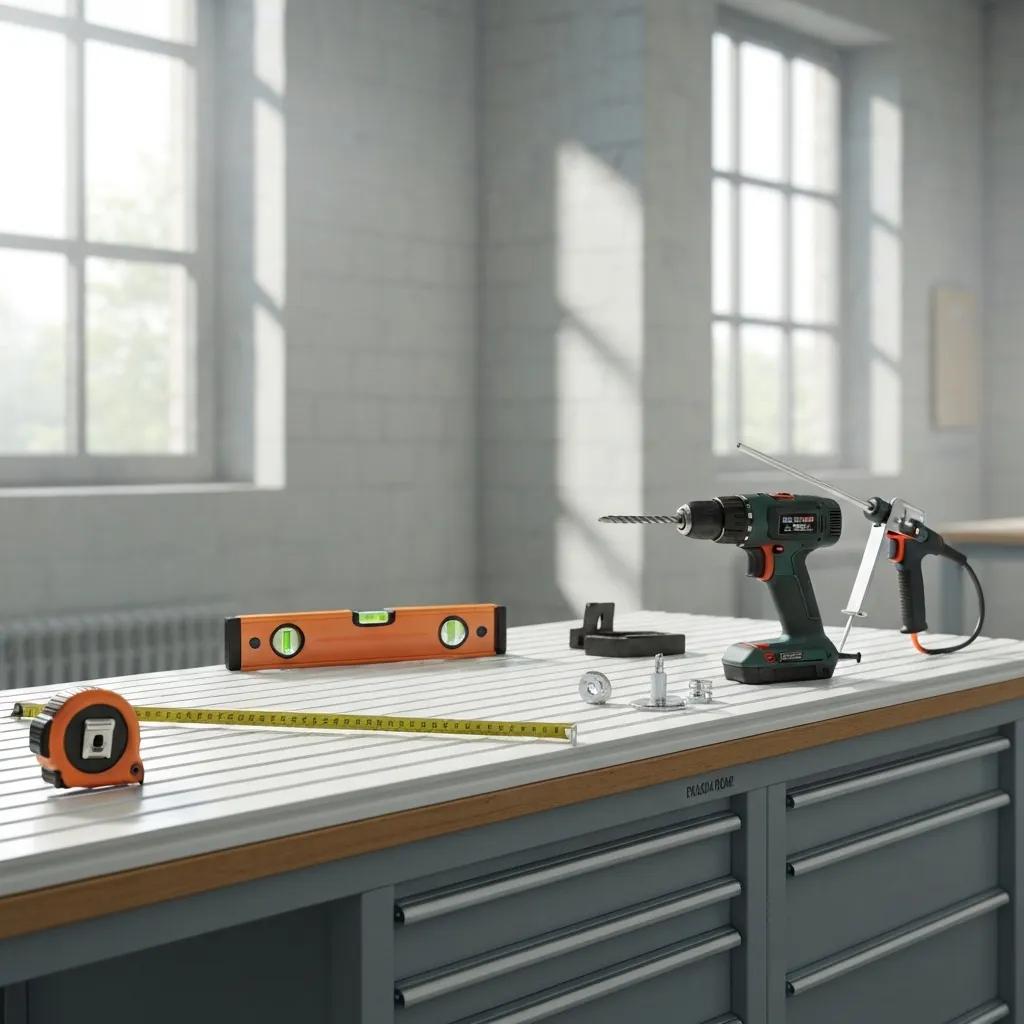
Installing roll‑down shutters requires basic carpentry tools plus substrate‑specific anchors and corrosion‑resistant fasteners. Accurate measuring tools, a true level, and a torque‑capable drill are just as important as selecting the right anchors for concrete, block, or wood. Safety gear—fall protection for second‑story work, eye and ear protection, and stable ladders or lifts—reduces risk on the job. Below is a prioritized checklist to help installers and experienced DIYers decide what to buy or rent before starting.
Essential installation tools and recommended specs:
- Measuring tape and laser measure for precise width and height readings.
- Spirit level and plumb bob to ensure guide rails run perfectly vertical.
- Hammer drill with masonry bits for concrete or CMU anchors.
- Torque‚Äëcapable drill/driver and impact driver for structural fasteners.
- Sealant gun and marine‚Äëgrade sealant for perimeter weatherproofing.
This list covers the core items for both manual and motorized installs and frames the hardware choices in the next table.
Before the mounting hardware table, here’s a compact EAV table comparing tool/hardware items, their uses, and typical specs to guide purchasing or rental decisions.
This table helps match tools to substrate and installation type so installers avoid underspecified anchors and hardware. Next, we cover mounting hardware choices and anchoring strategies for different substrates.
Which Tools Are Required for Manual and Motorized Shutter Installation?
Manual and motorized installs share measurement and fastening tools, but motorized systems add electrical testing and wiring tools. For both, a reliable level, tape, marker, drill, and fasteners are required to position and secure the headbox and rails precisely; accuracy here prevents binding later. Motorized installs also call for a multimeter, conduit bender or conduit materials, wire strippers, and often a licensed electrician to meet local code. Renting lifts or hiring an electrician can speed motorized installs on multi‚Äëstory homes and reduce safety and compliance risks that may exceed DIY capabilities.
Electric Shutter System Design for Device Protection
An electric shutter closes an opening for protection. The unit is designed to secure the opening when deployed.
Design Process of an Electric Shutter, 2020
Those tool distinctions lead into anchor selection and corrosion‚Äëresistant hardware recommendations next.
What Mounting Hardware and Anchors Are Used for Secure Installation?
Anchor selection depends on the substrate: wedge or sleeve anchors for poured concrete, concrete screws or sleeve anchors for CMU, and structural lag screws or SDS anchors for wood or steel framing. In coastal settings, corrosion resistance matters—stainless steel or hot‑dip galvanized fasteners reduce failure risk from salt air. Correct embedment depth and proper torque distribute loads under impact; anchor spacing should follow manufacturer load tables and local code, with closer spacing used for wider curtains or high‑exposure locations. Choosing the right anchor and verifying torque during installation reduces the chance of pull‑out when shutters must resist uplift and lateral forces.
This anchorage guidance sets the stage for the step‚Äëby‚Äëstep installation workflow in the next section.
How Do You Install Roll Down Hurricane Shutters Step-by-Step?
A safe, reliable installation follows a clear sequence: measure and prepare openings, mount the headbox, install and align guide rails, attach the curtain and set operational limits, then seal and inspect for water‑tightness and code compliance. Each step establishes the structural and operational foundation needed for impact resistance—accurate measurement and firm anchoring directly affect performance. The short workflow below gives a high‑level, time‑estimated roadmap to help with planning. After that we note when to bring in professional installers for permits, electrical work, and complex jobs.
- Measure openings and assess substrate condition — 30–60 minutes.
- Securely mount headbox level to the header — 60–90 minutes.
- Install guide rails, plumb them, and verify travel clearance — 30–60 minutes.
- Fit the curtain, set stops/safety features, and run test cycles — 30–60 minutes.
- Apply seals, install locks, record the installation, and schedule inspection — 30–60 minutes.
These ordered steps give an actionable roadmap. For motorized systems, large openings, or jobs requiring permits, a professional install often saves time and reduces risk.
To educate homeowners about hurricane protection and to generate leads, American Hurricane Shutters offers free estimates and professional installation focused on code compliance and coastal durability. When precise measurement, electrical work, or permit inspections are involved, hiring a professional improves safety, ensures correct motor commissioning, and streamlines final approval.
Below, the step‚Äëby‚Äëstep subsections expand each phase with practical tips and required tolerances for reliable results.
What Are the Steps for Measuring and Preparing Window Openings?
Start by identifying the structural opening and taking three measurements across width and height to capture any irregularities. Use the smallest width and shortest height for fit calculations and subtract manufacturer‑recommended clearances for guide rails and seals. Inspect the surrounding substrate for rot, cracks, or loose material and repair any damaged areas before anchoring—anchoring into compromised material invites failure under load. Careful measuring and substrate prep cut rework and help ensure the headbox and rails install square and true.
How Do You Mount the Shutter Box and Guide Rails Correctly?
Fasten the headbox to a structurally sound header with the anchors specified by the manufacturer, and make sure the box is level side‑to‑side and front‑to‑back; minor gaps can be corrected with shims, but large gaps mean the substrate needs repair. When mounting guide rails, verify they are plumb and maintain consistent spacing to prevent binding—temporary brackets are handy while anchors are installed and torqued to spec. Use corrosion‑resistant fasteners, seal the headbox joints and top flashing, and document anchor types and spacing for inspection records. Correct box and rail mounting creates the alignment necessary for smooth curtain travel and reduces common failures covered later.
How Is the Shutter Curtain Installed and Tested for Operation?
Attach the curtain to the roller tube per the manufacturer’s method (bolts or spline) and slowly run the curtain into the guides while checking for even, unobstructed travel. On motorized units, set up limit switches and verify emergency manual override before full operation; check conduit routing, ground continuity, and electrical connections with a multimeter before energizing. Cycle the shutter fully several times and listen for unusual noises, dragging, or uneven movement—these symptoms point to misalignment or snags. When curtain installation and commissioning pass these checks, proceed to final sealing, lock installation, and documentation for compliance.
Hurricane Shutter Types and Installation for Coastal Homes
Common protective systems in hurricane‚Äëprone areas include rolling and accordion shutters. These systems attach with vertical guide tracks and may be operated manually or by an electric motor.
Massachusetts Homeowner’s Handbook To Prepare For Coastal Hazards (July 2020), E Taylor, 2020
What Are the Final Sealing and Inspection Steps to Ensure Protection?
Finish the job with marine‑grade sealant or approved caulk at the headbox‑to‑header junction and around guide‑rail perimeters to block water and salt intrusion, and install continuous weatherstripping where the manufacturer recommends it. Fit mechanical locks or bottom‑rail engagement hardware, check lock operation and manual overrides, and photograph serial numbers and key components for records. Run a final QA checklist—verify anchor torque, perform travel tests, inspect seals, and confirm clearances—and compile documentation for local inspectors or insurance adjusters. Proper sealing and inspection produce a documented, code‑ready installation that limits water entry and secures the opening against wind‑borne debris.
When Should You Choose DIY Installation vs. Professional Installation for Roll Down Shutters?
The choice between DIY and professional installation depends on project complexity, local code and insurance requirements, your comfort with tools and working at heights, and whether the shutter is motorized. Ground‚Äëlevel, single‚Äëstory manual installs can be reasonable DIY projects for experienced homeowners with the right tools and safety gear. Professional installation is advised for motorized systems, large or high openings, multi‚Äëstory work, complex substrates like reinforced masonry, and any job that requires permits or inspections. The decision matrix below helps homeowners quickly assess task complexity and the recommended approach.
This matrix clarifies when to hire a pro and when DIY may be feasible. American Hurricane Shutters offers free estimates and professional installation focused on code compliance and coastal durability for homeowners who prefer expert support. For repairs, electrical work, or permit coordination, requesting a professional estimate reduces risk and helps ensure documented compliance before severe weather arrives.
What Are the Pros and Cons of DIY Roll Down Hurricane Shutter Installation?
DIY installation can save labor costs and provide scheduling flexibility, and it may be appropriate for small, ground‚Äëlevel manual installs if the homeowner has solid carpentry and mechanical skills. But DIY carries risks: wrong anchor selection, misalignment, voided warranties, code non‚Äëcompliance, and safety hazards from working at height or with electrical wiring. Insurers or manufacturers may require certified installation for full coverage or warranty enforcement. Weigh short‚Äëterm savings against potential long‚Äëterm liability and the specific job complexity before deciding on a DIY route.
Why Is Professional Installation Recommended for Motorized Systems and Code Compliance?
Motorized systems often need hardwiring, correct conduit and grounding, and careful commissioning of limit switches and safety interlocks—tasks that can fall under local electrical licensing. Licensed installers and electricians ensure wiring meets code, set motor limits to avoid overtravel, and provide the documentation inspectors expect. Professionals also prepare anchor schedules, inspection‑ready paperwork, and coordinate permitting, which supports insurance coverage and reduces liability. Because of these factors, professional installation is usually the safest option for motorized shutters, complex openings, and permit‑required projects.
How Do Local Building Codes Affect Roll Down Hurricane Shutter Installation in North and South Carolina?
Building codes in North Carolina and South Carolina affect accepted products, anchorage methods, impact ratings, and inspection procedures. Installers must consider jurisdiction‑specific requirements when selecting shutters and planning installs—codes often reference impact testing standards, anchorage loads, allowable materials, and required documentation. Confirming local code early avoids rework and helps you choose products that meet regional wind‑zone and exposure classifications for coastal NC and SC. The checklist below summarizes typical compliance steps homeowners and installers should complete before final inspection.
Key compliance steps for NC and SC installations:
- Confirm product impact ratings and manufacturer test reports meet local acceptance criteria.
- Verify anchor types and spacing meet the code‚Äërequired load capacities for the local wind zone.
- Obtain permits where required and prepare inspection documentation, including installation photos and anchor records.
If code interpretation or permit coordination feels uncertain, American Hurricane Shutters offers code‚Äëaware installation services and documentation support tailored to coastal North and South Carolina jurisdictions to reduce the risk of non‚Äëcompliant installations.
What Are the Key Building Code Requirements for Hurricane Shutters in NC and SC?
Key code items include using shutters or systems with approved impact ratings or listings, specifying anchors and attachments able to handle required design loads, and supplying documentation for permits and inspections. Some jurisdictions require manufacturer test reports, product labels, or third‑party certifications showing compliance with impact and wind‑load standards. Anchoring into structural members or reinforced concrete is often required for high‑load situations—verifying substrate capacity before installation helps avoid non‑compliant attachments. Following these code‑driven steps helps ensure the installed system will perform as intended during a storm.
How Does Professional Installation Ensure Compliance with Coastal Building Regulations?
Professional installers gather product certifications, use specified anchors and attachment patterns, and assemble inspection packages that include installation photos, torque records, and product labels for building officials. Installers familiar with coastal NC/SC inspections know common rejection causes and can avoid them by following accepted attachment patterns and using corrosion‑resistant materials in high‑exposure zones. Coordinating with the building department and providing clear documentation reduces the chance of failed inspections, supports insurance claims, and helps maintain manufacturer warranties—reducing long‑term homeowner liability after a storm.
What Are Common Installation Challenges and How Do You Troubleshoot Them?
Common issues include guide‑rail misalignment that causes binding, motor faults or misset limit switches in electric units, anchor corrosion in coastal environments, and leaks despite sealing. Troubleshooting is methodical: check plumb and level, verify anchor torque and embedment, inspect seals and weep paths, and run electrical diagnostics for motorized systems. Regular maintenance—cleaning salt buildup, lubricating moving parts, and exercising the system seasonally—prevents many problems. The sections below give practical diagnostics for alignment and motor issues and a seasonal maintenance checklist for coastal homes.
How Do You Address Alignment and Track Operation Issues?
If a shutter binds or travels unevenly, first confirm the guide rails are plumb and that shims behind the rails are stable; loosen anchors slightly, re‑plumb the rails, then retorque anchors to the manufacturer’s spec. Remove debris or paint buildup from inside the tracks and measure curtain travel to confirm even bottom‑rail engagement. For persistent binding, check that the roller tube sits square in the headbox and that curtain attachments are symmetric—improper attachment can produce asymmetric loads and premature wear. If adjustments don’t solve the problem or if structural damage exists, stop and call a professional to avoid unsafe conditions.
What Maintenance Steps Help Keep Roll Down Shutters Functional After Installation?
A coastal maintenance routine should include cleaning tracks and slats to remove salt and debris, lubricating moving parts with manufacturer‑approved products, cycling the shutter fully to verify smooth operation, and inspecting anchors and seals for corrosion or deterioration. Do a spring and fall check of fastener torque, replace degraded seals, and run electrical checks on motorized units—verify limit‑switch operation and wiring condition. Photograph maintenance activities and keep records to support warranties or insurance claims; documented upkeep helps spot problems before storms and preserves shutter performance when it matters most.
American Hurricane Shutters provides free estimates, professional installation, and compliance support for homeowners who prefer to leave the work to experienced teams. Use our cost calculator to plan projects, and prepare measurements and photos before requesting an estimate to speed the process.
Frequently Asked Questions
What are the benefits of using roll down hurricane shutters?
Roll‑down shutters offer strong protection from wind‑borne debris and water, deploy quickly, and improve home security. Motorized options add convenience and can be operated remotely. Built from corrosion‑resistant materials, they’re durable in coastal climates and can lower insurance costs in many hurricane‑prone areas—making them a practical investment for shoreline homeowners.
How do I maintain my roll down hurricane shutters?
Keep shutters working by cleaning tracks and slats to remove salt and dirt, lubricating moving parts with products the manufacturer recommends, and checking for corrosion or wear. Seasonal inspections should include anchor torque checks and seal condition. For motorized systems, test limit switches and electrical connections. Maintain a service log to track upkeep and support warranty claims.
What should I do if my roll down shutters are not functioning properly?
First check for visible obstructions in the guide rails and remove any debris. Confirm the guide rails are plumb and the curtain is correctly attached. If problems continue, inspect the motor and limit switches on electrified units. For electrical faults or
