
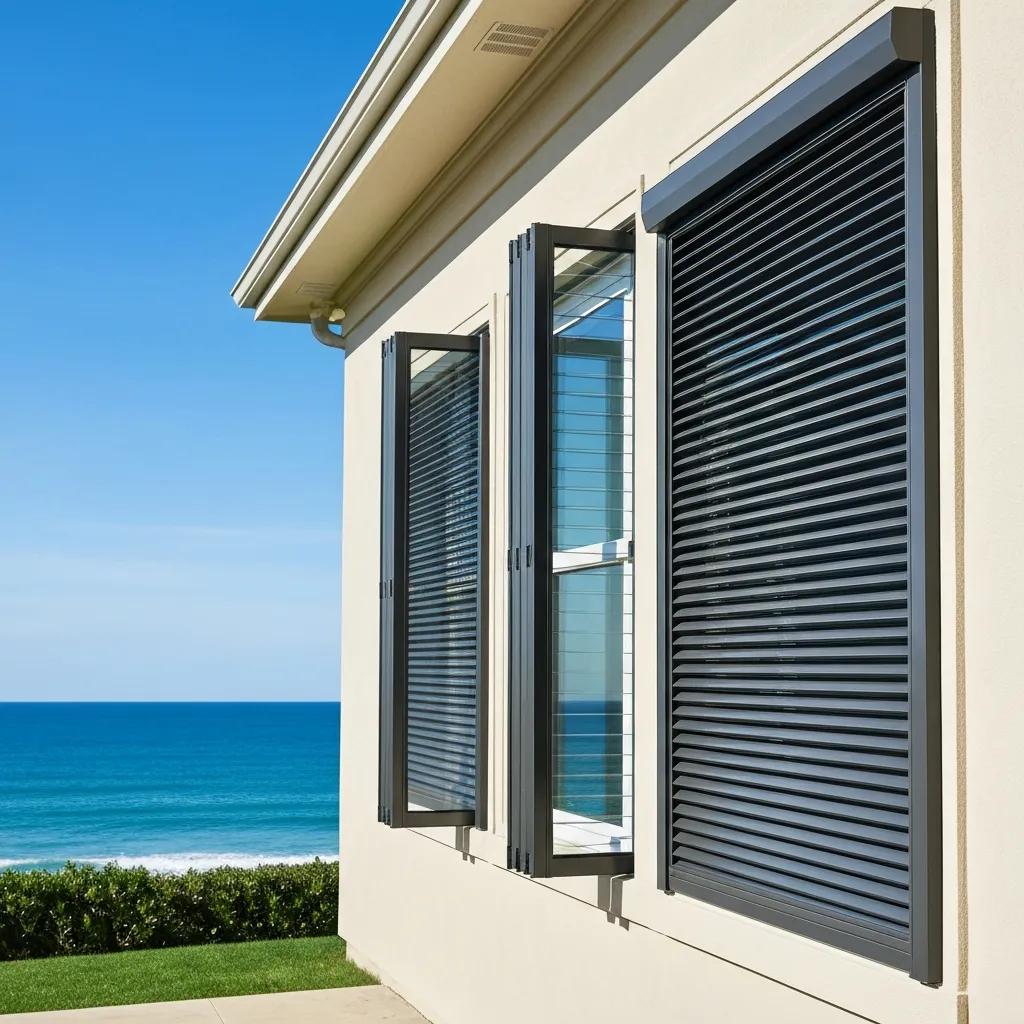
Are Accordion Shutters the Right Protection for Your Property? Security Risks, Performance, and What to Expect
Accordion shutters are a hinged, fold-away storm protection system that mount to window and door openings and lock into reinforced jambs to create a continuous barrier. They do two jobs: resist wind and impact during storms and add a physical layer that deters or delays forced entry. When you choose the right materials and ratings and have them installed to local code, accordion shutters are a reliable option for hurricane protection and improved home security. Below we’ll walk through how lock type, materials, installation quality, and code compliance affect on-the-ground safety, clear up common myths about being “burglar proof,” and give practical guidance on vulnerabilities, coastal code considerations for North and South Carolina, performance in storms, and routine care for coastal homes.
What security features make accordion shutters effective against intruders?
Accordion shutters protect primarily through three elements: strong locking hardware that ties panels into the jamb, panel and material designs that resist prying, and well-engineered tracks and anchors that remove easy leverage points. Together these features increase time-to-entry, which makes a house less attractive than an unsecured one. Below is a short list of the hardware and design priorities homeowners should use to focus inspections and upgrades. After that we’ll dig into locking options that best suit coastal properties.
Accordion shutters use several locking approaches depending on the opening size and desired resistance. Correctly specified locks anchor the shutter to the jamb or sill, stop lateral movement, and work with end and center locks to form a continuous security plane. In coastal environments, corrosion-resistant materials like stainless steel or coated alloys are essential to keep locks working over time. Add-on elements — for example auxiliary center locks or reinforced end pins — increase resistance to forced entry. The next section compares common lock types and where each performs best for coastal homes.
How do locking mechanisms improve accordion shutter security?
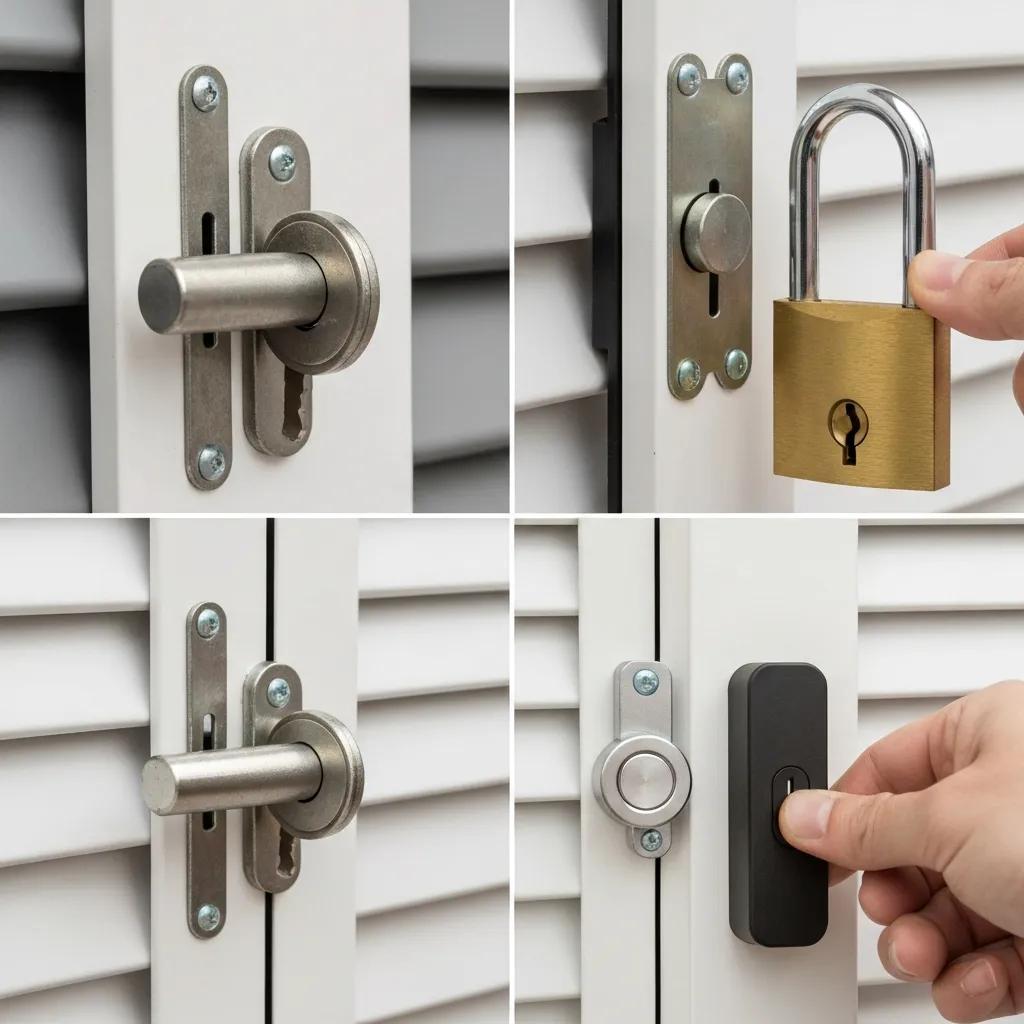
Locks are the interface between an intruder’s tools and the shutter’s anchor points, so they determine how well a shutter transfers force into the building structure. Center-keyed locks and keyed side locks seat panels into reinforced jambs; padlocks add a simple external barrier; magnetic or concealed locks reduce visible attack points on some motorized systems. Operational locks handle everyday use while auxiliary locks add redundancy—using both reduces single-point failures. Choosing corrosion-resistant lock materials and testing engagement under load are practical steps to keep locks anchoring the system instead of becoming leverage points.
To choose the right lock, think about how each performs against prying or cutting attacks and what maintenance it requires. Keyed center locks are easy to use and spread load to the jamb; exposed padlocks are simple but vulnerable unless the shackle is protected. Magnetic or concealed systems lower visible attack surfaces but need compatible design and professional installation to ensure secure anchoring. Regular inspection and lubrication in a coastal setting help avoid a stuck or corroded lock turning into a weak spot.
Note: the table below compares common lock types for accordion shutters — materials, how they operate, forced-entry resistance, and recommended coastal use-cases.
What materials and design elements improve durability and forced-entry resistance?
Material and panel geometry decide how shutters absorb and spread force during storms or break-in attempts. Extruded aluminum at the correct gauge gives a strong strength‚Äëto‚Äëweight ratio; heavier extrusions and thicker panels resist bending and prying better than thin stamped sheets. Stainless or coated fasteners and hardware prevent corrosion that would otherwise weaken anchors and tracks in salty coastal air. Interlocking panels, reinforced end locks, stop-nose edges, and strong support jambs reduce gaps and minimize leverage points for tools.
Good security is about parts working together: well-designed tracks and rollers stop panel deformation under load and keep alignment, while jamb reinforcements move loads into the structure instead of relying solely on fasteners. Compared with other shutters, accordions give fast deployment and continuous coverage but depend on strong anchoring and interlocks to reach higher forced‚Äëentry resistance. Choosing the right extrusion grade, fastener spec, and interlock geometry is essential for coastal durability and lasting security.
Are accordion shutters burglar proof? Common risks and misconceptions
Accordion shutters are not magically “burglar proof.” Instead, they’re a solid physical barrier and deterrent that raises the time and effort required to get inside. The best systems make entry difficult enough that most intruders give up or are detected. Misunderstandings usually come from assuming shutters make a home impenetrable; in reality, human factors (like forgetting to lock them) and environmental wear (like corrosion) often cause the most failures. Below we list common vulnerabilities and explain how proper installation and maintenance close those gaps.
Knowing likely failure points helps homeowners prioritize defenses. The most common weaknesses are unlocked or poorly seated shutters, undersized anchors, weak jambs, and corroded hardware. Storm damage and environmental degradation can also reduce effectiveness unless you inspect and repair promptly. The next subsection gives specific vulnerability examples and shows why installation quality matters.
What are the potential vulnerabilities of accordion shutters?
Most vulnerabilities come from human error, installation shortcuts, or environmental wear—not the shutter concept itself. If homeowners don’t fully engage locks, intruders have the simplest entry. Installers who skip jamb reinforcement or use the wrong anchors leave a system vulnerable to prying. Over time, corrosion can seize mechanisms or thin fasteners; storm damage can bend panels or misalign tracks and prevent secure engagement. While exact risk varies by situation, the most common failure modes are preventable with straightforward checks and attention.
Examples include: an unsecured center lock or missing auxiliary pin forced by leverage; a bent track pushed aside where end stops are damaged; or corroded screws that pull out under sustained force. Preventative steps—verify lock engagement, schedule post‑storm inspections, and replace corroded fasteners—noticeably lower the chance of successful forced entry. The following section explains installation standards and best practices that build resilient shutter systems.
The sturdy construction that helps shutters resist forced entry also improves their performance in severe weather.
Forced Entry and Ballistics Protection for Buildings: Security and Hurricane Resistance
FE/BR opening protectives are designed to prevent or delay unauthorized access. Though engineered for security, their robust construction also translates to meaningful protection in hurricanes: the same materials and design features that resist forced entry help a system withstand high winds and debris impacts.
Forced Entry and Ballistics Protection for Buildings and Infrastructure Facilities, 2019
How does proper installation affect accordion shutter security?
Correct installation turns good hardware into an effective security system by making sure loads transfer into the building structure, shutters operate smoothly, and installations meet local code. Key practices include reinforcing jambs where anchors attach, using through‚Äëbolts or fasteners rated for wind loads, aligning tracks to avoid binding, and documenting anchor locations for future checks. Installer experience is also important for integrating shutters with egress plans and ensuring locks engage fully and reliably.
A professional installation checklist usually covers anchor type and spacing, torque testing, alignment across the opening, and written documentation for permits and insurance. Regular inspections—at least twice a year and after storms—catch loosening, corrosion, or misalignment before they become failures. In short, professional installation reduces weak points and supports long-term shutter performance, which ties into the next section on coastal building-code compliance.
How do accordion shutters comply with coastal building codes for safety and security?
Compliance means picking products tested and certified for impact and wind performance and installing them per local permit and inspection rules so they perform as rated and qualify for insurance considerations. Coastal codes typically require impact-rated materials, verified wind-load ratings for your zone, and approved fastening methods that anchor shutters into structural members. Certified test results give assurance that products meet minimum performance thresholds for storms and provide useful reference points for security performance. Below we summarize what coastal homeowners in North and South Carolina should check.
Start with product approval and ratings, then follow your local permit and inspection process. While state or national benchmarks are helpful references, county and city inspectors set final acceptance. Professional installers help by gathering documentation, specifying approved fasteners, and installing to match rated performance. The subsection below outlines the key local code items to verify before installation.
What are the key North and South Carolina building code requirements for accordion shutters?
In North and South Carolina, jurisdictions commonly require hurricane protection products to demonstrate appropriate impact resistance and wind‑load ratings for a property’s risk zone, and to be installed with approved fastening into structural members. Product approval for impact, plus adherence to wind-load requirements, are the primary items that affect both safety and insurance eligibility. Permit basics typically include submitting product certification, installation plans with anchor locations, and scheduling a post-install inspection.
Because local authorities reference broader standards, homeowners should confirm which test standards their permitting office accepts and keep product approval paperwork handy for inspection. Retain installation records and certification documents for insurance and resale. The next subsection explains how professional installation ties these pieces together and maximizes the security and code benefits.
Research on shutter performance under simulated windborne debris gives useful evidence of how systems behave in storms.
Hurricane Shutter Performance: Impact Resistance and Window Protection
Evaluations of shutter systems under simulated debris impact and post‚Äëhurricane damage assessments show that properly designed and installed shutters play a key role in reducing window damage. Tests on steel and aluminum storm panels provide data on their effectiveness against common debris threats.
Performance of hurricane shutters under impact by roof tiles, KR Gurley, 2010
After you understand code requirements and paperwork, many homeowners opt for professional installation and inspection to streamline permitting and ensure shutters perform as rated. For local support in coastal North and South Carolina — including Wilmington, Myrtle Beach, Oak Island, Topsail, New Bern, and Pawleys Island — American Hurricane Shutters offers certified installations, code-compliance services, and free estimates to help homeowners pick the right accordion shutters and prepare permit-ready documentation. Their process emphasizes corrosion-resistant materials and fastening methods matched to local wind zones, plus post-install checks that support both safety and insurance needs.
How do accordion shutters protect your property in storms and against break-ins?
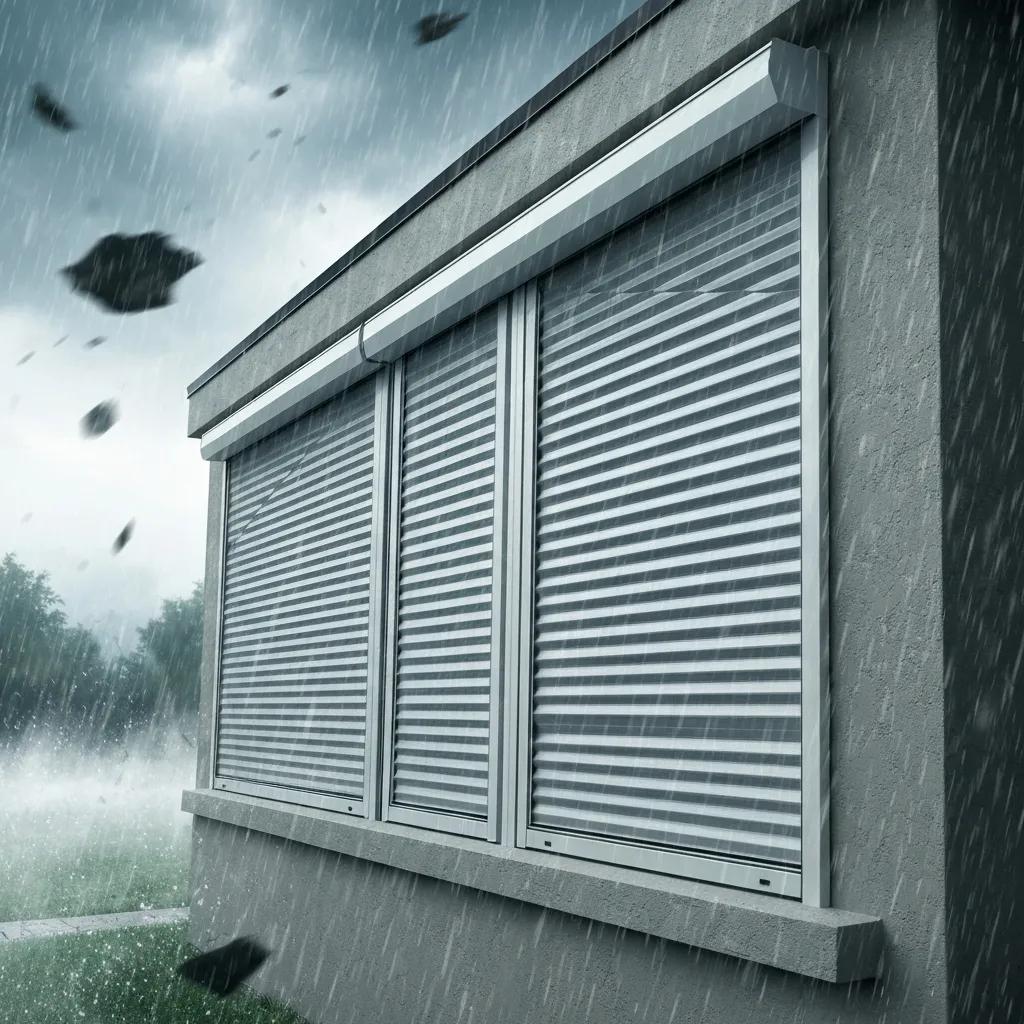
Accordion shutters protect in two complementary ways: they meet engineered wind and impact criteria to stop debris penetration during storms, and they act as visible, time‑delaying physical barriers that deter and slow burglars. Wind ratings and impact tests give measurable performance expectations under extreme loads and standard impact scenarios. At the same time, sturdy shutters change an intruder’s risk calculation and increase the chance of detection or abandonment. Next we break down common ratings and explain how shutters fit into a layered security plan.
Common performance metrics include wind‚Äëspeed ratings (in mph) and impact tests that simulate debris strikes; these translate to practical guidance for selecting shutters for your local zone. Pairing shutters with alarms, cameras, and lighting combines physical resistance with detection to further reduce burglary risk. The next section summarizes rating types in plain language and what they mean for homeowners.
Accordion shutters also reduce wind-driven rain intrusion, which adds another layer of storm protection.
Accordion Shutters: Reducing Wind-Driven Rain Intrusion for Storm Protection
Studies show accordion shutters can reduce wind-driven rain intrusion by roughly 6–14%, helping limit water penetration during severe storms. That benefit complements their impact and wind resistance.
Wind driven rain intrusion reduction for shuttered windows, KS Vutukuru, 2019
Accordion shutters commonly meet tested wind-load and impact standards used for coastal protection. The table below summarizes typical rating categories, test descriptions, and homeowner-relevant thresholds to make technical metrics easier to apply when choosing shutters and documenting them for insurance.
What wind and impact resistance ratings do accordion shutters meet?
Accordion shutters are engineered to meet structural wind‚Äëload ratings and impact resistance tests that simulate flying debris. Wind-speed ratings show how the shutter holds up to design gusts in a given zone; impact tests typically use a 9‚Äëlb 2×4 at a standard velocity to check panels and tracks against penetration. Choosing a shutter with ratings that match your property‚Äôs wind zone and getting installation verification are the steps that turn lab results into real protection. Keep both product certification and installation records for insurance and safety documentation.
Practically speaking, matching ratings to wind zone and verifying installation are the two most important actions homeowners take to ensure rated performance in the field. Proper documentation of product and install protects both safety and insurance claims.
How do accordion shutters deter burglars while protecting from storms?
Accordion shutters are a visible, durable barrier that signals higher effort and time are required to enter — and most intruders move on to easier targets. Systems with multiple locks and reinforced anchors increase time‑to‑entry, raising the odds that an attempt will be noticed or abandoned. Pairing shutters with alarms and exterior lighting multiplies effectiveness: a solid physical barrier plus quick detection is far stronger than either measure alone.
Security best practice favors layered defense: physical barriers delay, detection alerts, and response closes the loop. For coastal homeowners, shutters offer the added advantage of being storm‚Äëready while providing year‚Äëround security. The next section covers the extra benefits homeowners often see, such as energy savings and insurance incentives.
If you want verification and professional installation for rated accordion shutters, American Hurricane Shutters can align product choice, provide certified installation, and offer free estimates to ensure shutters are specified and documented to meet local code and insurance requirements.
What additional benefits do accordion shutters offer beyond security?
Besides storm and security protection, accordion shutters offer measurable secondary benefits: they can lower cooling costs by reducing solar heat gain, help reduce exterior noise with added panel mass and sealed fit, and may qualify you for insurance discounts when products are certified and installed properly. The shutters’ thermal barrier reduces HVAC load by blocking direct sunlight and creating an insulating air layer; tight seals and panel mass also reduce exterior noise transmission. Together these benefits improve comfort, can trim operating costs, and may boost resale appeal. The subsections below outline typical energy and noise effects and how to pursue insurance savings.
Accordion shutters reduce heat transfer by shading glazing and creating a buffer between outdoor conditions and indoor spaces, which can cut cooling demand in hot climates. Noise reduction comes from panel mass and airtight seals that absorb and reflect sound—useful in windy coastal areas or near busy roads. Deploying shutters during peak sun or at night can maximize these gains. The table below summarizes potential impacts and common ranges.
How can accordion shutters reduce energy costs and noise?
Accordion shutters lower energy use mainly by blocking direct sunlight and reducing conductive and convective heat transfer through windows and doors. That reduces peak cooling loads and smooths HVAC cycles, particularly in sun‚Äëexposed rooms. For noise, the panel mass and tight seals absorb and reflect exterior sound. To get the most benefit, pair shutter use with other shading strategies and keep tracks and jambs well sealed.
Simple habits — closing shutters during the hottest part of the day or overnight in noisy conditions — amplify energy and acoustic benefits. Properly specified shutters, with attention to panel fit and mass, deliver better thermal and noise performance and strengthen the value proposition beyond storm protection. Next, we explain how shutters can affect insurance and resale.
Do accordion shutters qualify for insurance discounts and increase property value?
Yes — accordion shutters can make homes eligible for insurance premium reductions when products are certified and professionally installed. Insurers favor verified mitigation measures that lower expected storm damage and claims, so having certified product approvals, permit records, and installation verification improves eligibility and eases claims. On resale, certified shutters installed to code appeal to coastal buyers who prioritize storm and security features and can enhance buyer confidence.
To pursue discounts, keep product approval paperwork, installation receipts, and inspection reports; insurers usually require documentation for underwriting and claims. Certified installations with clear records are the strongest basis for insurance benefits and buyer confidence. For homeowners ready to explore options or gather documentation, American Hurricane Shutters offers free estimates, maintenance guidance, and service across coastal North and South Carolina — including Wilmington, Myrtle Beach, Oak Island, Topsail, New Bern, and Pawleys Island.
How should you choose and maintain accordion shutters for the best security?
Choosing shutters means weighing material grade, wind and impact ratings, lock types, and whether manual or motorized operation fits routine use and emergency plans. Maintenance matters just as much: bi‚Äëannual inspections, track cleaning and lubrication, lock checks, and post‚Äëstorm assessments keep security performance intact. A clear decision framework and maintenance rhythm help balance budget, deployment speed, and long‚Äëterm durability. Use the checklist below to compare options and set a maintenance schedule that keeps shutters functioning when you need them.
- Selection checklist: Match wind/impact rating to your local zone, specify corrosion‚Äëresistant materials, and choose locks that anchor into reinforced jambs.
- Maintenance schedule: Inspect and lubricate tracks and locks twice a year and after storms; replace corroded fasteners promptly.
- Installer verification: Get written documentation of anchors, fasteners, and product certification for permits and insurance records.
What factors matter when selecting accordion shutters for coastal homes?
Coastal priorities include corrosion resistance of aluminum extrusions and fasteners, wind and impact ratings that meet local code, panel weight relative to how you’ll handle them, and whether manual or motorized operation fits your lifestyle. Ask installers about jamb reinforcement and the exact fastener types they’ll use, and request product rating documentation for your property’s wind zone. A selection checklist that weighs durability, ease of use, and maintenance will help you match product choice to safety needs and day‑to‑day use.
When deciding between motorized and manual systems, consider how often you’ll deploy them, emergency egress plans, and backup power needs for motors. Manual systems are simple and lower cost to maintain; motorized systems offer quick deployment but require attention to corrosion protection and power redundancy. Talk openly with installers about these trade‑offs so you get a solution that fits coastal living and delivers long-term security.
How does regular maintenance extend shutter life and security?
Routine maintenance keeps locks, tracks, and anchors functioning so shutters operate reliably when required and retain their resistance to forced entry. We recommend bi‑annual cleaning and lubrication of tracks and rollers, visual checks of locks and fasteners for corrosion or looseness, and a full operational test after major storms. Basic tasks — clear debris from tracks, apply recommended lubricants, tighten or replace corroded fasteners, and confirm full lock engagement — go a long way.
Watch for warning signs such as stiff operation, visible corrosion, panel gaps, or loose anchors; these indicate it’s time for professional service. Keep service records and installation paperwork to support insurance claims and resale, and schedule periodic professional inspections to verify anchor integrity and code compliance. If you need installation, maintenance, or documentation for insurance, American Hurricane Shutters provides free estimates, inspections, and servicing to help keep accordion shutters secure and compliant.
<!– wp:list