
Understanding Roll Down Shutter Regulations in Your Area: Building Codes, Permits, and Compliance for Coastal North and South Carolina
Roll down shutters protect windows and doors from wind-driven debris, high wind pressures, and unauthorized entry — and along the coast they’re subject to state and local building codes. This guide explains why those regulations matter, how ASTM E1996 and ASTM E1886 testing apply, and what HVHZ (High Velocity Hurricane Zone) labeling means for product selection and permits. Many homeowners and business owners underestimate the paperwork and installation specifics inspectors expect; missing items can delay permits or affect insurance credits. We’ll walk you through preparing the right documentation, choosing compliant products, and scheduling inspections. You’ll also find step-by-step permit guidance, city notes for Wilmington, New Bern, Myrtle Beach, and Pawleys Island, a comparison of impact-resistance standards, and maintenance tips to keep your system compliant and usable in an emergency. We use common search terms like roll down shutter laws, roll down shutter permits, and HVHZ certified shutters so you can match municipal rules and insurance requirements with the right products and installer practices.
What Are the Key Building Codes for Roll Down Shutters in North Carolina?
In North Carolina, roll down shutters must meet state building code rules for opening protection, wind loads, and product labeling because coastal debris zones need tested protection to limit risk to people and structures. Compliance generally requires shutters with manufacturer test reports, clear product labels, and installation details that match the tested configuration so inspectors can verify performance. Before you apply for a permit, gather product declarations, installation drawings, and any ASTM or HVHZ classifications that apply — these documents are what plan reviewers expect to see. The next section breaks down the specific code topics and the exact permit evidence inspectors commonly request, turning code language into a homeowner-friendly checklist.
Which North Carolina State Building Code Sections Apply to Roll Down Shutters?
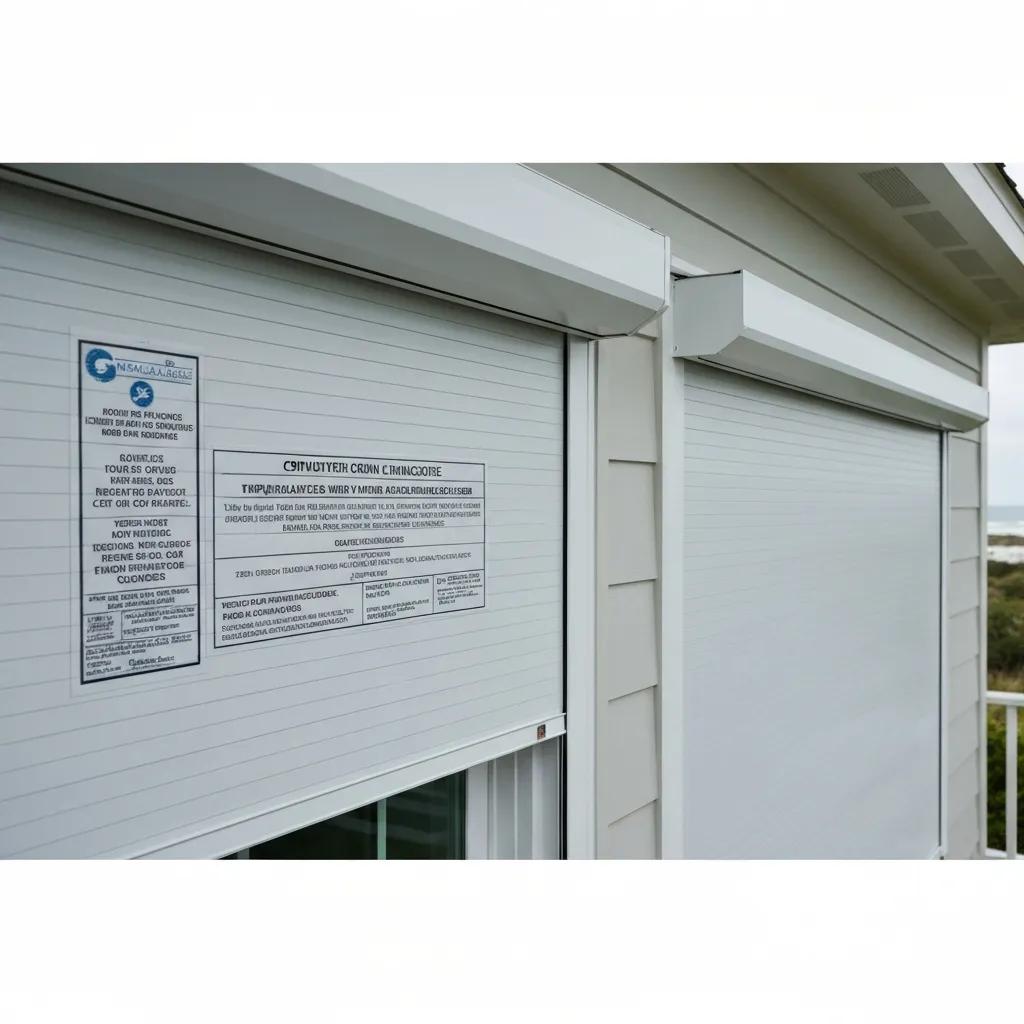
Relevant North Carolina code sections address wind loads, protection of glazed openings, and product labeling tied to tested assemblies. Inspectors will look for documentation showing impact-resistance evaluation and cyclic pressure performance. Practically, that means you should provide an ASTM E1996 classification statement, E1886 test reports for cyclic performance and structural integrity, manufacturer installation instructions, labeled product cut sheets, a signed installer statement committing to the tested layout, and installation drawings that show mounting details and connection points. Keeping these items together in your permit packet reduces review time and makes it easy for reviewers to confirm the field installation matches the laboratory-tested assembly.
How Do Wilmington and New Bern Local Regulations Affect Shutter Compliance?
Wilmington, New Bern, and other local jurisdictions follow the state code but often add municipality-specific triggers, inspection practices, or required forms that affect processing times. Some offices require signed installation affidavits or tag-mounted product labels at final inspection, while others insist on pre-construction plan review with stamped drawings. Contact your municipal building department to confirm required seals, inspection points, or special forms, and include any municipal checklists in your permit packet to avoid re-submittals. Understanding these local differences helps you plan realistic timelines and inspection staging. The section that follows covers how South Carolina handles similar protective requirements.
What Are the Hurricane Shutter Regulations and Building Codes in South Carolina?
South Carolina’s building code framework likewise regulates opening protection, wind loads, and product labeling for shutters in coastal areas. Local building departments translate state requirements into specific permit submissions and inspection expectations. Homeowners need the same core documentation — product test reports, labeled components, and installation drawings — plus any municipality-specific submission formats. Many jurisdictions also require proof that shutters are rated for the wind-speed conditions at the property, and some request a manufacturer letter confirming the tested installation matches the planned mounting. The following subsections outline the SC code requirements inspectors review, then describe typical permit practices in Myrtle Beach and Pawleys Island so you can file with confidence.
How Does the South Carolina Building Code Govern Roll Down Shutter Installation?
The South Carolina Building Code requires evidence of impact resistance, structural performance under cyclic load, and proper labeling. Inspectors expect a product label showing ASTM classifications, manufacturer installation instructions, and test reports that cover impact resistance and pressure cycling where required. To speed approval, submit installation drawings that match the tested assembly, a fastener schedule, and any structural calculations for mounting to the substrate. Those documents let plan reviewers confirm the field installation will replicate the conditions used in laboratory testing.
What Are Myrtle Beach and Pawleys Island Permit Requirements for Roll Down Shutters?
Myrtle Beach and Pawleys Island typically require a standard permit application, product documentation, and inspections at key stages (such as framing/anchorage and final). Prepare drawings and labeled product specifications that match municipal expectations. Common requests include product cut sheets, manufacturer test reports, and a layout showing shutter locations relative to structural framing so inspectors can verify anchorage points on-site. If an HOA is involved, submit municipal permit materials alongside your HOA packet to avoid duplicate reviews. Preparing documents ahead of time shortens review cycles and helps inspections move smoothly.
What Is the Permit Process for Installing Roll Down Shutters in Coastal Areas?
Permitting for roll down shutters in coastal North and South Carolina typically follows a clear sequence: gather product documentation, submit the permit application and drawings, respond to plan review comments, complete staged inspections, and obtain final approval. Each step calls for specific documentation and awareness of local timelines. Before you submit, assemble product labels, ASTM test reports, installation drawings, and an installer affidavit tying the field installation to the tested configuration — this reduces back-and-forth with reviewers. Knowing typical plan-review timelines and inspection stages helps you schedule the installer and coordinate HOA approvals. The checklist below outlines the procedural steps most coastal jurisdictions expect, and the table afterward summarizes common documents, reviewers, and typical timelines.
Note: Municipalities usually expect concise documentation and an accurate drawing set. Organized packets avoid delays.
- Prepare documentation and drawings that match the product’s tested configuration and fastener schedule.
- Submit the permit application with product cut sheets, ASTM test reports, and installation drawings to the local building department.
- Respond promptly to plan review comments or requests for additional documentation.
- Schedule required inspections (for example, anchorage/framing and final) and provide labeled product tags or samples if requested during inspection.
- Obtain final approval and retain all documentation for insurance and future resale needs.
Following these steps helps avoid common permit pitfalls. The table below clarifies which documents matter at each stage, who typically reviews them, and when each is needed during the process.
What Steps Are Involved in Applying for a Hurricane Shutter Installation Permit?
Applying for a permit starts with compiling product test evidence and precise installation drawings, then moves through submission, plan review, inspections, and final approval. First, confirm the product’s ASTM classifications and labeling, then prepare a drawing set showing mount locations, anchor types, and connection points so reviewers and inspectors can match the field installation to the tested conditions. After submission, monitor the plan-review portal or contact the reviewer and respond quickly to comments — missing test reports or mismatched installation details are common causes of delay. At inspections, be ready to produce the product cut sheet and installer affidavit, and keep the final approval documents and inspection reports for insurance credits or future compliance checks.
How Do Homeowners Associations Influence Shutter Installation Approvals?
HOAs often add design and aesthetic requirements that affect shutter selection and installation timing. Most HOAs require a design review packet with product photos, color choices, and installation drawings. To speed HOA approval, present a concise packet with labeled product specifications, photos or manufacturer renderings, and installation drawings that show how shutters will be recessed or concealed to meet community standards. Use wording that emphasizes safety and code compliance while proposing color and concealment options — that helps review boards balance curb appeal with storm protection. Submitting HOA materials that mirror the municipal permit packet makes parallel approvals easier and reduces conflicting revision requests.
What Are the Impact Resistance Standards for Roll Down Shutters in NC and SC?
Impact-resistance standards focus on ASTM E1996 and ASTM E1886 testing and on HVHZ designation for the most exposed coastal zones. Together these standards confirm shutters can resist wind-borne debris and remain structurally sound under cyclic pressures. ASTM E1996 classifies products by missile type and wind-speed capability, showing whether shutters stop typical hurricane debris. ASTM E1886 evaluates assembly performance under dynamic loading and repeated pressure cycles. HVHZ designation flags geographic zones that require higher classification levels and stricter documentation. The table below helps homeowners read product labels and select shutters that meet local code triggers.
How Do ASTM E1996 and ASTM E1886 Standards Ensure Shutter Safety?
ASTM E1996 gives a straightforward classification that indicates whether a shutter can stop specific debris at set wind speeds, which helps inspectors and homeowners understand impact resistance. ASTM E1886 complements that by testing how the assembly performs under cyclic pressures and dynamic loads, ensuring the shutter stays attached and functional through repeated wind pressure changes. Together they confirm a product not only blocks debris but also maintains structural integrity during storm conditions. Always read both test reports and make sure the installation mounting details match the tested configuration so the field assembly behaves like the lab-tested unit.
What Is the Role of HVHZ Certification in Coastal Hurricane Protection?
HVHZ certification signals that a product meets stricter testing and labeling standards for the most exposed coastal areas. In those zones, municipalities and inspectors expect higher ASTM classifications and clear documentation for any shutter used. HVHZ-rated products have test reports that demonstrate higher wind-speed ratings and robust cyclic performance, and inspectors will verify the field installation matches the tested HVHZ configuration. Choosing shutters labeled for HVHZ or approved for your zone reduces permit friction and helps when you document protection for insurance purposes. The next section covers homeowner benefits from selecting code-compliant, HVHZ-capable roll down shutters.
What Are the Benefits of Using Code-Compliant Roll Down Shutters?
Code-compliant roll down shutters provide several measurable benefits: better life-safety through debris protection, potential homeowners insurance discounts when insurers accept tested installations, stronger property resilience that preserves resale value, and added energy and security perks such as improved insulation and intrusion resistance. Properly tested shutters lower the risk of glazing failure and water intrusion, which reduces repair costs and limits structural damage after a storm. The list below summarizes the main homeowner benefits and real-world outcomes you can expect, followed by a table that illustrates how each benefit translates into measurable impact.
- Safety and Structural Protection: Tested shutters reduce glazing failure and help protect occupants during storms.
- Insurance and Financial Advantages: Insurers may offer premium credits when you provide compliant documentation.
- Energy and Comfort Gains: Shutters can cut solar heat gain and noise, improving comfort and reducing energy use.
- Resale and Marketability: Documented, code-compliant storm protection can enhance property value and buyer confidence.
These benefits show how code-compliant shutters connect safety with financial value. The table below maps each benefit to measurable outcomes and examples.
When backed by proper test reports and installation records, these benefits are both qualitative and measurable. If you want help moving from research to action, American Hurricane Shutters offers free estimates, a cost calculator, and product pages to turn these advantages into a practical installation plan for coastal NC and SC homes.
How Should Roll Down Shutters Be Installed and Maintained for Ongoing Compliance?
Correct installation and regular maintenance are essential to keeping shutters code-compliant, protecting warranties, and ensuring they’ll work when you need them. Installed systems must match the tested configuration, and scheduled inspections preserve performance. Professional installers follow the manufacturer’s fastener schedules and attachment details used in testing, while routine maintenance keeps motors, slats, guide rails, and seals in working order. Maintenance records also serve as documentation for insurers and future plan reviews: dated service logs, test-run photos, and receipts show you’ve kept the system serviceable. The subsections below explain why professional installation matters and outline a maintenance routine that supports emergency egress and inspector expectations.
Why Is Professional Installation Important for Meeting Local Building Codes?
Professional installation matters because inspectors expect field conditions to replicate the manufacturer’s tested assembly — that includes anchor type, fastener spacing, and substrate quality. Licensed installers typically provide the signed affidavits and post-installation documentation inspectors want. Experienced contractors verify attachment points, follow tested fastener schedules, and can supply as-built photos and installation drawings that match the permit packet. Installers familiar with coastal code and HVHZ requirements can avoid common defects that cause re-inspections. Hiring a qualified installer reduces the risk of failed inspections and helps ensure your system performs as the lab tests predicted.
Many installers also offer maintenance packages and documentation that support insurance and compliance needs, linking quality installation to long-term regulatory adherence.
What Maintenance Practices Ensure Long-Term Compliance and Emergency Egress?
A seasonal maintenance program keeps shutters ready and documents continued compliance. Check motors or crank mechanisms, inspect slats and guide rails for corrosion or damage, verify seals, and test electrical backups if present. Perform visual inspections at least twice a year, run the shutters under no-load conditions to confirm smooth movement, tighten anchor fasteners as needed, and record each service action with dated reports and photos for inspectors or insurers. Test manual overrides and quick-release mechanisms and make sure they remain accessible; train occupants on egress procedures in case the motor fails during a power outage. Keeping a maintenance log and service receipts creates a reliable compliance record that can speed future inspections and support insurance claims.
American Hurricane Shutters offers professional installation and maintenance plans that pair certified, HVHZ-capable products with installers experienced in local permitting and inspection requirements, helping homeowners meet both initial and ongoing compliance responsibilities.
If you’re ready to move from planning to procurement, American Hurricane Shutters — a family-owned, disabled-owned business serving coastal North and South Carolina — provides free estimates, a cost calculator to estimate budgets, and installation plus maintenance services that handle permit documentation and inspections. Our team installs HVHZ-rated products, including Alutech United and Bertha roll down shutters, helps with municipal plan review, and documents maintenance programs to support insurance and local authority requirements. For homeowners who want compliant protection and clear permit documentation, requesting an estimate and discussing permit support is the most practical next step.
Frequently Asked Questions
What are the differences between roll down shutters and other hurricane protection options?
Roll down shutters offer a full barrier that deploys quickly and stays in place during a storm. Compared with impact-resistant windows or storm panels, shutters can be motorized for fast deployment or operated manually, which makes them convenient. Unlike removable storm panels, roll down shutters don’t require storage when not in use, and they often integrate more cleanly with a home’s look than external panels. They also provide strong security benefits when closed, making them a versatile choice for many homeowners.
How do I choose the right installer for my roll down shutters?
Look for licensed, insured installers with experience in coastal installations and familiarity with HVHZ requirements. Ask for references, read reviews, and request examples of completed projects. A good installer will provide a detailed proposal including timelines, costs, warranty terms, and documentation support for permits and inspections. Confirm they supply signed installer affidavits and as-built photos that match your permit packet.
What should I consider when selecting the material for my roll down shutters?
Consider durability, weight, corrosion resistance, and appearance. Aluminum is a common choice for coastal use because it’s strong and resists rust. Polycarbonate gives visibility while still offering protection but is typically less robust than aluminum. Fabric systems are lightweight and easy to deploy but usually don’t offer the same level of impact resistance. Also consider insulation properties and how the shutter will affect energy use and indoor comfort.
Can roll down shutters be customized for specific home designs?
Yes — many manufacturers offer colors, finishes, and custom sizes to match your home’s architecture. Options include different mounting configurations, slat types, and operation methods. Work with your installer to ensure the chosen system meets both aesthetic goals and code-required performance levels.
What are the long-term maintenance costs associated with roll down shutters?
Maintenance costs vary by material, usage, and exposure. Regular checks — such as lubricating moving parts, inspecting for corrosion, and tightening fasteners — help extend life and preserve performance. Budget for periodic professional inspections and occasional part replacements. While upfront costs can be significant, quality products and regular maintenance typically lower long-term repair costs by preventing storm damage and reducing the need for emergency repairs.
How do roll down shutters impact energy efficiency in a home?
When closed, roll down shutters add an extra barrier that can reduce solar heat gain and block noise, improving comfort and lowering energy use. They can help maintain indoor temperatures during hot weather and reduce HVAC demand. Consider insulation performance when comparing systems if energy savings are a priority.
Conclusion
Coastal homeowners benefit from understanding roll down shutter regulations so they can improve safety, secure permits, and maximize potential insurance savings. Following local building codes and providing complete documentation streamlines approvals and protects your investment. Prioritize professional installation, accurate paperwork, and regular maintenance to keep your system compliant and ready for storms. For tailored help and compliant shutter options, contact American Hurricane Shutters — we’ll provide an estimate, walk you through permitting, and install systems suited to coastal NC and SC requirements.
**
