
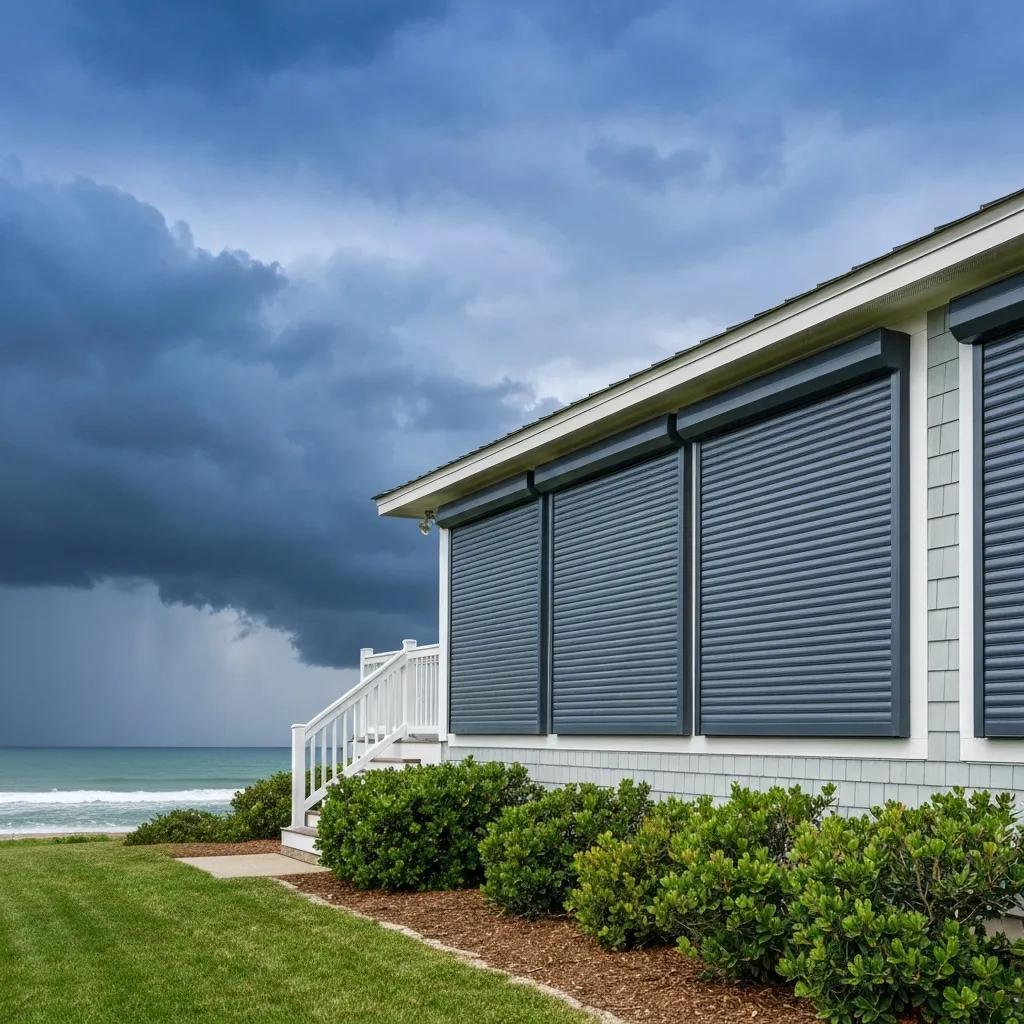
Navigating Local Rules for Hurricane Shutters in North and South Carolina
Local ordinances for hurricane shutters set the practical requirements that keep homes and businesses safe from windborne debris and high winds — and they tie product performance to permitting and inspection. This guide breaks down how building codes, Windborne Debris Region designations, and local permit systems determine which shutter types qualify as acceptable protection and why meeting those standards matters for safety and insurance. You’ll find which codes apply along the Carolina coast, how to handle permits and HOA reviews, and which shutter types meet ASTM and ICC test standards. We also walk through step-by-step permit workflows, side-by-side comparisons of shutter performance and local requirements, and how professional installation and routine maintenance preserve compliance over time. Read on for a practical compliance checklist, actionable permit steps, and sample documentation municipalities and insurers typically expect under current standards.
What Are the Key Local Hurricane Shutter Regulations in North Carolina?
North Carolina’s local shutter rules flow from the state’s adoption of model building codes plus city- or county-level amendments that apply design pressure, impact-resistance, and product-approval requirements inside Windborne Debris Regions. Local governments pick up components of the International Residential Code (IRC) and International Building Code (IBC) and add clarifications about when shutters must be impact-rated versus when meeting a design pressure is sufficient. Those rules are meant to limit structural damage by defining how shutters must resist wind loads and deflect or withstand projectiles during storms. Knowing how these requirements translate into permit paperwork and inspection checks helps homeowners prepare the documentation inspectors will look for during plan review and on-site inspections. The sections below define the governing codes and summarize enforcement practices in coastal cities such as Wilmington and other local jurisdictions.
Which Building Codes Govern Hurricane Shutters in North Carolina?

The main codes that govern hurricane shutters in North Carolina are the IRC for homes and the IBC for commercial buildings, as adopted and amended by the state and by local jurisdictions. Municipalities routinely reference ASTM E1886 and ASTM E1996 (impact and cyclic pressure tests) when they require impact-rated protection in Windborne Debris Regions, and they rely on design pressure values to verify a shutter can handle the specified wind load. Inspectors typically request manufacturer product approvals, engineering design pressure calculations, and installation details that match tested anchorage patterns and specified fasteners. It’s important to understand that a permit’s design pressure is an enforceable value — meeting it means using the right anchors, the right fasteners, and the tested configuration shown on the product approval. Those inspection expectations lead into how coastal municipalities manage permits and compliance in practice.
How Do Wilmington and Coastal NC Cities Enforce Shutter Permits and Compliance?
Coastal North Carolina municipalities enforce shutter permits through their building departments, which usually require product-approval documentation, installation drawings, and sometimes engineer-signed calculations for nonstandard openings. A typical municipal workflow includes an initial application review, verification of product approvals against the local code list, and scheduled inspections that confirm anchorage, fasteners, and operation. Common causes of delays or denials are missing test reports, installation details that don’t match the product approval, or inadequate anchorage for the required design pressure. Understanding these steps helps homeowners submit complete packages and shortens review times — and preparing the correct supporting documents makes inspections more predictable. Permit procedures are covered in the next major section.
Because the rules can be technical, many homeowners work with experienced installers who know local code nuances and the paperwork required for approval. At American Hurricane Shutters, we provide engineered hurricane protection across coastal North and South Carolina and offer Custom Design Pressure & Building Code Analysis to confirm shutter selection and anchorage meet municipal requirements. Our installation crews handle permit documentation and coordinate inspections, and we provide free estimates so homeowners can plan compliant protection with confidence. That hands-on approach reduces the homeowner’s permitting burden and turns code requirements into an approved, inspected installation.
What Are the South Carolina Hurricane Building Codes and Permit Requirements?
South Carolina’s approach to hurricane protection is similar: the state adopts model building codes and the South Carolina Building Codes Council issues guidance, while coastal municipalities add permit procedures tailored to Windborne Debris Regions. SC jurisdictions typically reference the IRC/IBC and require product approvals or test reports when shutters claim impact resistance, using design pressure criteria where impact testing isn’t required. In practice, state code sets baseline requirements while local permit offices control submission formats, portals, and inspection steps. Knowing that distinction helps property owners choose shutters and assemble permit packets that satisfy both state code intent and the local administrative process. The H3s below outline a couple of locality examples and explain how Windborne Debris Region status affects compliance.
What Are Myrtle Beach and Pawleys Island Specific Shutter Ordinances?
Myrtle Beach and Pawleys Island each apply permit triggers and documentation rules that reflect local hazard tolerance and administrative practice, with both communities typically requiring clear product approvals for impact-rated shutters in higher-risk zones. Applicants usually submit manufacturer test reports or formal product approval forms, installation drawings showing anchorage patterns, and sometimes engineering calculations for atypical openings or nonstandard mounts. Some municipalities also require HOA documentation or historic-district reviews, which can extend timelines if not anticipated. Homeowners should consult local building department checklists early and submit a complete packet to avoid resubmittals. These local rules illustrate how Windborne Debris Region designations influence required protection levels.
How Does the SC Windborne Debris Region Affect Shutter Compliance?
The Windborne Debris Region designation in South Carolina determines whether openings must be protected by impact-resistant systems or by systems engineered to a certified design pressure, and it drives reliance on ASTM and ICC standards for approval. Practically speaking, properties inside the Windborne Debris Region often must install shutters or protection systems that have passed ASTM E1886/E1996 testing, or demonstrate equivalent protection by meeting the same design pressure and impact criteria. Municipalities use this classification to decide if a product needs an impact-rated approval or whether a design-pressure-rated option is acceptable. That classification shapes product selection, documentation requirements, and insurance considerations — topics we cover later.
How Do Permits and Approvals Work for Hurricane Shutter Installation?
Permit and approval workflows for hurricane shutters follow a predictable sequence: application submission, documentation review (product approvals and drawings), plan review outcome, installation, and final inspection sign-off. This sequence confirms that the installed protection matches the tested or engineered performance shown in the paperwork and lowers liability for homeowners and contractors by documenting compliance. Municipalities vary in document formats and online portals, so anticipating those differences speeds approval. The H3 below shows a typical step-by-step permit process for coastal Carolina, including who can submit the application and what timelines to expect.
What Is the Step-by-Step Permit Application Process for Coastal Carolina?
- Complete the application with owner and contractor information and decide whether the contractor or the owner will submit the permit.
- Assemble supporting documents: manufacturer product approvals or test reports, installation drawings, and any required engineer-calculated design pressures.
- Submit the full packet through the local building department portal or in person for plan review.
- Address plan-review comments, schedule required inspections, and ensure the installer follows the approved details during installation.
- Receive the final inspection and certificate of compliance once the installation matches the submitted documentation.
This clear workflow helps owners and contractors understand responsibilities and avoids common delays caused by incomplete submissions. The next subsection lists the specific documents and inspection items municipalities commonly verify.
What Documentation and Inspections Are Required for Permit Approval?
Plan reviewers and inspectors typically expect a package that includes manufacturer product approvals or test reports, installation drawings showing anchorage and fastener schedules, and any design pressure calculations for engineered or nonstandard installations. Inspectors verify anchorage, correct fastener grades (for example, corrosion-resistant fasteners), spacing, and that the shutter operates as intended — cross-referencing these items with the product approval or engineering calculations submitted during plan review. Typical inspection checks include confirming mounting brackets match the tested configuration, guide tracks or attachment points align with drawings, and labeled product approvals are on site. Preparing these documents in advance prevents re-inspections and supports insurance documentation discussed later.
Before the table below, note that municipalities look for concise permit packages that clearly map product claims to installation details. The table compares common permit attributes across representative coastal localities so homeowners can tailor submissions.
Which Hurricane Shutter Types Comply with Local Ordinances and Safety Standards?
Several shutter types can meet local ordinances when engineered and installed to the required design pressure and, where applicable, impact standards. Common options include accordion shutters, rolldown shutters, colonial and Bahama shutters, hurricane screens, and storm panels — each can meet ASTM or ICC testing when manufactured and anchored correctly. Evaluating compliance means checking third-party test reports (for example, ASTM E1886/E1996), confirming a product’s design pressure rating, and ensuring installation mirrors the tested configuration. The next H3 compares common shutter types and how they satisfy code requirements, followed by a concise comparison table mapping types to code-relevant attributes.
How Do Accordion, Rolldown, Colonial, and Bahama Shutters Meet Code Requirements?
Accordion, rolldown, colonial, and Bahama shutters achieve compliance through tested hardware, certified product approvals, and anchorage patterns matched to their design pressure ratings. Accordion shutters typically use fixed guide tracks and tested attachment points to meet impact and wind-load criteria; rolldown systems depend on guide tracks and tested curtain profiles with specified anchor spacing. Colonial and Bahama shutters can meet design pressure requirements when reinforced stiles, approved fasteners, and the anchor pattern shown on the product test report are used. Hurricane screens and panels can be compliant when tested to relevant impact standards or engineered with verified design pressure calculations. Always confirm the product certification and make sure installation follows the tested configuration before submitting permits.
Below is a short comparison to help homeowners see which shutter types align with typical code attributes.
What Are the Impact Resistance and Wind Load Standards for Shutters?
Impact resistance and wind-load standards for shutters center on ASTM E1886 (performance of exterior windows, doors and impact/cyclic pressure) and ASTM E1996 (performance of exterior windows, doors and storm shutters under cyclic wind pressure and missile impact), and these are commonly cited by municipalities and the ICC when approving impact-rated systems. Design pressure values express the wind load a shutter must resist and are calculated from building code requirements and local wind-speed data; those values appear on engineered calculations or product approvals and must match the installed setup. Reading a product approval means checking tested configurations, anchorage patterns, allowable span or opening size, and the listed design pressure or impact rating. Knowing these standards and how to interpret test reports lets you choose shutters municipalities will accept during plan review and inspection.
What Role Do Homeowners’ Associations and Insurance Benefits Play in Shutter Compliance?
Homeowners’ associations often add aesthetic and material restrictions even when municipal codes focus on functional compliance, so property owners must navigate both HOA architectural review and building department permitting to get approved installations. Insurers commonly offer wind-mitigation credits for code-compliant shutters and documented installations, provided policyholders supply acceptable evidence like product approvals, inspection sign-offs, and maintenance records. You can balance HOA design preferences with municipal safety requirements by presenting product samples, manufacturer specifications, and engineer-signed drawings to the HOA’s architectural committee. The H3 below outlines HOA approval steps and then explains how documented compliance can support insurance savings.
How Do HOA Rules Affect Hurricane Shutter Installation in Coastal Areas?
HOAs frequently regulate shutter appearance, color, and operability, and they may require architectural review board approval in addition to municipal permits — creating a two-step approval process. Typical HOA requests include product photos or samples, installation drawings, and a statement that the product meets local building code. Supplying manufacturer literature and a copy of the municipal permit application often satisfies aesthetic review. Using negotiation points that stress code compliance, reversible attachment methods, and color-matching options helps reconcile HOA preferences with safety needs. Preparing a complete HOA package alongside your permit submission avoids conflicts and aligns aesthetic approvals with the technical documentation inspectors require.
How Can Code-Compliant Shutters Lower Your Insurance Premiums?
Code-compliant shutters can qualify a property for wind-mitigation credits, lower windstorm deductibles, or other underwriting incentives when an insurer verifies that openings meet recognized standards and were installed per approved details. Insurers usually require stamped product approvals, final inspection certificates, and maintenance records showing the shutters worked as intended at inspection time. Providing certified product test reports and municipal inspection sign-offs during renewals or mitigation inspections is often necessary to secure premium adjustments. Keeping dated maintenance records strengthens your mitigation case and can speed claims processing, reinforcing the long-term financial value of compliant installations.
Why Is Professional Installation Essential for Meeting Local Hurricane Shutter Ordinances?
Professional installation matters because trained installers translate product approvals and design pressures into precise anchorage, correct fastener selection, and on-site adjustments that ensure the installed system performs as tested. Professionals supply the documentation municipalities and insurers expect — installation drawings, as-built notes, and inspection coordination — and they know how to avoid common mistakes that cause failed inspections. Proper installation preserves the manufacturer’s certified configuration, which is critical for passing inspections and for insurance recognition. The subsections that follow explain installer responsibilities and outline the maintenance and repair services that keep systems compliant over time.
How Does Professional Installation Ensure Code Compliance and Safety?

Professional installers confirm manufacturer test configurations, apply the correct anchorage patterns, and use specified fastener types and corrosion-resistant materials to maintain rated performance. They typically produce shop drawings or verified installation checklists that mirror product approvals and engineering calculations, which helps plan reviewers and inspectors confirm that submitted documents match the actual installation. Installers also coordinate inspection scheduling, provide clarifying documentation to plan reviewers, and — when appropriate — arrange minor engineered adjustments to fit site conditions, reducing permit delays. Making sure the installation matches the certified configuration directly supports code compliance and homeowner safety during storms.
Beyond installation, homeowners should follow routine maintenance to keep shutters reliable and compliant. Regular upkeep supports inspection readiness and preserves the system’s protective function.
What Maintenance and Repair Services Support Long-Term Compliance?
A standard maintenance program includes an annual operational check, lubrication of moving parts, inspection and tightening of anchors and fasteners, and visual checks for corrosion or wear — all actions that help shutters perform to their tested standards. Recording maintenance with dated service reports and photos creates a traceable history municipalities and insurers can review during inspections or claims, which supports mitigation credits and helps with claims processing. Prompt repairs for worn fasteners, damaged guide tracks, or failing motorized components preserve the original design-pressure performance and prevent deterioration that could invalidate product approvals. A maintenance contract with a qualified provider ensures regular service and delivers the documentation trail needed for sustained compliance.
- Annual Operational Test: Confirm operation and note any binding, wear, or alignment issues.
- Fastener Inspection: Check and tighten anchors; replace any corroded fasteners.
- Lubrication & Cleaning: Service moving parts per the manufacturer’s recommendations.
Following these maintenance steps helps preserve a shutter’s tested performance and supports both permit compliance and insurance documentation over the life of the system.
We provide professional installation plus maintenance and repair services designed to keep homeowners compliant with local ordinances and insurer requirements. Our services include engineered installations, scheduled maintenance programs, and assistance preparing the documentation needed for permits and inspections. We also perform Custom Design Pressure & Building Code Analysis for atypical openings, coordinate inspection sign-offs, and offer free estimates to homeowners evaluating compliant protection options.
- Prepare documentation: Our teams produce installation drawings and inspection-ready paperwork.
- Coordinate inspections: We schedule and attend municipal inspections to confirm compliance.
- Maintain records: Service providers keep dated maintenance logs that insurers and HOAs accept.
These practitioner-level services reduce homeowner effort and improve the chances of timely permit approval and insurance recognition.
Frequently Asked Questions
What are the consequences of not complying with local hurricane shutter regulations?
Not complying can carry serious consequences: fines, denial of insurance claims, and greater liability if damage occurs during a storm. Non-compliant shutters may need to be removed, resulting in extra costs and delays before proper protection is installed. Staying compliant protects your home, your finances, and your peace of mind when hurricane season arrives.
How can homeowners find out about specific local ordinances for hurricane shutters?
Start with your municipality’s website or call the local building department — many offices publish downloadable checklists and permit guides. Local contractors and professional installers are often familiar with area requirements, and HOA boards or community forums can offer practical guidance. Early consultation with the building department or a trusted installer reduces surprises during the permit process.
Are there any financial assistance programs for installing hurricane shutters?
Some state and local programs offer financial assistance — grants, low-interest loans, or tax incentives — to help homeowners improve storm preparedness. Check with your local emergency management office or state disaster-recovery agency for current programs. In some cases, insurers also provide discounts or rebates for compliant protection systems.
What should homeowners do if their permit application is denied?
Review the denial notice to identify the specific deficiencies — missing documentation or code noncompliance are common issues. Address the listed items, consult a professional installer or code expert if needed, and resubmit the application. A corrected, complete package is the fastest path to approval.
How often should hurricane shutters be inspected and maintained?
Inspect and maintain shutters at least once a year, ideally before hurricane season. Regular tasks include testing operation, tightening fasteners, lubricating moving parts, and checking for corrosion or damage. Keep dated records and photos of maintenance; insurers and inspectors often request that documentation.
What types of hurricane shutters are most commonly used in coastal areas?
Common coastal options include accordion shutters, rolldown shutters, colonial shutters, Bahama shutters, and storm panels. Accordion and rolldown systems are popular for convenience and performance, while colonial and Bahama shutters offer a traditional look. Choose a type that meets local code requirements and fits your home’s needs and style.
Can homeowners install hurricane shutters themselves, or is professional installation required?
Homeowners can install some shutter types themselves, but professional installation is recommended to ensure code compliance and reliable performance. Trained installers know correct anchorage, fastener selection, and how to match the installed configuration to product approvals — all important for passing inspections and securing insurance recognition. Some municipalities also require professional installation to validate compliance.
Conclusion
Understanding local ordinances for hurricane shutters is essential for homeowners along the North and South Carolina coast. Meeting code requirements protects people and property and can produce insurance benefits when properly documented. Working with experienced professionals simplifies permitting, ensures correct installation, and helps you keep the paperwork insurers and HOAs expect. When you’re ready, we can help you evaluate options, prepare permit-ready documentation, and install shutter systems that meet local standards.