
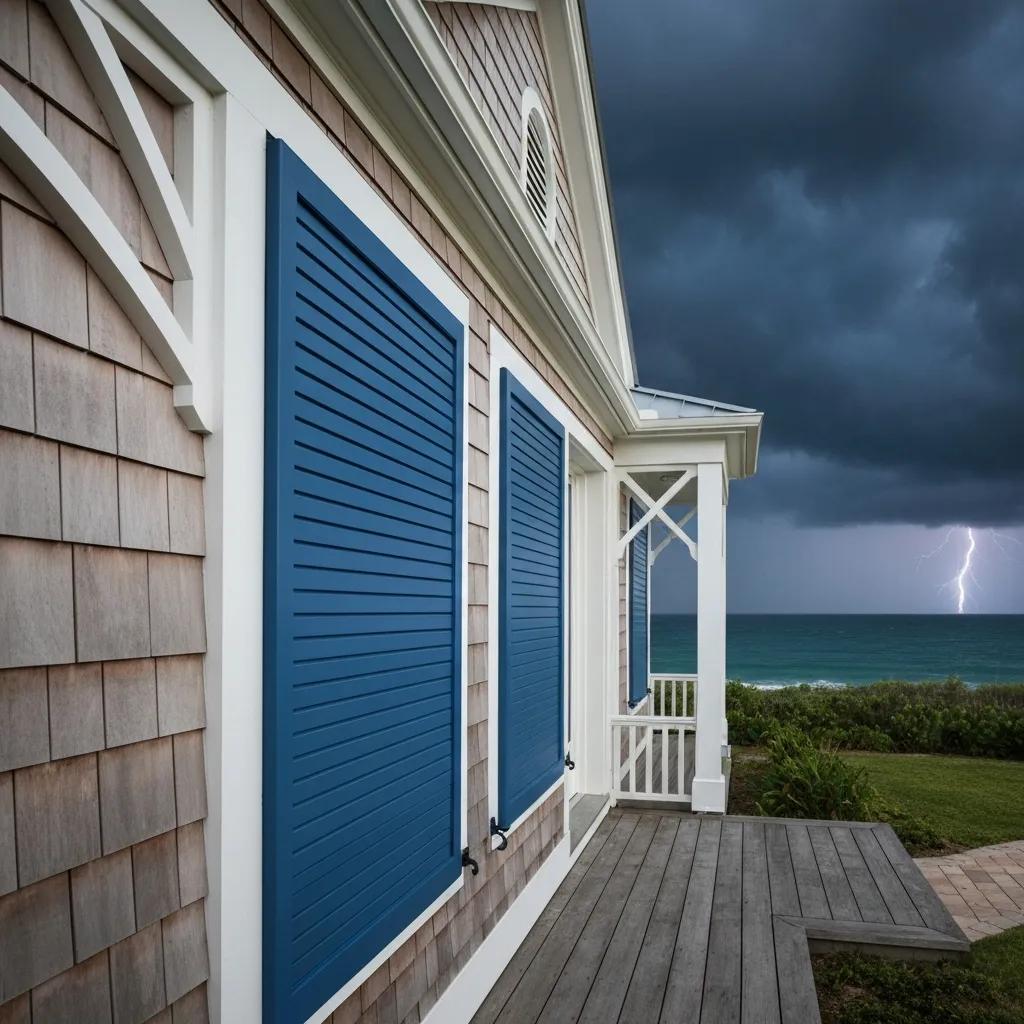
Local Rules for Hurricane Shutter Installations: Building Codes, Permits, and Compliance in NC & SC
Installing hurricane shutters along the coasts of North Carolina and South Carolina means more than picking a style — those shutters must meet local building codes, permit rules, and impact-resistance standards to actually protect people and property. This guide walks homeowners through how state and local codes, wind-zone classifications, and ASTM testing shape acceptable shutter choices, required paperwork, and the inspection process. You’ll learn which state and city rules commonly apply, how ASTM E1886 and E1996 factor into product approvals, and practical steps for getting permits and HOA sign-offs. We also map shutter types to design-pressure and impact expectations and give clear, step-by-step permit instructions for typical NC and SC municipalities. Along the way you’ll find quick-reference tables, HOA checklist items, and featured-snippet–friendly lists to help you move from decision to compliant installation with less friction. Our focus is practical: help coastal homeowners meet code and reduce risk, and note when professional services ease the process.
Why local building codes matter for hurricane shutter installations
Local building codes set the minimum performance and attachment requirements shutters must meet to withstand wind loads and flying debris. By defining design pressure thresholds and referencing impact standards, codes tie product selection, engineering, and installation methods to measurable safety outcomes. When shutters follow those rules, the chances of glazing failure, structural damage, and related injuries drop — and permitting and inspection expectations become clearer for homeowners and contractors. In short, knowing the local code shortens permit timelines and lowers legal and insurance risk from non-compliant work.
Codes turn safety goals into specific technical requirements — for example, fastener types, allowable gaps, and certified product approvals — that inspectors can verify on site. The next section summarizes the core ways those technical rules protect your property during a storm.
Code-driven protection delivers three clear safety outcomes:
- Less debris penetration: Properly rated shutters block projectiles that would otherwise break openings.
- Preserved structural integrity: Correct attachments distribute wind loads and reduce progressive failures.
- Maintained egress and life-safety: Compliant installations help keep exit routes usable in emergencies.
Those outcomes explain why codes affect insurance, repair costs, and occupant safety; the next subsection looks at the insurance and legal angle.
How building codes protect property and people

Building codes create performance baselines — like design pressure ratings — that shutters must meet to resist specified wind and debris impacts. When you choose and install shutters to those baselines, the protection follows: impact-rated barriers reduce glass breakage, and correct attachments move loads into the framing so failures don’t concentrate in one place. Research and industry experience show that impact-resistant openings help prevent secondary structural and interior water damage after glazing is breached. Understanding these mechanisms helps homeowners pick shutter types and attachment methods that match local design-pressure needs and inspection checklists.
That practical protection also has direct financial and legal implications when it comes to insurance claims and permit compliance in coastal towns.
How building codes affect insurance and legal compliance
Insurance companies and underwriters look to whether protective measures meet recognized safety standards when handling claims after a storm. Meeting referenced standards — including ASTM testing and local approvals — shows due care and can influence claim outcomes or premiums. Legally, missing permits or non-compliant installs can trigger stop-work orders, fines, or requirements to fix work before a claim is considered, which adds time and cost. Keeping clear records — product approvals, design-pressure calculations, and inspection sign-offs — makes it easier to prove compliance to both insurers and building officials.
If you want help making compliance straightforward, American Hurricane Shutters offers educational resources, installation services, and a free estimate to align product choices and installations with local code expectations. Our process emphasizes planning so compliance is built in from the start.
What rules and permits apply in North Carolina?
In North Carolina, installations follow the state-adopted codes based on the International Building Code (IBC) and International Residential Code (IRC), while counties and cities may add amendments or set higher wind-zone thresholds. The state-level code provides the baseline; local jurisdictions enforce it through their permit and inspection processes — so you need to confirm both the state rules and any county or city changes before buying shutters. Typical permit paperwork includes product approval statements, design-pressure calculations or stamped reports, installation drawings, and installer credentials that show compliance with IBC/IRC provisions. The table below gives a compact reference for common coastal permit patterns to help homeowners begin local checks.
The following table maps sample coastal entities to common permit attributes and local notes:
Use this table as a starting point, but always verify final requirements with your local building department — permit triggers and wind-zone designations can change documentation needs.
For North Carolina permits prepare a basic packet:
- Product approval documentation and manufacturer data.
- Design-pressure calculations or stamped engineering reports.
- Installation drawings showing fastener types and attachment locations.
Having these items ready shortens review time and lowers the chance of resubmittal. American Hurricane Shutters offers installation that meets North Carolina requirements and provides Design Pressure Analysis and corrosion-resistant 18-8 stainless steel fasteners to help ensure long-term code performance.
Which state and county codes govern NC shutter installs?
State enforcement starts with IBC/IRC adoption, which sets baseline structural and wind-load expectations for exterior openings and attachments. Counties and cities can add amendments that raise design-pressure thresholds or reference particular product approval programs, so the governing code is the state baseline plus any local ordinance. Bring product approval sheets, installation drawings showing attachments, and any engineering calculations to the permit intake to demonstrate compliance. Contacting the local building department early clarifies whether extra forms, fees, or pre-approvals are needed.
These practical steps naturally lead to HOA involvement, which often affects appearance approvals and timing for coastal projects.
How do homeowners associations affect shutter rules in NC coastal areas?
HOAs commonly maintain aesthetic standards and review processes that run alongside municipal permits, so you’ll want to coordinate HOA approvals with building permits to avoid conflicting directives. Typical HOA submittals include elevation drawings, color and finish samples, and manufacturer specs showing the shutter type and look. Timelines differ, so begin HOA review early; bundling HOA materials with your permit packet streamlines both reviews. Sharing product approvals and photos with your HOA up front reduces revision cycles and keeps projects aligned with community and safety standards.
Create an HOA submission checklist and line up that process with your permit submittal to avoid duplicate reviews and delays.
What rules and permits apply in South Carolina?
South Carolina follows model-code frameworks similar to IBC/IRC, but coastal municipalities often add windborne debris requirements and specific impact-resistance references. Cities in coastal zones are typically mapped as windborne-debris regions, which triggers ASTM-based acceptance criteria; permit offices will usually request product approval letters or test reports showing compliance. The table below shows common municipal expectations and how ASTM references appear in local permitting.
The following table links example SC cities to windborne debris and typical required standards:
This table points you to where to start conversations with city officials, but verify the exact ordinance language at your municipality — many towns explicitly reference ASTM standards and product approvals when defining acceptable shutter solutions.
Typical permitting steps in South Carolina are:
- Confirm your property’s windborne debris region status with the city.
- Gather product approvals and design-pressure documentation.
- Submit the application with installer credentials and await review.
Expect inspections and paperwork similar to North Carolina. American Hurricane Shutters can provide free estimates and a full lineup of products — from accordion and rolldown shutters to Bahama, Colonial styles, and fixed panels — to help meet city ordinances while supporting HOA and municipal approvals.
Which city ordinances and windborne debris standards apply in SC?
Many SC city ordinances designate coastal zones as windborne-debris regions, which requires shutters and panels to meet recognized impact-testing standards. Municipal codes commonly reference ASTM E1886 for structural/cycling performance and ASTM E1996 for impact resistance, so products should include test reports or approved listing numbers. Since local wording varies, check your city’s windborne-debris maps and whether alternate compliance methods (for example, engineered design-pressure calculations) are acceptable for special conditions. Clear documentation of impact testing and attachment methods speeds municipal review and lowers the risk of inspection failures.
A study in New Hanover County, North Carolina, found that many homes in exposed coastal communities were minimally protected, with homeowners taking few steps to address structural vulnerabilities.
Homeowner Mitigation in New Hanover County, NC
We conducted a pilot study of 662 respondents in one of the most frequently exposed US coastal communities, New Hanover County, North Carolina. We find that, on average, homes are minimally protected, with homeowners taking few actions to address structural vulnerabilities and not considering taking further action.
Coastal homeowners in a changing climate, D Javeline, 2019
How the permit application process works in SC
Permitting in South Carolina usually begins with pre-application checks, then formal submission of product approvals and design-pressure information, fee payment, and scheduled inspections before final sign-off. Applicants typically upload manufacturer product sheets, installation drawings with fastener schedules, and an installer affidavit or license to show competency. Review times vary from a few business days to several weeks, and inspections follow approval. Common pitfalls that cause resubmittals include missing product approval letters or incomplete attachment details.
To avoid rework, confirm required documents with the local building office up front and coordinate HOA approval timelines if applicable.
How wind zones and impact-resistance standards affect compliance
Local wind zones determine the design pressure shutters must resist, while impact-resistance standards decide whether a product can survive projectile strikes common in windborne-debris areas. Design pressure is a numeric value (positive/negative) that specifies structural performance; products and their attachments must be rated or engineered to meet or exceed that value. ASTM E1886 and E1996 describe test methods and pass/fail criteria municipalities reference for impact-rated products, making them central to product selection and permit acceptance. Mapping shutter types to wind zones and impact requirements clarifies which options suit residential or commercial uses.
Below is a comparison table linking common shutter types to typical ASTM ratings and design-pressure suitability.
Use this mapping to match shutter type with local wind-zone requirements and the look you want. The next sections explain ASTM standards and how they apply to product approval.
What ASTM E1886 and E1996 require
ASTM E1886 describes the test methods for exterior windows, doors, and impact-protective systems under missile impact, cyclic pressure, and structural loading. ASTM E1996 sets the performance criteria for products subject to windborne-debris impact. Together, these standards show how products are tested for impact durability and repeated pressure performance — and passing both is often required in windborne-debris regions. Municipalities accept certified test reports and product approval letters from recognized labs as proof of compliance. Understanding the difference between the two helps homeowners confirm a shutter is both impact-resistant and structurally reliable under cyclic loads.
Knowing how products perform in these tests makes it easier to choose shutters that meet local requirements; the next section compares common shutter styles and typical test alignments.
Which shutter types meet wind-zone and impact criteria?
Many shutter systems are manufactured and tested to ASTM criteria, but compliance depends on both the tested assembly rating and the installation method used to achieve the required design pressure. Accordion and rolldown shutters are often sold as certified impact-rated systems capable of repeated cycles and higher design pressures. Colonial and Bahama styles can be supplied in impact-rated versions that balance looks and protection. Fixed aluminum or polycarbonate panels are also tested as assemblies and can meet high design pressures when mounted with specified fasteners and brackets. Choose based on the product’s tested rating, the local design pressure requirement, and whether the installer can reproduce the tested attachment conditions.
Comparing product approvals and design-pressure results to local requirements is the core of municipal review — the next section explains the permit workflow that formalizes that comparison.
Permit application steps for NC and SC hurricane shutter installs

The permit application brings together a code check, product approvals and design-pressure data, and inspections that verify the installed work matches the submitted documentation. When a permit is required, the workflow starts with a code review and ends with final inspection; the goal is clear, test-based evidence that the chosen shutters and attachments meet local design-pressure and impact requirements. Homeowners should assemble product approval letters, manufacturer installation instructions, calculated or engineered design-pressure values, and installer credentials before submitting. The numbered list below gives a concise, featured-snippet–friendly sequence to guide homeowners through a typical permit workflow in both states.
Follow these step-by-step permit actions:
- Confirm local code and wind zone with the building department to identify required documentation.
- Collect product approval documents, test reports (ASTM E1886/E1996 if required), and design-pressure calculations.
- Prepare installation drawings showing fasteners, spacing, and attachment points; include installer license or affidavit.
- Submit the application, pay fees, and respond quickly to reviewer questions to avoid resubmittal.
- Schedule and pass inspection to receive final approval and document the installation for insurance records.
Following this checklist clarifies responsibilities and reduces resubmittals, which speeds project completion and inspection success. The next subsection explains when a permit is typically required and when temporary measures may not trigger one.
When is a permit required for hurricane shutters?
Permits are generally required for permanently attached shutters, any installation that changes structural members, or work on commercial properties. Permanently mounted accordion, rolldown, or fixed-panel systems attached to framing typically require permits. By contrast, removable temporary panels stored off-site may not follow the same permit path, though they still should meet safety expectations when used. Local jurisdictions also distinguish between residential and commercial thresholds, so always confirm local definitions. Treating permanent protective systems as permit-requiring helps avoid legal and insurance complications down the road.
Knowing permit triggers helps you plan product purchases and installation timing; the following section lists the documentation you’ll need, in order.
What documents are needed to get a permit?
A complete permit packet usually includes product approval letters or test reports, design-pressure calculations or engineering documentation, installation drawings with fastener specifications, and contractor license or installer information to show competency. Match the manufacturer’s installation instructions to your proposed attachment method — inspectors verify that installed hardware reproduces tested assembly conditions. Typical review timelines range from days to a few weeks, depending on municipal workload; scheduling inspections promptly after installation avoids delays in final approval. Preparing a full packet before submission reduces back-and-forth and keeps the project on schedule.
An organized permit packet that mirrors the municipal submittal checklist is the most reliable route to timely approval.
How professional installation helps ensure compliance
Professional installation is central to meeting code because trained installers replicate tested attachment conditions, confirm required design pressures, and supply the documentation municipalities need at inspection. Installers assess the opening and substrate, perform or review a Design Pressure Analysis to match product and attachment to local requirements, and use specified materials and corrosion-resistant fasteners. Professional teams also coordinate permit submissions, manage HOA communications, and schedule inspections — reducing the chance of non-compliant work and making insurance documentation straightforward. Hiring a qualified installer turns technical standards into inspectable installations that align with local building departments.
Because installation quality determines whether a tested product performs as expected, choosing an installer who understands local expectations and the link between product approvals and field attachments is essential. The next subsection outlines why that technical knowledge matters and offers a hiring checklist.
Why professional installation matters for code compliance
Professional installers make sure anchors and fasteners are correct and properly spaced — critical details because even certified shutters can fail if mounted with incorrect hardware. They reproduce the tested assembly conditions (anchor spacing, bracket placement, etc.) so that the product’s design-pressure performance is realized in the field. Installers also provide the documentation reviewers expect, such as as-built drawings and installer affidavits, which helps speed municipal inspections. From a practical viewpoint, professional coordination of permits, HOA approvals, and inspections reduces project friction and helps preserve insurance eligibility.
Hiring an experienced installer lowers both performance risk and administrative headaches tied to compliance.
How American Hurricane Shutters supports code-compliant installs
American Hurricane Shutters helps coastal homeowners reach code-compliant protection through on-site evaluations, education, and installations built around documented compliance. We offer free estimates to start the process, perform a Design Pressure Analysis to align product and attachment with local wind-zone needs, and install with corrosion-resistant 18-8 stainless steel fasteners to protect long-term structural integrity in coastal environments. These services — free estimates, documented design-pressure verification, and durable hardware — are designed to help homeowners meet municipal and HOA expectations while keeping shutters ready for storms. To request a free estimate or review a code-focused installation plan, call or email us to begin the evaluation and permit coordination process.
That practical support connects professional services to compliant outcomes, giving homeowners a clear path from product selection to approved, inspected installation.
Frequently Asked Questions
What types of hurricane shutters are available for coastal homes?
Coastal homeowners can choose accordion and rolldown shutters, Colonial and Bahama styles, and fixed panels. Accordion and rolldown systems are popular for ease of use and are often available in impact-rated versions. Colonial and Bahama shutters offer a more traditional look and are available in impact-rated variants. Fixed panels — aluminum or polycarbonate — are common for permanent protection. Each option carries specific design-pressure ratings and installation requirements, so pick a system that meets your local building code.
How can homeowners ensure their hurricane shutters comply with local codes?
Start by confirming your local building code and wind zone classification. Gather necessary documents — product approval letters, design-pressure calculations, and installation drawings — and work with a professional installer familiar with local rules. Keep open communication with the building department and your HOA to avoid surprises during permitting. A proactive approach and complete documentation are the best guarantees of compliance.
What are common mistakes homeowners make during the permit process?
Common mistakes include submitting incomplete documentation (missing product approvals or insufficient installation drawings), overlooking HOA approvals, and not verifying wind zone classifications before selecting shutters. These errors can lead to resubmittals or rejected permits. To avoid delays, prepare a full permit packet and consult with professionals before submission.
How do local wind zones affect shutter selection?
Wind zones determine the design-pressure rating a shutter must meet. Higher wind zones require stronger attachments and
