

Understanding Hurricane Shutter Designs — Find the Best Fit for Your Home
Hurricane shutters are purpose-built barriers that protect windows, doors and other openings from high winds and windborne debris during tropical storms and hurricanes. The design you choose affects safety, code compliance and curb appeal — especially for coastal homeowners. This guide walks through the major shutter types, explains material trade-offs in salt air, and gives a practical decision framework so you can match protection level to budget and style. Because North and South Carolina properties face unique corrosion and permitting issues, we also cover local code considerations, impact-rating basics, and the documentation inspectors and insurers expect. You’ll get clear comparisons of Accordion, Rolldown, Bahama, Colonial, panels, screens and polycarbonate systems, an easy-to-scan materials table, and the main cost drivers to estimate long‑term value. Finally, learn how a Design Pressure Analysis and certified installation help ensure systems meet IBC and coastal ordinances. Read on to narrow your options, prepare contractor questions, and find where to request a free local estimate.
What Are the Different Types of Hurricane Shutters Available?
Hurricane shutters include a range of storm‑protection options from permanently mounted, deploy‑ready systems to removable panels. Each type balances deployment speed, protection level and appearance. Fundamentally, shutters either create a rigid barrier to stop debris or form a rated assembly that resists code‑required design pressures — both reduce the risk of glass failure and interior damage. Knowing how a system operates — folding, rolling, hinging or panels — helps you pick the right solution for each opening, architectural style and storage need. Below are concise descriptions and quick benefits for the main types to help you compare before diving into materials and installation detail.
Accordion shutters fold side‑to‑side and lock into place to form a continuous barrier. Always mounted to the opening, they slide in guides for fast deployment — ideal for frequent use or short notice storms. Most systems are extruded aluminum, offering strong protection, simple operation and good coastal performance when specified with the proper alloy and fasteners. Because they don’t require off‑site storage, accordions suit homeowners who want a permanently ready, low‑hassle solution. If storage or headroom is a concern, rolldown systems offer a different approach.
What Are Accordion Hurricane Shutters and Their Benefits?
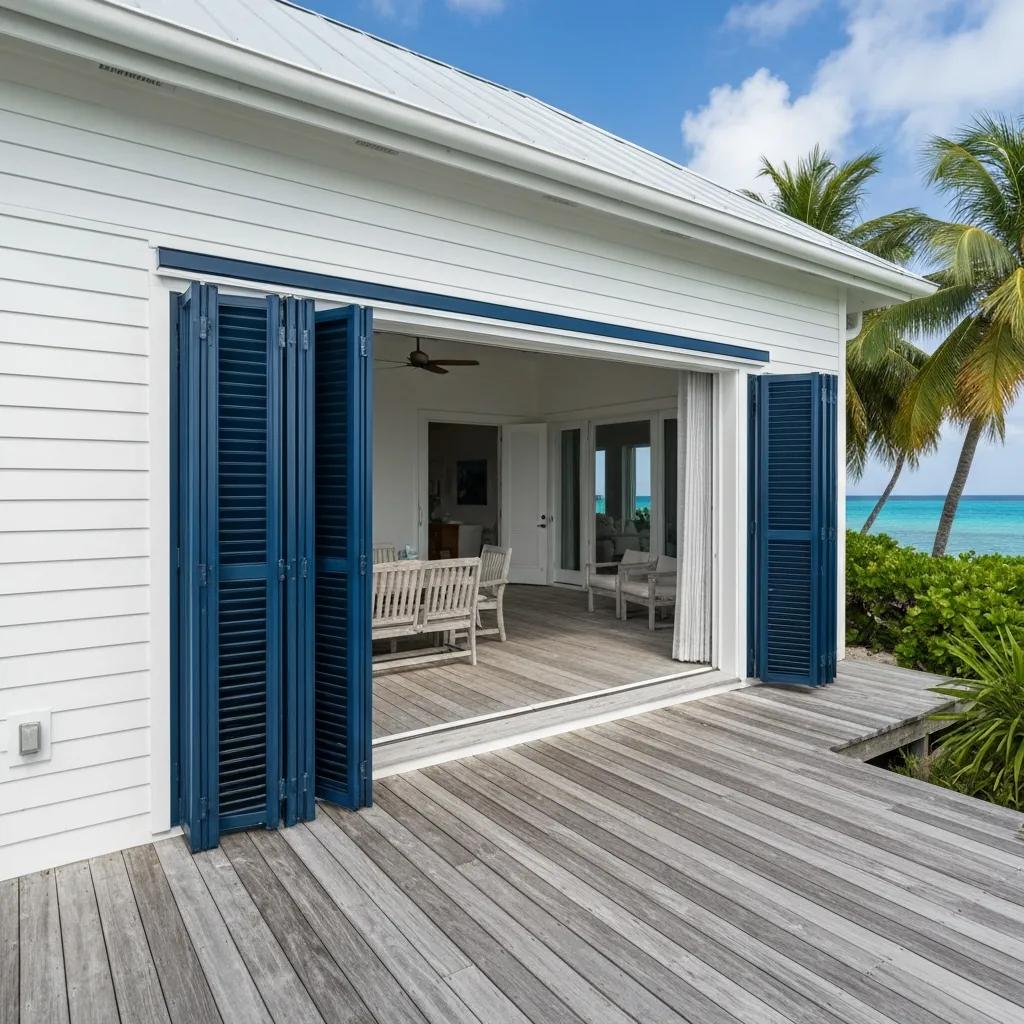
Accordion shutters are fixed, hinged panels that fold beside the opening when not in use and then slide across guides to close, giving continuous protection without separate storage. They run on mounted tracks with locking hardware and are commonly made from corrosion‑resistant aluminum alloys suitable for salt‑air conditions. The mechanism offers quick manual deployment and a clean look when closed. Accordion systems deliver strong protection for doors and windows, keep storage needs low and — when specified as rated — meet local impact requirements. For homeowners who want an always‑ready system that balances security and convenience, accordions are a top choice.
How Do Rolldown Shutters Work: Manual vs. Motorized Options?

Rolldown shutters coil into a headbox above the opening and lower into guides to close. Manual versions use a crank or strap; motorized models employ an electric motor and remote control. Rolldown systems provide flush coverage and often add insulation and sound reduction. Motorized units are convenient for large openings or frequent use, but they require power and occasional service. Manual shutters cost less and are simpler to maintain. When choosing, weigh convenience against upfront cost and ongoing maintenance — especially for larger coastal homes where frequent deployment is likely.
What Makes Bahama Shutters Ideal for Style and Shade?
Bahama shutters hinge at the top and tilt outward to create shade while offering moderate storm protection. Permanently mounted above windows, their louvered design blends island style, passive cooling and practical coverage. When closed for storms they deflect debris; slightly angled they let breeze and light in on milder days. Bahama shutters are a good match when you want sun control, a coastal aesthetic and reasonable protection without the heaviness of a steel panel. Finish and mounting options make it easy to tie them to local architectural character.
Why Choose Colonial Shutters for Traditional Durability?
Colonial shutters are side‑hinged, paired panels that suit traditional architecture and — when engineered and certified — can meet impact ratings for storm protection. Many colonial styles are decorative only, so if you want true protection verify engineered connections, correct fasteners and certification. Properly rated colonial shutters deliver the look homeowners want while resisting specified design pressures; choosing corrosion‑resistant hardware is especially important for long life near the coast. They’re a good option when preserving historic curb appeal matters.
How Do Storm Panels Compare: Aluminum, Clear, and Fabric?
Storm panels attach to pre‑drilled anchors or tracks and come in aluminum, clear polycarbonate or high‑strength fabric, each with trade‑offs for cost and storage. Aluminum panels are affordable and durable but need storage space when not in use. Clear polycarbonate panels (flat Lexan) keep daylight and views while offering strong impact resistance. Fabric systems are lightweight, compact and practical for large openings and temporary protection. The right choice depends on how quickly you can deploy panels, whether you have on‑site storage and how often you’ll use them. This summary helps you choose between temporary, semi‑permanent and permanent solutions.
Shutter types differ in material, deployment, protection level and visual impact; the table below gives a quick EAV‚Äëstyle comparison so you can match homeowner priorities to recommended options.
This comparison shows how types align with protection and visual priorities, and prepares you to select materials and meet local code requirements.
How Do You Choose the Best Hurricane Shutters for Your Home?
Start by assessing the design pressure your openings need, the property’s exposure and your priorities — budget, appearance and how fast you need to deploy protection. A Design Pressure Analysis ties window size and wind exposure to a required shutter rating; a professional assessment helps ensure compliance with the International Building Code and local coastal amendments. Material choice affects durability in salt air, and installation quality influences warranties and performance. Use the checklist below to organize your decisions and get the most from a consultation with a certified installer.
- Determine exposure and required design pressure with a professional analysis to set protection targets.
- Compare upfront cost vs long‚Äëterm value by factoring material life, maintenance and possible insurance discounts.
- Match shutter style to your home and check HOA or local permit requirements before ordering.
- Choose manual or motorized operation based on opening size, deployment frequency and willingness to service electrical systems.
This checklist prepares homeowners to evaluate materials more closely, starting with corrosion resistance and light transmission.
Before the materials table below, remember material trade‚Äëoffs directly affect longevity and coastal suitability. The table highlights these attributes to guide your selection.
This materials overview explains why specific alloys and fasteners matter on coastal properties and why a Design Pressure Analysis helps pair material and shutter type to performance goals.
What Factors Should You Consider When Selecting Shutters?
Key factors include the design pressure rating for each opening, the material’s corrosion resistance in coastal environments, the aesthetic fit with your home, storage needs for removable systems and the total lifecycle cost (maintenance and warranty included). Specifying the correct design pressure prevents undersizing and helps secure insurance credits when installations are documented and certified. HOA and permit rules can affect appearance and mounting, so confirm local requirements early to avoid rework. These considerations point to the material details and long‑term performance you should expect near salt water.
How Do Different Materials Compare: Aluminum, Steel, Polycarbonate, Fabric?
Material choice controls longevity, weight, light passage and corrosion behavior. 6063‚ÄëT6 aluminum with 18‚Äë8 stainless fasteners offers strong coastal corrosion resistance for NC/SC installations. Polycarbonate panels give clear sightlines and excellent impact resistance for patios or storefronts. Steel is strong but needs proper coatings and upkeep to resist rust in salt air, so aluminum alloys are often the long‚Äëterm choice. Fabric screening systems are lightweight and compact but deliver a different protection profile than rigid panels. Knowing these trade‚Äëoffs clarifies maintenance schedules and warranty expectations.
Performance of Steel and Aluminum Hurricane Shutters Under Impact
The study compared steel panels of three thicknesses and aluminum panels of two thicknesses, with results referenced against earlier polycarbonate panel tests. The matrix helped evaluate impact performance across materials.
Performance of hurricane shutters under impact by roof tiles, KR Gurley, 2010
Which Shutters Match Different Home Styles: Coastal, Traditional, Modern?
Pick shutters that protect without compromising curb appeal: coastal homes often suit Bahama shutters, hurricane screens or accordions that favor ventilation and island style; traditional homes pair well with Colonial shutters or painted storm panels; modern houses benefit from sleek rolldown systems or clear polycarbonate that preserve clean lines. Choosing a style that complements your façade reduces HOA friction and enhances resale. Paint and finish options let aluminum systems blend with trim and siding while keeping rated performance.
Should You Opt for DIY or Professional Installation?
Removable panels can work for experienced DIYers who follow manufacturer templates, but permanent systems, motorization and any work that must meet code should be installed by certified professionals. Pro installers ensure correct fasteners, anchors and seals, protect warranties and comply with IBC and local coastal ordinances. Certified technicians also perform a Design Pressure Analysis to size and specify products accurately. DIY may save labor on small, temporary panels, but for coastal properties the liability and risk of non‚Äëcompliance usually make professional installation the smarter choice. When unsure, ask a certified installer to validate designs and permitting needs.
What Are the Costs and Long-Term Value of Hurricane Shutters?
Shutter costs depend on material, opening size, installation complexity, motorization, permits and any structural reinforcement — all of which drive both upfront price and long‑term ROI through avoided damage and potential insurance discounts. Understanding these cost drivers helps homeowners budget and evaluate payback from reduced premiums, fewer repairs and better resale appeal. Warranties and maintenance schedules shape lifecycle cost: specifying corrosion‑resistant alloys like 6063‑T6 and 18‑8 stainless fasteners, and confirming warranty terms (for example a 7‑year coverage), improves long‑term value in coastal settings. The table below breaks down cost factors and their impacts.
This breakdown clarifies how each decision affects both initial spending and longer‚Äëterm financial outcomes, encouraging you to consider lifecycle costs rather than only the sticker price.
How Is Hurricane Shutter Installation Cost Calculated?
Installation pricing combines material and hardware costs, certified labor rates, any structural reinforcement, motorization, permits and testing or design services such as a Design Pressure Analysis. While rules of thumb exist, the main variables are size and number of openings, material choice and installation complexity; motorization and finish options add incremental cost. Request a professional estimate that includes a Design Pressure Analysis for accurate, site‚Äëspecific pricing and to avoid surprises during permitting. After you get a quote, compare projected maintenance and warranty coverage to evaluate net value.
What Are the Insurance and Property Value Benefits of Shutters?
Properly installed, impact‑rated shutters let homeowners document risk mitigation that insurers often reward with premium discounts — provided installations meet local code and certification requirements. Keep product data sheets and installation documentation to qualify for credits. Beyond lower premiums, reliable storm protection reduces the chance of claims and reassures buyers at resale by demonstrating a documented, code‑compliant system. Savings from avoided damage, faster recovery and lower deductible exposure all contribute to long‑term ROI. Ask for proof of rating and installation details to share with your insurer.
How Does Warranty and Maintenance Affect Your Investment?
Warranties spell out manufacturer obligations and coverage periods — knowing the scope (for example, a 7‑year materials or workmanship warranty) affects perceived risk and resale value. Regular maintenance — cleaning guides, lubricating moving parts, checking fasteners and seals — extends service life and preserves warranty eligibility where required. A recommended service schedule and access to certified maintenance plans reduce downtime and prevent small issues from becoming failures during storms. Investing in corrosion‑resistant materials and scheduled servicing often delivers the best balance of performance and total cost of ownership.
How Is Hurricane Shutter Installation and Maintenance Performed?
Installation starts with a site survey and measurements, then moves to selecting rated products, preparing mounting surfaces and anchoring systems per manufacturer instructions and local code. Post‑installation testing confirms operation and rating compliance. Certified technicians follow type‑specific procedures — measuring for headboxes on rolldown systems, aligning tracks for accordion shutters and verifying anchor spacing for panels — to ensure the assembly resists required design pressures. Routine maintenance focuses on hardware inspection, lubrication and fastener integrity to preserve performance through coastal weather cycles. The high‑level steps below outline why professional installers are typically recommended.
- Certified technicians use the correct fasteners, anchors and sealing methods required by ratings and local ordinances.
- Professionals document compliance — measurements, test reports and product data — needed for permits and insurance.
- Installers provide warranty‚Äëbacked workmanship that protects homeowners against installation defects.
- Trained crews identify structural issues or reinforcement needs before work begins to avoid delays.
These points show why installation quality matters as much as product choice and lead into the step‚Äëby‚Äëstep processes for each shutter type.
Why Is Professional Installation Important for Code Compliance?
Professional installation ensures anchors, fasteners and mounting methods meet manufacturer requirements and the International Building Code as applied locally; incorrect installation can void warranties and fail inspections. Certified installers know local coastal ordinance nuances in North and South Carolina and prepare permit documentation and product certification that align with inspectors’ expectations. Without professional verification, homeowners risk non‑compliance that can affect insurance claims and post‑storm assessments. Hiring certified personnel reduces liability and provides the documentation insurers and authorities commonly require.
What Are the Step-by-Step Installation Processes for Each Shutter Type?
Steps vary by type but share common phases: site survey and measurement, product selection with rated specs, preparation of openings and frames, secure anchoring or headbox installation, operational testing and final documentation with product data for compliance. For Accordion: measure guides, anchor tracks, mount panels, check interlocks and locks, then test deployment. For Rolldown: install headbox, mount guides, fit slats or insulated assemblies, add motor if specified, and run operational cycles. For Panels/Screens: install anchors or tracks, fit panel templates, and practice removal and storage. Each installation ends with an inspection and a homeowner briefing on maintenance.
Testing Corrugated Metal Storm Shutter Panels for Impact Resistance
A testing facility and results are described for corrugated metal panels used as storm shutters. Two impact tests were performed to help evaluate panel behavior under simulated impacts.
Behavior of corrugated metal panels for use as storm shutters, 2009
How Do You Maintain Hurricane Shutters for Longevity?
A seasonal maintenance routine preserves service life: remove salt deposits and debris, lubricate moving parts with manufacturer‚Äërecommended products, inspect 18‚Äë8 stainless fasteners and anchors for looseness, and test deployment mechanisms before storm season. After major storms, inspect for dents, loose fasteners or damaged seals and schedule repairs promptly to restore rating integrity. Keep a maintenance log of service dates and parts replaced to support warranty claims and insurance documentation. Regular preventive care reduces the risk of shutters being inoperable when a storm approaches.
What Local Building Codes and Safety Standards Affect Hurricane Shutter Choices?
Local codes in North and South Carolina adapt the International Building Code for coastal hazards and typically require rated protection based on calculated design pressures for exposed properties. Those requirements guide product selection, fastening systems and documentation. Understanding impact ratings, design pressure and required certifications helps you choose shutters that pass inspections and qualify for insurance credits. Because county and municipal ordinances vary, a professional Design Pressure Analysis is recommended to confirm installations meet both IBC criteria and local coastal amendments. The sections below summarize what to check and why certified testing matters.
What Are North and South Carolina Building Codes for Hurricane Protection?
North and South Carolina apply IBC‑based rules with local amendments for coastal risk zones. These rules require protective systems to meet calculated design pressures for openings, which depend on exposure, elevation and building geometry. Homeowners should verify that chosen products include impact and wind‑load test data and that installers provide documentation tying the product to the required design pressure. Permit and HOA processes may ask for product data sheets, installation details and certified drawings, so coordinate early with a certified installer and your local permitting office to avoid delays. A professional Design Pressure Analysis links your building’s exposure to the correct rated system.
How Do Impact Ratings and Certifications Ensure Shutter Reliability?
Impact ratings and wind‚Äëload certifications show a system has been tested to resist specified missile impacts and wind pressures; confirming these ratings on product data sheets ensures the system will perform as advertised during inspections. Look for manufacturer test reports and third‚Äëparty certification statements that match the design pressure required for each opening; installers should present matching doc
