

Types of Storm Shutters: Which Hurricane Shutter Is Right for You?
Living on the coast means preparing for predictable seasonal threats: high winds, flying debris, and water-driven damage that can break glass and compromise your building envelope. This guide walks through the main hurricane-shutter families, explains how each type protects openings, and lays out the trade-offs in cost, appearance, deployment speed, and long‑term upkeep for North and South Carolina properties. You’ll get clear definitions, real‑world use cases, side‑by‑side protection and cost data, and simple decision rules that pair common homeowner priorities—ease of use, budget, style, and maximum security—with appropriate shutter solutions. After we cover the major shutter types, the guide compares protection levels and maintenance needs, summarizes local code and insurance considerations, and finishes with scenario-based recommendations to help you choose. If you want a next step now: American Hurricane Shutters serves coastal North and South Carolina with engineered hurricane protection, offers free estimates and an online cost calculator.
What Are the Main Types of Hurricane Shutters Available?
Hurricane shutters protect openings in different ways and suit different needs for permanence, sight‚Äëlines, and deployment. Accordion shutters are permanent folding panels that close along side tracks; rolldown shutters roll into a headbox and unspool down tracks; colonial and Bahama shutters are hinged architectural panels that also serve as design elements; hurricane screens use high‚Äëstrength fabric or mesh tensioned over large spans; storm panels (aluminum or clear) are removable sheets bolted to brackets; and flat polycarbonate (Lexan) panels are transparent, impact‚Äëresistant sheets used where visibility matters. Knowing how each type works helps you balance protection, daylighting, and storage when picking the right system for your windows, doors, and architectural style.
This list summarizes the primary shutter families and their core advantages:
- Accordion Shutters: Permanent protection, fast manual deployment, ideal on frequently used openings.
- Rolldown Shutters: Strong protection with motorized convenience and high wind ratings when closed.
- Colonial Shutters: Decorative, permanent panels that give moderate protection with classic curb appeal.
- Bahama Shutters: Top‚Äëhinged, awning‚Äëstyle panels that provide shade and storm coverage when closed.
- Hurricane Screens: Fabric‚Äëbased solutions suited to very large lanais or pool enclosures where view matters.
- Storm Panels (Aluminum/Clear): Cost‚Äëeffective, removable protection for seasonal or emergency use.
- Flat Polycarbonate Panels: Transparent, durable panels that preserve sight‚Äëlines during storms.
The table below helps match property types and priorities to shutter options by summarizing permanence, storage needs, and visibility characteristics before you read further.
This quick reference clarifies how permanence and visibility differ across shutter types, helping you match options to your home’s architecture and your operational preferences.
What Are Accordion Shutters and When Are They Ideal?
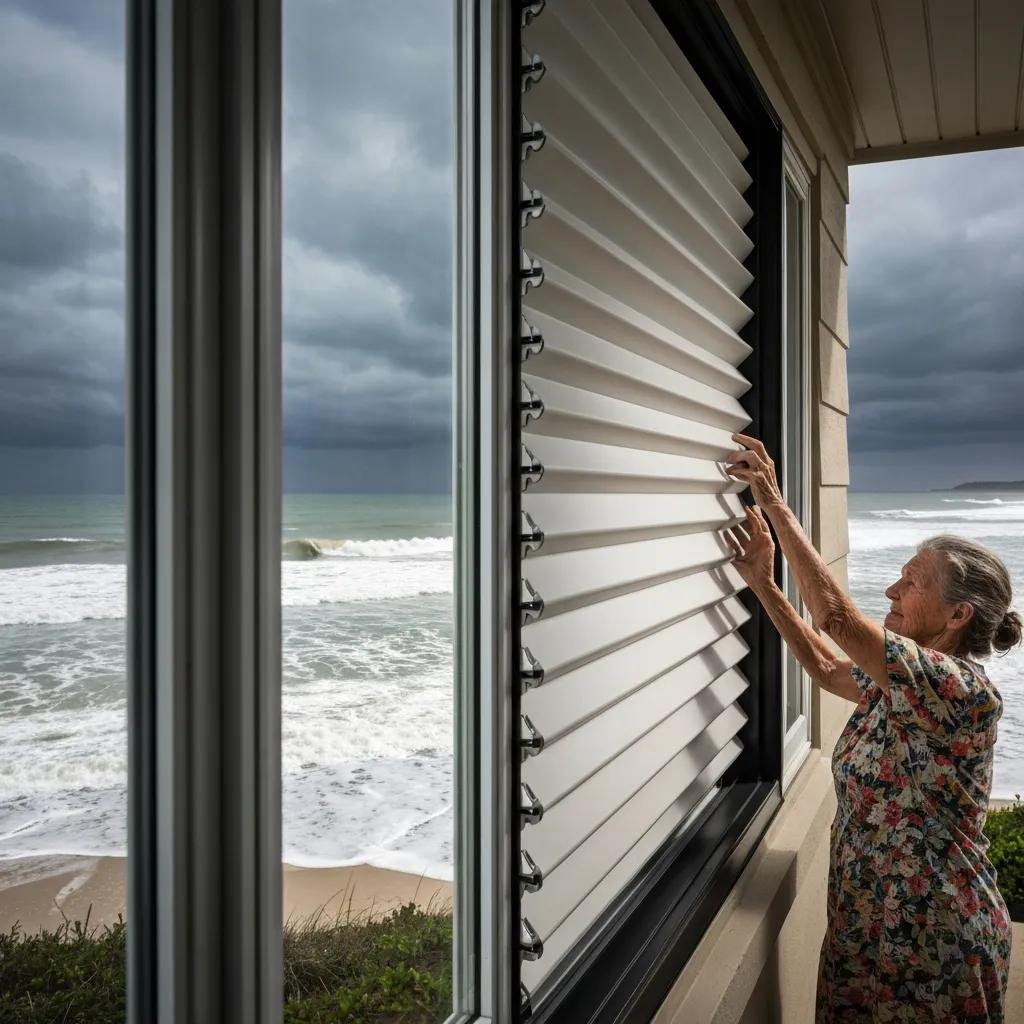
Accordion shutters are interlocking aluminum panels permanently mounted beside openings that fold across windows and doors on tracks. They create a rigid barrier that resists wind pressure and flying debris by transferring loads into the framing through the track and hinge system. They’re an excellent choice when you want fast, manual deployment without dealing with removable panels—popular for sliding doors and large picture windows. Trade‑offs include visible hardware and the need for routine track lubrication; quality installations specify corrosion‑resistant fasteners and hardware for coastal conditions. Accordion systems suit homeowners who value quick protection and low pre‑storm preparation.
How Do Rolldown Shutters Compare: Manual vs. Motorized Options?
Rolldown shutters stack slats into a headbox and deploy down vertical tracks to form a continuous barrier. Properly rated units offer strong wind resistance and impact protection. Manual rolldown systems use a crank or strap and are cost‑efficient; motorized versions add remote or app control and often include battery backup for power outages. Motorization raises upfront cost and adds electrical and motor maintenance, but it makes single‑person deployment fast—useful for large openings. When comparing models, check slat material, lockable bottom bars, and track robustness; premium installers use stainless fasteners and corrosion‑resistant components for longevity in salt air.
How Do Colonial, Bahama, and Hurricane Screens Differ in Style and Protection?
Colonial, Bahama, and hurricane screens sit on a spectrum from ornamental to highly practical, each balancing aesthetics with protection and ventilation in different ways. Colonial shutters are fixed in pairs and swing closed for a traditional look with reasonable impact resistance when reinforced. Bahama shutters hinge at the top and act as both sun shades and storm barriers, useful where year‑round shading and occasional storm protection are desired. Hurricane screens use engineered fabric or mesh mounted to frames or tracks to deliver impact resistance with excellent visibility and airflow—ideal for lanais, patios, and very large openings that are impractical for metal panels.
Here are the key stylistic and functional differences to guide aesthetic choices:
- Colonial Shutters: Classic curb appeal with permanent protection that complements traditional architecture.
- Bahama Shutters: Passive cooling and sun control that double as storm protection when latched.
- Hurricane Screens: Maintain sight‚Äëlines on large openings while meeting certified impact standards.
These options let you prioritize architectural harmony or unobstructed views; the next sections dig into material and protection trade‚Äëoffs that affect insurance credits and code compliance.
What Are the Aesthetic and Protective Benefits of Colonial Shutters?
Colonial shutters blend curb appeal with practical protection. Mounted in hinged pairs, they reinforce windows and doors when closed and preserve architectural continuity on period homes. Properly constructed from reinforced aluminum and anchored into framing, they can meet regional wind and impact standards. The trade‑off is reduced daylight when closed and more visible hardware compared with invisible options like impact glass. Maintenance is straightforward—hinge lubrication, repainting or powder‑coat touch‑ups, and periodic hardware checks—making them easy to include in a seasonal preparedness routine.
How Do Bahama Shutters Provide Shade and Storm Protection?
Bahama shutters are top‚Äëhinged panels that serve two roles: daytime shading and secondary storm protection when latched down. Their awning geometry blocks high sun angles to reduce heat gain while allowing ventilation when partly open; in storms they secure downward to deflect debris and wind‚Äëdriven rain. Installed above the window on fixed hinges, they stay unobtrusive when open and add signature coastal style. They offer good passive cooling but generally provide less full‚Äëwindow coverage than continuous rigid systems and should be fitted with corrosion‚Äëresistant hardware in salt‚Äëair environments.
What Are Hurricane Screens and Their Advantages for Large Openings?
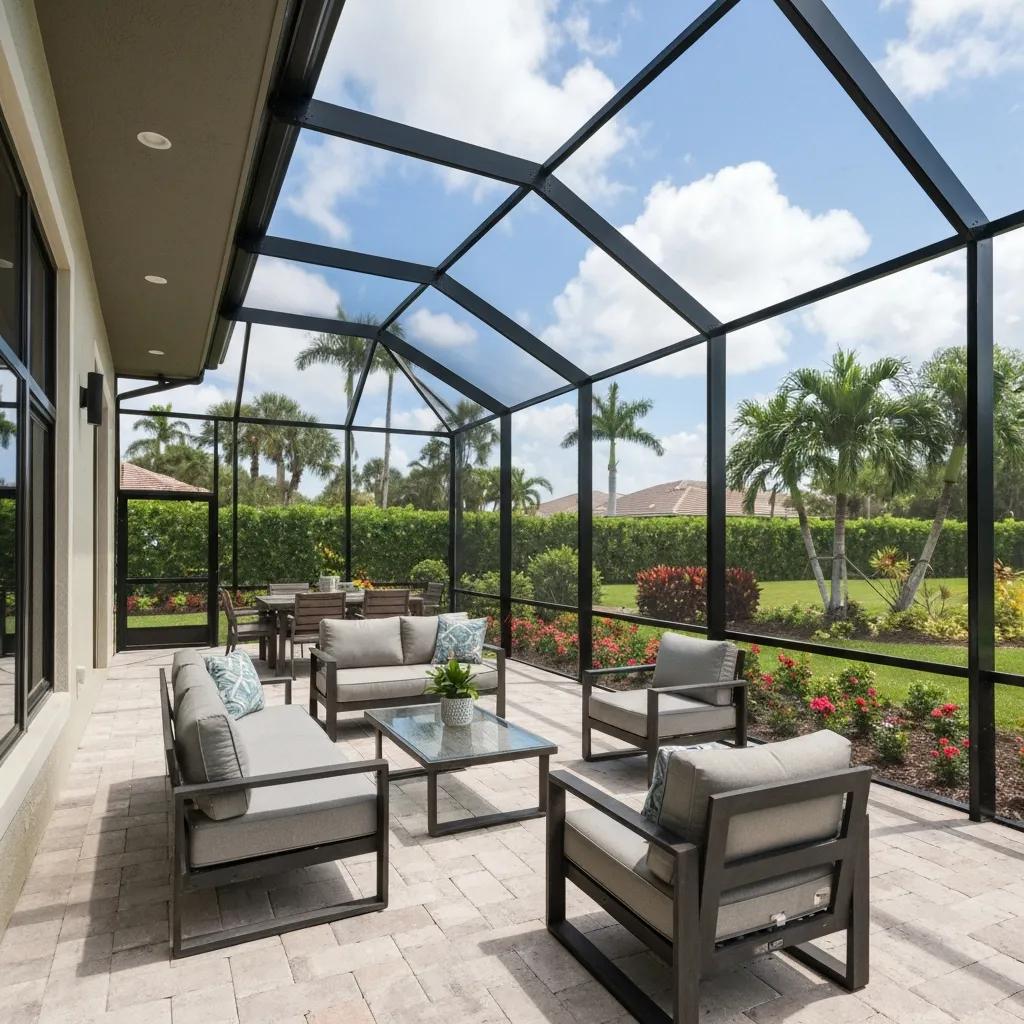
Hurricane screens rely on high‑strength textile membranes—woven or laminated composites—tensioned across frames to stop debris while keeping light and airflow for large openings such as lanais and pool enclosures. Their main advantage is scalability: tensioned fabric covers very large spans more affordably and with less storage burden than hard panels, and visibility stays high even when deployed. Performance depends on attachment systems, edge reinforcements, and correct installation to distribute design pressure; quality screens carry certified impact ratings for many coastal jurisdictions. Routine care includes inspecting the fabric, checking frame tension, and replacing worn hardware to keep performance reliable over time.
What Are Storm Panels and Flat Polycarbonate Shutters: Affordable and Durable Options?
Storm panels and flat polycarbonate shutters are budget‑friendly choices for seasonal protection or for homeowners who want to keep sight‑lines while adding impact resistance. Aluminum storm panels are lightweight, durable, and economical—they bolt to pre‑installed brackets and work well as temporary protection. Clear storm panels made from polycarbonate or acrylic preserve light and views but generally need thicker material or engineered laminates to match aluminum’s stiffness. Flat polycarbonate (Lexan) blends clarity with high impact resistance and comes in sizes suitable for doors and large windows; it transmits light while stopping debris and can be stored compactly when not in use.
Note: storm panels and polycarbonate solutions are commonly chosen for lower cost, seasonal use, or when preserving daylight is a priority.
This table highlights the trade‚Äëoffs between installation effort, storage needs, and visibility so you can match options to your priorities.
How Do Clear and Aluminum Storm Panels Offer Protection and Ease of Use?
Aluminum storm panels are a rugged, low‑cost barrier that bolt into pre‑set brackets around openings; they’re prized for simplicity, durability, and affordable seasonal storage. Clear storm panels use polycarbonate sheets mounted the same way but keep sight‑lines and daylight; choose UV‑stabilized grades to limit yellowing over time. Typical installation involves pre‑mounting clips or rails, aligning panels, and securing with carriage bolts or clamps; careful labeling and stacking during storage prevents damage. For many homeowners, aluminum panels give the best budget protection, while clear panels suit those who want visibility during storms.
Hurricane Mitigation: Glazing System Requirements for Wind and Debris Protection
Designing glazing systems for hurricane mitigation requires following specific standards for wind and windborne debris protection. Building codes and testing protocols have tightened over time, and certified shutters, screens, and impact glazing are now the accepted paths to compliance.
Hurricane Mitigation Design of Glazing Systems: Requirements for Wind and Windborne Debris Protection, 2013
Research and testing facilities have developed standardized test methods and results that inform analytical approaches to shutter performance.
What Makes Flat Polycarbonate Panels a Transparent and Strong Choice?
Flat polycarbonate panels—often sold as Lexan—combine high impact toughness with optical clarity, letting you protect openings without losing the view. The material absorbs and spreads impact energy, and UV‑stabilized grades extend outdoor life; panel thickness and mounting determine the design‑pressure rating and wind performance. Polycarbonate works well for doors and prominent windows where visibility is essential; depending on hardware, panels can be left in place seasonally or deployed quickly. Maintenance is minimal—cleaning and checking for scratches or UV wear—and replacement timing depends more on exposure and abrasion than on material failure.
Testing Corrugated Metal Panels for Storm Shutter Performance
Testing programs have evaluated corrugated metal shutter panels under simulated windborne debris impacts. Those results help validate analytical models used to predict shutter performance under hurricane conditions.
Behavior of corrugated metal panels for use as storm shutters, 2009
How Do Hurricane Shutter Types Compare: Cost, Protection, and Maintenance?
Buyers typically weigh cost per square foot, wind rating/design pressure, deployment speed, and ongoing maintenance—factors that drive lifecycle value and insurance eligibility. Permanent systems like motorized rolldown and heavy‑duty accordion shutters cost more up front but reduce storage and deployment labor and deliver continuous protection. Temporary options such as storm panels and fabric screens cost less initially but add recurring installation and storage work each storm. Maintenance varies by system: motorized units need electrical checks, fabrics require tension and UV inspections, and metal systems call for corrosion‑resistant hardware checks and lubrication. Evaluating total cost of ownership should include materials, labor, replacement cycles, and potential insurance savings from code‑compliant installations.
The table below presents a concise comparison across key buyer criteria for easier side‚Äëby‚Äëside evaluation.
Keep these summary points in mind when refining your selection:
- Higher upfront cost systems usually reduce long‚Äëterm labor and storage needs.
- Motorization increases convenience but adds maintenance tied to power and controls.
- Temporary panels work for infrequent storms but bring recurring installation and storage logistics.
What Is the Typical Cost Range for Each Hurricane Shutter Type?
Installed cost depends on material, labor complexity, motorization, and opening geometry. Typical ranges are accordion $15–$30/sq ft, rolldown $25–$60/sq ft, colonial and Bahama $18–$45/sq ft (depending on materials), hurricane screens $10–$35/sq ft, aluminum storm panels $5–$15/sq ft, and flat polycarbonate $10–$30/sq ft. Price drivers include opening size and shape, motorization and battery backup, premium finishes, and coastal hardware like 18‑8 stainless steel fasteners. For an accurate project estimate, measure openings and decide on automation and transparency options—many providers offer online calculators and free on‑site estimates to convert these ranges into a final price.
How Do Protection Levels and Maintenance Requirements Vary Among Shutters?
Protection ranges from moderate (decorative hinged shutters) to high (engineered rolldown systems tested to specific design pressures). Products with Design Pressure Analysis and recognized test certifications generally earn stronger wind ratings and better insurance recognition. Maintenance differs by system: motorized units need periodic electrical and motor checks, fabric screens need tension and UV inspections, and metal shutters require corrosion‚Äëresistant fastener checks and lubrication. We recommend an annual readiness inspection plus a pre‚Äëseason check to tighten fasteners, lubricate moving parts, and test motor backups and locks.
Performance of Hurricane Shutters Under Impact Testing
Impact testing of steel and aluminum shutter panels‚Äîusing projectiles such as roof tiles and 2×4 lumber‚Äîhelps evaluate systems‚Äô resistance to windborne debris. Test results form the basis for performance claims and design validation.
Performance of hurricane shutters under impact by roof tiles, KR Gurley, 2010
How Do Local Building Codes and Insurance Discounts Affect Your Hurricane Shutter Choice?
Local codes and insurance incentives can change which systems are most cost‚Äëeffective. Code compliance usually hinges on certified product ratings and correct installation. Many coastal jurisdictions accept shutters that meet Florida Building Code or Miami‚ÄëDade approvals as meeting protected‚Äëopening standards, and products with documented Design Pressure Analysis tend to match those requirements. For homeowners in North and South Carolina, choosing shutters that meet or exceed Florida standards is a dependable way to simplify permitting and insurance documentation. Working with local experts familiar with coastal code nuances also helps speed permitting and improve chances of qualifying for insurer incentives.
Below is a brief jurisdictional summary of common code and financial incentive considerations in the Carolinas and what to document to claim benefits.
Keep manufacturer test reports, Design Pressure Analysis documentation, and installer certificates when applying for insurance discounts or tax credits—these documents speed underwriting and claims reviews.
What Are North and South Carolina Hurricane Shutter Regulations?
Regulations vary by county and municipality, but coastal areas commonly require new or replacement openings to use protected‚Äëopening solutions or certified systems. Many local authorities reference the Florida Building Code, so shutters or panels with recognized impact and design‚Äëpressure test results simplify permitting. When choosing a system, pick products with documented test reports and ask your installer for signed installation certification. For complex projects, consult the local building official before purchase to avoid permitting surpr
