

Keep Accordion Shutters Rust-Free: Practical Corrosion Protection for Coastal Hurricane Season
Accordion shutters use interlocking slats that fold and lock to shield windows and doors from wind and flying debris. On the coast—where salt air and humidity are constant—metal parts corrode faster. This guide, written for homeowners and property managers across coastal North Carolina and South Carolina, covers practical steps to prevent rust: cleaning, lubrication, inspections, material choices, and targeted repairs. You’ll learn how salt-driven corrosion works, how often to clean and lubricate, which coatings and hardware resist corrosion best, and when a DIY fix is appropriate versus when to call a pro. Inside are step-by-step routines, inspection checklists, comparison tables for materials and lubricants, and clear triggers for professional service—so your shutters stay reliable and storm-ready while you limit repair costs.
Why rust matters so much for accordion shutters on the coast
Salt-laden air and high humidity speed up the chemical reactions that eat away metal parts, undermining both how shutters work and how they hold up under wind load. Corrosion often starts as tiny pits or small coating failures and can quickly become flaking metal, weakened fasteners, or seized moving parts. Those problems reduce rated performance and can leave shutters stuck or unable to lock when a storm hits. Regular care and choosing materials meant for coastal exposure are the best defenses to slow corrosion and keep your shutters dependable.
The sections below explain how corrosion develops and the specific ways rust shortens shutter life and affects safety.
How salt air and humidity create rust on accordion shutters
Salt and moisture form a thin electrolyte film on metal surfaces that lowers electrical resistance and encourages oxidation wherever bare metal exists. Salt crystals hold moisture longer, keeping parts damp and allowing continuous electrochemical attack—especially on steel components. Tiny scratches or coating failures concentrate corrosion into pits that grow with repeated wet-dry cycles. Mixing incompatible metals can also set up galvanic corrosion, which speeds localized damage in salty conditions. That’s why intact surface protection, matched materials, and quick touch-ups are essential to slow corrosion.
How rust affects shutter durability and performance
Rust weakens fasteners, eats hinge pins, wears down tracks, and makes slats bind or bend—all of which lowers a shutter’s wind rating and shortens its service life. Functionally, corroded tracks and joints increase friction and noise, causing sticking during deployment or retraction and preventing locks from engaging fully during storms. Left unchecked, surface staining can progress to structural pitting or broken hardware, making repairs more expensive or forcing full-panel replacement. Spotting early warning signs—rough movement, loose screws, or visible flaking—lets you act before safety or performance is compromised.
How often to clean accordion shutters to prevent rust
Cleaning frequency depends on how close you are to the ocean: beachfront homes need more attention, while properties further inland can space maintenance out. As a practical baseline, plan on at least twice a year and increase that cadence for properties within a mile of the shore or after storms. Regular cleaning removes salt, airborne grime, and organic debris that trap moisture and abrade protective finishes; rinsing with freshwater and drying afterward is the first line of defense.
Match your cleaning schedule to exposure and use to keep corrosion at bay.
This table shows how ocean proximity changes how often you should clean and the best tools and cleaners to use. Increase frequency after major storms or when you see salt buildup.
Best cleaning solutions and tools for coastal accordion shutters

Safe cleaning removes salt and grime without damaging powder coats or seals. Use a mild, pH-neutral soap and plenty of freshwater—this dissolves salt while being gentle on finishes. Soft brushes, non-abrasive sponges, and a low-pressure hose are the right tools; avoid close-range power-washing, which can erode coatings and push salt into seams. After washing, dry moving parts and exposed hardware with a microfiber cloth, then only lubricate once everything is fully dry. These steps clear corrosive deposits and protect the protective finish on panel metals.
- Keep a short toolkit on hand with gentle, non-abrasive cleaners and soft applicators.
- Choose products and brushes that remove salt while protecting powder-coated surfaces.
- Use a mild, pH-neutral detergent with an ample freshwater rinse to dissolve and wash away salt.
- Clean with a soft-bristled brush or non-abrasive sponge to avoid scratching powder-coated surfaces.
- Rinse with a low-pressure hose and dry exposed hardware and tracks with a microfiber cloth before lubricating.
- Avoid bleach, muriatic acid, and scouring pads that strip protective coatings and expose bare metal.
After cleaning, inspect panels and hardware for chips or scratches that should be touched up to stop corrosion from restarting.
Why avoid harsh chemicals and abrasives on shutters
Harsh chemicals and abrasive tools break down powder coating and thin protective films, creating micro-scratches and exposing bare metal where corrosion starts. Strong acids or alkalis can degrade finish layers and reduce adhesion, letting water and salt reach joints and fasteners. Abrasive pads and wire brushes remove surface protection and leave rough spots that rust clings to, increasing maintenance needs and shortening shutter life.
- Be gentle: the right cleaners protect finishes and prevent future corrosion.
- Skip the harmful agents and rough methods listed below.
- Avoid bleach-based cleaners, concentrated acids, caustic degreasers, and high-pressure streams that strip finishes.
- Do not use steel wool, wire brushes, or aggressive sanding that create micro-abrasions on panels.
- Skip solvent-based strippers or paint removers that dissolve powder coat or sealants.
- Refrain from using household cleaners with unknown pH on manufacturer-finished surfaces.
Keeping cleaning non-abrasive preserves the continuous barrier that blocks moisture and salt from starting corrosion.
Best lubrication routine to keep accordion shutters moving and rust-free
Lubrication reduces friction, prevents binding, and helps keep moisture out of moving parts. For coastal settings, silicone-based lubricants are preferred because they resist wash-off and don’t attract dust like petroleum oils. Lubricate only after cleaning and drying, and follow a schedule—typically semi-annually for moderate exposure and quarterly in heavy salt areas. Always choose products labeled safe for powder-coated finishes and compatible with seals. The table below maps components to recommended lubricants and how often to apply them. After that, follow the step-by-step guidance to ensure even coverage without over-application.
Use marine-rated products that state compatibility with exterior finishes to keep parts moving smoothly and reduce corrosion risk.
Recommended lubricants for tracks, hinges, and locks
Silicone sprays are a good default—they repel water, leave little residue, and are safe on powder-coated finishes. Dry PTFE sprays give very low friction where dust is a problem. Steer clear of petroleum-based oils and heavy greases that trap salt and grit and can damage rubber seals. For locks and keyways, use a non-residue silicone or a graphite-friendly lock spray to avoid grit buildup. Pick lubricants that explicitly mention compatibility with powder-coated or anodized aluminum to protect finishes and avoid chemical conflicts.
Step-by-step lubrication process
Always clean and dry components before lubricating to remove salt and grit. Apply lubricants sparingly to avoid buildup that attracts debris. For tracks, spray into the path while slowly operating the shutter so the lubricant spreads evenly; for hinges and pins, a few targeted sprays and several cycles will work the product into contact surfaces. Wipe away any visible excess to prevent dirt from sticking, then run the shutter fully to confirm smooth operation. Wear gloves and eye protection and follow product instructions for re-application timing.
- A clear, numbered routine makes lubrication safe and effective for homeowners and property managers.
- Follow the steps below to protect moving parts without creating maintenance problems.
- Clean tracks, hinges, and locks with mild soap and freshwater; dry thoroughly with a microfiber cloth.
- Apply recommended silicone or PTFE lubricant sparingly to contact points while moving the shutter to distribute.
- Cycle the shutter fully several times to work lubricant into mating surfaces and clear any trapped debris.
- Wipe excess lubricant from surfaces and inspect for residual salt or coating damage; reapply as needed per frequency table.
Doing this keeps lubricants working for their intended life without attracting abrasive contaminants.
How coatings and materials add long-term protection against rust
Choosing the right materials and coatings is the backbone of corrosion resistance. Powder-coated aluminum panels block direct oxidation, and stainless-steel fasteners reduce pitting and galvanic issues in salty air. Powder coating creates a continuous, impact-resistant film that shields substrate metals, while marine-grade hardware helps prevent corrosion at joints and penetrations. The table below compares common options to help homeowners prioritize upgrades. After the comparison, the guide covers when to use rust inhibitors and sealants for targeted protection.
This comparison shows why combining powder-coated panels with stainless fasteners yields the best longevity in coastal settings and reduces routine maintenance compared with standard steel hardware.
With that context, homeowners can decide where to invest—whether in hardware upgrades, targeted sealants, or full recoating.
Why powder coating helps resist rust
Powder coating provides a thick, continuous film that bonds to panels and resists chipping, UV fade, and moisture better than conventional liquid paints. Its harder finish reduces the chance of scratches exposing bare metal and holds up to regular handling and operation. Powder coating also tolerates gentle cleaning without rapid breakdown, and small chips can be touched up to prevent localized corrosion. When coating damage is widespread, professional recoating is often the most effective way to restore complete protection.
Why aluminum panels and stainless hardware are better on the coast
Aluminum forms a protective oxide layer rather than the red rust seen on steel, and stainless-steel fasteners (like 18-8 grades) resist pitting and keep their strength in salty air. Pairing stainless fasteners with aluminum panels—while isolating dissimilar metals where necessary—reduces galvanic risk. Specifying marine-grade hardware and properly sealing penetrations preserves both appearance and structural integrity, which means fewer maintenance cycles and lower long-term replacement costs.
The following section explains how and when to use rust inhibitors and sealants for small breaches.
When and how to use rust inhibitors and sealants
Use rust inhibitors and sealants for targeted repairs after cleaning and preparing the surface—apply them to small scratches, seams, and fastener heads during annual maintenance or right after mechanical damage. Choose marine-grade products that list compatibility with powder coatings so you don’t undermine adhesion. The basic process is cleaning, neutralizing any light corrosion, applying the inhibitor or sealant per instructions, and allowing a full cure before exposure. Re-inspect treated spots yearly and reapply as needed. For widespread coating failure or structural pitting, get a professional assessment and consider recoating to restore full protection.
How routine inspections catch rust early on accordion shutters
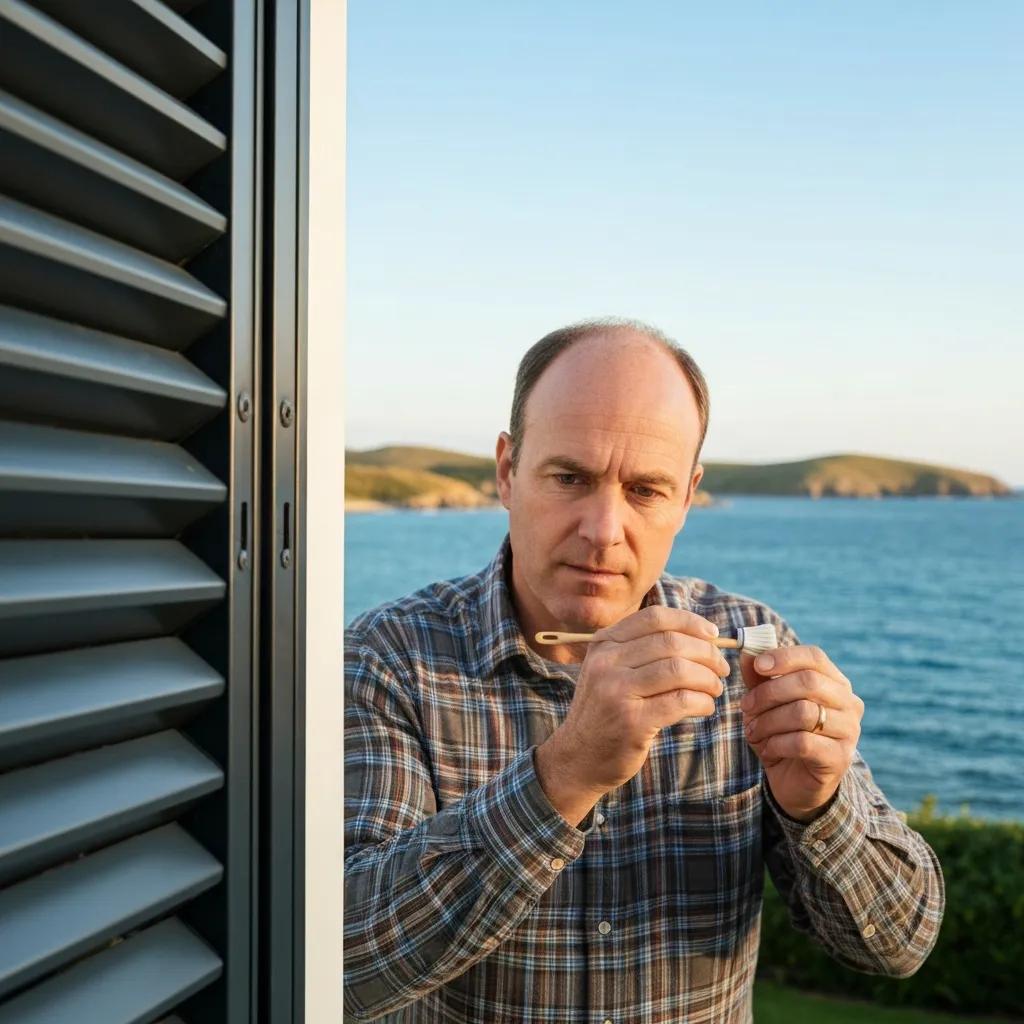
Regular inspections catch early corrosion, wear, and coating damage that can be remediated affordably. A consistent checklist and inspection cadence based on coastal exposure greatly reduce the risk of emergency shutter failures. Below you’ll find what to look for and a simple schedule you can follow.
What to look for during a rust inspection
During inspections, check fasteners for discoloration or looseness, look at track bottoms and hinge pins for pitting or debris, and operate the shutter slowly to detect binding, resistance, or grinding sounds that suggest corrosion or misalignment. Inspect seams, edges, and lock areas for chips, blisters, or flaking, and probe recessed spots with a soft tool to uncover hidden salt or moisture. Photograph and note findings, then prioritize cleaning and touch-up for exposed metal. This targeted approach helps you decide if a DIY fix will do or if a pro is needed.
- Focus inspections on areas where water and salt collect and where coatings are most likely to fail.
- Use the short checklist below for quick reference during walk-around checks.
- Check for discoloration, flaking, or blistering along panel edges and seams.
- Inspect fasteners and hinge pins for tightness and signs of pitting or corrosion.
- Operate the shutter slowly to listen for grinding, binding, or irregular movement.
- Look for trapped debris in tracks and accumulated salt in recessed areas.
Following this checklist helps homeowners spot corrosion early and schedule repairs that lengthen shutter life.
How often to inspect shutters for rust on the coast
Inspect shutters at least twice a year as a baseline—after winter and before hurricane season—and increase checks to quarterly or after major storms for beachfront or near-shore properties. High-exposure sites should also do a quick visual check after windy, salt-heavy weather or any event causing impact, since physical damage often leads to faster corrosion at breach points. Keep a written log with dates, observations, and actions to track trends and plan maintenance.
Best methods to remove existing rust from accordion shutters
How you remove rust depends on how severe it is. Small surface rust can often be handled with careful DIY sanding, neutralizing, and touch-up coatings; extensive pitting, failed fasteners, or deformed panels require professional remediation to restore performance and code compliance. For minor spots, remove corrosion mechanically, neutralize residues, prime, and apply a touch-up compatible with powder finishes. When corrosion affects hardware, welds, or structural parts, professionals can inspect and recommend repair or replacement to restore load capacity and safe operation.
How homeowners can treat minor rust spots
For limited surface rust, start by cleaning and drying the area. Gently remove loose corrosion with a nylon brush or fine-grit sandpaper, neutralize residues with a mild solution (for example, diluted vinegar or a manufacturer-approved rust neutralizer), then rinse and dry. Prime and apply a touch-up coating compatible with powder-finish materials, and after curing, seal edges with a small bead of marine-grade clear sealant to keep moisture out. Work in a ventilated area and use gloves and eye protection. Recheck the repair after a few weeks and touch up again if needed.
- DIY repairs are appropriate only for small, superficial rust spots—not structural damage.
- Follow the numbered steps below for a safe, effective repair process.
- Clean the affected area and dry thoroughly to prevent further oxidation during repair.
- Remove loose rust with a nylon brush or fine sandpaper, avoiding deep gouging of the substrate.
- Apply a rust neutralizer or diluted vinegar solution, rinse, and fully dry the area.
- Prime and touch up with a manufacturer-compatible coating; seal edges with a suitable marine-grade sealant.
If the rust is superficial and treated early, these steps stop progression and restore the protective barrier.
When to call professionals for rust remediation
Call a professional when corrosion is widespread, when fasteners or hinge pins show pitting or failure, when panels are deformed, or when the shutter won’t operate smoothly—these signs indicate possible structural compromise or reduced storm performance. Professionals can perform a full inspection, advise on repair versus replacement, swap in installer-grade hardware like 18-8 stainless fasteners, and handle recoating to restore continuous protection. If local codes apply or multiple components are compromised, professional assessment ensures repairs meet standards. Many providers offer inspections and free estimates to help you decide the best, cost-effective approach.
- Know the thresholds that mean professional help is needed and what to expect from a service visit.
- Watch for these clear red flags that require a pro:
- Extensive flaking, deep pitting, or rust-through on structural members or panels.
- Failed, loose, or heavily pitted fasteners and hinge pins that affect alignment or load capacity.
- Panels that deform, bind, or refuse to lock into place during operation.
- Post-storm damage visible across multiple components or along continuous seams.
When these red flags appear, professional inspection and remediation restore safe operation and long-term corrosion protection.
Common FAQs about accordion shutter rust prevention and maintenance
Below are short, practical answers to questions we hear most often. Use these to guide quick decisions and to build a sensible maintenance plan that fits your exposure and budget.
How long do accordion hurricane shutters last with proper maintenance?
With regular cleaning, scheduled lubrication, prompt touch-up of coating damage, and periodic inspections, powder-coated aluminum accordion shutters with corrosion-resistant hardware can last for decades before major replacement is required. Lifespan depends on exposure, material and installation quality, and how faithfully maintenance is followed—beachfront properties generally need refurbishment sooner than inland coastal homes. Keeping a documented maintenance log helps extend service life and preserves both appearance and wind-protective function.
Are accordion shutters available in rust-resistant materials?
No material is completely “rust-proof,” but aluminum panels and stainless-steel hardware are highly corrosion-resistant options. Aluminum forms a protective oxide layer rather than rusting like steel, and stainless fasteners resist pitting in salt air. Powder coating adds another protective layer, and specifying 18-8 stainless hardware for fasteners and anchors reduces galvanic risk. Choosing these materials and maintaining coatings lowers upkeep while improving longevity.
What is the best lubricant for accordion storm shutters?
Silicone-based sprays work best as a general-purpose lubricant for accordion shutters: they repel water, don’t attract dirt, and are safe on powder-coated finishes. Dry PTFE sprays are useful where dust is an issue. Avoid petroleum oils and heavy greases that trap salt and grit, accelerate wear, and can degrade seals. Apply lubricants after thorough cleaning and drying, following the component-specific schedule in this guide.
How do you maintain accordion shutters to prevent rust?
Prevent rust by repeating a simple cycle: clean, dry, lubricate, inspect, and touch up coating breaches. Escalate to professional remediation if structural components show corrosion. Keep a written maintenance schedule tied to local seasons and exposure, record inspections and repairs, and consider upgrades—like stainless fasteners or professional recoating—if corrosion recurs. That combined approach keeps shutters operational and reduces long-term replacement costs.
- Quick reference checklist to protect shutters:
- Follow this short list for regular upkeep and storm preparation.
- Clean shutters based on exposure and rinse with freshwater after salt contact.
- Lubricate tracks, hinges, and locks with silicone or dry PTFE per the component schedule.
- Inspect fasteners, seams, and moving parts at least twice a year and after storms.
- Touch up chips and seal breaches promptly; call a pro for structural corrosion.
These core steps form a practical maintenance program that preserves shutter safety and performance.
For homeowners and property managers who want expert help, American Hurricane Shutters offers accordion systems built from powder-coated aluminum with installer-grade 18-8 stainless-steel fasteners, installed to coastal performance standards. We provide maintenance guides and a cost calculator, plus free consultations and estimates for inspections or remediation planning. A professional inspection can clarify whether targeted repairs, hardware upgrades, or recoating are the most cost-effective path forward.
- If you prefer professional support, our team is available to inspect and advise.
- We offer practical services and resources without losing focus on everyday maintenance.
Frequently Asked Questions
What are the signs that my accordion shutters need maintenance?
Look for visible rust spots, flaking paint, or discoloration along seams and edges. Unusual resistance or grinding sounds while operating the shutters point to binding or corrosion. Loose fasteners or hinge pins are also red flags. Regular checks let you catch these issues early and avoid bigger repairs.
Can I use any type of lubricant on my accordion s
