
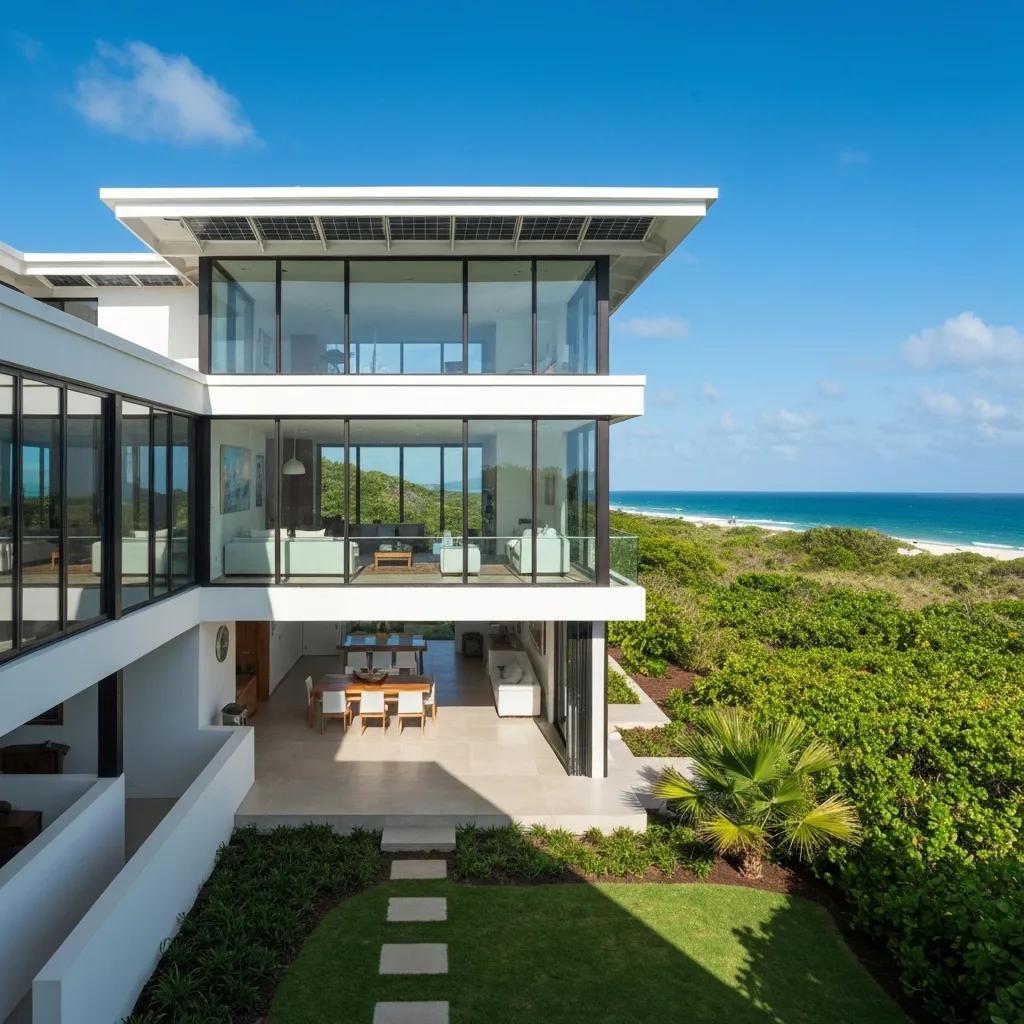
Modern Accordion Shutter Styles to Protect Your Coastal Home in Style
Modern accordion shutters blend tested storm protection with clean, contemporary design so coastal homeowners can safeguard their property without losing curb appeal. This guide shows what makes an accordion shutter “modern”—from material choices and slim stacking profiles to motorized options and required code approvals—so you can compare protection, looks, and long‑term value. Coastal properties face corrosive salt air, high wind loads, and design expectations that favor minimalist or coastal‑modern architecture; modern accordion systems answer those needs with corrosion‑resistant alloys, low‑visual stacking, and optional automation for easier use. Read on to learn how designs evolved, which materials perform best at the shore, measurable energy and noise benefits, and practical factors for matching shutters to your home. We also compare accordion shutters with other styles, outline common cost drivers and how estimates are built, and explain how American Hurricane Shutters helps coastal North and South Carolina homeowners with free estimates and a cost‑calculator tool. Find material details, style options, installation expectations, and clear steps to get an accurate quote.
What Makes Accordion Shutters Modern and Ideal for Coastal Homes?
Modern accordion shutters are compact, impact‑rated protection systems that stack neatly beside openings and deploy quickly. They fold on heavy‑duty tracks and lock into place to form an impact‑resistant barrier that—when installed to code—also seals against wind‑driven rain. The payoff is twofold: certified storm protection and a small visual footprint when retracted, which matters for coastal‑modern and minimalist homes. The sections that follow explain the design changes and material choices that give these shutters their modern performance and long life.
How Have Accordion Shutter Designs Evolved for Contemporary Homes?
Designs have moved from bulky, heavy systems to slim, smooth‚Äëoperating profiles with much smaller stacking footprints. Early models emphasized raw strength; newer extrusions use refined profiles and tighter interlocks to preserve sightlines and architectural lines while still meeting engineered wind‚Äëload requirements. That shift supports clean facades and uninterrupted window planes common in contemporary coastal architecture. The next section covers the materials and finishes that make those slim profiles durable and low‚Äëmaintenance in salt air.
Which Materials Define Modern Accordion Shutters?
Extruded aluminum is the go‑to structural material for modern accordion shutters because it balances strength and corrosion resistance when specified in the right alloy and temper. Stainless steel hardware and fasteners resist saline corrosion, while clear polycarbonate panels offer impact‑rated transparency for homeowners who want daylight and views with protection. Durable powder‑coat finishes add UV stability and reduce upkeep. The material mix you choose affects longevity and whether a system meets regional wind and impact codes—topics we cover in the benefits and compliance sections.
Modern Accordion Shutter Materials: Composites, Plastics, and Synthetics
In contrast, modern materials, including composites, plastics, and synthetic fabrics, offer cost, weight, and environmental resilience benefits, though they may compromise acoustic warmth and tactile feel. Emerging innovations such as nanomaterials, advanced composites, and 3D printing present new possibilities for enhancing accordion performance and sustainability.
Materials in Accordion Construction: A Comprehensive Review of Traditional and Modern Approaches, G Volpatti, 2025
What Are the Key Benefits of Modern Accordion Shutters?
Modern accordion shutters deliver protective performance, added security, aesthetic integration, easier operation, and measurable energy and acoustic improvements for coastal homes. They block high‚Äëvelocity impacts and wind‚Äëborne debris with engineered extrusions and secure anchoring while also deterring unauthorized entry when locked. Slim stacking and motorization options reduce the visual footprint and make everyday use simpler. The table below summarizes core benefits so homeowners can evaluate trade‚Äëoffs quickly.
Accordion shutters provide layered value across protection, security, and comfort:
This snapshot shows how accordion shutters meet several homeowner priorities; next we look closer at the storm and security mechanics.
How Do Accordion Shutters Provide Superior Storm and Security Protection?
Accordion systems combine impact‚Äërated panels with engineered tracks and secure locking hardware that transfer wind loads into the surrounding structure. Impact resistance comes from tested extrusion geometry and interlocking panels that absorb and distribute force, while properly placed anchors stop uplift and panel displacement under cyclic loads. Mortise locks and continuous edge engagement reduce forced‚Äëentry risk, giving a security layer beyond storm protection. Correct installation and verification to local codes ensure these features work as intended.
How Do Modern Accordion Shutters Enhance Energy Efficiency and Noise Reduction?
Closed shutters act as an external thermal barrier, cutting direct solar radiation and convective heat transfer through glazing, which can lower cooling demand in warm climates. Reflective powder‚Äëcoat finishes also help reduce heat gain by reflecting infrared and visible light. For acoustics, a continuous shutter surface with sealed tracks adds a layer that dampens airborne noise and limits reverberant energy entering living spaces. Exact savings vary with climate, glazing, and usage, but many homeowners notice clear drops in daytime heat gain and exterior noise after installation.
Which Modern Accordion Shutter Styles and Customizations Should You Consider?
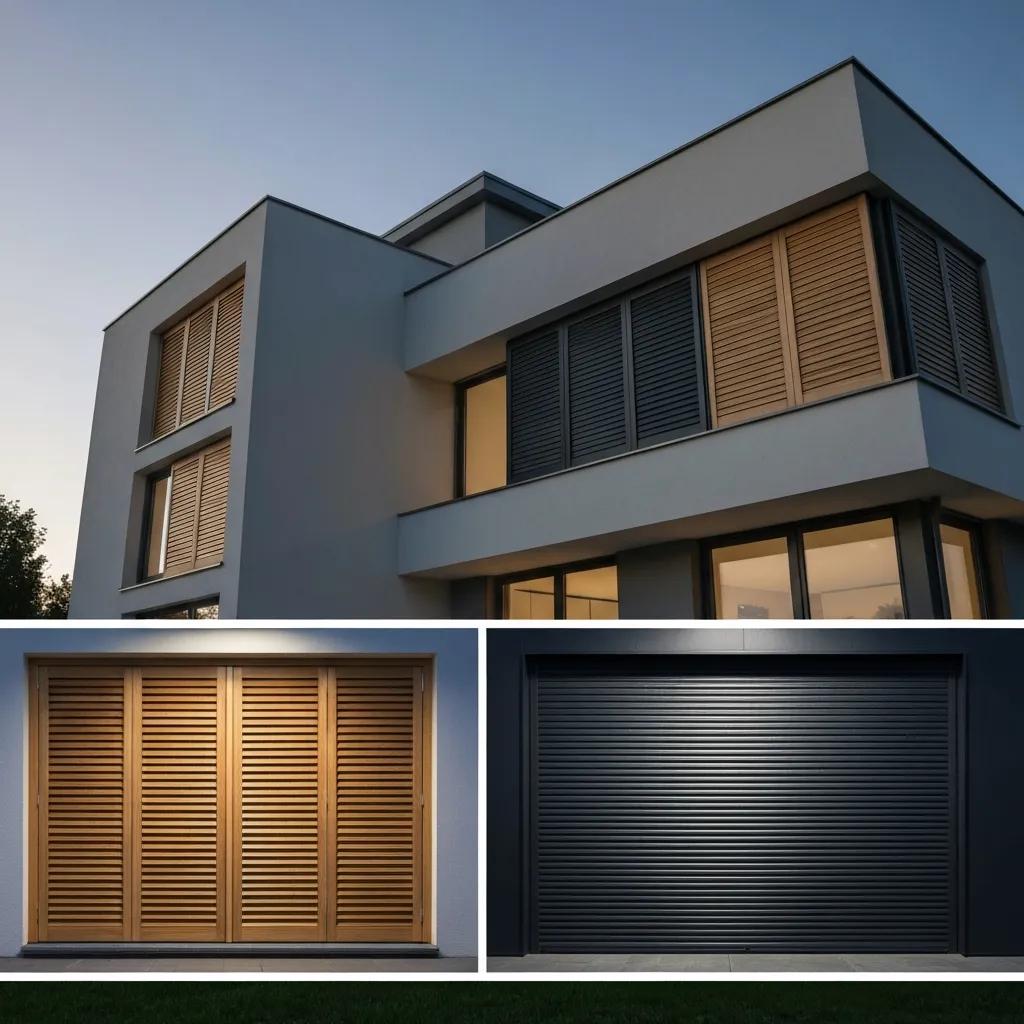
Accordion shutters now come in several modern styles and custom options that balance protection with design: slim‚Äëprofile extrusions, compact stacking systems, clear polycarbonate panels, and a wide palette of powder‚Äëcoat finishes. Choosing among these depends on stacking footprint, translucency, and finish durability so you keep the coastal aesthetic without sacrificing corrosion resistance. The comparison table below maps common styles to materials, stacking behavior, and visual impact to help you narrow choices.
The following table compares common styles and their functional‚Äëvisual tradeoffs:
What Color Options and Finishes Are Available for Contemporary Accordion Shutters?
Contemporary accordion shutters are commonly offered in neutral and architectural colors—white, ivory, bronze, beige—and can be custom matched with powder coating to blend with your façade. Powder coating bonds tightly to aluminum, resists UV fading, and is available in formulas designed for salt‑air exposure. For best long‑term results, pick coatings rated for marine conditions and plan routine cleaning to remove salt deposits. A well‑chosen finish preserves your home’s design language and minimizes visible wear in coastal environments.
How Do Slim-Profile and Clear Panel Designs Improve Home Aesthetics?
Slim profiles shrink the shutters’ stacking footprint so window lines stay clean and uninterrupted—ideal for minimalist and coastal‑modern architecture. Clear polycarbonate panels let daylight and views through while still providing impact resistance, which suits homeowners who want a strong connection to the outdoors. There are trade‑offs—slight depth perception changes and potential glare—so installers often recommend mockups or photos to confirm the final look. Next, we cover the key decision factors to weigh when selecting a style.
How Do You Choose the Best Accordion Shutter Style for Your Home?
Picking the right accordion shutter starts with assessing exposure, architectural goals, operation preferences, certification needs, and long‑term value like warranty and maintenance. Start by evaluating your property’s wind zone and salt exposure. Then decide whether sightlines and daylight or privacy are higher priorities. Operational options—manual versus motorized—affect daily convenience and any electrical or control integration. Use this practical checklist to focus your choices.
- Exposure Assessment: Consider wind zone, salt‚Äëair proximity, and typical storm patterns.
- Architectural Fit: Match stacking footprint and color to your home’s design language.
- Operational Preference: Choose between manual operation and motorized convenience.
- Certification & Warranty: Confirm impact and code compliance and review warranty coverage.
That checklist narrows your options; the next section compares accordion shutters to other shutter types so you can see where they perform best.
What Factors Should Influence Your Accordion Shutter Choice?
Important factors include your property’s wind‑load classification, how important unobstructed views are, desired deployment speed, maintenance tolerance, and whether you want to trade higher upfront cost for lower lifecycle upkeep. Beachfront homes should prioritize corrosion‑resistant alloys and stainless hardware over cheaper options that will require more upkeep. If one person needs to deploy shutters quickly, motorized or assisted folding systems add real convenience. Addressing these practical points early simplifies specification and helps ensure the system performs as expected.
How Do Modern Accordion Shutters Compare to Other Hurricane Shutter Styles?
Compared with roll‑down shutters, accordion shutters typically allow faster manual deployment and don’t need overhead housings, though roll‑down systems can offer tighter seals and full face coverage for some openings. Bahama and colonial styles add shade and architectural character but may deploy more slowly or require different anchoring. Storm panels are a budget‑friendly choice but require storage and extra labor for installation. Overall, accordion shutters hit a sweet spot for many moderate‑to‑high exposure coastal homes where speed, aesthetics, and certified protection matter.
Why Choose American Hurricane Shutters for Modern Accordion Shutter Installation?
Coastal homeowners in North and South Carolina choose American Hurricane Shutters for local expertise, code‑aware installations, and tools that help estimate project costs before committing. We specialize in accordion systems and related hurricane protection, offering a free cost‑calculator and guidance through certification and compliance. Our regional experience—from Wilmington and Oak Island to Myrtle Beach, Topsail, New Bern, and Pawleys Island—helps match product choices and installation methods to local wind‑load realities. The next section outlines trust signals and the installation steps that secure long‑term performance.
What Makes American Hurricane Shutters a Trusted Provider in Coastal NC and SC?
We’re a regional specialist focused on accordion shutters built for coastal conditions, and we emphasize free estimates via our cost‑calculator and strict local code compliance. Local installers understand area wind pressures and salt‑air challenges—so they can specify the right materials, fasteners, and attachment strategies. A regional specialist also helps with permits, inspections, and the paperwork inspectors expect, giving homeowners confidence the job will pass review and perform over time.
How Does the Installation Process Ensure Optimal Performance and Durability?
Professional installation starts with a site survey and precise measurements so extrusions and tracks integrate with structural framing and meet attachment requirements. Installers confirm structural backing, use stainless or corrosion‑resistant fasteners, and seal anchor points to limit salt intrusion—each step lowers long‑term maintenance risks. Post‑install inspection and operational testing verify locks, tracks, and motors (if used) work under simulated load and that code documentation is complete. Clear homeowner instructions for periodic maintenance finish the process to preserve performance over years.
What Are the Typical Costs and How Can You Get a Free Estimate for Modern Accordion Shutters?
Accordion shutter costs depend on material choice, opening size, hardware complexity, required certifications, and labor for correct anchoring and sealing. Common cost drivers include per‚Äësquare‚Äëfoot material for extruded aluminum or polycarbonate, labor tied to installation complexity and height, hardware such as mortise locks or motors, and any engineering or permit fees needed for code compliance. The table below outlines typical contributors and example ranges so homeowners understand what goes into an estimate before using a free cost‚Äëcalculator for a tailored quote.
This breakdown shows where money is allocated; the next section walks through a simple sample calculation so you can see how these pieces combine in a real estimate.
How Is the Cost of Accordion Shutters Calculated?
Typical pricing adds up material area times unit cost, plus labor for measuring and installation complexity, then includes hardware and any engineering or permit fees. For example, a large living‚Äëroom opening may need higher‚Äëgrade extrusions and extra anchoring, which raises labor and hardware costs, while a standard window will usually need less customization. Ask for a site visit or use a calculator that accounts for exact dimensions, finish, motorization, and local code needs. A transparent breakdown helps you compare bids and spot the main value drivers.
Where Can You Access a Free Accordion Shutter Cost Calculator?
Homeowners can use the free cost‚Äëcalculator tool from regional specialists like American Hurricane Shutters to enter opening sizes, preferred shutter style (slim‚Äëprofile, clear panels, motorized), and finish choices for an immediate ballpark. After an initial estimate, schedule a site visit for a final quote that verifies structural conditions and permit needs. Running the calculator first helps you prioritize features and plan your budget before committing to installation.
- Request an estimate: Start with the cost‚Äëcalculator to get a preliminary budget and identify required features.
- Schedule a site visit: Allow a professional to take measurements and confirm structural details that may change the quote.
- Review documentation: Make sure the final price includes installation scope, warranty, and code compliance paperwork.
This stepwise approach makes decision‚Äëmaking easier and moves you toward a reliable, code‚Äëcompliant installation.
- Protection Selection: Choose certified accordion shutters that match your exposure and design goals.
- Cost Planning: Use the cost‚Äëcalculator to set realistic budgets and allow for warranty and maintenance.
- Installer Verification: Confirm installers follow code procedures and provide after‚Äëinstall support.
Following these steps helps homeowners move from research to a durable, code‚Äëcompliant installation that balances style and hurricane protection.
Frequently Asked Questions
What are the maintenance requirements for modern accordion shutters?
Modern accordion shutters need only basic upkeep thanks to corrosion‑resistant materials and durable powder coats. Regularly rinse with mild soap and water to remove salt and debris—especially after storms—and inspect tracks and locking hardware for smooth operation. Address any worn or damaged parts promptly to avoid bigger repairs. These simple steps will extend service life and keep shutters looking good.
Can modern accordion shutters be customized for different window sizes?
Yes. Accordion shutters are custom‑manufactured to fit a wide range of window sizes and shapes. Manufacturers offer configurable sizes, finishes, and operation choices—manual or motorized—so you can match architectural style and performance needs. Work with a professional installer to ensure the system meets local codes and fits your opening precisely.
How do accordion shutters perform in terms of noise reduction?
Accordion shutters reduce outside noise by adding a continuous external layer and sealed tracks that dampen airborne sound. Acoustic performance varies with materials and installation, but many homeowners report noticeable reductions in traffic and storm noise after installation. Proper sealing and insulation details improve the outcome.
What is the typical lifespan of modern accordion shutters?
Lifespan depends on material quality, environment, and maintenance. High‚Äëquality aluminum systems, properly installed and maintained, commonly last 20 years or more. Coastal exposure speeds corrosion risk, so prioritize corrosion‚Äëresistant alloys, stainless hardware, and appropriate finishes. Regular cleaning and inspections will help the shutters reach their expected service life.
Are there any energy efficiency benefits associated with accordion shutters?
Yes. Closed shutters act as an external thermal barrier, reducing solar heat gain and lowering cooling demand in warm months. Reflective finishes further reduce heat transfer. In cooler months, shutters help reduce drafts and heat loss. Many homeowners see lower energy use after adding shutters, though exact savings depend on climate and glazing.
What are the differences between manual and motorized accordion shutters?
Manual shutters require physical folding and unfolding, which is straightforward for most openings but can be strenuous for large spans. Motorized systems add effortless deployment via wall switch or remote—ideal for large openings or homeowners with mobility concerns. Motorization raises upfront cost but greatly improves day‑to‑day convenience.
How do accordion shutters compare to other hurricane protection options?
Accordion shutters offer fast, integrated deployment with no storage required and a low visual profile when retracted. Roll‚Äëdown shutters can provide a tighter seal for some openings, while Bahama and colonial shutters add architectural character but may deploy more slowly. Storm panels are lower cost but require storage and manual handling. Accordions often balance speed, appearance, and certified protection for many coastal homes.
Conclusion
Modern accordion shutters deliver a practical blend of style and protection for coastal homes: slim, durable profiles that meet impact and wind standards while preserving a modern aesthetic. With the right materials, finishes, and professional installation, they offer durability, energy and noise benefits, and improved security. Choose the style and features that fit your exposure and design goals, and use a cost‚Äëcalculator or site visit to get an accurate quote. Explore our range of accordion shutters to find the solution that protects your home without sacrificing curb appeal.
