
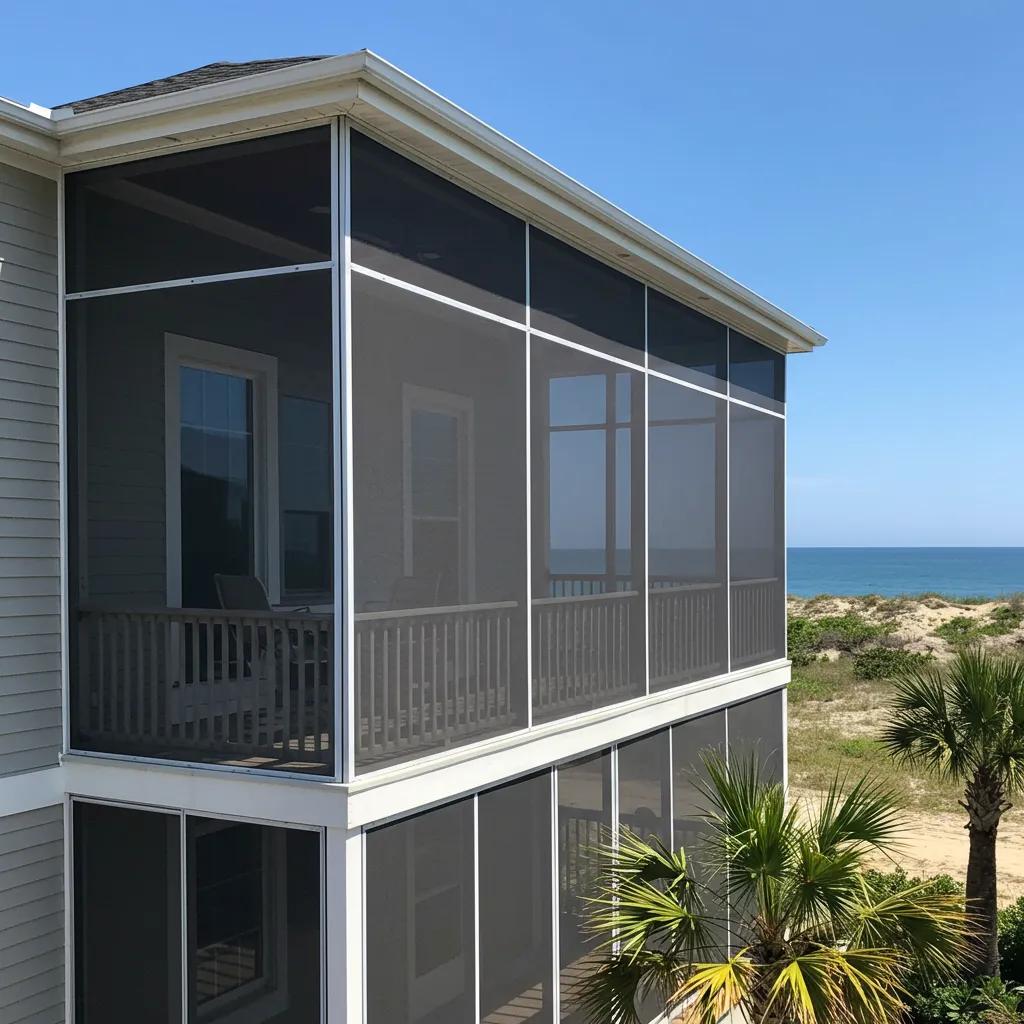
Hurricane Screen Types vs. Traditional Storm Protection: A Clear Comparison for Carolina Homeowners
Homeowners across coastal Carolina face a critical decision when it comes to safeguarding large openings and living spaces from hurricanes: should you opt for rigid shutters and panels, or choose flexible hurricane screens that seamlessly blend daily use with robust storm protection? This guide breaks down hurricane screens and traditional storm protection, comparing their effectiveness and costs. We’ll identify the best screen materials for North Carolina and South Carolina conditions and outline practical considerations for operation, aesthetics, and potential insurance savings. You’ll learn how aramid, polypropylene, and PVC-coated fabrics differ in strength, UV durability, and visibility, and when rigid options like accordion, roll-down, Bahama, or colonial shutters might be the better fit. This guide also highlights how to protect lanais and patios, how local codes influence your selection, and the insurance steps homeowners should document. Throughout, we’ll suggest recommended next steps and provider options so Carolina homeowners can confidently choose a solution that perfectly balances everyday utility with certified hurricane protection.
What Are Hurricane Screens and How Do They Differ from Traditional Storm Protection?
Hurricane screens are advanced tensile fabric barriers, typically mounted on tracks or integrated into roll systems. They effectively block wind-borne debris while crucially maintaining visibility and airflow. These systems deploy easily, either manually or with convenient motorized drives. Their protective power comes from high-strength fibers and engineered mounting hardware that absorb and disperse impact energy, significantly reducing the risk of window and enclosure failure. The result is a truly multifunctional system that not only shields against storms but also provides year-round shade, insect control, and privacy. Understanding these mechanics helps clarify why screens often outperform rigid shutters on very large openings, while shutters can offer a solid, rigid barrier for smaller, high-risk openings. Below, we detail the materials, typical shutter mechanics, core benefits, and known limitations to help you compare your options directly.
What Materials Are Used in Hurricane Screens?
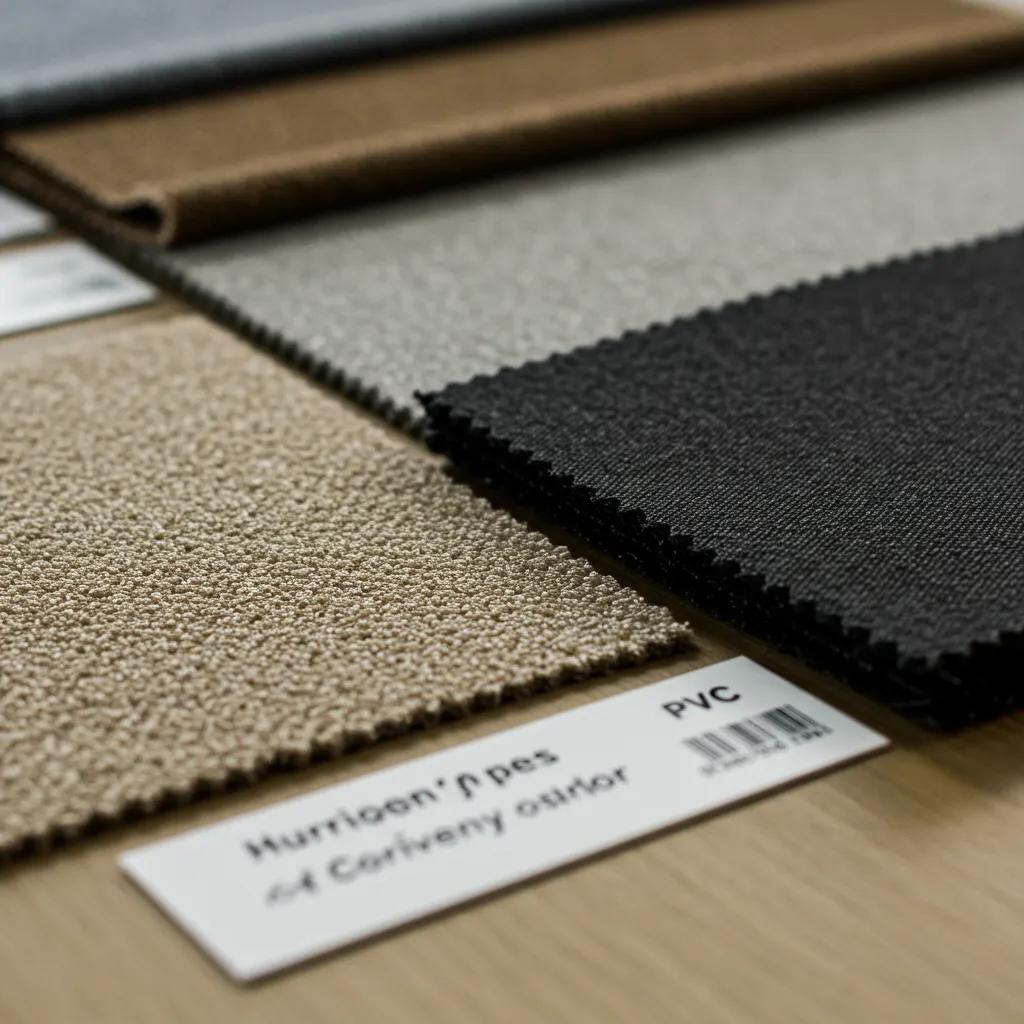
Hurricane screens utilize high-performance fabrics and coatings meticulously chosen for their exceptional tensile strength, superior UV stability, and optimal translucency. Aramid fibers deliver unmatched tensile strength and outstanding impact resistance, making them ideal where maximum protection is paramount. Polypropylene offers a cost-effective strength and lighter weight, best suited for very large spans. PVC-coated fabrics add crucial abrasion resistance and simplify cleaning, especially for high-UV coastal exposures. These materials vary in translucency—aramid can be woven tightly for enhanced protection with a slight trade-off in view, while polypropylene maintains higher visibility, perfect for lanais and patios. Selecting the right material hinges on your specific risk exposure, desired visibility, and budget. Professional measurement is key to ensuring the chosen fabric and mounting hardware precisely meet your site’s unique needs.
How Do Traditional Storm Protection Options Like Shutters and Panels Work?
Traditional storm protection encompasses mounted shutters and removable panels designed to create rigid barriers against impact and wind pressure by physically covering openings and fastening securely to frames. Accordion shutters remain permanently attached and fold neatly for daily use. Roll-down shutters retract into integrated housings, operated manually or via motorized drives. Bahama and colonial shutters offer distinct fixed architectural styles with varying deployment actions. Panels—crafted from clear polycarbonate (Lexan) or durable aluminum—are bolted on when a storm approaches, providing robust, hard-surface impact resistance. These systems function by transferring wind loads directly to the structure through anchors and fasteners. Their inherent rigidity offers clear impact resistance advantages but can reduce daylight and necessitate storage or permanent housings when not in use.
Hurricane Shutter Performance Against Debris Impact
Post-storm investigation studies have consistently noted a high degree of damage to buildings in hurricane-prone regions. In response, the development of hurricane shutters has evolved significantly to address debris impact on the building envelope. This necessitates rigorous testing of window and door systems to ensure they meet stringent performance standards required for effective storm protection.
Performance of hurricane shutters under impact by roof tiles, KR Gurley, 2010
What Are the Key Benefits of Hurricane Screens Compared to Traditional Protection?
Hurricane screens offer invaluable multi-season utility that extends far beyond storm protection. They provide significant shade reduction, effectively keep insects out, and maintain outward visibility, making lanais and patios comfortable and usable year-round. They are exceptionally scalable for very large openings where installing multiple rigid panels or shutters would be cumbersome and costly. Motorized options allow for rapid deployment, saving precious time during storm watches. Screens also tend to be lighter and less visually intrusive when retracted, preserving architectural sightlines and your enjoyment of your home. For many Carolina homes, this powerful combination of daily functionality plus certified storm performance delivers superior long-term value compared to single-purpose rigid barriers.
- Year-round utility: Enjoy shade, insect control, and privacy in addition to essential storm protection.
- Large-span scalability: Achieve continuous coverage for lanais and patios without the need for numerous seams or panels.
- Visibility and daylight: Maintain clear outward views, a significant advantage over opaque shutters.
These compelling benefits often lead homeowners to prioritize screens for their primary living areas and opt for rigid shutters for smaller, more vulnerable windows.
What Are the Limitations of Hurricane Screens Versus Traditional Shutters?
Hurricane screens can sometimes be perceived as less secure than solid shutters simply because they remain fabric-based and rely on engineered attachment points rather than a solid plate of aluminum or polycarbonate. Premium materials like aramid can increase the cost, potentially approaching or even exceeding the price of mid-grade rigid panels, so careful budget planning is essential. Code compliance and certified testing are absolutely critical: you must verify that screen systems are installed with the specified hardware and have passed the required Design Pressure Analysis for your specific risk zone. Mitigation strategies include reinforced tracks, 18-8 stainless steel installation hardware, and verified engineering calculations to effectively close any perceived performance gap with rigid barriers.
Para-Aramid Fiber Sheets for Extreme Environment Protection
Para-aramid materials are known for their high strength and stiffness, making them suitable for applications requiring robust protection. These aramid materials exhibit lower thermal conductivity compared to many other polymers, which can be advantageous in extreme environments. The performance of traditional Kevlar and Twaron para-aramid fibers is well-documented, and research continues to explore their use in advanced composite structures for enhanced mechanical and thermal protection.
Para-aramid fiber sheets for simultaneous mechanical and thermal protection in extreme environments, K Swana, 2020
How Do Hurricane Screens and Traditional Shutters Compare in Protection and Cost?
Hurricane screens and traditional shutters perform differently across key areas like impact resistance, wind load capacity, deployment speed, and lifecycle cost. Your personal priority—whether it’s maximum impact rating, ease of daily use, or budget—will ultimately determine the best choice for your home. Screens excel at covering large spans cost-effectively and offer valuable auxiliary benefits like shade and insect control. Rigid shutters and panels, on the other hand, generally provide higher localized impact resistance per square foot. Long-term value depends on factors such as maintenance needs, the availability of motorization options, and insurance advantages tied to certified installations. For accurate budgeting, you can utilize on-site cost tools like a Cost Calculator and request a Design Pressure Analysis and a custom estimate from experienced providers.
Which Offers Better Impact Resistance and Wind Protection?
Rigid paraphernalia—think aluminum panels and rigorously tested shutters—typically achieve higher nominal impact resistance in standard tests because they present a solid, unbroken surface to debris, and their anchored fasteners effectively distribute loads into the structure. Screens, conversely, rely on tensile energy absorption and engineered mounting to resist impact. When paired with advanced aramid fabric and reinforced tracks, they can meet stringent performance targets for many coastal sites. The practical choice often depends on your specific exposure: for direct paths of heavy debris and smaller, more vulnerable windows, rigid shutters may be preferred. For wide enclosures and lanais, reinforced screens can provide certified protection with a host of additional living benefits.
How Do Installation and Maintenance Costs Differ Between Screens and Shutters?
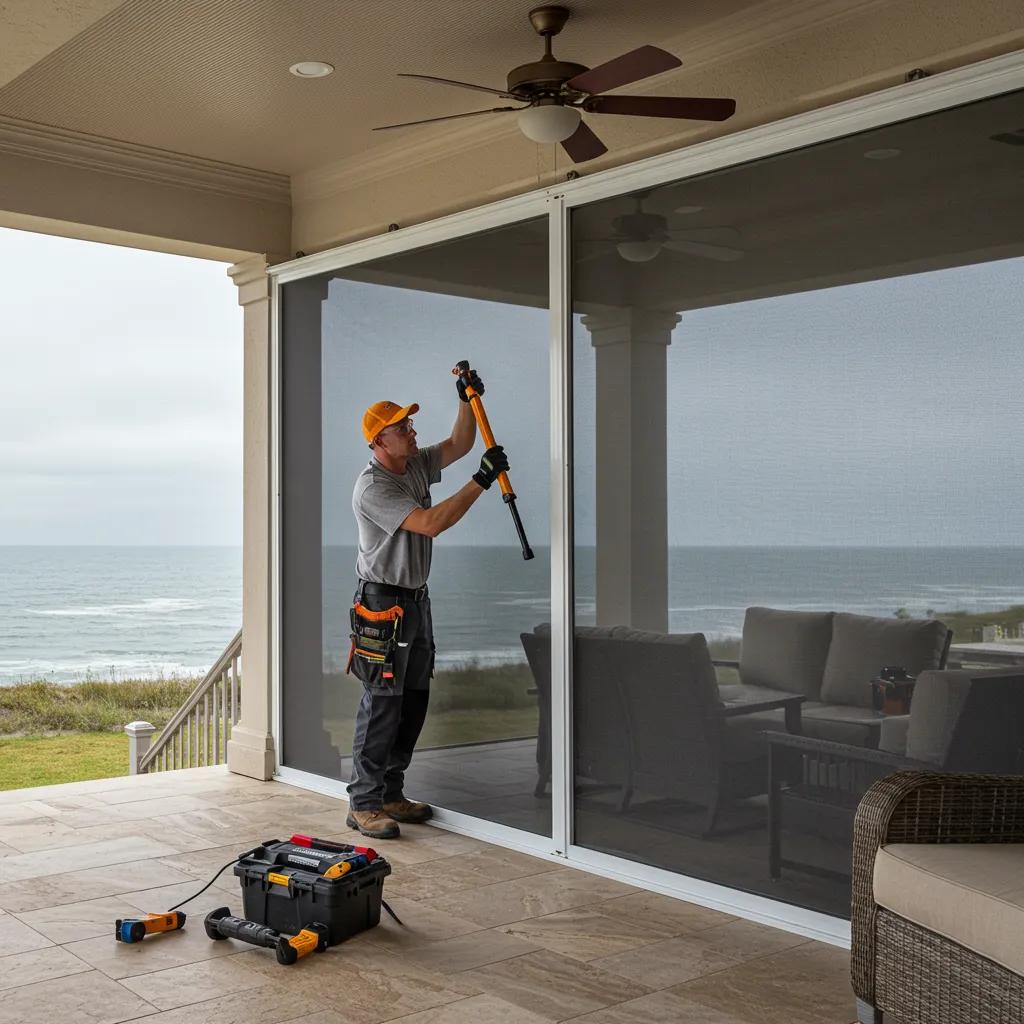
Initial costs encompass the product itself, any motorization and control systems, and installation labor. Screens often require precise track installation and may necessitate structural reinforcement for very large spans. Shutters, meanwhile, need housings, robust anchoring, or careful storage planning for panels. Ongoing maintenance for screens primarily involves fabric care, track lubrication, and motor servicing if motorized. Shutters and panels require periodic hardware checks and potential storage logistics. Over time, screens can offer lower lifecycle costs for large openings due to reduced manual handling and their year-round utility, though premium materials will increase the upfront investment.
- Product and material selection: premium fibers versus standard panels.
- Installation complexity: track reinforcement and anchoring requirements.
- Maintenance and storage: motors and tracks versus panel storage.
What Is the Long-Term Value of Hurricane Screens vs Traditional Storm Protection?
Long-term value encompasses durability, adaptability, homeowner satisfaction, and potential insurance savings tied directly to certified installations. Screens provide continuous lifestyle value—offering shade, pest reduction, and visibility—benefits that rigid shutters simply cannot match, thereby raising perceived ROI, particularly for outdoor living spaces. Rigid shutters can add resale value through clear impact-protection claims and may yield different insurance mitigation credits depending on their certification. You should carefully weigh multi-year utility, the expected lifespan of fabrics and coatings, and the insurance implications when comparing the total cost of ownership.
Which Hurricane Screen Types Are Best for Coastal Carolina Homes?
Selecting the ideal screen type hinges on your specific coastal exposures, desired visibility, and expected lifespan under strong UV and salt-laden air. The right material will precisely match your site-specific needs. Aramid fabrics deliver the highest tensile strength and superior long-term UV stability when properly coated, making them an excellent choice for high-risk sites and homeowners prioritizing maximum impact resistance. Polypropylene offers a compelling balance of cost and large-span performance, providing good translucency and lighter weight ideal for lanais and patios. Flat polycarbonate (Lexan) products serve as excellent rigid, clear alternatives when solid paneling is desired for optimal light transmission and impact resistance. Professional measurement and installation are crucial to ensure that your chosen materials and mounts meet all local conditions.
What Are the Differences Between Aramid and Polypropylene Hurricane Screens?
Aramid fibers provide superior tensile strength and exceptional resistance to impact energy, which translates into higher performance for smaller, high-risk openings or where certification targets are particularly stringent. Polypropylene is lighter and more cost-effective, offering excellent visibility and easier handling for extremely large spans where weight and modularity are more critical than absolute tensile ratings. Both materials can be treated for enhanced UV resistance; your selection should be guided by local exposure, budget, and whether you prioritize maximum impact rating or extensive large-area coverage.
How Do Hurricane Screens Perform on Large Openings Like Patios and Lanais?
Screens offer unparalleled scalability across wide spans, elegantly avoiding the seams and storage logistics associated with panels and multiple shutter bays. This creates unobstructed views and simple motorization possibilities for expansive enclosures. Proper mounting tracks and intermediate supports are essential to prevent undue sag and ensure consistent tension, while reinforced end anchors effectively transfer loads into the structure. Because of this remarkable scalability, screens often outperform rigid shutters for patios and lanais in terms of both usability and installation practicality.
How Do Local NC and SC Building Codes Affect Hurricane Screen Selection?
Local building codes and Authority Having Jurisdiction (AHJ) requirements precisely determine allowable design pressures, required testing protocols, and necessary documentation for insurance credits and permitting. While Florida Building Code approvals offer a strong benchmark, Carolina homeowners must verify local acceptance and any state-specific amendments. Requesting a Design Pressure Analysis and ensuring your installation hardware (for example, 18-8 stainless steel fittings) meets all specifications are critical steps to achieve both safety and insurance recognition.
What Are the Practical Considerations for Choosing Between Hurricane Screens and Traditional Shutters?
Practical choices depend heavily on your preferences for deployment speed, motorization needs, aesthetics, and whether professional installation is required to meet code and warranty conditions. Motorized screens significantly reduce manpower and deployment time, while manual panels and shutters may be less technologically complex but require dedicated storage and handling. Aesthetic integration varies widely: screens maintain transparency and minimal visual impact, whereas shutter styles like Bahama or colonial provide distinct architectural statements. Deciding between DIY and professional installation hinges on the complexity of your openings, local code requirements, and your willingness to manage maintenance and documentation.
- Deployment preference: motorized convenience versus manual simplicity.
- Aesthetic goals: transparency versus architectural shutter styles.
- Installation complexity: single large spans usually require professional expertise.
How Easy Is It to Deploy and Operate Hurricane Screens Compared to Shutters?
Motorized hurricane screens deploy rapidly with a simple push-button control and require minimal storage space, dramatically reducing storm-prep time for large openings. Manual screens and panels require physical labor and coordination; panels must be stored safely when not in use, adding logistical complexity and cost. Maintenance focuses on tracks, motors, and fabric care for screens, while shutters need periodic hardware checks and possible repainting or panel storage management. For many families, motorized screens represent a practical and highly convenient balance between speed and ongoing usability.
How Do Aesthetics and Home Integration Differ Between Screens and Shutters?
Screens preserve outward views and natural daylight whether retracted or deployed, making them a highly favorable choice for homes that emphasize coastal vistas and seamless outdoor living. Shutters offer a variety of stylistic options—Bahama, colonial, and accordion styles can integrate visually with architecture but inevitably obscure views when closed. Color, finish, and housing placement all play a role in determining how seamlessly a protective system blends with your home’s unique style; you should review samples and consider on-site mockups to confirm the visual fit.
Should Homeowners Opt for DIY Installation or Professional Services?
DIY installation can be suitable for small, straightforward openings with manufacturer-supplied hardware and low code complexity. However, most coastal installations significantly benefit from professional services due to the critical need for proper structural anchoring, certification requirements, and warranty conditions. Professionals provide essential Design Pressure Analysis, ensure the correct use of hardware such as 18-8 stainless steel fittings, and deliver the documentation that insurers require. For complex lanais and multi-span systems, professional installation reduces liability and protects your insurance eligibility.
How Can Carolina Homeowners Maximize Insurance Benefits with Hurricane Protection?
Insurance discounts and mitigation credits are directly tied to certified products, proper permits, and documented professional installation, forming a clear and effective path to lower premiums and an improved risk profile. Insurers typically request product testing data, installation records, and permit evidence. Obtaining certified Design Pressure Analysis and using approved hardware significantly increases the likelihood of recognized savings. You should compile all documentation pre- and post-installation and consult directly with your insurer to confirm acceptable certifications and credits before making your purchase.
What Insurance Discounts Are Available for Certified Hurricane Screens and Shutters?
Insurers commonly offer wind mitigation credits, certified product credits, and premium adjustments when homeowners present accepted testing data and proof of professional installation. Typical required documentation includes product test reports, installation certificates, and permit/inspection records. Some credits depend on meeting specific design pressure thresholds or using specified anchoring hardware. You should contact your insurer early in the process to confirm which certificates will be accepted, thereby avoiding potentially wasted upgrades.
- Verify your insurer’s specific requirements before making a purchase.
- Obtain all certified product paperwork and installation records.
- File all documentation with your insurer after installation to claim credits.
How Does Compliance with Building Codes Influence Insurance Premiums?
Code compliance fundamentally reduces insurer risk by ensuring products meet recognized performance standards. A system that satisfies local code or an accepted benchmark like the Florida Building Code typically translates to a lower assessed risk profile. Insurers view installation permits and inspections as positive indicators that the system will perform reliably under stress, and they often require these documents to apply mitigation credits. Ensuring proper permitting and professional installation significantly increases the chance of premium reductions.
How Can American Hurricane Shutter Help Homeowners Secure Insurance Savings?
American Hurricane Shutter provides specialized hurricane protection products and expert engineering services, including Hurricane Screens and a full range of other shutter and panel types. We offer Design Pressure Analysis and certified installations that align perfectly with insurance documentation needs. You can explore our offerings at ahscarolinas.com, where you’ll find a Cost Calculator and valuable resources to help you estimate your options. American Hurricane Shutter can provide material options, precise measurement services, and a free consultation to tailor solutions specifically for North Carolina and South Carolina properties. For homeowners seeking a comprehensive approach—whether it’s Accordion Shutters, Hurricane Screens, or Roll-down Shutters—our professional measurement and certified installation services help secure both your safety and potential insurance benefits.
- We provide Design Pressure Analysis to meticulously document performance.
- We offer a wide range of material options and precise measurement for accurate quotes.
- We supply cost-estimating tools and expert consultation to align upgrades with insurer requirements.
Frequently Asked Questions
What factors should homeowners consider when choosing between hurricane screens and traditional shutters?
Homeowners should carefully evaluate several key factors, including the size and type of openings, local building codes, your personal aesthetic preferences, and your budget. Consideration of deployment speed is also crucial; motorized hurricane screens offer incredibly quick setup, while traditional shutters may require more manual effort. Additionally, assess the long-term utility of each option, such as the ability to provide shade and insect control with screens versus the robust, solid protection of shutters. Consulting with our professionals can help clarify which option best meets your individual needs and local requirements.
How do hurricane screens perform in terms of maintenance compared to traditional shutters?
Hurricane screens generally require less maintenance than traditional shutters. While screens need periodic checks for track lubrication and fabric care, shutters often require more extensive upkeep, including hardware inspections and potential repainting. Additionally, screens can be easier to operate, especially if motorized, significantly reducing the physical effort neede
