
How to Choose the Right Hurricane Shutter Installer: Your Complete Checklist and Expert Guide
Picking the right hurricane shutter installer is one of the best investments coastal homeowners can make to protect their property and comply with local codes. This guide walks you through what to check before you hire—what installer credentials matter, how shutter choices change cost and performance, and why engineering steps like a Design Pressure Analysis (DP Analysis) are critical for long-term reliability. If you live along the North or South Carolina coast, you’ll find a practical checklist, cost expectations, and clear next steps to evaluate contractors, understand permitting and insurance implications, and secure an installation that will hold up in a storm.
What should you look for when selecting a hurricane shutter installer?
Start with a focused checklist of credentials, workmanship signs, and engineering capabilities that affect both safety and code compliance. A qualified installer will clearly explain how their methods meet wind-load requirements, describe corrosion-resistant materials and proper anchoring, and provide written proof of insurance and warranty coverage. These checks lower your risk: documented engineering and verified credentials reduce the chance of failure in severe weather and smooth permitting and insurance processes. Verifying these items up front also makes it easier to compare bids on an equal basis and avoid surprises during permitting or installation.
Before we show a quick verification table, confirm these core items with any prospective contractor—these form the checklist that follows. The next section explains why licensing and insurance deserve special attention and how to confirm them.
- Licensing, insurance, and written contracts: confirm the contractor’s active license and liability insurance.
- Documented engineering: require a site-specific Design Pressure Analysis for every project.
- Materials and methods: confirm the use of corrosion-resistant hardware such as 316 stainless steel.
- Warranties and after-sales support: get clear, written product and labor warranty terms.
- Local code and permit experience: verify experience with coastal NC and SC permitting and inspections.
Use these five verification points as a starter screening checklist. The subsection below walks through how to check licenses and insurance quickly.
Why do licensing and insurance matter for shutter installation?

Licensing and insurance protect you and hold a contractor accountable if work is incomplete or causes damage. A valid contractor license shows the company meets state requirements for construction work and helps when permits and inspections are required. Insurance—general liability and worker’s compensation—shields the homeowner if a worker is injured or if installation causes accidental damage. Ask for current license numbers and certificates of insurance, then confirm with the issuing authority or insurer that the policies are active.
Requesting these documents up front also reveals professionalism and avoids negotiation friction; if a contractor hesitates or can’t produce current certificates, treat that as a warning sign and consider other bidders. The next subsection covers how experience and proven expertise affect installation quality and outcomes.
How does experience affect installation quality?
Experience shows up in fit-and-finish, anchor detailing, and the ability to tackle site-specific challenges like irregular openings, masonry walls, or older window frames. Experienced crews will share a portfolio of coastal jobs, explain how they size attachment patterns and calculate design pressure, and describe their corrosion-mitigation choices—such as using 316 stainless steel fasteners. Ask for references, project photos, and copies of permit paperwork to verify claims and confirm consistent quality.
Seasoned companies also manage timelines and inspections more efficiently, which reduces permit delays and rework—saving time and money. The table below summarizes the key installer credentials, why they matter, and simple ways to verify them for your records.
Use this table as a checklist when talking with vendors. Next, we look at how customer reviews and reputation add real-world context to the credential checks above.
How can reviews and reputation help you find a reputable shutter company?
Customer reviews show how an installer performs day-to-day—communication, timeliness, workmanship, and warranty follow-through—that credentials alone won’t reveal. Look for patterns in reviews, such as consistent on-time completion, repeated warranty calls, or recurring installation issues with a given shutter type. Read reviews across multiple platforms and favor projects in coastal NC/SC communities to find installers who understand local permitting and weather conditions.
When you read reviews, watch for specifics—before-and-after photos, references to permits and inspections, or details about code compliance. Those details are stronger evidence than generic praise. The next subsection lists markers that help you spot trustworthy testimonials and how to ask for meaningful references.
What should you look for in testimonials and ratings?
Reliable testimonials describe the scope of work, timelines, include photos, and discuss interactions during permitting or post-install follow-up. Positive signals are repeated mentions of clear contracts, timely inspections, and durable performance after storms. Red flags include vague praise without particulars, frequent reports of delays, or unresolved warranty claims. Ask installers for local references and job photos that match your property type, then follow up with those references to confirm satisfaction and any post-install issues.
Cross-check reviews with licensing and insurance information to build a complete picture—paper qualifications must match on-the-ground performance. After reviewing references, the next key consideration is warranties and after-sales support.
How do warranties and after-sales support affect your decision?
Warranties spell out the installer’s commitment to product performance and labor quality. They should state duration, scope (product vs. labor), and any exclusions—especially those related to storm damage or misuse. Good after-sales support means prompt warranty service, a clear claims process, and availability of maintenance for moving parts like rolldown tracks or motorized drives. Get all warranty terms in writing, ask how claims are handled, and confirm any registration steps required to activate coverage.
Strong warranty terms plus responsive after-sales service protect long-term value and limit out-of-pocket costs for homeowners. With credentials, reputation, and warranties checked, the next decision is which shutter type best fits your home and budget.
What shutter types are available and how do they affect installation?
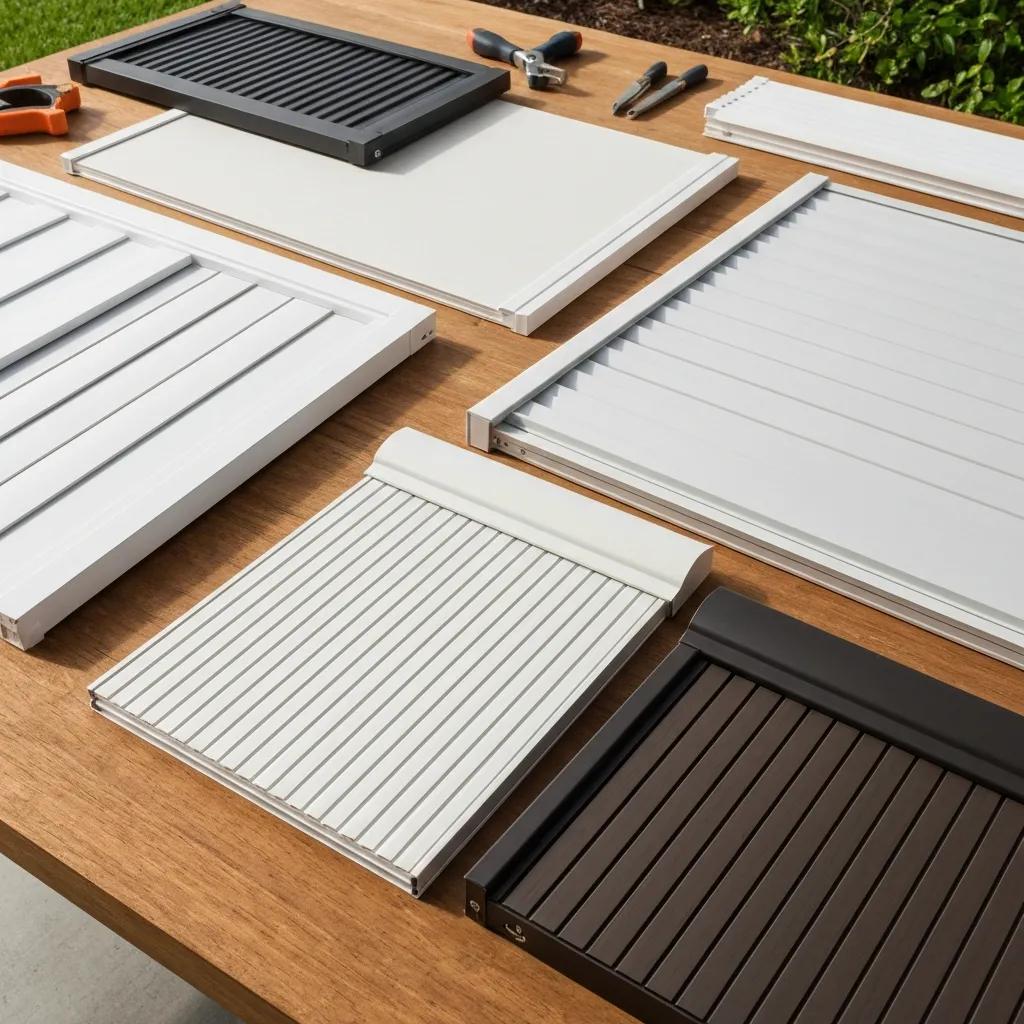
Shutter types differ in protection, appearance, permanence, and installation complexity—and those differences drive cost and anchoring requirements. Your choice depends on window geometry, exposure to wind and debris, whether you want manual or automated operation, and your budget. Knowing the trade-offs helps you pick a solution that balances protection, day-to-day convenience, and long-term maintenance.
This chart shows how product choice affects installation: permanent systems like accordion and rolldown need engineered anchors and sometimes structural reinforcement, while removable panels require storage planning. The next section reviews pros and cons of common shutter families and how those trade-offs affect installation complexity.
What are the pros and cons of popular shutter types?
Each shutter family balances protection, convenience, and curb appeal differently. Accordion shutters mount permanently and deploy quickly, offering solid protection without storage hassles but require a clean architectural fit. Rolldown shutters provide top-level protection and automation options that boost convenience, but costs and maintenance (tracks and motors) are higher. Removable panels and polycarbonate options tend to be more affordable and can be transparent, but they require storage and take longer to deploy.
Choosing a system means weighing your tolerance for permanent fixtures, interest in automation, and budget. Window sizes and wall materials will also influence attachment patterns and installation methods. That brings us to Design Pressure Analysis—what it is and why you should insist on one.
How does Design Pressure Analysis improve storm protection?
A Design Pressure Analysis (DP Analysis) calculates the wind and debris loads for each opening and specifies anchor spacing, fastener types, and reinforcement needed to resist those forces. It translates wind-load math into practical installation details—anchor spacing, fastener grade (for example, 316 stainless steel), and panel thickness—so hardware and techniques aren’t left to guesswork. A site-specific DP Analysis improves the likelihood that shutters will perform under extreme conditions and supplies documentation inspectors and insurers expect.
Ask for a DP Analysis tailored to your property so attachments match local exposure and building geometry rather than using generic assumptions. That engineering documentation also helps with permitting and can benefit insurance reviews. Next, we cover cost: typical pricing and the factors that affect final quotes.
How much does shutter installation cost and what affects pricing?
Cost varies by shutter type, total protected area, opening geometry, substrate and access complexity, required engineering or permits, and optional features like automation. Simple removable panels usually have lower per-square-foot costs, while automated rolldown systems and permanently mounted accordion systems are higher. An accurate price needs a site visit because window sizes, number of penetrations, and wall construction change anchor designs and labor time significantly.
Knowing these drivers helps you compare itemized proposals rather than surface-level per-square-foot quotes. The next subsection gives representative price ranges by shutter family and explains why a site visit matters for accuracy.
What are typical price ranges for different shutter types?
Representative ranges vary, but as a rough benchmark: basic panels often start near $20 per ft², while permanent, higher-protection systems can push toward $40 per ft² or more. Automation, custom work, and heavy-duty anchors increase costs further. Removable panels and polycarbonate solutions sit at the lower end, while automated rolldown or heavy-duty permanent systems command premiums because of motors, tracks, and engineered attachment needs.
How do you get a free estimate and explore financing?
To speed up a free estimate, provide a list of openings, photos or rough measurements, and note exposure (oceanfront, open marsh, sheltered). During the estimate expect a site survey, measurements, and a discussion of DP Analysis and permit needs. Common financing options include home improvement loans, payment plans through some installers, and home-equity products—compare interest rates, fees, and total credit cost before committing.
Many local installers offer free estimates and may include a cost estimator or financing info as part of the quote. Ask for a written, itemized estimate that separates material, labor, engineering, permits, and warranty registration so you can make clear, apples-to-apples comparisons. Next, we explain how local codes in NC and SC affect product choice and permitting.
How do local codes and regulations affect shutter installations in coastal NC and SC?
Local building codes set required design pressures, product approvals, and permitting steps that determine which shutters are acceptable and how they must be anchored. Coastal jurisdictions commonly enforce higher wind-load standards and may require approved products or engineered designs, so installers should know how to interpret regional codes and navigate inspections. Compliance not only improves safety but can also influence insurance discounts and the outcome of post-storm claims.
What do North and South Carolina building codes require?
Coastal areas in North and South Carolina follow model codes with coastal amendments that emphasize wind-load design and, in some zones, product approvals for impact-resistant systems. Key checkpoints include verifying that the chosen shutter system meets required wind ratings or is installed per a site-specific DP Analysis, ensuring anchors and fasteners meet corrosion-resistance standards, and submitting the necessary documentation for permits. Because local amendments and code updates change, confirm current requirements with your permitting authority before you start.
How does compliance affect safety and insurance?
Compliant installations increase safety by ensuring shutters and anchors are sized and installed for anticipated wind and debris loads, lowering the risk of structural failure in a storm. Insurers often require—or reward—code-compliant protection; documented installations with engineering reports and inspection sign-offs can lead to premium discounts or smoother claim handling. Keep copies of DP Analysis reports, permit approvals, and inspection certificates to show insurers that you’ve taken mitigation steps.
Those records also help at resale and during post-storm remediation. A well-documented, code-compliant installation is both safer and more resilient financially. With that regulatory backdrop, next we outline what a professional installation looks like from start to finish.
What does a professional hurricane shutter installation involve and why does it matter?
A professional installation follows a clear workflow: consultation and site survey, DP Analysis and permit preparation, material ordering and staging, precise installation with engineered anchors and corrosion-resistant hardware, and final inspection with warranty registration. That structure ensures the selected product is appropriate for the opening and that anchors and fasteners match calculated loads. The benefit is lower failure risk, documented compliance for insurers and inspectors, and a clear warranty and service path after handoff.
Professionally run projects also handle permitting and inspections, reducing homeowner effort and scheduling headaches while ensuring quality checkpoints are completed. The subsection below lists the common sequential steps so you know what to expect during a project.
What are the steps in a professional installation?
A typical professional process includes a consultation and measured site visit, a site-specific DP Analysis to size anchors and specify materials, permit submission if required, installation by trained crews using specified fasteners such as 316 stainless steel, followed by final inspection and warranty registration. Expect handover documentation to include the DP Analysis, permit closure or inspection report, warranty paperwork, and maintenance recommendations. Timelines vary with permit backlogs and material lead times, and a written proposal should outline scheduling, installation, and inspection windows.
Should you DIY or hire professionals? Pros and cons
DIY can be economical for temporary or small openings where codes and warranties are minimal—removable panels suit confident DIYers. But DIY risks include incorrect anchoring, noncompliance with local codes, voided warranties, and safety hazards when working at height or with power tools. We recommend professional installation for large openings, permanently mounted systems, automated rolldown units, and any job that must meet a DP Analysis or permit requirements.
Professionals provide engineered attachments, quality assurance, and documentation useful for insurance and resale; for many coastal homeowners, the extra cost is justified by reduced risk and the assurance of code-compliant performance.
A reliable regional installer will typically offer a no-cost initial estimate, a measured site visit, an on-site DP Analysis, permit handling if needed, professional installation with corrosion-resistant hardware, and post-install inspection and warranty registration. If you’re ready to move forward, request a free estimate that includes a DP Analysis and an itemized proposal. Local installers often list free estimates as part of their services and can review financing options during the visit. For help arranging a no-cost site assessment and engineered quote, contact American Hurricane Shutters by phone or email to request a free estimate and discuss coastal NC/SC specifics.
- Request a free site estimate: Share photos and rough measurements to speed the process.
- Verify credential documents: Ask for license, insurance, and a sample DP Analysis before scheduling.
- Compare itemized proposals: Make sure each bid lists anchors, fasteners, labor, and warranty terms.
- Schedule installation with inspection: Confirm permit submission and final inspection before final payment.
Frequently Asked Questions
What are the different types of hurricane shutters available?
Shutters come in many styles with different protection and looks: accordion, rolldown, colonial, Bahama, hurricane screens, and clear or aluminum panels. Each option varies in material, installation complexity, and cost. Accordion and rolldown systems are permanent and offer strong impact resistance; hurricane screens are lighter and more affordable for large openings. Match the type to your needs for protection, convenience, and budget.
How can I ensure my shutters meet local building codes?
Confirm that the chosen system meets required wind ratings and is installed per a site-specific DP Analysis. Discuss code familiarity with your installer and request documentation—engineering reports and inspection certificates—that proves compliance. Also check with your local permitting office for any recent code updates that could affect your project.
What financing options exist for shutter installation?
Common financing choices include home improvement loans, contractor payment plans, and home-equity products. Many installers provide free estimates to help you understand total costs. Compare interest rates, terms, and fees across offers to find the best fit. Some local companies also include financing information with their quotes to simplify decision-making.
How should I prepare for a free estimate?
Gather a list of openings that need protection, photos, and rough measurements. Note your exposure (oceanfront, marsh, sheltered). During the estimate expect a site survey, precise measurements, and a discussion about DP Analysis and permits. Providing this information up front leads to faster, more accurate quotes.
What should I expect during professional installation?
Expect an initial consultation and site survey, a DP Analysis, ordered materials, and installation by trained crews using engineered anchors and corrosion-resistant hardware. After installation there’s a final inspection and warranty registration. You should receive documentation—DP Analysis, inspection reports, and warranty paperwork—to keep with your records. This process ensures compliance and long-term performance.
What are the risks of DIY installation?
DIY can seem cheaper but carries risk—incorrect anchoring can lead to noncompliance with local
