
How Material Choice Affects the Cost and Performance of Roll-Down Hurricane Shutters
Roll-down hurricane shutters are a retractable exterior system that closes a continuous curtain of slats or panels across windows and doors. The material you choose drives both the upfront price and how the system performs over its life. In this guide you’ll find clear comparisons of aluminum, steel, polycarbonate and fabric options — how they handle impacts, resist corrosion, affect weight and maintenance, and what that means for price-per-square-foot and long‑term ownership costs. Strength-to-weight, corrosion resistance, translucency and compatibility with motorized or manual operation explain why certain materials are common on the North and South Carolina coast, while others make more sense inland or for tighter budgets. We map typical material profiles, give realistic cost ranges, compare effectiveness for impact and wind loads, and walk through installation and maintenance implications so you can choose with confidence. Local NC/SC exposure notes and an actionable next step for site-specific pricing are included.
What Are the Common Materials Used in Roll Down Hurricane Shutters?
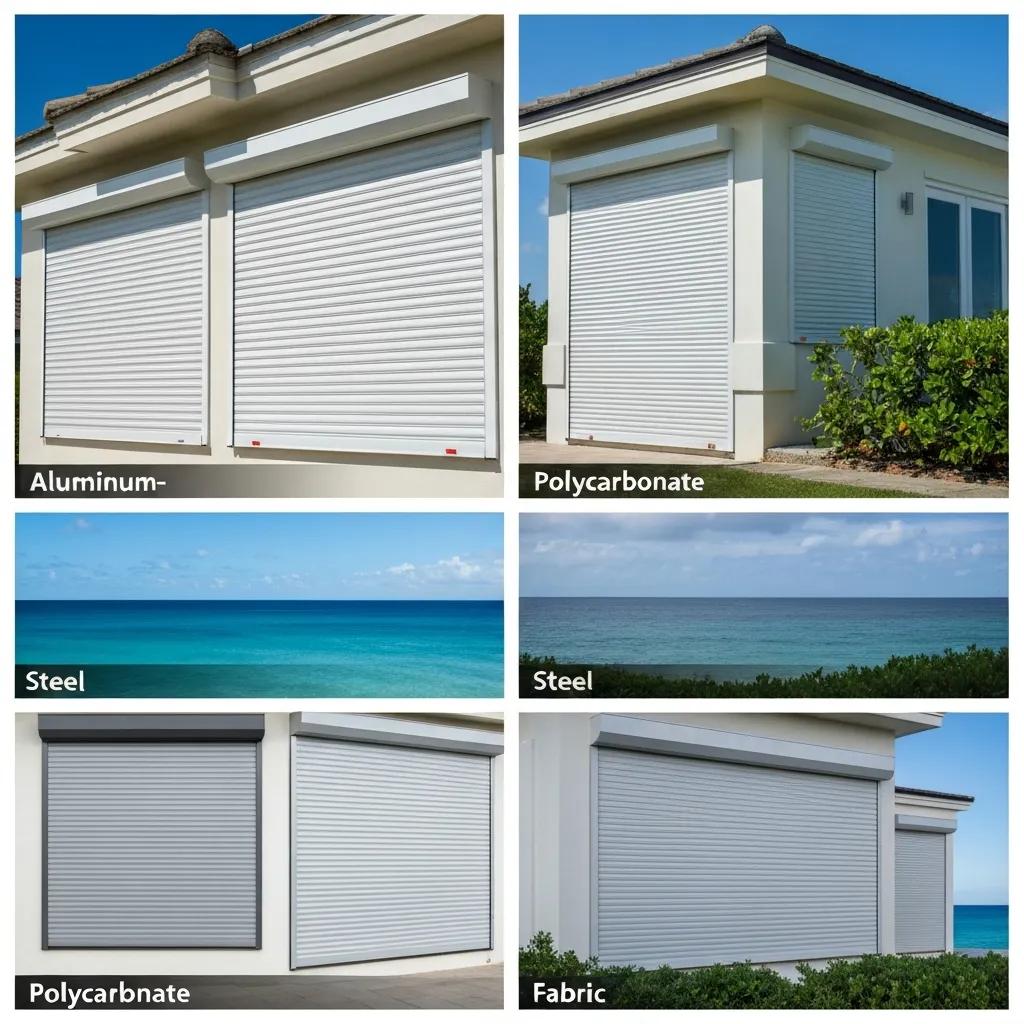
Most roll-down systems use one of a few material families chosen to balance strength, weight, visibility and cost. Typical use-cases look like this: aluminum for lightweight, corrosion-tolerant residential systems; steel for maximum impact and security; polycarbonate when you want transparency with protection; and fabric screens for economical debris control that preserves airflow and views. Knowing the common product names — aluminum roll-down shutters, steel roll-down shutters, polycarbonate roll-down shutters and fabric hurricane screens — makes it easier to understand how parts like slats, motors/actuators, tracks and housings interact with material choice to determine real-world performance. The quick list below summarizes core traits so you can match material strengths to your priorities.
Common roll-down shutter materials and primary use-cases:
- Aluminum: Lightweight and corrosion-resistant; a good fit for most residential coastal and inland applications.
- Steel: Heavy-duty with high impact resistance; chosen where security and maximum protection matter most.
- Polycarbonate: Translucent or transparent options that keep views while offering strong impact resistance.
- Fabric (hurricane screens): Cost-effective, retractable screening that blocks windborne debris while allowing airflow and visibility.
These categories set the decision framework. The sections that follow look closer at aluminum and steel, explaining their trade-offs so you can weigh cost, performance and installation implications.
How Does Aluminum Perform as a Roll Down Shutter Material?
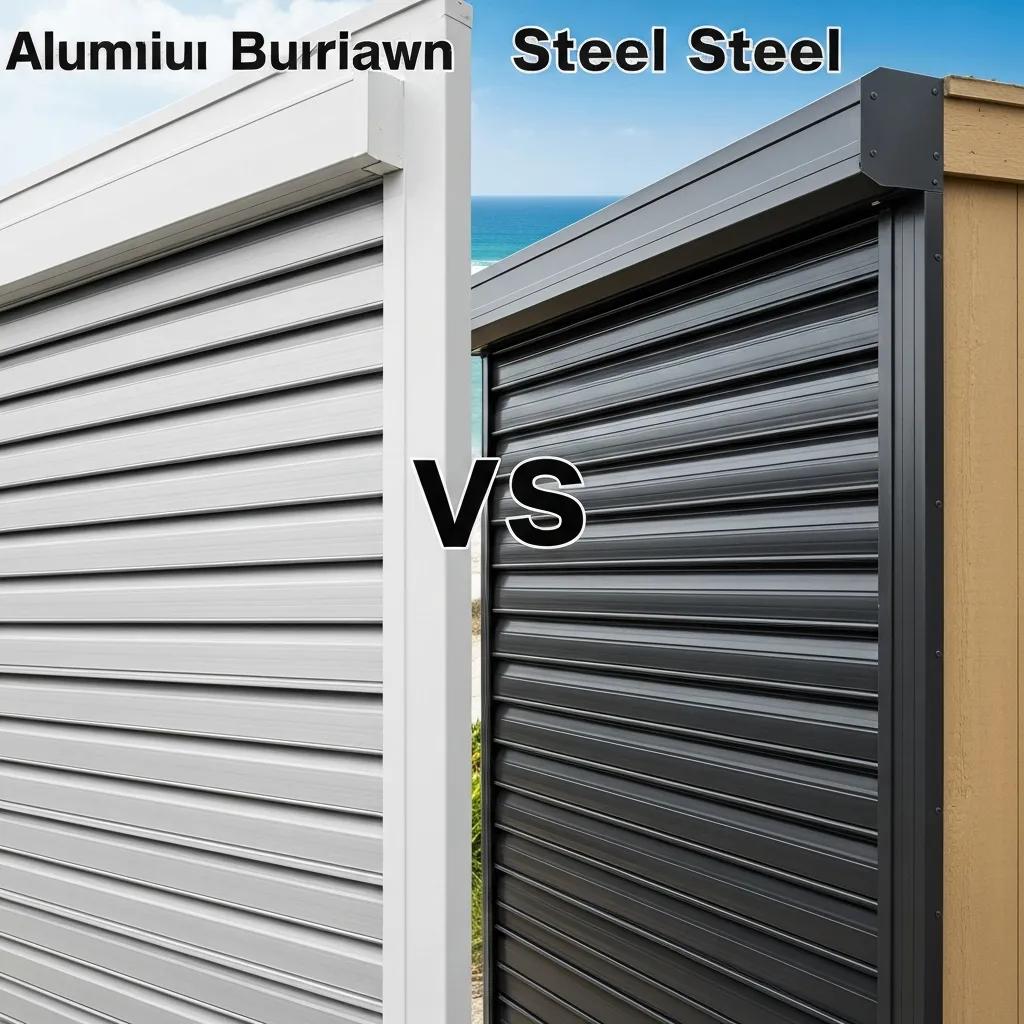
Aluminum is popular because it delivers a strong strength-to-weight ratio and good corrosion resistance when properly finished. Its lightness lowers load on tracks and motors, makes manual operation easier and keeps motorization costs down — while still providing solid wind-load and impact performance for most residential needs. Quality powder-coat finishes and the right alloy improve salt-air resistance, though finish detail and edge treatment matter for long-term durability in harsh coastal environments. For homeowners who want a practical balance of cost, straightforward installation and reliable protection, aluminum is often the sensible choice before stepping up to heavier or specialty materials.
What Are the Features of Steel Roll Down Shutters?
Steel gives you the highest raw impact resistance among standard roll-down materials, making it the go-to when maximum protection or heightened security is required. That strength comes with trade-offs: steel is heavier, so it increases structural and mounting demands, usually requires higher-torque motors (or manual-assist solutions) and needs solid corrosion protection — galvanizing, specialty coatings or stainless options — to hold up near salt air. Installers will check framing and anchor points carefully for steel systems to avoid overstressing tracks and housings. Owners typically accept higher material and labor costs in return for peak strength and a long theoretical service life under heavy use. Knowing these trade-offs helps you weigh steel versus lighter alternatives based on protection goals and budget.
How Does Material Choice Affect the Cost of Roll Down Hurricane Shutters?
Material selection is one of the biggest drivers of installed cost for roll-down shutters. Other factors that move price include motorization, opening complexity, mounting method and local code or engineering requirements. Price-per-square-foot varies by raw material cost, profile complexity, finish needs and the extra labor for heavier units. Lifetime costs depend on maintenance, corrosion control and any insurance savings tied to certified impact ratings. Below we summarize typical installed price ranges so you can have realistic budgeting conversations with installers or use an estimator tool.
Typical installed cost ranges by material (per square foot):
This table reflects common market ranges and shows aluminum frequently offers the best installed value, while steel sits toward the top end because of heavier profiles and reinforcement needs. Remember motorization, custom finishes, oversized openings and local engineering requirements can push a job to the high end of these bands.
Cost drivers to consider before requesting a quote:
- Size and number of openings — more or larger openings increase material and labor.
- Motorized vs. manual operation — motors, controls and wiring add cost.
- Structural reinforcement or retrofitting for heavier materials.
- Coastal finishes or corrosion-resistant options that raise material cost.
For precise, site-specific pricing that accounts for your openings and exposure, use our local specialists’ Get a Free Estimate cost calculator. That step turns the ranges above into an installed price tailored to your property and protection goals.
What Is the Price Range for Aluminum Roll Down Shutters?
Aluminum typically sits in the lower-to-mid range for installed cost while offering a solid mix of performance and durability. Prices rise for thicker extrusions, premium powder-coat finishes for coastal protection, insulated or foamed slats for thermal performance, and motorization with backup power. Standard manual aluminum units for typical residential windows tend to fall near the lower end of the range, which is why aluminum is a common choice for owners who want dependable protection without the premium of steel or specialty polycarbonate systems. Make sure installation labor, electrical for motors and any required structural anchoring are included when you compare quotes.
How Do Steel and Polycarbonate Materials Compare in Price?
Steel and polycarbonate overlap in price but occupy different niches. Steel often costs more to install because of heavier material, reinforced tracks and extra labor for handling and mounting — plus coatings or galvanizing for coastal resistance. Polycarbonate pricing depends on sheet thickness, UV and abrasion coatings, and whether you need specialized transparent slat assemblies; those options push it into the mid-to-high range. In short, pick steel for maximum impact rating and security, or polycarbonate when preserving light and view is important but you still want strong impact resistance.
Which Materials Offer the Best Effectiveness for Hurricane Protection?

Effectiveness depends on how a material translates impact resistance, wind-load capacity and long-term durability into real-world performance through multiple storm events. Installation quality, proper anchoring and certification or testing standards that confirm wind-load and missile-impact performance are just as important as the raw material. Evaluating materials against impact resistance, wind rating and corrosion resistance helps prioritize what matters most for coastal properties, where salt air can accelerate degradation. The table below compares these attributes so you can match material strengths to your protection goals.
Material performance comparison for protection:
Short version: steel leads for raw strength, aluminum balances performance and cost for many homes, polycarbonate protects without blocking views, and fabric screens are a budget or secondary option.
How Does Impact Resistance Vary Among Aluminum, Steel, and Polycarbonate?
Impact resistance depends on construction and thickness. Steel slats give the highest raw resistance to windborne debris and heavy impacts, while aluminum offers moderate impact resistance that is usually sufficient for residential needs when properly engineered. Polycarbonate stands out for energy absorption and shatter resistance while remaining transparent, so it’s a strong choice where you want a view plus protection. Look for recognized wind‑load and missile‑impact test results when evaluating products, and make sure installers translate those test outcomes into properly anchored, certified on‑site installations.
Polycarbonate vs. Aluminum: Impact Strength for Hurricane Shutters
Polycarbonate’s impact strength is comparable to aluminum and zinc; it’s often chosen for applications subject to severe dynamic loading.
Polycarbonate, 2020
Impact performance is a key factor when protecting properties from severe weather. Building codes and testing standards exist to ensure shutters meet required safety levels — always ask for certification details when comparing systems.
What Role Does Durability and Corrosion Resistance Play in Material Effectiveness?
Durability and corrosion resistance matter most on the coast. Salt air and high humidity can speed up degradation unless materials and finishes are chosen to resist them. Aluminum’s natural oxide layer plus good powder coats give strong corrosion resistance, but exposed edges and fasteners are common failure points if not handled correctly. Steel needs galvanizing or robust coatings (or stainless options) to avoid rust that weakens structure. Polycarbonate requires UV-stable grades and protective coatings to prevent yellowing and embrittlement. Fabric systems should use marine-grade meshes and corrosion-resistant hardware. Planned inspections, correct finish selection and routine preventative maintenance preserve impact and wind-load capacity over time.
Hurricane Shutter Performance and Cost Analysis Under Impact
Methods to model probable losses and determine hurricane shutter costs are discussed; building codes along many hurricane-prone coastlines now address shutter performance under impact.
Performance of hurricane shutters under impact by roof tiles, KR Gurley, 2010
Thinking about long-term performance and total cost is essential for homeowners — especially when natural hazards are a real risk.
American Hurricane Shutters supplies roll-down systems in the materials described — aluminum, steel, polycarbonate and fabric — with professional installation options for manual and motorized operation, so homeowners can choose materials and systems installed to meet local codes and performance expectations.
What Additional Benefits Do Different Shutter Materials Provide?
Beyond protection and cost, materials affect energy efficiency, noise reduction, aesthetics and visibility — secondary benefits that often decide a final choice. Thermal properties, fit and sealing, and whether slats are insulated or solid influence heat transfer and how effective shutters are at reducing cooling loads. Noise reduction correlates with mass, slat design and seal quality: heavier, better-sealed systems damp sound more than lightweight screens. Aesthetic options such as color-matched powder coats, exposed or hidden housings and polycarbonate transparency let owners meet architectural goals without sacrificing protection.
How material choices expand functional benefits:
- Energy performance: Thicker or insulated slats block more heat and can reduce cooling loads when closed.
- Noise reduction: Denser materials and tight seals cut wind and rain noise during storms and make interiors quieter.
- Aesthetics and visibility: Polycarbonate preserves views; powder-coat options let you match exterior colors.
These secondary benefits often tip the scales when homeowners are undecided. The next sections explore insulation and noise details, plus transparency and aesthetic trade-offs, to clarify real-world comfort and curb‚Äëappeal impacts.
How Do Materials Influence Energy Efficiency and Noise Reduction?
Materials affect energy performance through thermal conductivity and how well a shutter seals an opening. Insulated or foamed slats reduce conductive heat flow better than thin, uninsulated profiles. In warm coastal climates, shutters that limit solar gain can lower cooling needs—especially on west- and south-facing windows—while tight housings and perimeter seals reduce air infiltration. Noise control follows the same physics: heavier slats, denser assemblies and snug installation absorb and block sound better than lightweight fabrics or perforated profiles. Asking about R-value equivalents and emphasizing seal quality during installation will produce measurable comfort benefits year-round.
What Are the Aesthetic and Transparency Options for Polycarbonate and Fabric Shutters?
Polycarbonate roll-down shutters offer translucent or fully transparent choices that keep daylight and outward views while still resisting impacts — useful for waterfront homes or storefronts that need visibility. Fabric hurricane screens have minimal visual impact when retracted and allow light and airflow when deployed, making them a low-profile option but with less structural protection. Aluminum and steel can be finished in a wide range of powder-coat colors and housing styles to match design goals while delivering opaque security. Your priorities — preserving the view, a seamless facade, or full opacity for security — should guide the material decision.
How Does Material Choice Impact Installation and Maintenance of Roll Down Shutters?
Material choice affects installation complexity, structural reinforcement needs, motor sizing and ongoing maintenance. Heavier materials require stronger mounts, possibly longer install times, and more robust actuators for motorized systems. Serviceability matters too: consider track accessibility, motor replacement ease and whether parts like slats, housing cassettes and brackets are modular for field repairs. Maintenance schedules differ: aluminum usually needs minimal upkeep beyond cleaning and seal checks, steel calls for more frequent corrosion inspections and recoating, polycarbonate needs UV and scratch monitoring, and fabric screens require regular cleaning and tension checks. The table below summarizes installation complexity and maintenance expectations.
Installation and maintenance implications by material:
Material choice affects both the immediate installation scope and the long-term maintenance budget. Planning inspections and preventive care preserves protective performance and keeps lifecycle costs manageable.
Lifecycle Cost Analysis of Buildings Under Hurricane Risk
A lifecycle cost analysis examines residential buildings under natural hazard risk, including hurricanes; it helps quantify long-term costs and benefits of protective measures.
A lifecycle cost analysis of residential buildings including natural hazard risk, A Noshadravan, 2017
Understanding lifecycle cost in hurricane-prone areas helps homeowners make better long-term investment choices for protective measures.
What Are the Installation Differences Between Manual and Motorized Shutters by Material?
Motorization changes the installation picture: actuators, control wiring and possible backup power add cost and require technical work. Heavier materials like steel need higher-torque motors and reinforced mounting to ensure reliable operation. Manual systems avoid electrical work but increase physical effort and may need counterbalances on larger units. Aluminum typically pairs easily with compact motors; steel installations usually call for higher-torque actuators and accessible motor housings for upkeep. Installers size motors based on weight per linear foot, expected cycles and emergency operation needs — and they balance those constraints with homeowner preferences for automation, remote control or battery backup. Correct motor sizing and matched anchors protect warranties and prolong system life.
How Often Is Maintenance Required for Each Material Type?
Maintenance frequency depends on material and exposure. Aluminum systems generally need an annual inspection, cleaning and lubrication, plus occasional finish touch-ups to avoid localized corrosion. Steel benefits from biannual checks and proactive recoating in coastal settings. Polycarbonate should be inspected yearly for UV degradation, scratches and seal integrity; fabric screens require seasonal cleaning, tension checks and hardware inspection. Track maintenance actions, schedule seals and use recommended cleaning agents to extend service life and forecast cumulative costs over a 10-year period. Regular care keeps systems performing as rated and supports insurance or resale documentation.
How Can Homeowners Choose the Best Material for Their Roll Down Hurricane Shutters?
Choosing the right material follows a simple framework that balances protection needs, budget, aesthetic goals, maintenance tolerance and local exposure. Start with exposure and protection priorities, then add budget and secondary benefits like visibility or energy performance. The checklist below orders the steps so you arrive at a practical recommendation and the right questions for installers. After completing the checklist, request a site assessment and a tailored estimate to finalize cost and installation details for your property.
A prioritized checklist to choose material:
- Assess Exposure: Is the property beachfront, near barrier islands, or inland? That determines corrosion and wind-load priorities.
- Set Protection Goal: Do you need maximum impact protection, to preserve the view, or basic debris screening?
- Budget and Lifecycle: Compare upfront cost against expected maintenance over 5–10 years and potential insurance impacts.
- Operational Preference: Manual or motorized — choose based on convenience and structural constraints.
- Aesthetics and Light: Polycarbonate for visibility; aluminum or steel for opacity and security; fabric for minimal visual impact.
Following these steps gives you a clear recommendation path and prepares you to ask the right questions of installers. When you’re ready to move from planning to pricing, request a site-specific assessment and Get a Free Estimate using our cost calculator to turn these choices into an accurate installed price for your openings and exposure.
What Factors Should Influence Your Material Selection?
Prioritize exposure and required protection level first, then layer in budget, maintenance tolerance and aesthetics. Protection level includes expected wind loads and the likelihood of windborne debris; coastal homes must emphasize corrosion resistance and robust finishes, while inland properties can place more weight on cost or transparency. Budget planning should include expected maintenance cycles and replacement intervals to estimate total cost of ownership. Finally, operational preferences — automated convenience versus manual simplicity — affect motor sizing and sometimes rule out certain materials for large openings.
How Do Local Conditions in North and South Carolina Affect Material Performance?
Coastal North and South Carolina bring salt-laden air, high humidity and frequent tropical storm exposure — conditions that accelerate corrosion unless materials and finishes are specified for marine environments. Aluminum with high-quality powder coats or anodized finishes usually offers a good corrosion profile for these areas. Steel requires galvanizing or regular recoating to remain reliable. Polycarbonate used near the coast should be UV-stabilized with abrasion-resistant coatings. Fabric screens must be fitted with marine-grade mesh and corrosion-resistant hardware. Local codes and inspection practices can affect anchoring and engineering requirements, so build regional installation and maintenance plans into your decision.
- Regional maintenance tip: Schedule an annual coastal inspection for corrosion-prone components.
- Installation tip: Specify marine-grade fasteners and sealed housings for coastal deployments.
- Documentation tip: Keep records of finishes and inspections to support insurance considerations.
These local steps help ensure your shutters stay effective against the environmental stresses common along the NC/SC coast.
Frequently Asked Questions
What are the key factors to consider when choosing roll-down hurricane shutters?
Focus first on exposure and the level of protection you need. Then weigh budget, installation type (manual vs. motorized), maintenance appetite, and aesthetic goals. Consider energy efficiency and noise reduction if those matter to you. That combination of priorities will point you to the material and system that fits your home.
How do local weather conditions affect the performance of hurricane shutters?
Local weather — especially salt air and high humidity along the coast — accelerates corrosion and material wear. Choose materials and finishes rated for marine exposure and plan regular inspections in coastal areas to keep performance reliable over time.
What maintenance practices are recommended for different shutter materials?
<!– /