
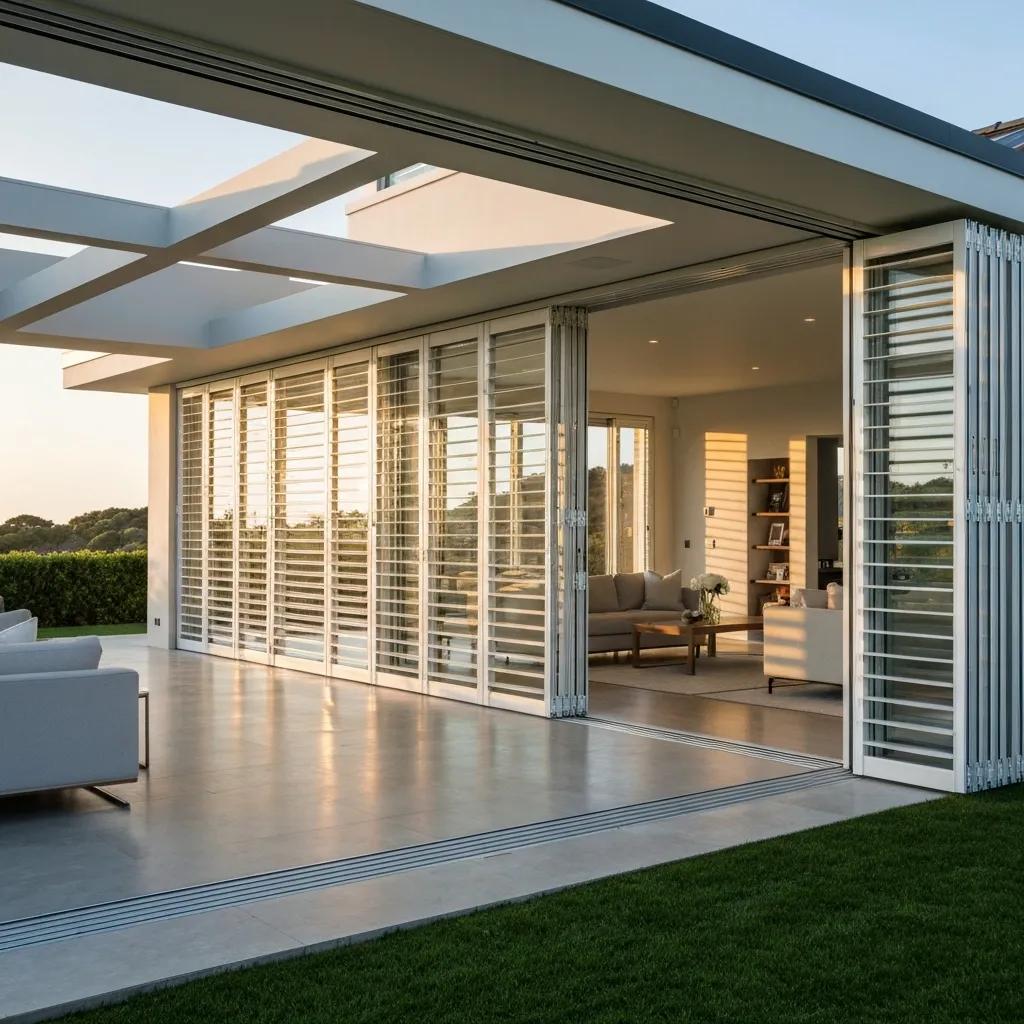
How Accordion Shutters Raise Your Home’s Value: Savings, Security, and Curb Appeal
Accordion shutters are hinged, multi-panel barriers that fold beside windows and doors and lock into place to protect openings during storms. They add measurable value by reducing storm-damage risk, cutting operating costs through insurance and energy savings, improving curb appeal with customizable finishes, and offering a visible security feature buyers understand. This article walks coastal North and South Carolina homeowners through those value drivers, gives practical examples and ROI guidance, compares accordion shutters to other hurricane protections, and explains how insurance, energy performance, installation, and maintenance affect resale value. We use clear comparisons and simple tables to show trade-offs and include checklists you can use when buying and caring for shutters.
How Do Accordion Shutters Increase Your Home’s Resale Value?
Accordion shutters help resale value in three main ways: they lower the chance of wind and water damage, they cut expected repair and operating costs, and they signal to buyers that the home is storm-ready. Built from aluminum panels and reinforced locking rails, shutters limit damage from debris and reduce post-storm repair needs—facts that increase buyer confidence in coastal markets and can shorten time on market. Sellers can present shutters as a functional, attractive upgrade that stands out in competitive neighborhoods. Below we break down typical ROI ranges and show a simple payback scenario so you can quantify the upgrade.
Expected ROI depends on upfront cost, local market conditions, and how many openings you protect. A conservative industry guideline is that well-documented accordion shutters can recover a meaningful portion of their cost through higher buyer interest and avoided repair risk, with payback influenced by insurance savings and avoided storm damage. The EAV comparison below shows how accordion shutters stack up against other hurricane protection options on financial and durability attributes.
Different hurricane protection options have distinct cost, durability, and maintenance profiles that affect long-term resale impact.
Use this table to match protection choice to your budget and resale goals. For many coastal homes, accordion shutters strike a practical balance between cost, protection, and curb appeal.
What Return on Investment Can Homeowners Expect from Accordion Shutters?

Accordion shutters deliver ROI through avoided repair costs, potential insurance savings, and often quicker sales. Exact returns depend on storm frequency, home value, and how many openings are protected. For a typical coastal home, a mid-range installation covering main windows and doors combined with modest annual insurance savings can produce net positive returns over a 10-year horizon—especially in higher-risk zones. Key variables that change ROI include the share of glazing protected, local demand for storm-hardened homes, and whether your shutters meet recognized standards. We recommend conservative assumptions and local market checks when estimating resale premiums.
To get practical numbers, use a cost calculator or request a professional estimate that models your property and likely insurer responses. American Hurricane Shutters offers free accordion shutter estimates and an online cost calculator to help translate general ROI guidance into a property-specific projection and to prepare the documentation insurers and buyers may ask for.
How Do Accordion Shutters Compare to Other Hurricane Protection Options?
Accordion shutters often offer the best mix of cost, ease of use, and long-term value compared with roll-down shutters, impact windows, and storm panels. They typically cost less than full impact windows, are faster to deploy than storm panels, and are usually more affordable than many motorized roll-down systems while still providing continuous attachment and sturdy locking hardware. Lifespan and maintenance vary: impact windows are permanent and low-maintenance but cost more up front; accordion shutters need periodic inspection but can be repaired or upgraded section by section. The summary below highlights key attributes to guide choices based on protection needs and resale strategy.
A direct comparison makes it easier to pick the right option for different homeowner priorities.
This side-by-side view shows accordion shutters can give sellers solid protection and flexibility while keeping costs controlled.
How Can Accordion Shutters Lower Your Home Insurance Premiums?
Yes—accordion shutters can reduce home insurance premiums when they meet your insurer’s qualifying criteria. Insurers commonly offer credits for storm-mitigation measures; shutters that meet testing or installation standards can qualify for premium reductions. The logic is simple: shutters lower the chance of expensive wind and water claims, and insurers price policies to reflect that reduced risk. Below we list common discount types and the documentation insurers usually request.
Insurers typically require verification of approved products, proof of professional installation, and sometimes an inspection before applying discounts. Industry ranges for premium reductions often run from low single digits up to the mid-teens, depending on carrier and region. To capture savings, keep product specs, installation receipts, and any test or compliance reports handy. The table below shows typical discount types, qualifying criteria, and example annual savings by home value.
Validated installations can produce meaningful annual savings that improve total cost of ownership over time.
What Insurance Discounts Are Available for Homes with Accordion Shutters?
Typical discounts include storm-mitigation credits and wind-resilience adjustments; amounts depend on documentation and local underwriting. Many carriers offer reductions in the 5–15% range when qualifying features are documented, though exact percentages vary. Insurers usually ask for product specifications, proof of professional installation, and sometimes on-site inspection reports. Homeowners in coastal North and South Carolina should talk with their carrier early and gather the paperwork needed for an insurance-savings review—something we can include with a free estimate.
Prepare documentation and request a savings review during installation planning to maximize the chance of capturing available discounts. American Hurricane Shutters can include this review with a free accordion shutter estimate to help you identify insurer requirements and assemble qualifying materials.
Storm Shutters: Insurance Recommendations for Loss Minimization
Storm shutters are recommended—and in some cases required by carriers—to reduce loss during storms.
Insurance and the Art Market, 2012
How Do Insurance Savings Contribute to Overall Home Value?
Ongoing premium reductions convert into present-value savings that make a property more attractive to buyers and factor into operating-cost projections appraisers and purchasers consider. For example, steady savings of a few hundred dollars a year lower expected ownership costs and can justify small premium adjustments in offers. Over 5–10 years, cumulative savings boost returns from the initial shutter investment and can be highlighted in listings to differentiate storm-ready homes. Common buyer benefits include:
- Lower annual expenses that improve cash-flow for owners and investors.
- Reduced perceived risk that can shorten marketing time and attract safety-conscious buyers.
- Documented mitigation measures that strengthen listing narratives and appraisal notes.
Positioning insurance savings as part of long-term operating-cost improvement helps sellers show shutters as a financially sensible upgrade rather than just defensive hardware.
How Do Accordion Shutters Enhance Home Security and Protection?
Accordion shutters add security by creating a durable physical barrier that resists forced entry while protecting glass from storm debris. Mechanical locks, reinforced rails, and full coverage over openings make break-ins harder than with unprotected windows or temporary panels. Buyers value this dual-purpose protection—storm readiness plus intrusion resistance—which adds perceived value beyond weather-related savings. Explaining how hardware features and code-rated performance reduce liability and theft risk is key to showing full protection value.
In What Ways Do Accordion Shutters Deter Intruders and Protect Property?
Accordion shutters deter intruders with visible, physical resistance: continuous aluminum panels, keyed locks, and secure mounting hardware make breaking glass and forcing entry impractical. Reinforced rails and tamper-resistant fasteners increase the time and effort required, often discouraging opportunistic burglars. Buyers appreciate passive, always-on security that doesn’t rely on electronics. This dual-use benefit—security plus storm protection—strengthens listing language and appeals to coastal buyers who want year-round peace of mind.
When buyers see certified shutters, they often infer both lower storm risk and improved burglary resistance—two practical reasons they may make stronger offers.
How Do Accordion Shutters Meet or Exceed Building Code Standards?
Many accordion shutters are designed and tested to meet wind-load design pressure and missile-impact standards referenced in coastal building codes; a common benchmark is the Florida Building Code. Compliance depends on product testing, certified ratings, and correct installation to achieve specified performance. Keeping test reports, ratings, and installation records supports permits and insurer recognition. Homeowners should confirm local North and South Carolina code requirements and keep compliance documents for resale and insurance purposes.
Because the Florida Building Code is a well-recognized benchmark for high-wind areas, shutters that meet or exceed its standards send a strong performance signal to buyers and insurers in coastal markets.
What Energy Efficiency Benefits Do Accordion Shutters Provide?

Accordion shutters help energy efficiency by blocking solar heat in summer and adding a barrier that reduces convective heat loss in cooler months. The main mechanisms are exterior shading and an air gap between the shutter and the glass that lowers heat transfer, producing measurable seasonal benefits in sunny coastal climates. Exact savings depend on window orientation, area, and local weather, but shutters can noticeably reduce peak cooling loads and smooth temperature swings. The table below summarizes typical energy impacts and likely utility changes.
This snapshot helps homeowners estimate dollar savings and see how shutters contribute to total operating-cost reductions.
How Do Accordion Shutters Help Reduce Utility Bills?
By shading windows from direct sun, shutters reduce indoor radiant heat and ease the load on air conditioning during peak periods. On west- and south-facing exposures, shutters can cut peak cooling demand noticeably, and the extra barrier helps moderate overnight heat loss or gain. Typical owners see single-digit percentage drops in annual HVAC energy use, with bigger savings during peak cooling months. To estimate dollar impact, consider window orientation, window-to-wall ratio, and your local utility rates—and treat shutters as one part of a broader efficiency plan.
Pairing shutters with measures like added insulation and smart thermostat settings amplifies savings and strengthens the value story for buyers who care about long-term costs.
Why Is Energy Efficiency Important for Coastal Homebuyers?
Energy efficiency matters to coastal buyers because operating costs and climate exposure influence purchase choices—especially for second homes and rentals where monthly expenses affect returns. Buyers increasingly prefer homes with features that lower ongoing costs and environmental impact; shutters that deliver seasonal savings are a clear differentiator. Efficiency also affects comfort and equipment sizing—smaller HVAC demands can lower replacement costs and support resilient system choices. Highlighting documented energy benefits alongside storm protection makes shutters a multi-benefit upgrade that appeals to cost- and climate-conscious buyers.
Framing efficiency as part of operating-cost transparency gives sellers a credible financial story that resonates with modern coastal buyers.
How Do Accordion Shutters Improve Your Home’s Curb Appeal?
Accordion shutters can enhance curb appeal when chosen and installed to match a home’s style. Low-profile or color-matched designs integrate with the architectural details common in coastal North and South Carolina so protection doesn’t look like an afterthought. Manufacturers offer finishes and profiles that blend with trim and siding, letting shutters read as intentional design elements. A cohesive exterior presentation helps listings show a home that looks cared for and storm-ready—an advantage many buyers appreciate. Below are common style and customization options that preserve aesthetics while keeping function.
What Styles and Customizations Are Available for Accordion Shutters?
Accordion shutters come in a range of finishes, powder-coat color matches, and low-profile rails that reduce visual impact when stowed, so homeowners can tie the look to local coastal styles. Options include custom powder-coat colors to match trim, slimline panel profiles, and integrated end caps for a clean finish around openings. Custom sizing and trim integration help shutters sit flush and respect architectural lines, and hardware finishes can complement door and window fittings. These choices let shutters act as thoughtful exterior accents that support, rather than detract from, curb appeal.
Common customization categories homeowners choose to prioritize visual integration include:
- Finish matching: powder-coat colors that coordinate with existing trim and siding.
- Profile selection: low-profile rails and slim panels for a discreet look when stowed.
- Hardware options: keyed locks and decorative end caps that blend function with design.
With these options, shutters can enhance curb appeal while keeping full protective performance.
How Does Enhanced Curb Appeal Influence Property Value?
Better curb appeal affects property value by improving first impressions, suggesting good maintenance, and positioning a home as turnkey for buyers who value resilience and design. Homes with high-quality, integrated shutters often spend less time on market and can attract higher offers because buyers don’t factor in immediate upgrades. Simple presentation steps—professional photos showing shutters stowed and blended into the façade—help communicate readiness and become listing differentiators. In practice, curb appeal improvements compound with documented insurance and energy benefits to make a stronger overall value case for buyers.
Linking visual upgrades to operational and protection benefits gives buyers multiple practical reasons to value the improvement beyond looks alone.
What Should You Know About Accordion Shutter Installation and Maintenance?
Correct installation and routine maintenance are essential to preserve performance, warranty coverage, and resale documentation; poor installation can void insurer recognition and reduce protective value. Professional installers ensure proper mounting, structural anchoring, and sealing needed for rated wind-load performance and smooth operation. Maintenance focuses on cleaning tracks, checking locks, and occasional lubrication to keep deployment reliable. The checklist below outlines seasonal tasks and typical attention intervals to extend service life and maintain resale-ready condition.
This checklist gives clear steps owners can follow to keep shutters effective and marketable.
- Seasonal Inspection: Check tracks, rollers, and panel alignment before and after hurricane season.
- Hardware Maintenance: Inspect and lubricate locks and hinges annually to ensure smooth operation.
- Cleaning and Finish Care: Rinse salt and debris from tracks and panels regularly in coastal environments.
How Does Professional Installation Affect Shutter Performance and Value?
Professional installation matters because it ensures shutters meet attachment, sealing, and alignment specs needed for rated wind performance and warranty compliance. Installers experienced with coastal jobs choose proper fasteners, confirm substrate strength, and provide the documentation insurers and permitting authorities require for discounts or approvals. Correct installation reduces failure risk during storms, preserves life-cycle performance, and supplies the receipts and certification buyers and insurers use to validate protections. When selling, keeping installation records strengthens disclosure and supports your value claims.
Ask installers for proof of coastal installs, verify qualifications, and request a documentation package (scope, product specs, and receipts) to include in the property file for resale.
What Are the Maintenance Requirements for Accordion Shutters?
Routine maintenance focuses on track and hardware care, corrosion checks in salt-air environments, and operational testing so shutters deploy and lock reliably. Annual tasks typically include cleaning grit from tracks, inspecting and lubricating locking mechanisms, and checking panel fasteners and anchors for looseness or corrosion. Maintenance costs are usually modest—time and small parts—compared with replacement or storm-repair expenses. Timely attention preserves warranties and resale documentation; schedule periodic professional inspections in addition to DIY checks to catch less obvious problems early.
Keeping a simple maintenance log with inspection dates and services performed adds credibility to resale claims and supports insurance reviews that may request proof of upkeep.
American Hurricane Shutters provides professional installation, free accordion shutter estimates, and service support across coastal North and South Carolina—including Wilmington, Myrtle Beach, Oak Island, Topsail, New Bern, and Pawleys Island. Our teams focus on meeting or exceeding recognized building-code benchmarks and can include an insurance-savings review with your free estimate to help document qualification for potential premium discounts. If you’re ready to evaluate options, request a professional estimate and a documented cost calculation to quantify protection and resale-value impacts.
Frequently Asked Questions
What are the key factors to consider when choosing accordion shutters?
Focus on material strength, ease of operation, and how the shutters will look on your home. Choose high-quality aluminum or reinforced materials rated for coastal conditions. Consider whether professional installation is required and compare customization options like color and profile to preserve curb appeal. Review warranty terms and expected maintenance so the shutters retain value over time.
How do accordion shutters affect energy efficiency in different climates?
Accordion shutters improve efficiency in hot climates by blocking solar heat and in cooler climates by adding an insulating barrier. The benefit depends on window orientation, local climate, and window area. In sun-heavy coastal regions, shutters can noticeably reduce peak cooling demand; in milder climates they provide modest insulation. Use shutters alongside other efficiency measures for best results.
Can accordion shutters be installed on any type of window or door?
Yes—accordion shutters can fit most windows and doors, including sliding glass doors and French doors. Installation varies by opening size and design, so consult a professional installer to ensure proper fit and code compliance. Custom sizing options are available for unique architectural features.
What maintenance practices are recommended for accordion shutters?
Inspect and clean tracks and rollers regularly, lubricate locks and hinges annually, and check for corrosion in coastal areas. Clean panels with mild soap and water to preserve finish. Keep a maintenance log for warranty and resale purposes; it helps validate condition for buyers and insurers.
How do accordion shutters impact home insurance claims?
Properly installed and documented shutters can reduce storm damage risk and may qualify you for insurance discounts. In a claim, shutters show proactive risk management and can speed claims processing. Keep installation records and code-compliance documents to support negotiations with your insurer.
What are the aesthetic benefits of installing accordion shutters?
Shutters come in many finishes and colors and can be designed to tuck away with minimal visual impact. When matched to trim and siding, they enhance curb appeal and read as intentional design rather than an add-on. That improved presentation can make a strong first impression and broaden buyer appeal.
Are there any financing options available for accordion shutter installation?
Many providers offer financin
