
Are roll-down hurricane shutters a smart investment for storm readiness? Costs, benefits and long‚Äëterm value
Roll-down hurricane shutters are a deployable exterior system that covers windows and openings to stop wind-driven debris — and they also bring insurance, energy, and security advantages. This guide walks you through how roll-down shutters work, the common materials and motorization choices, and what owners in North and South Carolina should expect for costs and local return on investment. Coastal homeowners often wrestle with whether shutters pay off through reduced damage, insurance savings, code compliance, and everyday utility; here you’ll find practical, evidence-based factors and real-world examples to help decide. You’ll learn what these systems do, typical cost ranges and cost drivers, the main benefits (including likely insurance and energy savings), how motorized and manual units compare, and how to choose, install, and care for shutters so they deliver value over their service life. The article naturally uses search-friendly terms like roll down shutters cost, motorized roll down shutters, aluminum roll down shutters, hurricane shutter ROI, and insurance discounts for hurricane shutters to match homeowner search intent and local decision needs.
What are roll-down hurricane shutters and how do they protect your home?
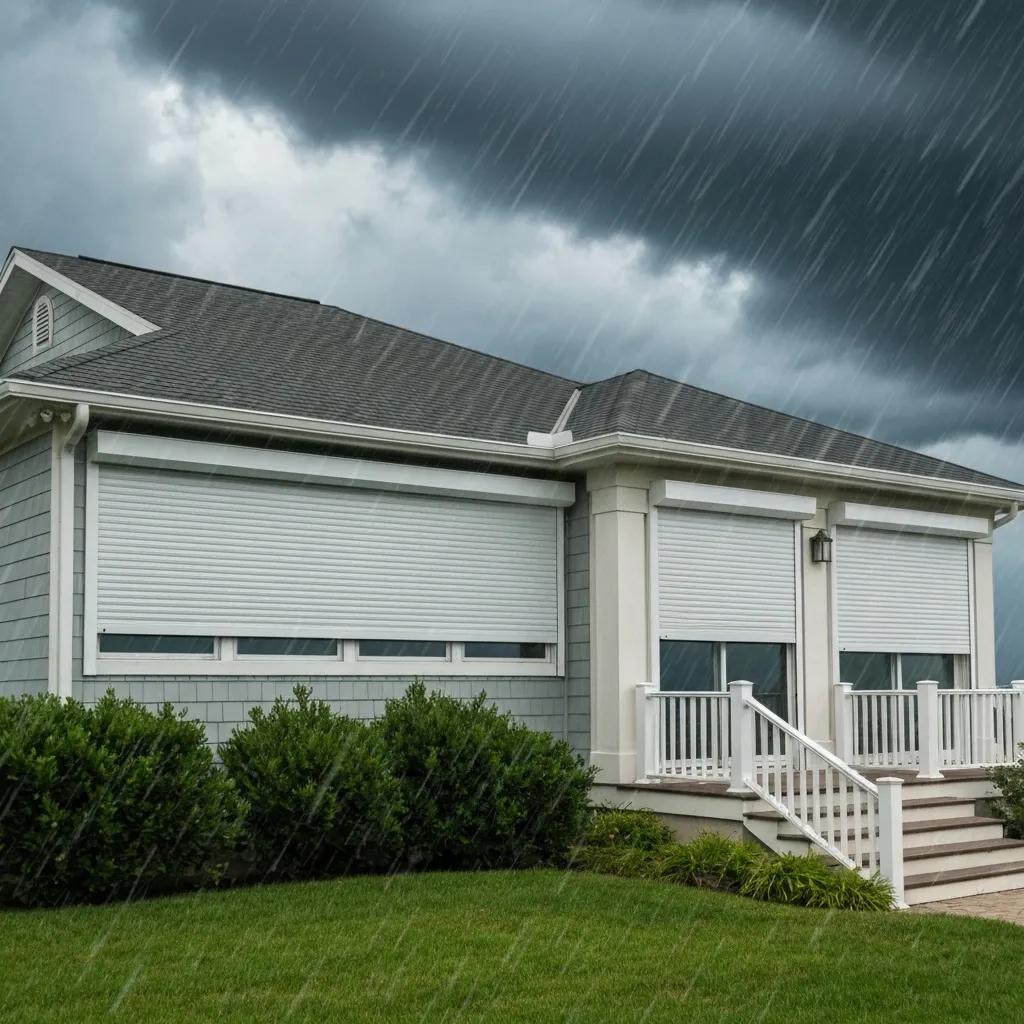
Roll-down hurricane shutters store in a compact housing above the opening and roll down vertically to cover windows or doors, forming a rigid, impact-resistant barrier. Interlocking slats travel in side channels and transfer wind and debris loads into the building’s structure, protecting glass and interior finishes from strikes and extreme pressure changes. A solid housing, secure channels, and reliable locks minimize glass breakage and the water intrusion that follows, and closed shutters also act as a visible deterrent to forced entry. Knowing how these components work together explains why roll-down systems are recommended for high‑exposure coastal properties and why their performance is checked against building codes and impact-rating standards.
What types and materials are available for roll-down hurricane shutters?
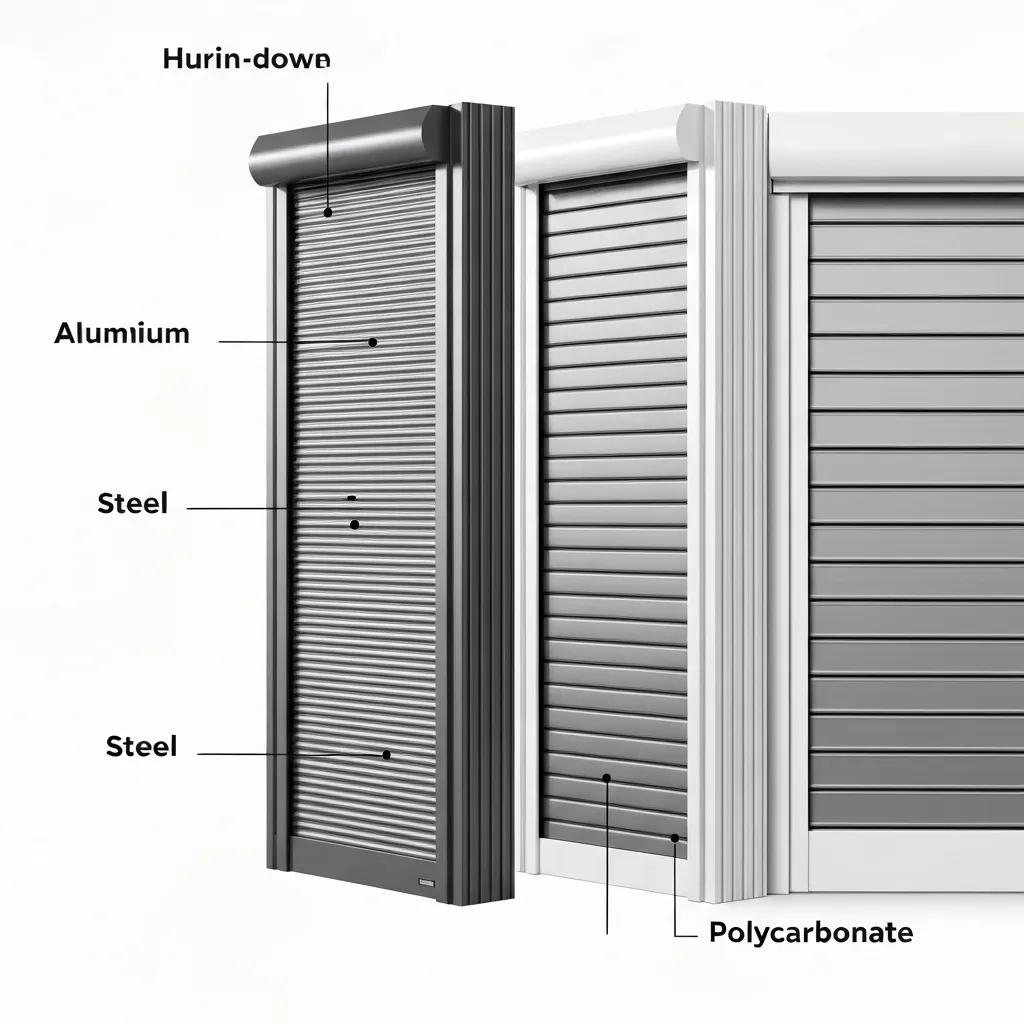
Roll-down shutters are commonly offered in aluminum, steel, and polycarbonate, with choices made to balance strength, corrosion resistance, appearance, and maintenance. Aluminum is a lightweight, corrosion‚Äëresistant favorite for salt‚Äëair environments. Steel gives higher raw impact strength but needs quality coatings to resist rust in coastal climates. Polycarbonate slats let daylight through while resisting impacts, though they require UV stabilization to avoid yellowing and scratching over time. When picking a material, consider coastal durability, powder‚Äëcoat color options, and ongoing upkeep to match exposure and aesthetic priorities.
Common roll-down shutter materials and selection factors:
- Aluminum: Lightweight, corrosion-resistant — a common choice where salt spray is a concern.
- Steel: Greater structural strength but needs corrosion protection for coastal use.
- Polycarbonate: Lets light in while giving impact resistance; good for select openings.
The material you choose affects lifecycle performance and installation complexity, which in turn drives price — so material selection is a key early decision.
How do roll-down shutters provide superior storm protection?
Roll-down shutters protect by absorbing and redirecting impact energy through the slats, housing, side channels, and anchor points, keeping direct forces from reaching the glass. Proper anchorage moves wind loads into the structural frame so glazing isn’t exposed to the storm’s full dynamic pressure, and the sealed barrier limits the water intrusion that follows window failure. Beyond impact and wind-load control, shutters add security by creating a visible, physical obstacle that deters break-ins and later‑stage storm damage. Understanding these load paths and sealing details is important when you compare products and verify whether a system meets local codes and insurer documentation requirements.
If you’re exploring installed options, local providers offer roll-down systems matched to exposure and code; American Hurricane Shutters installs roll-down shutters and provides an online cost calculator for quick, localized estimates to help move from planning to budgeting.
How much do roll-down hurricane shutters cost in North and South Carolina?
Installed cost varies by material, motorization, and opening complexity. Prices are typically quoted per square foot and then scaled to sample home scenarios. As a starting point: installed per-square-foot costs change with material and features, so the total for a modest single‚Äëstory coastal home will depend on those choices. Major cost drivers include material (aluminum, steel, polycarbonate), whether units are motorized, retrofit complexity for custom openings, local labor rates, and permit requirements. The sections that follow break these drivers into actionable factors so you can estimate likely costs for your property.
What factors influence the cost of roll-down hurricane shutters?
Installed price is shaped by several predictable factors: material and finish, motorization and controls, retrofit complexity (arches, trim, custom widths), labor and permit fees, and extras like locks or battery backup. Motorized systems add a premium for the motor, wiring, and controls — and possibly for smart‑home integration — while complex retrofits that need header reinforcement or custom housings increase labor time. Coastal exposure also affects selection: higher‑grade finishes and corrosion‑resistant hardware cost more upfront but lower maintenance down the line. Combining these variables helps build realistic sample budgets for single‑story versus multi‑story homes and for simple versus ornate openings.
Cost-influencing factors (summary list):
- Material and finish: sets the baseline per-square-foot price.
- Motorization and controls: adds equipment and installation labor.
- Retrofit complexity and permits: can significantly increase labor and time.
Below is an EAV-style breakdown that shows how these components add up to your final installed price.
Understanding each cost component highlights where budget choices create the biggest price swings.
How does professional installation affect overall pricing and performance?
Hiring a professional raises upfront labor costs compared with DIY, but it protects performance, ensures correct load transfer to the structure, and preserves manufacturer warranties — all of which lower lifecycle risk and future repair expenses. Proper anchorage, watertight sealing, and code‑aligned installation require trained crews and generally produce more consistent, compliant outcomes. By contrast, poor installation can lead to leaks, failed anchorage under load, and voided warranties, which increase lifetime cost. For many homeowners the extra initial cost pays off through fewer repairs, documented compliance for insurance, and better resale value.
Professional installation trade-offs:
- Higher upfront labor cost: pays for certified skills and the right tools.
- Improved performance and warranty protection: reduces long-term risk.
- Code documentation: simplifies permitting and insurer verification.
If you want a localized estimate, practical next steps include using a cost tool or requesting a free estimate; American Hurricane Shutters offers an online cost calculator and free estimates to help homeowners get personalized pricing and move from planning to firm budgets.
What are the key benefits of investing in roll-down hurricane shutters?
Roll-down shutters combine storm protection, potential insurance savings, energy-efficiency gains, and improved security — giving coastal homes a multi-layered value proposition. The primary benefit is preventing window failure and interior water intrusion during storms, which avoids costly repairs and reduces displacement risk. Secondary financial benefits include possible reductions in insurance premiums and stronger property value because documented mitigation measures lower risk ratings for insurers and appraisers. Operational perks like noise reduction, UV protection, and seasonal energy savings add everyday value outside storm season, strengthening the long-term hurricane shutter ROI homeowners should weigh against installation and maintenance costs.
Below is a clear comparison of key benefits and the typical ranges where industry reporting suggests measurable impact.
How do roll-down shutters increase property value and reduce insurance premiums?
Certified, documented mitigation measures like roll-down shutters can improve a property’s risk profile, which may lead to appraisal benefits and insurance premium reductions — many insurers offer discounts for verified hurricane protection systems. Industry reports typically cite insurance discounts in the 5%–15% range for qualified installations; those savings can speed payback when paired with avoided storm repair costs. At resale, buyers in high‑exposure markets value documented protective features, which can mean stronger offers or faster sales. Homeowners should keep product ratings and installation records handy for insurers and appraisers to substantiate discounts or value adjustments.
Cost-Benefit Analysis of Cyclone Shutters for Housing Damage Reduction
A cost–benefit assessment for this climate adaptation found that cyclone shutters can reduce damage risk by roughly 80%. Requiring shutters in cyclone-prone new housing is a cost-effective way to limit damage to homes.
Climate Impact and Cost-Effectiveness of Window Shutters to Reduce Roof Sheeting Wind Damage to Contemporary Australian Housing, MG Stewart
In what ways do roll-down shutters enhance energy efficiency and home security?
Roll-down shutters act as an extra insulating layer over glazing, cutting conductive and convective heat transfer, lowering peak cooling demand in summer and stabilizing interior temperatures in shoulder seasons. Reduced solar gain can modestly shorten HVAC run times, producing seasonal energy savings when used consistently. Shutters also dampen exterior noise and protect interiors from UV exposure, preserving finishes. On security, they form a physical barrier that complicates forced entry — a practical safety gain that also improves perceived value for occupants and appraisers.
Factor these steady energy and security benefits into lifecycle calculations alongside installation and maintenance costs; together they strengthen the overall ROI case.
Risk-Cost-Benefit Assessment of Hurricane Mitigation for Residential Buildings
This work presents a risk–cost–benefit framework for evaluating mitigation strategies for natural hazards, applying the method to hurricane and earthquake risks. It helps quantify the costs and benefits of mitigation options for residential buildings in hurricane-prone areas.
Assessment of damage risks to residential buildings and cost–benefit of mitigation strategies considering hurricane and earthquake hazards, Y Li, 2012
Are motorized roll-down shutters worth the extra investment?
Yes — for many homeowners motorized roll-down shutters are worth the added cost when quick deployment, safety during an approaching storm, and frequent use matter. Motors add convenience with remote or automated operation, increasing the chance shutters are closed when storms arrive and saving effort on multiple or high openings. But motors introduce more failure modes and need power; planning for battery backup and routine motor maintenance is essential to ensure operation during outages. The following sections compare motorized and manual systems and explain battery backup considerations for storm-time reliability.
This comparison highlights trade-offs that affect both upfront and lifecycle costs, helping homeowners choose options that fit their use patterns and exposure.
What are the pros and cons of motorized vs. manual roll-down shutters?
Motorized shutters shine for speed and ease: one control can lower many shutters quickly, shortening the time your home is exposed before a storm — a clear benefit for multi‑story houses or properties with many openings. Manual shutters cost less initially, have fewer mechanical parts to fail, and are often preferred for budget or simplicity. Motorization cons include higher upfront price, periodic maintenance for motors and controllers, and reliance on power unless you add battery backup. When choosing, weigh how often you’ll deploy shutters, how accessible openings are, and your willingness to maintain electronic components.
How do battery backup systems ensure functionality during power outages?
Battery backup systems supply emergency power to motorized shutters when grid power fails, letting you deploy or retract shutters during storms and the immediate aftermath. Backups can be internal batteries or external UPS-style units sized to deliver multiple cycles; actual runtime depends on motor draw and how many shutters the system serves. Recommended configurations usually allow several complete deployments plus a safety margin, and routine testing and maintenance are critical to ensure reliability. Because power loss is common during severe storms, battery-backed motorized systems significantly improve practical safety and functionality.
Appropriately sized backups and regular testing lower the risk of motor failure at critical times and increase the usefulness of motorized installations.
Cost-Effectiveness of Hurricane Mitigation Measures for Residential Buildings
This engineering-based analysis examined cost–benefit for hurricane mitigation measures on residential buildings. It estimated mitigation costs, the benefits from reduced damage and insurance claims, and life‑cycle costs including maintenance and replacement.
Cost effectiveness of hurricane mitigation measures for residential buildings, JP Pinelli, 2009
How should coastal homeowners choose the right roll-down hurricane shutters?
Choosing the right shutters means matching product ratings and materials to local wind exposure and building codes, balancing budget and appearance, and planning installation to limit retrofit complexity. Start by determining your wind zone and exposure class, select certified impact-rated products that meet local code, and pick materials and finishes that resist coastal corrosion. Decide whether motorization and battery backup are necessary for your household, and plan how shutters will integrate with the building envelope and architectural style. The checklist below turns those considerations into clear, actionable steps.
Selection checklist for coastal homeowners:
- Confirm local code and required ratings: ensure shutters are certified for your wind zone.
- Match material to exposure: use corrosion-resistant finishes where salt air is a factor.
- Decide on motorization and backup: weigh convenience against cost and reliability needs.
- Plan for installation access and permits: account for retrofit complexity and required documentation.
This checklist prepares you to consult local officials or pros to finalize compliant installations.
What local building codes and storm-preparedness standards affect shutter selection?
Local building codes and permit processes set the minimum performance ratings and documentation for hurricane protection systems; certified impact-rated shutters typically satisfy those requirements when properly installed and documented. Codes affect acceptable products, anchorage details, and inspection steps, and insurers may require specific documentation of ratings and installation to qualify for discounts. Jurisdictions vary across North and South Carolina, so verify requirements with building officials or experienced installers to make sure your product and installation meet both code and insurance expectations. Confirming these items early prevents delays and ensures the system delivers the protection you expect.
Knowing code-driven rating requirements helps you narrow product choices and avoid costly aftermarket fixes.
Which features and materials best suit different property types and budgets?
Property type and budget guide practical recommendations: beachfront single-family homes with high exposure often prioritize corrosion-resistant aluminum, motorized systems, and battery backup. Moderate-exposure suburban coastal homes may prefer manual aluminum shutters for cost-effectiveness. Condos or HOA-controlled properties often emphasize aesthetics and may require powder-coat finishes and low-profile housings, while commercial sites could call for heavy-duty steel and industrial motors. Typical budget tiers map like this: basic manual aluminum for constrained budgets, mid-tier motorized aluminum with backup for balanced value, and premium integrated systems for high‚Äëexposure properties needing fast, automated deployment.
Matching material and feature choices to exposure and property type ensures the system fits both your risk profile and financial priorities.
How can professional installation and maintenance maximize your shutter investment?
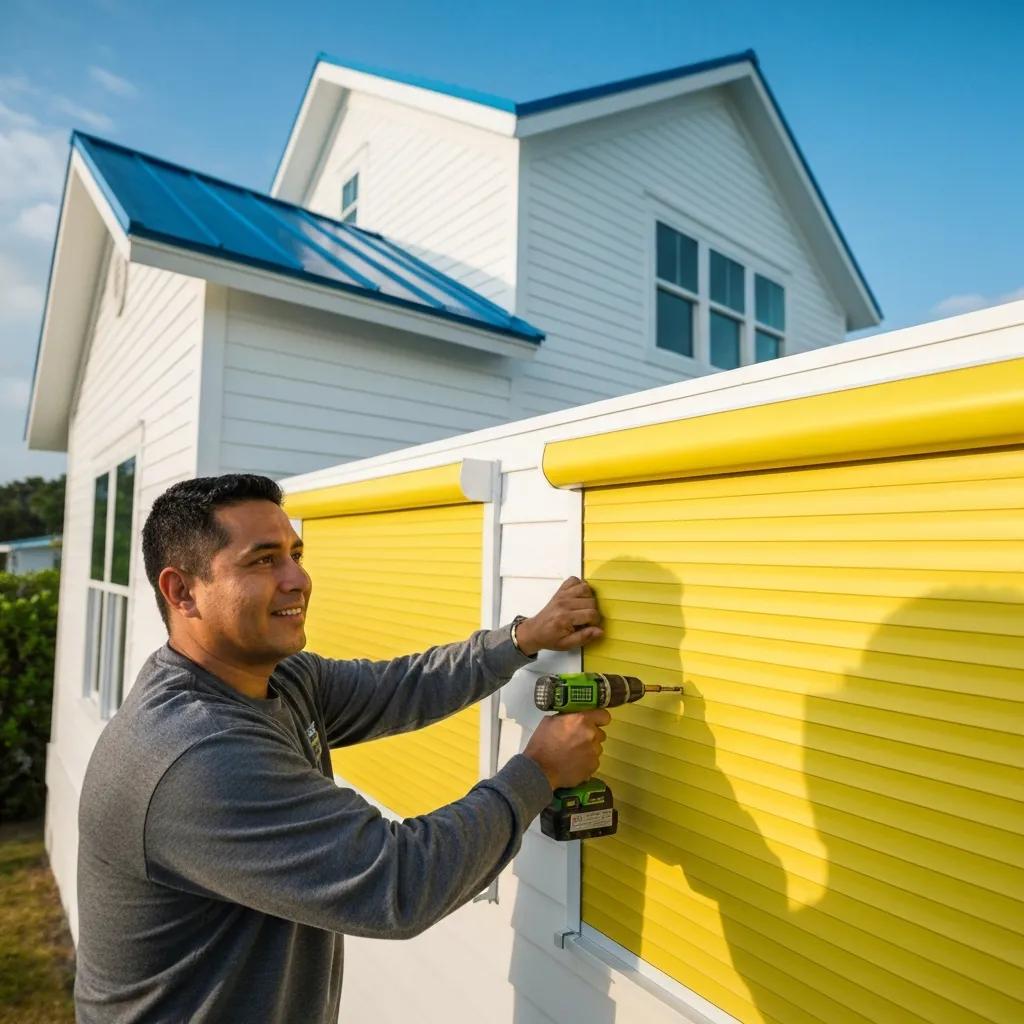
Professional installation and routine maintenance protect performance and warranty coverage, making sure shutters meet their rated wind and impact performance while keeping lifecycle repair costs lower. Installers verify anchorage into structural framing, integrate housings to prevent water intrusion, and align side channels and locks so loads distribute as intended. Regular maintenance — seasonal inspections, lubrication, motor testing, and post-storm checks — reduces wear, finds damage early, and creates documentation useful for insurance claims. A planned maintenance schedule combined with professional installation preserves performance and maximizes the long-term return on your shutter investment.
Why is professional installation critical for optimal storm protection?
Professional installers understand structural load paths and the correct anchorage locations that allow shutters to transfer impact and wind forces safely into the building frame. Proper mounting and sealing prevent water penetration at openings and ensure side channels guide slats correctly under load, reducing the risk of de‚Äërailing or glazing stress. Certified installation also supplies documentation for permits and insurers and usually preserves manufacturer warranties that improper DIY attachment could void. For these reasons, professional installation is essential to get the protection and long-term value advertised by manufacturers.
What are the essential maintenance tips to extend shutter lifespan?
A practical maintenance plan includes semi‑annual visual inspections, annual lubrication of moving parts and side channels, periodic motor testing for motorized systems, and prompt repairs after storms or visible damage to stop progressive deterioration. Keep records of inspections and service to support warranties and insurance claims, and schedule professional checks of motors and electrical components every 1–2 years. Watch for red flags — slat deformation, unusual motor sounds, water at housings, or corrosion at anchor points — and call a pro if you see them. Regular care preserves readiness and maximizes the life and value of your shutters.
If you’re ready to move from evaluation to action, professional installers can coordinate service; American Hurricane Shutters offers free estimates and professional installation to help with accurate budgeting and correct installations for coastal properties.
- Request a free estimate to get a customized scope and pricing for your openings.
- Confirm product ratings and warranty terms before purchase and installation.
- Schedule routine maintenance and post-storm inspections to protect your investment.
Following these steps turns planning into a durable, code-compliant, and cost-effective hurricane protection solution.
Frequently asked questions
What are the maintenance requirements for roll-down hurricane shutters?
Regular maintenance keeps shutters reliable and extends their life. Do semi‚Äëannual visual checks for wear or damage, lubricate moving parts and side channels annually, and test motors on motorized systems periodically. After a storm, inspect promptly to catch and document any damage for warranty and insurance purposes.
How do roll-down hurricane shutters compare to other types of storm protection?
Compared with temporary options like plywood or fabric systems, roll-down shutters are permanent, fast to deploy, and designed for repeated use. They provide stronger protection against wind and debris, often meet local code, and may qualify for insurance discounts — making them a more reliable long-term choice for many homeowners.
Can roll-down hurricane shutters be customized for unique window shapes?
<!– wp:paragr