

Essential Weatherproofing for Hurricane Roll Down Shutters: A Practical Guide for Coastal Homeowners and Businesses
Roll down hurricane shutters form a mechanical weatherproofing layer that protects openings from wind, water, and flying debris during storms. This guide walks you through selecting, installing, and maintaining shutters that stand up to coastal conditions. You’ll learn which materials resist salt-air corrosion, how correct installation prevents water intrusion and structural damage, and which maintenance steps extend life and reliability. Coastal properties face specific threats — salt spray, intense UV, surge-driven flooding, and wind-borne debris — and the right mix of materials, sealants, and fasteners lowers those risks while improving energy efficiency and security. The article covers six practical areas: materials and sealants, professional and DIY installation best practices, routine maintenance and lubrication, ancillary benefits like energy and insurance savings, coastal weather impacts and code considerations, and guidance for choosing manual or motorized systems. Expect actionable checklists, clear comparisons, and North/South Carolina–specific recommendations to help you make a durable, code-compliant investment in roll down shutters.
What Are the Key Weatherproofing Materials for Roll Down Hurricane Shutters?
Effective weatherproofing combines strong structural components with reliable sealing details to stop wind pressure, prevent water entry, and limit corrosion in salt-air environments. Most systems use aluminum alloys for structure and polycarbonate for impact-resistant, light-transmitting applications. Sealants, weatherstrips, and corrosion-resistant coatings close vulnerable spots — cassette housings, guide tracks, and perimeter flashings — to keep water out and slow sacrificial corrosion. Choosing materials proven in coastal use cuts maintenance needs and preserves reliable operation through repeated storms. The list below summarizes each material’s role so you can compare performance at a glance.
The principal material functions include:
- Structural Support: Aluminum alloys form the load-bearing frame that resists wind uplift and bending.
- Impact Resistance: Polycarbonate panels absorb debris strikes and can allow daylight when desired.
- Barrier Sealing: Neutral-cure silicone and polyurethane sealants block water at penetrations and joints.
- Corrosion Protection: Anodizing and marine-grade coatings slow salt-related oxidation on metal parts.
These roles link material choices to the coastal hazards your property faces and lead into why certain aluminum alloys and finishes perform best by the sea.
Why Is Aluminum Ideal for Coastal Hurricane Shutter Weatherproofing?

Aluminum is a top choice because specific alloys combine good tensile strength with natural resistance to corrosion, creating a lightweight structural option that reduces load on brackets and anchors. Alloys in the 5xxx and 6xxx series resist salt spray well when paired with protective anodizing or marine-grade powder coats that act as sacrificial barriers to pitting. Coatings add UV resistance and color stability, preserving both function and appearance in coastal sun. Regular freshwater rinsing to remove salt deposits and periodic inspection of anodized or coated layers prevents localized corrosion and extends service life, making aluminum a cost-effective long-term option for roll down shutters in maritime climates.
Studies show that 5000- and 6000-series aluminum alloys perform favorably in marine conditions when properly treated, thanks to their corrosion-resistant chemistries.
Aluminum Alloys for Marine Environments: Electrochemical Characteristics
This study evaluated 5000-series Al‚ÄëMg and 6000-series Al‚ÄëMg‚ÄëSi alloys commonly used near the sea. Using potentiodynamic polarization and electrochemical impedance spectroscopy, the research confirmed these alloys’ strong corrosion resistance in marine conditions when properly finished.
Electrochemical Characteristics of Aluminum Alloys in Sea Water for Marine Environment., 2019
Although 5xxx and 6xxx alloys are widely recommended, other high-strength aluminum grades show differing corrosion behavior — understanding those differences helps match material to the exposure level at your site.
Corrosion Resistance of 7075 Aluminum Alloy in Marine Environments
This investigation examined 7075 alloy in simulated and natural seawater. Results indicated higher corrosion rates in natural seawater and identified aluminum hydroxide and oxide as primary corrosion products. The study also notes that alloying adjustments can improve marine corrosion resistance.
Investigation of 7075 aluminum alloy corrosion in marine environment, H Guo, 2022
Next we’ll look at how polycarbonate panels and proper sealants work with aluminum structure to form the actual barrier against water and wind.
How Do Polycarbonate and Sealants Enhance Weather Resistance?
Polycarbonate panels combine very high impact strength with UV stabilization, so they flex on impact instead of shattering and can preserve natural light where desired. Compared with glass, polycarbonate is less likely to be breached by flying debris, which reduces the chance of subsequent water intrusion. Sealants such as neutral-cure silicone and polyurethane bond to metal and composite substrates, filling gaps around cassettes, guide tracks, and head flashings to create a continuous barrier against wind-driven rain. Correct sealant selection and joint detailing are essential in salt-rich environments — compatibility with aluminum coatings and scheduled resealing will help maintain impermeability over time.
Before covering installation, compare coastal performance and maintenance needs for the common materials below.
This comparison highlights trade-offs you’ll manage when specifying a system and prepares you for the installation steps that follow.
When comparing materials and prices, American Hurricane Shutters builds roll down systems around these options and provides a cost calculator for preliminary estimates plus free site-specific quotes. Using the calculator helps compare material grades and installation scenarios before you commit.
How Do You Properly Install Roll Down Shutters to Maximize Weatherproofing?
Correct installation ties the shutter housing into a structurally sound substrate, aligns guide tracks to avoid binding, and seals all penetrations so the assembled system becomes an integrated barrier to wind and water. The process starts with accurate measurements and a substrate assessment, then moves to anchor selection, cassette and track installation, sealing, and operational testing under simulated load and water exposure. Common failure modes — misdrilled anchors, unsealed penetrations, and misaligned tracks — are avoidable with a clear, step-by-step workflow that also ensures code and impact-rating compliance. The checklist below outlines professional installation actions in concise, actionable steps.
Professional installation checklist:
- Measure and verify openings: Confirm framing integrity and plan any header or jamb reinforcement.
- Prepare housing and mounting surface: Install the cassette above the opening with level alignment and backing plates where required.
- Secure with corrosion-resistant anchors: Use stainless or coated anchors sized to wind-load calculations and the substrate type.
- Install guide tracks and curtain: Plumb tracks and test curtain travel for smooth, bind-free operation.
- Seal all penetrations and flashings: Apply manufacturer-recommended sealants at cassette ends, jambs, and head flashings to prevent water entry.
- Test operation and water resistance: Run full cycles and perform a drip/water test to confirm sealing integrity.
Following this checklist preserves weatherproofing performance and supports code compliance. The subsection below expands each step in technical detail for professional installers.
What Are the Professional Installation Steps for Hurricane Roll Down Shutters?
Professional installers follow a defined workflow: inspect and reinforce the opening, mount the cassette to proper structural backing, fit guide tracks with shimmed alignment to prevent lateral play, fasten with specified anchors, and seal perimeters with compatible sealants and flashings. Anchorage matters — choose fasteners rated for salt-air exposure and match the anchorage pattern to wind-load calculations so loads transfer safely into the building structure. After mechanical fastening, technicians run diagnostic cycles, set motor torque on automated units, and perform water intrusion tests to confirm that sealants and weatherstripping stop driven rain. Final documentation typically includes as-built photos and a record of torque and sealant bead locations for future inspections.
These professional steps help homeowners decide whether to attempt a DIY install or hire certified installers, which we cover next.
Can You Install Roll Down Shutters Yourself? Key DIY Considerations
DIY installation can be practical for experienced homeowners on small, simple openings, but it demands precise measuring, scaffold safety, and knowledge of wind-load anchoring and sealant compatibility to avoid costly mistakes. Common DIY risks include incorrect anchors that fail under lateral loads, misaligned tracks causing premature wear, and inadequate sealing that leads to water entry. Essential DIY tools include a level, torque wrench, power drill with proper bits, and the correct sealants; safety gear and scaffolding competence are mandatory. For complex openings, multi-story work, or when permits and code documentation are required, hiring professionals reduces liability and ensures the system performs as intended.
Next we cover scheduled maintenance that preserves weatherproofing and extends service life.
How Should You Maintain Roll Down Hurricane Shutters for Long-Lasting Weatherproofing?
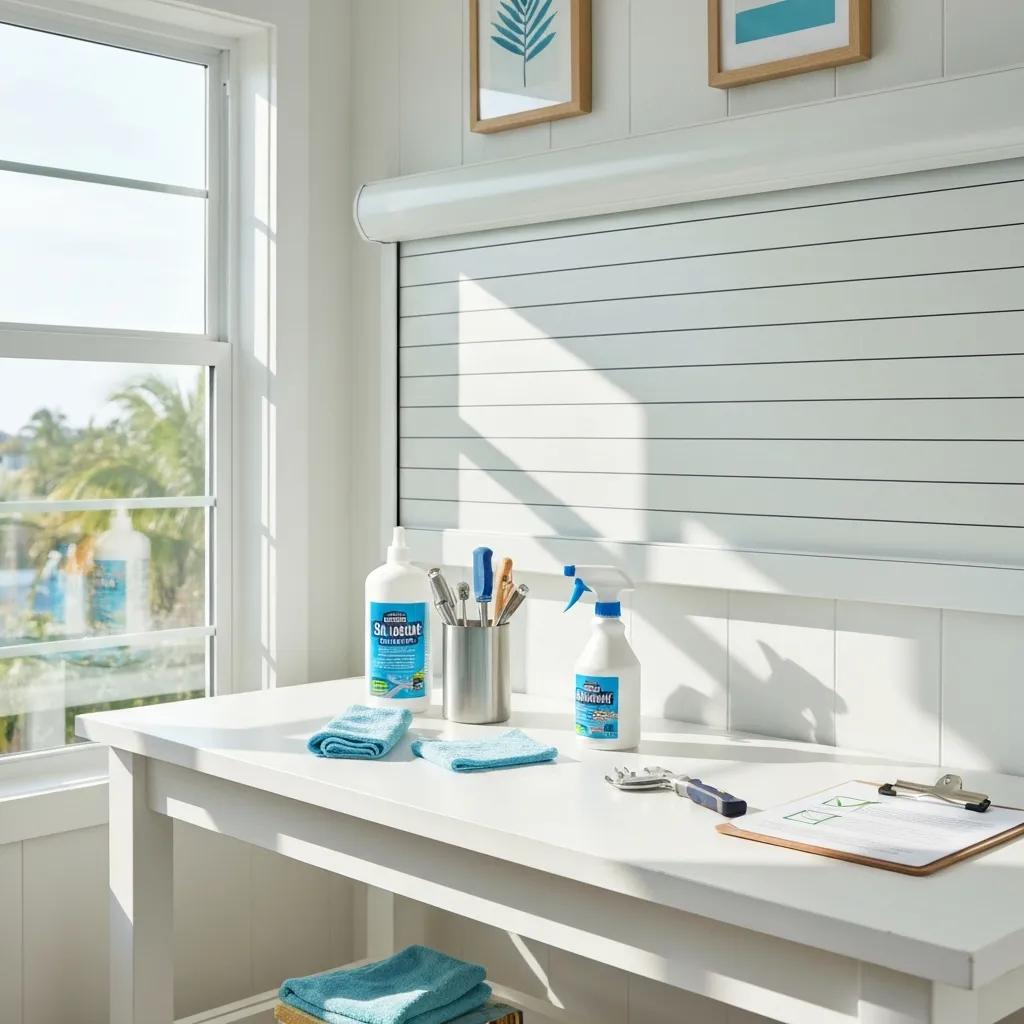
Regular maintenance keeps seals intact, removes corrosive salt buildup, and ensures motors and mechanical parts operate reliably when a storm arrives. Focus on four core activities: remove salt and debris, inspect and reseal joints, lubricate tracks, and check motors/drive systems on automated units. A consistent inspection schedule and a short checklist help spot early signs of wear such as seal shrinkage, track deformation, or pitting of fasteners.
A practical maintenance checklist and schedule follows so property owners can implement preventative care.
This simple roadmap helps protect weatherproofing performance and reduce long-term repair costs.
Effective cleaning prevents corrosion and minimizes water intrusion. The best practices below are safe for coastal environments.
- Rinse salt deposits with fresh water: Removing salt reduces galvanic and pitting corrosion on metal parts.
- Use mild, non-abrasive detergents: Gentle cleaners remove grime without stripping protective coatings.
- Avoid harsh solvents and abrasive pads: These can damage powder coats and anodized finishes and accelerate corrosion.
Following these cleaning steps preserves coatings and prepares surfaces for inspection and resealing. Proper lubrication is the next critical maintenance element to keep shutters operating smoothly when needed.
What Are the Best Cleaning Practices to Prevent Corrosion and Water Intrusion?
Safe cleaning starts with a freshwater rinse to remove salt, then a mild detergent and soft brush to clear grime without scratching protective finishes. Dry thoroughly after cleaning to avoid trapped moisture that can start corrosion. Avoid solvents and high-pressure washing near seals, as aggressive cleaning can displace sealant or force water into joints. After cleaning, visually inspect for cracked sealant, chipped coatings, or pitted fasteners and document any findings so repairs happen promptly. These simple steps preserve aluminum coatings and sealant performance, reducing water intrusion risk during storms.
Keeping tracks free of salt and lubricated is essential so shutters deploy smoothly when you need them.
How and Why Should You Lubricate Roll Down Shutter Tracks?
Lubrication prevents binding caused by salt crystals and airborne grit, maintains sealing contact between slats and guides, and preserves smooth operation under load. Use dry silicone lubricants rather than oil-based products because silicone resists attracting salt and dirt, stays effective in humid conditions, and won’t gum up tracks. Apply lubricant to track faces and bearings every 3–6 months in coastal zones, wiping excess to avoid collecting debris. For motorized units, inspect motor housings, verify thermal protections, and check electrical connections so the drive system works reliably during emergency deployments.
What Are the Benefits of Weatherproofed Roll Down Hurricane Shutters Beyond Storm Protection?
Weatherproofed roll down shutters offer several practical secondary benefits: they improve energy efficiency by shading windows and cutting solar heat gain, block UV to protect interiors and furnishings, increase physical security as a robust deterrent, and — when installed to code — can reduce insurance risk and improve resale appeal. These advantages factor into life-cycle cost calculations: a small upfront premium for higher-grade materials and certified installation often pays back through lower maintenance, energy savings, and potential insurance incentives. Below are the key secondary benefits to consider when choosing systems and materials.
Key secondary benefits include:
- Energy savings: Shading glazing lowers cooling loads and energy bills.
- UV protection: Blocking UV preserves furniture, flooring, and finishes.
- Security enhancement: Closed shutters serve as a strong physical barrier against forced entry.
- Insurance and property value: Code-compliant, professionally installed systems can influence premiums and marketability.
Documenting installations and maintenance supports insurance claims and helps calculate return on investment, which matters when choosing materials and contractors.
How Do Roll Down Shutters Improve Energy Efficiency and UV Protection?
Roll down shutters reduce heat transfer by shading glass and creating an insulating air gap that limits convective heat gain, which lowers peak cooling loads and improves comfort in summer. Opaque or closed slat systems block direct solar radiation and cut UV transmittance, slowing fading of upholstery and flooring. For large glazed areas exposed to strong sun, the shading effect can yield noticeable seasonal energy savings. Choosing insulated slat profiles or thermal breaks further improves energy performance, tying weatherproofing benefits to everyday efficiency gains.
These energy and UV protections also support the security and insurance benefits of properly installed, code-compliant shutter systems described below.
In What Ways Do Weatherproofed Shutters Enhance Home Security and Insurance Savings?
Weatherproofed shutters act as a deterrent and delay mechanism against forced entry, adding a rigid layer that resists impact and protects glazing. Insurers frequently recognize systems that meet established impact standards and documented installation practices as risk-mitigating, which can factor into underwriting and premium decisions. Keeping inspection records, installation certificates, and product specs helps substantiate protections during claims or policy reviews. This combination of physical protection and documentation supports both personal safety and financial resilience for coastal properties.
The benefits above depend on coastal stressors, so the next section tailors material and installation choices to North and South Carolina conditions.
How Do Coastal Weather Challenges Affect Roll Down Shutter Weatherproofing Needs?
Coastal weather brings salt spray, high humidity, strong UV, heavy wind loads, and storm surge — all of which accelerate material wear, complicate sealing, and demand robust anchorage and elevation planning. Salt-driven galvanic corrosion targets dissimilar metals and fasteners, so specifying compatible alloys, coatings, and corrosion-resistant anchors is critical. Wind-load and impact requirements may call for heavier gauges or tested impact-rated systems; in surge-prone zones, cassette placement and flood-compatible anchorage are important. Understanding these localized effects helps homeowners prioritize features that reduce failure risk and lower maintenance burdens.
The subsection below outlines regional hazards for coastal North and South Carolina and practical material and schedule adjustments.
What Unique Weather Conditions Impact Coastal North and South Carolina Homes?
Coastal North and South Carolina face hurricane-season exposure, nor’easter wind events, persistent salt spray, and episodic storm surge that repeatedly wet and expose shutters to high salinity. These conditions justify more frequent rinsing, closer inspection of sacrificial coatings, and specifying fasteners and anchors rated for marine exposure. Storm surge also affects cassette mounting locations and lower-jamb details to avoid trapped debris and standing water. Increasing rinsing and lubrication frequency during and after storm season helps combat accelerated wear in this regional climate.
These regional hazards make code awareness important. The next subsection explains how widely used standards like the Florida Building Code inform best practices even outside Florida.
How Do Building Codes Like the Florida Building Code Influence Shutter Weatherproofing?
The Florida Building Code establishes rigorous impact ratings and installation test methods that many manufacturers and installers use as performance benchmarks. Meeting or exceeding those standards signals a system designed for high wind and impact exposure. Key code concepts include specified impact ratings, tested anchorage patterns, and installation procedures that preserve structural capacity under design wind loads. Even in North and South Carolina, referencing these tested methods and keeping installation documentation helps demonstrate compliance for local permitting and supports insurer assessments. Confirming that installers follow tested attachment schemes and provide as-built paperwork strengthens both weatherproofing performance and regulatory defensibility.
Research into hurricane loss models further emphasizes the importance of proper opening protection and water-intrusion prevention, reinforcing the need for code-compliant installations.
Hurricane Loss Model: Opening Protection and Water Intrusion Research
This work reviews how recent experimental findings apply to opening protection and water intrusion components of public hurricane loss models. It discusses updates that affect soffit area calculations, rain-model sampling, and water infiltration estimates — changes that increased model vulnerability outputs in certain scenarios.
Maintenance and improvement of the Florida public hurricane loss model, 2016
With coastal hazards and codes in mind, homeowners must choose the shutter type that best matches their needs and budget — the next section helps make that decision.
How Do You Choose the Best Roll Down Shutters for Effective Weatherproofing in Coastal Areas?
Choosing the right shutter means evaluating material durability, automation needs, lifecycle cost versus upfront price, and installer quality — each factor affects weatherproofing performance and long-term ownership costs. Manual shutters are simpler and typically less expensive up front; motorized systems offer quick deployment and convenience that can be crucial during fast-moving storms. Budget planning should include expected maintenance, potential energy savings, and periodic sealant renewal; investing a bit more in higher-grade materials or certified installation often reduces repair frequency and overall cost of ownership.
Compare shutter types by cost and use case:
This comparison clarifies trade-offs. The section below outlines operational differences to help you pick between manual and motorized systems.
What Are the Differences Between Manual and Motorized Roll Down Shutters?
Manual units use cranks or straps and have fewer electrical failure modes, making them a robust, lower-maintenance option — though they’re slower to deploy and less practical for many or large openings. Motorized shutters close quickly with a push of a button, can integrate with home automation, and work well with battery backup, but they add electrical complexity and require motor maintenance. Choose based on how fast you need to secure openings, who will operate them, and your willingness to maintain electrical systems. Backup power for motorized units reduces the risk of non-deployment during storm-related outages.
After narrowing type and features, many homeowners use a cost calculator to estimate investment and compare options; the final subsection explains how to use that tool.
How Can You Use a Cost Calculator to Estimate Weatherproofing Investment?
A cost calculator produces a preliminary estimate by combining opening dimensions, material choice (aluminum vs polycarbonate), motorization, and installation complexity to generate comparative scenarios for budgeting and ROI. Enter accurate measurements, material grade, and whether you’ll use professional
