
Essential Safety Features: How Roll‚ÄëDown Hurricane Shutters Protect Homes and Businesses from Storm Debris
Roll‑down hurricane shutters form a continuous, impact‑resistant shield over windows and other openings, deflecting flying debris and reducing wind‑driven pressure on the building envelope. This guide walks you through how roll‑down shutters work, why impact ratings and proper seals matter, and which design and installation choices give the best protection for coastal homes and commercial properties. You’ll learn the differences between manual and motorized systems, the materials and testing that determine real‑world performance, and how shutters help prevent water intrusion and secondary structural damage. We also cover security, energy and noise benefits, and why professional installation and local code compliance matter in North and South Carolina. Practical scenarios — from tree limbs to roof tiles and small high‑velocity objects — help you match shutter type to your property’s risk profile. Terms like impact rating, interlocking slats, seals, and missile tests are defined so you can compare options and prepare for hurricane season with confidence.
What roll‚Äëdown shutters are and how they block storm debris
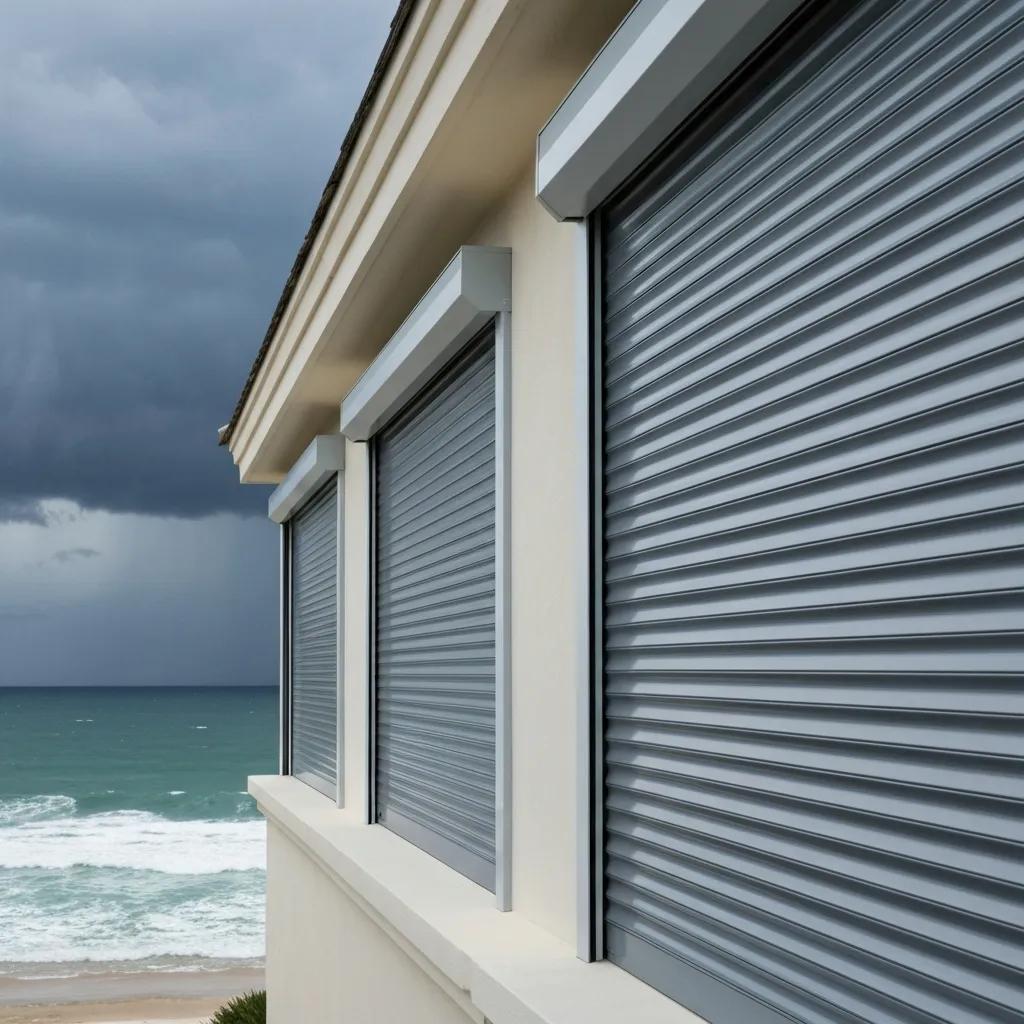
Roll‑down shutters consist of slatted panels that unroll from a cassette above an opening to form an interlocked, impact‑resistant barrier over glazing and frames. High‑strength slats, continuous guides, and secure anchoring work together to absorb and redistribute impact energy while keeping wind and water out. That combination reduces broken glass, interior flooding, and pressure swings on the building envelope. For homeowners, shutters both stop projectiles and lower the chance of structural damage during storms. Knowing how they operate and what debris they’re likely to face helps you prioritize features when buying and installing.
How roll‚Äëdown shutters work: manual versus motorized systems
Shutters are operated either manually — with crank drives, straps, or push‑up systems — or by motorized drives that raise and lower the slats via an electric motor, remote control, or home automation. Manual units are simple, reliable, and don’t depend on power; motorized units deploy quickly, can be scheduled or triggered remotely, and integrate with smart‑home setups. Both styles include manual overrides or crank backups for outages and need routine maintenance to keep seals and guides working smoothly. When choosing, think about deployment speed, how often you’ll use them, and whether remote control and automation matter for when you’re away.
Which types of storm debris do roll‚Äëdown shutters stop?
Roll‑down shutters defend against a range of debris — from small, high‑speed objects that shatter glass to larger pieces like lumber and roof tiles that can damage frames. Debris is typically classified as small missile (nails, gravel) or large missile (timber, roof tiles); shutters built with appropriate materials and tested to recognized missile‑impact protocols resist both types. In coastal North and South Carolina, likely hazards include tree branches and building fragments carried at high speed. Choosing the right shutter means matching expected debris and wind exposure to material strength and the product’s impact rating.
- Common storm debris roll‚Äëdown shutters protect against:
Tree branches and limbs that can strike with substantial force during gusts.
Detached roofing materials such as tiles and shingles that become heavy projectiles.
Small high‚Äëvelocity objects like nails, gravel, and loose trim.
Loose household items including outdoor furniture parts and signage.
These examples show why impact resistance combined with secure anchoring is essential; the next section explains how impact resistance is measured and why it matters for your property.
After reviewing likely debris and operation choices, homeowners often ask about availability and deployment. At American Hurricane Shutters we offer roll‑down lines in both manual and motorized configurations with custom fits for your openings. Our product approach focuses on reliable protection and ease of use — request a free estimate to see which options best fit your home and timeline.
How impact resistance keeps roll‚Äëdown shutters effective against flying debris
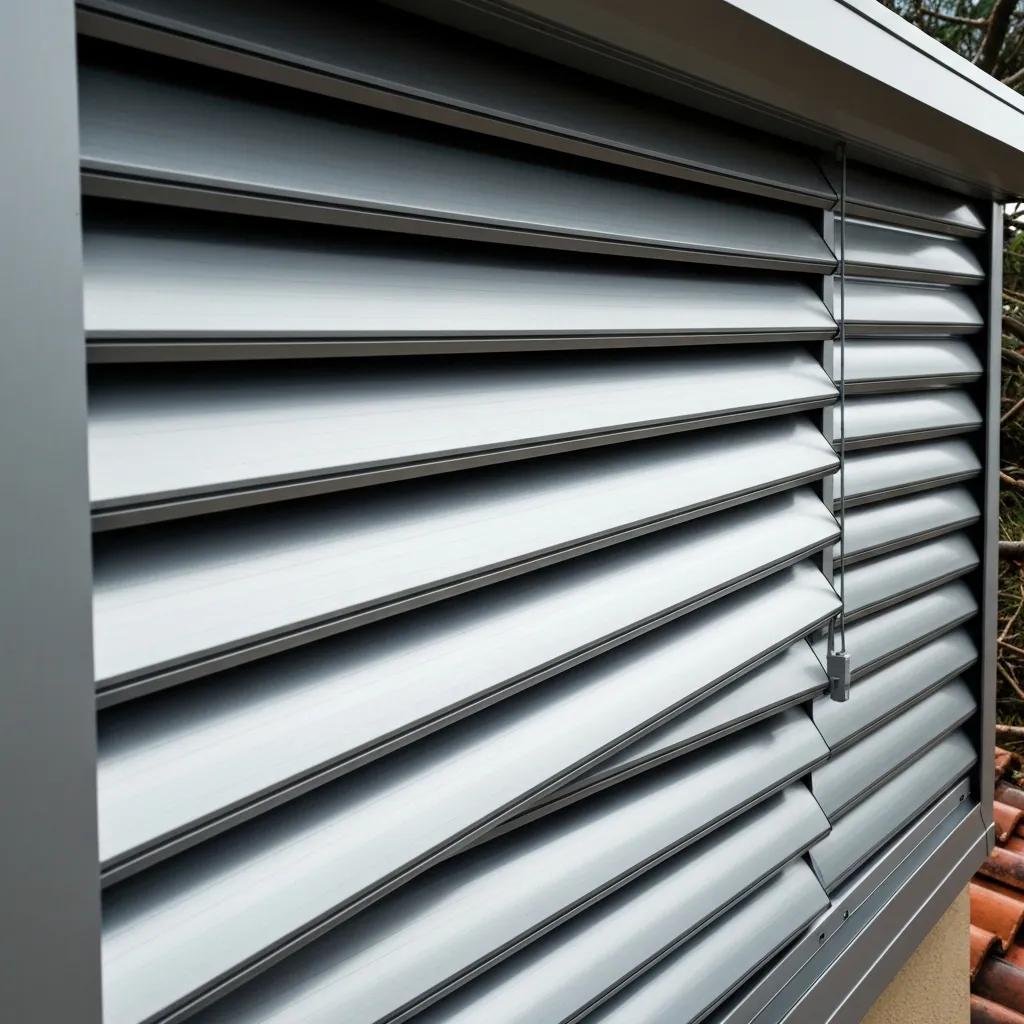
Impact resistance is a shutter’s ability to absorb and withstand kinetic energy from debris without allowing penetration or catastrophic failure. It’s the primary defense against glazing breakage and loss of the building envelope during storms. Measured by missile‑impact tests with defined projectiles and velocities, impact resistance depends on slat material, slat geometry, and anchoring. Higher‑rated materials and reinforced slat designs spread forces and reduce stress points, lowering the chance of holes or separations after a strike. Understanding ratings and test details helps you compare manufacturer claims and choose shutters that match your local debris and wind exposure.
Different materials and configurations behave differently in impact tests. The table below summarizes common material choices and how they typically map to test outcomes and wind ratings so homeowners can match material to risk level.
Intro: This comparison shows representative roll‚Äëdown shutter materials and model attributes to help match choices to debris and wind scenarios.
Which materials give the best impact resistance?
Aluminium alloys are widely used because they offer high tensile strength, a good weight‑to‑strength ratio, and corrosion resistance — all helpful for absorbing and redistributing impact energy. Polycarbonate or polycarbonate‑faced slats give excellent shatter resistance against smaller missiles and can be lighter and more flexible, though some formulations need UV‑stable coatings for long coastal life. Reinforced composites and hybrid slats balance stiffness, energy absorption, and corrosion resistance for salt‑air environments. Match the likely impact scenario to material: large timber strikes favor reinforced aluminium, while repeated small‑missile exposure can be handled well by polycarbonate systems.
How are roll‚Äëdown shutters tested for impact resistance?
Testing uses calibrated missiles of known mass and velocity to simulate debris strikes; pass/fail results show whether the shutter and glazing protection stopped penetration and maintained an intact barrier. Third‑party testing and certification to accepted protocols provide verifiable proof of performance — ask manufacturers or installers for test reports, test dates, and the exact conditions that correspond to your local code. Verifying documentation ensures the shutter you choose truly resists the debris types and speeds expected for your location in coastal NC/SC.
After reviewing materials and test reports, it helps to see how those choices translate into local product offerings and service. American Hurricane Shutters works with tested configurations, emphasizes material selection, and provides custom fittings; request a free estimate and we’ll recommend tested options that suit your home.
How roll‚Äëdown shutters form a watertight, wind‚Äëresistant barrier
Roll‚Äëdown shutters create a continuous envelope over openings by combining interlocking slats, perimeter seals, and secure anchoring to transfer wind loads and block wind‚Äëdriven rain. Interlocking slats spread uplift and lateral forces down the shutter, while seals and gaskets at guides and bottom bars limit water and air infiltration. Well‚Äëdesigned drainage paths, drip edges, and cassette details divert water away from frames. Together these features reduce pressure differentials, prevent glazing failure, and lower the risk of interior water damage during extended hurricane conditions.
- Interlocking slat geometry that spreads impact and wind loads across the full assembly.
- Compression seals and gaskets at guides and bottom bars to limit water entry.
- Reinforced mounting and anchoring that ties the shutter into structural framing.
- Cassette and drip designs that manage runoff and prevent pooling near openings.
This shows why both mechanical interlock and seal details matter; the next paragraph explains how those components protect interiors and the overall structure.
Design details that prevent wind and water damage
Tight seals, correct guide tolerances, and properly sized gaskets form the first line of defense against wind‚Äëdriven rain. Interlocking slats and hardened bottom bars resist uplift and impact while transferring loads to anchors embedded in framing or masonry. Cassette and below‚Äësill drainage channels stop water from accumulating and bypassing seals under pressure. Reinforcement plates and correct fastener spacing help the assembly keep tolerances during storm cycles so the shutter continues to seal and carry loads throughout the event.
How the barrier protects your home’s structure and interior
By preventing glazing failure and limiting water entry, shutters reduce internal pressure spikes that can lead to roof and wall uplift. Fewer broken windows also mean fewer airborne shards and less water, debris, and contaminants entering living spaces — protecting finishes and preventing mold. Over time, that translates to fewer storm repairs and potentially lower insurance exposure. These benefits depend on choosing the right product and a correct installation so the system performs to its design under hurricane loads.
How roll‚Äëdown shutters add security during and after storms
Roll‑down shutters provide a strong physical barrier that makes windows and openings much harder to breach during and after storms, deterring opportunistic intruders and protecting valuables when properties are unattended. The shutter’s mass, locked bottom bars, and continuous guides resist forced entry and slow down attempts to pry or cut through. During power outages or evacuations, shutters also block views into the home and reduce the chance of post‑storm looting. Reviewing locking options and system integrations helps you balance security with convenience.
- Physical deterrence—a visible, sturdy obstacle that discourages break‑ins.
- Mechanical resistance—locks and reinforced bottom bars increase breach time and difficulty.
- Privacy and concealment—they block line‑of‑sight into interior spaces during and after events.
- Integration potential—motorized systems can link to alarms or home automation for monitoring.
These security benefits build on the same structural features that protect against debris; below we cover how shutters perform when you’re away.
How shutters deter intruders and strengthen home security
Shutters deter intruders both physically and visually: a home with deployed, heavy‚Äëduty shutters signals a difficult, time‚Äëconsuming breach. Manual locks and motorized auto‚Äëlock features increase the tools and time required, making break‚Äëins unlikely. Shutters can also integrate with sensors or home‚Äëautomation systems that notify owners or monitoring services of tampering. Together, these measures reduce theft and damage after storms and add to household resilience.
Can roll‑down shutters protect your home when you’re away?
Yes. Motorized and remotely controlled shutters can be scheduled or activated from anywhere to secure openings before storms or during extended absences. Battery backups and manual overrides keep shutters functional during power failures, and trusted local contacts or contractors can provide manual deployment if needed. For absentee homeowners, set up access plans and make sure manual operation is documented so shutters serve as a dependable security layer even when you’re off‑site.
Why professional installation matters for shutter safety

Professional installation is critical: correct anchoring, tolerances, and weatherproofing determine whether a shutter performs to its rated impact and wind resistance during a storm. Experienced installers ensure anchors hit appropriate structural members, fastener types and spacing meet design loads, and seals and guide tolerances prevent water intrusion and slat binding. They also calibrate motorized drives, verify manual overrides, and document post‚Äëinstallation tests to preserve warranties and intended performance. Skipping professional installation risks voiding ratings and leaving vulnerabilities when it matters most.
The table below highlights installation service elements that affect real‚Äëworld shutter safety and helps homeowners verify installer practices and deliverables.
How professional installation delivers the protection you expect
Skilled installers follow a step‚Äëby‚Äëstep process: structural assessment, precise anchor placement, correct fastener selection, and calibration of drives to manufacturer tolerances. They test full deployment, verify seals, and check manual overrides and battery backups so the system runs reliably under stress. Installers also provide documentation and post‚Äëinstall test records for insurance or inspection. By fastening shutters to load‚Äëbearing elements and validating operation, professional installation turns tested product ratings into effective field protection.
Which building codes and certifications apply in North and South Carolina?
Regional requirements include recognized building‑code test protocols and product approval frameworks used in coastal high‑velocity zones. Ask your installer to confirm product approvals and local permitting requirements for your county or municipality. While exact approvals vary by jurisdiction, request third‑party test reports, proof of installation practices that meet local code, and any product approval numbers. Confirming the installer’s permits and documented product approvals reduces risk and aligns your protection with regional standards.
When homeowners want a local evaluation, American Hurricane Shutters provides professional installation that considers local codes and permitting. We offer service scheduling and free estimates to help plan the right protection for your property. Request a free estimate to identify the ideal shutter configuration and document installation needs for permits.
Other benefits of roll‚Äëdown hurricane shutters beyond debris protection
In addition to impact and wind protection, roll‑down shutters deliver comfort and value benefits: improved energy efficiency, reduced interior noise, UV protection for furnishings, and added privacy. A sealed shutter creates an insulating air gap and reflects solar heat, which can lower cooling loads; the shutter’s mass and fit also reduce exterior noise. Motorized shutters add everyday convenience with remote control, scheduling, and battery backup for absentee management. These secondary benefits boost property resilience, occupant comfort, and long‑term value.
- Energy savings from reduced solar heat gain and better thermal control.
- Noise reduction in windy, coastal environments.
- UV protection that helps preserve furniture and finishes.
- Aesthetic and privacy options through color and finish choices.
These advantages often factor into a homeowner’s return‑on‑investment and can complement insurance or retrofit decisions.
How shutters help with energy efficiency and noise control
Shutters add a buffer that reduces conductive and radiant heat transfer through windows, especially during peak sun. Their mass and sealed fit also dampen airborne sound, lowering perceived noise from wind and storm activity. Homeowners typically notice cooler interiors with less HVAC cycling and quieter rooms during windy conditions. Ask manufacturers for data sheets showing thermal resistance and sound transmission figures to compare products on measurable terms.
What convenience features do motorized roll‚Äëdown shutters offer?
Motorized shutters provide remote control, smartphone integration, programmable schedules, and battery backups so they work during power failures. Automatic deployment tied to weather alerts or home automation helps ensure shutters are down before conditions worsen. Manual overrides, on‑site keys, or crank backups keep the shutters operable if electrical systems fail. Regular maintenance — lubrication, drive inspection, and battery checks — keeps motorized systems reliable season after season.
American Hurricane Shutters focuses on local expertise, custom fits for unique openings, and complete protection through both manual and motorized roll‑down options. As a local resource serving coastal North and South Carolina, we offer free estimates to help you evaluate choices and plan installations. For a personalized recommendation, request a free estimate and we’ll help you pick the right shutter solution.
Frequently Asked Questions
What is the average cost of roll‚Äëdown hurricane shutters?
Costs vary with size, material, and installation complexity. On average, expect roughly $20 to $50 per square foot for materials and professional installation. Custom fits and motorized systems raise the price. We recommend getting free estimates from local providers to get an accurate, site‚Äëspecific number for your property.
How long do roll‚Äëdown hurricane shutters last?
With routine maintenance, roll‑down shutters typically last 10 to 20 years or more. Lifespan depends on material quality, coastal exposure, and frequency of use. Regular inspections, track cleaning, lubrication, and seal checks extend service life. Review the manufacturer’s warranty for guidance on expected durability and coverage.
Can roll‚Äëdown shutters be used for security outside of hurricane season?
Yes. Shutters serve as a year‚Äëround security feature, acting as a strong physical barrier against break‚Äëins and vandalism. They also provide privacy and protect vacant properties. You can deploy them whenever you need extra security, not just during storms.
Are roll‚Äëdown hurricane shutters energy efficient?
Yes. Properly fitted shutters reduce heat transfer through windows and help maintain cooler interiors, which can lower cooling costs. Their sealed fit also reduces drafts. Look for manufacturer data to quantify thermal performance for comparison.
What maintenance do roll‚Äëdown shutters require?
Inspect shutters at least twice a year for wear, corrosion, or damage. Clean tracks and slats to remove dirt and debris, lubricate moving parts, and test motorized systems and battery backups. Follow the manufacturer’s maintenance schedule to keep performance and warranties intact.
How do I choose the right roll‚Äëdown shutters for my home?
Start by evaluating the level of storm protection you need, typical debris in your area, aesthetic preferences, and budget. Compare material strength, impact ratings, and whether you prefer manual or motorized operation. Consult local experts to confirm code compliance and request free estimates so you can compare options and make a confident decision.
Conclusion
Roll‚Äëdown hurricane shutters are a practical, proven way to protect homes and businesses from storm debris while adding security, energy savings, and noise reduction. Choosing the right product and having it professionally installed are key to getting the protection you expect. For a personalized recommendation and cost estimate, request a free estimate today and let our team help you prepare your property for hurricane season.
