

Essential Guide to Repairing Roll-Down Hurricane Shutters: Troubleshooting, Maintenance & Professional Repair
Roll-down hurricane shutters are exterior protection systems made of interlocking slats that roll into a housing above windows and doors to block wind-driven debris and heavy rain. They move on vertical tracks and lock at the sill or jamb; motorized units use an electric motor and controls while manual units use a crank or strap. Regular repair and maintenance keep the system structurally sound, limit salt-air corrosion in coastal settings, and help ensure shutters meet local wind-load and life-safety code requirements. Homeowners who learn common failure modes and perform routine care can extend service life and avoid last-minute failures before a storm. This guide explains how roll-down shutters work, the most frequent problems, safe DIY maintenance steps, motor troubleshooting tips, and when to call a pro.
For coastal North and South Carolina properties, local technicians who understand salt-air corrosion and code specifics are a big advantage. American Hurricane Shutters (AHS Carolinas) provides installation, repair, maintenance, retrofits, and emergency service, and offers a free, no‚Äëobligation estimate to coastal NC/SC homeowners. Our teams perform site-specific Design Pressure Analysis to meet local wind-load and IBC requirements and use corrosion‚Äëresistant materials like 6063‚ÄëT6 Marine‚ÄëGrade Aluminum and 18‚Äë8 Stainless Steel fasteners to reduce failure risk. Knowing component-level causes and basic fixes helps you decide whether a DIY action is safe or whether professional stabilization is needed before a storm. Next, we define the main components and contrast manual and motorized systems so you know what to inspect.
What roll-down hurricane shutters are and how they protect your home
Roll-down shutters are curtain-like assemblies of interlocking slats that wrap around a barrel and travel inside vertical guides to cover openings, delivering impact resistance and wind-load protection. They rely on three coordinated subsystems: the curtain (slats), the guide tracks and fasteners, and the actuation system (manual crank or electric motor). Together they resist uplift and lateral storm loads. This design lets you deploy protection quickly, provides full coverage, and works well for retrofit installs where homeowners want impact-rated performance without permanent exterior changes. Below is a short comparison to highlight how manual and motorized systems operate and where they commonly fail.
Those component differences point directly to the parts you’ll inspect or service during troubleshooting and routine care.
Key components of roll-down shutters
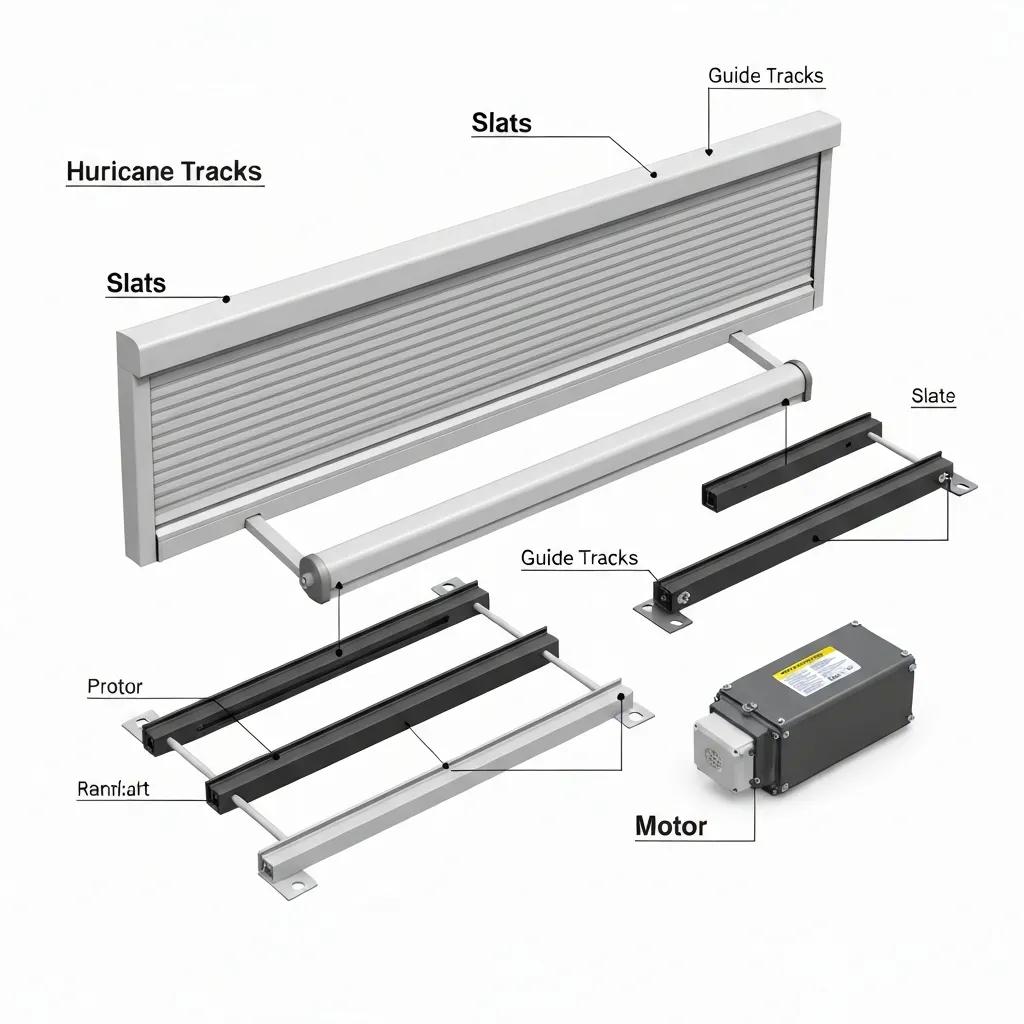
A typical roll-down shutter includes the curtain of slats, the barrel or roll housing, vertical guide tracks, end/sill locks, an actuation mechanism (crank or motor), and control interfaces such as remotes or wall switches. Each part has a clear role: slats stop impact and seal gaps, tracks keep motion aligned, and the crank or motor supplies the force to move the curtain smoothly. Common failure points are dented slats from impacts, track blockages from debris, motor burnout from overload, and corroded fasteners in salt-air climates. Regular inspections help you spot early wear and decide whether a fix is a quick adjustment or a larger replacement job.
Those same components determine different maintenance needs for manual versus motorized systems, which we cover next.
Manual vs. motorized roll-down shutters — what’s different?
Manual shutters use a crank, chain, or strap to raise and lower the curtain. They cost less up front and are simpler to maintain, but they require physical effort and regular lubrication of moving parts. Motorized systems add an electric motor, gearbox, and control electronics for automatic operation, improving speed and convenience while introducing electrical troubleshooting and potential motor replacement into the repair mix. Typical failures vary: manual systems often show misaligned tracks, worn fasteners, or crank-gear wear; motorized systems more commonly fail due to control issues, remote interference, or motor burnout. Both types benefit from corrosion‚Äëresistant materials and periodic inspections to stay reliable.
Understanding these operational differences will help you spot whether a problem is mechanical or electrical.
Quick comparison of manual and motorized systems:
- Manual systems are mechanically simpler and usually easier to repair, but require manual effort.
- Motorized systems add automation and speed, with additional electrical complexity.
- Both need aligned tracks and corrosion-resistant fasteners for reliable coastal performance.
With that context, here are the most common problems homeowners see in daily use.
Common problems with roll-down hurricane shutters
Shutters most often fail because of debris in the tracks, misalignment, corroded fasteners, bent or dented slats, and electrical or motor faults on motorized units. These issues reduce smooth movement, cause grinding noises, or can stop the curtain entirely. Many problems start as small maintenance gaps that get worse under stress. Recognizing symptom-to-cause relationships lets you triage quickly—remove debris, check fasteners, or isolate electrical faults as first steps to prevent escalation. The table below summarizes common problems, likely causes, and recommended DIY actions versus when to call a professional.
Use this triage to perform safe troubleshooting and to know when professional stabilization or component replacement is the right call.
Why your shutters get stuck or jammed
Most jams happen when grit, sand, or debris lodges in guide tracks, slats become bent and rub the guides, or end locks and sill hardware are misadjusted. Safe first steps are to fully retract the curtain if possible, shine a flashlight into the tracks, and remove visible debris with a soft brush and vacuum—don’t push particles deeper. If a slat is bent, don’t force the curtain; forcing can damage the barrel or motor. If cleaning doesn’t free the curtain or structural damage is visible, call a trained technician for realignment or slat replacement.
Troubleshooting motorized shutter problems
Motorized faults usually come from power interruptions, failed control modules, dead remote batteries, or worn motors/gearboxes that give off burning smells or grinding noises. Start by checking breakers and power connections, swap remote batteries, and reset accessible control modules; note any grinding, intermittent operation, or error behavior. If the motor overheats or you smell burning, stop operating the unit and schedule professional service immediately—electrical faults can cause further damage or fire. Motor replacement and control-board repairs should be handled by pros.
What causes noisy or stiff operation?
Noise and stiffness typically result from dry guides, loose or worn fasteners, misaligned tracks, or failing gearbox components that create grinding, squealing, or clicking sounds. Clean the tracks, apply clear silicone spray to contact points, and tighten loose fasteners to the manufacturer’s recommended torque when available; avoid petroleum-based lubricants that attract dirt. Persistent grinding or metallic shear sounds point to gear or motor wear and require professional diagnosis to avoid sudden failure. Regular cleaning and lubrication reduce noise and prolong both manual and motorized systems.
How to spot physical damage like bent slats or corrosion
Visually inspect slats for dents, creases, perforations, or pitting, and look for rusted fasteners or staining on tracks to decide if damage is localized or systemic. Bent slats often produce uneven edges and catching when the curtain descends. In coastal homes watch for white, powdery oxidation and stripped fastener heads—signs of salt corrosion that weaken connections and can compromise wind-load strength. Small dents or localized corrosion can sometimes be fixed with slat swaps or targeted fastener replacement; widespread corrosion of the barrel, guides, or housing usually needs professional assessment and likely replacement. If attachment points are compromised or the shutter no longer locks securely, schedule professional service to restore code-compliant protection.
DIY maintenance and minor repairs homeowners can do safely
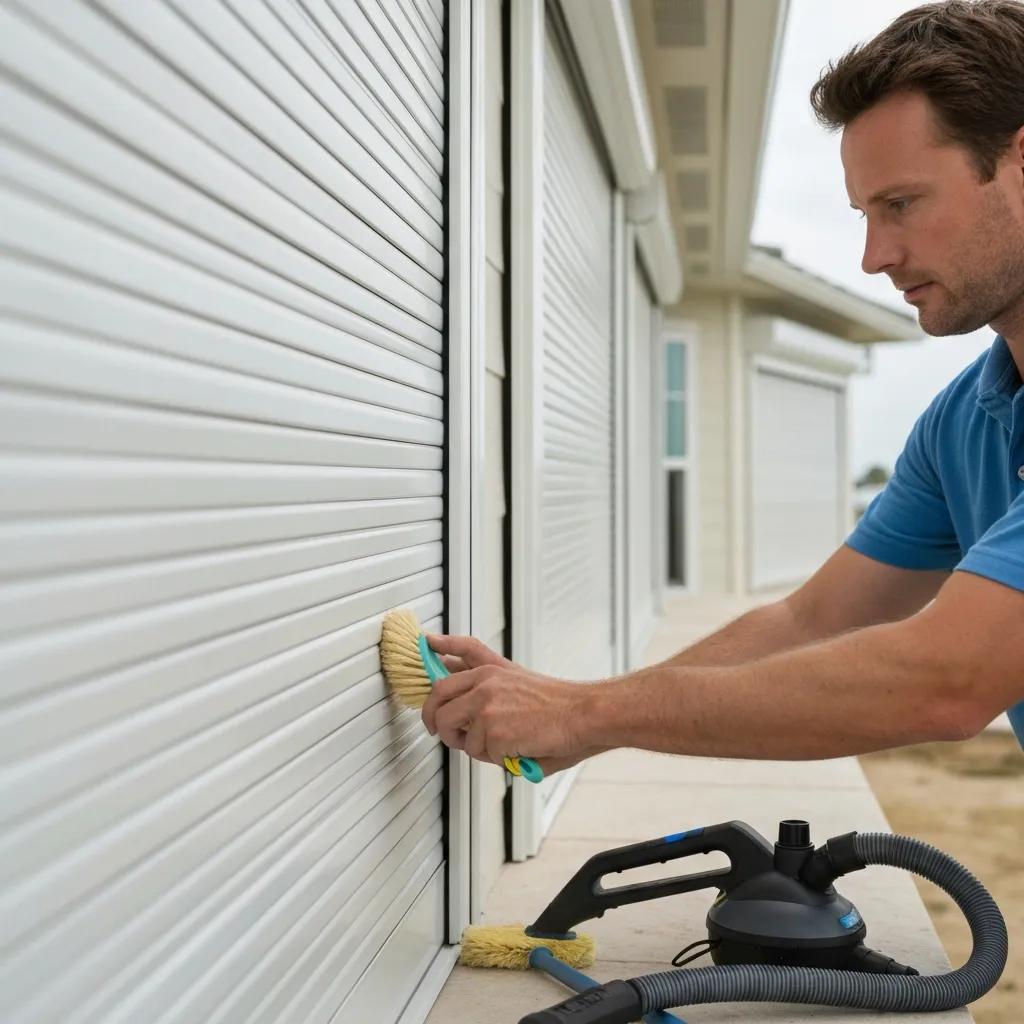
Most issues are preventable with scheduled cleaning, lubrication, fastener checks, and small adjustments that keep slats and tracks aligned and reduce motor strain. Regular homeowner maintenance improves reliability, cuts emergency repairs, and extends system life when paired with periodic professional inspections. Below are practical, safe procedures for track cleaning, lubrication, and basic mechanical adjustments—always follow safety precautions and never work on electrical components unless power is disconnected. We also explain when to stop and call a professional.
Step-by-step: cleaning roll-down shutter tracks
- Gather tools: soft brush, vacuum with crevice tool, clear silicone spray, microfiber cloths, and gloves.
- Retract the shutter: raise the curtain fully if possible to expose lower tracks and the sill.
- Remove debris: brush and vacuum dirt, sand, and grit from the full length of each track—don’t push particles deeper.
- Wipe and dry: use a damp microfiber cloth to remove residue, then dry the tracks thoroughly to avoid trapped moisture.
- Apply lubricant sparingly: spray clear silicone on guide edges and contact points, then cycle the shutter a few times to distribute it.
These steps reduce friction and lower the risk of jamming, and they lead directly into proper lubrication practices.
How to lubricate shutter moving parts correctly
Focus lubrication on guide edges, end locks, and pivot points while avoiding slat faces and painted surfaces; clear silicone spray is preferred because it resists salt spray and won’t attract dust. Apply a light, even coat and cycle the shutter several times to work the lubricant into contact areas; don’t overapply—heavy lubricant drips and catches grit. For coastal homes, lubricate twice a year and after major storms; inland homes can usually do this annually. If lubrication doesn’t ease resistance, inspect for wear or misalignment.
Fixing loose fasteners and making small adjustments
Tightening loose fasteners, shimming guides, and swapping corroded hardware are common homeowner tasks that restore alignment and reduce strain. Use stainless replacement fasteners where corrosion exists and apply moderate torque—tight enough to remove play but not so tight that anchors or strips deform; follow manufacturer torque specs when available. For minor misalignment, slightly loosen guide fasteners, center the curtain, and retighten incrementally while testing movement. If alignment needs shims or frame repair, stop and call a professional. Replacing individual slats is possible for small dents, but because curtain integrity affects wind-loads, extensive slat damage should be handled by a technician.
When to DIY and when to call a professional
Choose professional help when the repair carries electrical risk, structural implications, or code-compliance concerns. Call a pro for exposed wiring, structural frame damage, repeated motor failure, or compromised attachment points. Simple cleaning, lubrication, and fastener tightening are appropriate DIY tasks; defer motor replacement, major track realignment, or barrel/curtain repairs to trained technicians to avoid safety hazards and protect wind-load integrity. Red flags include persistent motor overheating, visible foundation/frame movement, and corroded hardware at primary attachment points. If in doubt, schedule an inspection—temporary stabilization may be needed before a storm.
Professional repair services for roll-down hurricane shutters
Professional services cover motor replacement, slat and track repair or replacement, retrofits for older systems, emergency stabilization, and maintenance agreements that protect warranties and ensure code compliance. Qualified providers assess damage, perform site-specific Design Pressure Analysis to confirm IBC and local wind-load compliance, and use corrosion‚Äëresistant materials like 6063‚ÄëT6 Marine‚ÄëGrade Aluminum and 18‚Äë8 Stainless Steel fasteners for durable coastal repairs. The table below compares core service types, what they include, typical timeframes, and service notes.
This comparison explains what professional service delivers and why trained technicians are essential for complex repairs.
Repairs American Hurricane Shutters provides
American Hurricane Shutters handles motor repairs and replacements, slat and track repair or replacement, retrofits for aging systems, emergency repairs, maintenance plans, and repairs for shutters installed by other companies. Each job includes diagnostic assessment, corrosion‚Äëresistant components where needed, and follow-up testing to confirm smooth operation and design-pressure compliance. Turnaround depends on repair complexity, parts availability, and emergency demand; when storms are near technicians prioritize safety and temporary stabilization. Our services support coastal homeowners with both routine maintenance and urgent interventions.
How emergency repair works in Coastal Carolina
Emergency roll-down shutter repair begins with a triage to identify immediate hazards, temporary stabilization to secure openings, and scheduling full repairs once parts and conditions allow. Local crews focus on rapid salt-air corrosion checks, applying temporary corrosion-resistant fasteners, and prioritizing properties with active wind threats or compromised attachment points. Timelines depend on storm proximity and workforce availability, but immediate stabilization is usually performed to protect interiors until permanent repairs are possible. Clear communication and quick assessment reduce risk during urgent situations.
Typical cost of professional roll-down shutter repair
Costs vary widely with scope—track cleaning and fastener replacement are relatively low-cost, while motor replacement, full-c curtain slat replacement, or anchor repairs raise parts and labor significantly. Key cost drivers include extent of damage, need for custom slats, availability of replacement motors or control modules, emergency call-out premiums, and travel to coastal locations. Because of these variables, providers offer free, no‑obligation estimates to deliver accurate pricing and scope rather than relying on broad ranges. A professional estimate also documents code-compliance work like Design Pressure Analysis, which can affect permitting or insurance.
Where American Hurricane Shutters provides repair services
American Hurricane Shutters serves coastal North and South Carolina—areas such as Wilmington, Myrtle Beach, Oak Island, and Topsail Island—where salt-air corrosion and storm exposure create distinct maintenance needs. Our regional focus lets technicians apply local experience for material selection, Design Pressure Analysis aligned with local codes, and rapid emergency maintenance during storm events. We also repair shutters installed by other companies so homeowners can often avoid full replacement when targeted repairs restore performance. Homeowners in these areas can request a free, no‑obligation estimate to assess repair needs and timelines.
How to prevent future issues with your roll-down shutters
Preventive maintenance includes scheduled track cleaning, targeted lubrication, tightening or replacing corroded fasteners, seasonal inspections, and prompt repair of physical damage before it worsens. A planned maintenance cycle reduces motor strain, prevents debris-related jams, and slows corrosion—especially important in salt-air coastal environments. Upgrades like marine-grade aluminum components and stainless fasteners lower long-term replacement costs and improve longevity. The checklist below gives practical tasks to help you build a preventive routine.
Seasonal maintenance checklist
- Spring / pre-storm: Clean tracks, lubricate guides, inspect slats and fasteners, and fully cycle the shutters.
- Pre-storm: Verify motor operation and backups, test the manual override, and confirm locking hardware secures properly.
- Post-storm: Check for dents, look for new corrosion or loosened anchors, and document any damage for repairs.
Following a checklist reduces surprises during storms and speeds recovery if repairs are required, and it points to the value of regular professional inspections.
Why annual professional inspections matter
Annual inspections catch hidden issues—worn gear teeth, early corrosion at attachment points, and subtle misalignment—that homeowners may miss, preserving warranties and ensuring code compliance with documented assessments. Professionals perform site-specific Design Pressure Analysis to confirm shutters still meet current IBC and local wind-load requirements, an important step after renovations or window and door replacement. Using OSHA 30-certified technicians ensures safe and consistent work, and inspection records can help with insurance or permitting. An annual professional check complements homeowner maintenance and can prevent costly failures.
When and how to upgrade or retrofit your system
Consider upgrading or retrofitting when you see repeated failures, obsolete motors or controls, widespread corrosion, or when code updates require higher design pressures. Retrofits can modernize controls, improve corrosion resistance, or convert manual systems to motorized operation. Common upgrades include installing 6063‚ÄëT6 Marine‚ÄëGrade Aluminum and 18‚Äë8 Stainless Steel fasteners, upgrading shafts and gearboxes, and adding modern control options while preserving the existing structure when possible. Retrofitting often delivers longer life and better performance at a lower cost than full replacement, but a professional evaluation will determine whether retrofit or replacement is the more durable solution. An inspection and free estimate outline scope, benefits, and warranty implications before you commit.
With regular maintenance and smart upgrade choices, homeowners can significantly reduce emergency repairs and keep shutters code-compliant for storms and everyday exposure.
Frequently Asked Questions
What are the benefits of regular maintenance for roll-down hurricane shutters?
Regular maintenance keeps shutters reliable and extends their useful life. Simple tasks—cleaning tracks, lubricating guides, and checking fasteners—prevent debris buildup, slow corrosion, and reduce mechanical failures. Routine checks also help ensure compliance with local codes and give you confidence the shutters will work when you need them most.
How can I tell if my roll-down shutters need professional repair?
Seek professional repair for persistent operational problems like unusual noises, difficulty opening or closing, visible damage such as bent slats, or corrosion on fasteners. If shutters won’t align properly or motorized systems show electrical faults, contact a technician. Repeated failures or an inability to secure the shutter are also signs you need professional assessment.
What should I do if my roll-down shutters are damaged during a storm?
After a storm, safely assess the damage. If the shutters still operate but show wear, visually inspect for bent slats or corrosion. For significant problems—structural issues, failed motors, or compromised attachments—contact a professional repair service right away. They can provide emergency stabilization to protect your home while planning permanent repairs.
Are there specific materials recommended for coastal environments?
Yes. Coastal installations benefit from corrosion-resistant materials. Marine-grade aluminum (6063‚ÄëT6) is commonly used for slats and housings, and 18‚Äë8 Stainless Steel fasteners resist rust and preserve secure connections. These materials improve longevity and help maintain structural integrity during severe weather.
How often should I schedule professional inspections for my shutters?
We recommend at least one professional inspection per year, ideally before storm season. Annual inspections identify wear, misalignment, and corrosion that homeowners may miss and document code compliance. After a major storm, schedule a follow-up inspection to catch any damage early.
Can I retrofit my existing roll-down shutters for better performance?
Yes. Retrofits can improve performance and extend service life—options include upgrading to corrosion-resistant components, modernizing controls, or converting manual systems to motorized operation. A professional evaluation will show which retrofit choices deliver the best value for your particular shutters and local code requirements.
Conclusion
Keeping roll-down hurricane shutters in good repair protects your home and reduces the chance of emergency failures. Regular inspections, preventive maintenance, and timely repairs preserve performance and can save money over time. If you have questions or need service, request a free, no‚Äëobligation estimate from American Hurricane Shutters to make sure your home is storm-ready.
