
Essential Emergency Supplies for Hurricane Readiness: Your Complete Hurricane Emergency Kit Checklist for the Coastal Carolinas
Preparing for a hurricane means readying both the people who live in your home and the structure that protects them. This guide walks you through the emergency supplies every coastal Carolinas household should have and explains how professional property protection fits into a full preparedness plan. You’ll find clear checklists, simple calculations for water and food, guidance on medical and power solutions, and practical steps to secure documents and help vulnerable household members. Our focus is practical and local: comparison tables and tips tailored to North and South Carolina coastal communities help you act before a storm. Emergency supplies keep occupants safe during outages and displacement, while shutters and other property measures reduce window breaches and water intrusion. American Hurricane Shutters offers a range of shutter options and a Cost Calculator (free estimate) to help you evaluate property protection as part of your overall plan. Read on for step-by-step lists, quick-decision tables, and targeted advice for pets, infants, and elderly family members so you can build a resilient hurricane kit.
What Are the Must-Have Items in a Hurricane Emergency Kit?
A hurricane emergency kit gathers the supplies needed to keep people safe during power outages, limited store access, or temporary displacement. It pairs immediate survival basics—water, food, first aid, light, and communication—with tools that help safety and recovery. A prepared kit reduces panic and speeds decision-making during evacuation or shelter-in-place scenarios, improving outcomes for families and pets.
Below is a straightforward checklist of core supplies and suggested quantities for a household preparing for hurricanes.
- Water: Store at least 1 gallon per person per day for a minimum of 3 days; aim for 7 days for coastal evacuation scenarios.
- Non-perishable food: Three days of ready-to-eat food per person; choose low-prep options and keep a manual can opener.
- First aid kit: Basic bandages, antiseptic, and OTC meds plus extras for any special needs.
- Power & lighting: Flashlights, headlamps, extra charged power banks, and a portable generator if feasible.
- Communication devices: A NOAA weather radio, charged phones with power banks, and spare batteries.
- Sanitation & hygiene: Moist wipes, hand sanitizer, trash bags, and basic toiletries.
- Tools & supplies: Multi-tool, duct tape, local maps, and waterproof containers for documents.
- Cash: Small bills and coins for situations where electronic payments or ATMs are unavailable.
- Special needs items: Infant formula, prescription meds, pet food, and mobility aids as required.
- Important documents: IDs, insurance papers, and property records kept waterproof and backed up digitally.
These items form the backbone of a hurricane emergency kit. The next section explains water storage, purification, and how to calculate needs so you’re prepared.
Which Water Storage and Purification Supplies Are Essential?

Water is the single most important supply in any disaster plan because it sustains life and supports hygiene. Plan for 1 gallon per person per day for drinking and basic sanitation, and increase to 2 gallons per person per day when possible. Storage choices include factory-sealed bottled water, food-grade jugs, and stackable water bricks—rotate stored water every six to twelve months to keep it fresh. Purification options include unscented household bleach at emergency doses, purification tablets, gravity filters, and pump filters; each has tradeoffs in speed, taste, and equipment needs. When fuel or power is available, boiling is very effective. Combining stored water with reliable purification gives you drinkable water even if municipal supplies are disrupted.
The table below helps you compare storage and purification methods by capacity and practicality.
Use bottled water for immediate needs and filters or tablets for longer outages. Next we cover non-perishable food choices and rotation best practices.
What Non-Perishable Food Items Should You Stock for Hurricanes?
Choose non-perishable foods that deliver calories, require minimal preparation, and accommodate dietary needs. Aim for at least three days of supplies and consider seven days for coastal households that may face evacuation delays. Mix canned proteins (tuna, chicken), ready-to-eat meals (MREs or retort pouches), grains (instant rice, oats), and calorie-dense snacks (energy bars, nut butters). Keep a manual can opener and, if allowed, a portable camp stove with fuel. Label items with purchase/expiration dates and rotate your stock every 6–12 months. For infants and people with special diets, keep appropriate formula, ready-to-feed options, and allergy-safe foods; rotate pet food alongside human supplies to avoid shortages.
Use the categories below to build varied menus that cover nutrition and morale during outages.
- Canned proteins and beans: High in protein and long-lasting.
- Ready-to-eat entrees and pouches: Minimal prep and long shelf life.
- Grains and shelf-stable carbs: Instant rice, pasta, and oats for energy.
- Snacks and comfort items: Energy bars, nuts, and dried fruit to keep spirits up.
Rotate and inspect foods seasonally. The next H2 covers medical kits and prescription planning to round out food and water strategies.
How Do You Prepare a First Aid and Medical Supplies Kit for Hurricane Survival?
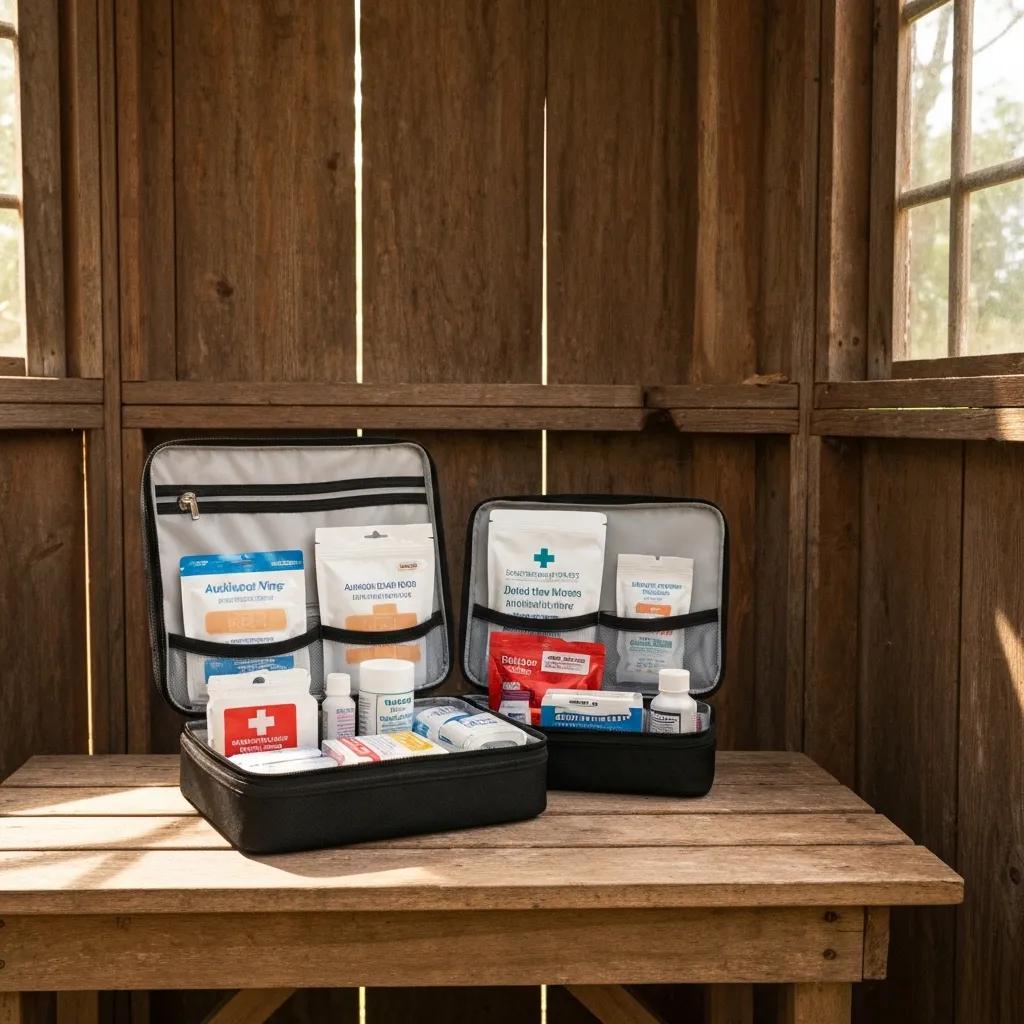
Your first aid and medical kit should combine basic trauma care with items tailored to household medical needs. It should treat minor injuries and help sustain chronic care if pharmacies or providers are inaccessible.
Basic kits include adhesive bandages, sterile gauze, antiseptic wipes, tape, scissors, tweezers, and OTC pain relievers. Advanced kits add larger dressings, triangular bandages, splinting materials, and other supplies for more serious injuries. Documentation is vital: include a current medication list, dosages, and prescriptions in waterproof paper form and encrypted digital backups. Plan power for medical devices and carry extra supplies for at least two weeks when possible. Coordinate with providers and local suppliers for emergency refills before storm season.
The table below clarifies which medical items are basic essentials and which are advanced additions.
Use this guide to assemble both a grab-and-go kit and a larger, home-based kit. The next subsection explains basic versus advanced contents in practical terms.
What Basic and Advanced First Aid Items Are Needed?
Keep basic first aid items accessible in a central grab-and-go kit: bandages in several sizes, sterile gauze, tape, antiseptic wipes, disposable gloves, scissors, tweezers, and OTC meds for pain, fever, and allergies. Advanced supplies are recommended for households with higher medical risk or remote locations and include larger sterile dressings, splinting materials, hemostatic dressings, and sterile burn dressings. Store kits in waterproof containers, replace used or expired items, and include a checklist inside the kit to simplify inventory. Training multiplies effectiveness—refresh basic first-aid and CPR skills regularly.
Once medical supplies are set, plan for prescriptions and powering essential devices—the next critical topic.
How Should Prescription Medications and Medical Devices Be Included?
Start by asking your provider or pharmacy about obtaining an emergency two-week supply and get clear documentation of medication names, dosages, and indications in both paper and encrypted digital forms. Store meds in waterproof containers and include a medication administration card for caregivers, noting any refrigeration needs. For devices like CPAPs, oxygen concentrators, or infusion pumps, identify compatible portable power options and pack extra tubing and consumables. Test battery backups and generator hookups before storm season. Coordinate with local emergency management and medical suppliers ahead of time to reduce interruptions in care during prolonged outages.
With prescriptions documented and devices planned for, you can move on to power, lighting, and communication—covered in the next section.
What Power, Lighting, and Communication Tools Are Vital During a Hurricane?
Power, lighting, and communication keep households safe and informed during outages: lighting prevents accidents, power runs medical devices and refrigeration, and communication preserves access to official alerts and family contact. Short-term portable power includes power banks and solar chargers for phones and radios. Longer-term needs may require a portable generator sized for critical loads—each option has tradeoffs in runtime, fuel, storage, and safety. Prioritize hands-free lighting (headlamps) and LED lanterns, and store extra batteries separately. Communication planning centers on NOAA weather radios and smartphone emergency alerts, plus backups like car chargers and two-way radios where cell service is unreliable.
The table below compares common power sources to help you choose a balanced setup based on runtime and safety.
That comparison clarifies tradeoffs. The next subsection gives practical recommendations for portable power and lighting.
Which Portable Power Sources and Lighting Solutions Are Recommended?
For most coastal households, combine power banks (10,000–30,000 mAh), a mid-size solar charger, and a portable inverter generator for flexible redundancy. Power banks keep phones and radios running, solar chargers provide slow recharge, and a generator can support a refrigerator or medical device when used safely. Choose LED lanterns and headlamps for efficient, hands-free lighting; store spare batteries and rechargeable cells, and label chargers for priority devices such as medical equipment and NOAA radios. Always follow generator safety: run them outdoors, keep them away from windows, use carbon monoxide detectors, and never refuel while they’re running. Practice generator startup and load management before a storm to avoid mistakes under stress.
Good lighting and power support reliable communication. The following subsection explains staying informed during storms.
How Can You Stay Informed with Communication Devices During Storms?
Reliable information comes from devices and habits that work when networks are strained. A battery-powered or hand-crank NOAA weather radio delivers official watches and warnings even when cell service is spotty. Enable wireless emergency alerts on your phone and keep at least two charged power banks to maintain connectivity. Backup options include two-way radios for short-range coordination, satellite communication devices in remote areas, and contact lists kept both digitally and on paper. Practice a family communication plan with meeting points, an out-of-area contact, and check-in intervals so everyone knows how to reconnect if separated.
These communication practices tie directly to safeguarding documents and valuables, the next essential preparedness topic.
How Should You Protect Important Documents and Valuables in a Hurricane?
Safeguarding documents and valuables reduces recovery friction after a storm by keeping the records insurers and aid agencies need. Prioritize IDs, insurance policies, deeds, medical records, and financial documents for waterproofing and off-site backups. Physical options include waterproof bags, portable fire-resistant safes, and sealed containers stored above likely flood levels. Digital backups should be encrypted and stored in cloud services or on encrypted drives kept off-site. Property-protection measures—like professionally installed shutters—also lower the risk of water intrusion and forced entry that can compromise on-site storage. Before evacuating, assemble a document packet, photograph valuables for claims, and make sure a trusted out-of-area contact can access digital copies if needed.
The checklist below highlights documents to secure and why they matter for recovery and insurance claims.
- Government IDs: Needed for shelter access, identification, and travel.
- Insurance policies and claim contacts: Speed claims and restore coverage faster.
- Deeds and mortgage paperwork: Prove ownership for housing assistance and repairs.
- Medical and prescription records: Enable continuity of care and pharmacy refills.
- Pet records and microchip info: Required for sheltering and reunification.
Securing documents physically and digitally pairs well with property protections. The next subsection lists effective waterproofing and digital storage practices.
What Documents Are Essential to Secure Before a Hurricane?
Keep originals or certified copies of driver’s licenses or passports, birth certificates, Social Security cards, homeowner or renter insurance policies, property deeds, mortgage documents, vehicle titles, and recent photos of your property and valuables for claims. Also include medical records, prescription lists, pet vaccination records, and emergency contact lists. Store originals in a waterproof, elevated container and carry certified copies or digital versions during evacuations. Include a small cash reserve and a list of bank account or policy numbers. A labeled, prioritized packet lets you grab critical items quickly and simplifies recovery interactions after the storm.
With documents organized, implement both physical and digital storage strategies to ensure access during outages.
What Are the Best Methods for Waterproof and Digital Document Storage?
Combine heavy-duty zip-seal bags, portable waterproof safes, or fire-resistant document boxes with cloud-based, encrypted backups to create redundancy. Scan documents at high resolution and store encrypted copies across multiple cloud services or on an encrypted external drive kept off-site. For refrigerated medications, plan portable coolers with ice packs and prioritize powering small medical refrigerators via generator if needed. Protect digital backups with strong passwords and two-factor authentication, and share essential access details with a trusted out-of-area contact. Test file retrieval on a battery-powered device before storm season so backups are accessible when you need them most.
Document and power planning naturally lead to tailoring supplies for pets, infants, and elderly family members—covered in the next H2 with specific lists.
How Do You Tailor Your Hurricane Emergency Supplies for Pets, Infants, and Elderly Family Members?
Special populations need tailored kits to maintain care and reduce complications during evacuations or extended outages. For infants, prioritize ready-to-feed formula, extra diapers, wipes, manual feeding tools, and blankets. For pets, include several days of food, medications, a carrier or leash, and vaccination/microchip records. Elderly household members often need an extended prescription supply, mobility aids, extra hearing-aid batteries, eye-care items, and contacts for caregivers or medical providers. Assign caregiver roles, rehearse evacuation routes, and keep documentation easily accessible to help with decisions under stress.
The checklist below outlines targeted supplies for each group.
- Infants and young children: Formula, diapers, wipes, bottles, soothing items, and a pediatric first-aid kit.
- Pets: Three to seven days of food, medications, proof of ownership and vaccination records, and a secure carrier.
- Elderly family members: Two-week medication supply, mobility aids, backup power for devices, and emergency contact cards.
Integrating these tailored kits into your household emergency kit improves resilience for everyone and pairs well with structural protections like shutters that reduce exposure to storm hazards.
What Supplies Are Needed for Infants and Young Children?
Infants and young children need feeding and hygiene supplies that work without electricity: ready-to-feed formula, powdered formula with measured containers, extra bottles and nipples, a manual can opener for canned baby food, diapers in the right sizes, wipes, and a change of clothing for each child. Comfort and health items—favorite blanket or toy, pediatric meds, a thermometer, and infant first-aid supplies—help manage stress and minor illnesses during displacement. Pack hand sanitizer, sealable disposal bags for diapers, and a small portable changing pad. If evacuation shelters require them, include a lightweight travel crib or secure carrier for sleep and safety.
These infant-specific preparations lead into pet and elderly kits, which need their own documentation and equipment planning.
How Do You Prepare Emergency Kits for Pets and Elderly Individuals?
Pet kits should cover three to seven days of food, medications in labeled containers, copies of vaccination and microchip records, a sturdy carrier or leash, and familiar items to reduce stress. For elderly members, compile a two-week supply of prescriptions, mobility aids (including backups), extra eyeglasses and hearing-aid batteries, and a caregiver contact sheet with medical directives and physician information. Identify pet-friendly sheltering options or trusted friends ahead of storms, and practice assisted evacuation drills for those with mobility limits. Clearly label kits and keep them in easy-to-reach locations for quick departures.
With supplies protecting people and shutters protecting property, the next H2 explains how both pillars combine to strengthen coastal hurricane readiness.
Why Are Hurricane Shutters and Emergency Supplies Both Critical for Coastal Hurricane Readiness?
Real coastal hurricane readiness rests on two complementary pillars: occupant preparedness through emergency supplies and structural protection like hurricane shutters and storm panels. Supplies keep people safe, fed, and connected during outages; shutters reduce window failures, debris penetration, and water intrusion—lowering the chance of displacement and secondary hazards. Combining both approaches shortens downtime after storms, reduces repair costs, and speeds recovery for families and communities. For homeowners in the Coastal Carolinas, pairing a well-stocked kit with professional shutter installation—and using our Cost Calculator (free estimate) to compare options—creates a balanced, practical resilience strategy.
Next we show how shutters change outcomes in real storm scenarios and where to get professional help locally.
How Do Hurricane Shutters Complement Your Emergency Supplies?
Hurricane shutters cut the chance of window breakage and the resulting water and wind-driven debris entry. That lowers interior flooding, reduces flying glass injuries, and helps prevent opportunistic burglaries after a storm—preserving the space where you use emergency supplies. Shutters don’t replace food, water, or medical supplies, so both defenses are essential. Practical planning ties them together: store supplies in elevated, waterproof containers inside shutter-protected rooms and keep alternate shelter plans ready if structural damage occurs despite protections. Together, these measures reduce immediate danger and make recovery faster and less costly.
The next subsection explains professional shutter installation and how to get a free estimate in the Coastal Carolinas.
Where Can Coastal Carolinas Residents Get Professional Shutter Installation and Free Estimates?
Coastal North and South Carolina homeowners have many professional shutter and storm-panel options—accordion, roll-down, colonial, Bahama, hurricane screens, and clear or aluminum panels—that match architectural styles and meet local code requirements. Professional installers ensure products meet local wind and surge conditions and advise on permits and compliance. To estimate costs and compare options, American Hurricane Shutters provides a Cost Calculator (free estimate) that gives quick, practical pricing guidance. We serve coastal communities including Wilmington, Myrtle Beach, Oak Island, Topsail, New Bern, and Pawleys Island. For homeowners weighing budget and readiness tradeoffs, combining a tailored emergency kit with professionally installed shutters completes a thorough hurricane plan.
This final operational step links personal preparedness with property-level protection to maximize safety and speed recovery after a storm.
Frequently Asked Questions
What should I do if I have special dietary needs during a hu
