
Essential Accordion Shutter Maintenance Guide for Homeowners — How to Clean, Lubricate, Inspect, and Troubleshoot with Confidence
Accordion shutters fold flat when not in use and lock across openings to protect coastal homes from wind, rain, and flying debris. This guide walks homeowners through practical cleaning, lubrication, inspection, and troubleshooting steps so shutters stay dependable before and after storm season. Regular care preserves function and extends service life — typically 15–25 years for aluminum and stainless-steel systems — and lowers the chance of failure during severe weather. You’ll find seasonal schedules for North and South Carolina coasts, safe cleaning solutions and tools, lubricant guidance for tracks versus locks, and clear rules for DIY versus professional work. The article includes step-by-step cleaning and lubrication procedures, lubricant comparison tables, inspection checklists, and a troubleshooting matrix for sticking, rust, and misalignment. Use the checklists and tables to make maintenance repeatable, and read the final sections to learn when to schedule pro service or request a free estimate.
How Often Should Homeowners Clean and Maintain Accordion Shutters?
How often you maintain accordion shutters depends on exposure to salt air, visible buildup, and seasonal storm risk. Along the Carolina coast, prepare shutters before hurricane season and inspect them again after storms to remove salt and debris that speed corrosion of aluminum and stainless components. Routine semiannual checks usually catch failing seals, loose fasteners, and wheel wear early, preventing small issues from becoming major problems. Regular attention to tracks, hinges, locking rods, and weather stripping keeps operation smooth and ensures shutters are ready for quick deployment during severe-weather alerts.
What Is the Recommended Cleaning Frequency for Accordion Shutters?
We recommend a mix of calendar-based and event-driven cleaning to protect shutter life. At minimum, clean shutters twice a year — once before hurricane season and once after — and add targeted cleanings after heavy salt spray, prolonged pollen, or major storms. These intervals reduce abrasive salt buildup on tracks and hardware, preserve paint and powder-coat finishes, and limit corrosive pitting on metal parts. For homes directly on the water, consider quarterly rinses to remove persistent salt deposits. Keep simple records of cleaning dates — they help during professional inspections and warranty reviews.
Coastal Engineering Patents: Protection and Maintenance
Coverage includes coastal structures and components, protection and maintenance methods, construction equipment, field research instruments, hydraulic laboratory modeling tools, marine pollution control devices, and ocean energy equipment.
An Annotated Bibliography of Patents Related to Coastal Engineering. Volume II. 1971-1973. Appendix., 1971
When Should You Schedule Lubrication and Inspection for Accordion Shutters?
Set lubrication and inspections around seasonal risk and how often you use the shutters. If shutters sit most of the year, light lubrication once a year is usually enough; if they’re used regularly or sit in heavy salt spray, move to semiannual lubrication — once before hurricane season and once after — to keep wheels, hinges, and tracks moving freely. Do a full functional inspection after any strong storm or if you notice sticking, unusual noises, or trouble engaging locks. Inspecting before storm season gives you time to arrange professional service or order parts if needed.
How To Clean Accordion Shutters: Best Practices and Tools for Homeowners
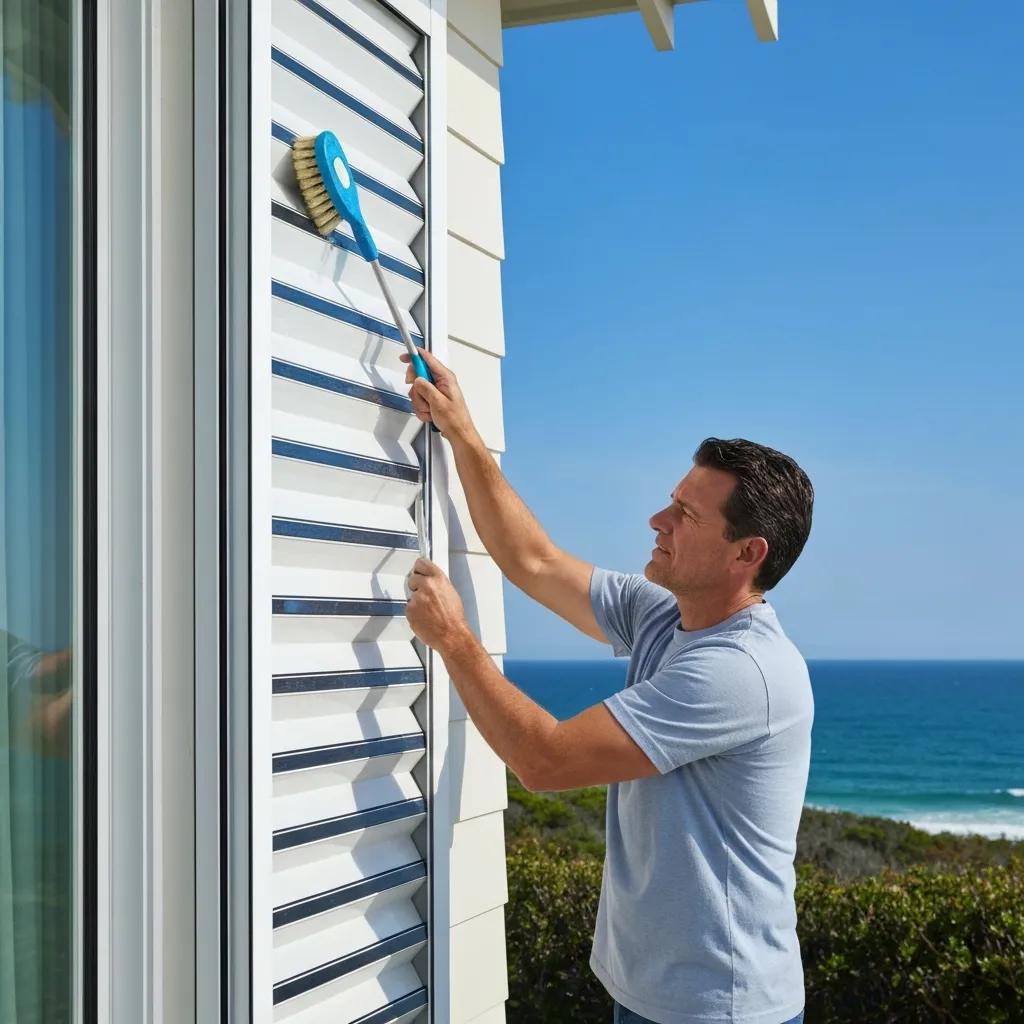
Cleaning removes salt, dirt, and biological growth from slats and tracks while protecting finishes and seals. Use mild detergent, soft brushes, and low-pressure rinsing to loosen deposits without forcing water into seals or motor housings on powered systems. Work from top to bottom so loosened debris rinses away naturally, and dry hardware thoroughly to slow corrosion. Proper cleaning preserves seals and weather stripping, improves storm performance, and reduces the chance of sticking or lock problems.
What Are the Step-by-Step Instructions for Cleaning Accordion Shutter Tracks and Slats?
Follow a consistent sequence to clean safely and effectively. Close the shutters and remove loose debris with a soft brush or vacuum attachment. Rinse slats and tracks with low-pressure water to remove surface salt and dirt. Mix a mild soap solution and gently scrub slats and visible hardware, avoiding saturation of motor housings on powered units; rinse and dry with microfiber cloths. Finally, operate the shutter slowly several times to dislodge any remaining grit from wheels and tracks, and note any areas with persistent residue or damaged finishes for follow-up inspection.
- Use the stepwise approach above for a safe, repeatable cleaning routine.
- Soft brushes and a low-pressure rinse prevent damage to seals and finishes.
- Always test operation after cleaning to confirm smooth movement.
Following this order prevents trapped debris from causing operational issues and prepares the system for targeted lubrication of wheels, hinges, and locks.
Which Cleaning Solutions and Tools Are Safe and Effective for Accordion Shutters?
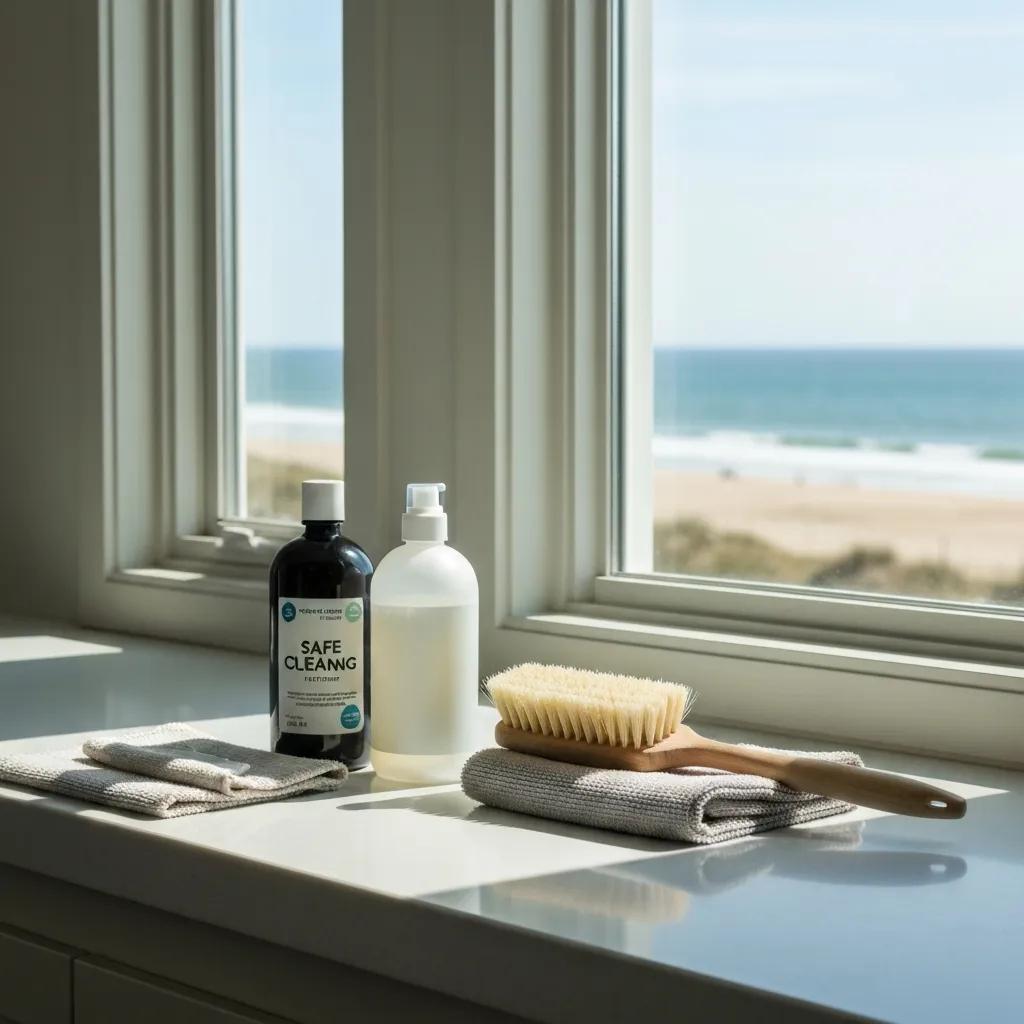
Pick cleaners and tools that remove salt and grime without harming finishes, seals, or metal alloys. A mild soap diluted in warm water, non-abrasive brushes, microfiber cloths, and a soft-bristled toothbrush for tight spots are safe choices. Avoid abrasive pads, strong acids, or bleach on metal hardware — they accelerate corrosion. For stubborn salt deposits, a short application of a dedicated salt-removal product followed by thorough rinsing can help; always test in an inconspicuous spot first. Wear protective eyewear and gloves, and preserve paint and powder-coat surfaces to delay structural wear from the elements.
How To Lubricate Accordion Shutter Tracks, Hinges, and Locks for Smooth Operation
Lubrication reduces friction and wear on moving parts — tracks, hinges, wheels, and locks. Choose lubricants by component and coastal exposure. In salt-air environments, use products that resist wash-off and repel moisture while avoiding heavy greases that collect dirt in tracks. Apply lubricants sparingly, wipe excess, and test movement immediately after application. The right lubricant and a sensible interval between applications extend component life and help prevent sticking or motor strain.
Which Lubricants Are Best for Accordion Shutters: Silicone Spray, White Lithium Grease, or Others?
Different shutter parts benefit from different lubricants: tracks, hinges, and locks each have optimal choices that balance water resistance and dirt attraction. Use the comparison below to pick the right product for common components and coastal conditions.
Lubricant comparison for accordion shutter components:
Use silicone sprays on tracks and seals, white lithium on heavy hinges, and dry/graphite sprays for locks to reduce gumming and keep parts turning smoothly.
What Is the Proper Method to Apply Lubricant to Tracks, Hinges, and Locking Mechanisms?
Apply lubricant in a controlled way: clean and dry surfaces first, then apply small amounts to pivot points, wheel axles, and the inside edges of tracks. For tracks, spray a thin line along the travel path and cycle the shutter several times to distribute the lubricant; wipe away excess to prevent buildup. For hinges and rollers, target pivot pins and work the movement until smooth. For locks, use dry graphite or dry silicone to avoid clogging. After lubrication, run full open/close cycles and note when reapplication is needed based on exposure and wash-off.
What Should Homeowners Look for in an Accordion Shutter Inspection Checklist?

A concise inspection checklist helps homeowners quickly assess shutter readiness and spot parts that need repair or replacement. Check component integrity — tracks, slats, hinges, fasteners, seals, and locking rods — and look for rust, deformation, loose hardware, or damaged seals. Combine visual inspection with simple functional tests like opening and closing under load and verifying lock engagement. Record your findings to build a maintenance history. Systematic checks reduce surprises during storms and help decide whether a DIY fix is safe or a professional visit is needed.
How to Identify Wear, Rust, Corrosion, and Loose Fasteners on Accordion Shutters
Use simple visual and tactile checks to prioritize repairs. Inspect tracks for pitting or deep grooves and look for dents or paint blistering on slats, which can reveal corrosion under the finish. Gently wiggle fasteners to check for looseness and examine rollers for side play or cracking. Light surface rust can often be treated with cleaning and a protective coating; heavy corrosion near attachment points or frame distortion typically requires part replacement. Classify issues as minor (surface rust, loose screws), moderate (worn rollers, slightly bent slats), or major (frame warping, severe corrosion) to decide on DIY fixes versus professional service.
Inspection checklist table:
We provide inspection and maintenance services tailored to coastal North and South Carolina homeowners and offer a cost calculator and free estimates on the website to help determine repair and service needs. If an inspection shows moderate-to-major issues, schedule a professional visit so repairs align with regional coastal conditions and preserve warranty coverage. Consider a pro inspection when hardware replacement, frame repairs, or motorized system service is indicated.
How to Check Seals, Weather Stripping, and Operational Functionality Before and After Hurricane Season
Testing seals and operation reveals leaks and engagement problems that reduce storm performance. Press seals to confirm even compression and run a light water test or visual gap check where possible. New weather stripping should compress consistently along the frame. Operate shutters fully open and closed while watching lock engagement, wheel tracking, and any binding under load; log unusual sounds or resistance for follow-up. Keeping dated notes of seal and operation checks shows wear patterns and supports timely replacements before hurricane season.
How To Troubleshoot Common Accordion Shutter Problems: Sticking, Rust, and Misalignment
Troubleshooting starts by finding the root cause — debris, corrosion, misalignment, or lubrication failure — then applying targeted fixes and knowing when to call a professional. Quick initial steps include cleaning tracks, checking rollers, and using the correct lubricants. More complex problems such as motor failure, through-corrosion of metal, or frame distortion require professional attention. A clear problem/cause/solution approach lets homeowners act safely and avoid steps that could void warranties or worsen damage.
Why Are My Accordion Shutters Sticking or Not Closing Properly?
Sticking usually comes from debris in tracks, worn wheels, bent slats, or inadequate lubrication — each with a prioritized DIY response. First, clean the track and remove visible grit, then apply a recommended lubricant to wheels and track surfaces and cycle the shutter to see if movement improves. If wheels show side play or the shutter binds at one spot, look for bent slats or a misaligned track; tightening fasteners can correct small misalignments, but bent tracks or frames generally need a pro. If cleaning and lubrication don’t restore smooth operation, stop DIY attempts to avoid damaging motors or frames and contact an expert.
Troubleshooting quick checklist:
- Clean: Remove debris from tracks and wipe slats, then test movement.
- Lubricate: Apply the correct lubricant to rollers, hinges, and locks.
- Inspect: Check for bent slats, worn wheels, or loose fasteners.
- Escalate: If movement stays restricted or structural damage exists, call a professional.
These steps create a safe DIY troubleshooting flow and lead into corrosion treatment and prevention guidance.
How Can Homeowners Remove Rust and Prevent Corrosion on Accordion Shutters?
Safe rust removal and prevention focus on minimizing material loss and protecting metal from salt-driven corrosion common on coastal properties. For light surface rust, remove loose flakes with a non-abrasive brush, treat with a rust converter if needed, then apply a marine-grade protective coating or corrosion inhibitor to stop further deterioration; always test products on a small area first. Replace heavily corroded fasteners or components and consider sacrificial protective sprays on exposed hardware. Stainless steel resists corrosion better, while aluminum benefits from regular cleaning and protective coatings. Long-term prevention relies on scheduled cleaning, correct lubricant use, and timely replacement of compromised seals and fasteners.
Rust treatment table:
This matrix clarifies when homeowners can intervene and when professional replacement is the responsible choice to preserve shutter integrity.
When Should Homeowners Call Professionals for Accordion Shutter Maintenance and Repairs?
Call a professional when safety, structural integrity, or code compliance is at risk — for example, motor failure, frame distortion, severe corrosion, or compromised anchoring. Professional service delivers accurate diagnosis, parts replacement, code-aware repairs, and warranty-preserving work that DIY fixes may not achieve. Pro help is especially important for motorized systems or when hardware failure affects shutter attachment to the home; professionals can ensure repairs meet applicable building code requirements for hurricane protection.
What Are the Benefits of Professional Accordion Shutter Maintenance Services?
Professional maintenance extends shutter life, ensures correct part fit and function, and helps protect warranties by using manufacturer-approved parts and methods. Benefits include expert diagnosis of motor and structural problems, proper selection and application of lubricants and coatings, and targeted hardware replacement that restores reliable operation. Technicians familiar with coastal regions understand salt-air corrosion patterns and can recommend more durable materials — such as stainless steel parts — and provide documentation for insurance and safety records. These technical advantages translate into homeowner peace of mind during storm season and lower long-term repair costs.
- Expert diagnosis and precise repairs that restore full functionality.
- Use of appropriate materials and methods for coastal salt-air conditions.
- Documentation of service and repairs to support warranties and insurance claims.
These benefits show why professional service is worthwhile for moderate-to-major issues and help homeowners decide which problems need a pro versus a DIY approach.
Which Issues Require Expert Repair Versus DIY Solutions?
Distinguishing DIY-appropriate tasks from professional repairs helps prioritize safety and cost. Minor tasks — routine cleaning, basic lubrication, tightening loose fasteners, and replacing weather stripping — are suitable for capable homeowners. Complex issues — frame distortion, motor or electrical faults on powered shutters, severe corrosion through structural members, or compromised anchoring — need professional expertise. If an inspection reveals extensive metal loss, repeated binding despite lubrication, or electrical malfunctions, schedule a pro evaluation to avoid safety risks and ensure code-compliant repairs.
DIY vs. Professional guidance list:
- DIY: Cleaning, mild rust removal, light lubrication, and replacing seals.
- Professional: Motor repair, frame realignment, major corrosion repair, and anchoring work.
- When unsure: Request a professional inspection or use our cost calculator for a free estimate.
With the right assessment, homeowners can choose to proceed themselves or arrange professional assistance.
American Hurricane Shutters offers maintenance and repair services across coastal North and South Carolina; homeowners can use the company’s online cost calculator to request a free estimate for inspections, repairs, or installations. Choosing a qualified local provider helps ensure repairs meet building code standards for hurricane protection and use materials suited to salt-air environments.
American Hurricane Shutters provides educational resources and service options for accordion shutters, including free estimates via the cost calculator and maintenance guidance tailored to coastal homeowners; contact us through the website to schedule inspections or request a quote.
Frequently Asked Questions
What are the signs that my accordion shutters need professional maintenance?
Consider professional maintenance if you notice frame distortion, deep corrosion, or malfunctioning motors. Other warning signs include persistent sticking despite cleaning and lubrication or failure to engage locks. If components look compromised or there’s significant metal loss, consult a pro to ensure repairs meet safety standards and building codes important for coastal hurricane protection.
Can I use regular household cleaners on my accordion shutters?
Avoid regular household cleaners that contain harsh chemicals — they can damage finishes and seals. Use a mild soap solution made for metal surfaces, non-abrasive brushes, and microfiber cloths to prevent scratching. Always spot-test any cleaner in an inconspicuous area before treating the whole shutter.
How can I tell if my accordion shutters are properly sealed?
Visually inspect seals for gaps or wear and press them to confirm even compression. You can run a light water test along edges to check for leaks. If seals don’t compress consistently or you see gaps, replacing the weather stripping is a straightforward way to restore water and wind resistance.
What should I do if my accordion shutters are making unusual noises?
Unusual noises often indicate inadequate lubrication, misalignment, or worn parts. Start by cleaning the tracks and applying the recommended lubricant to moving parts. If noise continues, look for bent slats or loose fasteners that need adjustment. If you can’t identify or fix the source, call a professional to prevent further damage.
Are there specific lubricants I should avoid for accordion shutters?
Avoid thick, sticky greases that attract dirt and debris and petroleum-based products unsuitable for coastal metals. Instead, choose water-resistant silicone sprays or dry lubricants that protect without gathering grime. Follow manufacturer recommendations for best results.
How can I extend the lifespan of my accordion shutters?
Keep a regular maintenance schedule of cleaning, lubrication, and inspections. Use cleaners and lubricants intended for coastal conditions, address wear and corrosion early, and keep a maintenance log of service dates and issues. These simple steps help your shutters remain reliable for years.
What are the risks of neglecting accordion shutter maintenance?
Neglected shutters can lose functionality, suffer accelerated wear, and even fail in severe weather. Corrosion can weaken structural components and debris buildup can cause binding or lock failure. Poor maintenance may void warranties and lead to costly repairs or replacements. Regular upkeep keeps shutters ready when you need them most.
Conclusion
Routine maintenance keeps accordion shutters reliable and extends their service life, especially on the coast. Follow the cleaning and lubrication schedules in this guide, act on inspection findings, and bring in a professional when issues exceed DIY scope. If you’d like help, local experts understand coastal conditions and can tailor maintenance or repair plans for your home. Contact us to keep your shutters ready and your home protected.
