

Customizable Roll Down Shutters for Ultimate Hurricane Protection: Complete Guide to Cost, Types, Benefits, and Installation
Custom roll down shutters are engineered exterior systems that deploy across windows and other openings to block wind-driven debris, reduce pressure differentials, and protect the building envelope during hurricanes and severe storms. This guide walks you through how roll down shutters work, the differences between manual and motorized operation, realistic cost ranges and what drives price, and the installation and material choices most relevant to coastal North Carolina and South Carolina homeowners and businesses. Coastal properties face repeated exposure to high winds, salt spray, and impact hazards, so choosing the right products, meeting code requirements, and keeping up with maintenance are key to long-term performance and value. Throughout, we cover technical components, customization and impact-resistance options, measurable benefits like energy and noise reduction, and practical maintenance that extends service life. You’ll also learn how cost estimators and free in-person estimates factor into the buying process and what to expect from a professional installation using corrosion-resistant hardware and engineered mounting. After the technical sections we provide checklists, comparison tables, and next steps to get an accurate project estimate.
What Are Customizable Roll Down Hurricane Shutters and How Do They Work?
Custom roll down hurricane shutters are exterior protection systems made from interlocking slats that roll into a housing at the top of an opening and run in guide rails to close windows and doors, forming a continuous barrier against wind and debris. They operate either by a manual crank or an electric motor; the housing stores the rolled curtain while the guides anchor the slats to the opening. When closed, the assembly transfers wind loads to structural anchors and reduces air infiltration. These systems can be tailored for non‚Äëstandard openings, accommodate architectural details, and integrate controls such as remotes or wall switches so owners can balance appearance and performance. Because shutters seal against guides and can include retention features, they lower the risk of slat disengagement and stop projectiles from breaching openings during storms. The component breakdown below explains why engineered fit and corrosion‚Äëresistant fasteners matter for reliable storm performance.
Roll down shutters are built from several distinct parts that determine performance and longevity; the table below summarizes core components and typical options to help you match features to needs.
This component overview shows how each piece contributes to impact resistance and wind‚Äëload transfer. Choosing the right slat gauge, guide retention, and stainless fasteners is especially important in coastal environments and influences both cost and installation approach.
What Features Make Roll Down Shutters Customizable and Impact-Resistant?
Customization and impact resistance come from decisions about slat geometry, material grade, anchor design, and sealing systems — together these control strength, deflection, and debris penetration. High‑grade aluminum slats with the right wall thickness give bending stiffness while staying light enough for smooth operation; end‑retention or reinforced guides stop slat lift‑out under pressure. Seals and brush strips in the guides reduce air and water intrusion, and powder‑coat finishes let you match color while protecting against UV and corrosion. Choosing 18‑8 stainless steel fasteners and other corrosion‑resistant hardware preserves mounting integrity in salt air, and engineered pressure analysis customizes shutter sizing and anchor spacing to meet wind‑load demands. These features determine whether a shutter meets impact standards and performs reliably through repeated deployments.
The next section compares manual and motorized options so you can weigh convenience against upfront cost and ongoing maintenance.
How Do Motorized and Manual Roll Down Shutters Compare?
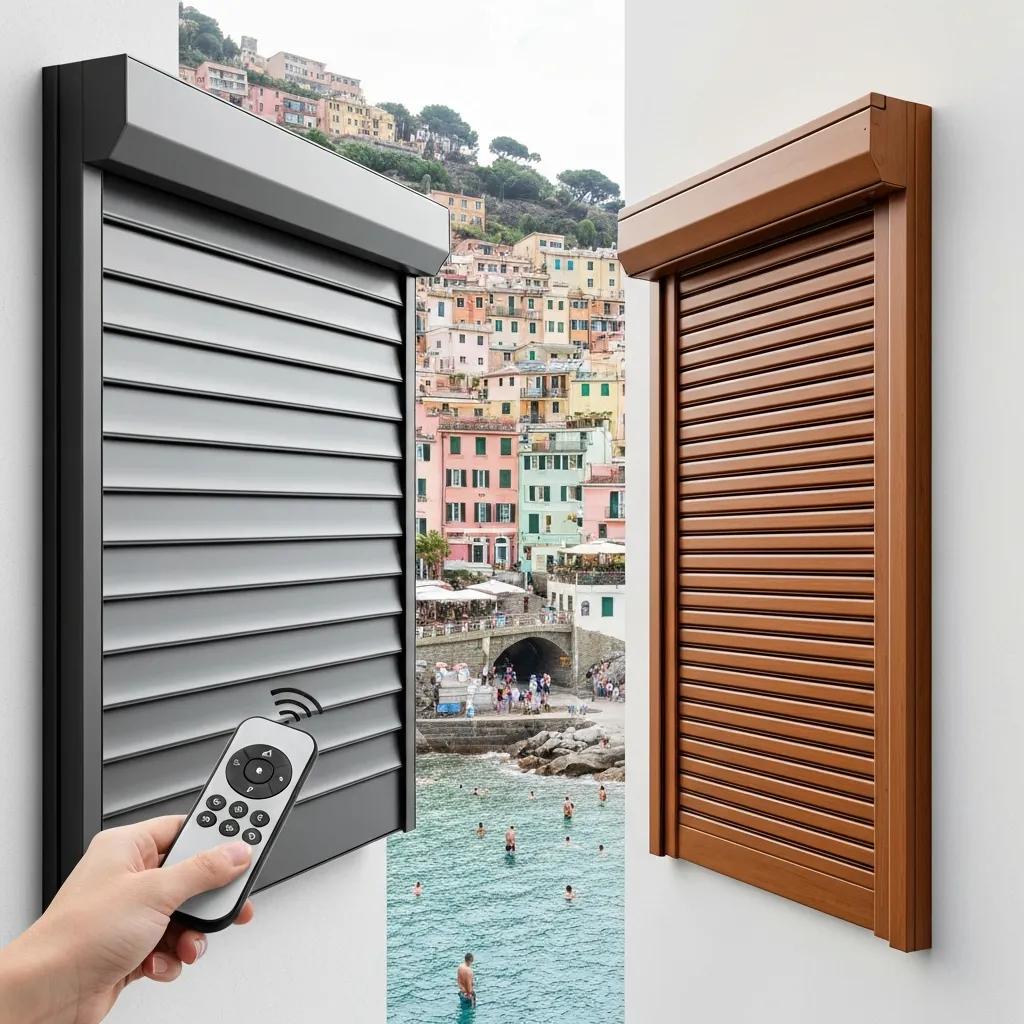
Motorized and manual roll down shutters trade off convenience, cost, and resiliency in different ways. Motorized systems typically use 120V electric motors or battery/solar‑backed drives, offer one‑touch operation via remote or wall switch, and can integrate with smart‑home systems for scheduled closure. They cost more up front and require occasional electrical service but deliver fast deployment when a storm is approaching. Manual crank systems are less expensive, simpler to maintain, and avoid electrical dependencies, but they require physical effort and may be slower on large openings; they’re often chosen for secondary or seldom‑used openings. Evaluate both options for backup power, serviceability, and any local code requirements that might favor motorized units with tested performance. The right choice balances expected use frequency, accessibility, and the value of automation during short‑notice events.
Before we get into costs, remember local experts provide tailored project estimates: American Hurricane Shutters specializes in engineered roll down systems across coastal North and South Carolina and delivers custom solutions for each opening, available in manual or motorized configurations with corrosion‚Äëresistant hardware and free estimates through our cost calculator and contact resources. That local context turns technical specs into an actionable plan.
How Much Do Roll Down Hurricane Shutters Cost? Pricing Factors and Free Estimate Options
Costs break down into materials, labor, and feature‑driven line items so homeowners can estimate a per‑square‑foot range and see how options affect totals. Typical price ranges depend on manual versus motorized operation, slat gauge and finish, complexity of openings, and site conditions; many buyers identify a per‑square‑foot band that spans base manual systems up to premium motorized or large commercial installations. Labor and permits affect final pricing, and engineered jobs for unique openings or code‑stamped drawings add cost but ensure documented compliance. To estimate accurately, gather measurements, decide on manual or motorized operation, and note special mounting conditions — masonry or limited headroom often require custom housings or brackets.
This table highlights that motorization and upgraded materials raise per‚Äësquare‚Äëfoot costs, while engineered mounting and commercial scales shift pricing further. For coastal projects, a cost calculator is a useful starting point because it aggregates opening sizes, selected features, and local installation variables to deliver a tailored estimate.
How to get an accurate quote: use a cost calculator to enter measured dimensions, choose manual versus motorized operation, and note finish and access constraints. Then schedule a free in‑person estimate to review architectural details, confirm anchoring and electrical needs for motors, and request stamped engineering if required. American Hurricane Shutters’ cost calculator and local estimate process help homeowners in coastal North and South Carolina turn rough ranges into precise installed pricing.
What Influences the Price of Custom Hurricane Roll Down Shutters?
Key factors affect installed cost and help you prioritize investments for long‑term performance. Material choice — especially slat gauge and aluminum grade — alters manufacturing cost and weight; thicker, reinforced profiles cost more but offer higher wind ratings. Motorization adds equipment and electrical labor, and may include backup power or smart‑home integration. Opening complexity raises labor: non‑rectangular shapes, limited headroom, and masonry substrates can require custom housings or additional anchoring. Local code requirements and the need for stamped engineering or permits add soft costs; projects in higher wind zones often require documented calculations and stronger anchors. Finally, finish options and accessories (locks, seals, sensors) increase the subtotal but can be justified by lifecycle benefits in corrosive coastal environments.
How to Use the Roll Down Shutter Cost Calculator for Accurate Estimates?
A good cost calculator converts measured opening dimensions, chosen operation type, and material selections into an approximate installed price so you can compare options before scheduling an on‑site estimate. Start by measuring width and height for each opening and note obstructions like doorways or trim that interfere with tracks; enter total square footage and choose manual or motorized operation plus your preferred slat profile and finish. Flag special conditions — masonry installation, custom housings, or high‑wind‑code locations — to adjust labor assumptions. Use the calculator output as a planning figure, then schedule a free in‑person estimate to confirm structural anchoring, finalize electrical needs for motors, and get stamped engineering if needed.
When you want a site‑specific estimate, request a free estimate via American Hurricane Shutters’ cost calculator and local estimate process to receive tailored pricing and guidance for coastal North and South Carolina installations.
What Are the Key Benefits of Roll Down Shutters for Homes and Businesses?
Roll down shutters deliver layered benefits: robust hurricane and storm protection, improved security and privacy, and measurable energy and noise improvements — making them a multifunctional investment for coastal properties. As a physical barrier, shutters stop impact penetration and help control interior pressurization that can drive structural damage. As a locked exterior enclosure they deter intrusion and provide controlled privacy. The shading effect and added thermal resistance reduce solar heat gain and air leakage, lowering HVAC runtime and improving comfort, while the curtain mass and sealed guides reduce exterior noise. Together, these benefits address acute storm risk and everyday resilience — which can also influence insurance exposure and livability.
Practical benefits for residential and commercial properties include:
- Storm Protection: Shields openings from wind‚Äëborne debris and reduces internal pressure during hurricanes.
- Security: Acts as a physical deterrent to forced entry when shutter curtains are locked.
- Energy Savings: Lowers solar heat gain and reduces HVAC cycling by adding an exterior thermal barrier.
These advantages explain why many owners prefer engineered roll down systems over temporary or ad‚Äëhoc options. The sections below unpack protection, security, and energy/noise benefits in more detail.
How Do Roll Down Shutters Provide Superior Hurricane and Storm Protection?
Roll down shutters handle hurricane forces by intercepting debris and transferring wind loads through guides and anchors into the building structure, which reduces the chance of glazing failure and interior pressurization damage. Impact‑resistant slat profiles and retention systems are tested to simulate debris strikes and the resulting impulses; a properly engineered system resists slat deformation that would allow a breach. When closed, shutters limit air exchange between inside and out, moderating pressure differentials that can lift roof and envelope components. Real‑world experience shows continuous protection across multiple openings prevents chain‑reaction failures, where one breached opening increases pressure on adjacent areas — so consistent coverage of high‑risk openings is critical for whole‑building resilience.
Construction for Hurricane Conditions: Strategies and Analysis
Hurricanes have repeatedly battered the southeastern United States, often overwhelming even well‑built structures. Major storms like Donna, Camille, Hugo and Andrew left lasting lessons about vulnerabilities in design and construction. Building codes and construction practices have evolved in response, but the risk remains — so understanding protective strategies and code requirements is essential to reduce future damage.
The historical record of hurricane damage underscores why strong building‚Äëenvelope protection matters.
In What Ways Do Roll Down Shutters Enhance Property Security and Privacy?
Beyond storm protection, roll down shutters act as solid exterior barriers that lower the chance of opportunistic break‚Äëins and let occupants control privacy, especially at ground‚Äëlevel or street‚Äëfacing windows. Sturdy slat profiles combined with locking hardware and retained guides make forced entry more difficult than with plywood or other temporary coverings. For businesses, shutters protect inventory and storefront glazing after hours; for homes, they let owners dial daylight and visibility on and off. Compared to plywood, shutters provide repeatable, long‚Äëterm security and are faster to deploy and more durable across repeated use or storm cycles.
How Do Roll Down Shutters Improve Energy Efficiency and Noise Reduction?
Roll down shutters boost energy efficiency by creating an exterior shading and insulating layer that cuts solar heat gain and slows convective heat transfer through glazing. The air gap between closed slats and the glass acts as a thermal buffer, lowering peak cooling loads in hot months and reducing heat loss in cooler seasons. For noise reduction, the curtain’s mass and sealed guides help attenuate airborne sound, improving indoor comfort near busy roads or construction. Exact savings vary with climate, window orientation, and occupancy, but many homeowners notice reduced HVAC run times and quieter interiors after installing continuous exterior shutters.
How Is Professional Hurricane Shutter Installation Done in North Carolina and South Carolina?
Professional installation follows a clear workflow that starts with site assessment and ends with testing and homeowner orientation, while addressing local codes and coastal corrosion concerns. Installers conduct an initial consultation and on‚Äësite measurement, produce engineered or shop drawings when required, fabricate custom housings and guides to measured dimensions, and mount housings and anchors with corrosion‚Äëresistant fasteners. Proper anchoring transfers wind loads to structural members rather than trim, and post‚Äëinstallation testing and sealing ensure shutters operate smoothly and lock correctly. Throughout the job, installers verify code compatibility and prepare documentation for permits or homeowner records.
- Assessment and Measurement: On‚Äësite review of openings, substrates, and headroom to create accurate shop drawings.
- Engineering and Fabrication: Produce engineered plans if required and fabricate shutters to spec.
- Mounting and Anchoring: Secure housings and guides with corrosion‚Äëresistant fasteners into structure.
- Electrical and Controls: For motorized units, install motors, wiring, and backup power as specified.
- Testing and Customer Walk-through: Cycle shutters, demonstrate controls, and review maintenance basics with the owner.
This sequence ensures a safe, code‚Äëaware installation tailored to each opening; the subsection below explains when local building codes require additional engineering.
What Are the Steps in the Roll Down Shutter Installation Process?
Professional installation typically follows a six‚Äëstep process from assessment to final testing to ensure shutters meet performance and code expectations. First, an on‚Äësite assessment documents opening dimensions, structural backing, and mounting constraints. Second, installers produce detailed measurements and shop drawings to define housing and guide sizes. Third, fabrication produces custom shutters to the specified dimensions and finish. Fourth, the crew mounts housings, guides, and anchors using corrosion‚Äëresistant fasteners sized to local wind loads. Fifth, electrical work is completed for motorized units and backup power options are set up when requested. Sixth, the team performs operational testing, sealing, and a customer walk‚Äëthrough explaining operation and maintenance. Each step reduces field issues and confirms the system transfers loads correctly.
How Do Local Building Codes Affect Hurricane Shutter Installation?
Local and state codes — particularly in high‑velocity hurricane zones — set required wind‑load capacities, impact‑testing documentation, and sometimes engineering stamps for shutter systems, so installers must design and document anchors and assemblies accordingly. Knowing HVHZ and other regional thresholds tells you if the project needs sealed calculations or third‑party testing, and some municipalities require permit submittals with manufacturer data and installation details. Properties in regulated zones or with unusual openings may need professional engineering to size anchors, specify spacer plates, or confirm the shutter will perform under code loads. Working with installers experienced in North and South Carolina coastal codes reduces permit delays and helps ensure the installed system passes inspection.
Which Materials and Customization Options Are Best for Roll Down Shutters?
Material choices and available customizations determine durability, corrosion resistance, and how well shutters blend with the building. Prioritizing high‑grade aluminum, stainless fasteners, and durable finishes typically produces the best long‑term results on the coast. Aluminum strikes a balance of weight and strength, enabling protection of large openings without excessive headroom or heavy motors; powder‑coat or anodized finishes add surface protection. Corrosion‑resistant hardware — specifically 18‑8 stainless steel fasteners and brackets — is critical near salt air to avoid galvanic corrosion and loosening. Custom options include non‑standard widths and heights, slim or concealed housing profiles, color matching to facades, and a variety of motorization and control integrations to fit building automation systems.
Why Is High-Grade Aluminum Preferred for Roll Down Shutters?
High‑grade aluminum is the common choice because its strength‑to‑weight ratio supports large openings without oversized housings or drives, and with proper finishes it resists corrosion better than many steel alternatives. Aluminum can be formed into precise slat profiles with consistent wall thickness for predictable wind‑load performance and smoother rolling. It’s non‑combustible and accepts powder‑coating treatments that boost UV and salt resistance, lowering long‑term maintenance. For coastal homeowners and businesses, the mix of lighter weight, corrosion tolerance, and consistent fabrication generally makes high‑grade aluminum the practical option.
What Custom Sizing, Colors, and Motorization Features Are Available?
Customization ranges from precise sizing for irregular openings to factory finishes and multiple control schemes so owners can match aesthetics and operation. Custom sizing lets shutters cover non‚Äëstandard or large expanses without gaps; color matching and textured finishes help shutters blend with facades. Motorization options include 120V motors with remote control, wall switches, and smart‚Äëhome integration for scheduled or centralized control; optional backup power or battery packages support deployment during outages. When choosing options, weigh aesthetic goals against constraints like headroom and expected frequency of use to optimize lifespan and cost.
How Can You Maintain and Extend the Lifespan of Your Roll Down Hurricane Shutters?
Regular maintenance and seasonal inspections keep shutters reliable and extend their service life, especially in coastal environments that accelerate wear on moving parts and hardware. A basic maintenance routine includes visual checks of slats and guides, cleaning salt deposits and debris from guides and seals, lubricating moving parts per manufacturer guidance, and testing motor operation and backup power for motorized units. Annual checks of anchor tightness, fastener condition (especially when not stainless), and seal integrity catch small issues before they cause bigger problems. Replacing worn seals or corroded hardware promptly avoids accelerated wear of adjacent components. Proper maintenance also supports warranty claims and helps plan for end‚Äëof‚Äëlife replacement predictably.
- Monthly / After Storms: Inspect guides and slats for debris; remove salt and dirt to prevent abrasion.
- Quarterly: Cycle motorized units and test backup power; listen for unusual noise or vibration.
- Annually: Check anchors and fasteners, lubricate moving parts where specified, and replace worn seals.
What Are the Best Practices for Roll Down Shutter Maintenance?
Best practices pair regular homeowner tasks with periodic professional service so both visible and hidden wear are addressed and warranties stay valid. Homeowners should clean exterior surfaces and brush out guides after storm seasons to remove salt buildup, cycle shutters periodically to prevent sticking, and visually inspect seals and
How Long Do Roll Down Shutters Typically Last with Proper Care?
With proper materials — high‑grade aluminum, corrosion‑resistant hardware — and a proactive maintenance program, roll down shutters commonly last 15–30 years, depending on exposure, use frequency, and maintenance diligence. Systems often provide reliable protection well beyond a decade in coastal settings. Factors that shorten lifespan include heavy salt exposure without cleaning, infrequent cycling that stiffens seals, and delayed repairs to corroded fasteners or failing motors. Signs it’s time to consider replacement include excessive slat deformation, motors beyond economical repair, persistent guide binding, or anchors that no longer meet torque specs. Regular maintenance, prompt repairs, and using appropriate materials maximize return on investment and sustain system performance over time.
For an accurate evaluation of your property and a tailored estimate that reflects local conditions, request a free estimate through American Hurricane Shutters’ cost calculator and local estimating process; our team provides engineered solutions, uses 18‑8 stainless steel for coastal installs, and serves coastal North and South Carolina with custom roll down options.
Frequently Asked Questions
What are the maintenance requirements for roll down hurricane shutters?
Regular maintenance keeps roll down shutters ready and extends their life. Key tasks include visual inspections of slats and guides, removing salt and debris, and lubricating moving parts per the manufacturer’s instructions. Motorized units need periodic operation checks and backup power tests. Follow a routine of monthly or post‑storm checks, professional service every few years, and annual anchor and seal inspections to prevent wear and ensure the system works when required.
<h4