
How Easy Are Roll-Down Hurricane Shutters to Operate? Customer Insights on Manual and Motorized Use
Roll-down hurricane shutters retract into a slim housing and slide down to protect windows and doors from wind and flying debris. They’re available as manual crank systems or as motorized units, and each fits different homeowner needs. This guide explains how roll-down shutters work, compares manual cranks with electric motors, and highlights why deployment speed, user effort, and backup plans matter for coastal homes in North and South Carolina. Many homeowners worry about quick deployment during short-notice storms and how motorized units behave during power outages — we address those concerns with practical steps, realistic time estimates, and straightforward maintenance advice. You’ll find clear how-to descriptions, comparison tables for control methods and crank types, maintenance checklists, and a focused comparison with accordion and panel shutters to help you decide which option is easiest to use. By the end, you’ll understand typical deployment times, common user feedback, and next steps for a professional assessment or a free estimate. With 2024 forecasts and local storm patterns in mind, planning ahead is important — and this article ties directly to the decisions most coastal homeowners face about purchase and upkeep.
What Are Roll-Down Hurricane Shutters and How Do They Operate?
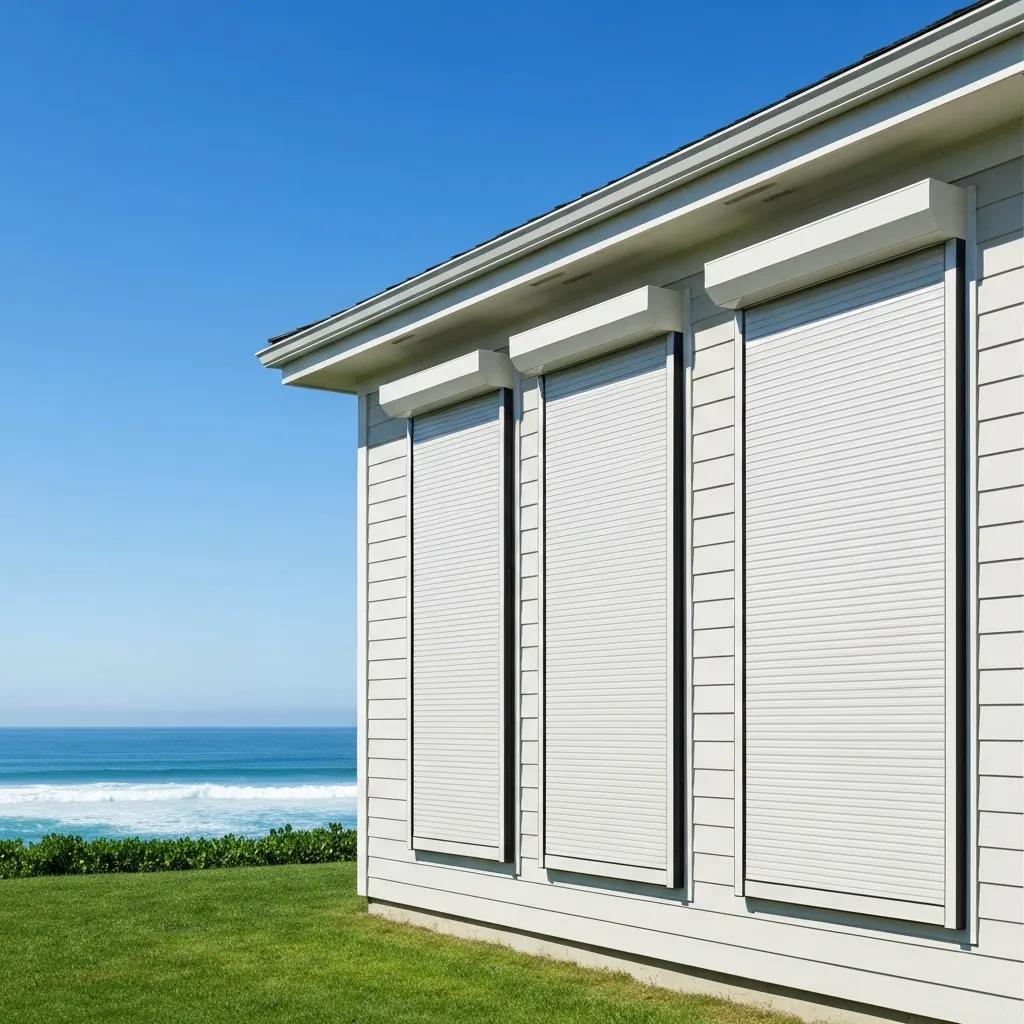
Roll-down shutters unroll from a compact roller box and use interlocking slats guided in vertical tracks to cover openings. Most are made from extruded aluminum for strength and corrosion resistance in salt-air environments. The system centers on a roller tube and guide tracks; manual models use a crank or gear drive to lower the curtain, while motorized units house an electric motor in the roller box to automate movement. That compact design delivers full coverage with a minimal storage footprint and often allows a single person to protect large openings like patio doors or long window runs quickly. Knowing the key components — slats, guide tracks, roller box, and either motor or crank — makes it easier to match a shutter type to your home’s needs. Next, we compare manual and motorized options so you can pick the operation style that fits your property and household.
For homeowners weighing choices, American Hurricane Shutters offers localized support across coastal North and South Carolina with free estimates, educational resources on shutter types and costs, and professional installation and service that meets local building-code requirements. Their informational pages and shutter cost calculator help estimate manual and motorized options before arranging an on-site assessment. That local service context connects these general explanations with practical next steps for your property.
What Is the Difference Between Manual and Motorized Roll-Down Shutters?
Manual roll-down shutters rely on a crank or gear drive to turn the roller tube and lower the curtain; motorized shutters use an electric motor to do the same work and can be triggered remotely or by a schedule. Manual systems are simpler and usually less expensive, but they require physical effort and take longer on large openings. Motorized systems cut out the physical work and speed deployment, which is especially helpful for multi-story homes or properties with many openings. Both share the same basic parts — slats, tracks, and a roller box — but they differ in power source, convenience, and potential for home-automation integration. The trade-offs are straightforward: manual units tend to be cheaper and easier to maintain, while motorized units offer convenience and automation but require power planning. Understanding those differences helps you choose what matches your mobility, budget, and storm-readiness goals.
- Manual: Lower upfront cost and simpler maintenance; requires physical effort.
- Motorized: Faster deployment and remote control; depends on electricity and electrical maintenance.
- Hybrid: Manual override or battery backup adds contingency for motorized systems.
Those distinctions lead into how manual deployment works in practice.
How Do Manual Roll-Down Shutters Work?
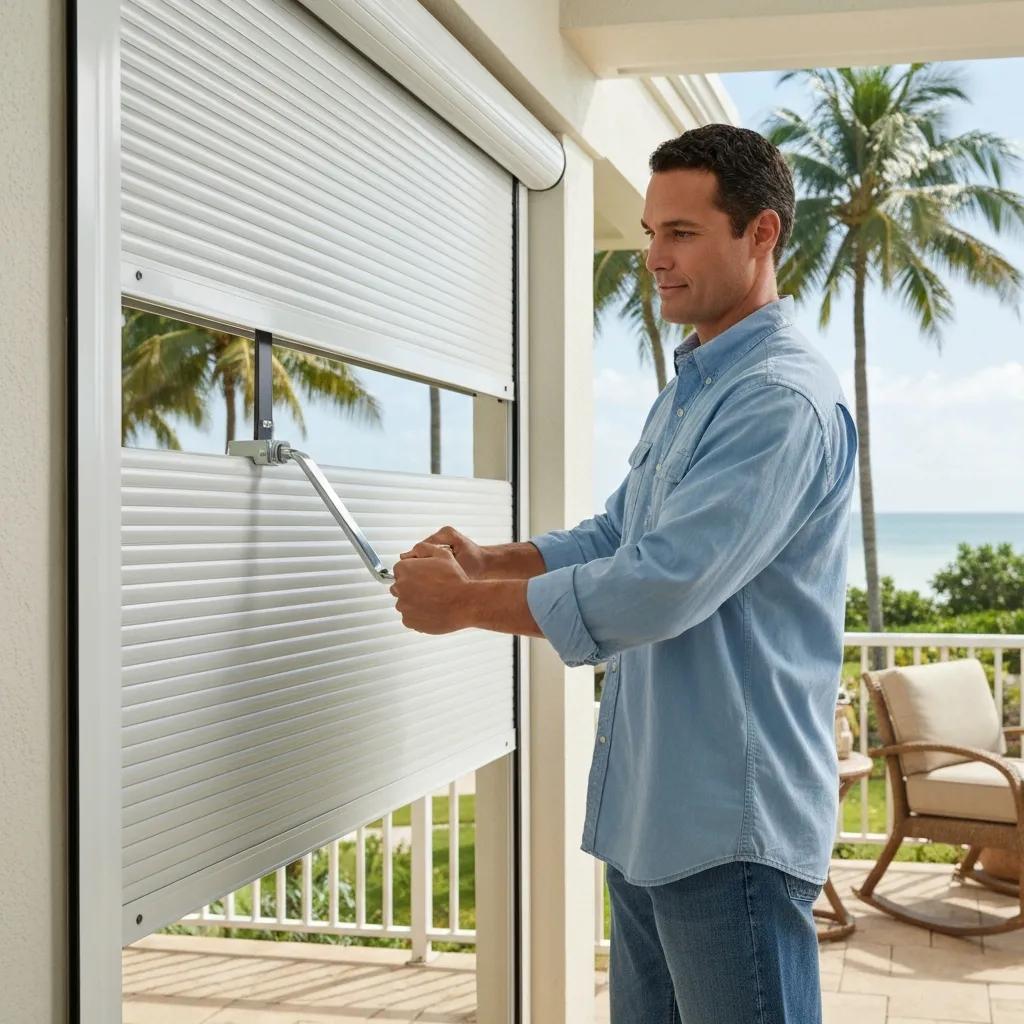
Manual roll-down shutters operate via a hand crank or gear drive that engages the roller tube and lowers the curtain of interlocking slats down the guide tracks. To deploy, you insert and turn the crank or engage a chain drive; when tracks are clean and the mechanism is lubricated, the shutter rolls down smoothly. Many systems include locking pins or base latches to secure the bottom against uplift. Learning proper cranking technique helps reduce strain and prevents uneven rolling. For large openings, a two-person team or a gear-reduction crank lowers the required effort and shortens deployment time. Regular maintenance — cleaning tracks, checking for bent slats, and lubricating moving parts — keeps manual shutters operating reliably for quick use during storm warnings.
How Easy Is It to Operate Motorized Roll-Down Hurricane Shutters?
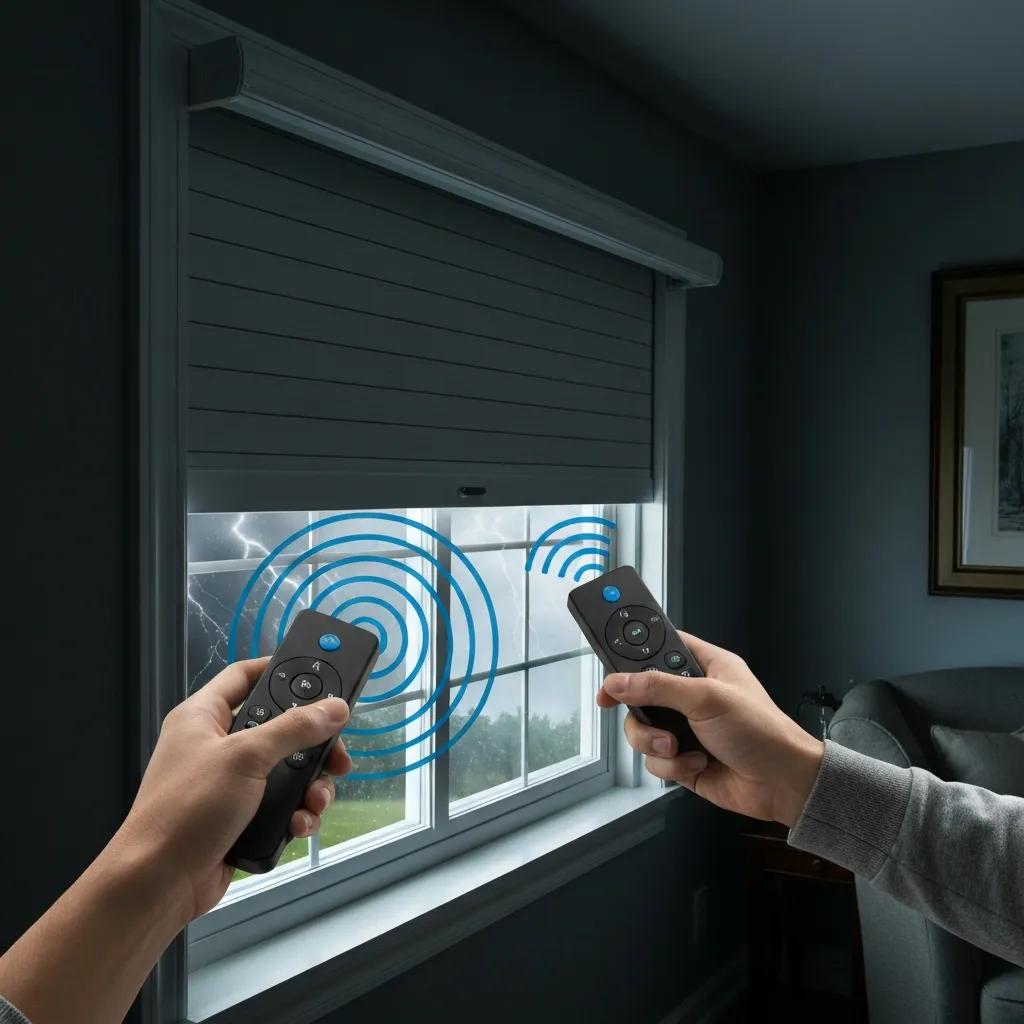
Motorized roll-down shutters use an electric motor to automate deployment, giving you single-button operation and options like wall switches, handheld remotes, or smartphone control for scheduled or sensor-triggered closure. Motors make it easy to secure large or multiple openings with almost no physical effort — a big advantage for multi-story homes or properties with many windows. The convenience does require planning for power outages, though: manual overrides and battery backup systems are common ways to keep shutters operable when the grid is down. Below we outline common motorized control methods and compare them by deployment time, power source, and pros and cons to help you pick the control scheme that fits your household.
What Are the Common Operation Methods for Motorized Shutters?
Motorized shutters are typically controlled with a handheld remote, a wall-mounted switch, a smartphone app, or as part of a home-automation system; some setups also use timers or weather sensors to trigger automatic closure. Each option balances accessibility, setup complexity, and speed: remotes are simple and fast, wall switches are reliable and immediate, apps let you control and schedule remotely, and automation ties the shutters to weather data or routines. The table below summarizes deployment characteristics and the primary pros and cons for each method to help you choose.
Choosing a control method affects day-to-day convenience and contingency planning. Pick controls that fit your household routines and redundancy needs before addressing backup power.
How Do Motorized Shutters Perform During Power Outages?
Most motorized shutters include a manual override and can be paired with battery backups or a home generator so they’ll still operate when grid power fails. The manual override usually takes the form of a crank socket at the roller box or motor unit so you can roll shutters by hand if needed. Battery backups supply a set number of cycles (varies by battery capacity) and should be tested periodically to confirm they’ll perform in an emergency. If you’re planning a motorized installation, build routine backup testing and clear manual-override instructions into your plan so shutters remain operable even during outages. The following table outlines common contingency options and practical notes for each.
Including one or more of these options reduces the operational risk of motorized systems and should be part of any motorized-installation plan.
How Does Manual Roll-Down Shutter Operation Compare in Ease and Convenience?
Manual roll-down shutters are mechanically simple, typically less expensive, and easier to repair in the field, while motorized systems prioritize speed and low effort. The right choice depends on opening size, who will be operating the shutters, and how often storms occur. Manual systems require physical input and can be slower for large doors or many windows, but they avoid electrical vulnerabilities. Think about operator strength, how many openings must be secured quickly, and whether remote operation or automation is important for safety or convenience. The next sections walk through the benefits and drawbacks and give realistic deployment-time estimates to help you decide.
What Are the Benefits and Drawbacks of Manual Operation?
Manual operation’s strengths are straightforward: lower upfront cost, simpler mechanics, and easier DIY troubleshooting. Downsides include required physical effort, slower deployment for large openings, and impracticality for multi-story access. Manual shutters are a sensible, durable choice when you have only a few openings or prefer minimal electronics. If you need to secure many openings quickly or some household members have limited mobility, motorized or hybrid solutions may be a better fit. Assess the number of openings and likely deployment scenarios to decide whether manual shutters meet your needs.
- Benefit: Lower initial cost and easy maintenance.
- Benefit: Fewer electronic failure points and simpler repairs.
- Drawback: Requires physical effort and more time for multiple or large openings.
Next, we look at typical real-world deployment times for manual systems.
How Long Does It Typically Take to Deploy Manual Roll-Down Shutters?
Manual deployment time depends on opening size, crank gearing, and operator strength. Expect small windows to take under a minute, standard windows around 1–2 minutes, and large patio doors anywhere from 2–5 minutes with a single crank. Time increases if tracks are dirty, mechanisms are unlubricated, or slats are bulky; time decreases with gear-reduction cranks, two-person teams, and pre-staged tools and locking pins. For planning, estimate per-opening times and multiply by the number of openings to get total staffing or timing needs before a storm. Seasonal track cleaning, lubricating pivot points, and practicing deployment drills can shave time and improve safety during urgent situations.
Use these ranges to compare manual effort versus motorized convenience and decide the level of automation that makes sense for your home.
What Maintenance Is Required to Keep Roll-Down Hurricane Shutters Operating Smoothly?
Routine maintenance prevents sticking, uneven rolling, and mechanical failure for both manual and motorized roll-down shutters. A seasonal and pre-storm checklist reduces deployment problems and extends service life. Key tasks include cleaning guide tracks, removing debris from the roller box, applying silicone-based lubricant to moving parts, and inspecting slats and fasteners for corrosion or damage. Motorized systems also need regular checks of motors, wiring, remote controls, and battery backups. Below are specific maintenance steps to keep your shutters reliable and predictable.
How Should You Maintain Manual Roll-Down Shutters for Easy Operation?
Manual shutters benefit from seasonal track cleaning, periodic lubrication, and inspection of crank and gear assemblies to keep them turning smoothly. Rinse away salt spray and windblown debris, remove built-up dirt from tracks, and apply silicone-based lubricant sparingly to sliding surfaces so friction stays low without attracting grime. Check crank handles and gear teeth for wear and replace worn parts before they fail during deployment. Store removable cranks where you can reach them quickly and run a deployment drill before storm season so everyone knows the process.
Checklist for manual shutters before storm season:
- Clean guide tracks and roller housing.
- Inspect and lubricate crank and gear components.
- Verify locking pins and latches operate smoothly.
Following this checklist prevents common sticking problems and keeps manual operation efficient and reliable.
What Maintenance Is Needed for Motorized Roll-Down Shutters?
Motorized shutters need the same mechanical upkeep as manual units — clean tracks, lubricated slats, and aligned guide channels — plus routine electrical checks on motors, wiring, and battery backups. Test remotes and app connectivity periodically and confirm that scheduled automation runs as expected; factor firmware or app updates into seasonal prep. Load-test battery backups per manufacturer guidelines to ensure they can provide the necessary cycles during outages. If you’re unsure, schedule an annual professional inspection to spot issues that could prevent automated deployment in an emergency.
- Test remote and app control functionality quarterly.
- Inspect motor mounts and wiring annually.
- Load-test battery backup systems before hurricane season.
Regular maintenance keeps the convenience of motorized systems dependable and reduces the chance of last-minute failures.
How Do Roll-Down Shutters Compare to Other Hurricane Shutter Types in Ease of Use?
Roll-down shutters offer automation and single-operator capability that often make them the easiest choice for large openings, while accordion and panel shutters can be faster for small openings but may require more hands or storage. Deployment ease depends on automation, storage footprint, and whether you prefer single-button control or a low-tech solution. Accordion shutters slide open and closed from the side and are convenient for frequent small-window closures, while panel shutters require mounting and storage and can be cumbersome for frequent use. The table below highlights deployment time, operator count, and storage needs so you can compare systems for coastal Carolina homes.
This comparison shows roll-down shutters are preferred when rapid, single-operator deployment and a small storage footprint matter — especially for large or numerous openings.
What Makes Roll-Down Shutters Easier or Harder to Operate Than Accordion or Panel Shutters?
Roll-down shutters are easiest when motorized because they lower on command or on a schedule; accordion shutters are simple but always manual, and panel shutters require physical handling and storage. Automation is the main differentiator: roll-down systems integrate with remotes and apps to turn a multi-window task into a single action, while accordion shutters rely on manual sliding and panels need staging and securing. Storage and access matter, too — roll-down housings stay fixed and discreet, accordion shutters remain attached and instantly ready, and panels must be staged and stored. Consider your home’s opening count, who will operate the shutters, and storage availability to find the best balance of ease and practicality.
Key decision checkpoints for homeowners:
- Opening size and number.
- Need for single-person operation or automation.
- Storage availability and aesthetic preference.
These checkpoints feed into recommendations for coastal North and South Carolina properties.
Which Shutter Type Is Best for Coastal Homes in North and South Carolina?
For many coastal homes in North and South Carolina, roll-down shutters strike the best balance of rapid deployment for large openings, corrosion-resistant materials suited to salt air, and automation options for multi-story properties. In high-frequency storm areas, homeowners who want fast, single-operator protection often choose motorized roll-down systems with battery backup or manual override. Those with fewer openings or tighter budgets may favor accordion or panel systems. Weigh opening size, household mobility, storage, budget, and local storm patterns; when unsure, a professional assessment will match your home’s layout and code requirements to the right shutter type. The next section shares homeowner feedback to ground these recommendations in real experience.
What Do Customers Say About the Ease of Operating Roll-Down Hurricane Shutters?
Customer feedback consistently praises motorized roll-down shutters for speed and convenience, while owners also value roll-down systems for durability and low long-term maintenance. Common concerns focus on power-outage contingencies and upfront cost. Many homeowners say motorized systems cut stress during sudden storms by allowing whole-house closure in seconds; manual users cite reliability and lower cost, provided tracks are maintained and cranks are sound. Frequent praises are single-operator convenience and secure locking; frequent concerns include maintaining battery backups and keeping tracks clear. Below we summarize homeowner experiences and the main points of praise and concern so you can weigh real-world trade-offs.
How Have Homeowners in the Carolinas Experienced Manual and Motorized Shutter Operation?
Homeowners along the Carolina coast report that motorized roll-down shutters substantially reduce deployment time on properties with many windows and are particularly useful for second homes or remotely monitored properties. Manual shutters earn high marks for mechanical simplicity and lower up-front cost, especially when owners keep tracks clean and cranks in good condition. Measured outcomes include whole-house motorized deployment in under a minute on well-integrated systems and manual per-opening times that align with the ranges given above — which makes motorized systems attractive where many openings must be secured quickly. Service experiences also underline the value of professional installation, clear manual-override instructions, and routine backup testing.
What Are Common Customer Concerns and Praises Regarding Shutter Operation?
Customers commonly praise roll-down shutters for fast protection, added security when lowered, and unobtrusive storage. Concerns most often relate to power-outage resilience, initial cost, and occasional sticking when maintenance slips. Practical mitigations include battery backup or manual override for motorized systems, a seasonal maintenance checklist, and scheduled professional inspections to keep systems running smoothly. The lists below capture top praises and typical concerns with suggested actions.
Top praises:
- Fast, single-button closure with motorized systems.
- Solid protection and improved security when lowered.
- Minimal visible storage compared to panel systems.
Top concerns and mitigations:
- Power outages — install battery backup or use manual override.
- Upfront cost — tally total openings and consider manual options where appropriate.
- Mechanical sticking — prevent with seasonal track cleaning and lubrication.
If you’re ready to move forward, American Hurricane Shutters offers free estimates, professional installation and service, and educational resources tailored to coastal North and South Carolina — including help matching shutter type to opening geometry and local code requirements. Our teams can discuss motorized options, battery backup planning, and code considerations during a consultation to help you move from evaluation to installation with confidence.
Frequently Asked Questions
1. What factors should I consider when choosing between manual and motorized roll-down hurricane shutters?
When choosing between manual and motorized roll-down shutters, consider opening size and count, who will operate the shutters, mobility and physical ability, and your budget. Manual shutters are usually more affordable and simpler to maintain but require physical effort and take longer to deploy. Motorized shutters bring convenience and speed — especially for large or numerous openings — but they rely on electricity and often need backup solutions. Match the choice to your household’s needs and storm-readiness plans.
2. How do I prepare my roll-down shutters for hurricane season?
Preparing your shutters for hurricane season means following a seasonal maintenance routine: clean guide tracks, lubricate moving parts, and inspect for damage or corrosion. For motorized systems, test remotes, app connectivity, and battery backups. Practice deploying the shutters so you can do it quickly under pressure. A simple checklist completed before storm season helps avoid last-minute issues.
3. Can I install roll-down hurricane shutters myself, or should I hire a professional?
Some homeowners install roll-down shutters themselves, but professional installation is generally recommended. Pros ensure shutters are mounted correctly and comply with local building codes — essential for safety and performance during storms. Professional installers also provide guidance on the best shutter type for your home and can handle adjustments or maintenance after installation.
4. What are the typical costs associated with roll-down hurricane shutters?
Costs vary by type (manual vs. motorized), size, and materials. Typical ranges are about $20–$30 per square foot for manual shutters and $40–$60 per square foot or more for motorized systems with features like remote control and battery backup. Get multiple quotes and factor in long-term maintenance when budgeting for shutters.
5. How do roll-down shutters compare to other types of hurricane protection?
Roll-down shutters offer automated, single-operator protection that works well for large openings. Accordion shutters are quick for many small windows but remain manual, while panel shutters require handling and storage. Roll-down systems have a minimal visible footprint when not in use, which many homeowners prefer for aesthetics and convenience.
6. What should I do if my motorized shutters fail to operate during a storm?
If motorized shutters fail, first check for a power outage. If grid power is out, use the manual override to lower the shutters. Regular testing of the manual override and battery backup before storm season reduces the chance of this happening. If issues continue, contact a professional for repairs or troubleshooting so your system is ready next time.
<!-