
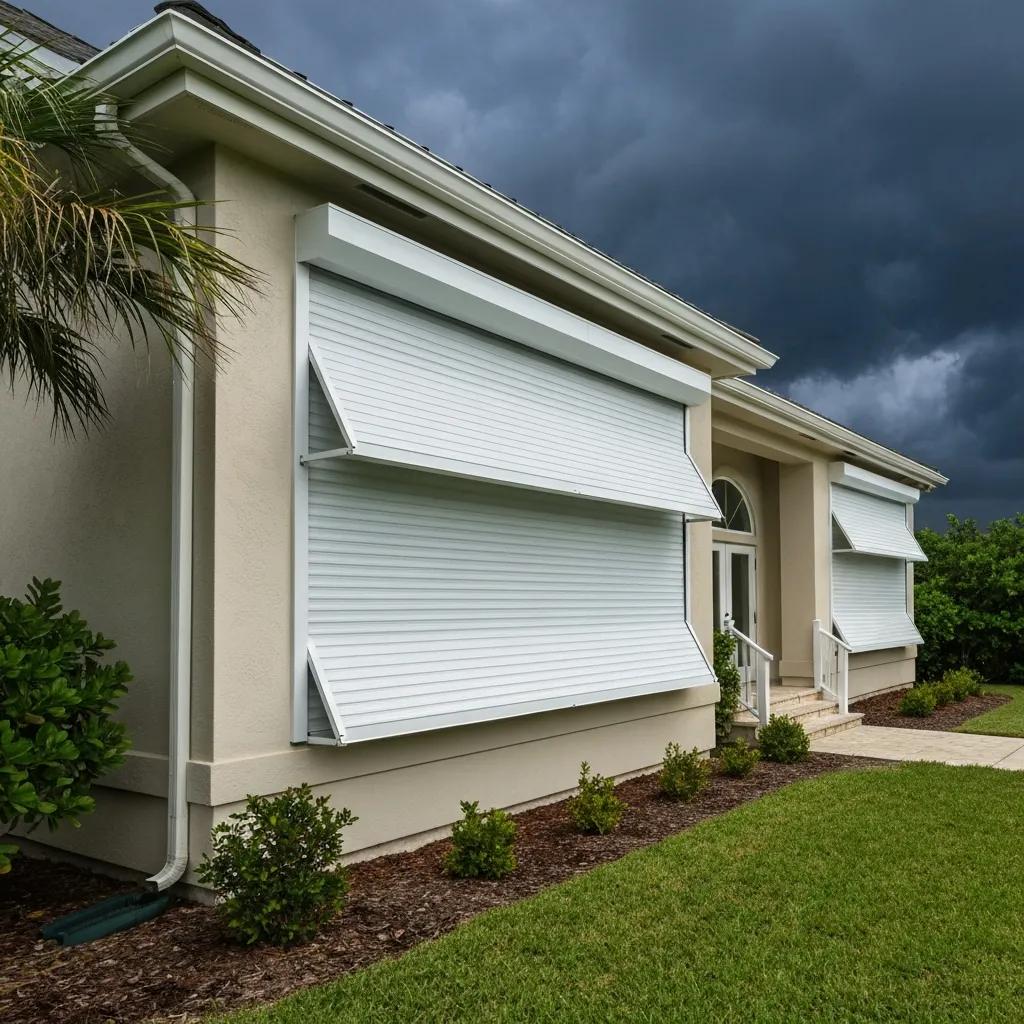
Cost Comparison — Roll‑Down Hurricane Shutters: Prices, Benefits & Installation Guide
Roll‑down hurricane shutters are a permanent storm‑protection solution: a metal or insulated curtain that unrolls across windows and doors to block wind, water, and flying debris. This guide helps coastal homeowners weigh upfront cost against long‑term protection and code‑compliant installation. Read on to learn what roll‑down shutters are, the differences between manual and motorized systems, the key cost drivers for North and South Carolina, 2025 price ranges per square foot, and typical installation and maintenance expenses. We also compare roll‑downs to accordion, Bahama, and panel options so you can match protection, appearance, and budget to your property. Throughout, the focus stays practical — budgeting, coastal code considerations, and the decision points that shape total project value.
What Are Roll Down Hurricane Shutters and How Do They Work?
Roll‚Äëdown hurricane shutters are a curtain‚Äëstyle system stored in a housing box above a window or door; when needed, the curtain rolls down along guide rails to fully cover the opening. The system is made of interlocking slats (the curtain), guide rails, mounting brackets and either a hand crank or motor to deploy and lock the shutter. When closed, the slats form a continuous barrier that resists uplift and puncture, lowering the risk of broken glass and interior damage. Many systems also seal to the frame to limit water intrusion and offer insulated slats for improved thermal performance. Knowing these components helps you evaluate durability, repairability, and how a particular system handles the wind‚Äëload requirements for our coastal region.
What Are the Differences Between Manual and Motorized Roll Down Shutters?
Manual roll‑downs use a hand crank or spring assist and usually cost less initially and need no electrical work. They’re a practical choice for smaller openings and for homeowners prioritizing material cost and mechanical simplicity. Motorized (electric) roll‑downs add convenience: wall switches, remotes, or smart controls make quick, coordinated deployment easy — especially if you have many openings or need accessibility for older family members. Motor systems require wiring and occasional motor service; manual units need spring checks and mechanical upkeep. Your choice will depend on budget, how often you expect to deploy shutters, and whether convenience is a priority.
How Do Roll Down Shutters Provide Hurricane Protection for Coastal Homes?
Roll‑down shutters protect coastal homes by creating a continuous, impact‑resistant barrier that prevents wind‑driven debris from breaking glazing and allowing pressure changes and water entry. The curtain slats transfer wind loads through guide rails and mounting brackets into the structure, lowering the chance of structural or interior damage when properly installed. Many roll‑down systems are designed and tested to meet recognized wind‑resistance standards; in coastal NC and SC, choosing corrosion‑resistant materials and installation practices is important to withstand salt air. Beyond storms, these shutters deter break‑ins and — when insulated — reduce solar heat gain, helping energy efficiency. Understanding load transfer helps decide mounting locations, reinforcement needs, and whether a retrofit is required.
For homeowners looking at durable, permanent options, American Hurricane Shutters offers both manual and motorized roll‑down systems with code‑compliant installation and free estimates. Use vendor consultations to compare products and the company’s installation approach before choosing a contractor.
What Factors Influence the Cost of Roll Down Hurricane Shutters in North and South Carolina?
Several regional and product factors determine final pricing for roll‚Äëdown shutters along the NC and SC coasts: material grade and insulation, motorization, opening size, mounting complexity, and permit or inspection fees. Coastal labor rates and the need for corrosion‚Äëresistant hardware to combat salt air raise costs compared with inland installs. High, hard‚Äëto‚Äëreach openings or unusual architecture increase fabrication and installation time, and properties in regulated coastal zones may need engineering documentation or certified attachments to meet local codes. Knowing these drivers helps you anticipate price variance and prioritize upgrades that give the best protection per dollar. The next section shows how materials, size, and motor options affect price per square foot.
Key cost drivers to consider when budgeting and choosing contractors:
- Materials: Higher‚Äëgauge aluminum or insulated slats add durability and cost.
- Size and configuration: Custom openings and many small windows increase fabrication complexity.
- Motorization: Electric units add equipment cost, wiring, and possible backup power needs.
- Installation complexity: High elevations, retrofit framing, or structural reinforcement increase labor.
- Permits and inspections: Local rules can add fees and paperwork time.
When comparing bids, ask for line‑item estimates for materials, labor hours, fastening hardware (stainless fasteners), and any engineering or permit fees — those items explain most of the price differences.
How Do Materials, Size, and Motorization Affect Roll Down Shutter Prices?
The material you choose has a direct effect on price per square foot: standard aluminum slats are the baseline, while insulated slats or thicker gauges cost more due to higher material and manufacturing expenses. Large or irregular openings often need custom curtain lengths and reinforced housings, which increase fabrication and handling charges. Motorized systems add the motor, controls and electrical labor; premium features like smart integration or battery backup push costs higher. Corrosion‑resistant coatings and stainless fasteners are recommended for coastal installations — they add a moderate upfront premium but cut long‑term repair risk. Ask contractors to separate materials, controls, and labor in their quotes so you can see what drives the price.
What Are the Regional Installation Costs and Building Code Requirements?
Installation costs along the North and South Carolina coasts reflect local labor rates, contractor supply, and the added precautions needed for salt‚Äëair exposure and wind‚Äëload compliance. Experienced contractors often price jobs to include stainless fasteners and other corrosion‚Äëresistant components that meet coastal durability expectations; installers familiar with local permitting can also speed approvals and inspections.
While Florida Building Code standards are commonly used as a design benchmark for wind loads, NC and SC municipalities may use similar load tables or require engineered attachments for elevated structures. Noncompliant installs risk poor storm performance and can affect insurance claims. Budgeting for quality installation and proper documentation reduces long‚Äëterm risk. Ask for line‚Äëitem estimates showing labor hours, fastener types, and any engineering or permit fees to understand local cost drivers.
How Much Do Roll Down Hurricane Shutters Cost in 2025?
In 2025, roll‑down shutters typically range from $25–$60 per square foot: manual models cluster at the low end, while motorized, insulated or custom systems sit at the high end. Whole‑house projects can run from a few thousand dollars for limited coverage to tens of thousands for full protection on larger coastal properties — the number and size of openings, motorization, and access complexity drive total cost. Installation labor often represents 20–40% of the project, and retrofits that need structural work or electrical wiring will raise the final price. Below is a concise comparison of manual and electric roll‑down models to clarify per‑square‑foot expectations.
What Is the Average Cost Per Square Foot for Manual vs. Electric Roll Down Shutters?
Manual systems generally sit between $25 and $40 per sq ft in 2025, depending on slat gauge and housing size. Electric systems typically range $40 to $60 per sq ft when you add motor units, wiring, and control hardware. Prices reach the upper band when insulated slats, corrosion‚Äëresistant finishes, or custom housings are needed; costs drop toward the lower band for standard aluminum slats on easy‚Äëaccess, single‚Äëstory openings. Large arches, glass walls, or multi‚Äëstory retrofits push prices higher because of fabrication and the need for lifts or scaffolding. When comparing bids, review warranty terms, motor brands and fastener materials to see where value is built in versus short‚Äëterm savings.
How Does Installation Impact the Total Project Cost?
Installation influences total cost through labor hours, access needs, structural reinforcement and any electrical work for motors — complex installs can add several hundred to several thousand dollars per opening. Typical tasks include a site survey, precise measurements, framing or reinforcement if required, mounting the housing and guide rails, electrical hookups for motors, then testing and adjustments. Additional charges may apply for working at height (lifts or scaffolding) or for trim and stucco repairs. Professional installation matters: proper load transfer, code compliance and warranty protection reduce the risk of failure in high winds. Cheap installs that skip engineered attachments or use inferior fasteners often lead to larger costs down the road.
To move from ranges to real numbers, request a free estimate and property‚Äëspecific consultation. These visits produce accurate takeoffs and itemized bids that separate materials, controls and labor so you can compare apples to apples.
What Are the Benefits of Investing in Roll Down Hurricane Shutters?

Roll‑down shutters deliver direct storm protection plus secondary benefits — security, energy savings and comfort — that can offset the initial investment over time. Their main job is to shield glazing and openings from wind and debris, cutting the risk of costly interior damage after a storm. Secondary gains include deterring break‑ins, reducing solar heat gain when using insulated slats, and lowering exterior noise levels; these effects improve comfort and can reduce HVAC runtime. Over the long term, documented, code‑compliant shutters can help with insurance discussions and appeal to coastal buyers who value permanent mitigation. Here are the core benefits to weigh against alternatives and budget limits.
- Storm Protection: Shields windows and doors from high winds and flying debris.
- Security: Creates a visible, locked barrier that deters intrusion when deployed.
- Energy Efficiency: Insulated slats reduce solar gain and help stabilize interior temperatures.
- Noise Reduction: Dense slats and sealed guides lower exterior noise transmission.
Once you weigh these advantages, you can decide whether the combined protection and lifestyle benefits justify the upfront cost.
How Do Roll Down Shutters Enhance Security, Convenience, and Energy Efficiency?
Roll‑down shutters add security by forming a locked, physical barrier that resists forced entry and blocks sightlines. Convenience is greatest with motorized systems that deploy at the touch of a switch, remote or smart command — a real advantage when you must secure many openings quickly before a storm. Energy savings come from insulated slats that reduce conductive heat transfer and from shading that limits solar gain through glass, lowering cooling load in summer. For coastal homes, corrosion‑resistant hardware keeps these benefits reliable longer, and keeping installation and engineering records helps when seeking insurance credits or demonstrating resale value.
Can Roll Down Shutters Increase Property Value in Coastal Areas?
Permanent storm protection like roll‚Äëdown shutters is often a selling point in coastal markets where buyers value resilience and code‚Äëcompliant systems. Documented installations can improve marketability and may influence appraisals or insurance underwriting, though premium reductions vary by carrier and location. To maximize resale value, keep installation records, model specs and any engineering paperwork showing compliance with local wind‚Äëload requirements. Matched with good aesthetics and HOA approvals, roll‚Äëdown shutters can be a strong value add for buyers focused on long‚Äëterm protection.
How Do Roll Down Shutters Compare to Other Hurricane Shutter Types?
Comparing roll‑down shutters to accordion, Bahama and panel options highlights trade‑offs across cost, convenience, permanence and appearance. Roll‑downs score high for protection and ease of use (especially motorized units) but are higher in cost. Accordion shutters are permanent and manual with moderate cost and quick deployment. Bahama shutters add architectural appeal and shading but may need removal or ladder access unless permanently hinged. Storm panels — aluminum or clear polycarbonate — are the most economical but are removable and need storage. The table below summarizes these differences to help you choose the right type for your home.
What Are the Cost Differences Between Roll Down, Accordion, Bahama, and Panel Shutters?
Costs track with permanence and feature set: storm panels are the least expensive up front because they’re removable and simple to make; accordion shutters fall in the middle as permanent but manual systems; Bahama shutters add architectural value with moderate protection costs; and roll‑down systems — especially motorized or insulated models — carry the highest equipment and installation price. Lifecycle costs differ too: panels need storage and reinstall labor, while permanent systems require maintenance such as motor service or slat repairs. Weigh initial capital against recurring maintenance, deployment convenience, and how often storms occur to choose the option that fits your risk tolerance and lifestyle.
Which Shutter Type Offers the Best Protection and Aesthetic for Coastal Homes?
For maximum protection and the least deployment friction, motorized roll‑down shutters are usually our top recommendation for primary coastal residences that prioritize safety and convenience. Accordion shutters are a solid compromise for those who want a permanent, mechanical solution without electrical work. Bahama shutters suit owners seeking storm protection plus year‑round shading and a coastal look, though they don’t match roll‑downs in absolute debris resistance. Storm panels work for seasonal properties or tight budgets where storage and manual installation are acceptable. Check HOA rules, historic district limits and overall architectural compatibility to keep curb appeal and resale potential in mind.
What Is the Installation Process and Maintenance Cost for Roll Down Hurricane Shutters?

Professional installation begins with a site survey and precise measurements, followed by fabrication of curtains and housings, mounting of guide rails and housings, electrical work for motorized units, and final testing and adjustments. Small projects may install in a day; larger homes or jobs that need reinforcement, permitting or electrical work can take several days. Routine maintenance includes lubrication of guides, motor checks, spring tension inspections for manual systems, and tightening or replacing fasteners that corrode in coastal conditions. To estimate life‚Äëcycle costs, factor in annual inspection budgets and likely repair items such as motor replacement or slat damage.
Professional installation protects warranty coverage and ensures attachments transfer wind loads correctly — investing in experienced installers reduces long‑term risk and costly repairs.
What Should Homeowners Expect During Professional Installation?
Expect a step‑by‑step process: an initial site survey and measurements, fabrication lead time, permit submission if needed, on‑site mounting of housings and guide rails, electrical hookup for motorized units, calibration and testing, then a final walk‑through. Look for quality markers: corrosion‑resistant hardware (stainless fasteners), clear wind‑load attachment documentation, and a full functional test showing deployment, locking and retraction. Clean finishing — flashing or trim reattachment — and a short homeowner briefing on operation and emergency manual override are standard. Request an itemized scope and timeline so you know when each phase will occur and what to expect during work on your property.
How Much Does Maintenance and Repair Typically Cost Over Time?
Routine maintenance usually means annual inspections, lubrication and operational checks and typically costs a modest annual fee compared with replacement expenses — many homeowners budget a few hundred dollars a year for inspection and minor service. Major repairs are less frequent but can be costly: motor replacements or slat repairs after an impact vary by slat type and access difficulty. Salt‑air corrosion accelerates wear on fasteners and guides, so choosing stainless hardware and scheduling preventive maintenance lowers the chance of higher downstream costs. A simple maintenance contract or annual checklist helps preserve function, keep warranties valid and ensure the system is storm‑ready.
American Hurricane Shutters offers professional installation with corrosion‚Äëresistant components (like 18‚Äë8 stainless fasteners) and local service across coastal North and South Carolina. Use these service offerings to match contractor capability to the protection level you need.
- Installation Step Overview: Schedule a site survey, obtain permits, fabricate, and install.
- Maintenance Actions: Annual inspections, lubrication, fastener checks, and motor testing.
- Repair Expectations: Budget for occasional slat repairs and potential motor replacement.
This checklist helps homeowners plan realistic timelines and budgets when moving from quote to finished installation.
Frequently Asked Questions
What are the key benefits of roll down hurricane shutters compared to other types?
Roll‑down shutters offer strong protection against wind and debris, quick deployment and — with motorized options — remote operation. They increase home security and, when insulated, improve energy efficiency. Because they’re permanently installed, they remove the storage and setup hassle of removable panels, making them a preferred long‑term solution for many coastal homeowners.
How do I choose the right type of roll down shutters for my home?
Choose based on budget, the number and size of openings, and your protection needs. Decide between manual or motorized systems by weighing convenience against electrical and maintenance costs. Consider material options (standard aluminum vs insulated slats) and whether you need custom sizes for irregular openings. A professional site survey helps match product choice to your home’s requirements.
What maintenance is required for roll down hurricane shutters?
Maintenance typically includes annual inspections, lubrication of moving parts and checks of motors and electrical components for motorized systems. Inspect slats and fasteners for damage or corrosion — especially in coastal locations. Regular maintenance keeps shutters reliable during storms and can prevent costly repairs.
Are roll down hurricane shutters worth the investment?
For coastal homeowners, roll‚Äëdown shutters are often worth the investment: they protect against wind and debris damage that can lead to thousands in repairs, and they add security and energy benefits. Long‚Äëterm savings, peace of mind and potential insurance or resale advantages frequently offset the upfront cost.
How do I prepare my home for the installation of roll down shutters?
Clear the installation area of obstructions, schedule a site survey, and confirm whether permits are required in your jurisdiction. Communicate any concerns or access limitations to your installer so they can plan around them. That preparation helps keep the project on schedule.
What should I expect during the installation process?
Installation follows a predictable sequence: site survey, fabrication, mounting of housings and guide rails, electrical work for motors (if applicable), testing and a final walk‚Äëthrough. Expect a short period of disruption during installation; professional crews work to minimize inconvenience and leave the site neat.
Can I install roll down shutters myself, or should I hire a professional?
While DIY might be possible for very simple installs, we recommend hiring a professional. Correct attachment, load transfer and adherence to local codes are critical for performance in storms. Motorized systems also require electrical work that’s safest when done by licensed professionals. Hiring an experienced installer helps ensure safety, code compliance and valid warranty coverage.
Conclusion
Roll‑down hurricane shutters deliver proven storm protection, added security and potential energy savings that often justify the up‑front investment for coastal homeowners. Understanding the factors that affect price and installation — from materials and motorization to coastal codes and access — helps you make a confident decision that fits your budget and safety needs. Explore our manual and motorized options and request a free estimate to get a property‑specific quote and take the first step toward protecting your home.
