
Roll-Down Hurricane Shutters vs. Other Storm Protection: What You Should Know
Coastal homes and businesses across North and South Carolina face serious risk from hurricane winds and flying debris. Picking the right storm protection affects safety, insurance costs, and long‑term property value. This guide breaks down roll‑down hurricane shutters in plain language and compares them to common alternatives — accordion shutters, Bahama and Colonial styles, storm panels, hurricane screens, and impact‑rated windows and doors. You’ll see how performance, cost, and convenience trade off, learn the difference between motorized and manual systems, find the best materials for salt‑air environments, and understand when temporary panels make sense versus permanent glazing. We also cover NC/SC code and insurance considerations and provide checklists to help homeowners and businesses decide. Expect clear side‑by‑side comparisons, structured tables to clarify attributes, concise pros/cons lists, and practical advice on DIY vs. professional installation and maintenance.
What Are Roll Down Hurricane Shutters and Their Key Benefits?
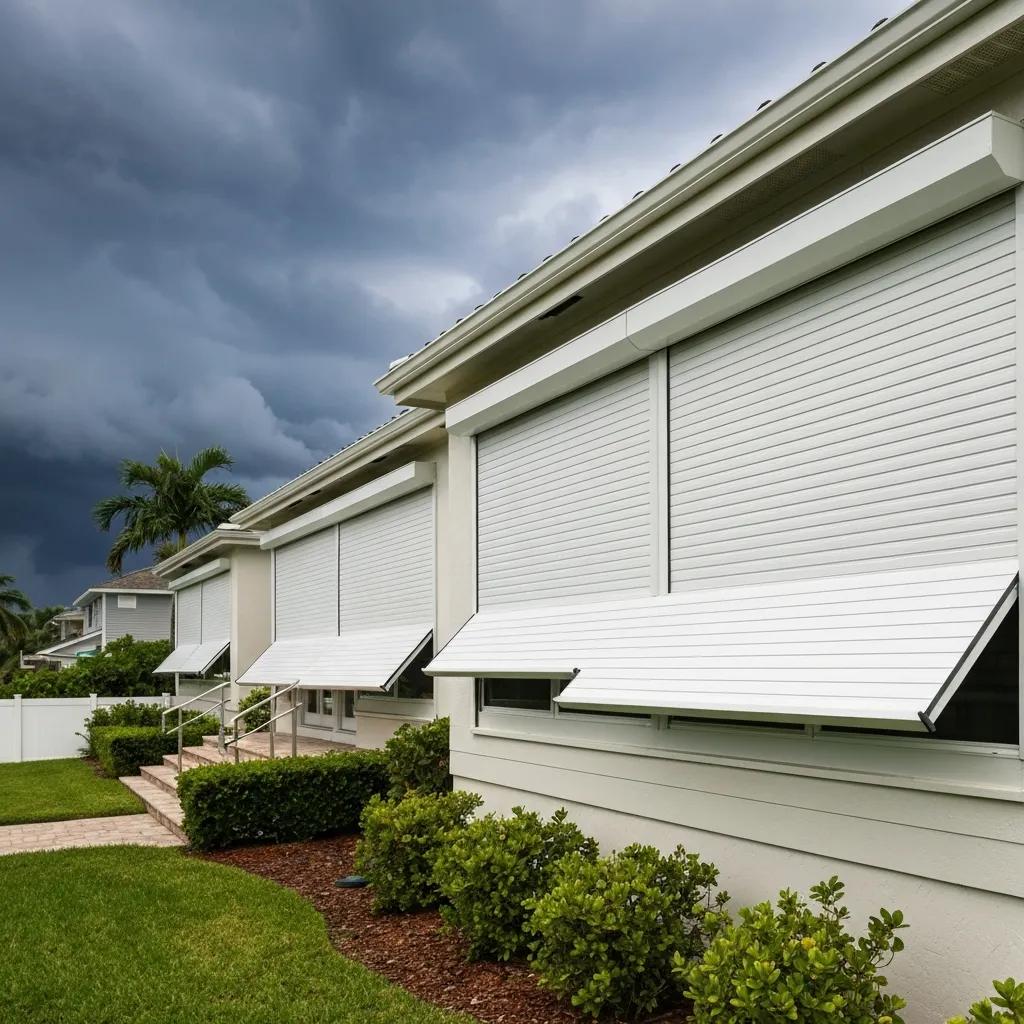
Roll‚Äëdown hurricane shutters are retractable exterior barriers made of interlocking slats that unroll from a housing above a window or opening to form a continuous protective face. They ride in side tracks and lock at the bottom bar to shield glass and frames from impact and to reduce wind pressure. The main advantages are quick deployment, strong impact resistance when built to rated design pressures, added security, potential energy savings from shading, and possible insurance benefits when the system meets local codes. Those features make roll‚Äëdown shutters a flexible choice for coastal properties with frequent storm exposure and a mix of opening sizes.
Roll‚Äëdown systems come in different operation styles and materials, and those choices affect performance, longevity, and day‚Äëto‚Äëday convenience. Below we list the practical benefits and then explain how motorized vs. manual drives and material selection influence which system fits your property.
Key practical benefits of roll‚Äëdown shutters for coastal homes and businesses include:
- Impact protection: A continuous barrier against windborne debris and high wind loads.
- Fast deployment: Motorized units retract or deploy in seconds; manual units typically secure quickly from the ground.
- Energy savings and security: Closed shutters reduce solar heat gain and add a physical layer of security to doors and windows.
These advantages help lower storm damage risk, support insurance compliance, and improve daily comfort through shading and added security. Knowing how motorized and manual systems differ — and which materials resist coastal corrosion — makes it easier to match a roll‑down configuration to your building size, occupancy, and budget.
If you want a ballpark while comparing options, American Hurricane Shutters offers roll‚Äëdown solutions plus tools to assess cost and request a free estimate; that resource converts performance choices into a site‚Äëspecific budget and next steps. Their local experience across coastal NC and SC helps ensure code‚Äëaware recommendations and installation planning.
How Do Motorized and Manual Roll Down Shutters Compare?

Both motorized and manual roll‑down shutters provide the same protective barrier, but they differ in convenience, speed, and service needs. Motorized systems use an electric drive to raise and lower the curtain and can integrate with remotes, wall switches, or home automation — ideal for large openings and multi‑story applications where quick, hands‑free operation matters. Manual units use a crank or spring‑assist and are often more cost‑effective for small openings or outbuildings. They’re mechanically simple and typically need less electrical maintenance. Motorized systems cost more up front and may need occasional motor service, but they’re invaluable for elderly occupants, commercial properties, or very large storefronts where manual operation is impractical or unsafe.
Your choice usually comes down to opening size, how often you’ll deploy the shutters, and how comfortable you are with automated components. If fast, reliable closure on short notice is critical, motorized is usually worth it; for infrequent use or tight budgets, manual remains a practical option. The next section explains how material selection affects durability in coastal conditions.
What Materials Are Used in Roll Down Shutters for Durability and Security?
Material choice drives corrosion resistance, structural strength, and the shutter’s ability to meet rated design pressures. Quality roll‑down shutters commonly use marine‑grade aluminum slats (often specified as 6063‑T6 or equivalent) for a balance of tensile strength and resistance to salty air. Hardware and fasteners should be stainless steel — typically 18‑8 or similar — to resist galvanic corrosion. Key components include the aluminum slats, side tracks, housing box, bottom bar, motor or crank assembly, and stainless fasteners; each part affects wind‑load performance and maintenance needs.
Picking corrosion‑resistant materials and sealed housings reduces repair frequency and helps preserve warranty coverage — especially important in coastal NC/SC where salt accelerates wear. Follow manufacturer maintenance guidance to keep rated performance over time.
How Do Roll Down Shutters Compare to Accordion Shutters?
Both roll‚Äëdown and accordion shutters are permanently mounted, deployable systems, but they differ in how they operate, how they look, and what drives cost. Accordion shutters fold to the side and remain visible when retracted; roll‚Äëdown shutters store in a housing above the opening and present a continuous face when deployed. Accordions can be quicker to secure manually at ground level and often cost less for some opening sizes, while roll‚Äëdown systems offer cleaner sightlines when retracted and can be motorized for remote operation. Both can meet code ratings, but storage visibility, automation options, and performance on large openings help determine the best fit for a property.
The table below summarizes typical trade‚Äëoffs across cost, deployment, storage, security, and maintenance for a practical comparison.
In short, roll‚Äëdown shutters often win on automation and hidden storage, while accordion shutters can be more economical for simple, ground‚Äëlevel installations. For precise pricing and long‚Äëterm value, get a site‚Äëspecific assessment.
American Hurricane Shutters can walk you through hands‚Äëon comparisons and recommend a Design Pressure Analysis to verify either shutter type meets coastal NC/SC code requirements. Their local experience helps align product selection with building codes and insurance expectations.
What Are the Cost Differences Between Roll Down and Accordion Shutters?
Initial and lifecycle costs vary by system. Accordion shutters often have lower equipment costs and faster manual installation for modest openings, making them appealing for tighter budgets. Roll‑down systems bring higher material and installation costs — especially with motorized drives or custom housings — but they reduce deployment labor, add convenience, and may qualify for larger insurance savings when documented to meet specific design pressures. When evaluating long‑term value, include expected lifespan, usage frequency, maintenance needs, and any insurance premium reductions.
Model total ownership costs over a typical lifecycle, including potential labor at storm time. A site‚Äëspecific cost estimate and Design Pressure Analysis turn these comparisons into concrete numbers for each opening.
Which Shutter Type Offers Better Security and Ease of Use?
Security and ease of use are related but separate considerations. Roll‚Äëdown shutters create a continuous, locked surface that resists intrusion and spreads loads through tracks and anchors, making them strong for both storm protection and security when built to rated pressures. Accordion shutters also form solid barriers, but their side storage can leave a visible seam and produce different impact resistance characteristics. Ease of use favors motorized roll‚Äëdown systems for large or frequently secured openings, while accordion shutters may be perfectly fine for small windows where manual folding is quick and straightforward.
Factor in activation speed, who will operate the shutters, and opening geometry. Homes with elderly residents, large storefronts, or second‚Äëfloor exposures often gain the most from motorized roll‚Äëdown systems.
How Do Roll Down Shutters Compare to Bahama and Colonial Shutters?
Bahama and Colonial shutters mix architectural style with some storm protection but usually differ in operation and protection level from roll‑down systems. Bahama shutters hinge at the top and prop outward, offering shade and a tropical look; Colonial shutters are hinged panels that close over windows for classic curb appeal. These styles are chosen to complement architecture and can offer basic protection, but unless specifically engineered and certified, they typically won’t provide the continuous, rated barrier a dedicated roll‑down system does. Homeowners should weigh design priorities against the protection their location demands.
Choosing between decorative shutters and high‚Äëperformance roll‚Äëdowns also comes down to permanence and deployment needs; the next subsection explores those differences.
What Are the Aesthetic and Functional Differences Between These Shutters?
Bahama and Colonial shutters boost curb appeal, provide shading and light control, and act as visible architectural features. They operate on hinges and usually require manual fastening before a storm, which can be time‚Äëconsuming across many openings. Roll‚Äëdown shutters, on the other hand, stow neatly when retracted and give a flush, modern look; when deployed they form a continuous protective face with minimal visual clutter. If architectural consistency and passive cooling matter most, Bahama or Colonial shutters may be preferred; if rated impact protection and rapid emergency deployment are priorities, roll‚Äëdowns generally perform better.
Some homeowners use a hybrid approach — decorative permanent shutters for everyday aesthetics plus rated roll‑downs on the most exposed openings — to balance looks and protection.
Are Bahama and Colonial Shutters Permanent or Retractable Compared to Roll Down?
Bahama and Colonial shutters are typically permanently mounted and hinge open and closed; they remain visible as part of the façade and must be secured manually for storm protection. That permanence helps with daily shading and style but requires extra steps to reach storm‑level security. Roll‑down shutters are retractable and stored in a housing above the opening, so they’re unobtrusive until you need them and can be automated. Retractable systems simplify seasonal use and preserve sightlines when protection isn’t required, while decorative shutters keep their visual presence year‑round.
Maintenance differs too: hinged shutters need hinge lubrication and occasional repainting; retractable systems focus on housing seals, track alignment, and slat condition.
How Do Roll Down Shutters Compare to Storm Panels and Hurricane Screens?

Storm panels and hurricane screens are more temporary or seasonal solutions and contrast with permanently mounted roll‑down shutters in cost, storage, and labor. Storm panels — aluminum, polycarbonate, or plywood — are installed before a storm and stored off season; they cost less in materials but require storage and installation effort. Hurricane screens are fabric systems that reduce wind pressure while preserving airflow and views, making them ideal for large lanais or patios. Roll‑down shutters offer on‑demand protection without seasonal storage and often meet higher design pressure ratings, but they cost more up front and usually need professional installation.
The table below compares storm panels, hurricane screens, and roll‚Äëdown shutters so you can choose based on weight, ease of use, visibility, coverage for large openings, and cost.
The comparison shows panels and screens serve specific needs — budget limits or very large covered areas — while roll‑down shutters aim for continuous rated protection without off‑season storage. The next section outlines pros and cons to help your decision.
What Are the Pros and Cons of Storm Panels Versus Roll Down Shutters?
Storm panels are affordable and easy to replace but need storage space and can be time‑consuming to install, making them less suitable for short‑notice storms. Roll‑down shutters remove the need for seasonal storage and deploy quickly — especially when motorized — and typically offer stronger rated protection and added security, though they have a higher upfront cost and usually require professional installation. If you have helpers and secure storage, panels can control costs; if convenience and permanent, rated protection matter, roll‑downs are the better long‑term solution for high‑risk coastal properties.
Consider storm frequency, household ability to install panels, and available storage; those practical factors often push owners toward permanent systems in high‚Äërisk zones.
When Are Hurricane Screens a Suitable Alternative to Roll Down Shutters?
Hurricane screens make sense when preserving view, daylight, and airflow is a priority and when debris risk is moderate or reduced by nearby structures. They’re great for enclosing large lanais, porches, or pool areas where rigid barriers would be impractical or visually intrusive. But screens don’t provide the same debris impact protection as solid shutters and seldom meet code for high wind‑load zones without additional systems. If you want seasonal shading and insect protection with some wind resistance, screens are a cost‑effective choice; for direct impact protection of windows and doors, roll‑down shutters remain the stronger option.
Match the protection type to each opening’s function and exposure to flying debris to keep occupants safe and comfortable.
How Do Roll Down Shutters Compare to Impact Windows and Doors?
Impact‚Äërated windows and doors give permanent, glazed protection integrated into the building envelope and remove the need for separate barriers, but they represent a different cost and benefit profile than shutters. Impact glazing offers continuous protection with no deployment, preserves daylight and views, and can boost resale value. Roll‚Äëdown shutters provide external, on‚Äëdemand protection that can be hidden when not needed and are often a more affordable retrofit option or a choice when seasonal control is desired. Both strategies can help with insurance discounts and code compliance when installed to required standards.
The table below compares roll‚Äëdown shutters and impact windows across initial cost, installation disruption, permanence, aesthetics, and insurance benefits to help you decide for the long term.
What Are the Cost and Installation Differences Between Shutters and Impact Windows?
Impact windows replace glass and frames and typically require interior and exterior touch‑ups — repainting, trim work, and longer site disruption. Their initial price per area is usually higher than shutters, especially for custom glazing and high‑performance frames. Roll‑down shutters are faster to retrofit and less invasive to install, although motorized systems and long continuous runs raise material and labor costs. When comparing total cost, include energy impacts, maintenance, and expected lifespan. For many homeowners, impact glazing’s permanent aesthetic and resale benefits justify the premium; for others, shutters provide a practical, less disruptive alternative.
Base your choice on budget, tolerance for installation disruption, and whether permanence and uninterrupted daylight are key priorities.
How Do Aesthetics and Permanence Affect Choosing Between These Options?
Aesthetics and permanence often guide homeowner decisions: impact windows offer a clean, permanent solution that preserves curb appeal and daylight, while roll‑down shutters deliver flexible protection you can conceal when not in use but do change the façade when closed. For historic or high‑end properties, impact glazing may better preserve design intent; shutters let owners protect openings on demand without committing to full window replacement. Consider resale value, neighborhood character, and occupant preferences — permanent glazing can boost marketability, while shutters are a practical, less permanent investment that still meets protection goals.
Weigh visual goals against protection needs and your long‚Äëterm ownership plans when choosing between these approaches.
What Factors Should Homeowners and Businesses Consider When Choosing Hurricane Protection?
Choosing the right hurricane protection means balancing budget, architecture, coverage needs, convenience, local building codes, and potential insurance savings. Start by cataloging vulnerable openings and assessing exposure — second‑floor windows, large picture windows, and storefronts often need different solutions than small bedroom windows. Budget should include purchase, installation, storage or labor (for seasonal options), and maintenance. Consider convenience: motorization, deployment speed, and who will operate the system. Finally, confirm products meet NC/SC code requirements and that installations are documented for insurance discounts.
- Budget & total cost: Include purchase, installation, storage, and maintenance over the system’s life.
- Home style & aesthetics: Choose protection that fits your architectural goals and curb appeal.
- Convenience & deployment: Consider motorization, how often you’ll deploy, and occupant ability.
- Coverage needs & opening size: Pick systems that scale to large or irregular openings.
- Code compliance & insurance: Verify rated products and collect documentation for insurers and permitting.
This checklist helps you focus on the trade‚Äëoffs that matter most to safety, budget, and long‚Äëterm value. The next sections explain how budget, style, and convenience typically influence choices.
How Do Budget, Home Style, and Convenience Influence Shutter Selection?
Budget often pushes owners toward storm panels or accordion shutters, while those who value convenience, automation, and consistent rated protection lean toward motorized roll‑downs or impact glazing. Architectural style determines whether visible hardware is acceptable — Bahama and Colonial shutters add stylistic value but usually aren’t rated unless engineered. Convenience factors, like needing quick deployment or accommodating residents with limited mobility, favor motorized roll‑down systems despite higher upfront costs. Balance lifecycle costs and insurance incentives to arrive at the most practical solution for your property.
Also consider local exposure and how much maintenance you’re willing to do; those factors can tip the decision toward permanent glazing or a retractable external barrier.
What Local Building Codes and Insurance Benefits Affect Your Choice?
Coastal NC/SC jurisdictions require products to meet specific design pressure and impact standards for windborne debris regions. Compliance usually depends on certified products and site‚Äëspecific anchoring guided by a Design Pressure Analysis. Documented code compliance can help reduce insurance premiums and limit post‚Äëstorm liability. Prioritize systems that come with per‚Äëopening engineering or testing documentation and keep records for insurance underwriting. Requesting a site‚Äëspecific Design Pressure Analysis is often the decisive step to confirm your chosen protection will meet both code and insurer expectations.
A documented, engineered approach is the safest path to secure both protection and potential financial incentives.
Should You Choose DIY or Professional Installation for Roll Down Shutters?
DIY might make sense for small projects or temporary panels, but roll‚Äëdown shutters demand precise anchoring, accurate track and housing alignment, and installation methods that preserve rated performance and code compliance. Professional installers ensure anchoring patterns, fastener specs, and load paths match the design assumptions behind product ratings and any required Design Pressure Analysis. Proper installation protects
