

Accordion vs. Aluminum Storm Shutters: What Homeowners Should Expect for Maintenance
Accordion and aluminum storm shutters are both common choices for hurricane protection, but they age and need care in different ways. This guide lays out the routine maintenance, typical tasks, and lifespan you can expect so you can pick the system that fits your hands-on comfort, budget, and coastal exposure. We give clear, practical steps — cleaning, lubrication, inspection timing, and corrosion control — to keep shutters storm-ready and protect warranty coverage. You’ll find month-by-month and seasonal checklists, do-it-yourself fixes and clear triggers for professional help, plus realistic time and repair estimates. There are focused how-to sections for cleaning and lubricating accordion shutters, matching guidance for aluminum panels and roll-down systems, three quick-reference tables comparing recurring tasks and lifespan, and regional recommendations for North and South Carolina’s salt-humid conditions. Read on for concrete actions, the right tools and materials, and when to call in a pro.
Key Maintenance Needs for Accordion Shutters
Accordion shutters are hand-operated slat systems that fold and lock into place. Keeping them reliable means focusing on smooth operation, clean tracks, and working locks. Moving the shutter regularly helps prevent binding — monthly operation spreads lubricants and exposes trouble spots before they get worse. A simple routine of cleaning, lubrication, and visual inspection reduces wear on tracks, rollers, hinges, and locks and preserves weather tightness. Below we walk through practical cleaning steps and specific lubrication guidance so you can follow a predictable schedule.
How to Clean Accordion Shutters

Start cleaning by rinsing away loose salt and debris, then use a mild detergent and a soft brush to lift grime that speeds wear. Secure ladders and protect surrounding areas, then rinse from top to bottom so you don’t push salt into track joints. Mix a pH‑neutral soap with water and gently scrub slats and tracks, paying special attention to wheel housings and hinge pockets where salt builds up. Rinse the soap off, dry exposed moving parts, and cycle the shutter to check function. For coastal homes, monthly rinsing prevents corrosive buildup and reduces the need for heavier repairs later.
Safe cleaning steps:
- Secure the area and clear loose debris.
- Rinse thoroughly with fresh water to remove salt and sand.
- Apply a mild detergent solution and scrub with a soft brush.
- Rinse again, dry metal parts, and operate the shutter to confirm smooth movement.
Following this sequence keeps tracks clear and minimizes abrasive wear that leads to sticking or premature part failure.
Regular cleaning also helps you spot early paint damage or pitting that may need touch-up or pro attention.
Lubrication for Accordion Tracks and Locks
Lubricate tracks, rollers, hinges, and locks to cut friction and curb metal wear. Use waterproof, non‑gumming products — silicone spray for exposed tracks and white lithium grease for heavy‑load hinge pins. Spray silicone sparingly into track channels and along rollers, then open and close the shutter several times to distribute the product. Use white lithium grease on hinge pins and lock bolts where a longer-lasting film is needed. Avoid petroleum-based sprays on painted or polymer components; they can degrade seals and attract dirt. Wipe away excess lubricant after operating the shutter to prevent grime build-up. Signs you need lubrication include sticking, squeaks, or visible rust; aim for bi-annual lubrication and always service after major storms to extend service life.
Lubrication checklist:
- Use silicone spray in tracks and on rollers twice a year and after heavy salt exposure.
- Apply white lithium grease to hinge pins and locks once a year.
- Wipe excess lubricant and inspect seals after applying.
Consistent lubrication reduces stress on moving parts and helps avoid early replacement of rollers, wheels, and lock hardware — a direct savings over the life of the system.
How Maintenance Differs for Aluminum Storm Shutters
Aluminum storm shutters cover removable panels, Bahama and Colonial styles, and motorized roll-down systems. They share basic metal care but differ in mechanical complexity and corrosion risk. Aluminum doesn’t rust like steel, but it can pit and suffer galvanic corrosion at fasteners and see finish degradation. Roll-down units add motors, tracks, and seals that need periodic checks and professional motor servicing if performance drops. Homeowners should focus on panel care while watching motors for unusual noises or sluggish operation. The sections below cover cleaning best practices and coastal corrosion prevention tailored to aluminum systems.
Best Practices for Cleaning Aluminum Panels and Roll-Downs
Use non‑abrasive tools and mild cleaners to protect factory finishes and avoid micro‑scratches that trap salt and moisture. Rinse panels with fresh water, then wash with a pH‑neutral soap and a soft cloth or brush. Don’t use steel wool or harsh scouring pads — they can remove anodized or painted layers. For roll-downs, rinse external tracks and, if accessible, wipe the motor housing exterior, taking care not to force water into electrical enclosures. Cycle the shutter after cleaning to check seals and guides. While cleaning, inspect fasteners and attachment points for looseness or early corrosion before they become structural problems.
Aluminum cleaning checklist:
- Rinse with fresh water to remove salt spray and airborne grime.
- Wash with mild, pH‚Äëneutral detergent and a soft cloth or brush.
- Inspect fasteners and seals, tighten loose hardware, and cycle the system to test movement.
Gentle, regular cleaning preserves finishes and helps avoid dents, seizing, or motor strain that can lead to costly repairs.
Preventing Corrosion on Aluminum Shutters
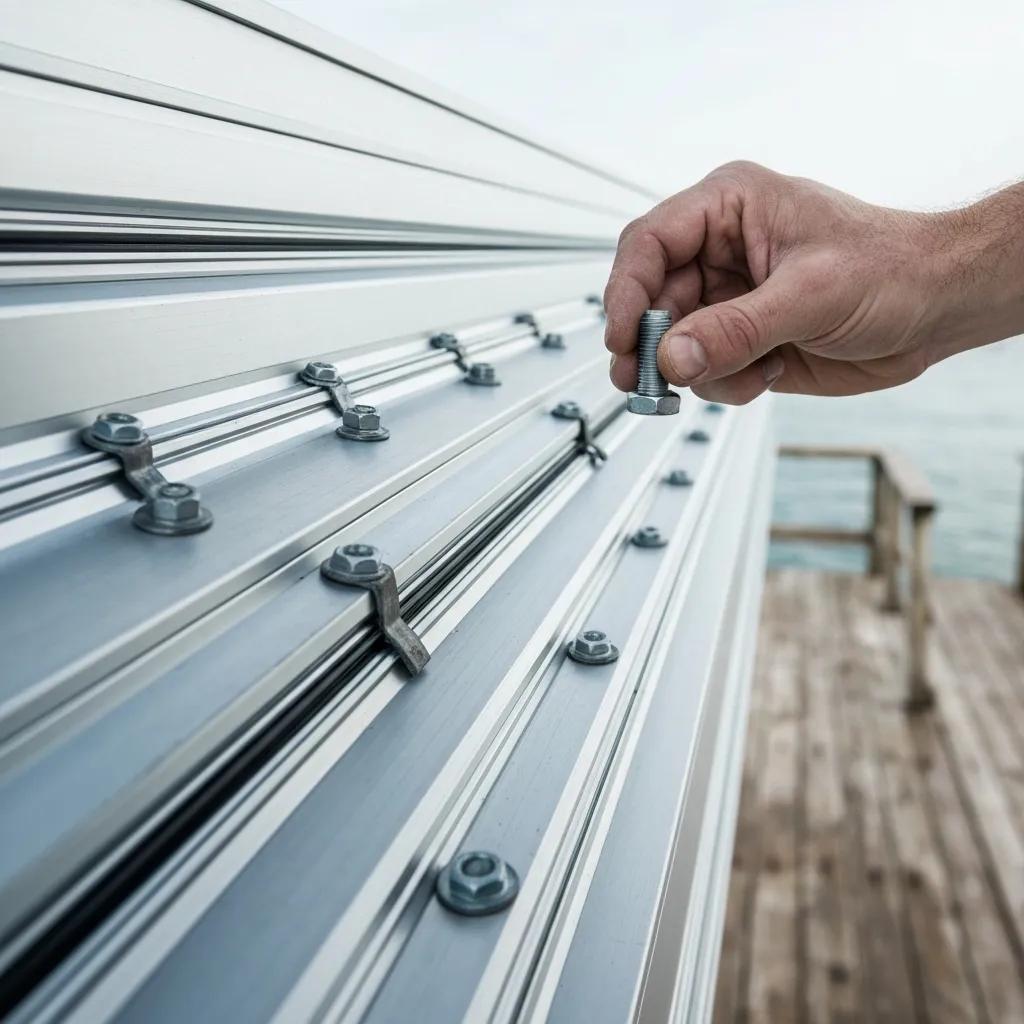
Salt spray and humidity speed corrosion at exposed interfaces, so prevention focuses on rinsing frequency, corrosion‚Äëresistant fasteners, and protective coatings that limit metal‚Äëto‚Äëmetal contact. Rinse high‚Äëexposure installations weekly to biweekly depending on shoreline proximity, and consider a clear protective coating or wax formulated for exterior aluminum to help keep salt from sticking. When repairing, replace standard fasteners with stainless or other corrosion‚Äëresistant hardware to avoid galvanic issues. Watch for white powder deposits and pitting as early warning signs; when corrosion penetrates structural elements or motor housings, call a professional to assess and repair before the next storm.
Corrosion prevention steps:
- Increase rinsing frequency to weekly for beachfront homes during high‚Äësalt months.
- Upgrade to stainless or marine‚Äëgrade fasteners during repairs.
- Apply manufacturer‚Äëapproved protective coatings and inspect them yearly.
Proactive corrosion control lowers the chance of major repairs and keeps aluminum shutters performing through repeated storm cycles.
Maintenance Cost and Effort: Accordion vs. Aluminum
Compare recurring tasks, time investments, and likely repair scenarios: accordion shutters are generally more hands‚Äëon but mechanically simpler; aluminum roll‚Äëdowns require less day‚Äëto‚Äëday effort but can need higher‚Äëcost professional work. Accordion systems need manual cleaning, bi‚Äëannual lubrication, and occasional part replacement (rollers, locks) that many homeowners can do themselves. Aluminum roll‚Äëdowns may need professional motor servicing or track realignment when issues appear. The table below summarizes routine tasks, recommended frequencies, and realistic cost ranges so you can plan ownership time and expenses.
Use the table to map routine tasks to frequency and estimated costs so you can forecast long‚Äëterm expenses and time commitments.
Accordion shutters usually shift cost toward homeowner time and occasional parts; aluminum roll‚Äëdowns concentrate potential expense into less frequent but costlier mechanical servicing. If you want a quick estimate, try our online cost estimator tool or request a free estimate to model routine and unexpected costs.
Typical Maintenance Costs for Each Type
Costs depend on how much you do yourself, the system type, and how close you are to the ocean. Simple DIY cleaning and lubrication for accordion shutters can run under $100 a year; professional motor service or major corrosion repair for roll‑down systems can reach several hundred dollars. Small accordion repairs like replacing rollers or locks are usually inexpensive; motor or track rebuilds for roll‑downs are the pricier repairs to plan for. Factors that change costs include system size, number of openings, access difficulty, and whether you upgrade to stainless hardware or protective coatings during regular maintenance. Realistic ranges help you project total ownership cost over the shutter’s service life.
Factors that influence costs:
- Motorized systems add potential repair costs versus manual shutters.
- Coastal exposure increases cleaning frequency and corrosion risk.
- Installing stainless hardware and protective coatings raises short‚Äëterm cost but lowers long‚Äëterm repairs.
Knowing these trade‚Äëoffs helps you balance upfront investment against ongoing maintenance and replacement risk.
Which Shutter Type Is Easier to Maintain?
“Easier” depends on what you prefer. Accordion shutters are mechanically simpler and usually easier for DIY maintenance. Aluminum roll‑downs reduce manual deployment but introduce electrical and mechanical parts that typically need a pro. If you’re comfortable with regular cleaning and basic part replacement, accordion shutters keep costs and complexity lower. If you value convenience and are ready to budget for occasional motor service, roll‑downs can be a low‑effort option. Many coastal homeowners weigh hands‑on, lower‑cost DIY maintenance against lower‑effort but potentially higher‑cost professional servicing.
Quick decision pointers:
- Pick accordion shutters if you want manageable DIY tasks and easy part replacement.
- Pick roll‚Äëdown aluminum if you prioritize convenience and can budget for occasional professional motor service.
- Factor local coastal maintenance cadence into your choice — proximity to the ocean changes upkeep needs.
Use these points to match a shutter type to your skills, access, and willingness to schedule service.
Expected Lifespan and Durability: Accordion vs. Aluminum
Lifespan depends on materials, maintenance, and exposure. Well‑maintained accordion shutters commonly last 15–20 years or more; aluminum roll‑down systems can exceed 20 years with proper care and corrosion control. The common failure modes differ: accordion systems wear at tracks, rollers, and locks, while aluminum systems face fastener corrosion and motor wear. The table below compares typical lifespans, key longevity factors, and maintenance actions that clearly extend service life so you can see how upkeep affects long‑term performance.
The table below shows lifespan expectations and the maintenance steps that help each type reach its full service life.
How Maintenance Extends Accordion Shutter Life
The right maintenance reduces abrasive wear and stress on moving parts. Cleaning removes salt grit, lubrication lowers friction, and replacing worn rollers prevents track damage. A predictable schedule catches small problems — a stiff hinge or worn lock — before they turn into larger failures that might need full track replacement. Early part‑level repairs are cost‑effective and preserve structural elements and uptime. With steady care, you can push accordion shutter life toward the higher end of the range and avoid emergency replacements after storms.
Key actions that add years:
- Monthly washing to remove corrosive salt and debris.
- Bi‚Äëannual lubrication to keep movement smooth and reduce roller stress.
- Replace rollers and locks promptly to avoid track overhaul.
Consistent attention to these tasks is the simplest and most effective way to protect performance and extend useful life.
Durability Advantages of Aluminum Shutters in Coastal Areas
Aluminum brings natural corrosion resistance, light weight, and structural rigidity, which makes panels and roll‚Äëdown systems robust in high winds when maintained. Anodized or finished aluminum resists rusting and pitting better than untreated steel, and when paired with corrosion‚Äëresistant fasteners and coatings, the system performs well on the beach. Roll‚Äëdown designs also distribute wind loads across the structure when installed and maintained correctly, improving storm performance. That said, aluminum systems still need rinsing, seal checks, and motor service to keep those durability benefits in salt‚Äëlaced climates.
Durability highlights:
- Aluminum’s resistance to rust improves longevity versus untreated steel.
- Lighter weight reduces stress on mounting points and simplifies handling.
- Quality finishes and the right hardware maintain performance in humid, salty environments.
Owners who invest in proper finishes and fasteners see the best long‚Äëterm results from aluminum solutions.
How Coastal North and South Carolina Affect Shutter Care
Coastal North and South Carolina expose shutters to salt spray, higher humidity, and frequent storms — conditions that speed corrosion, fade finishes, and increase inspection needs compared with inland locations. Salt deposits act as electrolytes that accelerate galvanic reactions at fasteners and degrade paint and seals; humidity traps moisture in crevices and encourages biological growth. More storms also raise the chance of impact damage and require extra post‑storm checks. The table below links these environmental stressors to their effects and suggests homeowner adjustments so regional owners can follow a seasonally tuned maintenance plan.
The table connects coastal stressors to practical maintenance adjustments and inspection frequency for homeowners in North and South Carolina.
Saltwater and Humidity: What They Mean for Upkeep
Saltwater and humidity speed electrochemical reactions and hold moisture that accelerates corrosion of metal interfaces and degrades seals, paint, and moving parts. Look for white salt deposits, metal pitting, stiffness in moving parts, or failing weatherstripping — each should prompt cleaning, lubrication, or part replacement. After heavy salt exposure, rinse with fresh water, dry moving parts, and schedule an inspection to check for hidden corrosion at fasteners and inside motor housings. Acting quickly after salt events often avoids more costly structural repairs.
Immediate steps after heavy salt exposure:
- Rinse shutters with fresh water to remove salt deposits.
- Dry accessible metal surfaces and moving parts.
- Inspect for pitting, loose fasteners, or sticky movement, and service as needed.
Prompt action prevents small issues from becoming structural failures.
Recommended Maintenance Adjustments for Coastal Homeowners
Coastal owners should adopt a stepped-up maintenance cadence: more frequent rinsing, annual or semi‚Äëannual professional inspections, and hardware upgrades to stainless or marine‚Äëgrade fasteners where practical. A seasonal checklist helps manage the work: weekly or biweekly rinses during salt‚Äëintensive months, quarterly visual inspections, bi‚Äëannual lubrication, and annual professional motor checks for roll‚Äëdowns. Consider protective upgrades like clear coatings and replacing susceptible fasteners during routine repairs, and document maintenance to protect warranties and resale value. These adjustments trade a bit more effort for a lot less risk of major repairs.
Coastal maintenance highlights:
- Rinse exterior surfaces weekly to biweekly during high‚Äësalt months.
- Perform lubrication and operation checks bi‚Äëannually and after storms.
- Schedule professional inspections annually for motorized systems and after significant storms.
Following this cadence reduces cumulative corrosion and keeps shutters ready for storm season.
When to Call a Professional for Shutter Maintenance
Call a professional when repairs are beyond safe DIY skills, when motorized components show electrical or mechanical problems, after major storms, or when corrosion threatens structural connections. Pros provide full inspections, safe motor servicing, track realignment, and corrosion remediation that preserve code compliance and warranty coverage. A pro brings specialized tools, design‑pressure checks when required, and correct replacement of structural fasteners and seals that homeowners shouldn’t attempt. The list below describes common triggers for professional service so you can prioritize safety and performance.
When to get professional help:
- Motor failure, electrical faults, or intermittent power in roll‚Äëdown systems.
- Major corrosion at mounting points or visible structural pitting.
- Impact damage from storms, bent panels, or misaligned tracks.
- After a hurricane‚Äëlevel event to verify system integrity and performance.
Professional Services from American Hurricane Shutters
American Hurricane Shutters offers inspections, cleaning, lubrication, repairs, motor servicing, and installation verification with coastal conditions in mind. Our on‚Äësite assessments identify corrosion, fastener health, track alignment, and motor condition, and we deliver prioritized repair plans that focus on safety and durability. We emphasize code‚Äëcompliant products and design‚Äëpressure analysis during inspections, and we provide free estimates and flexible scheduling so you can plan work. If you suspect motor issues or significant corrosion, a professional inspection ensures repairs are safe and meet local building expectations.
Typical professional services:
- Comprehensive inspection and documentation of shutter condition.
- Motor diagnostics and track realignment for roll‚Äëdown systems.
- Cleaning, lubrication, and targeted corrosion remediation.
- Free estimates to help homeowners budget for repairs and upgrades.
How Free Estimates and Professional Care Preserve Shutter Life
Free estimates and professional care help you prioritize repairs, schedule preventive services, and budget for upgrades that extend service life and avoid emergency replacements. A professional inspection can uncover worn fasteners, compromised seals, or motor strain that — when fixed early — prevents cascading failures like track collapse or motor burnout. Using a free estimate to compare options, from simple fastener replacement to scheduled motor service, gives you clarity on costs and benefits and helps plan upgrades like stainless hardware or protective coatings. For coastal homes, pairing regular DIY care with periodic professional inspections creates a maintenance system that maximizes longevity and ensures storm readiness.
How professional care adds life:
- Early detection prevents small issues from becoming major structural problems.
- Motor servicing and track alignment from a pro reduce mechanical stress and extend component life.
- Free estimates give clear costs so you can schedule preventive upgrades proactively.
If you want a professional inspection or a tailored maintenance plan, scheduling a free estimate is a simple next step to keep your shutters safe and effective in coastal conditions.
Frequently Asked Questions
What are the main differences in lifespan between accordion and aluminum storm shutters?
Accordion shutters commonly last 15–20 years with proper maintenance. Aluminum storm shutters — especially motorized
