
Accordion vs. Colonial Shutters: Which Really Improves Energy Efficiency for Coastal Homes?
Windows are often one of the largest sources of heat gain and loss in coastal houses. Choosing the right hurricane shutters affects both storm protection and year‑round energy performance. This article walks homeowners through how accordion and colonial shutters reduce heat transfer, how to think about R‑value for shutters, and what real‑world energy savings look like across coastal North and South Carolina. You’ll learn the physical ways shutters cut heat—air gaps, reflectivity, and seals—the importance of materials and installation for long‑term performance in salt air, and how to balance insulation with aesthetics, cost, and upkeep. We also benchmark both styles against roll‑down shutters (the insulating standard) and end with a practical checklist and vendor guidance for site‑specific decisions.
What Is Shutter Insulation and Why Does It Matter for Coastal Homes?
“Shutter insulation” describes how a shutter’s material, trapped air cavities, reflective finish, and edge seals together slow heat moving through a window. In coastal homes—where sun exposure, humidity, and large glass areas are common—windows can represent as much as 25%–30% of a home’s energy loss when unprotected, increasing summer cooling loads. Effective shutters lower conductive heat from hot exterior glass, limit unwanted air movement around window edges, and reflect solar radiation before it reaches the building interior. Knowing these mechanisms helps you pick shutters that cut HVAC runtime and keep interiors comfortable while resisting salt‑air corrosion that would otherwise degrade performance. The next section explains the specific thermal mechanisms—air gaps, reflectivity, and seals—that make shutters work.
How Do Accordion and Colonial Shutters Create Thermal Barriers?
Both accordion and colonial shutters reduce heat by combining a solid panel with trapped air and reflective surfaces. Accordion shutters run in side tracks and close as a continuous sheet across the glass, creating a narrow air cavity and compressive seals that cut convective drafts. Colonial shutters hinge in paired panels and, when closed, add more physical mass between the outside and the glass—but their thermal tightness depends on hinge alignment and edge fits; louvers allow some airflow while solid panels block it. In both types, shading and surface reflectivity lower solar heat gain, but final effectiveness comes down to material finish and how well they’re installed and sealed. That leads into how R‑value applies to these add‑on systems.
What Is R-Value and How Does It Measure Shutter Energy Efficiency?
R‑value measures thermal resistance for bulk insulation, but using it for shutters needs care. Shutters are add‑ons to a window assembly, so an “effective R‑value” is an estimate that bundles surface reflectivity, the insulating effect of the air gap, and reduced leakage. These effective values are lower than wall insulation R‑ratings but still meaningful for windows exposed to sun and conductive gains. Because shutters differ in materials and sealing, R‑values should be treated as ranges rather than exact numbers; percent heat‑reduction is often a more practical metric for homeowners. With that context, the next section looks at how accordion shutters deliver efficiency through materials and design.
How Do Accordion Shutters Provide Energy Efficiency Benefits?
Accordion shutters improve efficiency through full coverage, built‚Äëin seals, and reflective aluminum surfaces that act together as a thermal barrier. Their folding panels run in side tracks and compress at closure points, minimizing convective leaks and maintaining a consistent air cavity that weakens conductive transfer from hot exterior glass. Choosing marine‚Äëgrade aluminum helps keep surfaces reflective and structure sound in coastal conditions, so insulating characteristics last longer. Below we break down key materials and design features and offer typical heat‚Äëreduction estimates for accordion systems.
What Materials and Design Features Enhance Accordion Shutter Insulation?
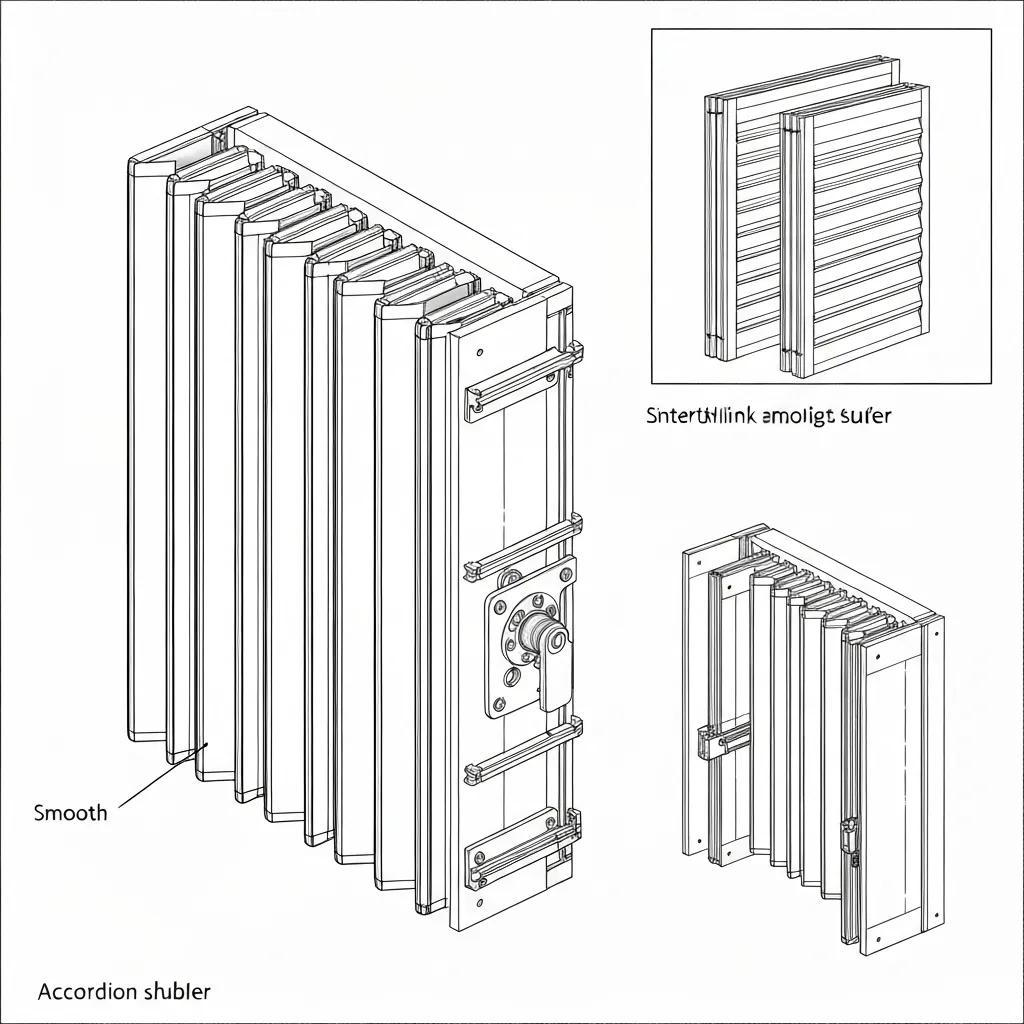
Typical accordion systems use aluminum panels shaped for stiffness, interlocking edges for continuous coverage, and perimeter gaskets to limit air infiltration. Using 6063‑T6 marine‑grade aluminum for slats and panels improves corrosion resistance and helps preserve reflective finishes in salt air. 18‑8 stainless steel fasteners prevent galvanic corrosion that could open seams and reduce seal effectiveness. Panel depth and surface finish influence conductive paths—deeper profiles and brighter coatings absorb less solar energy and slow heat transfer to the glass. Equally important are installation details: track alignment and gasket compression matter because small edge gaps can drastically increase convective gains. In short, long‑term performance depends on both product specs and quality installation.
The table shows how specific components translate into lasting insulation benefits and why coastal‚Äëgrade specifications matter for reliable energy savings. Accordion shutters also provide consistent closure behavior that supports planned shading during peak sun, which we quantify next.
How Much Can Accordion Shutters Reduce Heat Gain and Energy Bills?
Accordion shutters typically reduce solar heat gain in percentage terms rather than delivering high R‑values. Conservatively, field estimates put reductions between 15% and 30% on solar‑exposed windows, depending on orientation, glazing, and sealing. On a typical coastal home with large south‑ or west‑facing glass, adding accordion shutters to high‑exposure windows can cut peak HVAC runtime and produce meaningful annual savings over several years. For example, if cooling is a large share of your bill, a 20% cut in window‑driven heat gain might lower total cooling energy by roughly 3%–5%, with payback depending on shutter cost and local electricity rates. Because outcomes vary by site, treat these figures as projections and consider a professional assessment for precise ROI. American Hurricane Shutters (AHS Carolinas) installs accordion shutters to custom sizes and recommends a free estimate and cost calculator to model your savings and pricing.
Research into specialized shutter designs—like those using phase change materials—points to material science efforts aimed at improving thermal performance.
Thermal Performance of Window Shutters with PCM
This study validated, both numerically and experimentally, how a shutter containing phase change material affects indoor temperatures. Two similar test compartments were compared to analyze the shutter’s thermal behavior and performance.
Thermal performance of a window shutter containing PCM: Numerical validation and experimental analysis, T Silva, 2016
What Are the Insulation Properties of Colonial Shutters?
Colonial shutters insulate by adding thicker solid panels or louvered boards between the outside and the glass—an approach that fits well with traditional coastal architecture. Solid colonial panels reduce radiant and convective exchange by covering glass and creating a buffer, but their hinged design and panel‑to‑frame tolerances can leave small gaps compared with track‑mounted accordion systems. Louvered colonial shutters allow some airflow even when closed, trading insulation for ventilation and classic appearance; solid panels perform noticeably better thermally. Installation precision, strike hardware, and perimeter sealing upgrades all influence colonial shutter performance and how they hold up in corrosive salt air.
How Does Colonial Shutter Construction Affect Heat Retention?
Construction choices—solid board versus louvers—drive conduction and convection behavior. Solid panels limit conduction through mass; louvers let air and some light pass. Gaps at hinges and between paired panels can create convective loops that erode the effective thermal barrier unless mitigated with seals or weatherstripping. Material conductivity matters too—aluminum or composite colonial panels transfer heat differently than wood—so the same style can perform differently by material and finish. Style and curb appeal often guide the choice, but sealing strategies are key to maximizing heat retention and minimizing maintenance in salt air.
What Energy Savings Can Homeowners Expect from Colonial Shutters?

Energy savings from colonial shutters depend on panel type and how often they’re used. Solid‑panel colonial shutters with good seals can approach mid‑range accordion performance; conservative estimates put heat‑reduction for colonial shutters between 10% and 20% on covered windows. The lower end applies to louvered styles or installations with visible gaps. Owners of historic homes may accept a small trade‑off in insulation for architectural authenticity, but can boost performance with added seals or secondary window films. Comparing these estimates to accordion and roll‑down benchmarks helps you choose whether appearance or thermal performance is the priority.
Window frames and shutter systems play a critical role in overall building envelope efficiency; experimental and numerical studies quantify these effects.
Energy Efficiency of Window Frames and Rolling-Shutter Boxes
This research used finite‚Äëelement methods and in‚Äësitu experiments to analyze the thermal behavior of various window frames and rolling‚Äëshutter boxes. The study highlights how shutter housings and frame details can drive heat transfer and affect energy performance.
Numerical and experimental thermal analysis for the improvement of various types of windows frames and rolling-shutter boxes, N Cardinale, 2015
How Do Accordion and Colonial Shutters Compare for Energy Efficiency?
Accordion shutters usually give more continuous sealing and predictable air‚Äëgap behavior, while colonial shutters offer added panel mass that insulates well when solid and properly sealed. Roll‚Äëdown shutters remain the benchmark for the highest thermal barrier. In practice, installation quality, material grade, and edge sealing often matter more than nominal product differences. Cost, maintenance frequency, and coastal corrosion risk also affect long‚Äëterm performance: marine‚Äëgrade materials extend the period shutters remain effective and slow performance decay from salt damage. The table below compares typical effective R‚Äëvalue ranges, percent heat reductions, installation effort and cost, and coastal durability for accordion, colonial, and roll‚Äëdown shutters.
This comparison frames roll‚Äëdown shutters as the insulating benchmark, with accordion and colonial systems occupying nearby tiers depending on sealing and materials. For site‚Äëspecific advice and installation, American Hurricane Shutters (AHS Carolinas) installs both styles, performs Design Pressure Analysis for code compliance, and provides energy‚Äëfocused recommendations via a free estimate and cost calculator to assess payback.
What Are the Differences in R-Value and Heat Transfer Between These Shutters?
Shutters add modest effective R‑value to a window assembly; for homeowners, percent heat reduction under peak sun is usually more actionable. Roll‑down shutters tend to deliver the highest effective R‑values thanks to thicker panels, sealed housings, and continuous coverage. Accordion shutters create a narrower air cavity but strong perimeter seals that produce competitive percent reductions. Colonial shutters add mass but need good hinge fit and seals to match those gains; louvered versions are weaker thermally. Site specifics—glass type, orientation, and climate—can shift these differences, so treat effective R‑value as a rough guide, not an absolute.
How Do Installation, Maintenance, and Cost Affect Energy Savings?
Precision at installation directly affects sealing: misaligned tracks, loose hinges, or worn gaskets increase convective losses and cut measured savings. Regular coastal maintenance—inspecting fasteners, checking track alignment, and cleaning surfaces—prevents corrosion that would otherwise widen seams and reduce insulating performance over time. Upfront cost versus energy‑savings payback depends on exposure and usage: a higher initial investment in roll‑down or marine‑grade accordion systems often shortens lifecycle payback through greater percent heat reduction and lower maintenance. A simple maintenance checklist preserves insulation benefits and extends service life:
- Annual fastener and track inspection to prevent gaps.
- Replace worn seals and gaskets promptly to keep airtightness and cut convective losses.
- Clean surfaces and check for corrosion; use stainless fasteners and marine‚Äëgrade finishes where possible.
These routine steps help maintain long‑term energy benefits and reduce unexpected repair costs—an important factor when comparing shutter types.
Dynamic shutter systems can act as a secondary building envelope, offering measurable improvements in thermal performance when integrated thoughtfully.
Dynamic Insulated Shutter System for Building Envelopes
This case study presents an insulated shutter system used as a secondary envelope on a small house. Physical prototype tests and simulations showed that the shutter layer can significantly improve the building’s thermal performance.
Dynamic Insulated Shutter System for a Double-Layer Building Façade: a Case Study with Physical Prototype, Z Bian, 2024
What Additional Energy-Saving Benefits Do Hurricane Shutters Offer?
Beyond direct thermal resistance, hurricane shutters deliver shading, UV blocking, and incidental noise reduction that together reduce HVAC load and protect interior finishes—adding to long‑term energy and maintenance savings. Shading lowers direct solar gain on glass and nearby surfaces, cutting peak cooling demand and HVAC cycling. UV blocking preserves furnishings and reduces heat absorbed by interior surfaces. Added mass and sealed edges help dampen exterior noise, improving comfort and sometimes allowing occupants to rely less on mechanical systems. The table below summarizes how shutters affect HVAC load, UV exposure, noise insulation, and potential insurance incentives tied to wind mitigation.
These secondary benefits can add up in payback calculations—so factor them in when comparing shutter options. The next section explains how shutters lower HVAC load in practical terms.
How Do Shutters Reduce HVAC Load and Improve Climate Control?
Shutters cut HVAC load by shading glazing (blocking solar radiation) and by sealing edges and tracks to limit infiltration. Lower peak glass and wall temperatures mean less heat moves into living spaces, so HVAC systems run fewer cycles. When solar gain is reduced, humidity‚Äëdriven loads in coastal climates can also fall, helping stabilize indoor conditions. Regular shutter use during peak sun hours gives the most consistent load reduction and ties directly to real energy savings.
Can Shutters Lower Homeowners’ Insurance and Energy Costs Together?
Yes. Shutters that meet local wind‑mitigation standards and pass a Design Pressure Analysis can qualify homeowners for insurance discounts tied to reduced storm risk. Those insurance credits, combined with annual energy savings, shorten the effective payback period—especially if installations use coastal‑grade materials that keep seals and fasteners intact through inspections. Check with your insurer about specific credits and keep documentation of compliant installation. Together, these savings make a strong case for choosing durable, well‑specified shutters in coastal settings.
How Should Coastal Homeowners Choose Between Accordion and Colonial Shutters?
Choosing between accordion and colonial shutters comes down to balancing insulation goals, visual style, frequency of use, budget, and local code or insurance requirements. If you want consistent sealing and easy closure, accordion shutters are often the better fit for insulation and convenience. If you prioritize historic appearance, colonial shutters may be preferred—paired with upgraded seals to boost thermal performance. Consider budget, willingness to maintain hardware, and the orientation of high‑exposure windows when deciding which option gives the best lifecycle value. The short checklist below helps prioritize factors for a site‑appropriate choice.
- Selection checklist to help prioritize factors when choosing shutter types.
- Identify window orientation and solar exposure to target high‚Äëperformance shutters where they matter most.
- Prioritize sealing and marine‚Äëgrade materials if long‚Äëterm insulation retention in salt air is important.
- Balance aesthetics and budget; consider retrofit ease and possible insurance credits from code‚Äëcompliant installs.
Using this checklist clarifies whether accordion or colonial shutters better match your priorities. The next section explains how AHS Carolinas supports site‚Äëspecific decisions.
What Factors Should Influence Your Shutter Selection for Energy Savings?
Key factors are window orientation, how often you’ll close the shutters, convenience and automation, material specs for coastal durability, and local code or insurance requirements. South‑ and west‑facing windows typically benefit most from higher‑performance, easy‑to‑close shutters because they receive the most direct sun. Frequency of use matters: shutters left open most of the time provide little energy benefit, so ease of operation or automation increases real‑world savings. Finally, choosing marine‑grade materials such as 6063‑T6 aluminum and 18‑8 stainless fasteners reduces corrosion‑related decline in performance—an important longevity consideration.
How Can American Hurricane Shutters Help You Maximize Energy Efficiency?
American Hurricane Shutters (AHS Carolinas) offers free estimates, a cost calculator to model site‚Äëspecific budgets, and custom Design Pressure Analysis to meet local wind‚Äëload requirements while supporting energy goals. We use 6063‚ÄëT6 marine‚Äëgrade aluminum and 18‚Äë8 stainless steel fasteners to preserve structural and sealing integrity in salt air, helping maintain insulation performance over time. AHS Carolinas installs accordion and colonial shutters, performs retrofits, and backs our work with a 7‚Äëyear warranty on materials and workmanship. For a professional review of insulation benefits and code compliance, request a free estimate and try the cost calculator to compare options and projected savings.
- Request a free estimate: Get a site‚Äëspecific assessment that factors in orientation and glazing details.
- Use the cost calculator: Model payback and energy‚Äësavings scenarios for accordion, colonial, and roll‚Äëdown options.
- Get a Design Pressure Analysis: Ensure installations meet local wind‚Äëload requirements while optimizing thermal performance.
Frequently Asked Questions
What are the main differences in maintenance requirements between accordion and colonial shutters?
Accordion shutters usually need less hands‑on upkeep because they’re often built from marine‑grade aluminum and have fewer moving parts. That reduces corrosion and wear in coastal environments. Colonial shutters—especially wood or some composites—may need periodic painting, sealing, or hardware attention to resist moisture and salt. Consider long‑term upkeep when choosing a style.
How do the aesthetics of accordion and colonial shutters impact home value?
Shutters affect curb appeal and can influence resale. Colonial shutters generally suit traditional or historic homes and can enhance charm. Accordion shutters are more utilitarian and modern, which works well for buyers focused on convenience and protection. Match style to neighborhood character and your resale goals while balancing energy and maintenance benefits.
Can shutters be customized for specific window sizes and shapes?
Yes. Both accordion and colonial shutters can be custom‑made to fit unique openings, including arched or oversized windows. Manufacturers like American Hurricane Shutters provide tailored options so you don’t sacrifice fit, function, or insulation performance for aesthetics. Consult a pro to explore available configurations.
What role do shutters play in noise reduction for coastal homes?
Shutters add mass and create a sealed barrier that helps reduce outside noise from wind, rain, and traffic. Both accordion and colonial shutters can improve indoor sound levels; effectiveness depends on materials and installation quality. If quieter indoor spaces matter to you, factor noise reduction into your shutter choice.
Are there any insurance benefits associated with installing hurricane shutters?
Yes. Many insurers offer discounts for homes with approved wind‚Äëmitigation measures. Shutters that meet local standards and pass required testing can lower premiums. Check with your carrier for specific criteria and keep installation documentation to claim any credits.
How do local building codes affect the installation of shutters?
Local codes—especially in coastal zones—set requirements for materials, design, and installation to meet wind‑load standards. Work with certified professionals and obtain any required documentation to ensure safety, compliance, and eligibility for insurance credits. Proper permitting also protects resale value.
What is the expected lifespan of accordion and colonial shutters?
Lifespan varies by material and maintenance. Marine‚Äëgrade aluminum accordion shutters can last 20+ years with proper care. Colonial shutters, particularly wood, may need more f
