
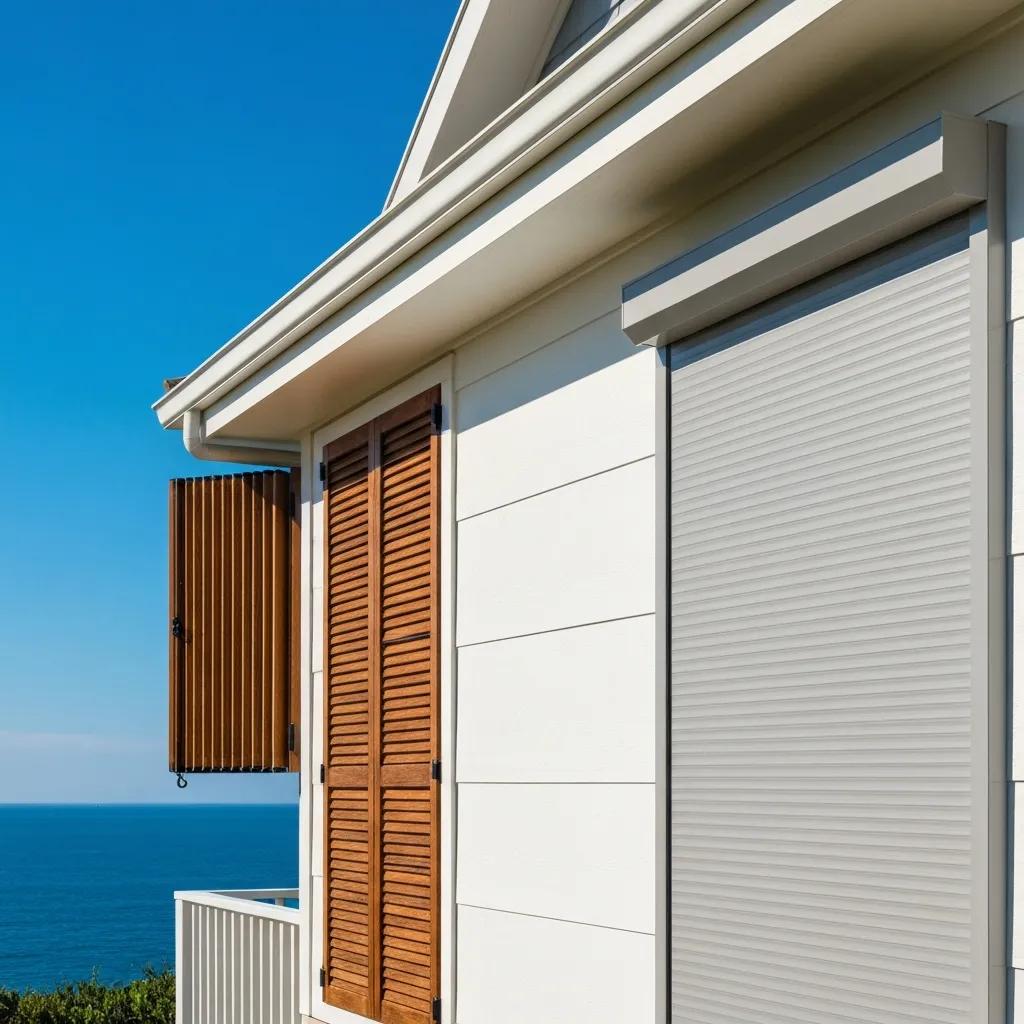
Comparing Durability: Accordion Shutters vs. Roll-Down Shutters in Severe Weather Events
Accordion shutters and roll-down shutters are the two most common engineered options homeowners rely on to protect doors and windows during hurricanes. This guide looks at durability, operation, cost, and maintenance with a focus on conditions in coastal North and South Carolina. You’ll learn how each system works, which materials and design details drive wind and impact performance, and how to read wind-load and impact-test ratings that matter for resilience. Many homeowners weigh the always-visible, permanently mounted accordion panels against the concealed slatted roll-down systems that tuck away into a housing box — understanding how aluminum slats, guide rails, hinges, and fasteners distribute design pressure is key to the right choice. We also cover wind and impact standards (ASTM, TAS, Miami-Dade), realistic service life expectations, maintenance checklists, and cost trade-offs including manual versus motorized roll-down options. Practical decision points for coastal NC/SC homes, local code issues, and insurance incentives are included, along with how American Hurricane Shutters supports homeowners with engineered protection, Design Pressure Analysis, professional installation, and free estimates. Read on for a clear comparison and an actionable selection checklist to match shutters to your budget, opening size, and performance needs.
What Are Accordion Shutters and How Do They Perform in Severe Weather?
Accordion shutters are permanently mounted, interlocking aluminum panels that fold sideways to cover openings. They protect by transferring wind and impact loads through hinges and anchor points into the building structure. Continuous vertical locking at top and bottom tracks, together with a series of hinges and fasteners, spreads pressure across the opening and gives immediate, rigid coverage for windows and doors. Storm performance depends on the aluminum alloy and gauge, hinge spacing, and fastener quality — corrosion-resistant hardware and deeper interlocks improve resistance to design pressures and impact. Accordion systems are a reliable choice for small-to-medium openings and offer a constantly ready barrier; that visible profile can be a trade-off for homeowners who prefer a concealed solution.
How Do Accordion Shutters Work to Protect Your Home?
Accordion shutters open and close by unfolding panels from one side of an opening to the other, engaging vertical guides and locking at the center or ends to form a continuous protective wall. Panels sit in header tracks and floor guides so wind loads transfer through the hinges into the structure instead of concentrating on a few anchors — that reduces the chance of frame deformation under high PSF design pressures. In impact events, interlocks and panel geometry spread energy across multiple hinge points to lower the risk of localized failure. When installed to spec, accordion shutters use corrosion-resistant fasteners and anchorage patterns sized to the opening and local design pressure, ensuring the system meets its certified wind and impact ratings.
What Materials and Construction Features Affect Accordion Shutter Durability?
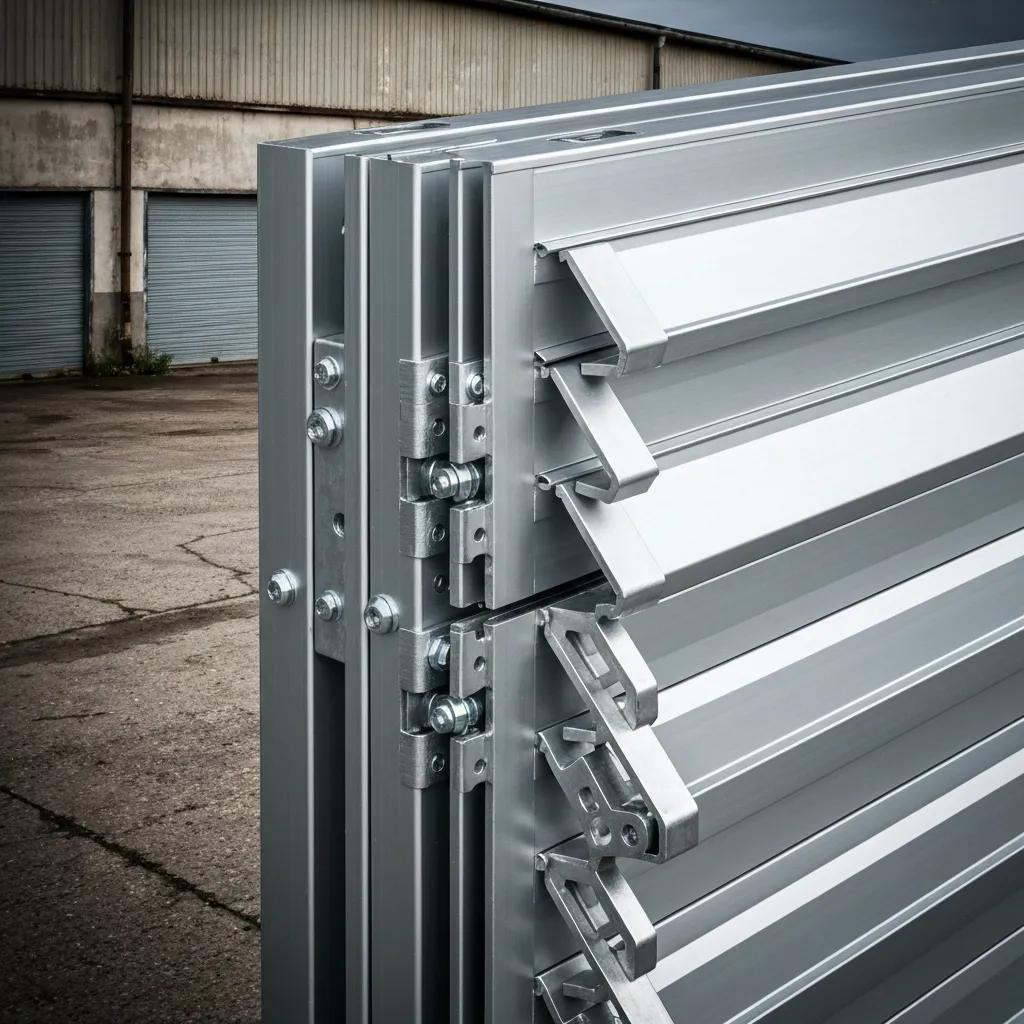
Durability comes down to aluminum alloy grade, panel gauge (thickness), hinge quality, and fastener materials. Thicker gauges and better alloys increase stiffness and improve PSF ratings. In coastal environments, stainless-steel fasteners — commonly 18-8 stainless — are standard practice to avoid galvanic corrosion and preserve long-term integrity where salt air accelerates deterioration. Reinforcements such as deeper interlocks, extra vertical stiffeners, and closer hinge spacing raise both impact resistance and wind-load capacity by improving load distribution. Powder coatings and finishes protect the surface and appearance, but material selection and anchor design ultimately determine whether an accordion shutter meets severe-weather performance standards.
Accordion shutters commonly protect these types of openings:
- Windows: Effective for standard window spans when a visible, permanent barrier is acceptable.
- Single doors: Quick deployment and constant readiness for entry doors.
- Sliding/glass doors (narrow spans): Suitable when widths fall within tested panel lengths.
These are typical applications; the next section contrasts roll-down systems in operation and concealment, which affects performance and homeowner preference.
How Do Roll-Down Shutters Provide Superior Protection During Hurricanes?
Roll-down shutters use slatted curtains that roll into a housing box above the opening and lock into guide rails at the sides. With reinforced housings and sturdy guides, slat-and-guide construction stiffens the curtain and spreads loads evenly, often achieving higher PSF ratings than thinner accordion panels. Roll-down systems are commonly certified to impact and wind-load standards and are available as manual, motorized, or battery-backed motorized units — offering fast, convenient deployment while meeting engineered protection requirements. Because the curtain stores inside an enclosed housing, the components are shielded from UV and weather exposure when retracted, which can extend service life and reduce maintenance compared with permanently exposed accordion shutters.
How Do Accordion and Roll-Down Shutters Compare in Wind and Impact Resistance?
Both shutter types can meet demanding wind and impact standards, but they typically reach those ratings in different ways. Wind-load ratings are expressed in PSF (pounds per square foot) or design pressure; impact standards reference tests such as ASTM and TAS that define missile sizes and velocities. Understanding these ratings helps homeowners match a shutter type to an expected hurricane category and local code requirements. Roll-down systems often reach higher PSF ratings for very large openings, while accordion shutters perform well for many common window and door spans. Below is a concise comparison of typical certified rating ranges and what they mean for coastal properties.
This table summarizes wind and impact testing characteristics for each shutter type and what those ratings mean in the field.
Both systems can be certified to protect against wind-borne debris when engineered and installed correctly; the sections below unpack wind and impact specifics in more detail.
What Are the Wind Load Ratings for Accordion vs. Roll-Down Shutters?
Wind load ratings are expressed in PSF and represent the design pressure a system can resist without failing. To use them, match the rated PSF to the local code-required design pressure for your zone. Accordion shutters reach their ratings through panel stiffness and hinge spacing, so heavier gauges and closer hinge patterns raise allowable PSF. In coastal NC/SC, matching a system’s rated PSF to a Design Pressure Analysis avoids under-specification. Roll-down shutters gain wind resistance with slat geometry, reinforced guide rails, and bottom locks that limit curtain deflection — often producing higher certified PSF values for the same opening width. Always ask for documented certified ratings and confirm the system’s PSF meets or exceeds the engineering requirement from local code or a Design Pressure Analysis.
How Do Accordion and Roll-Down Shutters Differ in Impact Resistance Against Debris?
Impact resistance is tested with protocols that simulate wind-borne debris striking the shutter at set speeds and missile sizes; certified products list the ASTM or TAS tests they passed. Accordion systems can pass impact tests when built with heavier gauges and reinforced interlocks, but panel joints and hinges are critical failure points that must be properly designed and installed. Roll-down shutters often show strong impact performance because slat interlocks and bottom reinforcement form a continuous curtain, though the housing and guide attachment quality determine how impact forces reach the structure. Translate test results to real-world expectations by verifying the specific test (for example, TAS 201/202/203) and ensuring installation uses the same anchorage and fasteners specified during certification.
Accordion Shutter Design: Durable and High-Quality Structural Elements
The new accordion forms might therefore be better suited for use as durable and high-quality structural elements, as the rigid quadrilateral panels connected between hinge lines, with four hinge lines meeting at any vertex, provide inherent stability.
Geometric design and construction of structurally stabilized accordion shelters, TU Lee, 2016
The geometric design of accordion panels — rigid quadrilaterals joined at hinge lines — contributes inherent stability that supports their use as durable structural elements when engineered correctly.
What Are the Longevity, Maintenance, and Security Differences Between Accordion and Roll-Down Shutters?
Accordion and roll-down shutters have different longevity profiles driven by exposure, moving parts, and enclosure design. Comparing maintenance needs and security features helps homeowners maximize service life and year-round usefulness.
How Long Do Accordion and Roll-Down Shutters Typically Last?
Expected lifespans vary with materials, installation quality, and environment. Accordion shutters typically last 15–25 years when specified and maintained properly; coastal corrosion shortens life if hardware isn’t corrosion-resistant. Roll-down systems often last 20–30 years for the structural slat and housing when made from high-grade aluminum and maintained, while motorized components and batteries tend to need replacement every 5–10 years. Longevity improves when homeowners specify coastal-grade materials, 18-8 stainless fasteners, and follow maintenance schedules for lubrication, seals, and motor servicing so systems continue to meet their certified ratings.
What Maintenance Is Required to Maximize Shutter Durability?
Routine maintenance preserves rated performance. The table below gives a concise maintenance schedule with common tasks and recommended intervals for each system. Inspections before and after hurricane season, lubrication of moving parts, rinsing salt residue, and scheduled motor servicing are core steps to keep shutters functional and corrosion-resistant.
Following this maintenance routine keeps shutters operating as designed and lowers the chance of failure when severe weather hits. Next we compare security features that often influence homeowner choice.
How Do Security Features Compare Between Accordion and Roll-Down Shutters?
Design affects security: roll-down shutters can provide continuous, locked coverage that resists forced entry and double as a year-round security barrier, while accordion shutters are solid but typically rely on center locks or optional bars to reach the same intrusion resistance. Roll-down locking options range from keyed bottom-bar locks to electronic locks tied into motorized controls, letting them serve both storm protection and everyday security if left closed. Accordion shutters use strong hinges and multi-point locks that resist prying when installed correctly, though their always-visible profile may be less desirable for homeowners who want an unobstructed facade. In either case, professional installation to engineered anchorage details is essential for the security performance to match manufacturer claims.
Roll-Down Shutters: Installation, Materials, and Operation
Roll-down shutters can be installed directly over windows and doors, or in some cases, at the exterior of the building. They are typically made of aluminum or steel and are operated manually or with a motor. Some motorized roll-down shutters have a battery backup to function.
Louisiana Homeowners Handbook To Prepare For Natural Hazards (Version 1), 2013
Roll-down shutters are versatile in installation and operation, typically built from aluminum or steel and available in manual or motorized versions; some motorized units include battery backup for operation during outages.
How Do Cost, Aesthetics, and Convenience Influence Your Hurricane Shutter Choice?
Cost, visual impact, and convenience are core decision factors. Below are typical installed cost ranges, aesthetic trade-offs, and deployment ergonomics so you can weigh protection against budget and lifestyle. Costs vary by opening size, material grade, and whether a roll-down is manual or motorized — motorization and larger housings raise installed cost but add convenience and faster deployment. Aesthetics hinge on visible versus concealed hardware: accordion shutters are a permanent visual element, while roll-downs disappear when retracted and better preserve curb appeal. Convenience considerations include deployment time, physical effort, and whether motorization with battery backup is worth the extra cost for your home.
This list summarizes the main considerations homeowners balance when choosing shutters:
- Budget vs Performance: Higher PSF/impact ratings and motorization increase cost but improve safety and convenience.
- Aesthetics: Visible accordion panels alter facade appearance; roll-downs retract into discreet housings.
- Operation: Manual systems require physical effort; motorized roll-downs offer rapid, one-button deployment.
These factors interact — for example, a homeowner with many large openings may choose motorized roll-downs despite higher upfront cost. The next section provides transparent cost ranges to help plan budgets.
What Is the Cost Difference Between Accordion and Roll-Down Shutters?
Use these typical installed cost ranges as a starting point: accordion shutters usually cost less per square foot than motorized roll-down systems, though final prices depend on gauge, finish, and installation complexity. The table below summarizes common installed cost ranges and notes add-ons like motorization and housings so homeowners can compare options for budgeting or insurance incentives.
These ranges are indicative. Always request itemized estimates so you can compare material grade, labor, and motorization separately.
How Do Accordion and Roll-Down Shutters Affect Home Aesthetics?
Appearance differs: accordion shutters are a visible architectural element that can be powder-coated to match trim, while roll-down shutters stay hidden in a housing when retracted, preserving the original facade. Accordion systems offer constant readiness but change sightlines and may not suit every architectural style. Roll-downs provide a low-visibility solution and can be specified with slim housings and color-matched slats for better curb appeal. Balance your preference for year-round appearance against the level of protection and convenience you want.
Which Shutter Type Offers Easier Operation and Deployment?
Operation depends on the system. Manual accordion shutters deploy quickly by hand and require no motors, making them low-maintenance but physically demanding. Motorized roll-downs deliver one-button deployment and faster coverage for large openings — a major advantage when you have many openings to close before a storm. Battery backup keeps motorized systems usable during power outages. Manual roll-downs and accordion shutters avoid motor lifecycle costs but need periodic checks and lubrication. If deployment speed and accessibility matter most, motorized roll-downs are typically worth the extra investment.
Hurricane Shutter Impact Performance: Testing Against Roof Tiles
This paper investigates the performance of hurricane shutters under impact by roof tiles. It tests and compares the impact resistance of various storm panel shutters, including those made of aluminum and metal, against common roofing materials used in hurricane-prone regions.
Performance of hurricane shutters under impact by roof tiles, KR Gurley, 2010
Research includes impact testing against common debris — such as roof tiles — to better simulate real-world storm conditions and compare shutter performance.
How to Choose the Best Hurricane Shutters for Your Coastal Carolina Home?
Choosing the right shutters means matching protection to local design pressures, opening geometry, budget, and how you want to operate the system. Local code and a Design Pressure Analysis set the minimum PSF and impact standards for each opening and guide material and anchorage choices. For wide or continuous glazing and large patio doors, roll-down systems are often recommended because they can reach higher PSF ratings and stay concealed when not in use. Accordion shutters can be a cost-effective, efficient option for standard windows and single doors. The checklist below helps you prioritize before asking for engineered documentation or quotes.
Homeowner decision checklist:
- Determine required design pressure and impact standard: Obtain or request a Design Pressure Analysis matching your coastal zone.
- Match shutter type to opening size: Prefer roll-down for very large or continuous openings; accordion for standard windows and smaller doors.
- Decide on motorization: Choose motorized roll-downs for convenience on many or large openings, and consider battery backup.
- Specify materials for coastal exposure: Require corrosion-resistant fasteners and appropriate aluminum alloys for salt-air durability.
Use this checklist to narrow options, then proceed to professional evaluation and itemized quotes. Below explains how American Hurricane Shutters helps through that process.
What Factors Should Homeowners Consider When Selecting Shutters?
Homeowners should weigh protection level, opening size, budget, aesthetics, local code, and maintenance capacity when selecting shutters, and prioritize certified ratings and correct anchorage over the lowest upfront price. Protection level ties directly to PSF and impact test results — match those to a Design Pressure Analysis to avoid under-specifying. Opening size may dictate the mechanical solution — very large openings often need roll-downs or custom engineering — while budget affects motorization, material grade, and finishes. Consider who will maintain the system: if you prefer low-maintenance, a concealed roll-down with fewer exposed parts may be preferable. Always request written certification and installation details before purchase.
How Does American Hurricane Shutters Support Your Hurricane Protection Needs?
American Hurricane Shutters (AHS) works with homeowners and businesses across coastal North and South Carolina to provide engineered hurricane protection: accordion, roll-down, colonial, Bahama, hurricane screens, and panel systems. We focus on engineered solutions, performing Design Pressure Analysis and installing with corrosion-resistant hardware — such as 18-8 stainless steel fasteners — so systems meet or exceed commonly referenced Florida Building Code benchmarks. Homeowners can get free estimates via our cost calculator and pricing tools to compare manual and motorized options and plan budgets for locations like Wilmington, Myrtle Beach, Oak Island, Topsail, New Bern, and Pawleys Island. If you want documented, engineered protection with local installation and service, AHS offers product choices and installation practices tailored to coastal NC/SC conditions.
- Free Estimate Availability: AHS offers complimentary estimates and cost-calculator assistance to plan budgets.
- Engineered Analysis: AHS performs Design Pressure Analysis and provides systems that meet or exceed code-based standards.
- Professional Installation: Installations use industry-grade fasteners and practices to preserve certification performance.
Frequently Asked Questions
What are the key differences in installation between accordion and roll-down shutters?
Accordion shutters are usually mounted permanently to the exterior and require precise anchoring to withstand severe weather. Roll-down shutters can be installed over openings or recessed into the building’s exterior and include a housing that conceals the slats when not in use. That housing can complicate installation but protects components and improves appearance when retracted.
How do local building codes affect the choice of shutters?
Local building codes set minimum wind load and impact resistance requirements based on location and expected storm forces. Choose shutters that meet or exceed those standards to ensure safety and compliance. A professional installer or local building department can confirm the specific requirements for your property so the selected shutters provide the required protection.
What are the energy efficiency benefits of using hurricane shutters?
Shutters add an insulating layer when closed, reducing heat transfer and helping interiors stay cooler in summer and warmer in winter. That can lower HVAC run time and energy bills. They also limit sunlight that fades furniture and flooring, offering both comfort and preservation benefits.
Can hurricane shutters be customized for unique window shapes or sizes?
Yes. Many manufacturers and installers offer custom solutions for arched, circular, or oversized windows so shutters fit unusual openings while maintaining protection and visual appeal. Discuss specific requirements with a professional installer to explore custom options that meet both function and aesthetics.
What are the insurance implications of installing hurricane shutters?
Certified hurricane protection can lead to insurance discounts or incentives because it reduces the risk of storm damage. Check with your insurer to understand possible savings and confirm certification requirements. Keep documentation of installation and any certification to support premium reductions.
How do hurricane shutters impact home resale value?
Quality, certified shutters are often a selling point in hurricane-prone markets. Buyers value existing storm protection because it reduces immediate costs and increases peace of mind. Certified systems that are well-documented and in good condition can positively influence resale value.
What are the environmental considerations when choosing hurricane shutters?
Consider materials and longevity. Aluminum is highly recyclable, and longer-lasting systems reduce replacement waste. Energy efficiency benefits also lower a home’s overall energy use. Look for durable materials and responsible manufacturing when assessing environmental impact.
Conclusion
Choosing between accordion and roll-down shutters comes down to matching performance, appearance, and convenience to your home’s needs. Both types offer reliable protection when engineered and installed correctly — accordion shutters excel for smaller openings and constant readiness, while roll-downs often suit large openings and homeowners who prefer a hidden solution with motorized convenience. Evaluate cost, maintenance, and certified ratings, then get a professional Design Pressure Analysis to confirm the right option for your coastal property. For expert guidance and a free estimate, connect with American Hurricane Shutters today.
