

Accordion Shutters vs. Other Storm Protection: A Practical Durability Guide
Accordion shutters are permanently mounted, folding storm panels that lock into place to protect windows and doors from high winds, flying debris, and impacts — a common choice for coastal homes. This guide walks homeowners through how accordion systems work, compares measurable durability with roll-down shutters, removable panels, and screens, and reviews material options like aluminum, steel, and polycarbonate for long-term coastal performance. You’ll get clear explanations of wind-load and impact-resistance factors, expected lifespans, corrosion-resistance tradeoffs, and how durable choices influence insurance, energy use, and resale value. We also translate technical durability details into practical steps for installation, maintenance, and code compliance in North and South Carolina. Read on for side-by-side comparison tables, concise pros and cons, material recommendations, and straightforward next steps to request a free estimate or a Design Pressure Analysis from a local provider.
What Are Accordion Shutters and How Do They Provide Durable Storm Protection?
Accordion shutters ride on a fixed track and fold across an opening to form a continuous protective barrier. They deliver durable protection by transferring wind and impact loads into the building through interlocking panels and anchored guide rails. Typical components — extruded aluminum blades, interlocking seams, reinforced guides, and stainless steel fasteners — create stiffness and clear load paths that resist uplift and penetration. Because the shutters stay mounted year‑round, you avoid seasonal removal and storage, and they’re ready to deploy as a storm approaches. That permanent attachment also tends to produce consistent performance over repeated events; proper finishes and routine upkeep further extend service life in salty coastal air. Understanding these mechanical and material details helps explain why accordion shutters are a reliable, fast-to-deploy option for Atlantic coast homeowners.
Accordion shutters pair structural design with corrosion-aware materials to balance strength and longevity. The sections that follow break down those materials and the wind/impact mechanics that determine real-world performance.
What Materials Are Used in Accordion Shutters for Strength and Longevity?
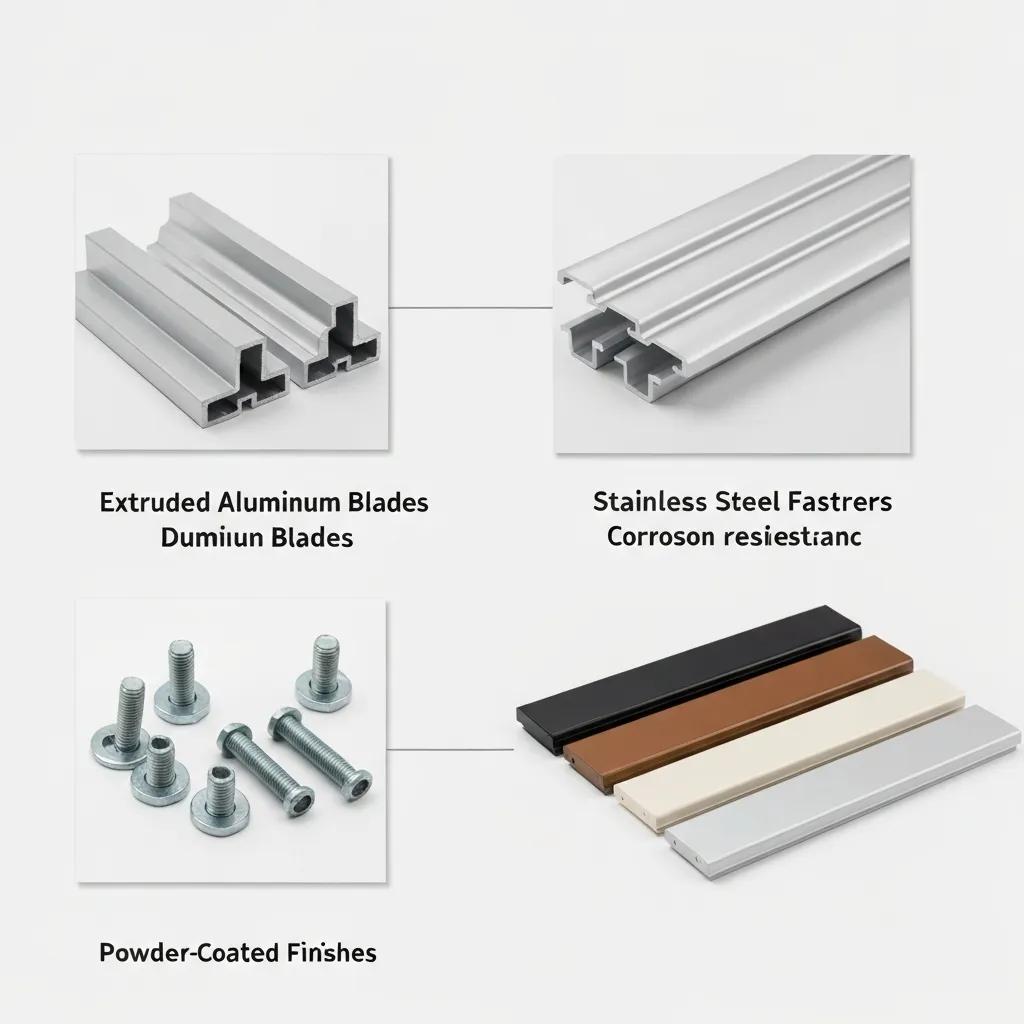
Most accordion shutters use extruded aluminum for blades and frames, 18‑8 stainless steel for fasteners, and durable powder‑coat finishes to resist coastal corrosion — yielding a strong but relatively lightweight assembly. Aluminum alloys give a favorable strength‑to‑weight ratio and won’t rust, while stainless steel hardware reduces galvanic and saltwater corrosion where parts meet. Anodized surfaces and quality coatings slow oxidation and keep the finish looking good in salty air. Regular inspections and targeted upkeep — cleaning tracks, lubricating moving parts, and touching up scratches — keep the system structurally sound and slow wear. For locations with frequent salt spray and humidity, these material choices make accordion shutters a sensible, long‑lasting option.
How Do Accordion Shutters Withstand Wind and Impact Forces?
Accordion shutters resist wind and impact by forming continuous, interlocked panels that route lateral and uplift forces into anchored guides and frame connections, limiting bend and preventing penetration. Interlocking blade edges and stiff extruded sections reduce bending, while guide rails and reinforced stiles carry stresses into the home’s structural framing. Impact performance improves when shutters are installed with corrosion‑resistant fasteners and tight tolerances so components stay snug after repeated events. Properly rated accordion systems show predictable load paths and, with routine maintenance, can maintain protection through multiple storm cycles. Knowing how forces travel through the system helps homeowners confirm whether a given accordion design matches local wind‑load requirements and long‑term durability goals.
American Hurricane Shutters (AHS Carolinas) is a family‚Äëowned, disabled‚Äëowned local provider serving coastal North and South Carolina with accordion shutters and related hurricane protection products. We focus on quality installations using 18‚Äë8 stainless steel components, custom Design Pressure Analysis for code alignment, and ongoing support including repair, maintenance, and retrofits. For a practical durability check, AHS Carolinas provides a cost calculator and free estimates so you can compare options and plan installations. If you want a local evaluation that balances mechanical durability with coastal corrosion protection, request a free estimate for tailored guidance and options.
How Do Accordion Shutters Compare in Durability to Roll-Down Hurricane Shutters?
Accordion and roll‑down shutters take different structural approaches: accordion shutters use continuous extruded panels and guide rails, while roll‑down units rely on coiling slats and a barrel assembly. That difference creates distinct durability profiles for wind, impact, and corrosion exposure. Roll‑down shutters offer strong impact resistance and can be motorized, but the coiling mechanism adds moving parts that require motor and barrel maintenance. Accordion shutters avoid a central coil, resulting in a simpler mechanical system with fewer hidden moving parts — often meaning easier long‑term upkeep and more predictable failure modes. Material choices (extruded vs. roll‑formed aluminum) and fastener quality also shape each system’s lifespan in coastal conditions. The table below summarizes key durability metrics to help homeowners choose based on wind rating, impact resistance, deployment reliability, and maintenance needs.
Intro to the comparison table: The table below compares core durability and usability attributes for accordion and roll‚Äëdown shutters using concise, homeowner‚Äëfocused metrics.
This comparison highlights that accordion shutters tend to offer robust, low‚Äëfailure mechanical profiles because they have fewer concealed moving parts, while roll‚Äëdown systems add convenience at the cost of more mechanical components and a higher maintenance burden. The next section looks at the material strength differences behind those results.
What Are the Key Differences in Material Strength Between Accordion and Roll-Down Shutters?
Extruded aluminum used in many accordion shutters usually provides higher section modulus and greater stiffness than roll‑formed slats found in some roll‑down systems, so accordion blades resist bending and deflection more effectively for a similar cross‑section. Roll‑formed slats depend on multiple interlocking segments whose overall performance relies on slat thickness and barrel integrity; motor or barrel failures can compromise protection. Fastener quality and anchor patterns matter equally: a stiff extrusion that’s poorly anchored will perform worse than a correctly anchored roll‑down assembly. Using corrosion‑resistant fasteners (like 18‑8 stainless steel) and protective finishes reduces coastal degradation regardless of manufacturing method. Those material and anchorage choices dictate how each system behaves under high wind and repeated impacts.
Which Shutter Type Offers Better Security and Ease of Use During Storms?
Accordion shutters typically allow simple manual deployment and keyed locks, so you can secure openings without relying on electricity — a major advantage during extended outages. Roll‑down shutters provide motorized convenience but depend on reliable power or a backup. From a security standpoint, accordion shutters’ continuous interlocks and fixed guide rails form a strong physical barrier that resists forced entry; keyed or padlock options add deterrence. Well‑maintained roll‑down systems can also be secure, but the added drive components introduce more potential failure points homeowners must manage. Ultimately, readiness matters: permanently mounted accordion shutters offer immediate, low‑complexity closure, making them a durable and user‑friendly choice in many coastal scenarios.
How Do Accordion Shutters Stack Up Against Other Storm Protection Solutions Like Panels and Screens?
Accordion shutters are a permanent, quickly deployable protection method. Removable hurricane panels (aluminum, steel, or polycarbonate) are typically stored when not in use, while hurricane screens and fabric shields are lighter, lower‚Äëprofile alternatives. Each option balances upfront cost, lifespan, storage needs, and resistance to wind and debris. Permanent systems like accordion shutters usually cost more up front but lower lifecycle costs by removing seasonal labor and storage. Screens and fabric shields have lower initial cost and allow airflow, but they usually offer less impact resistance and shorter service life in high‚Äëwind, coastal exposure. The table below maps cost‚Äëeffectiveness against durability so homeowners can weigh long‚Äëterm value against short‚Äëterm budget choices.
Intro to cost-effectiveness table: This table maps protection type to lifecycle attributes homeowners weigh when balancing budget against long-term durability.
That comparison shows how accordion shutters can justify a higher upfront investment through longer useful life and reduced seasonal labor. The next section drills into the durability advantages accordion shutters offer over panels and screens.
What Are the Durability Benefits of Accordion Shutters Compared to Hurricane Panels and Screens?

Accordion shutters generally outlast most removable panels and screens in repeated events because their permanent anchorage and continuous guide rails prevent damage from misalignment, installation errors, and storage‚Äërelated corrosion or deformation. Panels can get bent, lose hardware, or be stored improperly, which degrades their performance over time; screens and fabric options are vulnerable to UV decay, tearing, and lower impact resistance. Using corrosion‚Äëresistant fasteners and quality coatings reduces the common coastal failure modes seen with stored equipment. For homeowners who want predictable, long‚Äëterm protection with minimal pre‚Äëstorm prep, accordion shutters offer durability advantages that often translate to lower total cost of ownership when storms are frequent.
How Does Cost-Effectiveness Relate to Durability Across These Storm Protection Options?
True cost‚Äëeffectiveness looks beyond initial price to include expected lifespan, maintenance, insurance incentives, and storage or installation labor over time. Durable, permanently installed solutions can deliver lower lifetime costs despite higher upfront expense. Eliminating seasonal labor and storage reduces recurring costs and the risk of degraded performance from mishandled equipment. Insurance discounts for rated, permanently installed shutters further improve ROI by lowering premiums, and year‚Äëround shading can yield energy savings. Homeowners should model a multi‚Äëyear total cost of ownership that factors in replacement cycles and maintenance intervals. Key items to include in that calculation are listed below.
- Upfront purchase and professional installation costs.
- Expected lifespan and frequency of replacement or major repairs.
- Seasonal labor and storage expenses for removable options.
- Potential insurance premium reductions and energy savings.
Considering these factors helps homeowners choose the solution that best balances budget, durability, and convenience. Next, we examine material‚Äëspecific durability tradeoffs.
What Role Do Materials Like Aluminum, Steel, and Polycarbonate Play in Hurricane Shutter Durability?
Material choice determines the most important durability attributes for storm protection: structural strength, corrosion resistance, weight, and UV stability. Aluminum, steel, and polycarbonate each have distinct tradeoffs depending on a homeowner’s priorities for longevity and maintenance in coastal settings. Aluminum strikes a balance of light weight and corrosion resistance and is commonly used for extruded blades and frames. Steel offers higher tensile strength but needs heavy‑duty coatings and careful fastener selection to avoid rust. Polycarbonate gives excellent impact resistance and can be transparent, but thicker sections add weight and UV‑stable grades are required to prevent long‑term degradation. Understanding these tradeoffs helps match product selection to local wind conditions and exposure. The table below summarizes material attributes for coastal installations.
Intro to material comparison table: This EAV-style table highlights how each material performs across key durability attributes relevant to hurricane shutters and panels.
How Does Aluminum Provide Corrosion Resistance and Longevity in Coastal Environments?
Aluminum develops a natural oxide layer and, when combined with anodizing or high‑quality powder coatings, offers effective resistance to salt spray. Its low density reduces dead load on frames and anchors, and extruded stiff profiles keep dimensions stable under wind loads — provided anchors and fasteners are specified to move loads into structural framing. Timely touch‑ups to protective finishes and routine inspections — addressing scratches, damaged sealants, and loose fasteners — significantly extend service life in coastal settings. For most residential accordion shutter installations along the Atlantic, aluminum is a durable, low‑maintenance choice that balances performance and weight.
What Are the Advantages and Limitations of Steel and Polycarbonate in Storm Protection?
Steel delivers exceptional strength and is useful for heavy‚Äëduty panel systems or high‚Äësecurity applications, but it requires thorough corrosion protection and heavier anchors to handle its weight, which can make it less appealing for some coastal residential uses. Polycarbonate offers superior impact resistance and the option of light transmission, which is useful where visibility matters; however, it can scratch or yellow without UV‚Äëstabilized formulations and may need thicker panels to meet structural wind loads. Steel maintenance focuses on coatings and protecting fasteners, while polycarbonate care centers on UV protection and scratch mitigation. The right choice depends on whether raw structural strength or impact transparency is the priority.
What Are the Long-Term Benefits of Choosing Durable Accordion Shutters for Your Home?
Durable accordion shutters deliver long‚Äëterm homeowner benefits: lower lifecycle replacement costs, potential insurance premium reductions when shutters are rated and installed to code, energy savings from shading and reduced infiltration, and stronger resale appeal because protection is permanent and documented. Across multiple storm cycles, permanently mounted shutters reduce labor and storage expenses and lower the risk of damaged or improperly stored temporary panels. They also reduce maintenance frequency and avoid repetitive replacement cycles that can erode property value. Below are the primary ROI elements to consider when evaluating durable accordion systems.
- Lower lifecycle costs: Fewer replacements and reduced seasonal labor expenses over time.
- Insurance and financial incentives: Potential premium reductions when shutters are rated and documented.
- Energy savings: Year‚Äëround shading and reduced air infiltration can lower cooling costs.
These ROI factors create a strong financial case for investing in higher‚Äëquality, properly engineered accordion shutter installations. The following section explains energy and insurance impacts in more detail.
How Do Durable Accordion Shutters Contribute to Energy Efficiency and Insurance Discounts?
Accordion shutters cut solar heat gain and limit air infiltration when closed, producing measurable energy savings in cooling‚Äëdominant coastal climates. That shading and reduced convective loss lower HVAC run time. Insurers frequently recognize rated, permanently installed shutters as a risk‚Äëmitigation measure, which can lead to premium discounts or smoother claims handling when product ratings and installation documentation are provided. Homeowners should check with their insurer about specific discounts and ensure any installed system includes test results or design analysis to support rebate applications. When combined, energy savings and insurance incentives improve overall ROI and strengthen home resilience.
In What Ways Do Accordion Shutters Increase Property Value and Reduce Maintenance Needs?
Permanent accordion shutters tidy up a home’s exterior, reassure buyers that the property has durable storm protection, and can increase resale appeal in hurricane‑prone markets. Because the shutters remain mounted year‑round, routine care focuses on inspection, lubrication, and surface touch‑ups rather than repeated removal, storage, and reinstall cycles — which reduces long‑term ownership hassle. Fewer replacements and professional installation records also streamline permitting and insurance processes, adding transactional value at sale. These practical benefits combine to make durable accordion shutters a value‑adding home improvement for coastal properties.
When you’re ready to turn durability and ROI into action, a local professional assessment ensures systems are matched to code and site conditions.
American Hurricane Shutters (AHS Carolinas) helps homeowners align durability with financial value through services like maintenance, repair, retrofits, and insurance documentation guidance. We emphasize quality installation practices — using corrosion‑resistant fasteners and offering Design Pressure Analysis — to help qualify installations for insurance discounts and permits. Homeowners who want a tailored lifecycle assessment or a cost estimate can request a free estimate or use our cost calculator to compare scenarios and identify the most durable, cost‑effective solution for their property.
- Site survey and assessment: AHS Carolinas measures openings and exposure to determine design pressures.
- Design Pressure Analysis: Engineers match product and attachment to code‚Äërequired loads.
- Quality installation and documentation: Installers use corrosion‚Äëresistant hardware and provide paperwork for permits and insurance.
How Do Accordion Shutters Meet North and South Carolina Building Codes for Hurricane Protection?
Accordion shutters meet building code requirements when they’re engineered to transfer design wind loads, tested for impact resistance where required, and installed with approved anchors and documentation that show compliance with local attachment standards. Coastal codes in North and South Carolina focus on verified wind‑load capacity, correct attachment methods, and performance under impact and cyclic loading. Demonstrating compliance typically requires product ratings, manufacturer test reports, or a documented Design Pressure Analysis that ties the shutter and anchorage to the opening’s exposure and backing. Homeowners should expect an evaluation that aligns product ratings with local code criteria and provides the paperwork needed for permits and insurance.
What Are the Key Building Code Requirements for Hurricane Shutters in Coastal Carolina?
Key requirements include verified wind‚Äëload performance for the applicable design pressure, secure attachment into structural framing with approved fasteners, and impact resistance ratings when the opening sits in a windborne debris region. Documentation of these elements is commonly required for permitting and insurance verification. Authorities typically ask for manufacturer test reports or engineering calculations showing the shutter resists specified pressures and that anchors and fasteners are sized and positioned to transfer those forces. Confirming a product is rated for the applicable design pressure and that installations fasten into structural members simplifies permitting and supports insurance claims if needed.
How Does American Hurricane Shutters Ensure Compliance and Quality Installation?
American Hurricane Shutters (AHS Carolinas) follows a consistent process: site survey, custom Design Pressure Analysis, and professional installation using corrosion‑resistant 18‑8 stainless steel components and proven anchorage patterns to meet code and performance expectations. We document installations to assist with permitting and insurance, and offer maintenance and retrofit services to keep systems performing as rated. AHS Carolinas also focuses on customer education — helping owners understand ratings and the importance of proper anchorage — so clients know how their shutters meet code. To get a tailored evaluation and the documentation you need for permits or insurance, request a free estimate or use our cost calculator to explore options and pricing.
- Site survey and assessment: AHS Carolinas measures openings and exposure to determine design pressures.
- Design Pressure Analysis: Engineers match product and attachment to code-required loads.
- Quality installation and documentation: Installers use corrosion‚Äëresistant hardware and provide paperwork for permits and insurance.
Frequently Asked Questions
What are the maintenance requirements for accordion shutters?
Accordion shutters need moderate, regular care to stay reliable. Inspect tracks and fasteners for corrosion or wear, rinse panels to remove salt and debris, and lubricate moving parts so the system opens and folds smoothly. Promptly touch up any scratches or damaged coatings to preserve corrosion resistance. These routine steps help extend service life and ensure shutters perform when a storm arrives.
How do accordion shutters affect energy efficiency in homes?
<!– wp:paragraph