
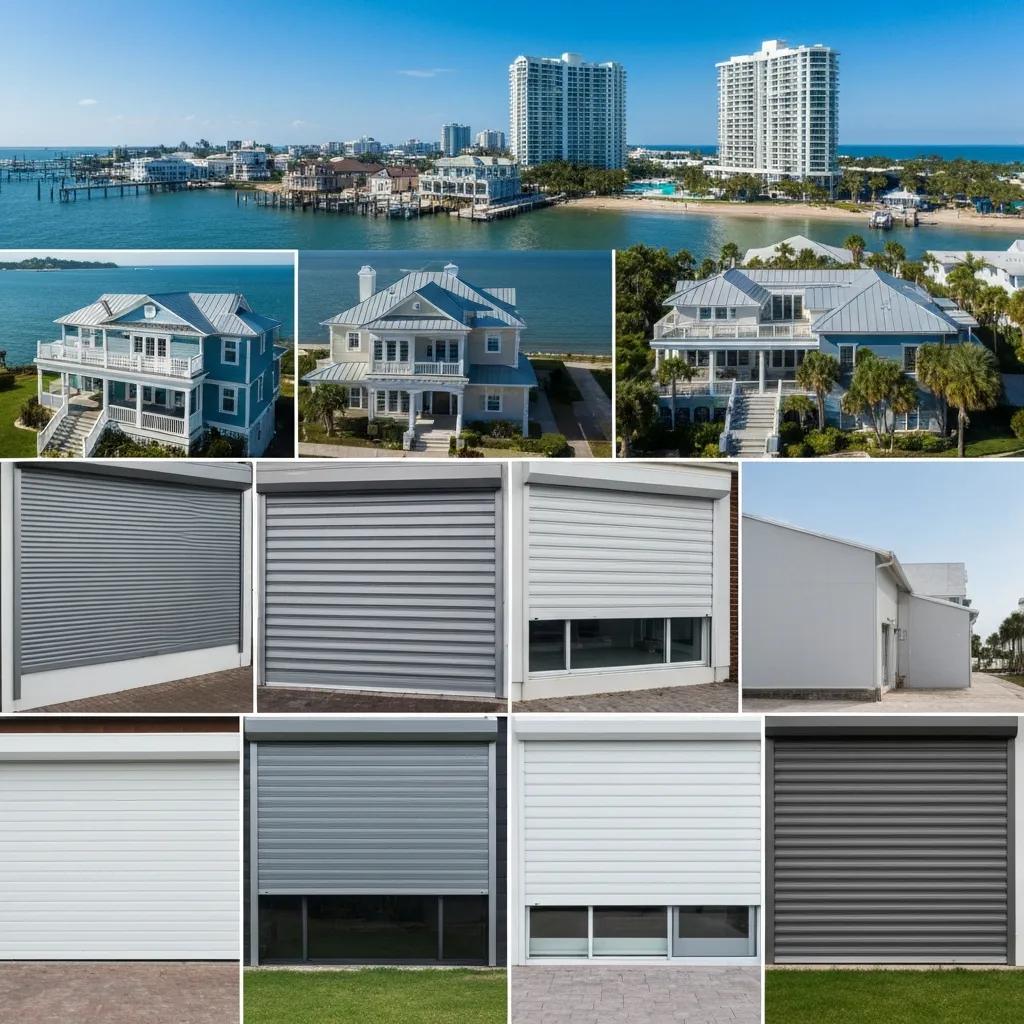
Choosing the Best Hurricane Shutter Materials for Durability: A Complete Guide for Coastal Protection
Coastal properties need hurricane protection that stands up to impact, high wind loads, and years of salt-air exposure. This guide walks you through what “durability” actually means for shutters — impact performance, wind-load ratings, corrosion resistance, UV stability, and expected lifespan — and compares how common materials stack up. Whether you’re a homeowner or facilities manager, you’ll get clear comparisons of aluminum, steel, polycarbonate, and fabric options, plus practical notes on maintenance, cost trade-offs, and real-world use cases like high-salt exposure or frequent deployment. Use our free estimate tool to model costs, then request a site visit for a tailored, code-compliant plan.
What Are the Most Durable Hurricane Shutter Materials for Coastal Homes?
Durability for hurricane shutters means resisting high-speed impacts, staying rigid under wind loads, and resisting corrosion from salty air over time. The materials most commonly used for long-term protection are steel, aluminum, polycarbonate, and high-performance fabric screens. Each balances strength, weight, and upkeep differently: steel tops the list for raw strength, aluminum offers a good strength-to-weight and corrosion balance, polycarbonate delivers impact resistance while preserving light, and fabric screens cover large openings with easy storage. Typical use cases vary: steel and aluminum work well where impact resistance or security is essential, polycarbonate is chosen where daylight and views matter, and fabric screens suit large lanais and commercial openings where compact storage and rapid deployment are priorities.
The sections below break down aluminum and steel so you can match material performance to your property’s needs.
How Does Aluminum Provide Lightweight and Corrosion-Resistant Protection?
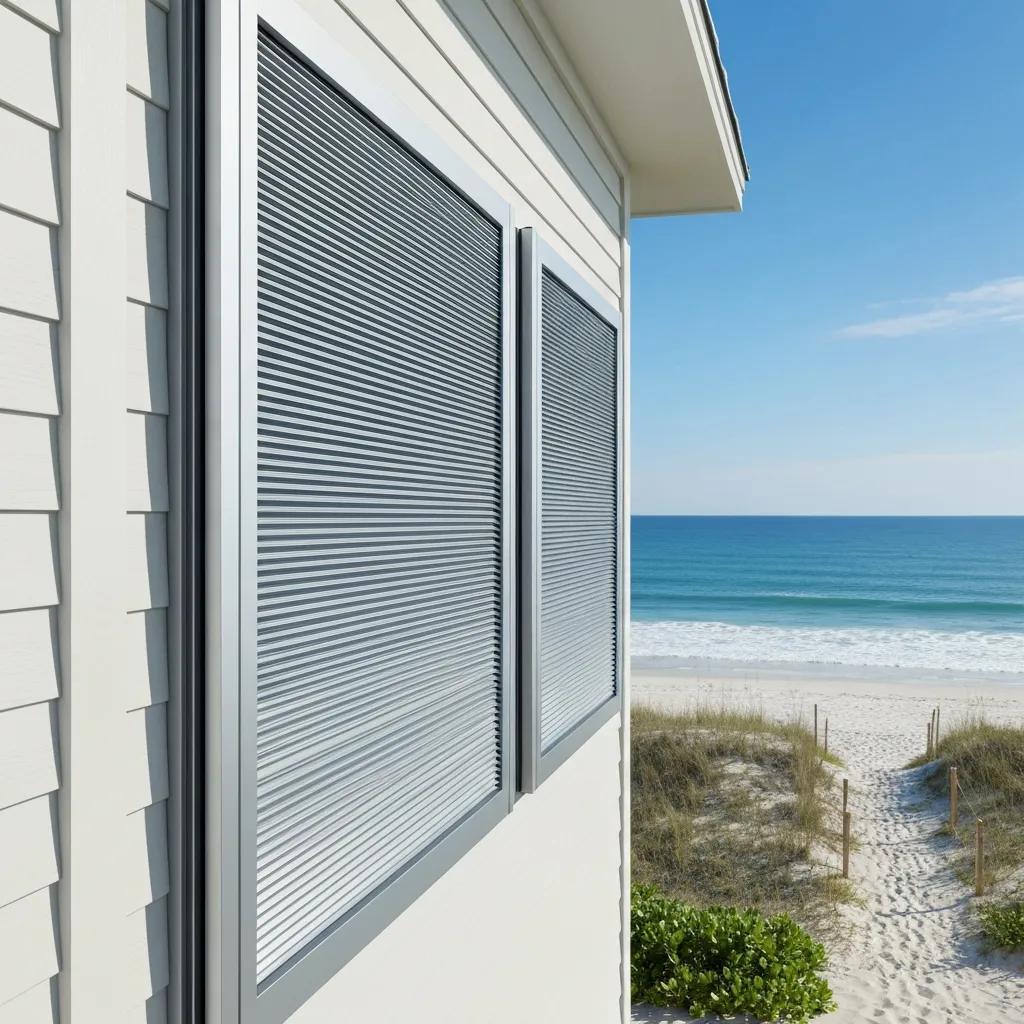
Aluminum is a go-to for coastal installs because it’s strong for its weight and forms a protective oxide layer that helps resist salt corrosion. You’ll see it in accordion and roll-down systems that are easy to operate manually or with a motor, and its lighter weight reduces strain on tracks and fasteners. Maintenance is straightforward: rinse away salt deposits periodically and inspect fasteners and seals; anodized or painted finishes extend service life. Aluminum’s lighter profile also makes motorized options practical when shutters are used frequently. In short: choose aluminum when you need a durable, low-maintenance solution that balances performance and convenience.
Why Is Steel Known for Maximum Strength and Impact Resistance?
Steel offers the highest tensile strength and excellent resistance to flying debris, which is why it’s chosen when impact protection is the priority — especially for ground-level openings or highly exposed façades. The trade-offs are weight and corrosion risk: steel should be galvanized or coated, and use stainless fasteners where salt air is a concern. Installations require heavier anchoring and handling, which can increase labor and hardware costs, but the result is very high wind-load capacity and proven performance. When you need maximum protection and are willing to manage coatings and maintenance, steel is the strongest option available.
What Are the Key Benefits of Polycarbonate and Fabric Hurricane Shutters?
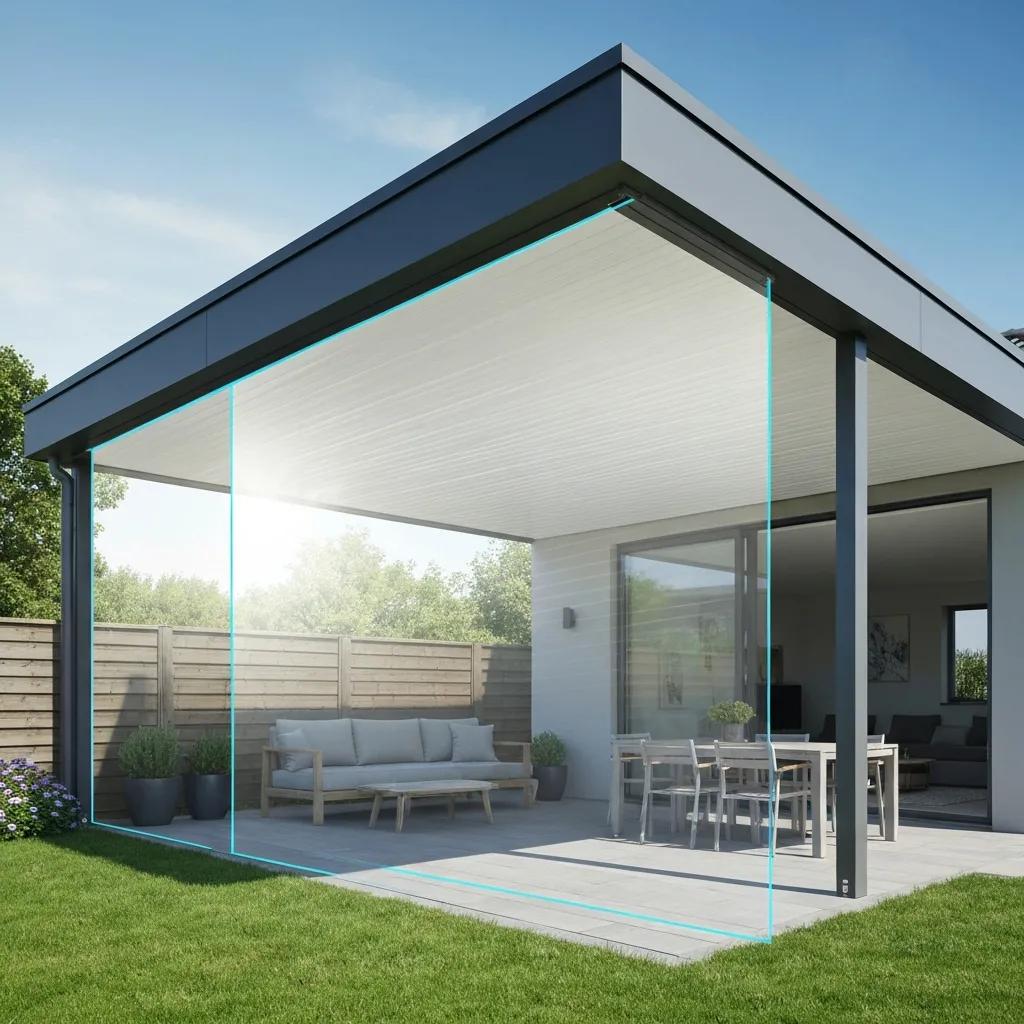
Polycarbonate panels and high-strength fabric screens serve different priorities. Polycarbonate offers outstanding impact resistance while letting light through and preserving views — a good choice for patios and glass doors when daylight matters. It’s a clear, tough thermoplastic that resists shattering and performs well with UV-stabilized grades. Fabric screens use engineered textiles on tracks and anchors to protect very large openings; they deploy quickly, retract or roll compactly for storage, and keep sightlines open when stowed. Maintenance differs: polycarbonate needs non‑abrasive cleaning and UV checks, while fabric screens require tension and hardware inspections. Each fills a distinct role in a coastal protection plan.
Different owners pick polycarbonate or fabric for practical reasons. The table below highlights the core trade-offs.
Bottom line: pick polycarbonate when you want light and impact protection; choose fabric screens for very large openings or when storage and rapid deployment are priorities.
How Do Hurricane Shutter Materials Compare in Durability, Cost, and Maintenance?
Comparing strength, weight, corrosion resistance, cost, maintenance, and lifespan helps you make practical choices for coastal conditions. Steel leads for strength but needs coatings and heavier installation. Aluminum balances corrosion resistance, weight, and ease of use. Polycarbonate excels at impact resistance and daylighting but requires UV-stable formulations. Fabric screens cover large areas affordably with simple storage but offer less resistance to point impacts. The table below presents a clear side-by-side view of these attributes to help you weigh options before moving to scenario-based recommendations.
That table highlights the trade-offs: steel delivers top strength but higher weight and maintenance; aluminum is a balanced, low-maintenance choice; polycarbonate preserves light while resisting impact; fabric screens are cost-effective for large areas. The sections that follow dig into strength, weight, corrosion performance, cost, and maintenance in more detail.
What Are the Strength, Weight, and Corrosion Resistance Differences Among Materials?
Strength typically ranks steel first, then aluminum and polycarbonate for broad impact resistance, with fabric trailing for point loads but offering distributed protection across large openings. Weight affects installation: steel needs stronger anchors and more labor, while lighter materials let you use simpler hardware and motorization. Corrosion resistance is critical in NC and SC coastal climates: aluminum’s oxide layer and quality finishes perform well, polycarbonate won’t corrode, and steel needs galvanization or protective coatings plus stainless fasteners. Match these attributes to your exposure: choose aluminum or coated steel for frequent use and longevity, polycarbonate where clarity and non‑corrosive performance matter, and fabric when weight and storage are the priority.
How Do Cost and Maintenance Requirements Vary by Material Type?
Up‚Äëfront costs usually run lowest for fabric screens, medium for aluminum and polycarbonate, and highest for heavy‚Äëduty steel. Total cost of ownership, however, must include maintenance, lifespan, and any insurance incentives for code‚Äëcompliant systems. Maintenance differs by material: steel needs coating inspections and occasional repainting; aluminum benefits from salt rinses and hardware checks; polycarbonate requires gentle cleaning and UV monitoring; fabric needs tension checks and mildew prevention. Insurance or replacement savings can make higher‚Äëdurability options more economical over time, but seasonal residents sometimes prefer lower up‚Äëfront costs. Choose a material that balances initial budget with how often you expect to deploy and maintain the system.
What Factors Should You Consider When Choosing Hurricane Shutter Materials?
Pick a material after evaluating storm risk, deployment frequency, budget, appearance, and local code requirements — each factor changes the recommendation. High‑risk locations and buildings with large glass areas should prioritize impact strength and code certification; seasonal residents may opt for removable or lower‑cost options. Aesthetics and operation (manual vs motorized) affect whether accordion, colonial, or roll‑down systems are best. Coastal climate factors — salt air, humidity, and UV — should drive your choice of materials and finishes. NC and SC permitting often looks to Florida Building Code and Miami‑Dade approvals as performance benchmarks, so product approvals matter for insurance and permitting.
Key decision factors include:
- Storm risk and local history of high‚Äëwind events.
- How often shutters will be deployed and whether you need motorization.
- Up‚Äëfront budget versus expected long‚Äëterm maintenance.
- Aesthetic goals and the importance of preserving light and views.
- Local building codes and required product approvals for permits.
Use the scenario table below to map those factors to recommended materials.
How Do Storm Risk, Frequency of Use, and Budget Influence Material Choice?
Higher storm risk usually means choosing permanently mounted, stronger systems like aluminum roll‑downs or steel panels to meet resilience and code requirements. If you deploy shutters frequently during a season, motorized or accordion aluminum systems reduce labor and wear and often provide better long‑term value despite higher upfront cost. Budget limits push some homeowners toward fabric screens or removable panels, but remember to factor in replacement frequency and lower impact performance. Framing the decision as a lifecycle choice — upfront cost versus expected repairs and replacements — helps you select the most practical, durable option for your situation.
What Local Building Codes and Climate Conditions Affect Material Durability in NC and SC?
Coastal North Carolina and South Carolina face salt spray, high humidity, strong UV, and occasional extreme winds — all of which require corrosion‑resistant materials and hardware that hold up under repeated loading. While Florida Building Code and Miami‑Dade approvals are common performance references, check local NC/SC code updates and permit requirements. Use stainless or coated fasteners, proper anchoring systems, and marine‑grade finishes to extend shutter life. Understanding how climate and code interact ensures your material choice delivers durable, reliable performance in the field.
Why Choose American Hurricane Shutters for Durable, Code-Compliant Protection?
American Hurricane Shutters helps homeowners plan and install durable, code‑compliant protection. We offer a full range of shutter styles and materials — accordion, roll‑down, colonial and Bahama styles, storm panels, hurricane screens, clear and aluminum panels, and flat polycarbonate — all selected for coastal performance. Our team emphasizes professional installation and works with products that meet or exceed Florida Building Code standards. We serve coastal North Carolina and South Carolina communities including Wilmington, Myrtle Beach, Oak Island, Topsail, New Bern, and Pawleys Island, and we offer free estimates plus a cost calculator to help you compare options before requesting an on‑site evaluation.
How Does AHS Ensure Florida Building Code Compliance and Professional Installation?
We reference Florida Building Code standards when selecting products and set installation practices around verified test and approval benchmarks for wind load and impact resistance. Professional installation includes correct anchors, corrosion‑resistant fasteners, and precise field measurements to ensure shutters fit and perform under design loads. Pairing approved products with trained installers reduces installation errors that can undermine durability — especially in salt‑air settings where sealing and fastener choice are critical. These measures support local permitting and give you confidence that your system will perform when it matters.
What Do Local Case Studies and Customer Testimonials Reveal About Material Performance?
Local case studies and customer stories show how material choices played out in real storms. We summarize each example by the property’s exposure and openings, the chosen shutter type and material, and the outcome during a storm, including any maintenance notes. In our region, aluminum roll‑downs and polycarbonate panels frequently preserved glass and interiors during high winds, while fabric screens protected large lanais with minimal storage needs. Photos and performance notes help homeowners visualize results for similar properties.
How Can You Get a Free Estimate and Calculate the Cost of Durable Hurricane Shutters?
We offer tools and a simple process to estimate costs and request a free, on‚Äësite assessment. Start by measuring openings and noting glazing and framing, use our cost calculator to compare materials and shutter types, then schedule a free estimate so we can verify measurements, code needs, and final pricing. The steps below explain how the inputs affect the estimate and what to expect from the evaluation.
- Measure each opening (width and height) where shutters will be installed and note glazing and framing types.
- Select material and shutter style in the cost calculator to compare estimated prices for aluminum, steel, polycarbonate, or fabric options.
- Include installation complexity notes (e.g., masonry, soffit anchors, motorization) so the estimate accounts for labor and hardware.
- Request a free estimate for an on‚Äësite assessment to verify measurements, code requirements, and final pricing.
Knowing the cost drivers — material, shutter type, opening complexity, and approvals — helps you prioritize within your budget. After using the calculator and receiving a free estimate, factor total cost of ownership, insurance incentives for code‑compliant systems, and maintenance expectations when choosing the most durable material for your situation.
What Tools Does AHS Offer to Estimate Hurricane Shutter Costs by Material and Type?
Our online cost calculator models material and installation costs when you enter opening sizes, material choice, and shutter style. It shows estimated ranges and highlights how options like motorization or complex anchoring increase costs. Use the tool to build a preliminary budget and identify which materials meet your protection goals; then schedule a free, on‚Äësite estimate to finalize measurements and receive a code‚Äëcompliant proposal tailored to your property.
How Does Understanding Cost Help You Choose the Best Durable Shutter Material?
Understanding upfront cost and total cost of ownership clarifies trade‑offs between budget and long‑term resilience. Higher upfront investments — for example, galvanized steel or premium polycarbonate — can reduce replacement frequency and storm damage risk, while lower‑cost fabric or removable panels may make sense for seasonal or low‑exposure properties. Insurance discounts for code‑compliant installations and reduced repair bills can offset initial costs. When planning, include expected lifespan, maintenance frequency, and possible insurance incentives to find the right balance between cost and protection.
Maintenance Tips for Longer Service Life:
- Rinse metal shutters and hardware after salt‚Äëair exposure to reduce corrosive build‚Äëup and extend finish life.
- Inspect anchors, fasteners, and seals annually and after major storms to catch issues early.
- For polycarbonate, use non‚Äëabrasive cleaners and check for yellowing or UV damage to keep clarity and strength.
- Store removable panels properly and verify fabric tension and hardware condition before redeployment each season.
Frequently Asked Questions
What is the average lifespan of different hurricane shutter materials?
Lifespan depends on material, exposure, and maintenance. Steel can last about 15–30 years with proper upkeep; aluminum typically runs 20–30 years; polycarbonate panels usually last 10–25 years depending on grade and UV exposure; fabric screens typically last 8–20 years. Regular inspections and care will extend life for any system.
How do I maintain my hurricane shutters for optimal performance?
Regular maintenance keeps shutters ready when a storm approaches. Rinse metal systems with fresh water after salt exposure, inspect fasteners and seals yearly, and look for signs of wear after storms. Clean polycarbonate with non‚Äëabrasive products and monitor for UV degradation. For fabric screens, check tension and hardware before each season and store panels properly when not in use.
Are there insurance benefits for installing hurricane shutters?
Many insurers offer discounts for shutters that meet local building codes or recognized approvals. Those discounts can help offset installation costs. Check with your insurance provider for specific requirements and potential savings tied to code‚Äëcompliant products and professional installation.
What are the aesthetic options available for hurricane shutters?
Shutters come in a variety of styles and finishes: accordion, roll‑down, colonial, Bahama, storm panels, and clear polycarbonate options. Metal shutters can be painted or anodized to match your home’s exterior, and polycarbonate preserves daylight while providing protection. Custom colors and styles are usually available to help maintain curb appeal.
How do I choose the right hurricane shutter for my specific needs?
Assess storm risk, how often you’ll deploy shutters, and your budget. For high exposure, choose stronger, permanently mounted systems like aluminum roll‑downs or steel panels. If you’ll use shutters frequently, consider motorized or accordion aluminum. For very large openings, fabric screens are practical. Consult a professional to review your priorities and local code requirements before deciding.
What are the differences in installation requirements for various shutter types?
Installation varies by system. Steel requires robust anchoring because of its weight, which raises labor costs. Aluminum is lighter and often easier to install, especially when motorized. Polycarbonate panels need appropriate mounting hardware to resist impacts. Fabric screens are generally simpler to install and can be rolled or retracted for fast deployment. Understanding these differences helps you plan for installation time and cost.
Conclusion
Choosing the right shutter material protects your coastal property while balancing durability, maintenance, and cost. Knowing the strengths of aluminum, steel, polycarbonate, and fabric lets you make an informed choice for your home or business. Explore our range of hurricane protection solutions and request a free estimate to get a personalized, code‚Äëcompliant plan that fits your needs and budget.
