
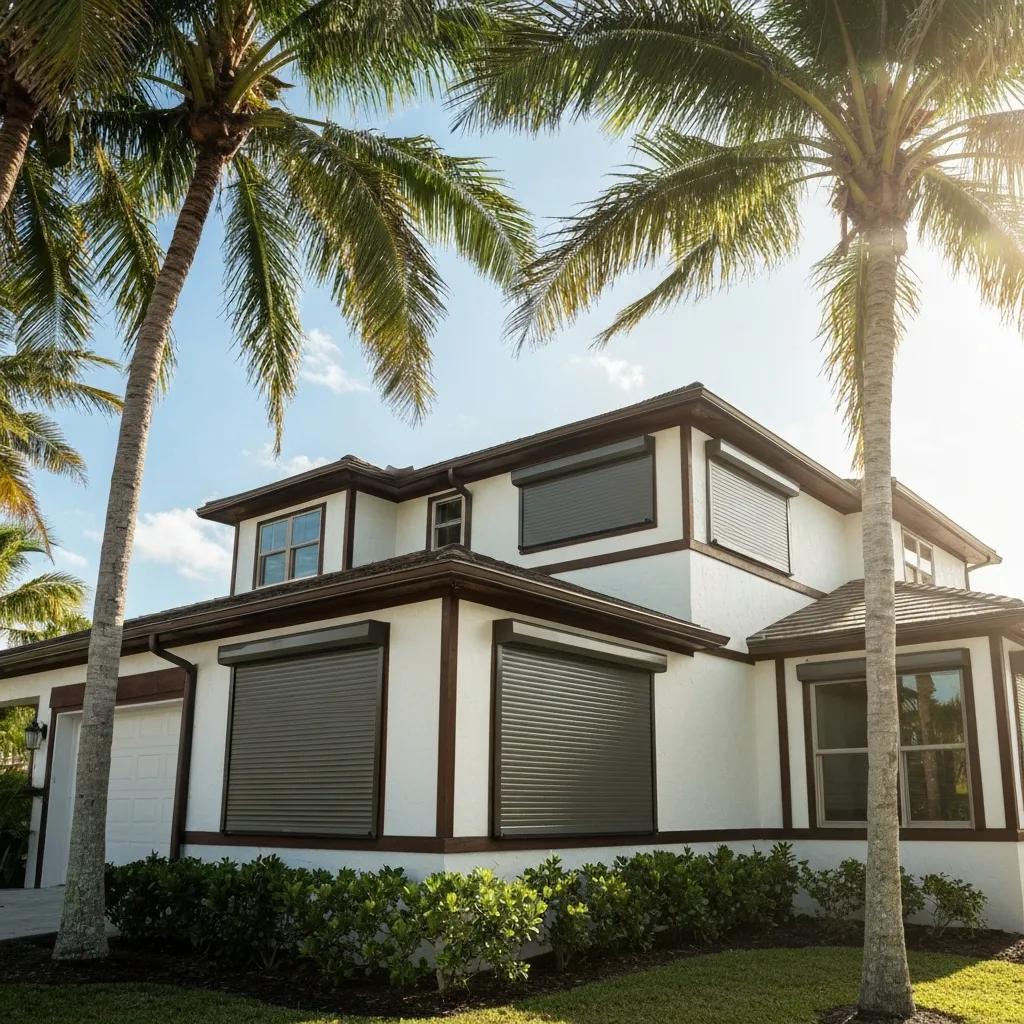
Buy Roll-Down Hurricane Shutters — Maximum Protection for Coastal Carolinas
Roll-down hurricane shutters—available in motorized or manual configurations—lower a curtain of interlocking slats to form an impact-resistant barrier across windows and large openings. This guide walks homeowners and business owners in North and South Carolina through how roll-down shutters work, why they provide superior storm protection, and the extra benefits—security, energy savings, and noise reduction. We explain differences between manual and electric systems, show coastal-grade material choices that fight salt-air corrosion, and outline the permit and installation steps required for code compliance. You’ll also find comparison tables, a breakdown of cost drivers, step-by-step installation phases, and answers to the questions people ask most so you can plan before the next storm season.
Why are roll-down hurricane shutters the best choice for maximum storm protection?
Roll-down shutters create a continuous, impact-resistant surface that protects glass and openings by transferring wind and debris forces into properly engineered anchors and guide channels. The curtain—interlocking slats wrapped on a roller tube and retained in reinforced guides—forms a uniform barrier that resists high-speed impacts and sustained wind pressures, lowering the chance of broken glazing and water intrusion. For coastal properties facing wind-driven debris and corrosive salt air, roll-down systems combine proven mechanical performance with installation flexibility for different opening sizes. The table below summarizes the core materials and features that determine long-term reliability in coastal conditions.
Key components and materials directly affect protection and durability.
Specifying marine‑grade aluminum and stainless fasteners is central to reliable performance on the coast—those material choices cut maintenance and reduce failure risk. Knowing each component’s role helps explain the specific storm protection roll-down shutters deliver for windows, doors, and larger openings.
What storm protection benefits do roll-down shutters provide?

Roll-down shutters absorb and redirect impact energy, resist uplift and lateral wind loads, and stop debris from breaching the building envelope. Their continuous coverage shields glazing and helps maintain interior pressure balance—reducing roof uplift risk and water intrusion during storms. Tested systems can carry specific design pressure and impact ratings, which helps with permitting and insurance. These protective functions limit immediate damage and secondary costs from mold, structural repairs, and displacement—why many coastal homeowners choose roll-down systems.
Performance of hurricane shutters under impact
The test matrix evaluated steel panels at three thicknesses and aluminum storm panels impacted by common concrete roof tiles used in hurricane‚Äëprone regions. Three manufacturers supplied samples for each of five panel types, tested at two impact energy levels.
Performance of hurricane shutters under impact by roof tiles, KR Gurley, 2010
How do roll-down shutters improve security, energy efficiency, and noise reduction?
Beyond storm defense, roll-down shutters add a physical security barrier that deters forced entry and limits sightlines for privacy. A closed aluminum curtain also reduces heat transfer through windows, which can lower HVAC runtime and energy bills. The mass and seal of the shutters reduce exterior noise from wind and storms, improving indoor comfort during and after events. These added benefits—safety, thermal performance, and acoustic dampening—improve lifecycle value and strengthen the ROI of installing roll-down shutters.
How do manual and electric roll-down hurricane shutters compare?
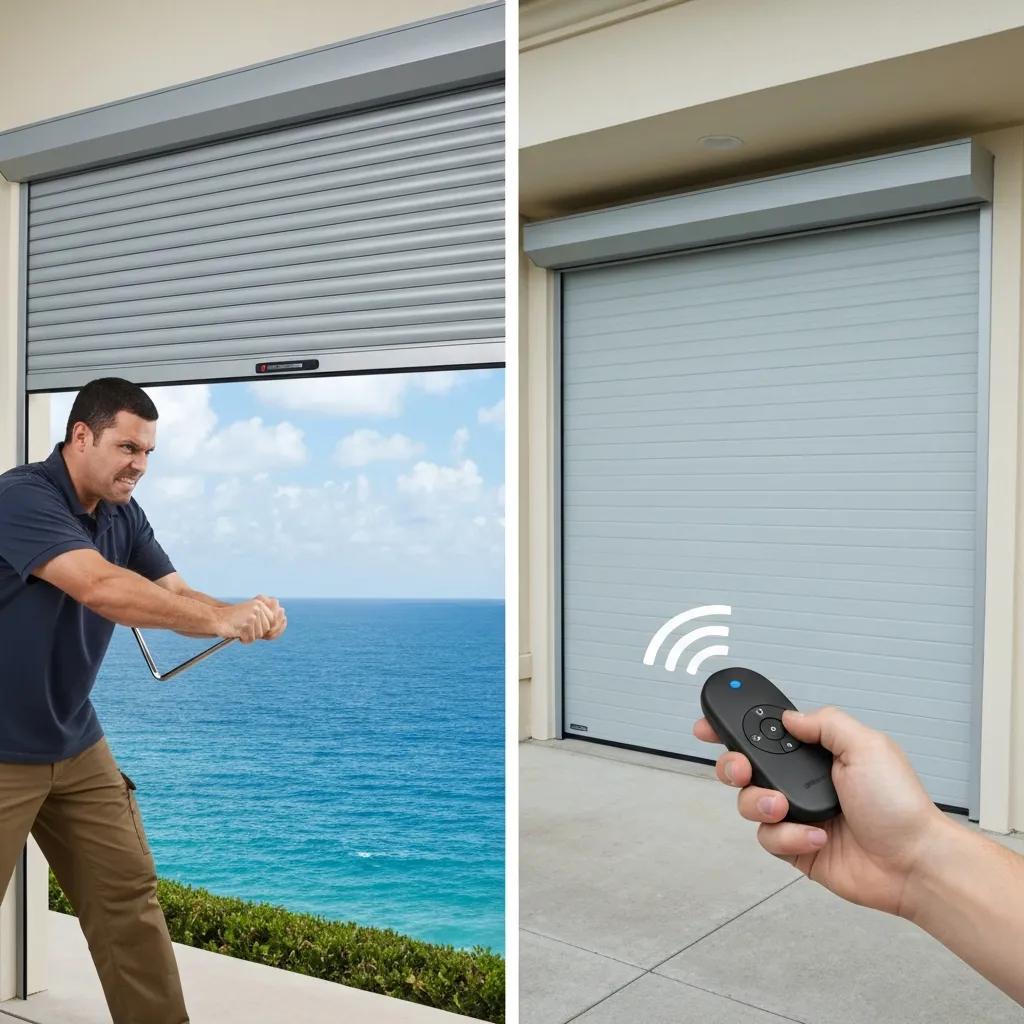
The main trade-offs between manual and electric roll-down shutters are deployment speed, convenience, cost, and smart‑home integration. Manual units use a crank or strap—simple, lower cost, and easier to maintain—while electric systems use motors and controls for fast, remote operation. Both share the same curtain, guides, and fasteners; motorized units add wiring, controls, and occasional service needs. The table below highlights operational differences so you can pick the mode that fits your property size, storm response plan, and budget.
Compare operation modes across cost, speed, and integration.
This comparison highlights the balance between simplicity and convenience and leads into more detailed pros and cons for each option.
What are the advantages and disadvantages of manual roll-down shutters?
Manual shutters are reliable and straightforward: fewer electrical parts means fewer failure modes, lower initial cost, and easier routine maintenance—good for smaller homes or a limited number of openings. The downside is deployment time and the physical effort required across many openings, which can be impractical during fast‑moving storms or at commercial sites. For single windows or budget‑focused installs, manual systems make sense; for whole‑property coverage or large openings, motorized systems are often a better fit.
Corrugated metal panels for storm shutters
This work describes the development of a testing facility for storm shutter panels and presents two impact tests performed on corrugated metal panels, providing baseline data for analytical approaches.
Behavior of corrugated metal panels for use as storm shutters, 2009
Why choose electric or motorized roll-down shutters for convenience and smart-home integration?
Electric shutters provide push-button protection and integrate with smart-home systems and scheduled automation so you can cover the whole property in seconds. Motorization supports remote control, scheduled closure ahead of storms, and battery backup options to operate during power loss—addressing the common failure mode of delayed manual deployment. While motors add upfront cost and require occasional servicing, owners value the speed and reliability, especially for large openings or commercial locations where manual operation isn’t practical. Adoption of motorized systems is growing in high‑risk coastal areas for those reasons.
What custom roll-down shutter solutions are available for homes and businesses in NC and SC?
Roll-down shutters are customized by slat profile, motor capacity, finish, and mounting method to fit coastal residences and commercial openings while resisting local corrosion. Residential options focus on matching colors and compact housings for curb appeal, with marine‚Äëgrade materials for durability. Commercial solutions scale up with reinforced guides, heavy‚Äëduty motors, and service contracts to handle frequent use and larger spans. Below are common customization categories to consider when protecting properties along the North Carolina and South Carolina coasts.
Common customization options cover materials, operation, and visual integration.
- Material & finish selection: Specify marine‚Äëgrade aluminum and corrosion‚Äëresistant coatings for longevity.
- Operation mode: Choose manual, electric, or battery‚Äëbackup motorization based on deployment needs.
- Mounting & housing: Size the headbox and select mounting for a flush look and structural compatibility.
These choices affect upfront cost and long‚Äëterm performance, so early design and engineering input ensures the final system meets both function and aesthetics.
How are residential roll-down shutters tailored for coastal properties?
Residential systems prioritize corrosion resistance, color‑matched finishes, and low‑maintenance hardware to withstand salt spray and humidity. Specifying 6063‑T6 marine‑grade aluminum slats and 316 stainless steel fasteners prevents premature corrosion, while powder‑coat finishes preserve appearance. Designs also consider egress, manual overrides, and compact housings that follow architectural lines—balancing protection with curb appeal and ease of use.
What commercial roll-down shutter options protect large openings and business properties?
Commercial shutters use reinforced slat sections, heavy‑duty roller tubes, upgraded motors, and redundant controls to secure storefronts, warehouses, and large spans. Reinforced guides and end‑retention mechanisms handle greater lateral loads, while higher‑capacity motors with soft‑start controllers extend service life under heavy cycles. Commercial owners commonly add preventative maintenance contracts and prioritized repairs to minimize downtime and protect business continuity—industrial design choices that support fast operation and reliable asset protection.
What is the professional installation process and how is code compliance ensured?
Professional installation starts with a site survey and precise measurements, followed by a Design Pressure Analysis to certify the shutter assembly for local wind and impact loads. Installers follow a clear workflow so anchors transfer loads into the building framing, electrical work (for motorized units) meets code, and the system is functionally and load tested before handover. Documentation from the design analysis and installation supports permitting and insurance records, proving the system meets local requirements. The numbered steps below outline a typical, compliant installation process.
A standard professional installation follows sequential phases to ensure safety and compliance.
- Site survey and measurements: Confirm opening sizes, structural attachment points, and installation access.
- Design Pressure Analysis and engineering: Calculate required components, anchors, and curtain specifications for code compliance.
- Permitting and pre-install coordination: Prepare documentation and secure local permits when needed.
- Mounting, electrical, and assembly: Install guides and roller; complete motor wiring and test backup power if used.
- Functional and load testing: Operate shutters under load and verify end‚Äëretention and sealing.
- Handover and documentation: Deliver manuals, warranty paperwork, and engineering reports for insurance.
Following these steps ensures shutters are both physically installed and formally qualified to meet code and insurance requirements—essential for safety and financial protection.
What steps are involved in installing roll-down hurricane shutters?
Installation begins with a detailed site evaluation to identify structural anchor points and measure openings for fabrication. The process continues with engineering validation, permit support, mounting, wiring (for motorized systems), and thorough testing. Correct anchor selection and pre‚Äëdrilled mounting patterns are critical to transfer design pressures into framing without localized failure. For motorized units, certified electrical work and battery backup integration are completed and tested. Final testing includes simulated loads and repeated cycles to confirm quiet operation and retention under storm stresses; finished documentation supports permits and insurance claims.
Hurricane shutter impact testing with roof tiles
The test matrix evaluated steel panels at three different thicknesses and aluminum storm panels impacted by concrete roof tiles commonly used in hurricane‚Äëprone regions. Three manufacturers provided samples for each of the five panel types, tested at two impact energy levels.
Performance of hurricane shutters under impact by roof tiles, KR Gurley, 2010
How do roll-down shutters meet local building codes and design pressure requirements?
Roll-down shutters meet code through a Design Pressure Analysis that quantifies required load capacity and ensures components—curtain strength, guide retention, and anchor capacity—are specified to withstand local wind forces. The analysis converts wind maps and exposure categories into component specifications and supports permit submittals and inspections. Documentation from the Design Pressure Analysis demonstrates compliance with building code intent and gives insurers technical proof of installation adequacy. An engineering‑backed approach reduces permit delays and strengthens the case for insurance mitigation credits.
How much do roll-down hurricane shutters cost and what factors affect pricing?
Pricing depends on opening size, material grade, motorization, custom finishes, and engineering requirements; buying in bulk can reduce per‚Äësquare‚Äëfoot costs for large projects. Major cost drivers include slat thickness and alloy, the complexity of structural mounts, whether the system is manual or motorized, electrical wiring and battery backup, and the need for Design Pressure Analysis and permits. Commercial installs add costs for heavy‚Äëduty motors and reinforced guides. The table below outlines the common price drivers so property owners can anticipate budget ranges and ask for precise estimates.
Cost depends on several variables; this table explains common drivers.
Knowing these drivers helps you see where higher costs buy measurable performance or convenience and prepares you to request detailed quotes rather than rely on ballpark numbers.
What influences the price of manual vs. electric roll-down shutters?
Manual shutters cost less because they omit motors, controls, and related electrical work; however, the labor to manually operate many units can raise indirect costs for large properties. Electric systems add motor, wiring, and control expenses—plus optional battery backup—raising the upfront investment but dramatically shortening deployment time. For commercial sites, heavier motors and reinforced hardware increase capital cost but are required for repeated, safe operation. Considering long‑term operational needs and the value of quick deployment often clarifies whether motorization is worth the extra expense.
How do roll-down shutters deliver long-term value and insurance savings?
Roll-down shutters reduce storm damage risk, which translates to avoided repair bills and potential insurance premium reductions when installations are documented with engineering reports. Many insurers offer mitigation credits for verified impact‚Äëresistant systems backed by a Design Pressure Analysis. Durable materials and professional installation cut maintenance and replacement cycles, while improved security and energy savings boost resale appeal. When you calculate ROI, include avoided damage costs, probable insurance savings, and energy benefits to get a complete long‚Äëterm picture.
What are the most common questions about roll-down hurricane shutters?
Buyers often ask about lifespan, maintenance, the viability of DIY installation, and warranty and service options. Short answers: lifespan depends on materials and care; professional installation reduces code and safety risks; and warranties plus service plans offer dependable aftercare. Below is a concise FAQ addressing the practical concerns homeowners and business owners raise most frequently.
Common buyer questions focus on longevity, installation complexity, and maintenance.
- How long will shutters last? Longevity depends on materials and maintenance—marine‑grade components commonly last many years.
- What maintenance is required? Periodic cleaning, lubrication of guides and motors, and inspection of fasteners and anchors are typical.
- Is professional installation necessary? Complex openings, code compliance, and warranty terms often make professional installation the smart choice.
These straightforward answers point readers toward prioritizing quality materials, scheduled maintenance, and professional installation to maximize life and performance.
How long do roll-down hurricane shutters last and are they worth the investment?
With marine‑grade aluminum, stainless fasteners, and routine maintenance, roll-down shutters can provide reliable protection for many years—often making them cost‑effective compared with storm repair bills. Regular inspections, timely replacement of worn fasteners, and motor servicing for electric units keep performance steady and preserve warranties. Savings from avoided structural repairs, less water damage, potential insurance credits, and energy reductions frequently justify the initial investment over the system’s lifetime. Evaluate total cost of ownership, not just upfront price, to see the full value.
Can I install roll-down shutters myself or should I hire professionals?
DIY installation is possible for very small, simple openings with manual units, but most owners benefit from professional installation because of anchor complexity, electrical code, permit coordination, and warranty requirements. Licensed installers perform Design Pressure Analysis, specify anchors for your framing, handle electrical connections to code, and provide documentation that insurers accept. Hiring a pro reduces safety risks, ensures local compliance, and preserves warranty coverage—making professional installation the recommended route for most coastal homes and every commercial property.
American Hurricane Shutters (AHS Carolinas) provides local expertise and products that match the protection and durability standards covered here, including manual and motorized roll-down shutters, marine‚Äëgrade components, and Design Pressure Analysis for code compliance. For property owners in Wilmington and along the North and South Carolina coasts, request a free estimate and let professional design documentation translate these technical benefits into a solution tailored to your home or business. Our services include installation, repairs, maintenance, and customer education to ensure reliable performance and documented compliance with local permitting and insurance requirements.
Frequently Asked Questions
What maintenance is required for roll-down hurricane shutters?
Regular maintenance keeps shutters working and extends their life. Typical tasks include cleaning debris from slats and guides, lubricating guides and motor parts, and inspecting fasteners and anchors for wear or corrosion. Do a full check at least once a year—ideally before storm season. For electric models, test the motor and any battery backup to ensure operation during outages. Proper maintenance significantly improves performance and longevity.
How do roll-down shutters affect home insurance premiums?
Many insurers offer discounts for verified impact‚Äëresistant protections like roll‚Äëdown shutters. To qualify for potential savings, provide your insurer with installation documentation, including the Design Pressure Analysis and code‚Äëcompliance records. That paperwork helps demonstrate reduced risk and can translate into meaningful premium credits over time.
Can roll-down shutters be customized for different architectural styles?
Yes. Shutters can be tailored with different slat profiles, colors, and finishes to blend with your home’s architecture. Compact headboxes and tailored mounting options minimize visual impact. Customization lets you keep curb appeal while getting robust storm protection.
What is the typical lifespan of roll-down hurricane shutters?
Lifespan depends on materials and care. High‑quality marine‑grade aluminum and stainless fasteners can last 20 years or more with proper maintenance. Regular inspections, cleaning, and timely repairs are essential—especially in salt‑air environments. Investing in quality materials and upkeep yields a long‑lasting protective solution.
Are there any warranties available for roll-down hurricane shutters?
Most manufacturers provide warranties covering material and workmanship defects; terms and durations vary. Motor components may carry separate warranties. Professional installation often includes installation warranties as well. Review warranty details before purchase and keep documentation for future claims.
How do roll-down shutters compare to other storm protection options?
Compared with temporary solutions like plywood or fabric covers, roll‚Äëdown shutters are permanent, easier to deploy, and more durable. They provide impact resistance, improved security, energy savings, and noise reduction. While other options can be cheaper upfront, roll‚Äëdown shutters typically deliver better long‚Äëterm value and lower maintenance.
Conclusion
Roll‚Äëdown hurricane shutters deliver reliable storm protection, added security, and energy benefits for coastal properties. Built with the right materials and installed to code, they reduce damage risk and can lower long‚Äëterm costs for maintenance and insurance. Choose a solution tailored to your property and enjoy greater peace of mind during storm season. Contact us to explore our selection of roll‚Äëdown hurricane shutters and get protection suited to your home or business.
